 FlashBoards Learn
Genres · Film language
Tragicomedy
Also called: dramedy, comedy-drama
Tragicomedy is a story mode that holds tragedy and comedy in the same scenes, so the audience laughs at something that also hurts. Neither tone wins: the joke makes the loss feel more human, and the loss makes the joke land harder. Life Is Beautiful (1997) is the textbook film example.
- What it does
- Lets laughter and grief color each other, so both feel truer than either would alone.
- Use it when
- Your story is about loss, failure or dying, and the characters cope the way real people do: with jokes.
- Watch out
- If the camera winks at the audience, the grief turns into a sketch; play the comedy straight.
- Try this prompt
Static wide shot, eye level, a mourner in a black dress wearing a paper party crown, eating cake alone at a long empty banquet table, soft window light, muted colors
What is tragicomedy?
Tragicomedy refuses to pick one register. The subject is serious (death, illness, divorce, a wasted life), but the characters and situations are funny, and the same moment is allowed to be both.
The idea is old: Samuel Beckett subtitled Waiting for Godot "a tragicomedy in two acts." In film, Charlie Chaplin built the form in the silent era; the Tramp is a clown, but the ending of City Lights (1931) is closer to heartbreak than to a gag. Roberto Benigni's Life Is Beautiful (1997) pushes it to the limit: a father clowning to shield his son inside a concentration camp.
The industry often calls this territory comedy-drama or dramedy, looser labels for any mix of jokes and serious scenes. Tragicomedy is the end of that range where the stakes are genuinely tragic. It is a common hybrid genre living between two of the broadest film genres, comedy and drama.
Why does tragicomedy hit so hard?
Pure tragedy makes the audience brace, and people brace by pulling back. A laugh drops that guard, so the next painful beat goes in deeper.
The mix also reads as honest, because real grief is full of absurd logistics. Billy Wilder's The Apartment (1960) runs a suicide attempt through a romantic comedy; Little Miss Sunshine (2006) sends a family on a road trip with a dead grandfather in the van; The Descendants (2011) follows a man whose wife lies in a coma, and it is often funny.
This differs from comic relief, a funny beat placed between tense ones. In tragicomedy the humor is not a break from the pain; it is how the characters live inside it.
How to shoot tragicomedy
The camera's job is to stay neutral enough that both readings survive.
- Play the comedy straight. No comedic zooms, whip pans or cartoon sound cues. Let actors play it deadpan.
- Hold the wide. A locked-off wide or medium-wide on a 32–40mm lens at eye height lets the absurd prop and the sad face share one frame. A close-up picks the emotion for them.
- Stay a beat longer. Let the take run 2–3 seconds past the laugh; the silence after a joke is where the sadness enters.
- Light for drama. Soft, motivated window or practical light, a 2:1 to 4:1 key-to-fill ratio, a muted grade.
- Use one incongruous object. A party hat at a wake, a costume in a hospital. The prop carries the joke so the performance can carry the grief.
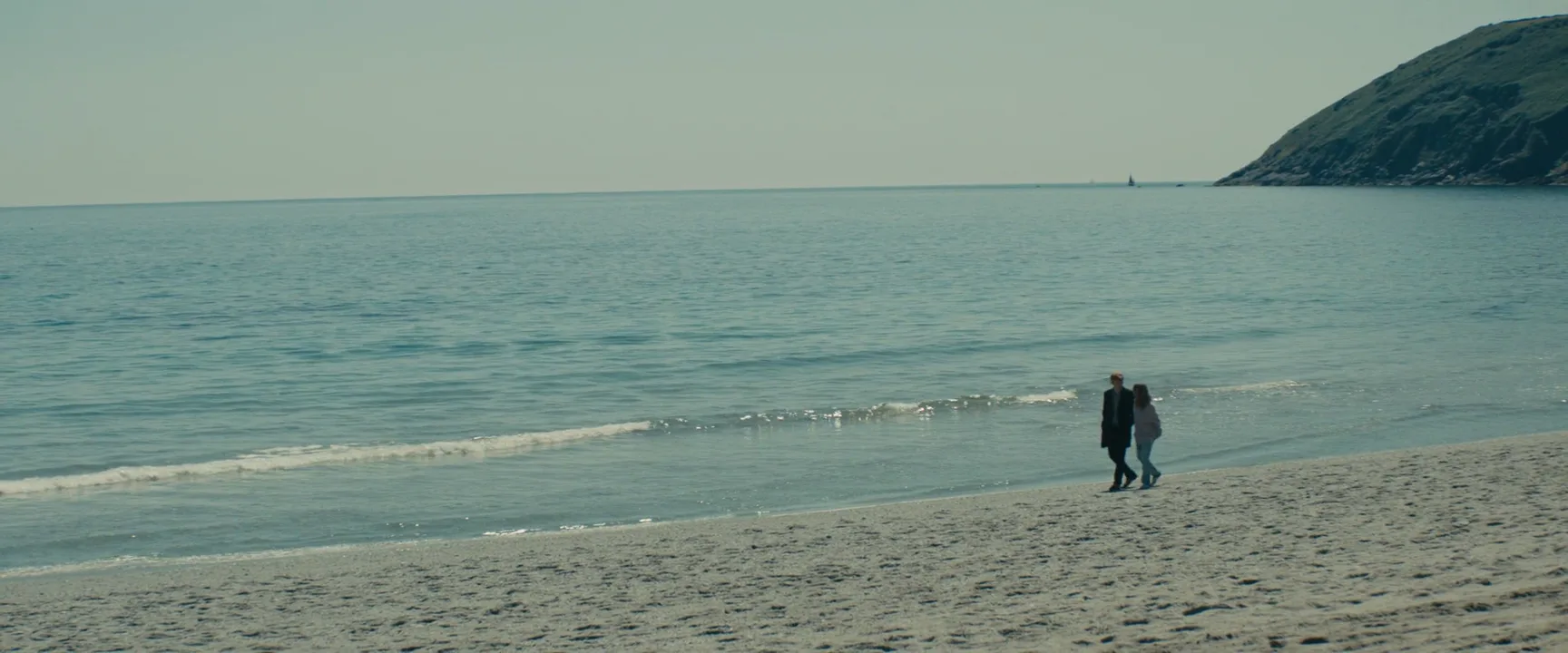
- Put characters small in beautiful places. Perfect beaches and empty luxury offices make a lonely figure look pitiful and slightly ridiculous.
Tragicomedy vs. black comedy
Both take on death and illness but aim the laugh differently. Black comedy laughs at the dark thing and makes the audience uneasy about laughing; its tone is cool and ironic. Tragicomedy laughs with the people going through it; its tone is warm, and it wants you to care.
A quick test: if a character's death is the punchline, you are in black comedy. If the punchline makes the death hurt more, you are in tragicomedy.
Tragicomedy examples in film
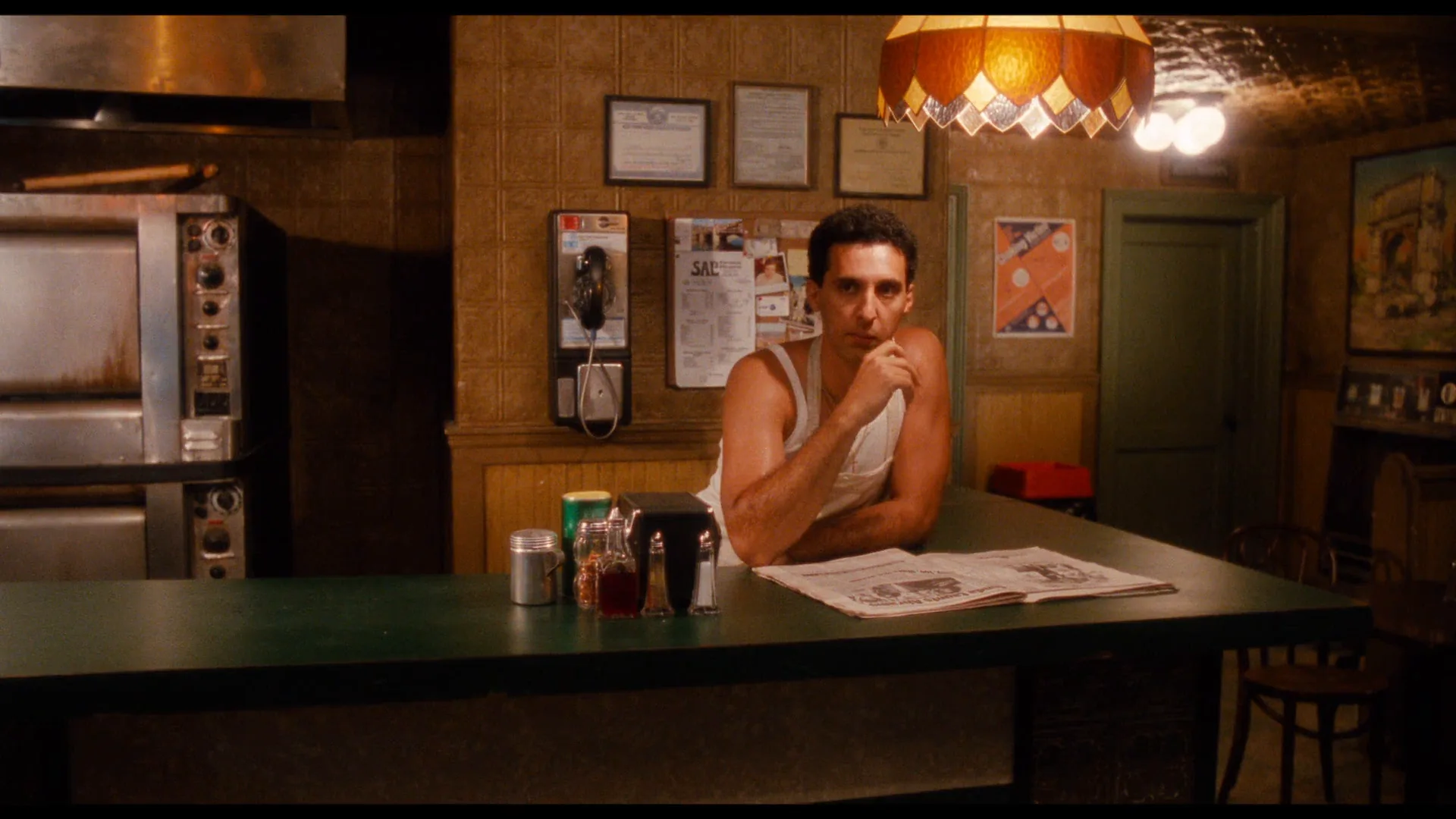
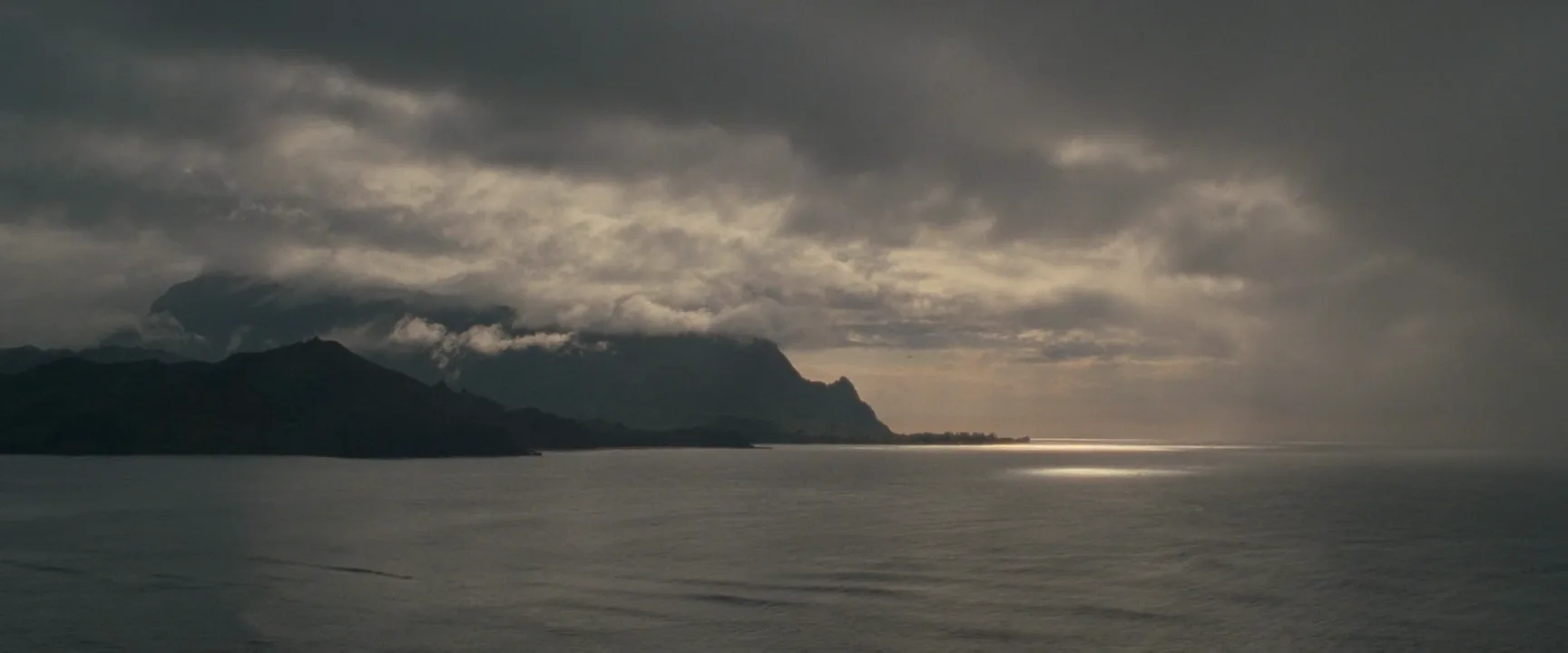
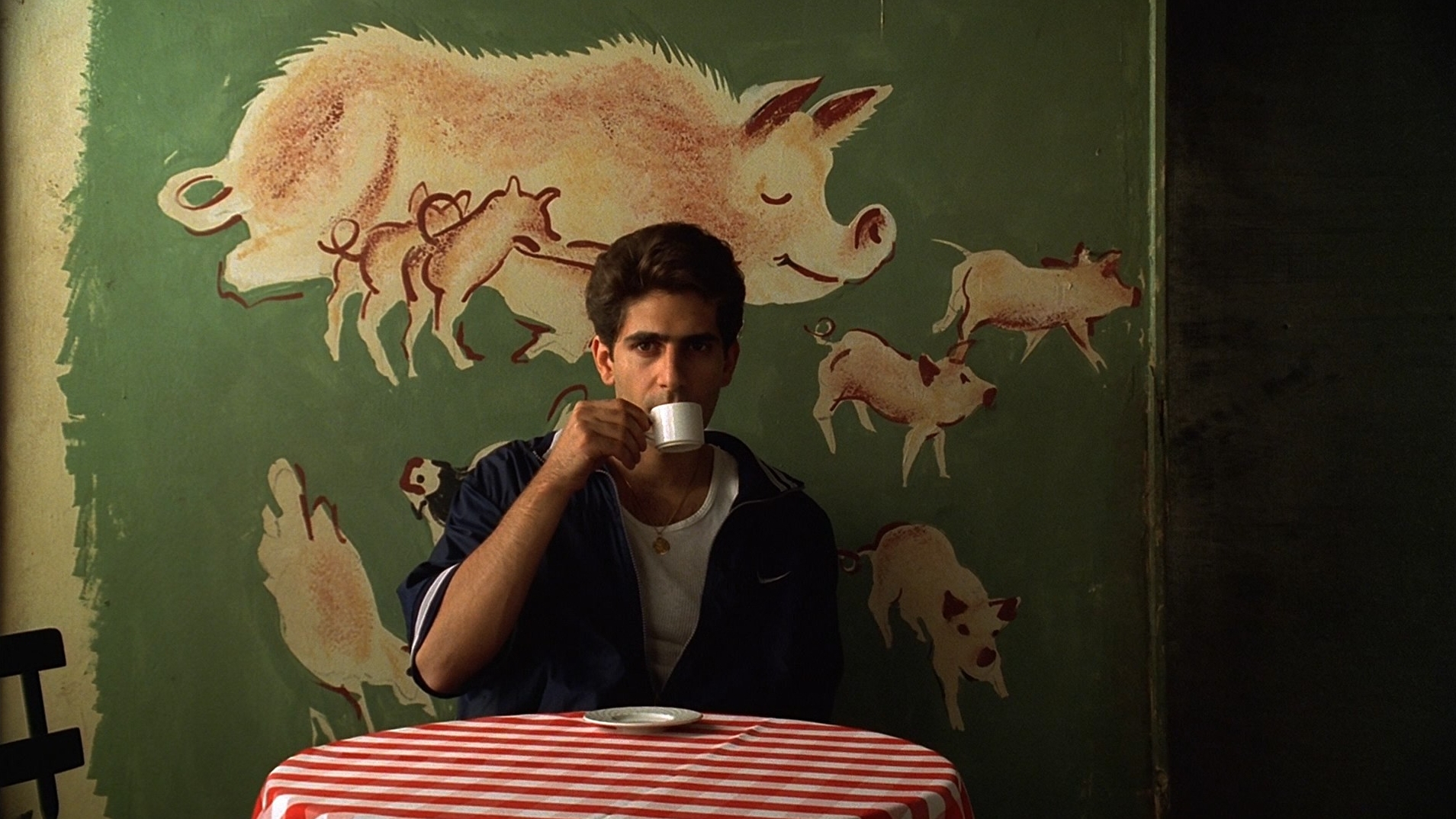
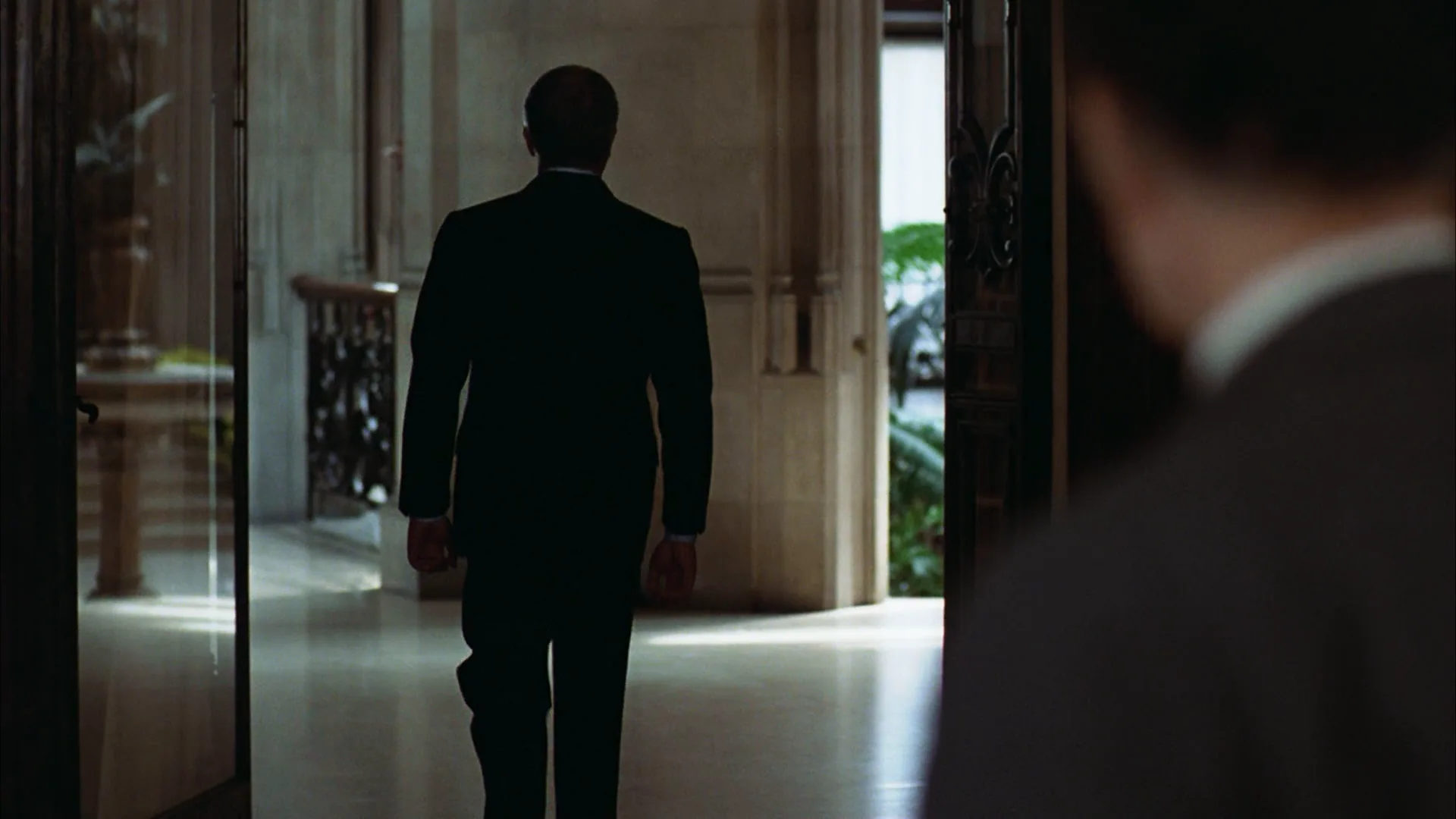
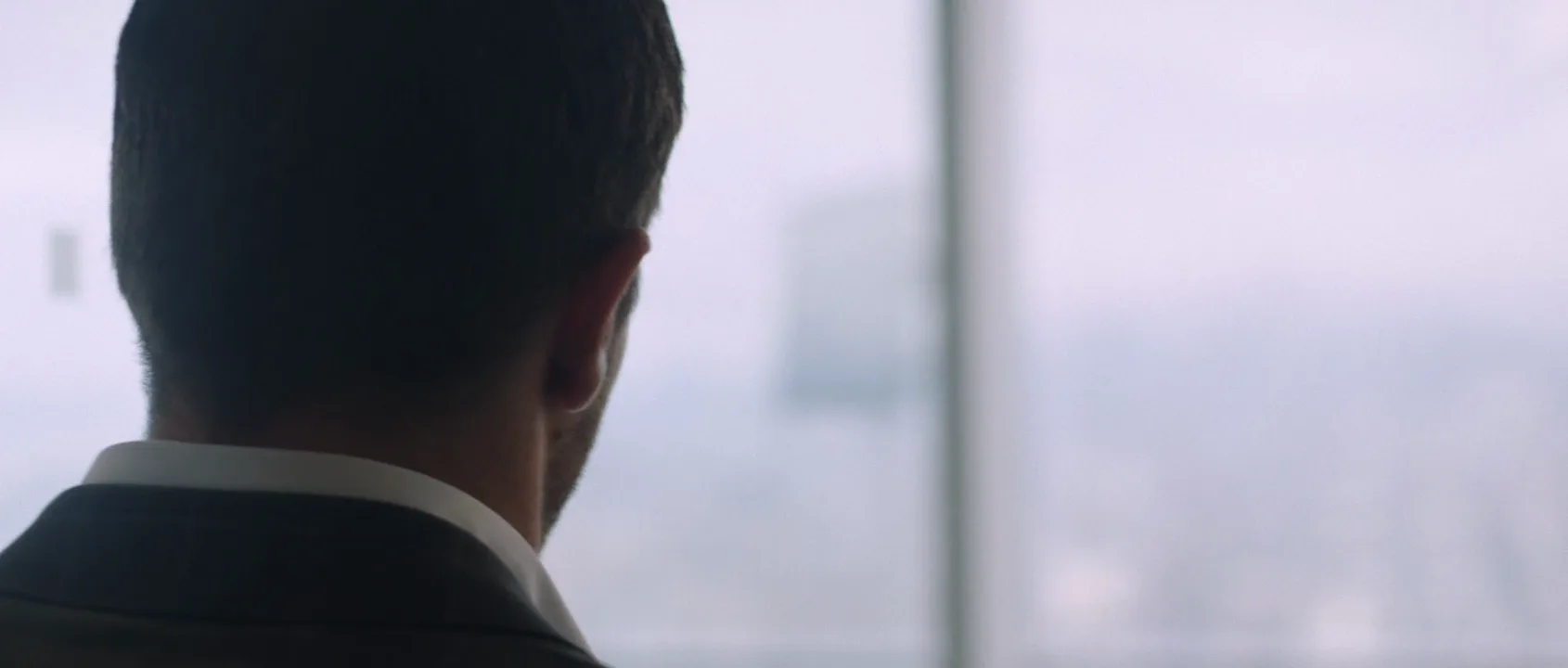
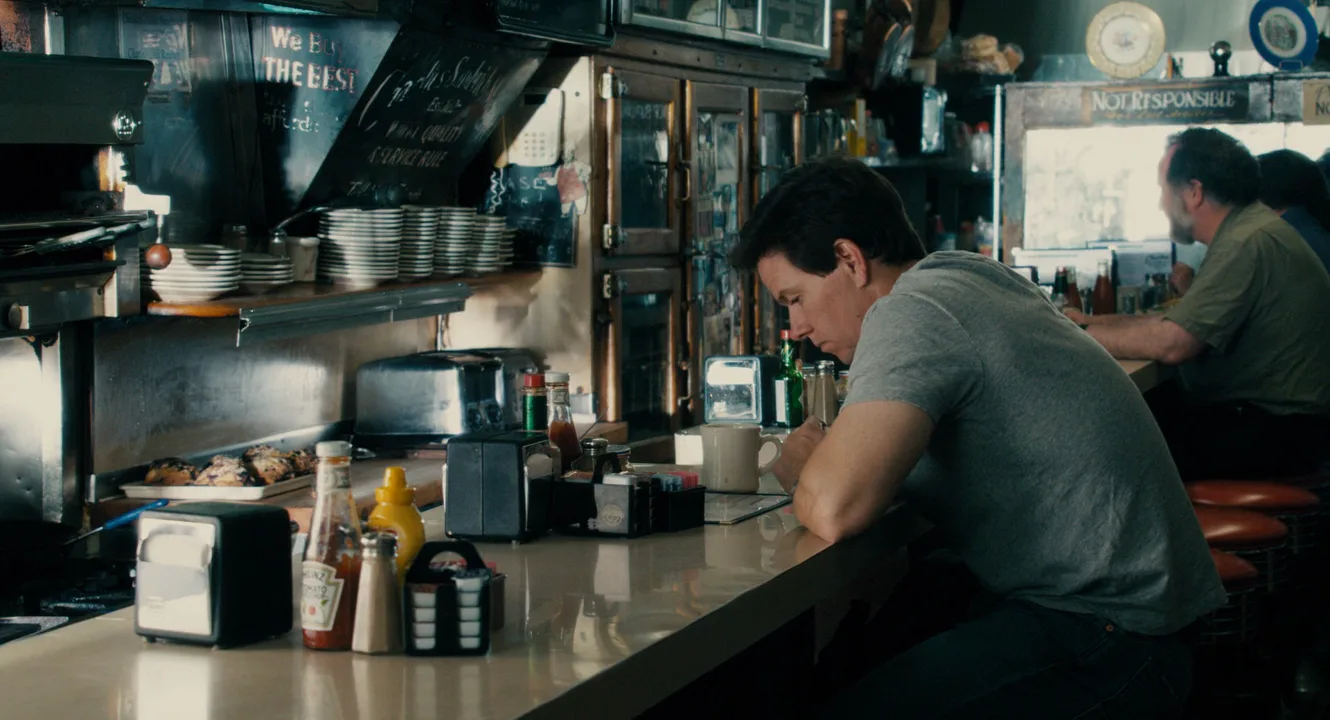
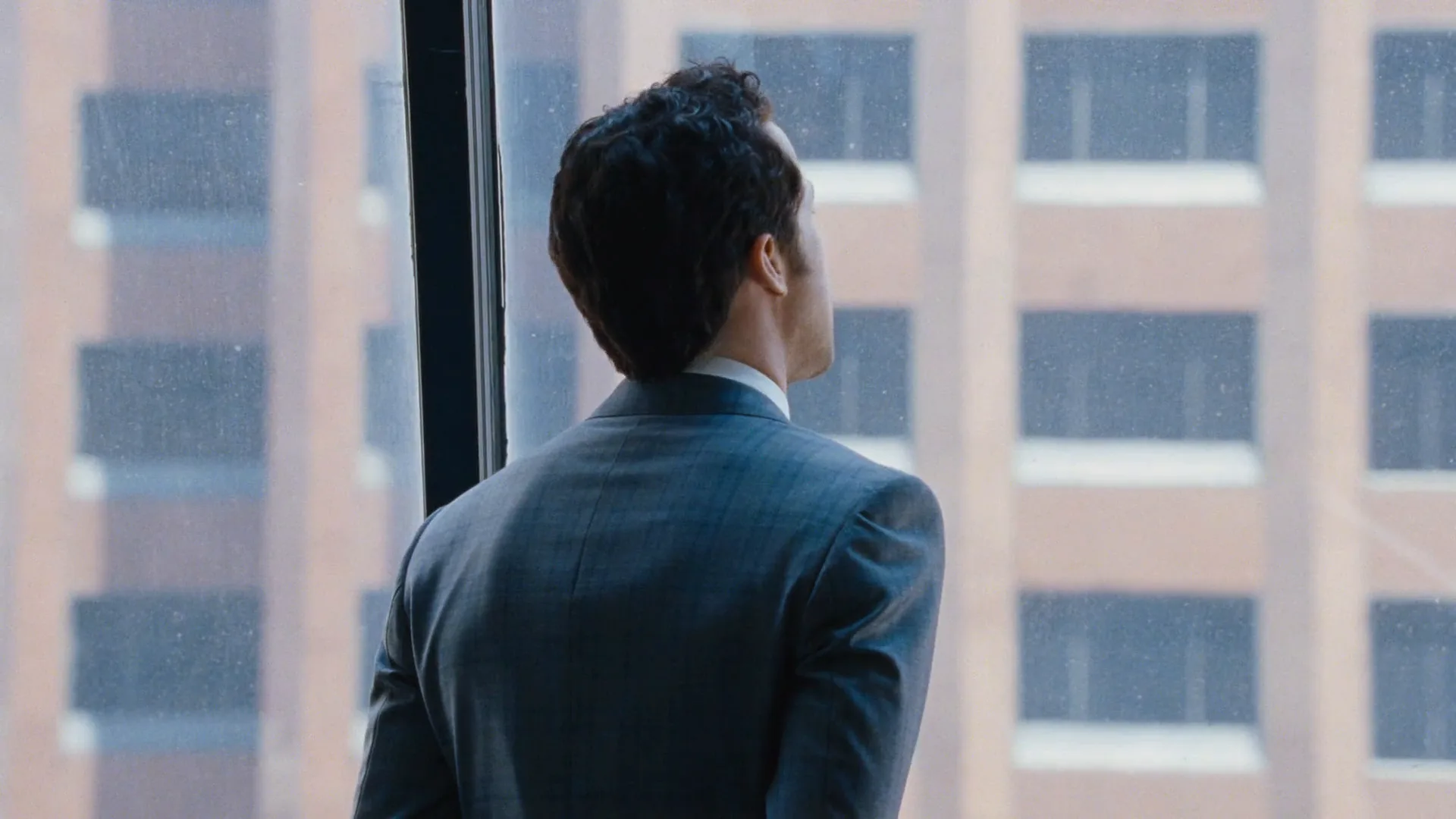
8 framesTragicomedy shows in staging: neutral framing, one odd detail, lonely figures held in wide spaces.
How to create a tragicomedy with AI
4 promptsImage models default to one tone. Describe a serious setting and face, add one incongruous object, and keep the framing neutral and wide. On a FlashBoards board, pin film frames next to your takes and compare them side by side. The fourth prompt re-shoots a real film shot from a text description alone, and the original plays next to the result so you can compare.
Static wide shot at seated eye height, 35mm lens. A tall, lanky woman in her mid-forties with a short platinum crop, freckles and red-rimmed eyes, in a plain black funeral dress, sits alone at the end of a long banquet table in a church basement. She wears a bright yellow paper party crown and eats white sheet cake from a paper plate with a plastic fork. A silver foil balloon is tied to her chair. Soft gray daylight from high windows, muted beige palette, the yellow crown the only strong color.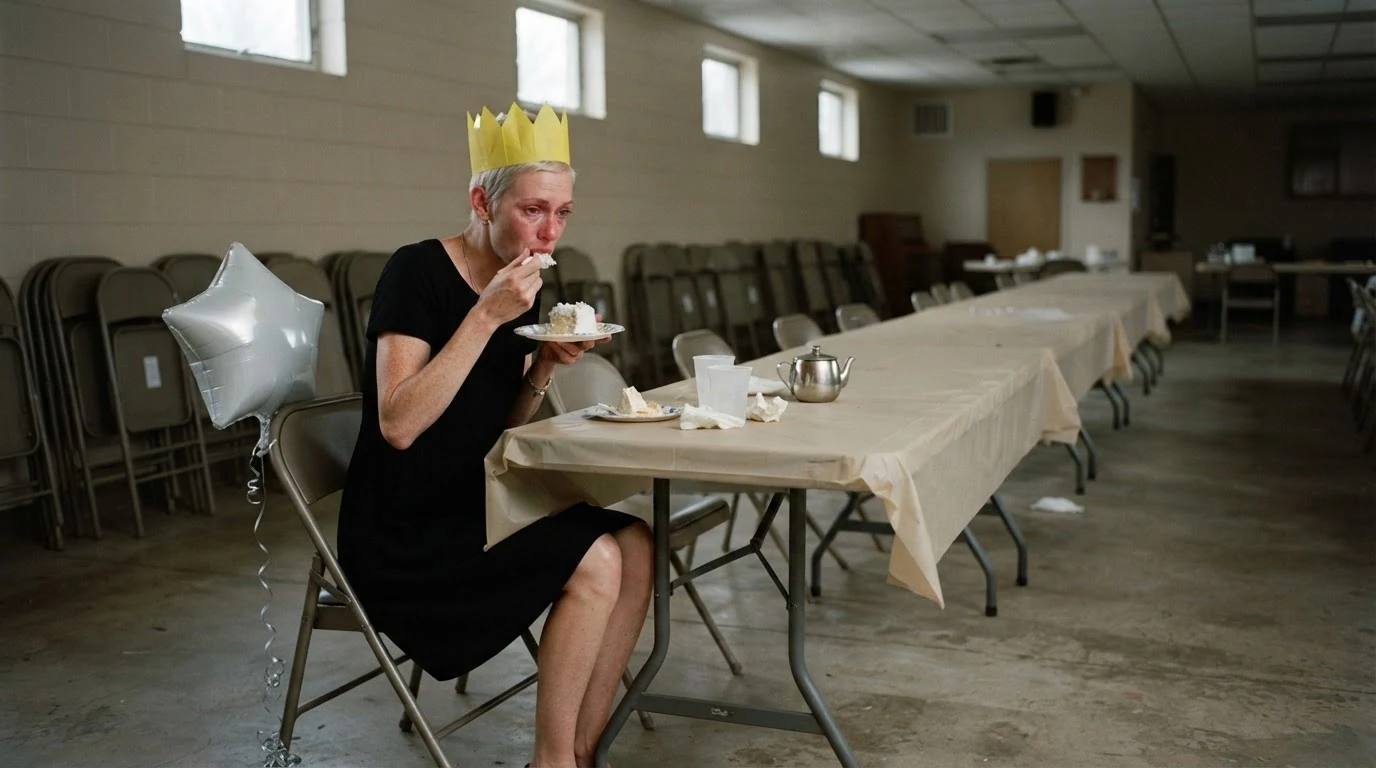
Funeral dress, red-rimmed eyes and church basement set the tragedy; the yellow paper party crown, the only strong color, is the punchline. Static wide at eye height keeps the camera neutral.
Open FlashBoardsSymmetrical wide shot down a long hospital corridor, 28mm lens, camera at seated eye height. In the center, a young father with a thick red beard and round wire glasses sits on a plastic chair in a full green dinosaur costume, the dinosaur head on his knees, staring at a closed double door. Cold fluorescent light, pale green walls, a glowing vending machine far behind. Deadpan, realistic cinematic photograph.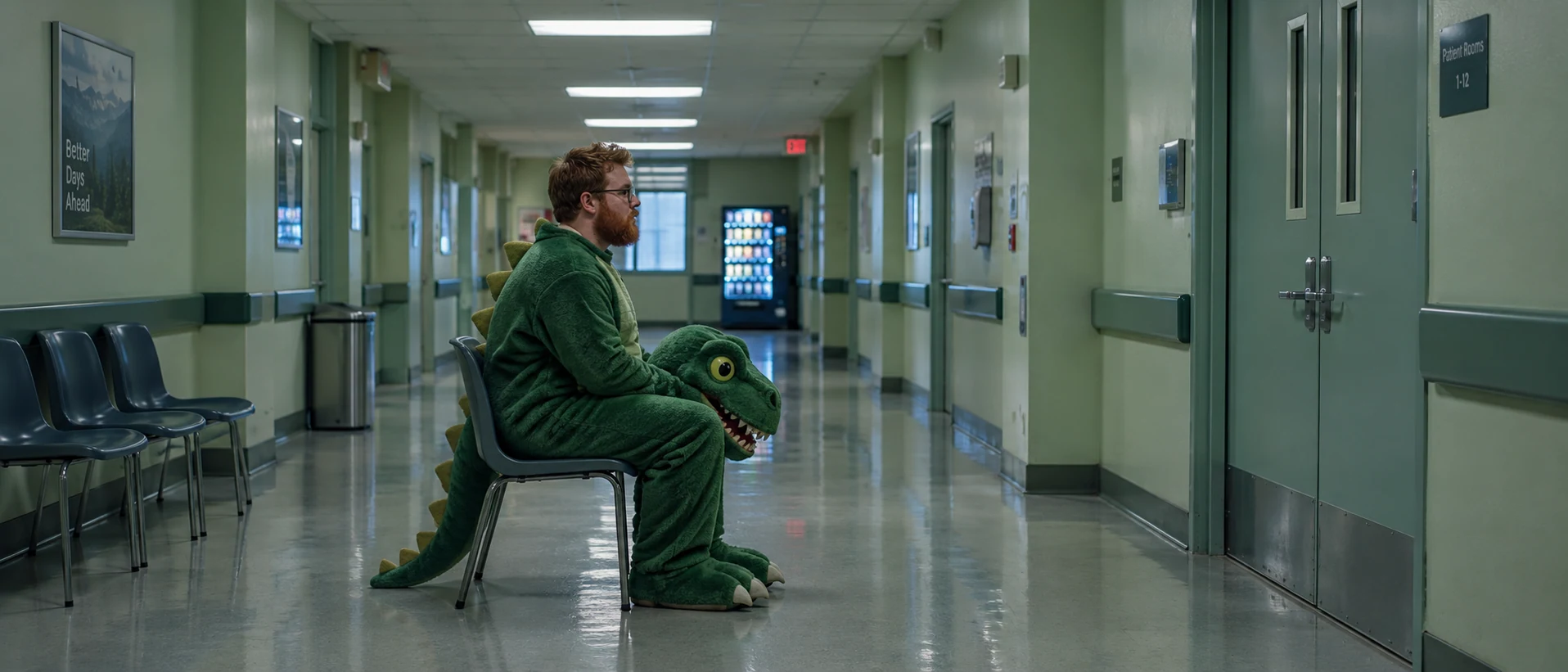
A new setting and a wider frame for the same idea. Symmetrical and center give a formal, deadpan look; the dinosaur costume facing a closed double door holds joke and dread together.
Open FlashBoardsCamera: locked-off tripod, the wide framing stays the same from start to end. Action: the woman is already chewing cake as the shot begins. The paper crown slides down over one eyebrow; she pushes it back up with the hand holding the fork and keeps chewing. Then her chin trembles, she presses a paper napkin to her eyes with the fork still in her hand, and her shoulders shake once. The silver balloon sways gently above her.Chewing is stated first, so the shot is alive from frame one. The crown gag comes before the tears and the fork stays in her hand, so the comic and sad beats overlap while the still camera underlines neither.
Open FlashBoards{
"output": "Full-screen live-action film shot from Being There (1979), alive from its very first frame: one continuous shot, no cuts. 35mm film stock, soft overcast daylight from tall windows, muted beige-and-black palette, the marble hall of a grand old mansion.",
"characters": {
"S1": {
"name": "Chance, played by Peter Sellers",
"look": "middle-aged man, neat dark hair, dark tailored suit, seen only from behind",
"voice": "soft, flat, polite, unhurried"
},
"S2": {
"name": "Dr. Robert Allenby, played by Richard Dysart",
"look": "grey-haired man in a grey suit, only the back of his head and shoulder visible, out of focus",
"voice": "silent"
}
},
"shots": [
{
"shot": 1,
"camera": "locked-off at standing eye height behind a tall dark carved wooden doorframe, a slow pan right and a slight tilt down following the walker; deep focus on the hall, the foreground shoulder soft",
"action": [
"BEGINNING: alive from the first frame, Chance walks away from camera in the centre of frame, back to us, arms hanging still at his sides, through the tall doorway into a bright pale stone hall; Dr. Allenby's out-of-focus head and shoulder fill the right third of the foreground, facing away from camera toward Chance, perfectly still",
"THEN: Chance keeps a slow, even, stiff walk straight down the hall, growing smaller, never turning his head; the camera pans slightly right with him",
"THEN: he drifts toward the right side of the hall past a small red upholstered chair against the left wall and a wrought-iron railing, green garden visible through the bright openings",
"END: Chance steps out of frame at the right edge of the doorway; the hall stays empty and bright with the red chair, Dr. Allenby's shoulder still motionless in the foreground"
],
"dialogue": [
{
"speaker": "S1",
"on_screen": false,
"when": "at the very end, just after Chance has left the frame",
"delivery": "quiet, mild, matter-of-fact, heard from beyond the doorway",
"line": "<d>[English] I understand.</d>"
}
]
}
],
"sound": {
"ambience": "large quiet marble hall, soft footsteps on stone fading away, faint birds heard from outside",
"speech": "exactly these spoken phrases, each said once, in this order: I understand.",
"never_spoken": "no narration and no voice-over: the descriptions, performance notes and step words of this prompt are never spoken aloud",
"music": "a film score under the scene, always below the voices: a slow, gentle solo piano melody, wistful and slightly whimsical",
"subtitles": "none"
}
}Remakes Chance's walk away through the mansion doorway in Being There (1979), keeping the foreground watcher, the slow pan right and the flat closing line.
The comedy lives in the staging, not the acting: a locked-off frame, a slow, even, stiff walk and a foreground watcher who never moves. The one line, I understand, arrives flat after the exit.
Open FlashBoardsCommon mistakes
- Models pick one mood: the crown turns the scene into a birthday party, or the funeral drains the prop. Name the serious setting and face first, then the one comic object and its color.
- Faces drift into a smile to match the prop. Describe the expression you want (red-rimmed eyes).
- In video, big comic timing (double-takes, mugging) breaks the tone. Write small physical actions and keep the camera still.
Keep the reference frames, prompts and every generated take side by side — images and video in one canvas.
FAQ
4 questionsWhat is a tragicomedy film?
A tragicomedy film tells a genuinely sad story (loss, illness, failure, death) through characters and situations that are also funny, without splitting the two into separate scenes. The laughter and grief happen together and change each other, as in City Lights (1931), The Apartment (1960) and Life Is Beautiful (1997).
Is a dramedy the same as a tragicomedy?
They overlap. Dramedy, or comedy-drama, is an industry label for any story mixing jokes and serious scenes, including light family shows. Tragicomedy is narrower: the stakes are truly tragic, and the humor lives inside the pain rather than next to it. Every tragicomedy is a comedy-drama, but not the reverse.
What are some examples of tragicomedy films?
Well-known tragicomedies include City Lights (1931), The Apartment (1960), Being There (1979), Life Is Beautiful (1997), Little Miss Sunshine (2006) and The Descendants (2011). On television, The Sopranos, Succession and Barry mix violence and family misery with sharp comedy about characters we care about.
How is tragicomedy different from black comedy?
Black comedy laughs at dark subjects themselves and makes the audience uneasy about laughing; its tone is cool and ironic. Tragicomedy laughs alongside people living through dark events, and its tone is warm. If a death is the punchline, it is black comedy; if the joke makes the death hurt more, tragicomedy.
Related terms
5- Black ComedyGenres
Black comedy finds laughs in subjects normally treated as taboo or tragic — death, violence, illness, war — and makes the audience uneasy about what it is laughing at.
- DramaGenres
Drama is the broad genre of serious stories about realistic characters in emotional or moral conflict, where the stakes are internal and relationships rather than spectacle.
- ComedyGenres
Comedy is the genre built to make the audience laugh — through character, situation, wordplay or physical gags — and it usually bends toward a happy or reconciling ending.
- Comic ReliefStorytelling
Comic relief is a humorous character, line or scene placed inside a tense or dark story to release pressure before tension builds again.
- Hybrid GenreGenres
A hybrid genre film fuses the conventions of two or more genres — sci-fi horror, western musical, romantic comedy-thriller — so that each genre's expectations reshape the other's.
Further reading
Samuel Beckett, Waiting for Godot (English edition, 1954), subtitled "a tragicomedy in two acts."