 FlashBoards Learn
Genres · Film language
Black Comedy
Also called: dark comedy, black humor, gallows humor
Black comedy, also called dark comedy, is a film genre that gets laughs out of subjects usually treated as tragic or taboo: death, murder, illness, war, bureaucratic cruelty. The joke works because the film plays the horror straight, so the audience laughs and then feels uneasy about what it just found funny.
- What it does
- Turns death, violence and misfortune into comedy, making the audience complicit in the laugh.
- Use it when
- The story is grim, but the characters' denial, pettiness or bad luck makes it absurd.
- Watch out
- If the film winks or mugs, the tension collapses; play the dark material completely straight.
- Try this prompt
Symmetrical pastel funeral parlor, gaunt undertaker calmly eating a sandwich while sitting on a coffin lid, deadpan face, flat soft daylight
What is black comedy?
Black comedy is a branch of comedy that aims its jokes at things a culture normally treats with reverence or fear. Corpses get misplaced, murders go wrong for trivial reasons, a war is lost over a misunderstanding. Dark comedy, black humor and gallows humor name the same mode.
What separates it from ordinary comedy is the cost. In a light comedy nobody really gets hurt; in a black comedy the body is a body and the grief is grief. The laugh comes from the gap between that weight and the characters' reaction: irritation, greed, politeness, bureaucratic calm. That gap is a form of irony.
As a tone, it attaches easily to crime, war and horror, so many film genres titles are a hybrid genre.
Why does black comedy work on an audience?
Laughter releases tension, and black comedy builds more tension first. The viewer is primed for dread, gets a joke instead, and laughs from relief. A beat later comes the second reaction: why was that funny? That double response is the point.
- To make the unbearable watchable. Dr. Strangelove (1964) turns nuclear annihilation into farce; the image of a pilot riding a falling bomb outlasts any solemn warning.
- To expose people. In Fargo (1996) a crime spirals because of small greed and incompetence. Parasite (2019) keeps its class conflict funny right until it stops being funny.
- To cope with grief and faith. Monty Python's Life of Brian (1979) ends with men on crosses singing a cheerful song. Jojo Rabbit (2019) sees Nazi Germany through a child's imaginary friend.
How to shoot black comedy
Camera, light and actors must treat the grim event as normal.
- Play it straight. Cast actors who can hold a deadpan face. Once a performer signals "this is a joke," the tension is gone.
- Frame formally. Static, centered or symmetrical compositions on a tripod make the chaos inside the frame look absurd. Hold two or three seconds past the gag; the silence is where the audience squirms.
- Go wide and close. A 25–32mm lens at close-up distance slightly exaggerates faces and props, a look associated with the Coen brothers and Jean-Pierre Jeunet.
- Light it pleasantly. Bright, even light and pastel or warm palettes over a murder are funnier than noir shadow.
- Keep violence sudden. Cut to it without build-up, then cut to a mundane reaction.
- Use contrasting sound. Cheerful music or a polite line over something terrible creates ironic distance.
Black comedy vs. satire and tragicomedy
Satire attacks something outside the film: a government, an industry, a social habit. Its laughs carry an argument. Black comedy needs no target; it can simply find death absurd. Dr. Strangelove is both.
Tragicomedy alternates tragic and comic moments and asks you to feel the sadness fully. Black comedy fuses them in one beat: the funny thing is the terrible thing. A quick test: if the audience cries after laughing, it leans tragicomedy; if it laughs and then feels guilty, it is black comedy.
Black Comedy examples in film
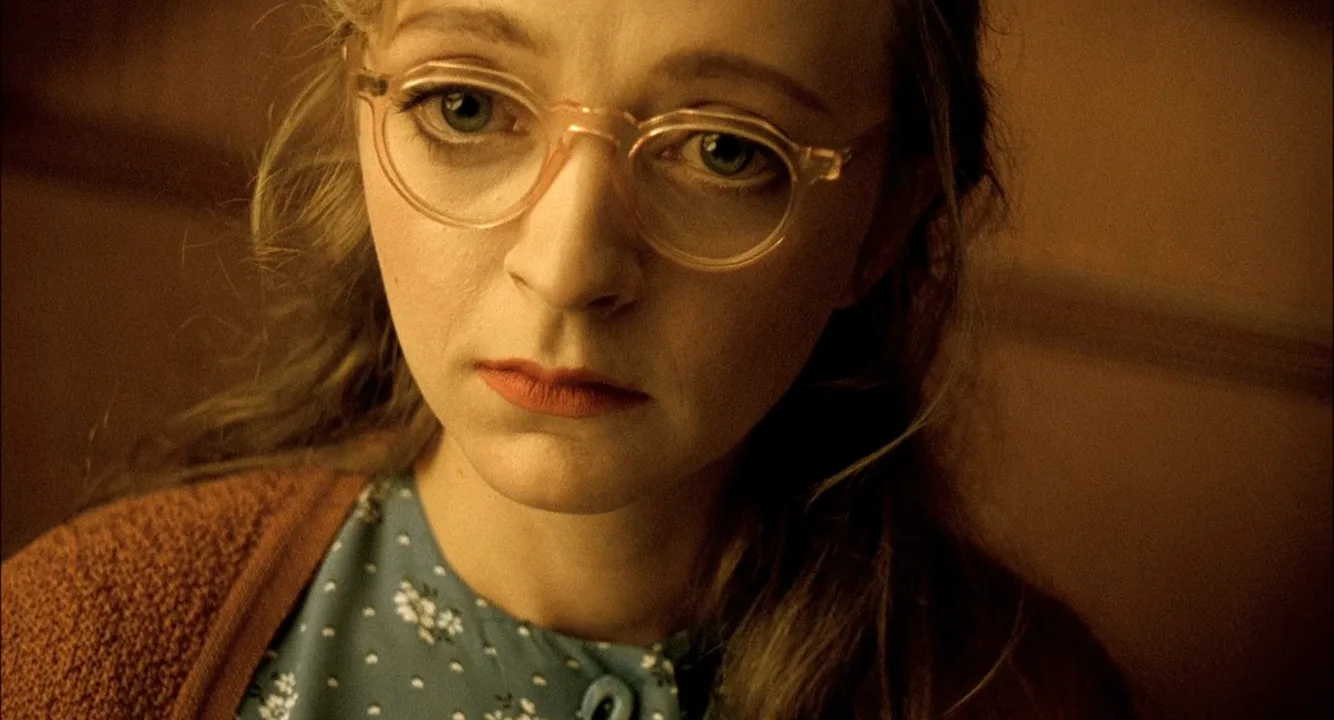
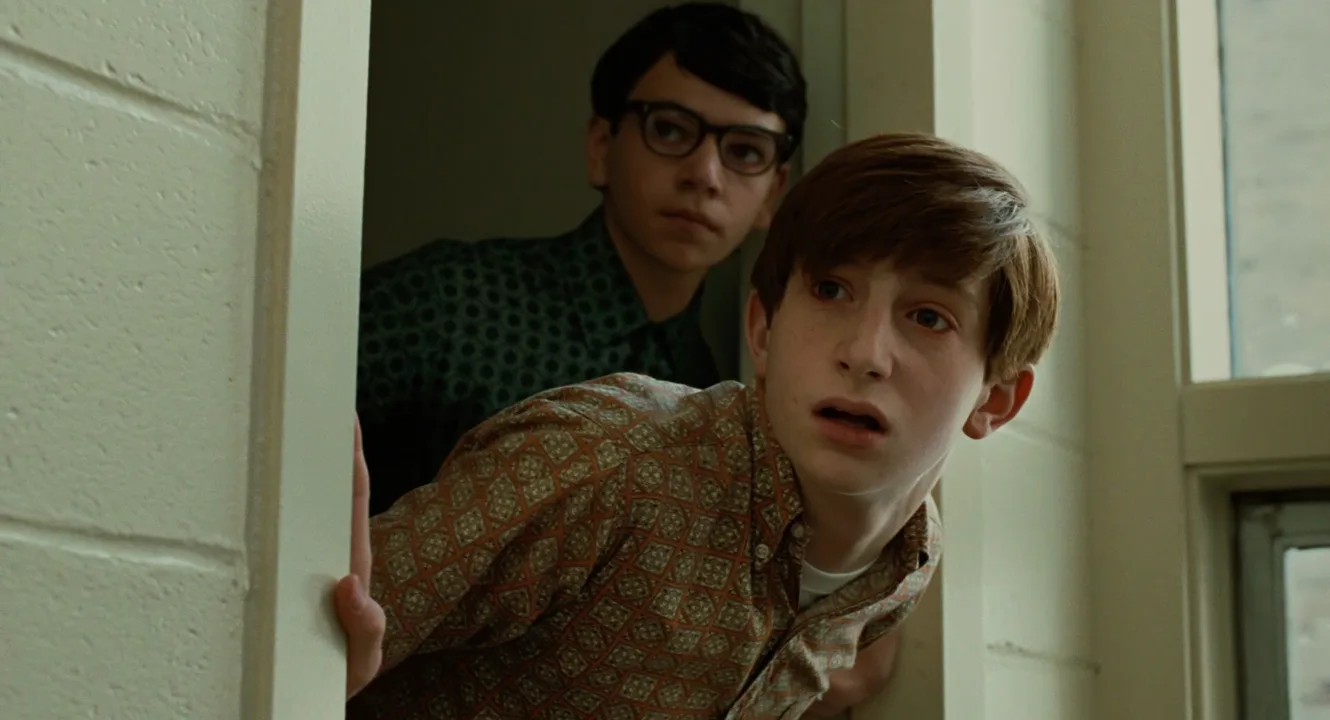
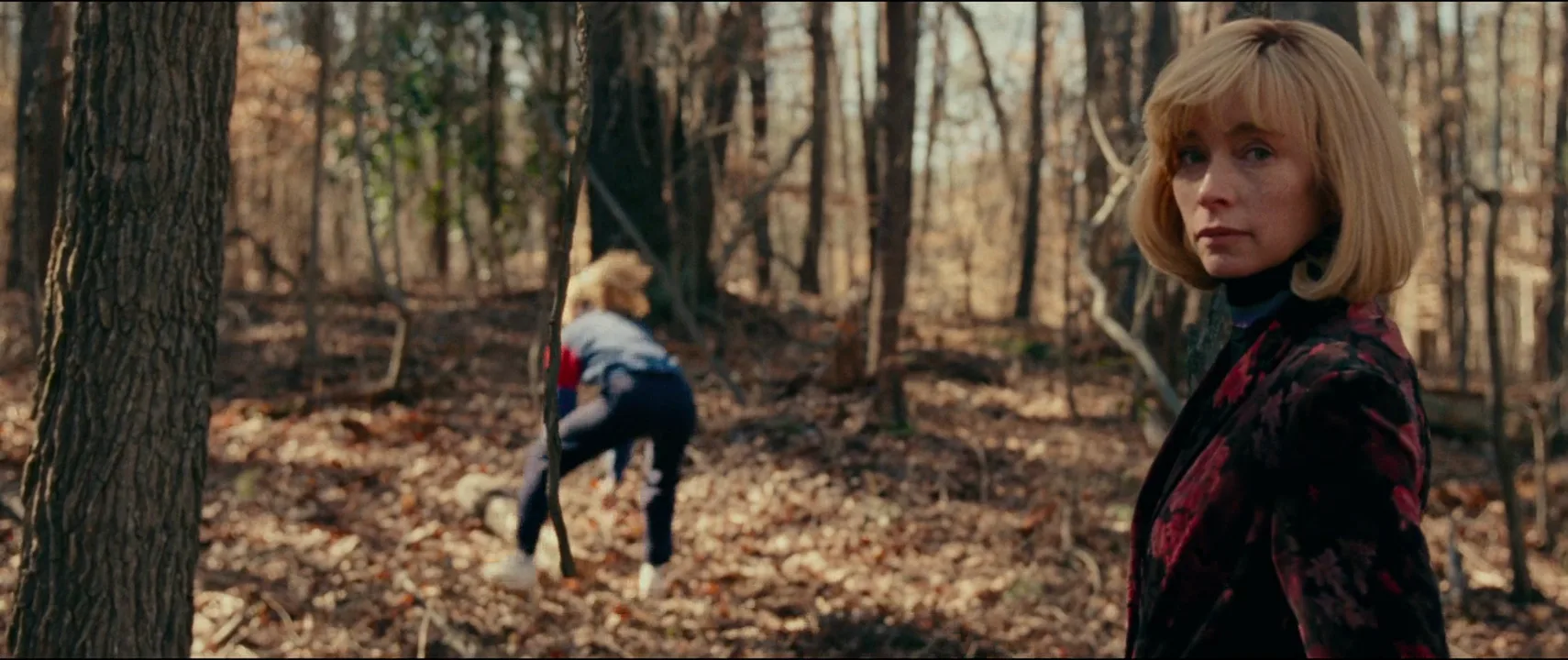
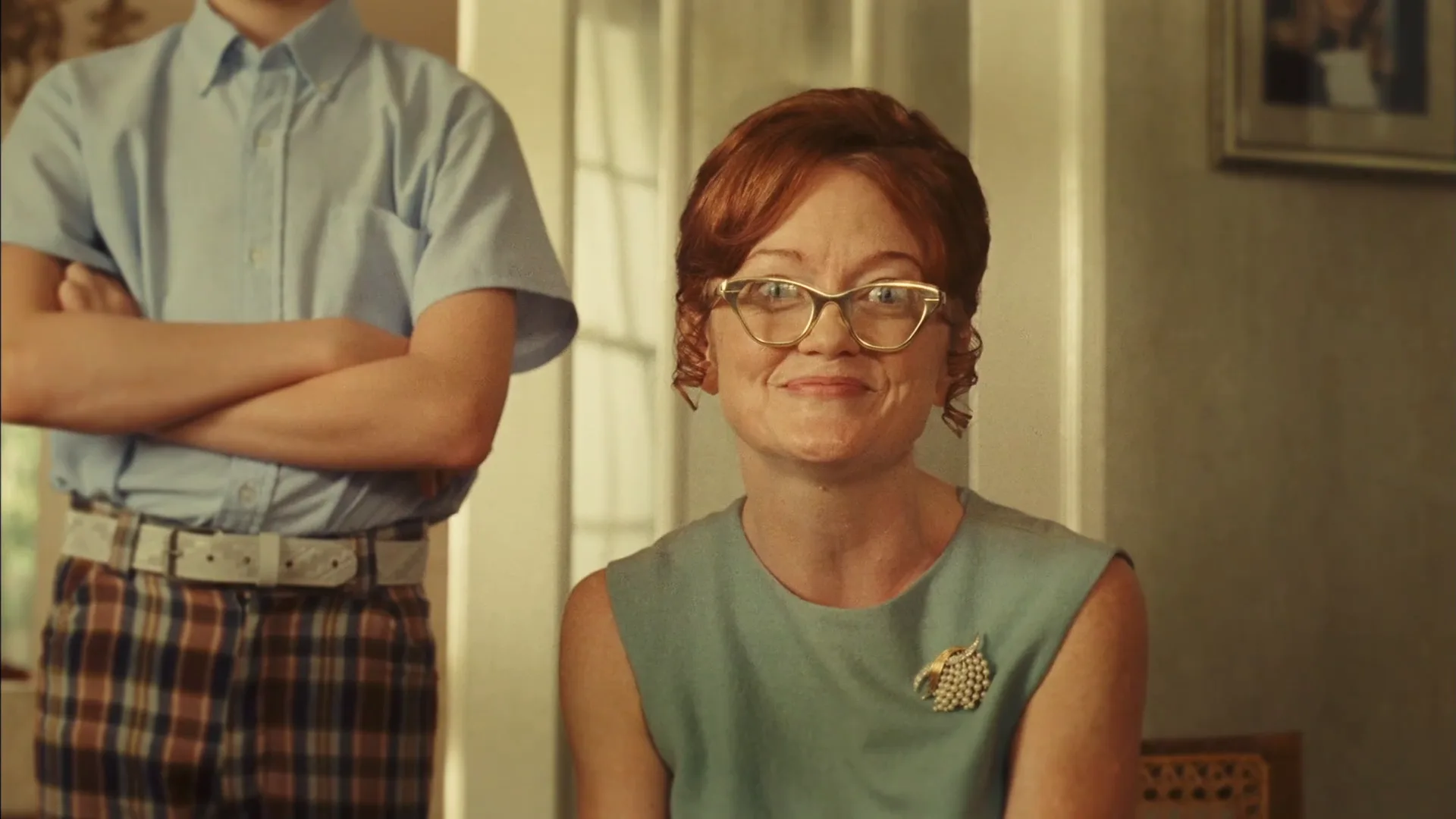
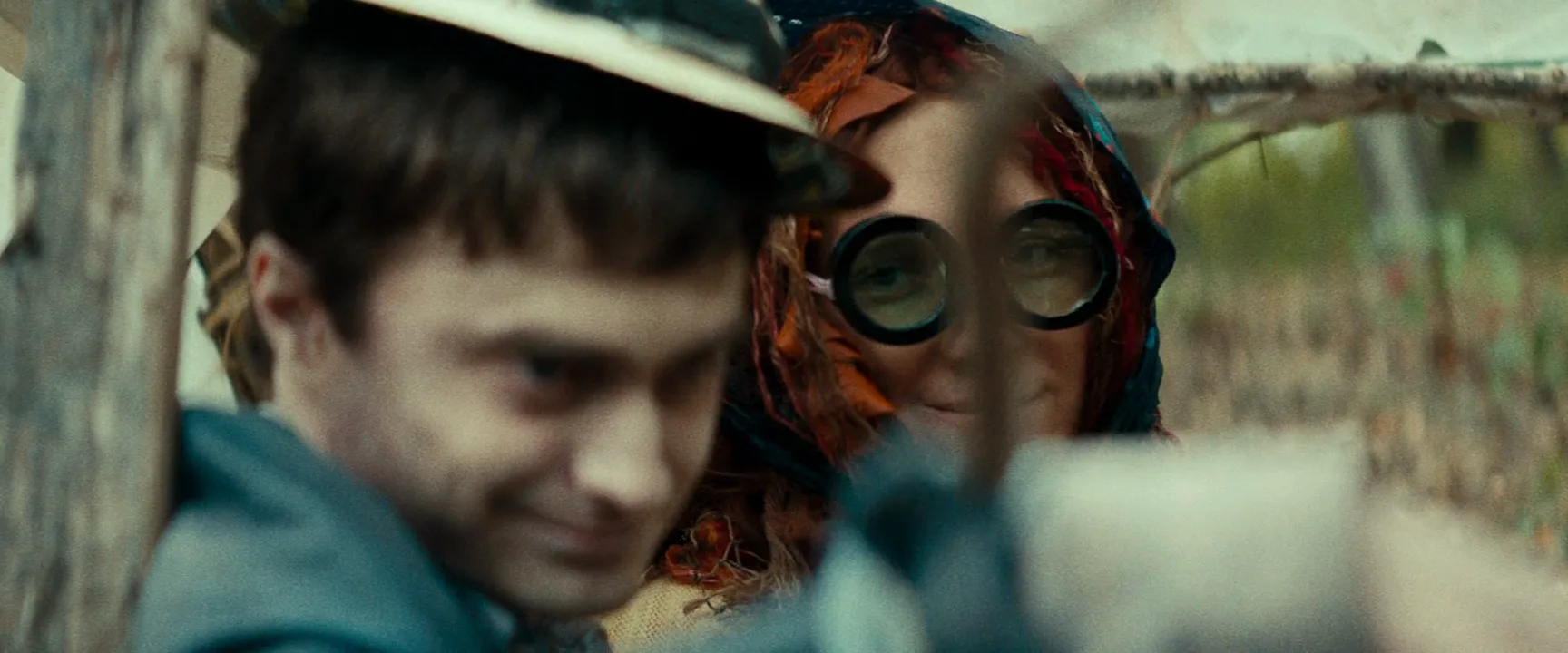
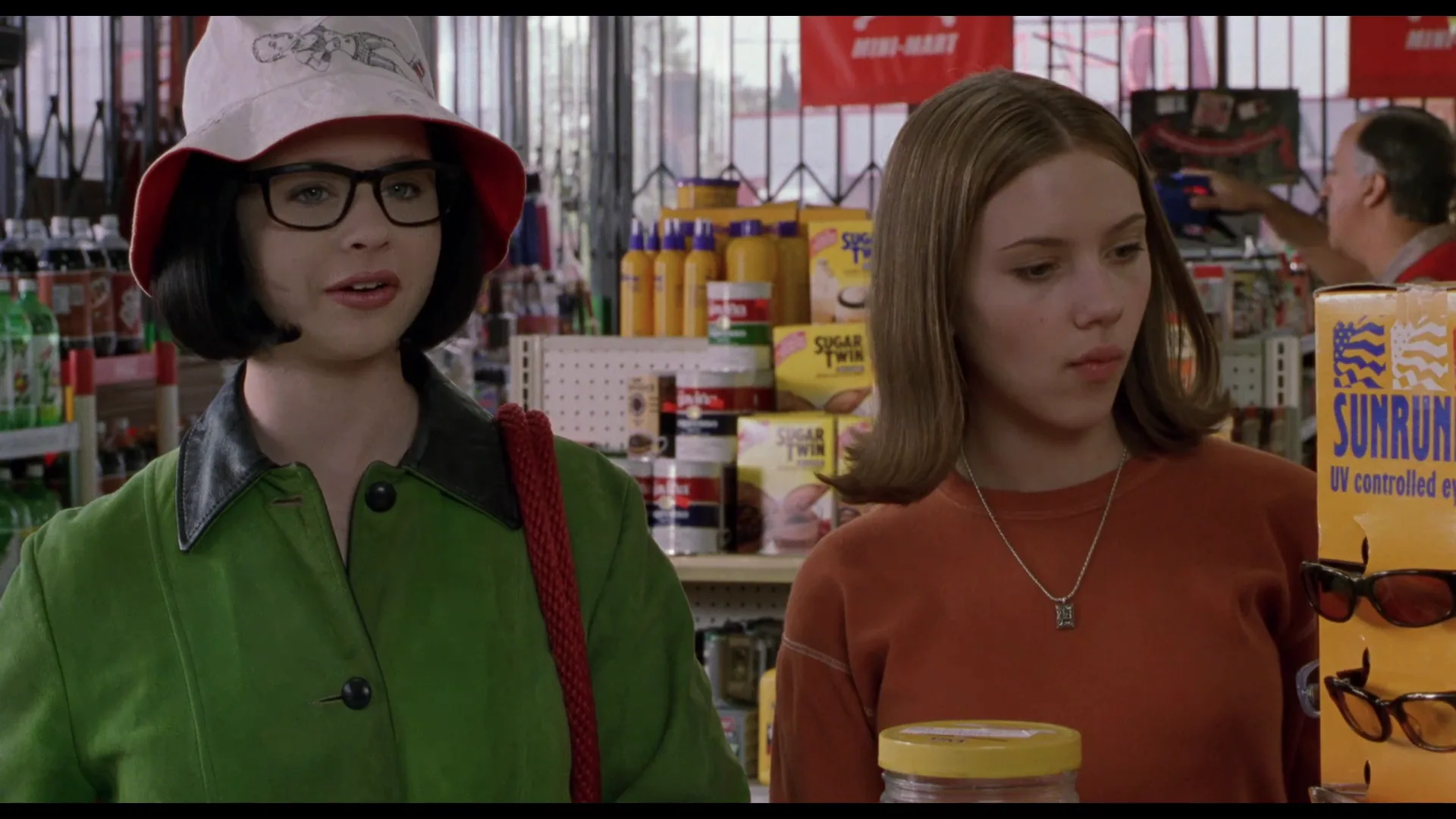
7 framesFrames from dark comedies: faces, props and compositions stay calm around something wrong.
How to create a black comedy with AI
4 promptsModels read death words as horror and paint them dark and gory. For black comedy, describe a bright, orderly scene and a calm person, then put one grim detail in plain view. Keep every take on one FlashBoards board to compare which holds the tone. The fourth prompt re-shoots a real film shot from a text description alone, and the original plays next to the result so you can compare.
Symmetrical medium-wide shot, camera at chest height, 28mm lens: a small funeral parlor with mint-green walls, pink carnations and a closed oak coffin in the center. A gaunt undertaker in his sixties, bald, gray horseshoe mustache, oversized black suit, sits on the coffin lid calmly eating a cucumber sandwich, napkin tucked into his collar. One white-socked foot pokes out from under the lid beside him. Neutral, polite face, eyes to camera. Flat soft window daylight, pastel palette, 35mm film still.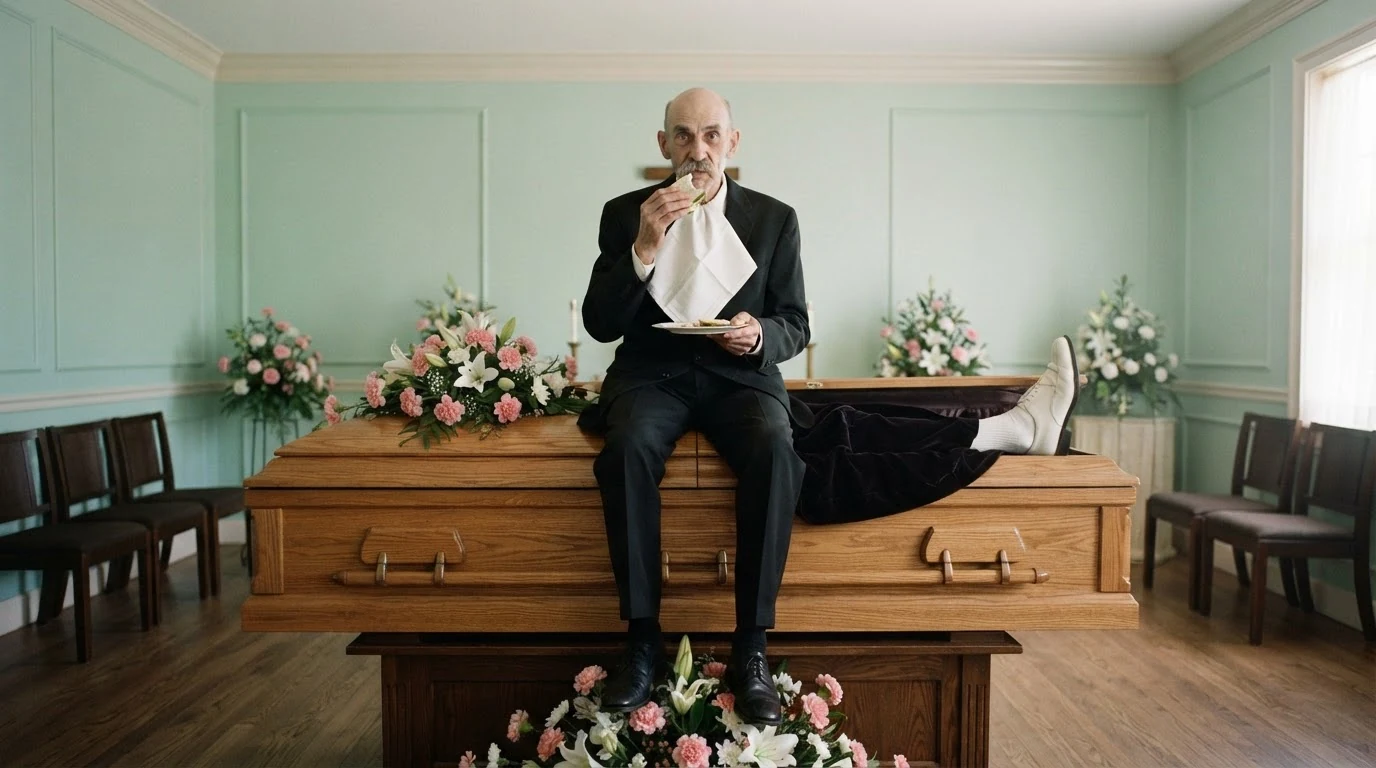
The grim detail (the foot) and the calm action (the sandwich) share one frame, so the gag reads without a cut. Mint-green, pink carnations, flat soft daylight block the horror palette; neutral, polite face keeps the undertaker from grinning.
Open FlashBoardsWide static shot at eye level, 35mm lens, deep focus: a tidy suburban backyard at bright noon, pink flamingo ornament, white picket fence. Two middle-aged sisters in matching lemon-yellow cardigans dig a long rectangular hole with garden shovels; one tall with a silver pixie cut, the other short with auburn curls and cat-eye glasses. A rolled-up floral rug lies beside the hole. Over the fence a smiling neighbor in a sun hat holds out a pie; both sisters smile back politely. Saturated pastels, hard sunny light.
The crime is only implied by the rug and the hole. The 21:9 frame puts the neighbor and the evidence in one composition; hard sunny light makes it darker by contrast.
Open FlashBoardsCamera: locked tripod, the symmetrical framing stays the same from start to end. Action: the undertaker is already chewing as the shot begins. The coffin lid bumps up an inch under him; he shifts his weight to press it down without looking and takes another bite. The white-socked foot twitches once and goes still. He dabs his mustache with the napkin, keeps his polite, neutral face and looks back into the lens.Chewing is stated first, so the shot is alive from frame one instead of slowly pushing in. The gag escalates in plain beats, and keeps his polite, neutral face describes the reaction positively.
Open FlashBoards{
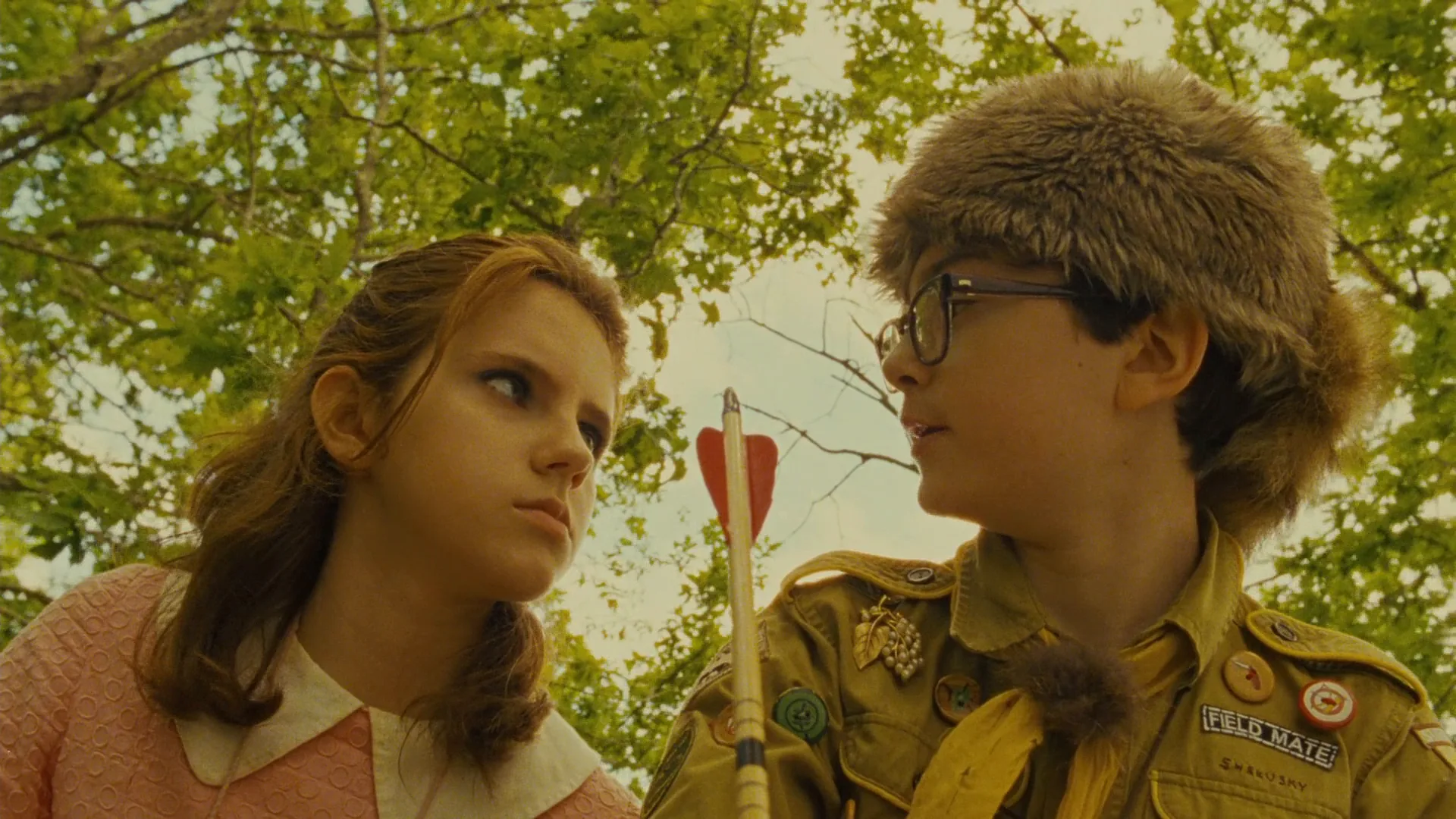
"output": "Full-screen live-action shot from Moonrise Kingdom (2012), alive from its very first frame: one continuous locked-off shot, no cuts. 35mm film with fine grain, soft overcast daylight filtered through a summer tree canopy, saturated yellow-green and khaki palette with pale sky behind the leaves, a deadpan storybook symmetry.",
"characters": {
"S1": {
"name": "Suzy, played by Kara Hayward",
"look": "twelve-year-old girl in the left third of the frame, shoulder-length wavy auburn hair, heavy turquoise eyeshadow, pink knit cardigan over a white Peter Pan collar, head tilted toward her right shoulder",
"voice": "quiet, flat, matter-of-fact"
},
"S2": {
"name": "Sam, played by Jared Gilman",
"look": "twelve-year-old boy in the right third of the frame, coonskin fur cap, thick black-rimmed glasses, khaki scout shirt covered in round badges, yellow neckerchief",
"voice": "soft, level, solemn"
}
},
"shots": [
{
"shot": 1,
"camera": "static, locked-off extreme low angle from the ground looking straight up, the lens resting on the forest floor; wide lens; the two kids lean over the lens from above, framed from the chest up against the leafy canopy, identical framing from first to last frame",
"action": [
"BEGINNING: alive from the first frame, both kids lean over the lens and stare straight down into it with blank faces; a thin wooden arrow with red-and-white fletching stands upright in the exact centre of the frame, its shaft rising from the bottom edge between them; hands out of frame.",
"THEN: S1 turns her eyes and head to screen right toward S2 and asks her question while looking at him; S2 keeps staring down into the lens, face still.",
"THEN: S2 turns his head to screen left to meet her eyes, his profile facing her; they hold each other's gaze, both deadpan, and he starts his answer.",
"THEN: both turn back and look straight down into the lens again; S1 tilts her head, lips pressed together; S2 finishes his answer looking down into the lens, only his lips moving.",
"END: both stare down into the lens in silence, perfectly still, faces unmoved, the arrow standing between them; leaves stir faintly above."
],
"dialogue": [
{
"speaker": "S1",
"on_screen": true,
"when": "right after she turns to look at S2, early in the shot",
"delivery": "quiet, flat, polite curiosity",
"line": "<d>[English] Was he a good dog?</d>"
},
{
"speaker": "S2",
"on_screen": true,
"when": "starting while he looks at her, finishing after both look back down into the lens",
"delivery": "soft, level, solemn, a small pause after the first words",
"line": "<d>[English] Who's to say. But he didn't deserve to die.</d>"
}
]
}
],
"sound": {
"ambience": "quiet summer woods: birdsong, a light breeze in the leaves, a faint rustle of clothing",
"speech": "exactly these spoken phrases, each said once, in this order",
"never_spoken": "no narration and no voice-over: the descriptions, performance notes and step words of this prompt are never spoken aloud",
"music": "a film score under the scene, always below the voices: sparse plucked acoustic guitar and soft glockenspiel, gentle and melancholy",
"subtitles": "none"
}
}Remakes the Moonrise Kingdom (2012) shot of Suzy and Sam peering down past the arrow at the dog, keeping the static ground-level angle, the arrow between them, the turn to each other and back, and their two lines word for word.
The camera lies where the victim lies, so the death stays off screen and the joke sits in the faces. Locked-off extreme low angle and identical framing from first to last frame hold the silence past the gag; the arrow in the exact centre keeps the cause in view, and the verbatim lines are played flat and solemn so nobody laughs.
Open FlashBoardsCommon mistakes
- Horror drift. Coffin, body or grave pull toward shadows and gore; pair them with pastels, daylight and domestic props.
- Mugging. Models add grins to anything labeled comedy. Describe the face: neutral, mouth closed, eyes to camera.
- Lost gag object. The grim detail shrinks or vanishes; state its exact position.
- Video reactions. Characters tend to turn and gasp. Write the reaction you want (shifts his weight without looking).
Keep the reference frames, prompts and every generated take side by side — images and video in one canvas.
FAQ
4 questionsWhat is black comedy?
Black comedy is comedy that finds humor in subjects normally treated as tragic or taboo, such as death, murder, illness and war. The film plays the dark material straight while characters react with calm, greed or pettiness. The audience laughs at the gap, then feels uneasy about laughing. Dr. Strangelove, Fargo and Parasite are classic examples.
Is dark comedy the same as black comedy?
Yes. Dark comedy, black comedy, black humor and gallows humor describe the same mode: comedy built on grim or forbidden subjects. "Black comedy" is the traditional critical term, "dark comedy" the common everyday phrase. "Gallows humor" is often reserved for jokes made by people who are themselves facing danger or death.
What are some examples of black comedy movies?
Well-known black comedies include Kind Hearts and Coronets (1949), Dr. Strangelove (1964), Harold and Maude (1971), Delicatessen (1991), Fargo (1996), A Serious Man (2009), The Death of Stalin (2017), I, Tonya (2017) and Parasite (2019). They range from light farce to near-tragedy.
What is the difference between black comedy and satire?
Satire ridicules a real target, such as politicians, institutions or social habits, so its laughs carry an argument. Black comedy needs no target: it can simply find death, violence or bad luck absurd. Many films are both, like Dr. Strangelove, which mocks military logic while making nuclear war funny.
Related terms
6- SatireGenres
Satire uses exaggeration, irony and ridicule to attack real institutions, politics or social behavior — the laugh carries a critique, as in Dr. Strangelove or Network.
- TragicomedyGenres
Tragicomedy blends tragic and comic modes in one story, so that laughter and grief sit side by side and color each other — Life Is Beautiful is a classic film example.
- IronyStorytelling
Irony is a gap between what is said, expected or known and what is actually meant or happens; film uses verbal, situational and dramatic irony, plus cosmic and historical variants.
- DeadpanActing & Casting
Deadpan is comic delivery with a blank face and flat voice: the actor plays absurd material with total seriousness, and the gap between content and expression is the joke.
- ParodyGenres
A parody imitates the style, clichés and famous scenes of a specific work or genre and exaggerates them for comic effect — Airplane!, Young Frankenstein, Galaxy Quest.
- ComedyGenres
Comedy is the genre built to make the audience laugh — through character, situation, wordplay or physical gags — and it usually bends toward a happy or reconciling ending.
Further reading
Wes D. Gehring, American Dark Comedy: Beyond Satire (Greenwood Press, 1996).