 FlashBoards Learn
- Learn
- Lenses, Focus & Exposure
- Normal Lens
Lenses, Focus & Exposure · Film language
Normal Lens
Also called: standard lens, 50mm lens
A normal lens is a focal length whose field of view and perspective feel close to natural vision for its format: roughly 40–50mm on full frame, around 35mm on Super 35. Space looks neither stretched nor compressed, so the camera disappears and the audience watches the scene as if standing in the room.
- What it does
- Keeps distances, faces and room geometry at believable proportions, so the lens itself stays invisible.
- Use it when
- You want an honest, observed, undramatic view: dialogue, drama, documentary-style scenes, anything that should feel real.
- Watch out
- Neutral can turn into flat; without a composition, blocking or light idea, a normal-lens shot looks like coverage.
- Try this prompt
Medium shot on a 50mm lens from 2 meters at eye level, natural proportions, kitchen background at true size, soft window light
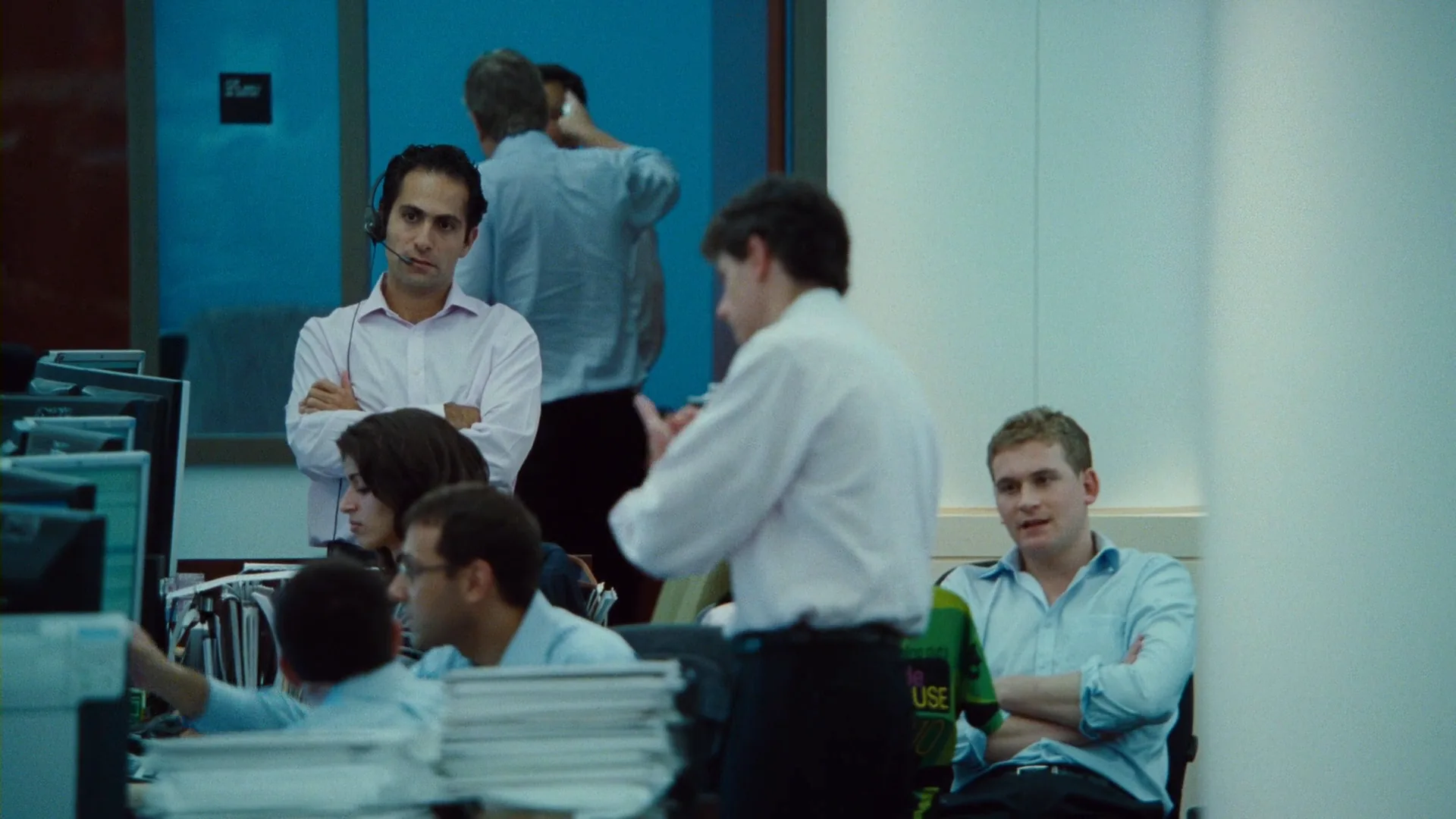
What is a normal lens?
A normal lens, also called a standard lens, sits in the middle of the focal length range. At ordinary shooting distances it renders space the way we expect: a person three steps behind another looks about as much smaller as they would in life.
The number depends on the format. A normal focal length is close to the diagonal of the image area:
- Full frame (diagonal about 43mm): 40–50mm.
- Super 35 motion picture (diagonal roughly 28–31mm): about 32–35mm.
- Micro Four Thirds: about 25mm. 65mm and large format: roughly 65–80mm.
It does not match the human eye literally. Perspective comes from camera distance; a normal lens looks natural because a common framing puts the camera where a person would stand in conversation.
Why do filmmakers use a normal lens?
Because it takes the lens out of the conversation. A wide-angle lens stretches foregrounds; a telephoto lens stacks backgrounds. A normal lens does neither, so the audience reads actors, set and blocking instead of optics.
- Honesty. Dramas and faux-documentary films lean on normal focal lengths because the image feels simply pointed at events. Yasujirō Ozu is famously associated with shooting almost everything on a 50mm.
- Equality. In a normal-lens two-shot, neither character dominates through optics alone.
- A baseline. If most of a film sits near normal, a sudden cut to 18mm or 200mm lands hard.
The trade-off: composition, light and performance do all the work.
How to shoot with a normal lens
- Match the sensor. 40–50mm on full frame, 32–35mm on Super 35; a horizontal angle of view near 40° is a good target.
- Let framing set distance. A waist-up medium shot puts the lens about 1.8–2.5m from the actor, a close-up about 1–1.2m. Closer than that, even a 50mm enlarges the nose.
- Stay near eye height. A normal lens pairs naturally with an eye-level shot; tilting reintroduces converging verticals.
- Choose separation with the stop. f/1.4–f/2 softens the background but keeps shapes; f/4–f/5.6 keeps the room legible. For heavy blur, see shallow depth of field.
- Block in depth. Stage people at two or three distances, or put a doorway or window behind the subject.
- Light for shape. A soft side source keeps a normal-lens close-up from looking flat.
Normal lens vs. wide-angle and telephoto lens
Frame one actor waist-up three ways on full frame:
- 24mm: the camera stands about a meter away. The foreground swells and the room looks deep.
- 50mm: about two meters away. The face keeps its shape and the background sits at expected size.
- 135mm: five meters or more away. Background objects look huge and close; the viewer becomes a distant observer.
Same framing, different relationship to space. The guide to camera lenses covers the whole range.
Normal Lens examples in film
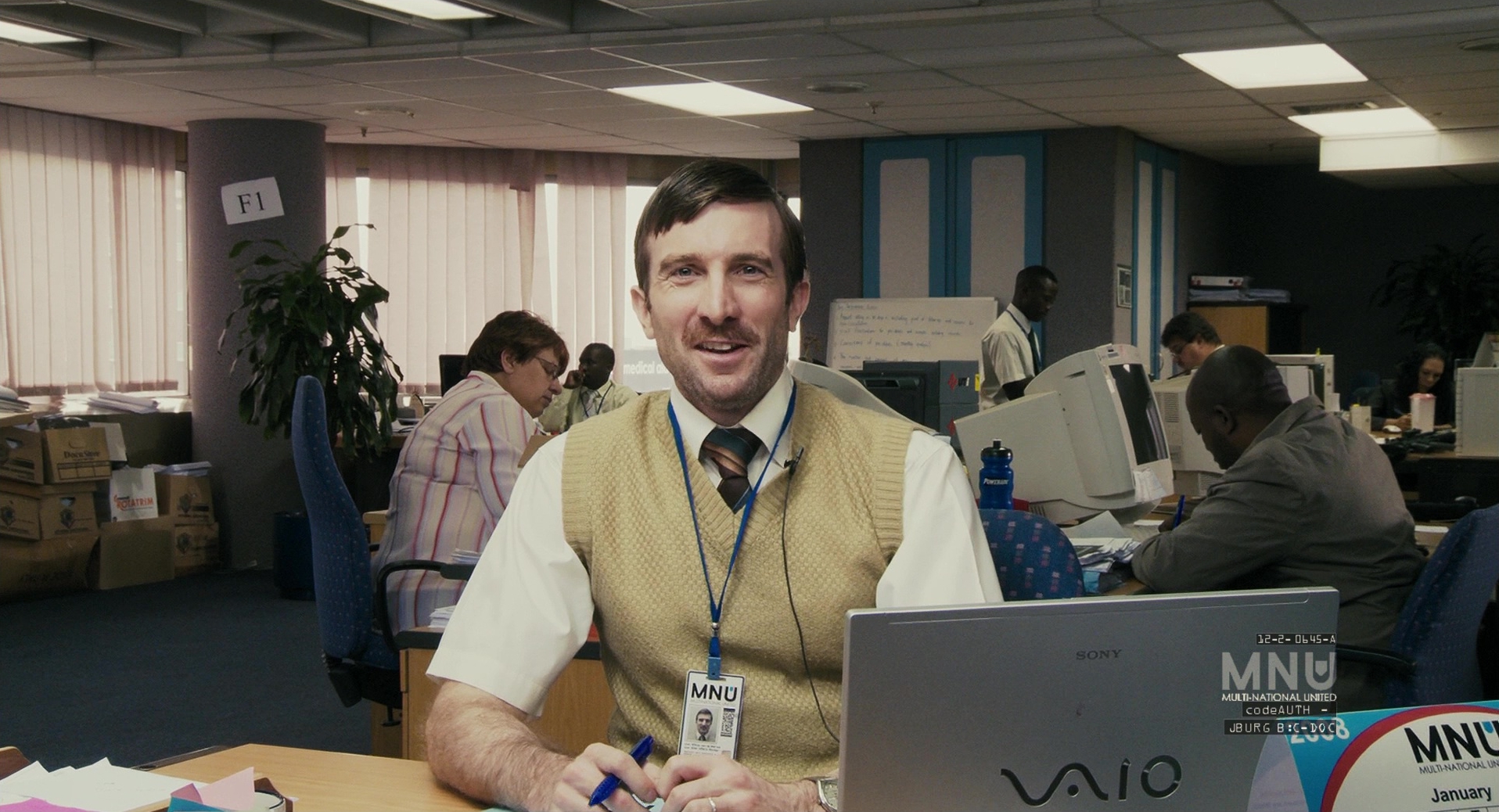
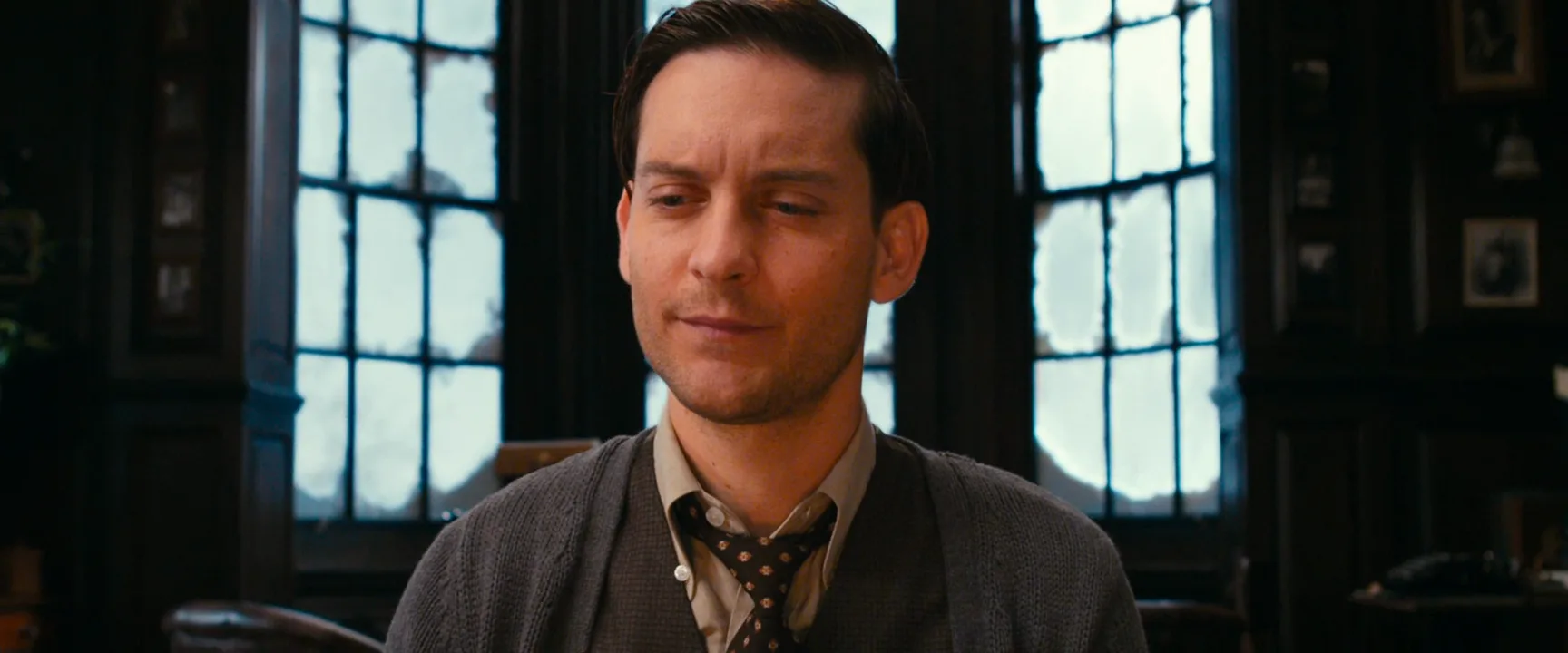
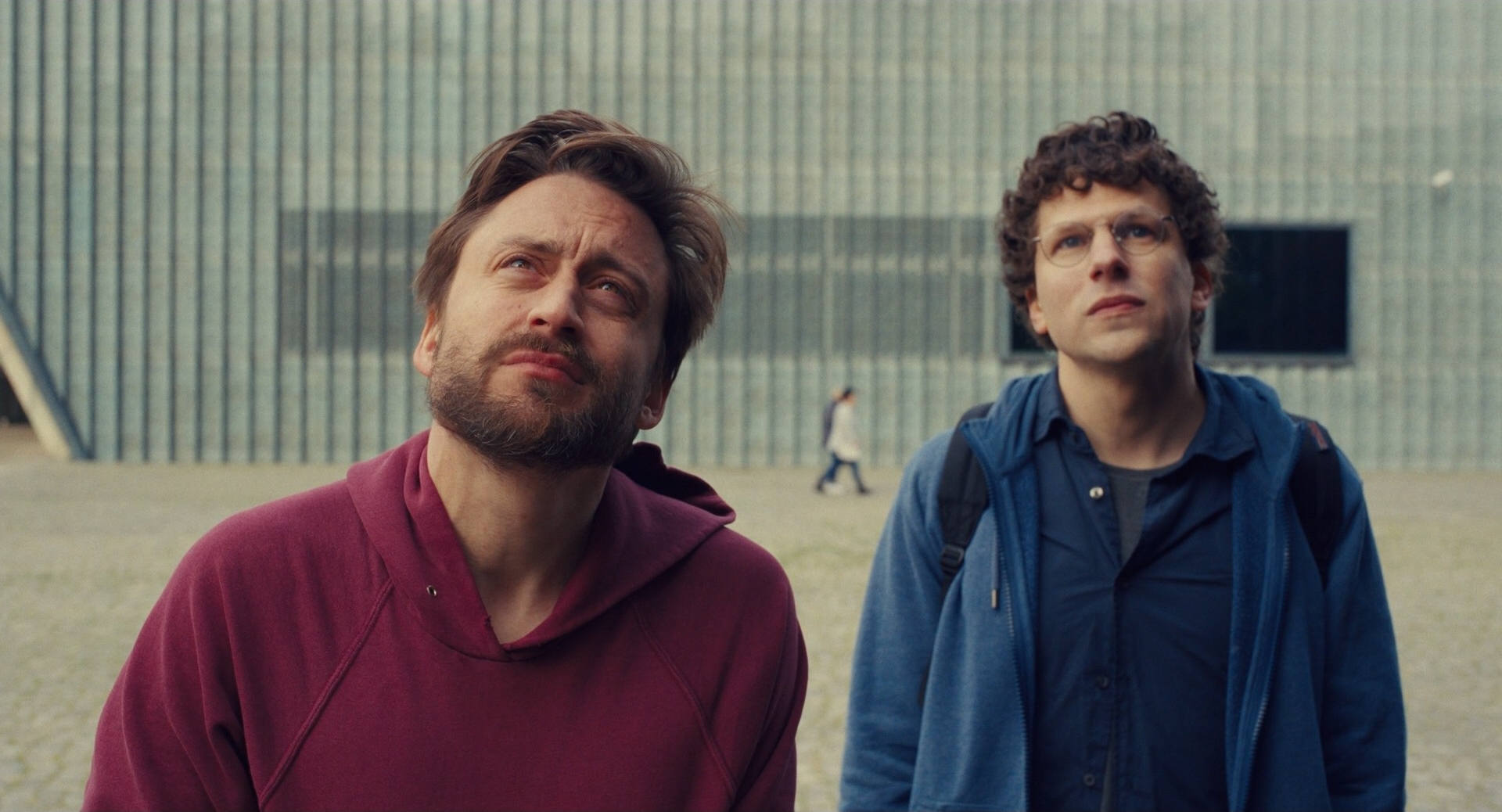
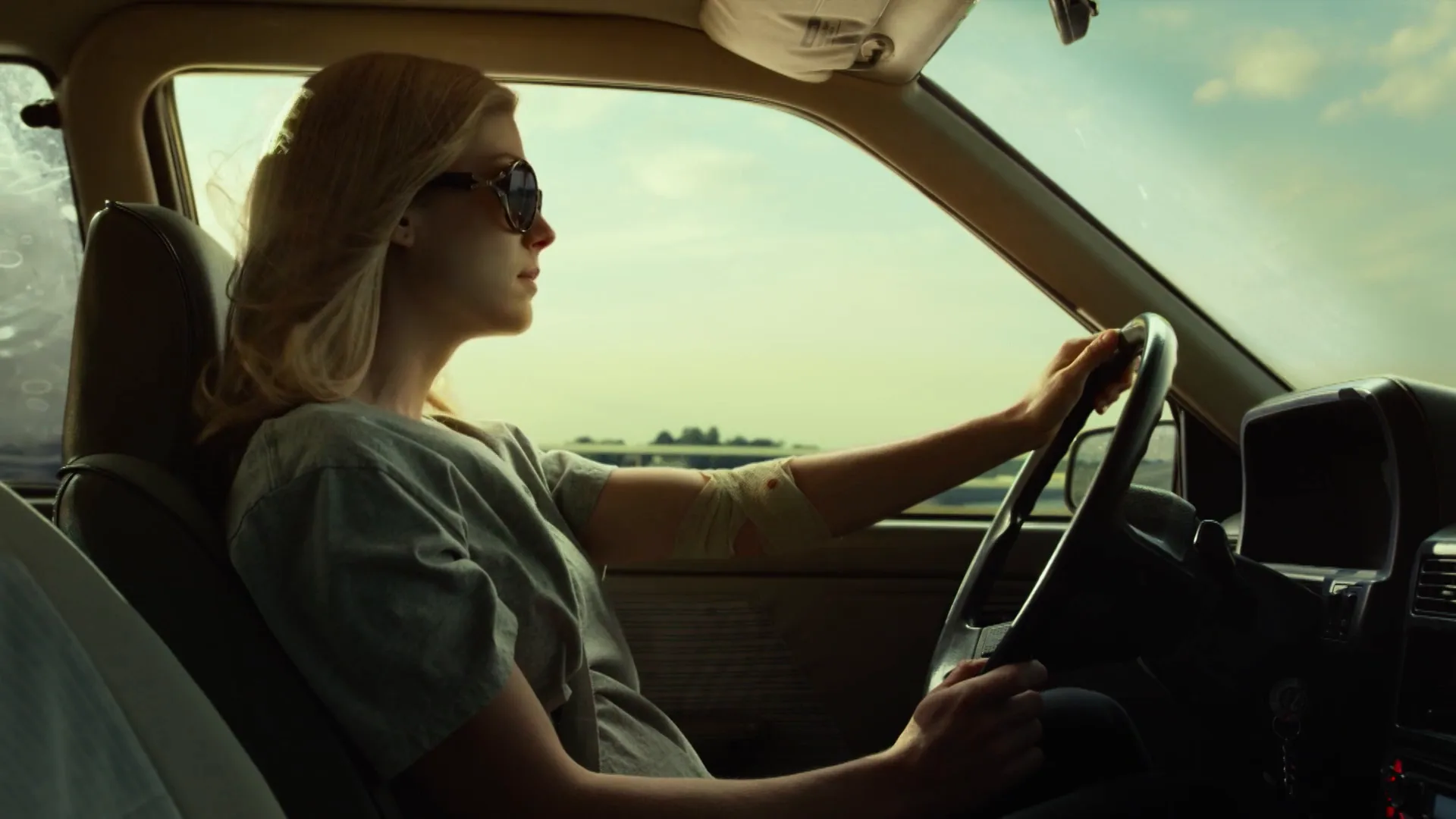
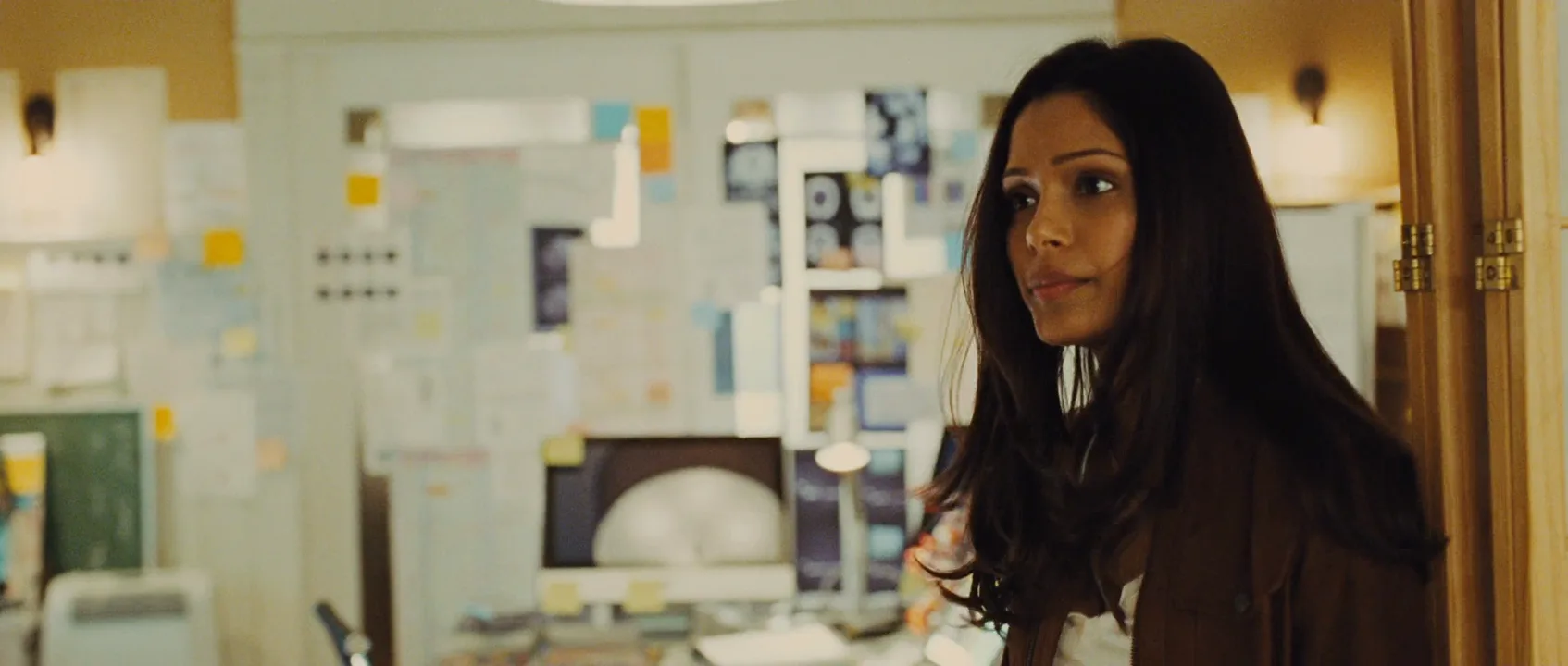
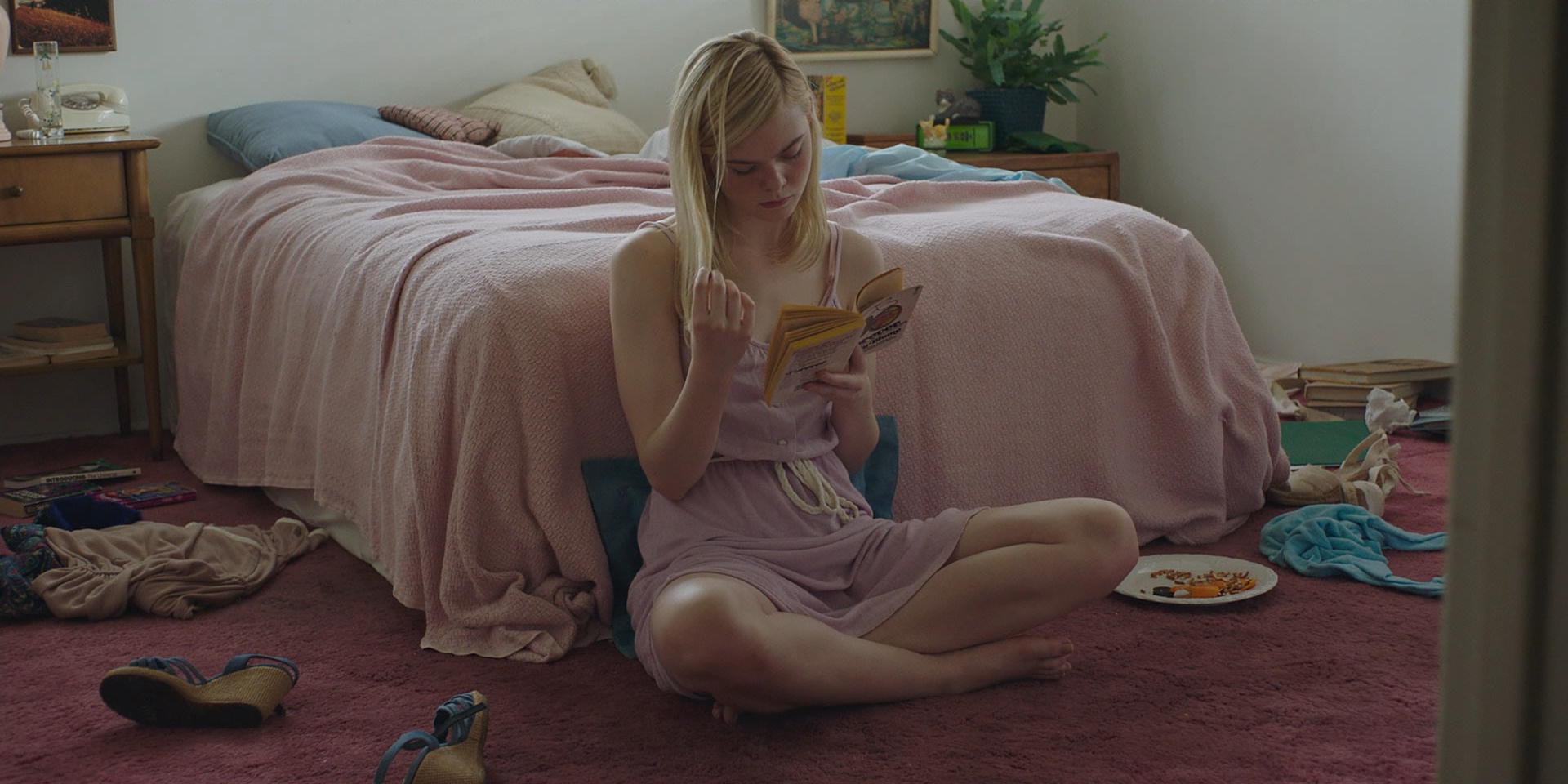
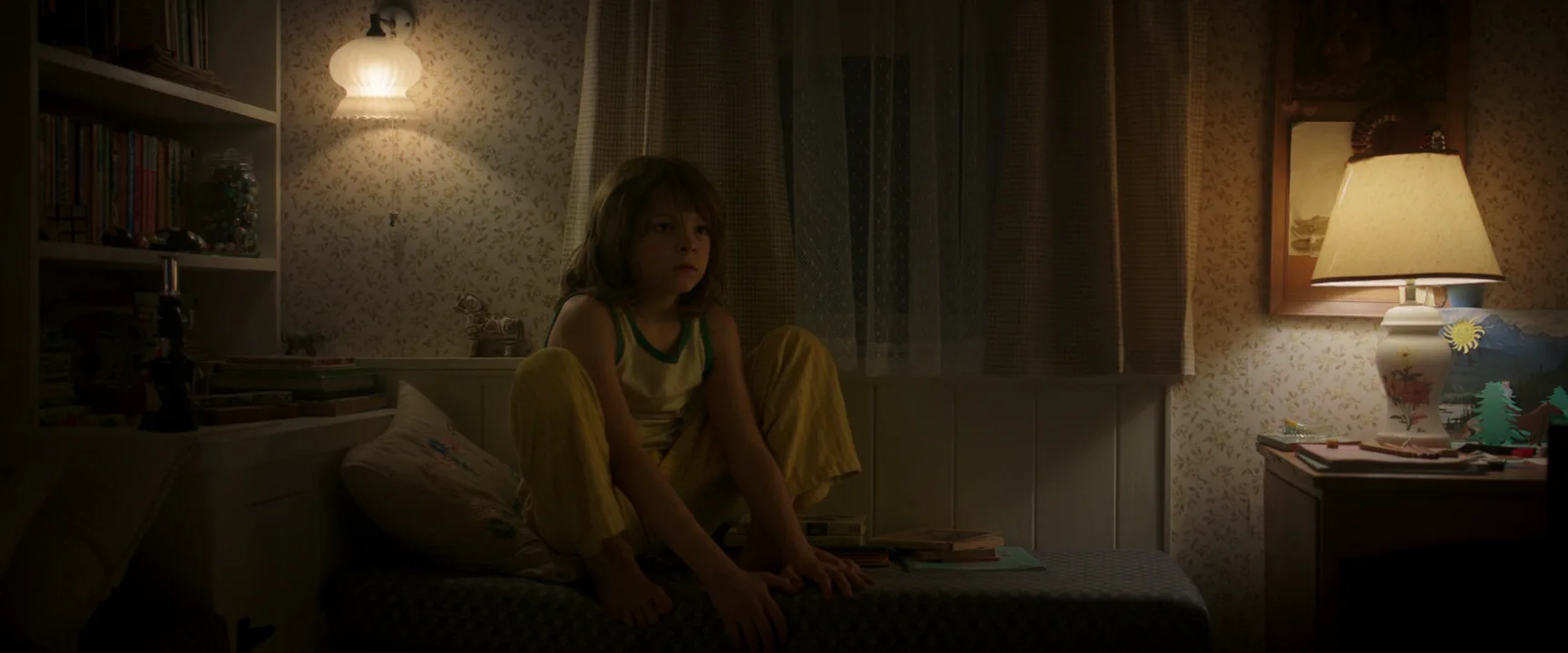
8 framesNothing here is stretched toward the lens or pressed flat behind the actors: people and rooms keep the proportions you would see from a couple of meters away.
How to create a normal lens with AI
4 promptsWords like close-up or cinematic often push image models to a stretched wide-angle face or a telephoto blur. Name the focal length, format, camera distance and the result: natural proportions, background at true size. Compare the takes beside your film references on one FlashBoards board. The fourth prompt re-shoots a real film shot from a text description alone, and the original plays next to the result so you can compare.
Medium shot on a 50mm normal lens, full-frame camera at eye level, 2 meters from the subject, natural perspective with true proportions. A woman in her sixties with cropped silver hair, round tortoiseshell glasses and a mustard cardigan pours hot water from a steel kettle into a white teapot at a kitchen counter, steam rising. Behind her at natural size: a window with morning light, a green fridge, an open doorway. Soft daylight, f/2.8, background soft but readable, subtle film grain.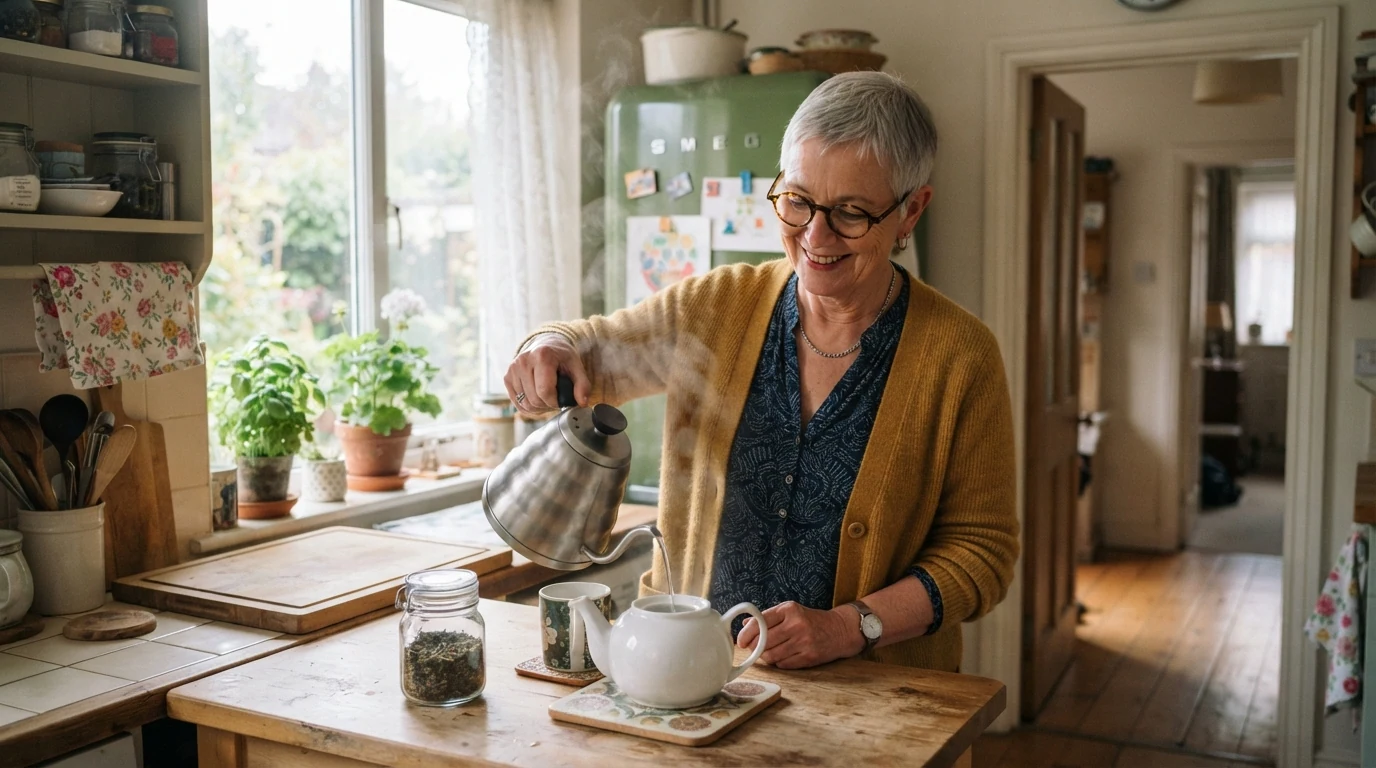
50mm normal lens, full-frame plus 2 meters from the subject give both the lens and the distance. True proportions and behind her at natural size describe the result, so the model neither swells the foreground nor blurs the room away. The pour gives the video a motion to start from.
Open FlashBoardsTwo-shot on a 35mm lens on a Super 35 cinema camera, standard focal length, eye height, 2.5 meters away. On an evening subway platform, a tall young man with a shaved head, a gold hoop earring and a navy work jacket talks with a short woman in her forties with a black bob, freckles and a red scarf. Both at equal size, facing each other in three-quarter profile. The tiled wall and platform sign behind them keep real size and straight lines. Cool fluorescent light, f/4.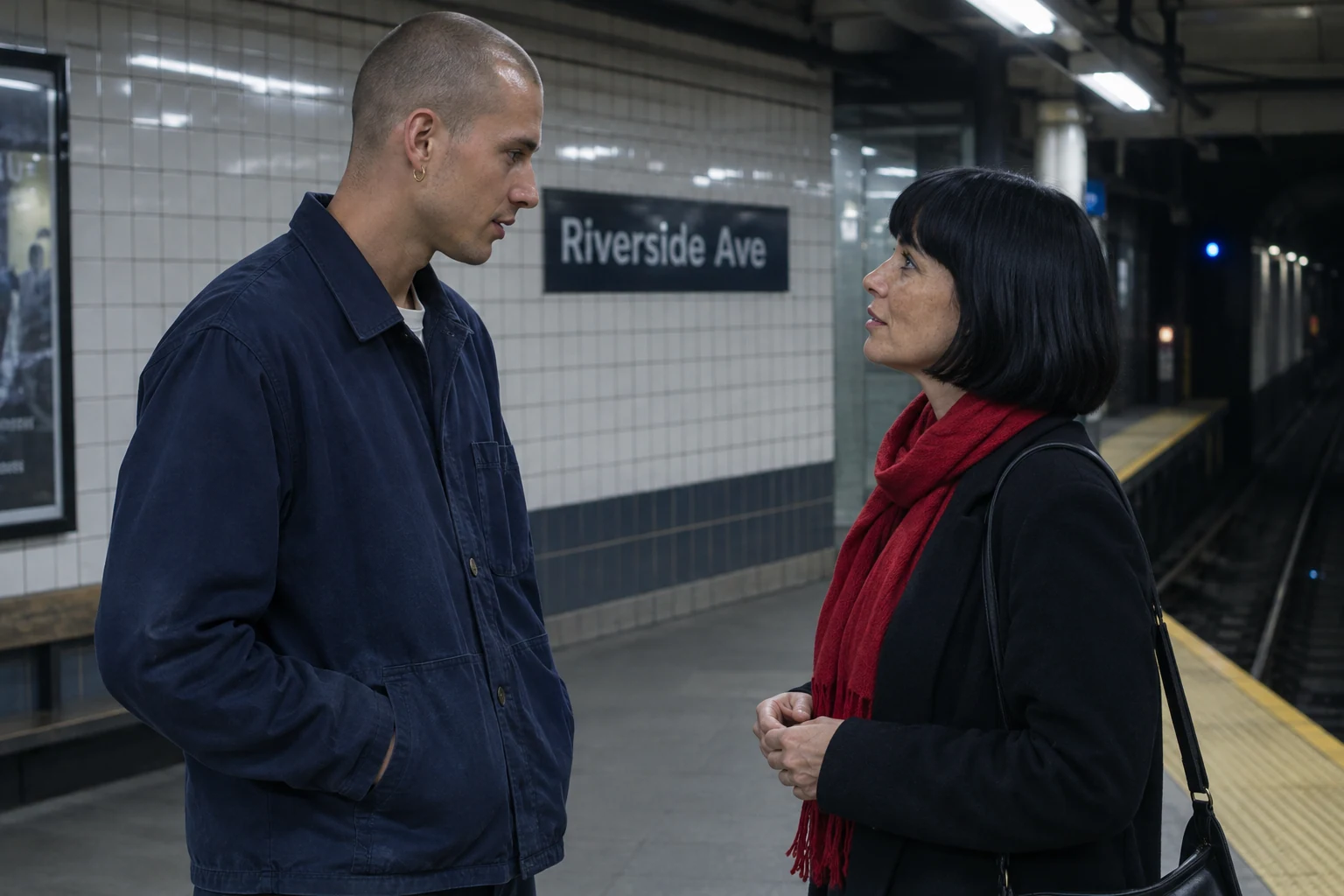
35mm on a Super 35 camera, standard focal length is the normal lens for that sensor; naming the format stops the model reading 35mm as wide. Both at equal size and straight lines spell out the neutral two-shot.
Open FlashBoardsCamera: locked off on a tripod at eye level, holding the same 50mm medium framing, with a very slow push in of about half a step. Action: she is already pouring, water streams from the kettle and steam curls past her glasses. She sets the kettle down, puts the lid on the teapot and looks up toward the window, morning light on her face.The pour runs from the first frame, so the shot is alive at once. Holding the same 50mm medium framing keeps the model from drifting into a wide close-up, and every object in the action already exists in recipe 1.
Open FlashBoards{
"output": "Full-screen live-action scene from Rise of the Planet of the Apes (2011), alive from its very first frame: one continuous shot on a normal 40mm lens, anamorphic 2.39:1, natural proportions, the room behind her at true size, never compressed and never stretched. Warm tungsten wall sconces on amber walls, soft even light, clear air, 2011 35mm film grain, a cluttered home research office at night.",
"characters": {
"S1": {
"name": "Caroline Aranha, played by Freida Pinto",
"look": "slim woman in her late twenties, long straight dark-brown hair falling past her shoulders, rust-brown suede jacket over a white top, a thin necklace",
"voice": "soft, puzzled, pressing"
}
},
"shots": [
{
"shot": 1,
"camera": "eye level, normal lens, slow pan right with a gentle dolly in: starts as a medium shot of S1 from behind and slightly left as she stands at a tall wood-framed folding screen door of translucent rice-paper panels; ends as a medium close-up of S1 in the right third of the frame, in three-quarter view, the wooden door frame with brass hinges along the right edge, the wall of pinned papers soft but readable behind her",
"action": [
"BEGINNING: alive from the first frame, S1 seen from behind at left-centre, her face in profile turned to screen right, her hand on the right side of the frame flat against the rice-paper panel, framed black-and-white pictures on the amber wall at the far left.",
"THEN: she pushes the panel aside to screen right and it folds out of frame; the camera pans right with her and reveals the office: a wall covered in pinned papers, photos and charts, a desk with a bright blue-and-white computer monitor on the left, a round white lamp on the desk below the wall.",
"THEN: she walks a few steps into the room away from camera and to the right, her back still to camera, hair hanging straight down her back.",
"THEN: she turns back toward camera-left, her long hair swinging out across her shoulder, her eyes finding someone just off frame left.",
"THEN: she settles in the right third, chest up, face in three-quarter view, gazing off frame left at eye level, brows slightly raised, lips parting as she starts to speak.",
"END: she keeps speaking toward off frame left, head tilted a little forward, eyes steady on that person, hands out of frame, the pinned wall steady behind her at true size and the door frame at the right edge."
],
"dialogue": [
{
"speaker": "S1",
"on_screen": true,
"when": "as she finishes turning toward off frame left, and running on to the last frame",
"delivery": "soft, puzzled, pressing for an answer",
"line": "<d>[English] Come on, explain it to me.</d>"
}
]
}
],
"sound": {
"ambience": "quiet room tone, the rice-paper door sliding on its wooden track, her soft footsteps on the floor",
"speech": "exactly these spoken phrases, each said once, in this order",
"never_spoken": "no narration and no voice-over: the descriptions, performance notes and step words of this prompt are never spoken aloud",
"music": "a film score under the scene, always below the voices: soft, uneasy piano notes over low sustained strings",
"subtitles": "none"
}
}Remakes the gallery moment from Rise of the Planet of the Apes (2011), dir. Rupert Wyatt, DP Andrew Lesnie: Caroline (Freida Pinto) opens the paper door, the camera pans right and pushes in as she turns to someone off frame left, and her line is taken word for word from the film.
The lens lives in output and camera: normal 40mm lens plus natural proportions, the room behind her at true size. The pinned wall is named in the reveal and again at the end, so the model keeps it readable instead of melting it into bokeh, and the move from her back to her face ends at a medium close-up with an undistorted face.
Common mistakes
- Close-ups turn wide. Add 50mm lens from 1 meter away, natural facial proportions.
- "Cinematic" turns telephoto. Add background at true size and a stop like f/2.8–f/4.
- Bare numbers get misread. Name the format: 35mm on Super 35, 50mm on full frame.
- Flat results. Neutral optics need staged depth: a doorway, window or second person at a clear distance.
Keep the reference frames, prompts and every generated take side by side — images and video in one canvas.
FAQ
4 questionsWhy is a 50mm lens called a standard lens?
On 35mm still cameras the 50mm was the lens sold with the body for decades. It sits near the diagonal of the 36×24mm frame, so its view feels natural, and it was easy to make fast and sharp. That made it the default, or standard, lens. Other formats have a different standard focal length.
What is the normal lens for Super 35 or APS-C?
Use the image diagonal as a guide. Super 35 frames measure roughly 28–31mm across the diagonal, so a 32mm or 35mm lens gives the normal look; APS-C stills sensors are similar. On these smaller sensors a 50mm behaves like a short telephoto and starts to isolate faces.
Is 35mm or 50mm better for filmmaking?
Neither is better, and the sensor matters. On full frame, 35mm is slightly wide and puts the viewer inside the space, while 50mm is neutral and observational. On Super 35, a 35mm is the neutral lens and a 50mm is slightly long. Many films pair both for masters and closer coverage.
Does a normal lens have less distortion?
It usually shows little visible distortion, because the camera sits at a natural distance. Stretched features up close come from camera distance, not the lens, so a normal lens pushed right up to a face will still enlarge the nose. Distortion built into the glass varies by design; see lens distortion.
Related terms
4- Wide-Angle LensLenses, Focus & Exposure
A wide-angle lens has a shorter focal length than normal: it takes in more space, exaggerates the distance between near and far, and enlarges whatever is close to the camera — from immersive interiors to unsettling, distorted close-ups.
- Telephoto LensLenses, Focus & Exposure
A telephoto (long) lens has a narrow angle of view that magnifies distant subjects; used from far away it compresses space, stacking the background onto the subject — the look of long-lens crowd shots, heat-haze chases and isolated faces.
- Focal LengthLenses, Focus & Exposure
Focal length, measured in millimetres, sets a lens's angle of view: short focal lengths see wide and stretch space, long ones see narrow and compress it — which is why the same framing feels different on 24mm and on 135mm.
- Eye-Level ShotCamera Angles
An eye-level shot places the camera at the height of the subject's eyes, looking straight on, producing a neutral, natural view that neither empowers nor diminishes the character.
Further reading
Blain Brown, Cinematography: Theory and Practice (Routledge). American Cinematographer Manual (ASC Press).