 FlashBoards Learn
Lighting · Film language
Top Lighting
Also called: top light, overhead lighting, top-lit
Top lighting comes from directly above the subject. It brightens the head, forehead, nose and shoulders and drops the eye sockets and the underside of every form into shadow. It reads as midday sun, an interrogation lamp or a character whose thoughts we are not allowed to read.
- What it does
- Hides the eyes in shadow while the head and shoulders glow, so a face turns into a mask and a room into pools of light.
- Use it when
- You want menace, secrecy, exhaustion or isolation: interrogations, back rooms, noon exteriors, a character we should not trust.
- Watch out
- Without a touch of fill the eyes disappear completely; decide whether that is the point or a mistake.
- Try this prompt
Medium close-up, hard top light from a bare bulb directly overhead, eye sockets in deep shadow, dark room
What is top lighting?
Top lighting is a direction, not a type of lamp: the key light sits overhead, roughly 70 to 90 degrees above the eye line. Surfaces that face up go bright: scalp, brow, nose, shoulders, the tabletop. Surfaces that face down go dark: eye sockets, lips, chin, neck.
The tell is the eyes. A frontal key leaves catchlights; true top light fills the sockets with shadow. Around the subject the light falls as a pool that drops off toward the walls.
The textbook case is Gordon Willis on The Godfather (1972): Brando's Don Corleone is lit from overhead so his eyes stay dark while he talks, and we have to guess what he is thinking.
Why do filmmakers use top lighting?
It withholds the eyes. We read people through their eyes; top light removes them while leaving the face visible, so the character becomes a presence we cannot read: bosses, interrogators, killers, anyone keeping a secret.
It is easy to motivate. A bare bulb in a cell, fluorescent panels in a station house, a lamp over a pool table, the noon sun under a hat brim: the source is right there, which makes it a natural partner for practical lighting.
And it isolates. One overhead source lights the subject and the floor and lets the walls fall away, the backbone of many chiaroscuro setups.
How to set up top lighting
- Position. Hang or boom the source 1 to 2 meters above the head. Tilt it a few degrees toward the lens for a sliver of light in the eyes, back to lose them.
- Source. Hard: a bare bulb, a small Fresnel on a boom, a practical pendant. Soft: a skirted space light, a China ball, or diffusion over an LED panel.
- Spill. Add a grid or black skirt so light lands on the subject and table, not the walls.
- Fill. A white tablecloth or a bounce card at chest height lifts the sockets a stop or two. Without it, the eyes go black.
- Blocking. Chin down, the eyes vanish; chin up, the face opens into the light. Use it as a performance beat.
- Exposure. Meter the forehead and nose, let the sockets fall two to three stops under, and watch hot spots on bald heads.
Hard vs. soft top light
Top light describes where the light comes from, not how hard it is. A hard overhead source, a bare bulb or the noon sun, cuts crisp shadows under brow and nose and makes a face severe, even skull-like. A soft one, a skirted box or a white ceiling bounce, wraps the head: the eyes are shaded but not black, and the scene reads as an office or an overcast day. Pick hardness for mood, direction for the eyes.
Top lighting vs. butterfly lighting
Both put the key above the face. Butterfly lighting sits in front, just above the lens, about 30 to 45 degrees up, so the eyes keep their catchlights and the face is flattered. Top lighting climbs nearly straight overhead: the eyes drop into shadow and the face is concealed. Raise a butterfly key too far and you have top light. For the other extremes see side lighting and under lighting, or the whole lighting hub.
Top Lighting examples in film
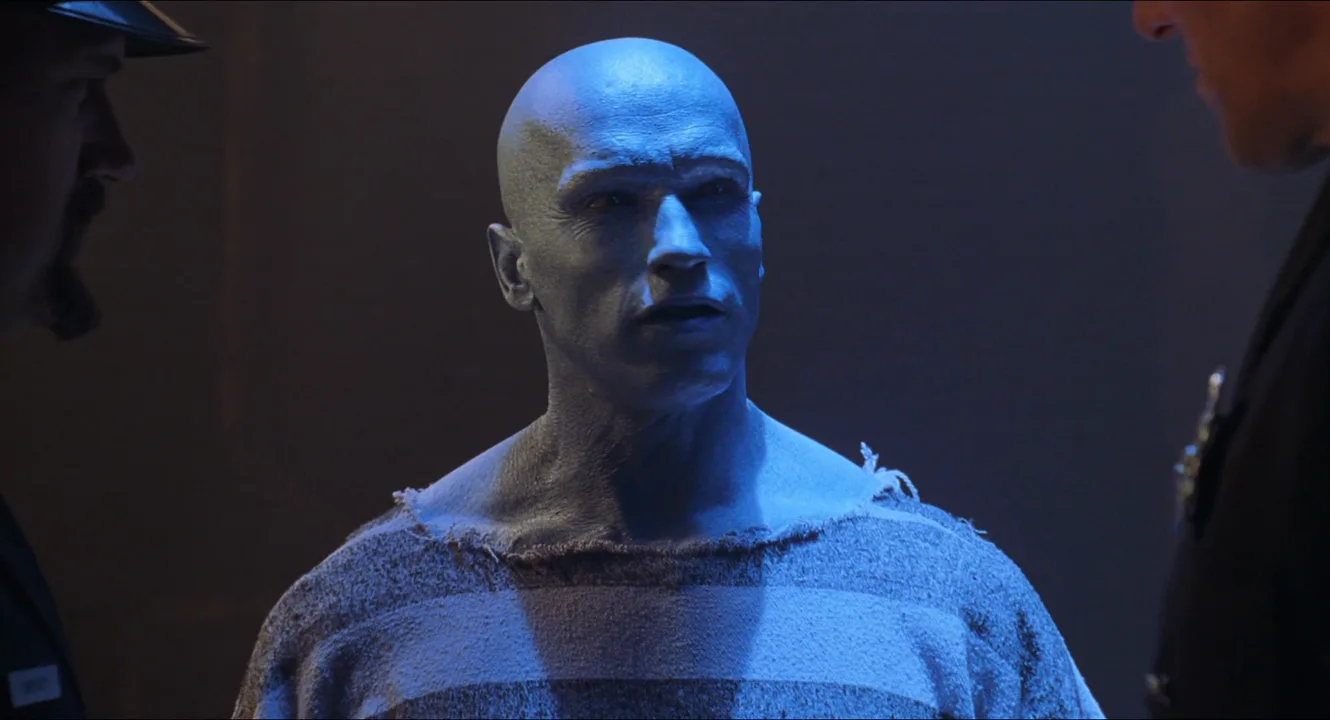
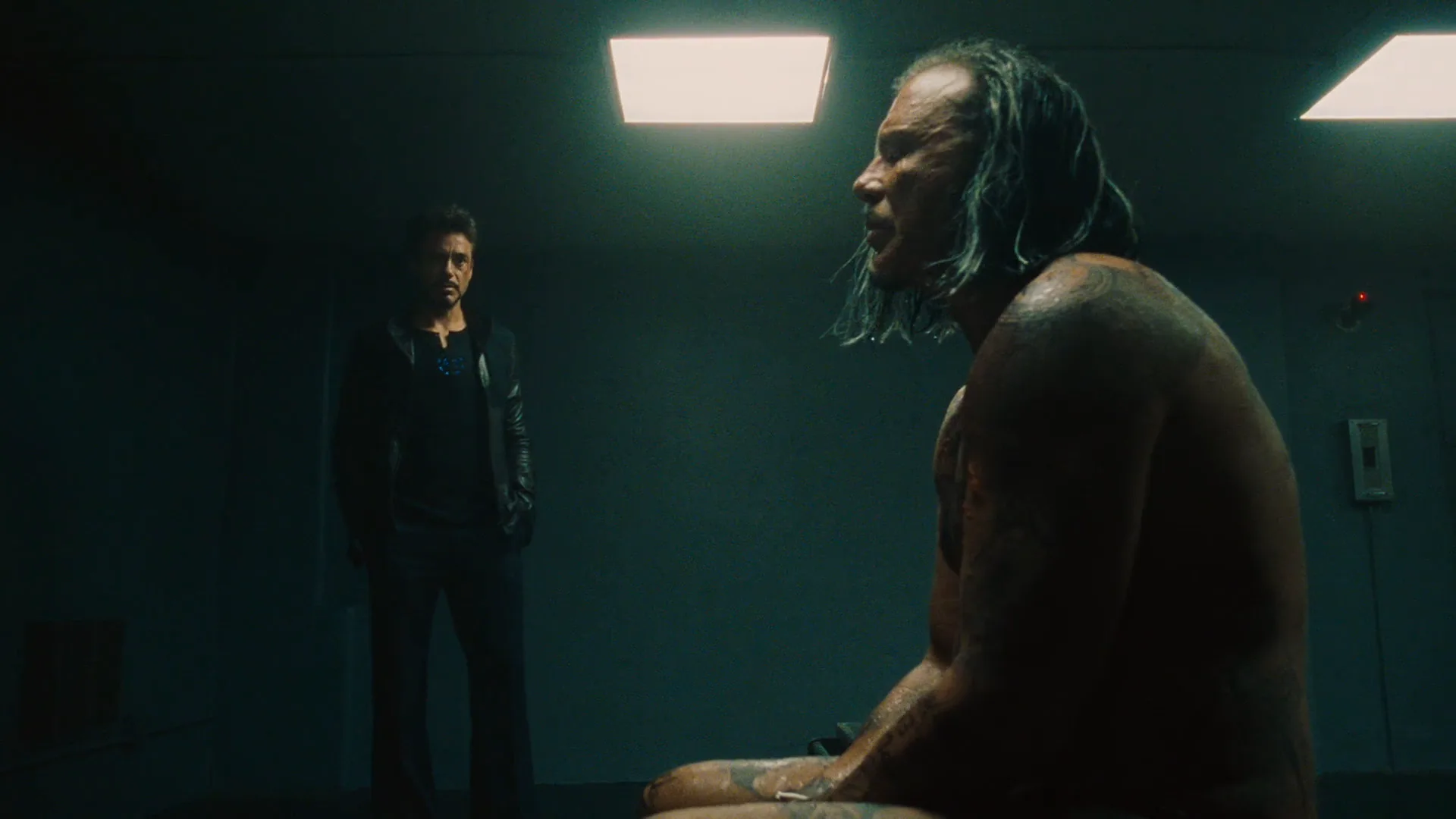
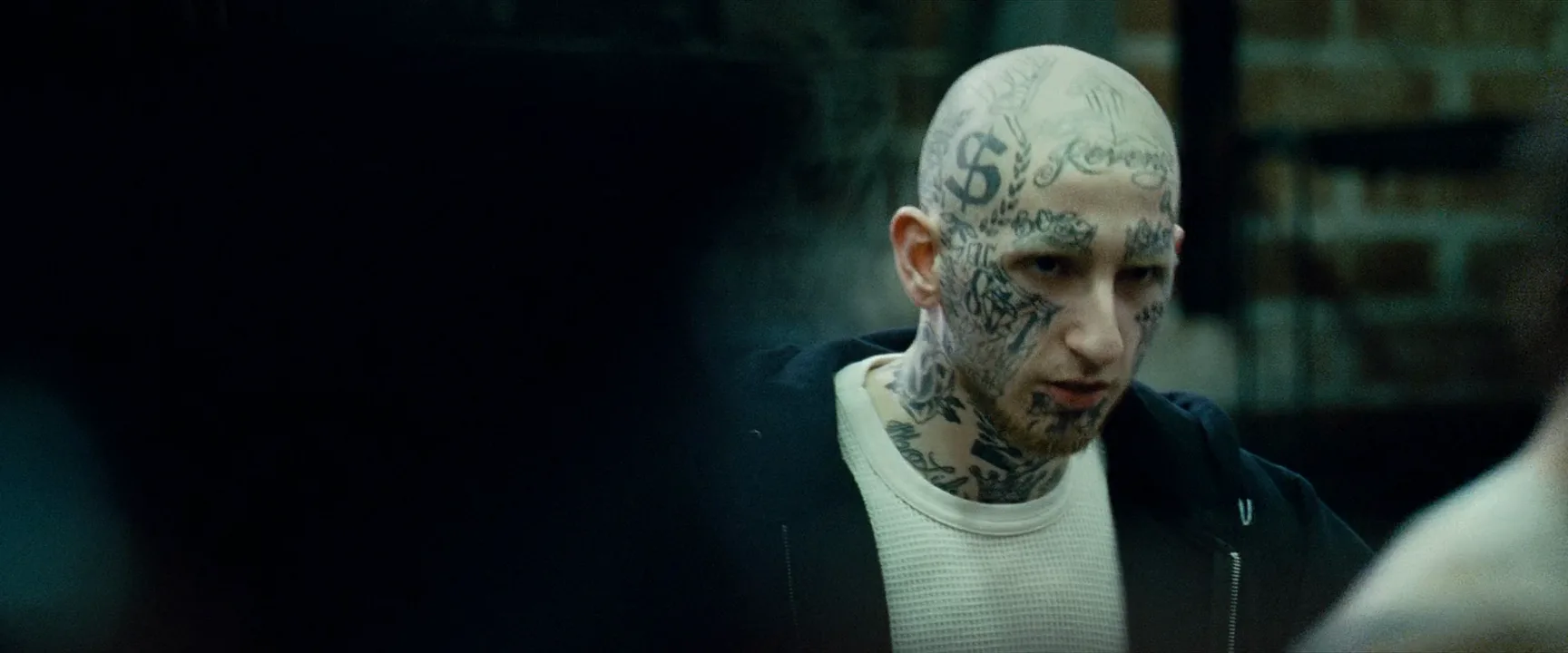
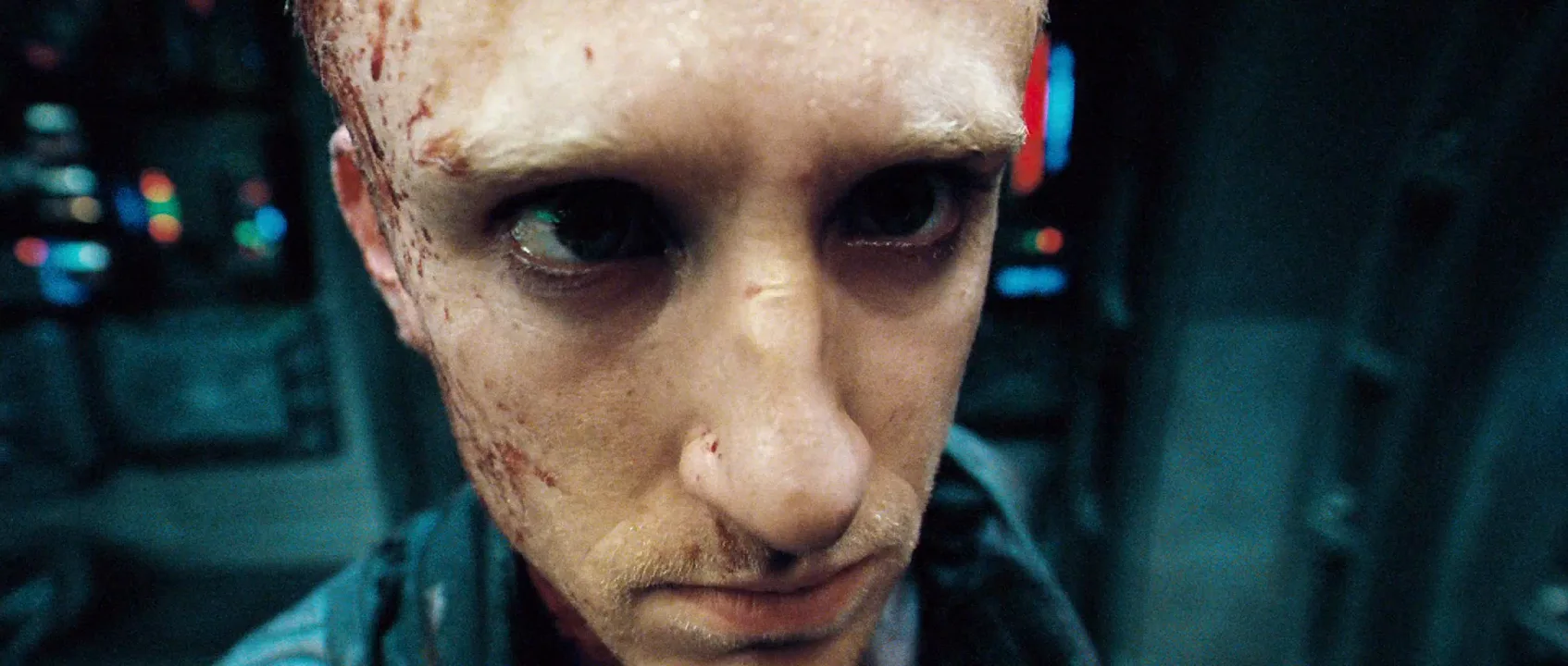
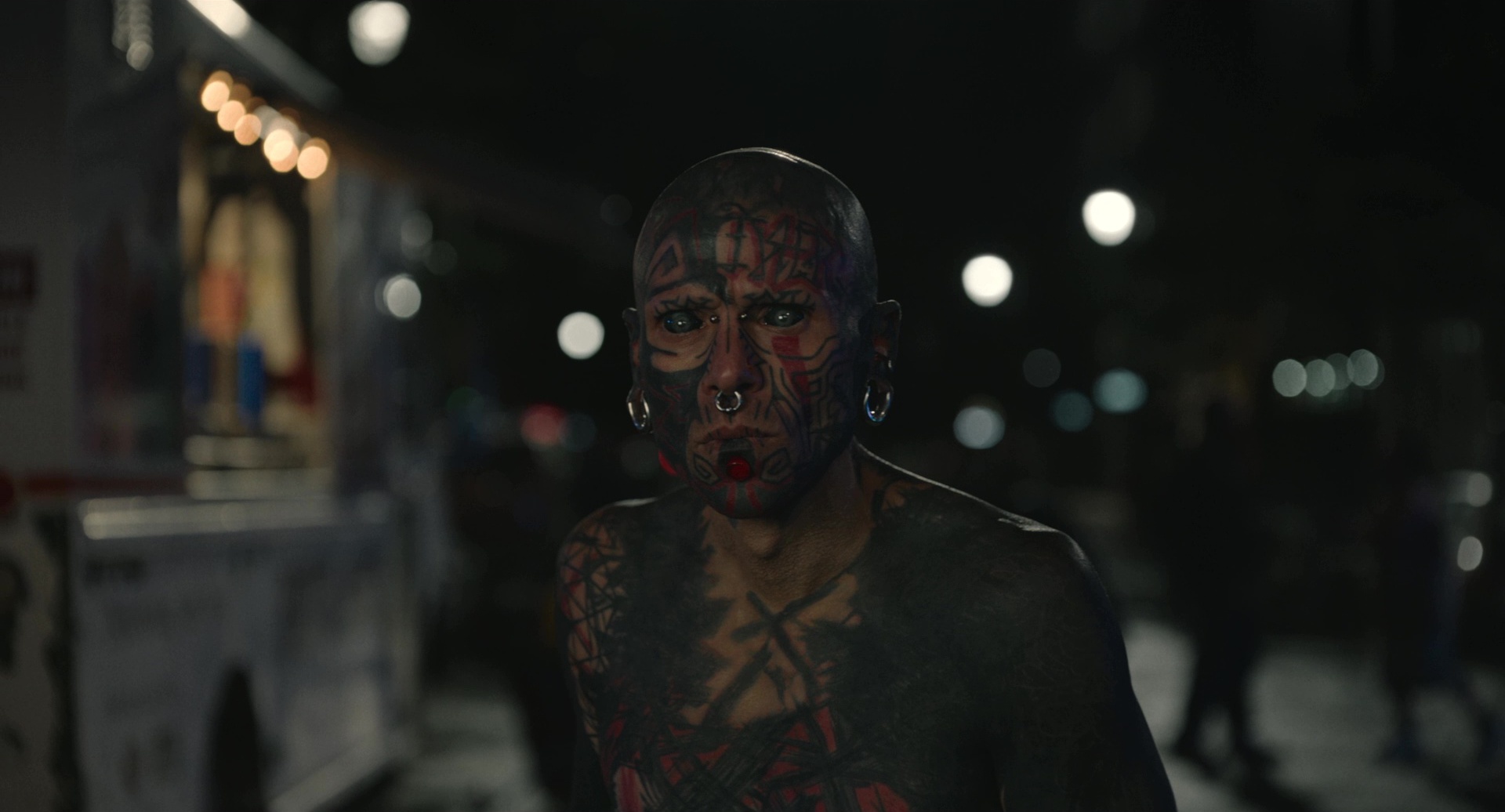
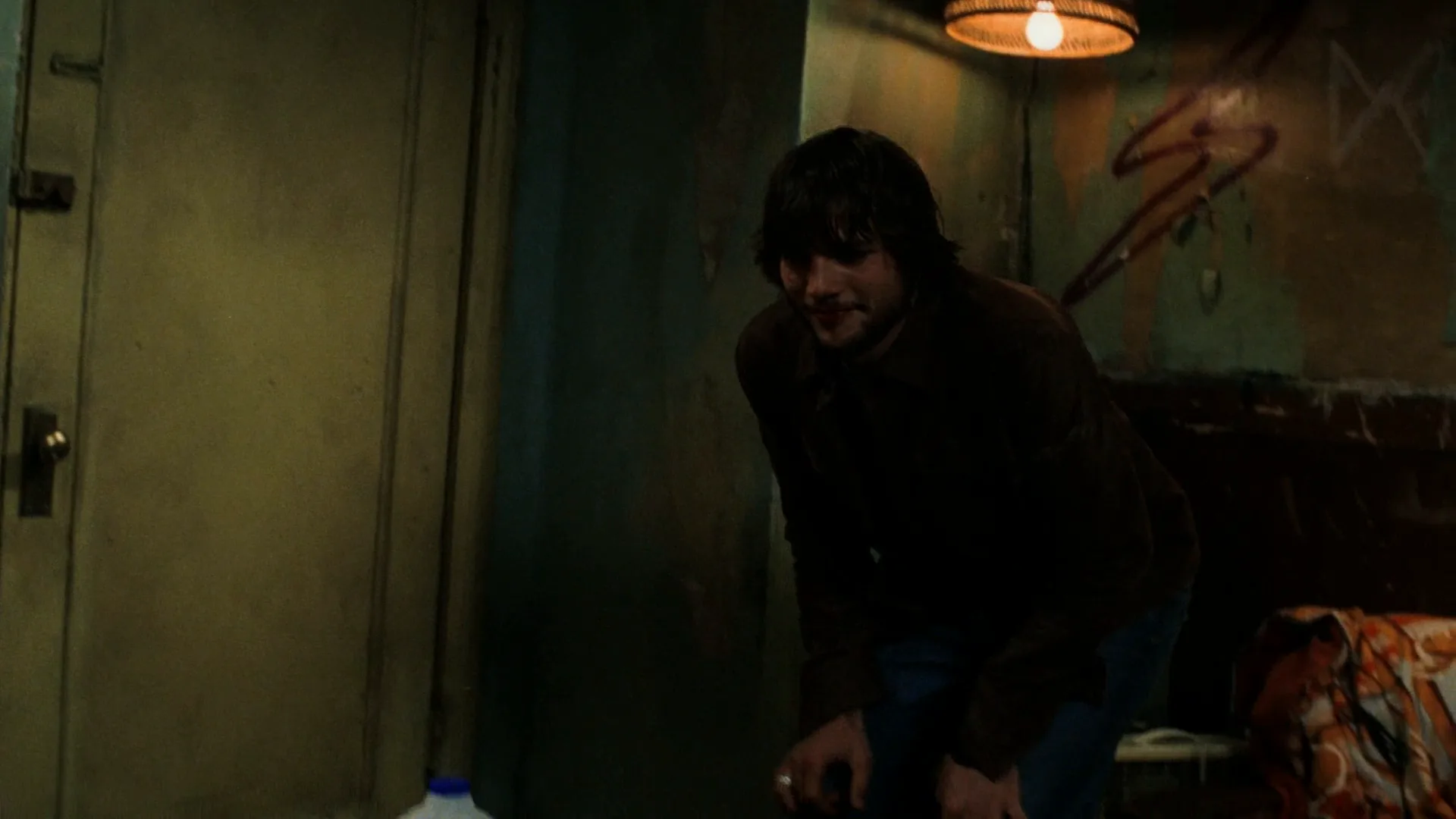
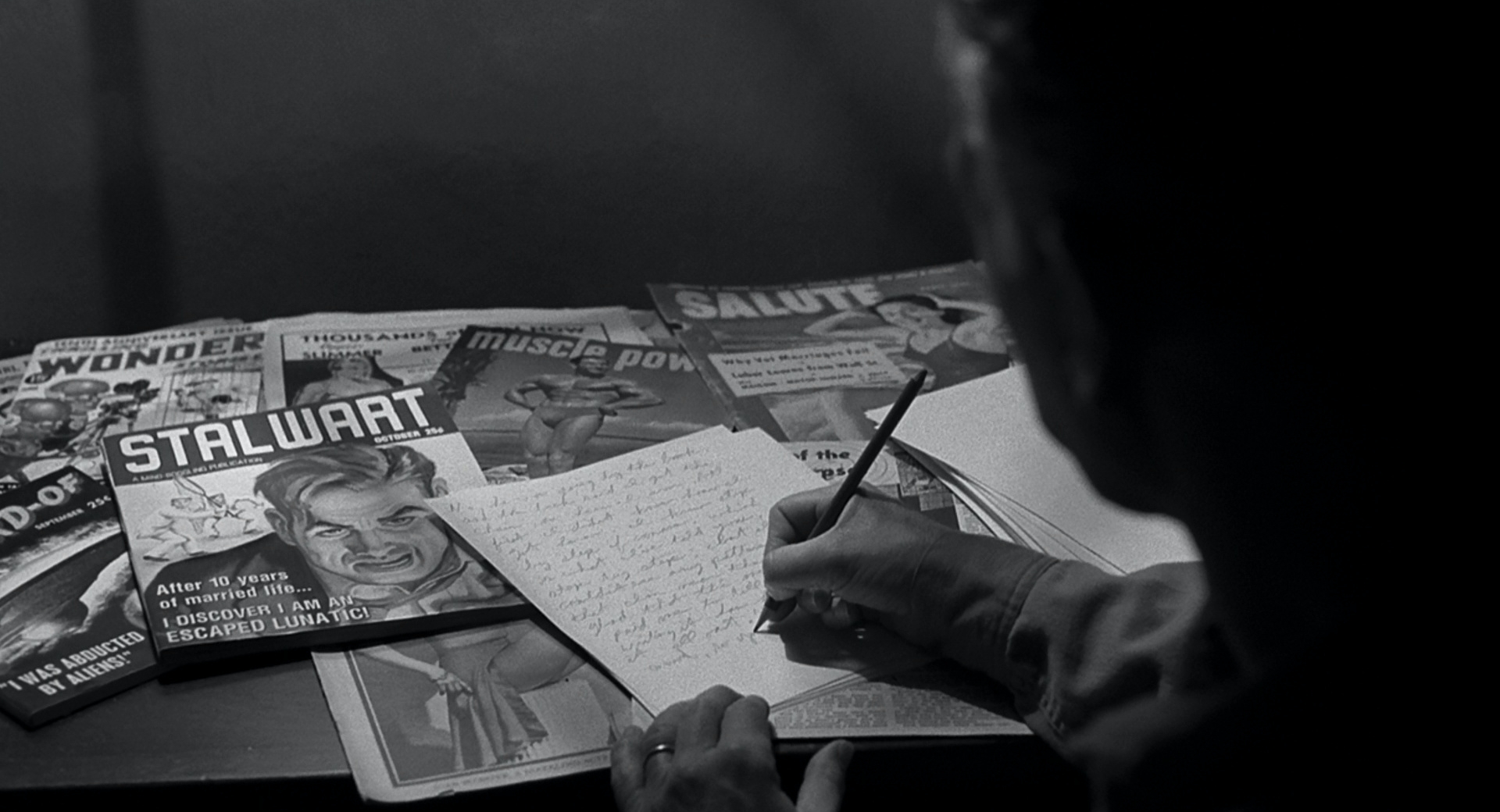
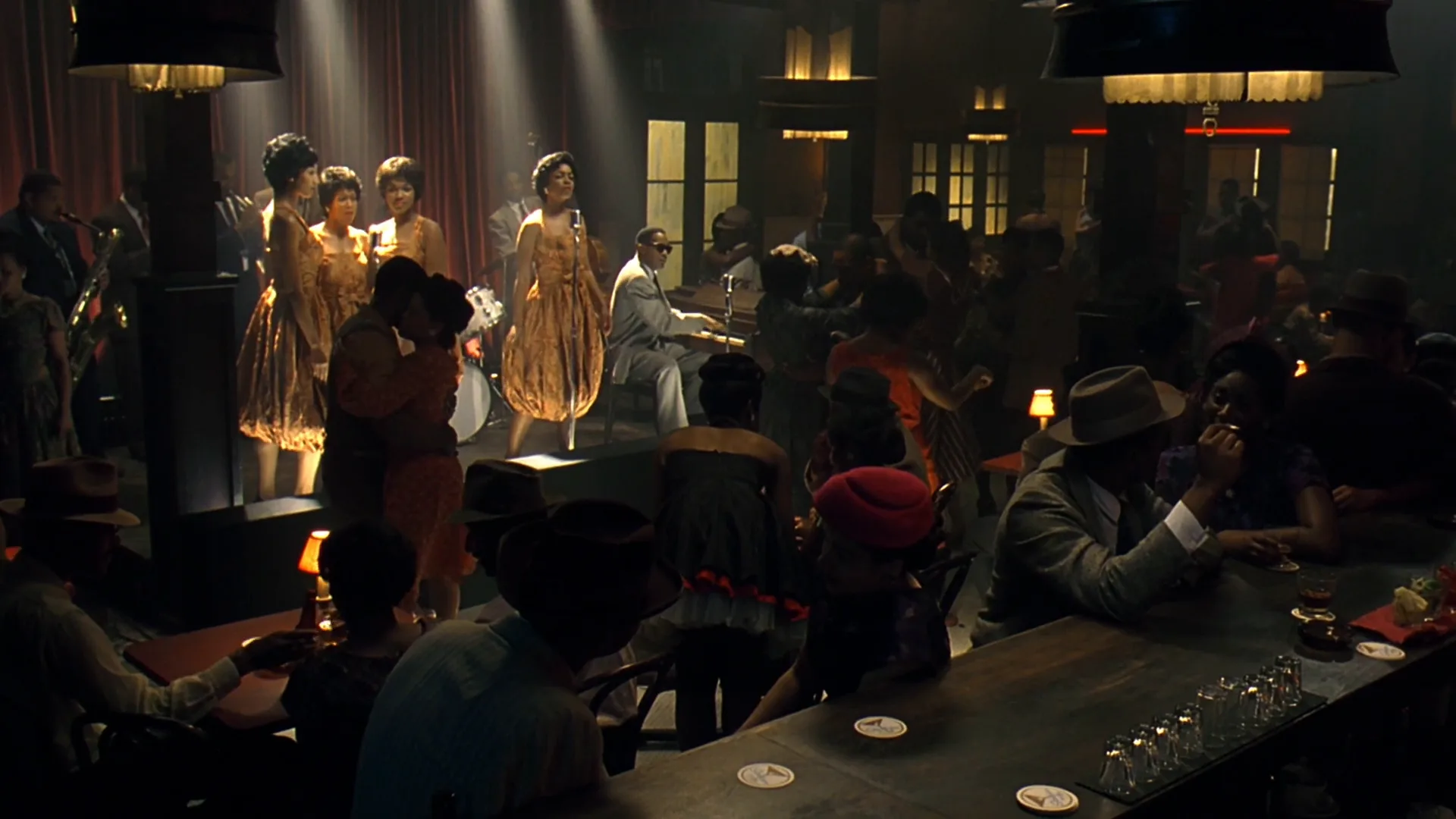
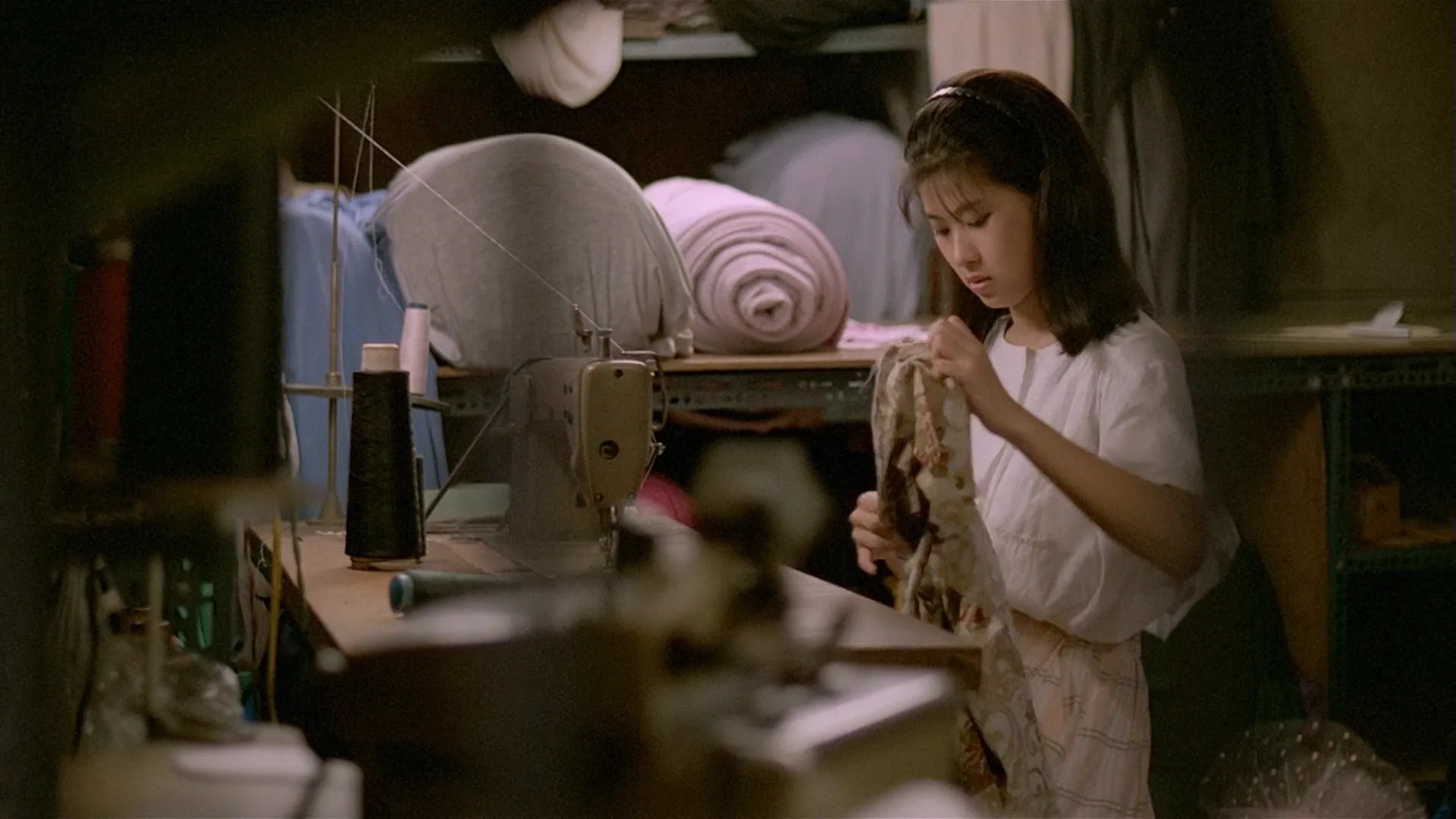
9 framesCheck the eyes first. In every frame the brightest surfaces face up.
How to create a top lighting with AI
4 promptsImage models default to frontal light, so put the source in the scene, directly overhead, and describe the result: bright forehead, eye sockets in shadow, no catchlights. In FlashBoards, keep the film frames beside your takes on one board and compare the eyes before you animate. The fourth prompt re-shoots a real film shot from a text description alone, and the original plays next to the result so you can compare.
Cinematic medium close-up of a man in his late fifties with a heavy gray mustache, deep forehead creases and a crooked nose, slicked-back graying hair, dark suit and loosened tie, seated at a metal table in a windowless room, looking down at his folded hands. Top lighting: a bare bulb in a tin shade hangs on a cord directly above his head at the top of the frame. His crown, forehead, nose and shoulders are bright; his eye sockets fall into deep shadow with no catchlights. Walls fall off to black. 50mm lens at eye level, film grain.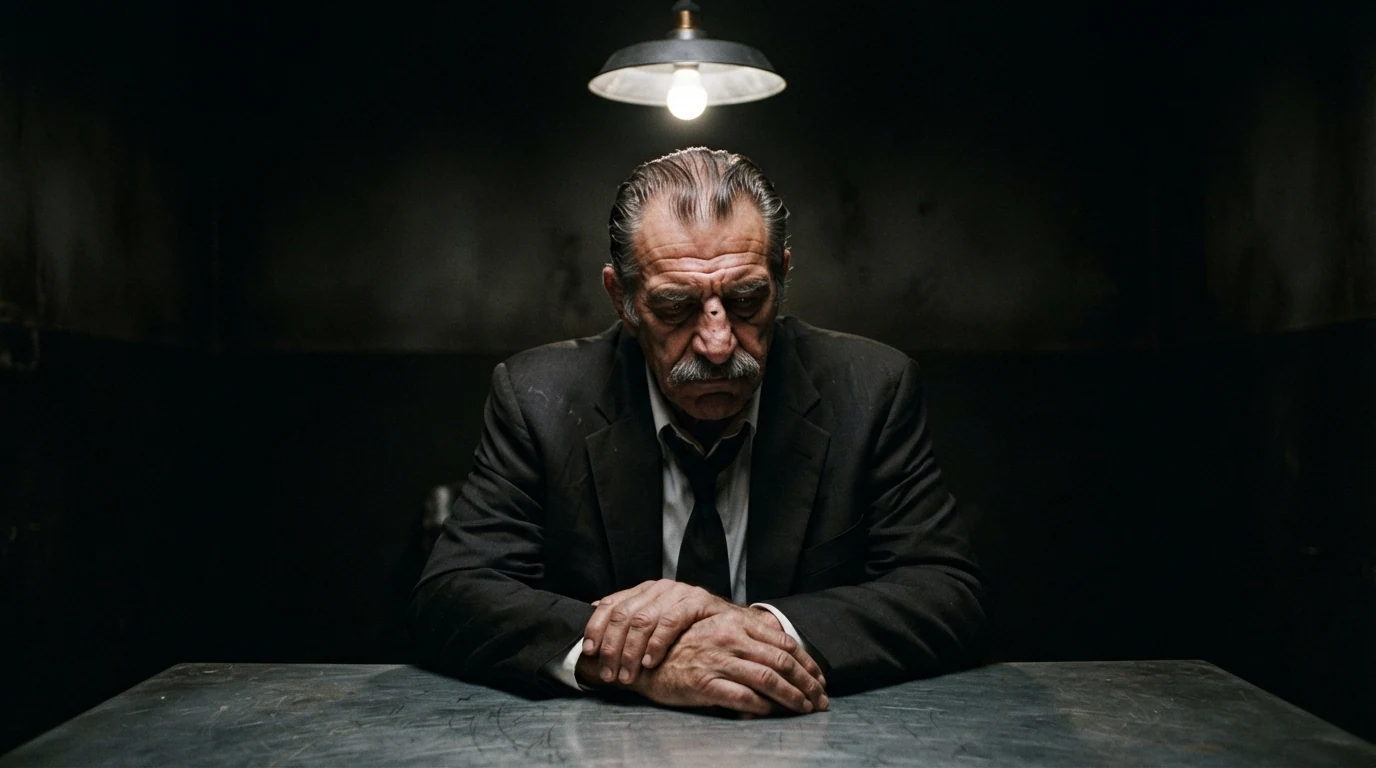
"Directly above his head at the top of the frame" fixes the direction with a visible source; "eye sockets in deep shadow with no catchlights" is the result the model checks against.
Open FlashBoardsWide cinematic shot of three card players around a green felt table in a back room at night. A long rectangular fixture with a black skirt hangs low over the table; soft top light falls straight down on the felt, cards, hands and the tops of their heads. Their eyes are shaded, faces lit only by faint green bounce from the felt. Players: a young woman with a shaved head and silver septum ring, an old man with a white beard and tweed cap, a red-bearded man in rolled sleeves. The room beyond falls to black. 35mm lens.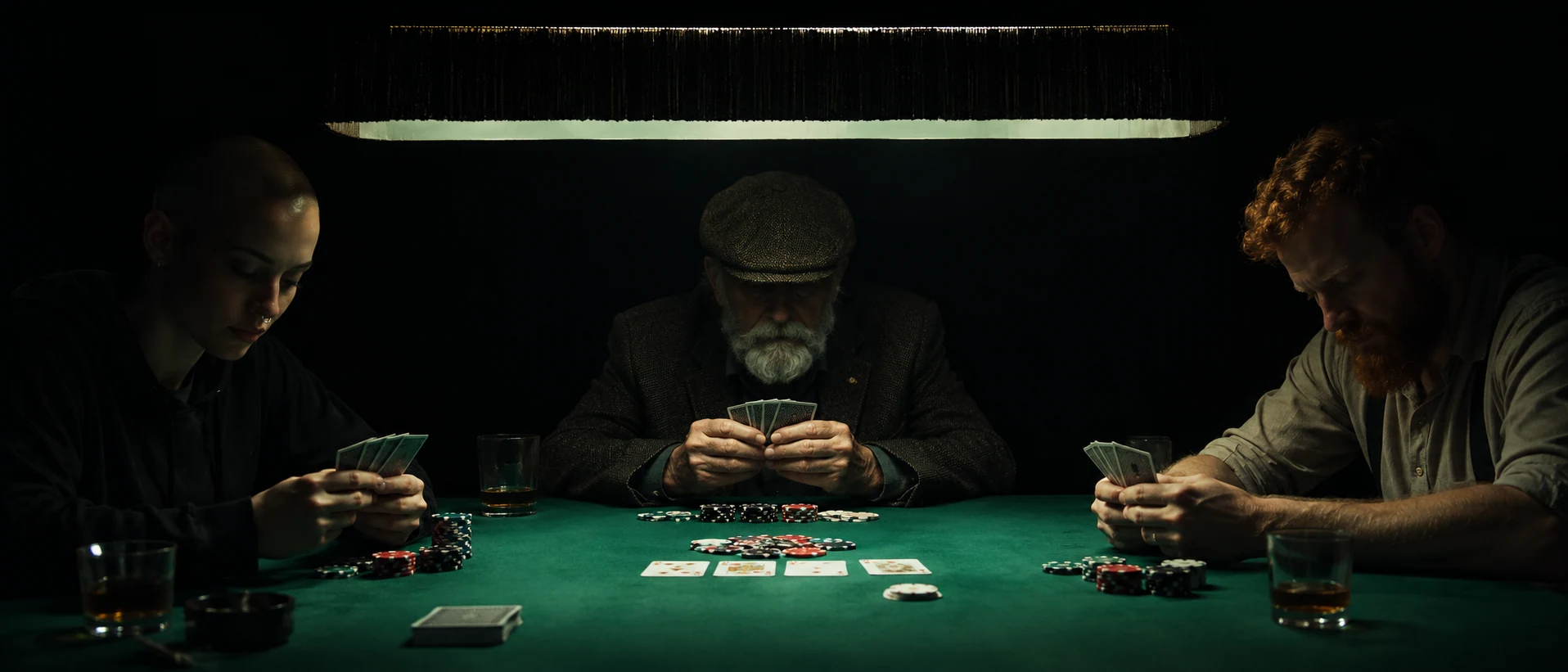
A soft, room-scale take. "Black skirt" and "room falls to black" keep the pool; the felt bounce keeps faces readable while the eyes stay shaded.
Open FlashBoardsCamera: a slow, steady push-in toward his face, starting immediately and ending on a close-up. Action: the bulb above him is already swinging gently on its cord, so light slides across his forehead and the shadows in his eye sockets deepen and ease. He slowly raises his head; as his face tilts up, his eyes catch the light for a moment. Then he lowers his chin and his eyes sink back into shadow. The walls stay black.The swinging bulb makes the shot alive from frame one; the head tilt is the beat: chin up reveals the eyes, chin down hides them.
Open FlashBoards{
"output": "Full-screen live-action shot from Batman & Robin (1997), from its very first frame: one continuous shot, no cuts. 35mm film stock, a dark prison hall, hard cold-blue top light falling straight down from above, deep blue-black palette, background falls off to darkness.",
"characters": {
"S1": {
"name": "Mr. Freeze, played by Arnold Schwarzenegger",
"look": "a huge bald man with pale blue-tinted skin and a heavy brow, wearing a gray-and-white horizontally striped prison sweater with a frayed neckline",
"voice": "deep, slow, heavily accented, mocking calm"
},
"S2": {
"name": "two prison guards",
"look": "guards in black uniforms and peaked caps, seen only as dark silhouettes at the left and right frame edges",
"voice": "silent"
}
},
"shots": [
{
"shot": 1,
"camera": "eye-level static camera with a slow steady optical zoom in: starts as a medium-wide with the prisoner small in the centre between two guards at the frame edges, ends as a close-up of his head and shoulders",
"action": [
"BEGINNING: alive from the first frame, the prisoner stands in the centre of the frame in profile, head turned to screen right toward the guard on the right; a guard in a peaked cap stands at the left edge, another guard at the right edge, both dark and facing him",
"THEN: he turns his head from screen right to face the camera, chin level, and begins to speak; the light from straight above shines on his bald crown, brow ridge and nose while his eye sockets sit in deep shadow",
"THEN: the zoom keeps pushing in; the guards slide out past the frame edges; he stays still, arms down, only his head and mouth move, a slight smug tilt of the head",
"END: a close-up of his face and shoulders; the scalp glows cold blue, the eyes stay dark hollows under the brow, he finishes the line looking straight toward camera"
],
"dialogue": [
{
"speaker": "S1",
"on_screen": true,
"when": "just after he turns his head toward the camera",
"delivery": "slow, amused, cold",
"line": "<d>[English] Allow me to break the ice.</d>"
},
{
"speaker": "S1",
"on_screen": true,
"when": "in the middle of the zoom, after a short pause",
"delivery": "proud, slow",
"line": "<d>[English] My name is Freeze.</d>"
},
{
"speaker": "S1",
"on_screen": true,
"when": "as the zoom reaches his close-up, until the end",
"delivery": "menacing, savouring each word",
"line": "<d>[English] Learn it well for it's the chilling sound of your doom.</d>"
}
]
}
],
"sound": {
"ambience": "a quiet echoing prison hall, faint shuffle of the guards' boots",
"speech": "exactly these spoken phrases, each said once, in this order",
"never_spoken": "no narration and no voice-over: the descriptions, performance notes and step words of this prompt are never spoken aloud",
"music": "a film score under the scene, always below the voices: low icy strings with a slow ominous brass swell",
"subtitles": "none"
}
}Remakes the Mr. Freeze prison shot from Batman & Robin (1997): the head turn, the slow zoom in, the corpus lines and the cold blue top light on the bald scalp.
The prompt names the source ("straight down from above") and the result (lit crown and brow, eyes in shadow), and the zoom carries the reveal from the wide to the close-up.
Open FlashBoardsCommon mistakes
- Frontal light creeps back: name the overhead source and write "no catchlights".
- Eyes lit anyway on upturned faces: ask for the chin lowered.
- Walls lit evenly: add "walls fall off to black".
Keep the reference frames, prompts and every generated take side by side — images and video in one canvas.
FAQ
4 questionsWhat is top lighting in film?
Top lighting is light falling on the subject from directly above. It brightens the head, forehead and shoulders and leaves the eye sockets and chin in shadow. Filmmakers use it to hide a character's eyes, suggest a harsh overhead source such as a bare bulb or the noon sun, and isolate a figure in a pool of light.
Why does overhead lighting make the eyes dark?
The eyes sit recessed under the brow ridge. When light comes from nearly straight above, the brow blocks it, so the sockets stay in shadow and no catchlight appears. The steeper and harder the source, the darker the sockets. A bounce from below, such as a white table, brings detail back.
How is top lighting different from butterfly lighting?
Butterfly lighting places the key just above the lens, in front of the face, so the eyes keep light and catchlights and the look flatters. Top lighting moves the key nearly straight overhead; the eyes fall into shadow and the catchlights disappear. Butterfly idealizes a face; top light hides it.
How do you soften top lighting for a close-up?
Use a larger diffused source overhead, such as a skirted space light, and add fill from below: a white bounce card at chest height, a light tablecloth or a reflector in the actor's lap. Tilting the source slightly toward the lens also helps. Each step returns detail to the eyes.
Related terms
5- Butterfly LightingLighting
Butterfly lighting puts the key light high and straight in front of the face, casting a small butterfly-shaped shadow under the nose; it sculpts cheekbones and was the classic Hollywood glamour look.
- Side LightingLighting
Side lighting puts the key roughly 90° to the side of the subject, splitting the face into light and shadow and raking across texture — the most direct way to reveal volume and inner conflict.
- Under LightingLighting
Under lighting places the key below the face, reversing the natural direction of daylight: shadows climb upward from nose and brows, making faces look uncanny, sinister or theatrical — unless motivated by a campfire or a screen.
- Key LightLighting
The key light is the main light on a subject: it sets the direction, hardness and color of the illumination, and every other source — fill, back, practicals — is balanced against it.
- ChiaroscuroLighting
Chiaroscuro, borrowed from Renaissance and Baroque painting, is dramatic modelling with strong light and deep shadow — usually one hard side or top source carving faces out of darkness — the backbone of German Expressionism and film noir.
Further reading
Gordon Willis interviews in Masters of Light: Conversations with Contemporary Cinematographers by Dennis Schaefer and Larry Salvato (1984).