 FlashBoards Learn
Lighting · Film language
Catchlight
Also called: eye light, catch light
A catchlight is the small reflection of a light source in a subject's eyes. Its shape and position give away where the light is and what it is, and its presence makes a face look alive and attentive. Take it away and the same eyes read as dead, cold or unreadable.
- What it does
- Puts a spark of reflected light in the eyes so the face reads as alive and focused.
- Use it when
- Any close-up where the audience needs to connect with a character's eyes.
- Watch out
- Two or three competing reflections in each eye look busy and reveal the lighting rig.
- Try this prompt
cinematic close-up, large soft window light at 10 o'clock, a clear square catchlight in both eyes, 85mm, dark background
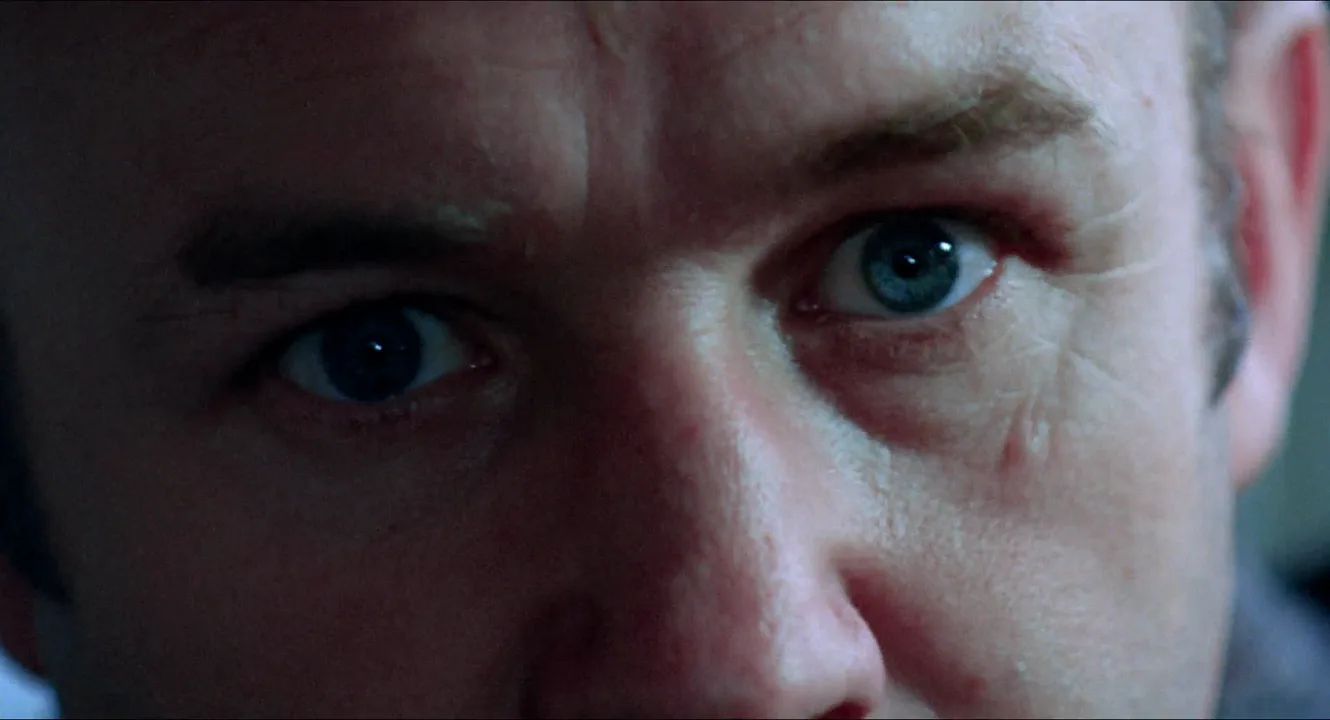
What is a catchlight?
The eye is a small, wet, curved mirror. Any bright source in front of it, a window, a softbox, the sky, shows up as a highlight on the cornea: the catchlight. Usually it is just the key light reflected back at the lens.
The reflection is a tiny map of the light on the face: a square means a window or softbox, a hard pinpoint a bare lamp or the sun, a ring a light around the lens.
In a wide shot it disappears; in a close-up it is a spark; in an extreme close-up it becomes a shape of its own. It is the part of film lighting audiences feel without naming.
Why do catchlights matter in film?
People read eyes first. A highlight in the pupil says the eye is wet, focused and looking at something, so the face feels present. Without it the iris goes flat and the character gets harder to read.
- Life and sympathy. Leads in emotional close-ups nearly always get a clean catchlight; teary eyes catch even a weak source.
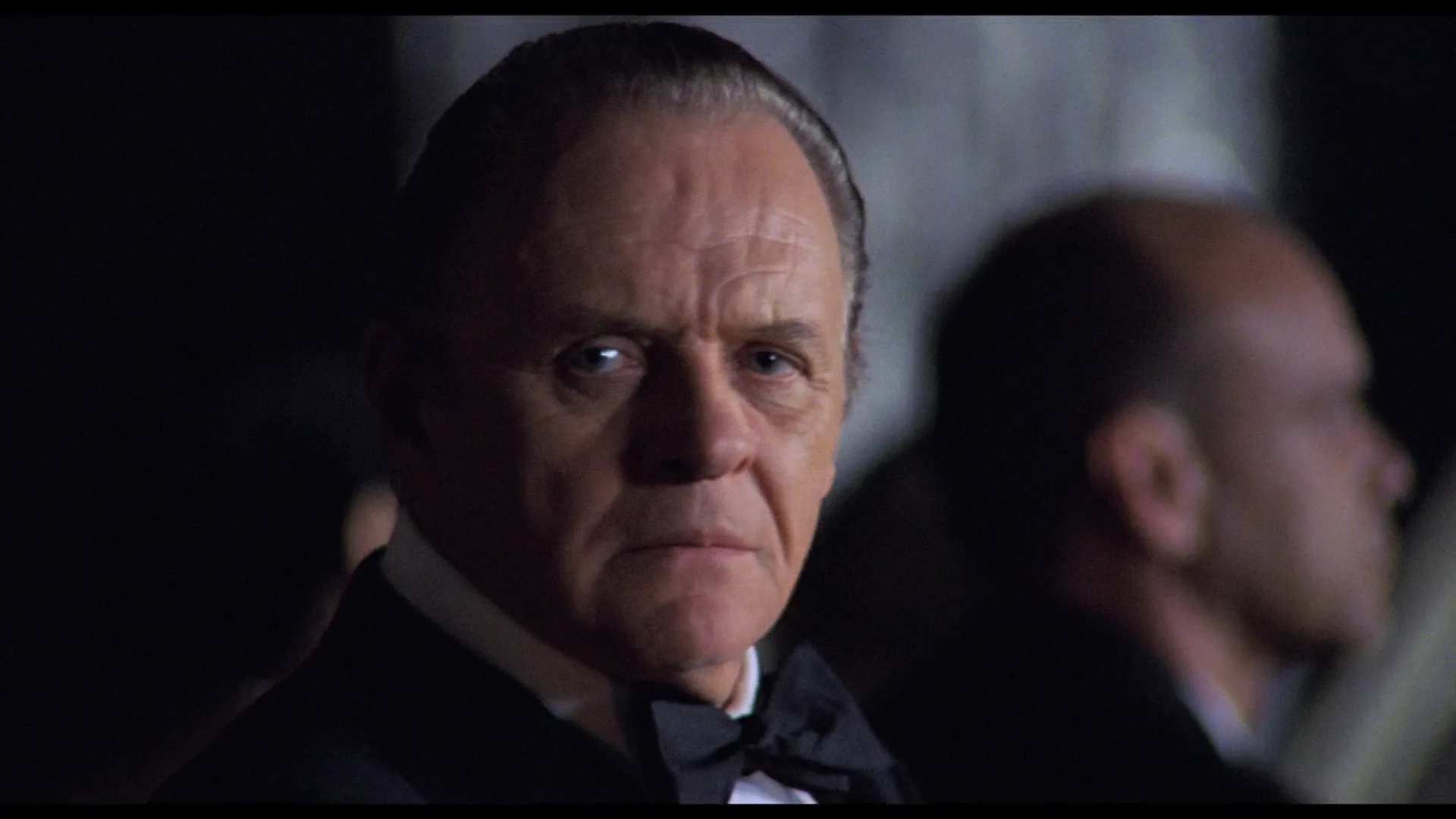
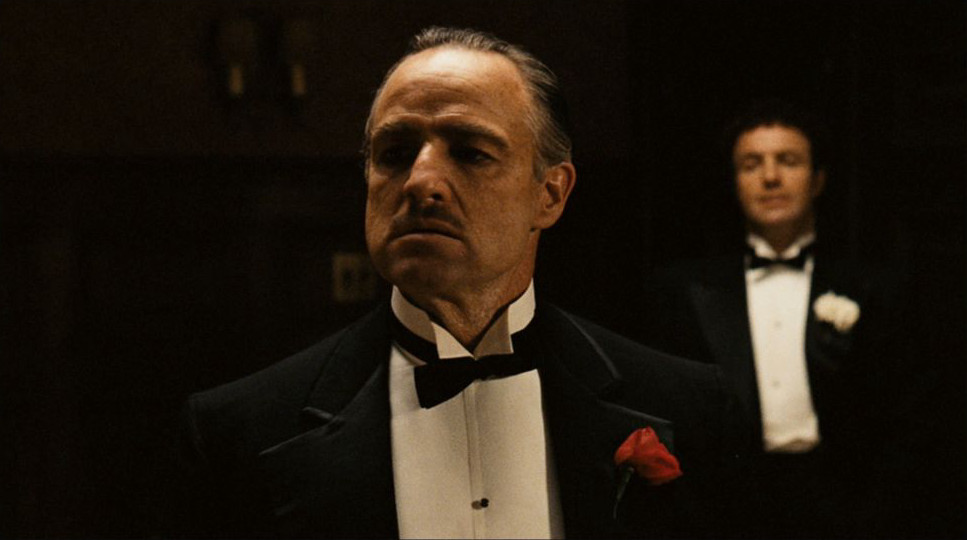
- Menace and secrecy. Gordon Willis lit Brando from above in The Godfather (1972), so the Don's eyes often sit in shadow and his thoughts stay hidden. Top lighting and hard low-key lighting do the same.
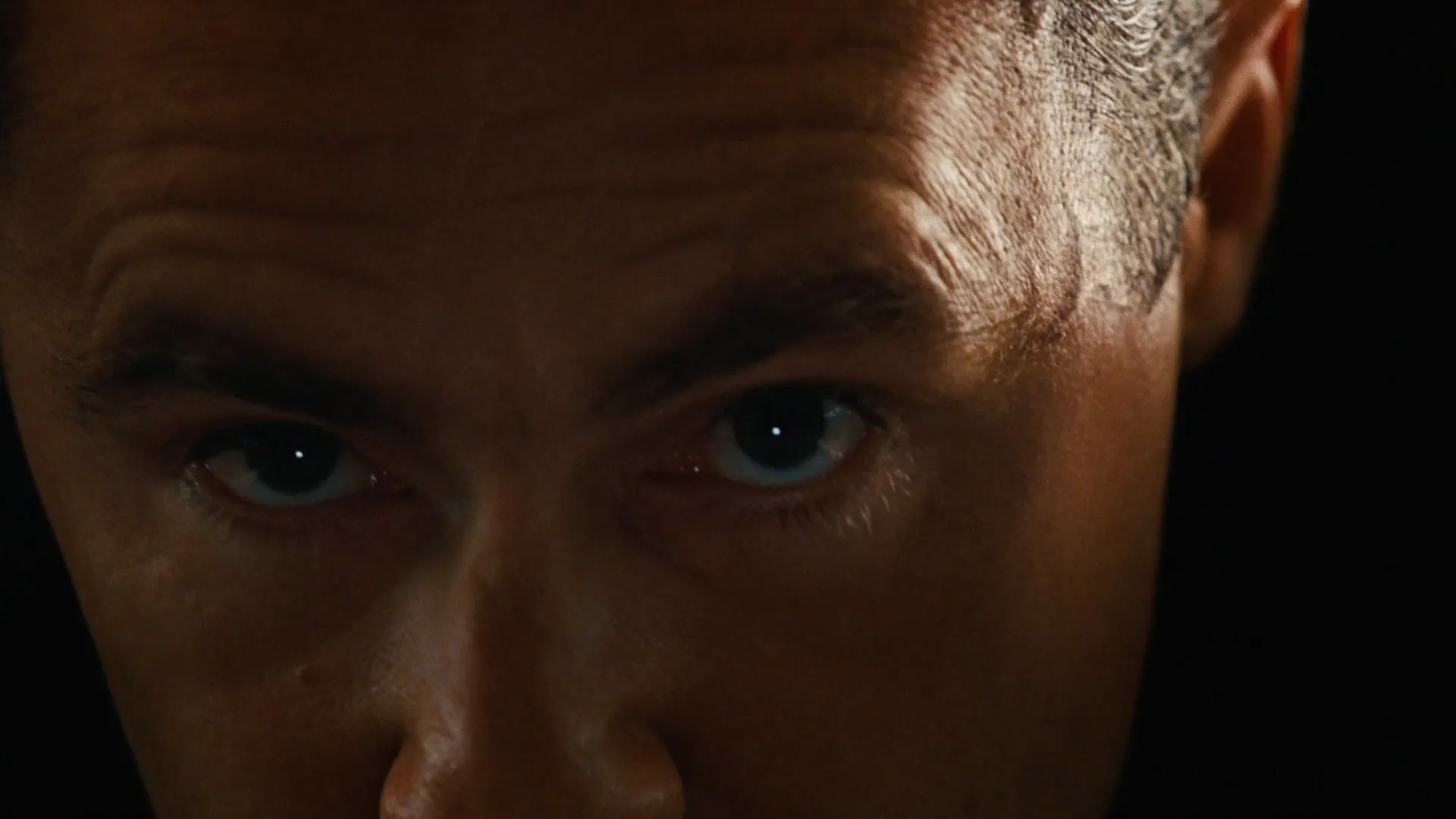
- Something wrong. A single hard pinpoint in dark eyes, in a dark frame, can read predatory rather than warm.
What catchlight shape and position tell you
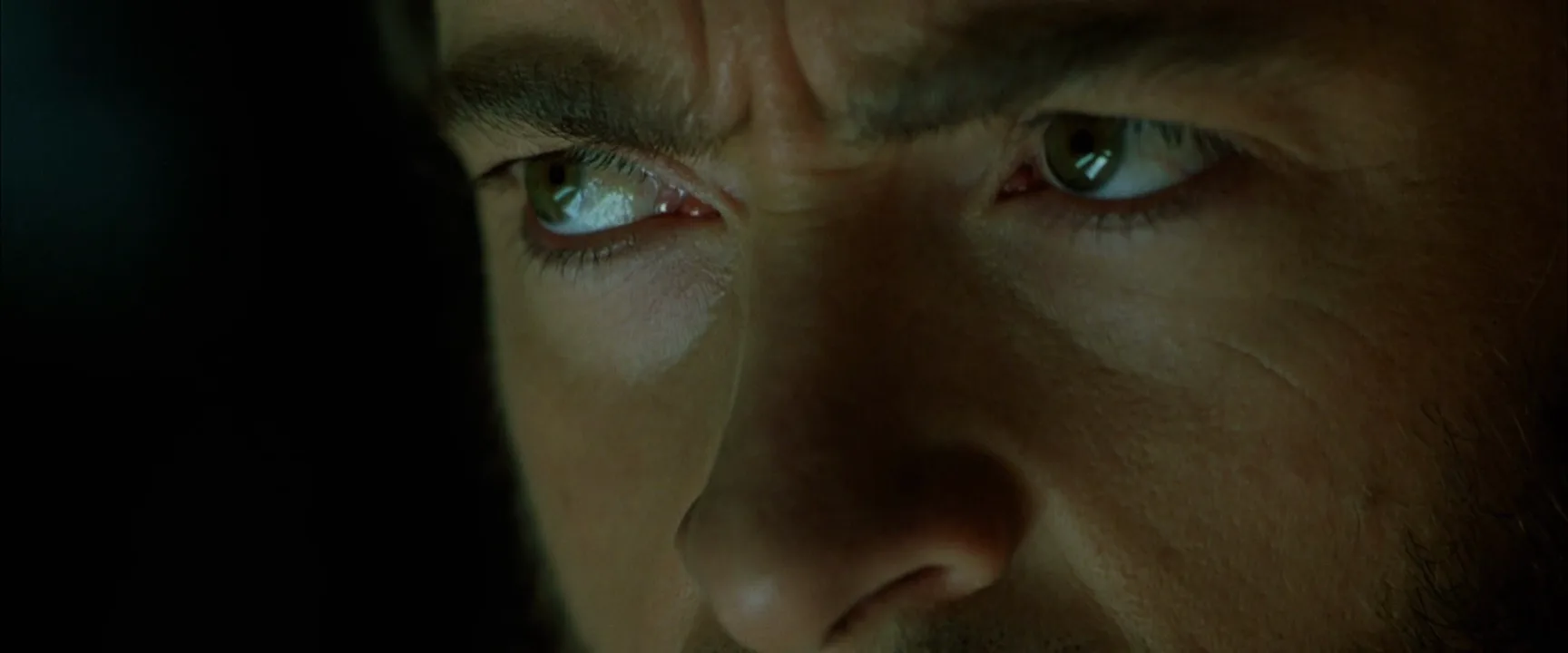
Position. Think of a clock face. A catchlight at 10 or 2 o'clock, in the upper iris, looks most natural because it matches light from a window or the sky. Dead center means an on-axis source; low in the eye means light from below.
Shape. Square or rectangle: a window, softbox or screen. Round: a China ball or round softbox. Ring: a ring light. Overhead butterfly lighting puts it high and centered.
Size and count. A big, close source makes a big, soft catchlight; a small one a sharp pinpoint. One catchlight per eye reads as one world with one sun. Two or three give away the rig.
How to get catchlights on set
- Let the key do it. Place it 30 to 45 degrees off the lens, slightly above eye level. If the eyes stay dark, the key is too high or too wide; lower it until the reflection appears.
- Choose the shape. A 4x4 diffusion frame gives a square, a China ball a circle. For a big, soft reflection, bring the source to 1 to 2 m from the face.
- Add an eye light. When the key must stay high, put a small dimmed LED panel or bounce card just above the lens, 2 to 3 stops under the key.
- Turn the eyes. A few degrees of head turn toward the source puts the catchlight back in the iris.
- Remove extras. Flag practicals and white walls that add second reflections.
Catchlight vs. eye light
The catchlight is the result: the reflection in the eye. An eye light is a tool: a small, low-power source near the camera whose only job is to create that reflection. Most catchlights come from the key, a window or a bounce, with no eye light at all; you add one when a hard top or side key can't reach the eyes. DP Lucien Ballard's lens-side light for Merle Oberon gave it the old studio nickname "Obie".
Catchlight examples in film
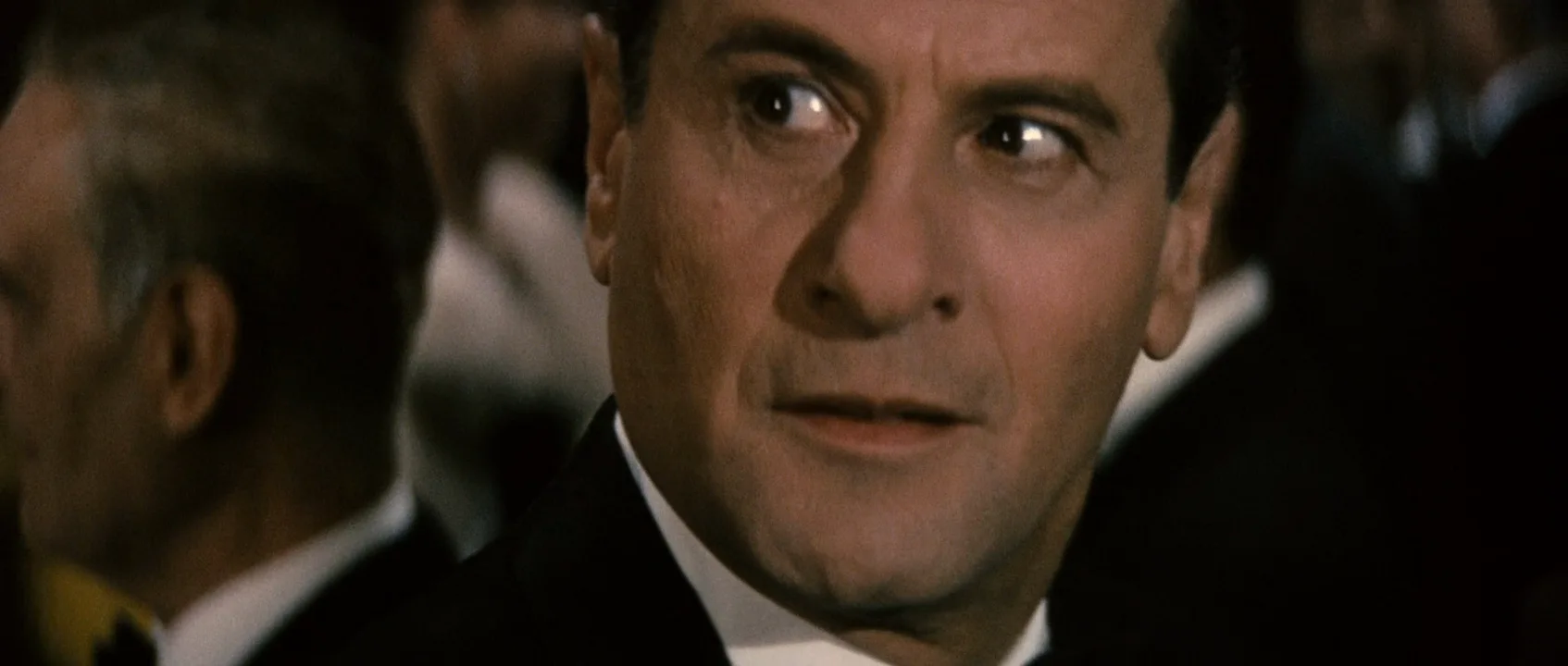
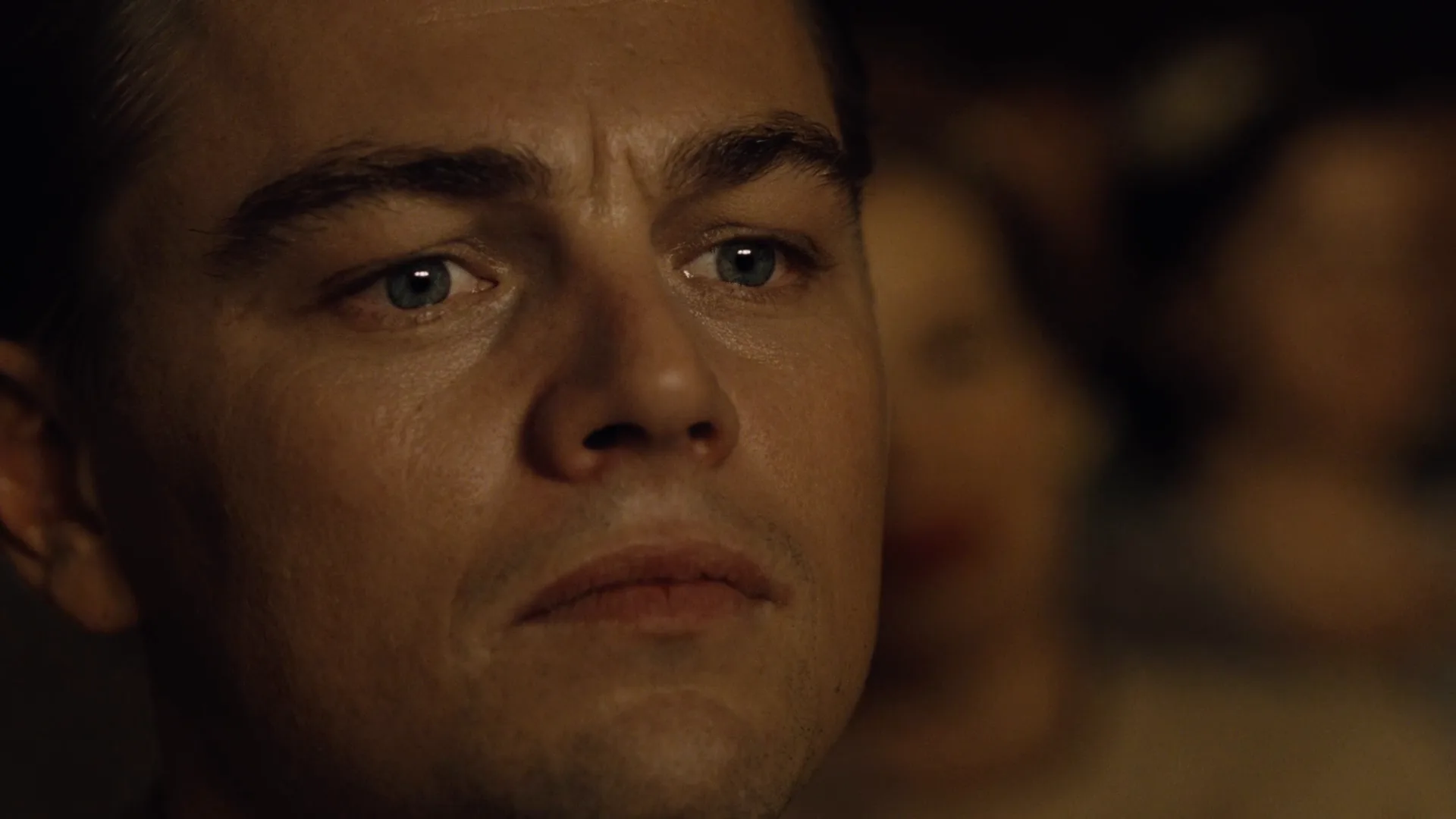
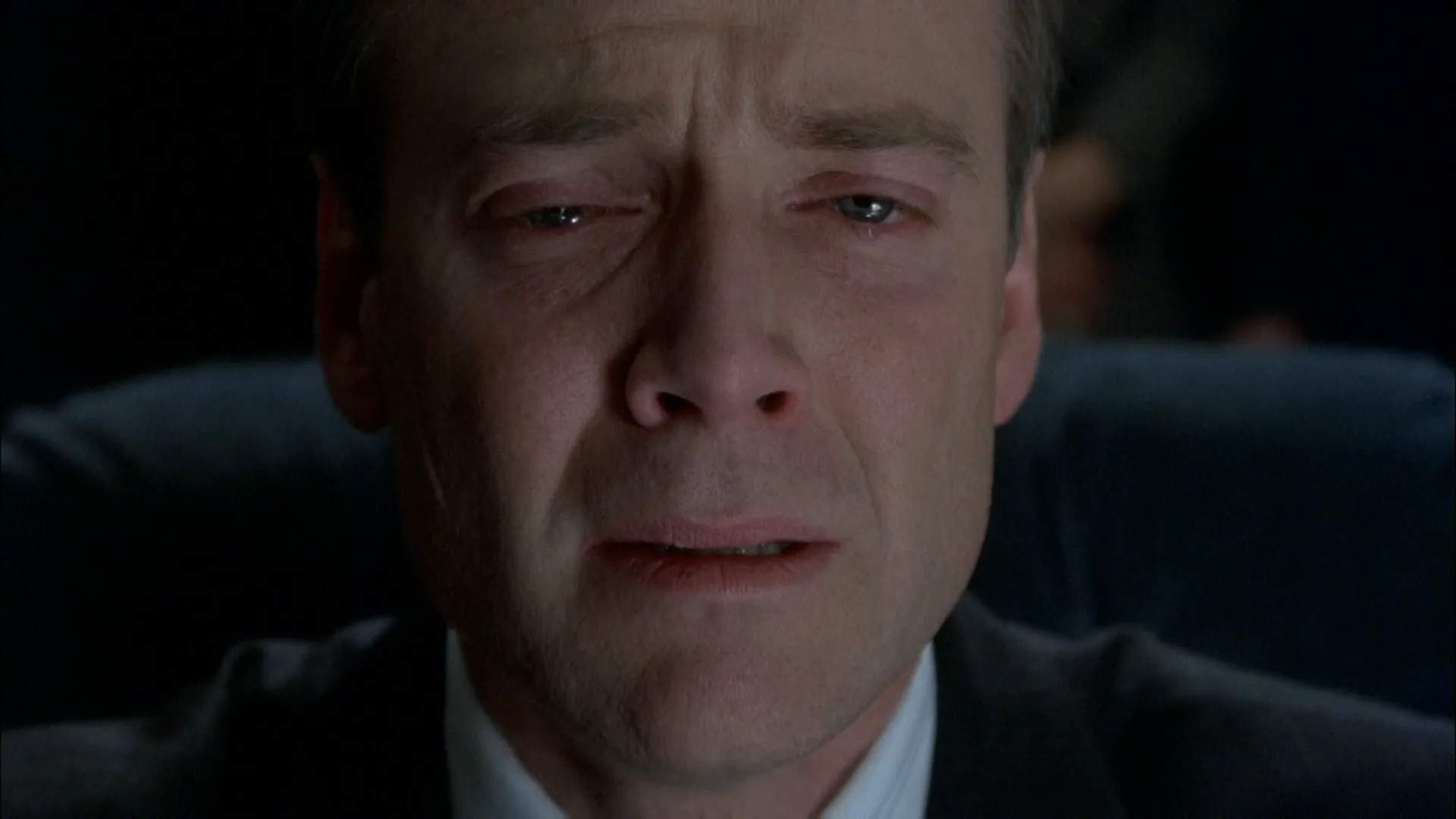
8 framesLook at the eyes first: where the highlight sits, how big it is, and what the face loses when it is missing.
How to create a catchlight with AI
4 promptsImage models add catchlights on their own, usually as generic white dots. To control them, name the source, its shape and its clock position, and frame tight enough to show the eyes. In FlashBoards, keep references, both takes and the animated shot on one board and compare the eyes side by side. The fourth prompt re-shoots a real film shot from a text description alone, and the original plays next to the result so you can compare.
Tight cinematic close-up of the face of a woman in her late 40s, framed from chin to forehead, with a silver-streaked black bob, a small scar through her left eyebrow, freckled olive skin and dark brown eyes looking just past the lens, beside a tall window at dusk. Large soft window light from frame left at 10 o'clock, slightly above her eyes, reflected as a clear square catchlight in the upper left of both irises. Far side of her face in soft shadow, dark room behind. 85mm lens, eye level, shallow depth of field, calm mood.
"Square catchlight in the upper left of both irises" sets the reflection's shape and position, and "window light from frame left at 10 o'clock" matches the source to it. The tight 85mm close-up, framed chin to forehead with her gaze near the lens, keeps the eyes big enough to show it.
Open FlashBoardsExtreme close-up across the eyes of a man in his twenties with a shaved head, a thin gold hoop in one eyebrow, deep brown skin and hazel-green eyes, in a dark night interior. A round paper lantern just above the camera makes one soft circular catchlight in the top center of each iris. Warm darkness around, sharp lashes and skin texture. 100mm macro lens, eye level, low-key, intense.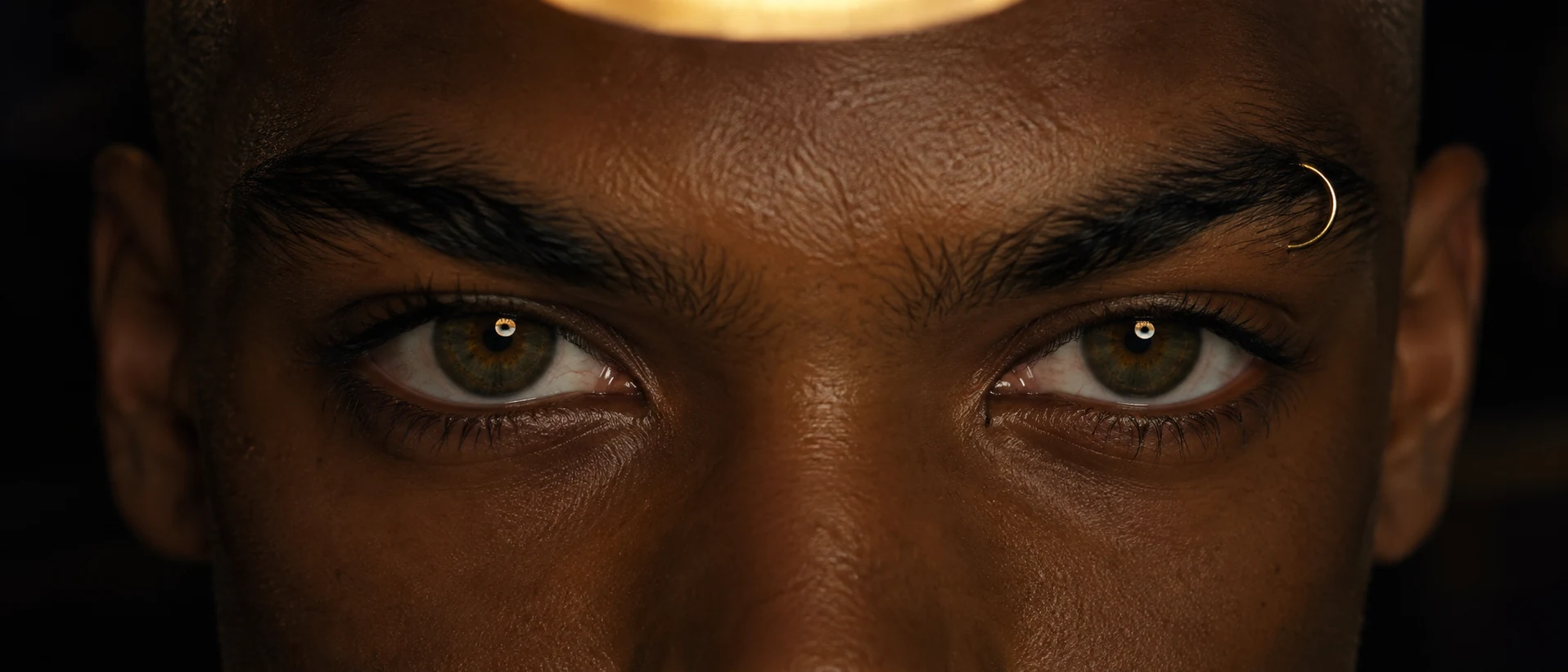
A new subject, shape and framing: the "round paper lantern" gives a circular reflection, and "one catchlight in each iris" prevents the busy multi-highlight look that extreme close-ups expose.
Open FlashBoardsCamera: a slow, steady push-in from the close-up toward her eyes, ending on a tight close-up of her face. Action: she is already turning her head slowly toward the window, and the square catchlight grows brighter in both eyes. She blinks once, her gaze settles outside, and she holds still, the window reflected in her dark brown eyes.The action starts at once, so the shot is alive from the first frame. Turning toward the window moves the catchlight into the iris while the push-in makes it the focus. Only things already in the frame are named.
Open FlashBoards{
"output": "Full-screen live-action close-up from The Sixth Sense (1999) from its very first frame: one continuous locked-off shot. Late-1990s 35mm film grain, low-key night interior, the only light is the soft cool flicker of a television screen just below the lens falling frontally on his face, surroundings sinking into deep navy darkness, muted blue-gray palette with pale skin.",
"characters": {
"S1": {
"name": "Mr. Collins, played by Greg Wood",
"look": "man in his forties, clean-shaven, short light-brown hair, pale gray-blue eyes with reddened rims, dark charcoal suit jacket, white shirt; seated",
"voice": "silence: he never speaks, only shallow uneven breathing"
},
"S2": {
"name": "Mrs. Collins, played by Angelica Page",
"look": "never seen; only her recorded voice is heard, coming from the television speaker off screen",
"voice": "light, sweet, slightly tinny through a small TV speaker"
}
},
"shots": [
{
"shot": 1,
"camera": "static, locked-off tripod, eye level, 85mm lens, tight face-on close-up: his hairline touches the top edge, his shirt collar and jacket lapels sit at the bottom edge, his face fills the centre third; dark blurred navy armchair backs on both sides and a faint out-of-focus figure far behind on the right; the framing stays exactly the same to the end",
"action": [
"BEGINNING: alive from the first frame, S1 sits dead centre staring straight into the lens as if at a screen, eyes wide and wet, brows pulled up and together, lips slightly parted; a single small crisp white catchlight sits in the upper centre of each pupil.",
"THEN: his lower lip trembles and the corners of his mouth pull down; his eyes stay locked on the lens, tears welling along both reddened lower lids; the catchlights stay sharp and flicker faintly with the television light.",
"THEN: his brows knit harder and his jaw tightens; his head stays still, no nod, his hands stay out of frame.",
"THEN: he blinks once, slowly, and opens his eyes again to the same stare; the two catchlights come back sharp in the upper centre of each pupil.",
"END: tears pooled on his lower lids, lips parted and trembling, he holds the level stare into the lens, the two small catchlights glinting in his wet eyes."
],
"dialogue": [
{
"speaker": "S2",
"on_screen": false,
"when": "from the first frame, already mid-sentence, heard from the television off screen while S1 stays silent",
"delivery": "light, reassuring, tinny through the TV speaker",
"line": "<d>[English] I don't know. You know how you get sick in the afternoons. We'll see.</d>"
},
{
"speaker": "S2",
"on_screen": false,
"when": "about halfway through, just before his slow blink, heard from the television off screen; S1's lips do not form the words",
"delivery": "sweet, faintly scolding, tinny through the TV speaker",
"line": "<d>[English] Don't say that it tastes funny. You know I don't like to hear that.</d>"
}
]
}
],
"sound": {
"ambience": "quiet room tone of a dim room, the faint hum of a television, the soft rustle of his suit",
"speech": "exactly these spoken phrases, each said once, in this order, both in her voice from the television; he says nothing",
"never_spoken": "no narration and no voice-over: the descriptions, performance notes and step words of this prompt are never spoken aloud",
"music": "a film score under the scene, always below the voices: low sustained strings with a slow, grieving swell",
"subtitles": "none"
}
}Remakes the tearful close-up of Mr. Collins watching the videotape in The Sixth Sense (1999), dir. M. Night Shyamalan, DP Tak Fujimoto, keeping the locked-off face-on framing, the TV glow, the single blink and the small catchlight in each wet eye.
The prompt is structured JSON: it names Mr. Collins and the TV light just below the lens, pins "a single small crisp white catchlight" in the upper centre of each pupil and brings it back after the blink, locks the camera off, and keeps his wife's two taped lines off screen.
Open FlashBoardsCommon mistakes
- Generic dots. Without a named source, models put a white dot in each pupil's center. State shape and clock position.
- Mismatched light. Tie source and reflection together: "window light from frame left, reflected in the upper left of her eyes".
- Too many reflections. "Sparkling eyes" gives several highlights; ask for "one catchlight in each eye".
- Dead eyes on purpose. Describe what is there: "eyes sunk in deep shadow under the brow".
- Too wide. In a medium shot the reflection is lost.
Keep the reference frames, prompts and every generated take side by side — images and video in one canvas.
FAQ
4 questionsWhat is a catchlight in photography and film?
A catchlight is the bright reflection of a light source visible in a person's eyes, usually from the key light, a window or a bounce card. It makes the eyes look wet, focused and alive, and its shape and position show where the light comes from.
Where should the catchlight be in the eye?
Most cinematographers aim for the upper iris, around 10 or 2 o'clock. That matches light from a window or the sky, above and to one side, so it looks natural. A centered catchlight means an on-axis source; one low in the eye comes from below and often looks strange.
Why do eyes without catchlights look sinister?
Without a reflection, the eyes lose their wetness and focus, so the viewer can't tell what the character feels or where they look. Overhead or hard side light that leaves the eye sockets in shadow is used on purpose to make a character distant, secretive or threatening.
How do you get catchlights with natural light?
Face the subject toward the brightest part of the scene, such as a window, an open doorway or open sky, with the source slightly above their eye line. Have them turn a few degrees toward it until the reflection appears in the iris. A white card held low adds a softer second catchlight.
Related terms
4- Key LightLighting
The key light is the main light on a subject: it sets the direction, hardness and color of the illumination, and every other source — fill, back, practicals — is balanced against it.
- Butterfly LightingLighting
Butterfly lighting puts the key light high and straight in front of the face, casting a small butterfly-shaped shadow under the nose; it sculpts cheekbones and was the classic Hollywood glamour look.
- Extreme Close-UpCamera Shots
An extreme close-up isolates a tiny part of a subject — an eye, lips, a finger on a trigger, a watch face — so a single detail fills the frame and takes on enormous weight.
- Close-Up ShotCamera Shots
A close-up frames a subject tightly — for a person, usually the face from chin to forehead or the head with the top of the shoulders — so emotion, micro-expressions and small details dominate the screen.
Further reading
Blain Brown, Motion Picture and Video Lighting (Focal Press). Kris Malkiewicz, Film Lighting (Touchstone).