 FlashBoards Learn
Lighting · Film language
Rembrandt Lighting
Also called: Rembrandt light, Rembrandt triangle
Rembrandt lighting is a portrait setup with the key light high and about 45° to one side, so the far side of the face falls into shadow except for a small triangle of light under the eye. It gives a face weight, volume and a hint of secrecy, which is why dramas and thrillers lean on it.
- What it does
- Carves the face into a lit side and a shadow side, keeping one small triangle of light on the dark cheek so both eyes still read.
- Use it when
- A close-up needs gravity, doubt or a painterly, old-master mood without losing the actor's eyes.
- Watch out
- Move the key a few degrees too far and the triangle closes into split lighting; too far forward and it opens into flat loop light.
- Try this prompt
Close-up, hard warm key high and 45° camera left, small triangle of light on the shadow cheek under the eye, dark background, Rembrandt lighting
What is Rembrandt lighting?
Rembrandt lighting is a specific placement of the key light: high above the eye line and roughly 45° off the camera–subject axis. From there the light hits the near cheek, the forehead and the bridge of the nose, while the nose throws a shadow down and across the far cheek. That shadow meets the shadow of the cheekbone, and between them a small, closed patch of light is left under the far eye. That patch is the Rembrandt triangle, and it is the whole test: no triangle, no Rembrandt.
The name comes from the Dutch painter Rembrandt van Rijn, whose self-portraits and sitters are often lit by a single high window to one side, with one cheek glowing out of a brown-black ground. In film, the term is usually traced to Cecil B. DeMille and his art director Wilfred Buckland in the 1910s, when they lit actors from one side with a single strong source and defended the half-dark faces to a worried Samuel Goldwyn (then Goldfish) as "Rembrandt lighting".
Any source can make it: a Fresnel, a window, a bare bulb, a streetlight. What makes it Rembrandt is geometry: the angle of the key relative to the nose, plus a fill light low enough that the shadow side stays shadow. It is one of the classic portrait patterns of film lighting, sitting between loop lighting (key closer to the camera) and split lighting (key at 90°), and it belongs to the broader tradition of chiaroscuro modelling in painting and film.
How do you recognize the Rembrandt triangle?
Look at the shadow cheek, not the lit one. Three things have to be true at once:
- The nose shadow reaches the cheek shadow. If there is a gap of light between them, the shadow is only a loop and you are looking at loop lighting.
- The patch is closed and small. A classic triangle is no wider than the eye and no longer than the nose. When it grows past that, the key has swung toward the camera.
- The far eye is lit. The top of the triangle should touch the lower lid so the shadow-side eye gets light and, ideally, its own catchlight. If the far eye goes black, the key is too high or too far around.
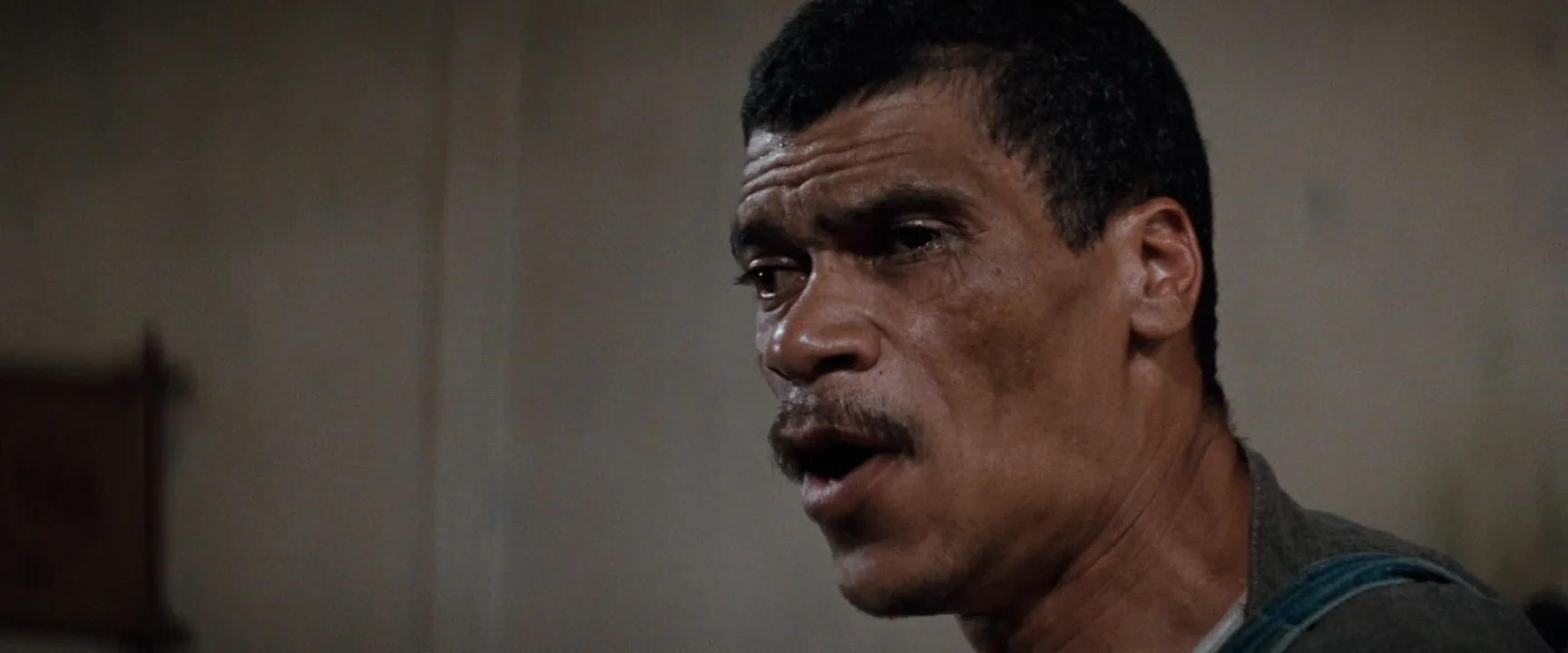
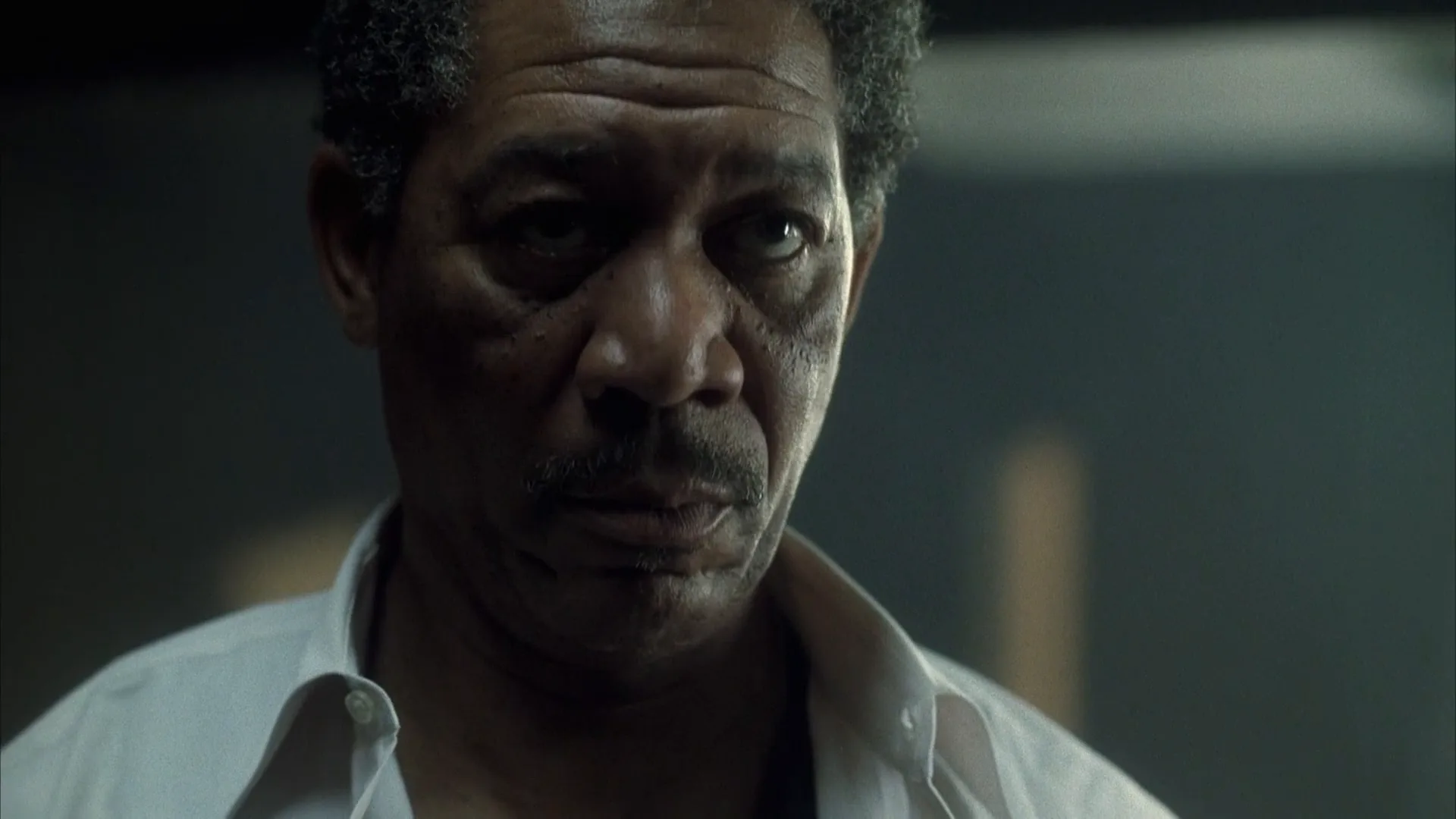
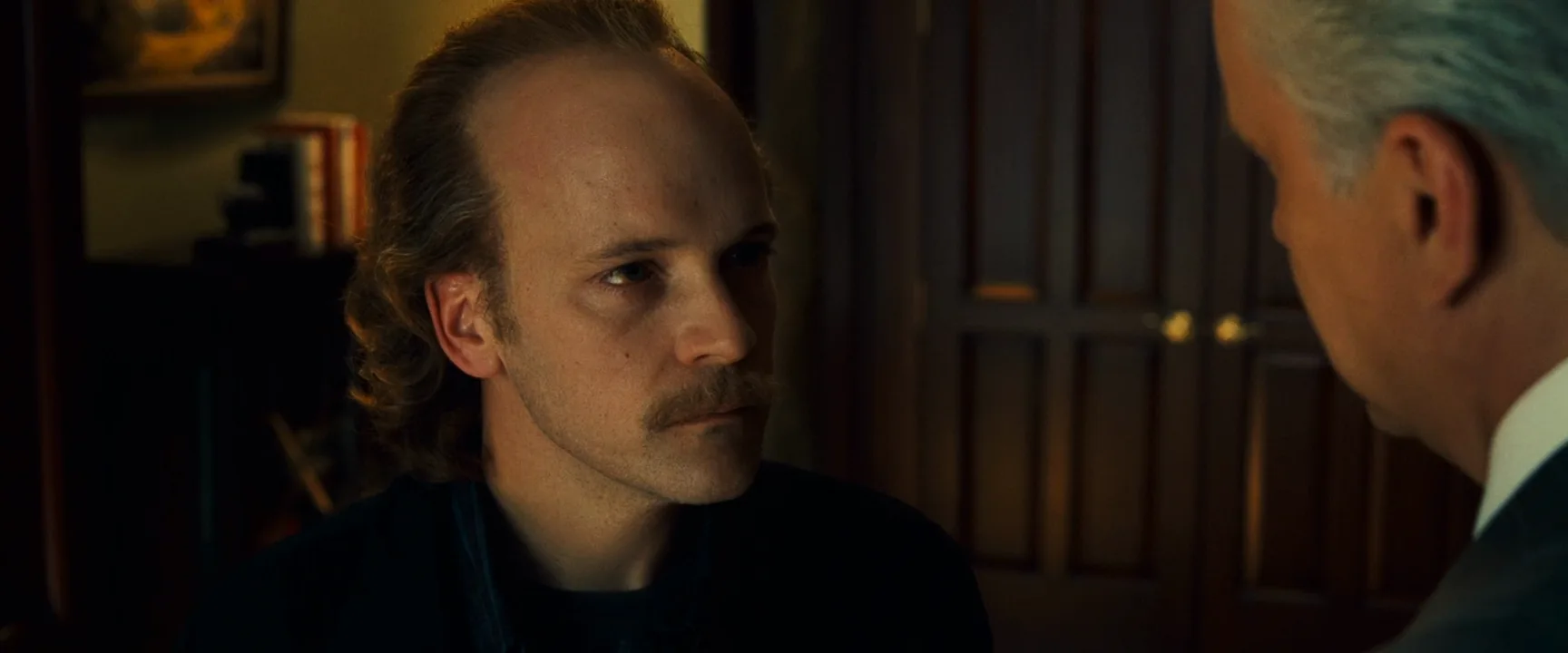
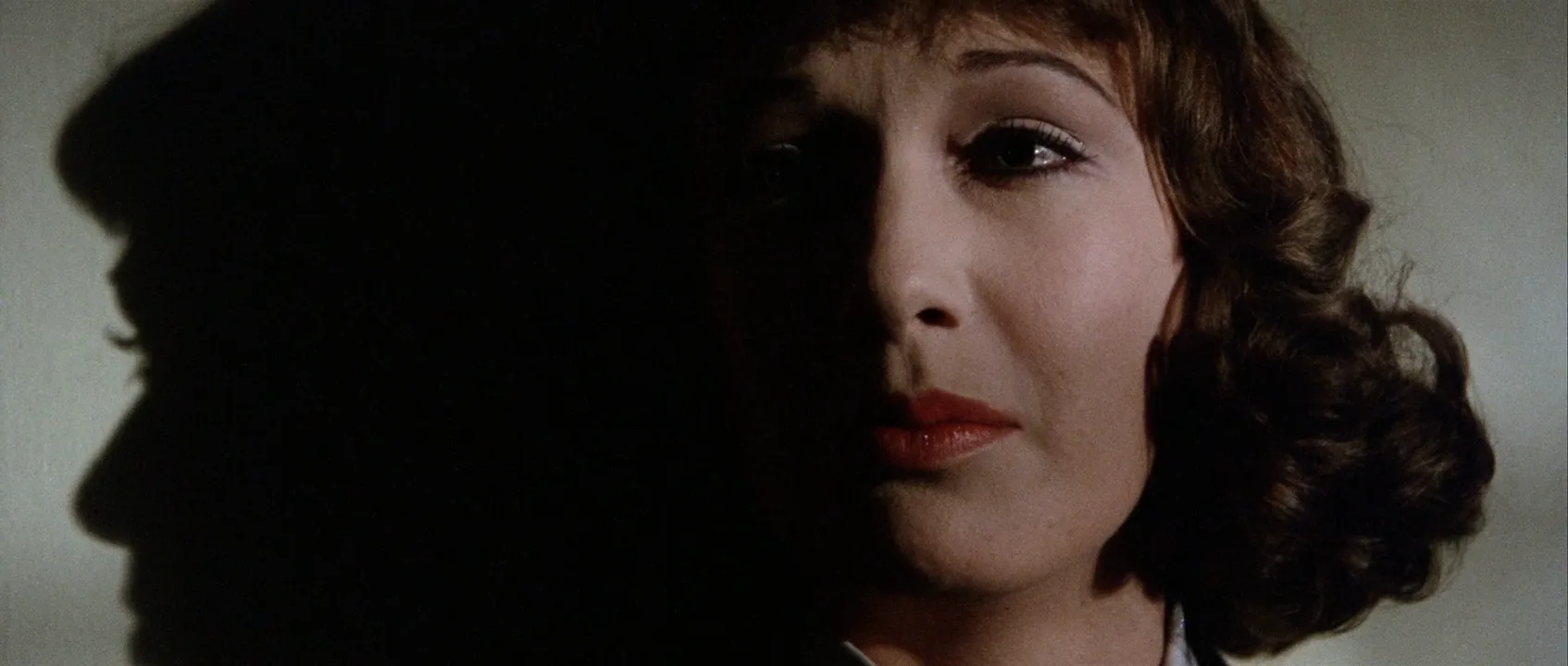
The triangle does not have to be crisp. With hard light its edges are sharp and graphic, almost painted on; with soft light from a big diffused source the triangle is still there but its edges melt into the cheek. The film frames below show both. A color cast or dark skin tone does not change it: you are reading the shape of the shadows, not the brightness of the face.
There are two versions depending on which side of the face the camera sees. In short Rembrandt the actor turns toward the key and away from the camera, so the shadow side faces the lens and the triangle sits on the cheek nearest the camera. This is the more dramatic and slimming version and the most common in close-ups. In broad Rembrandt the lit side faces the lens and the triangle is on the far cheek, partly turned away: calmer, more open, with more of the face in light.
Why do filmmakers use Rembrandt lighting?
Because it gives a face three dimensions with one light, and because half a face in shadow reads as a person with something held back. The triangle keeps the audience connected to both eyes, so the actor can still play the scene: unlike a full split, it never hides the performance.
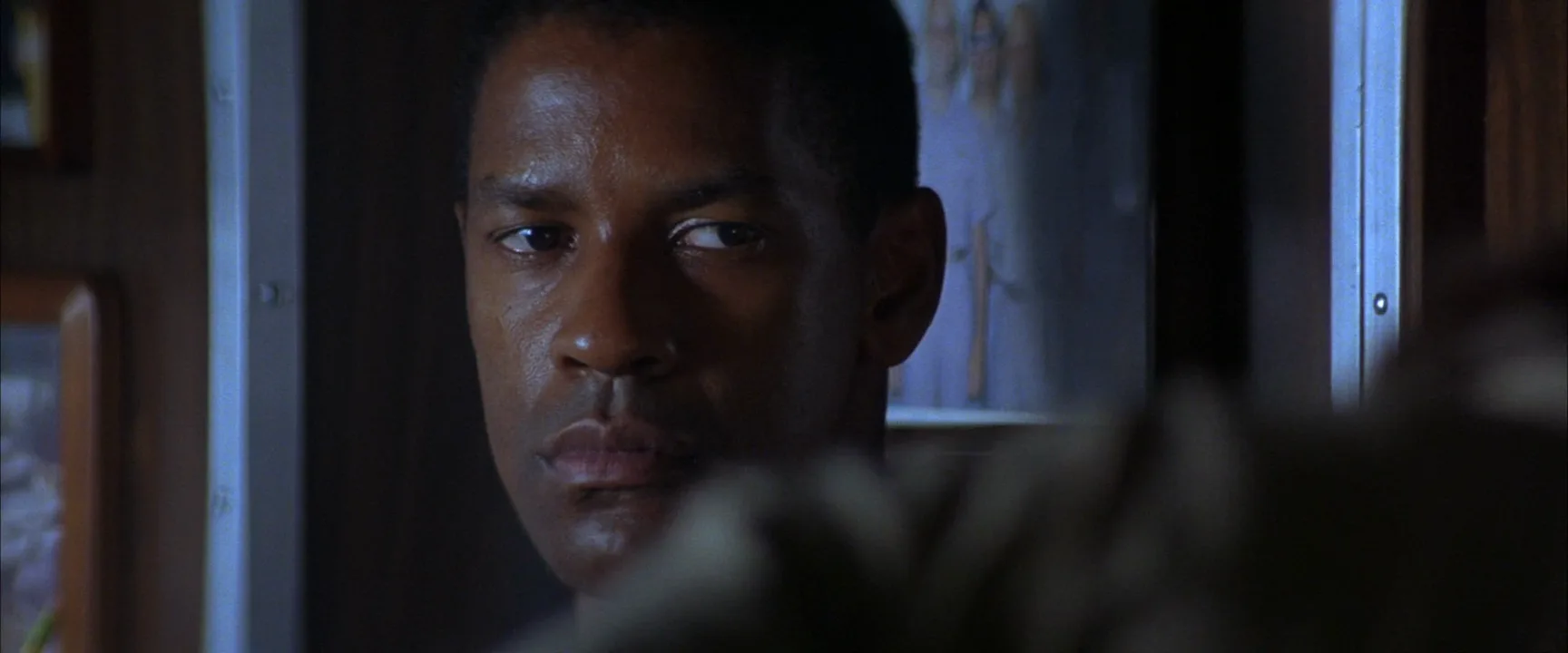
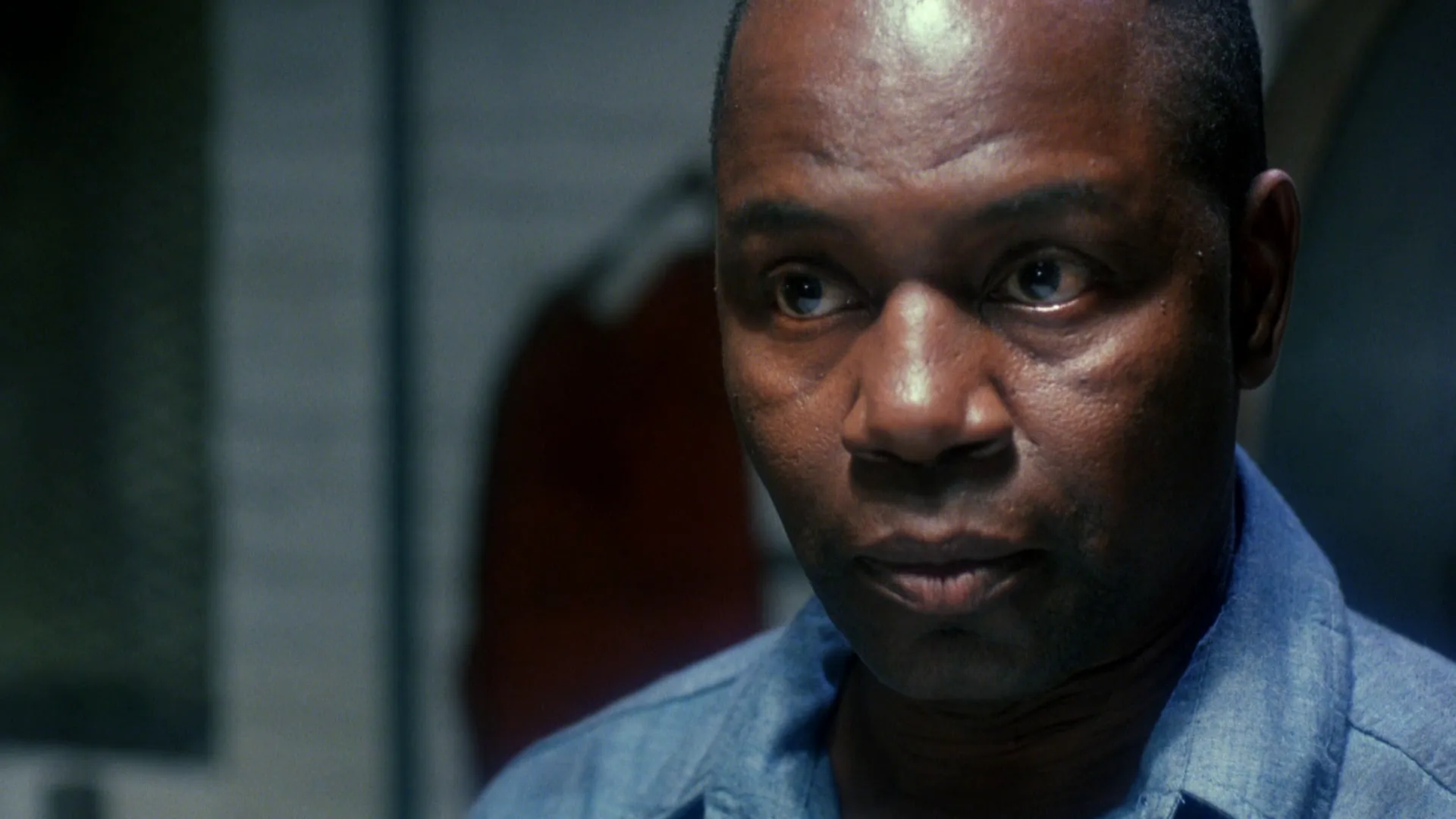
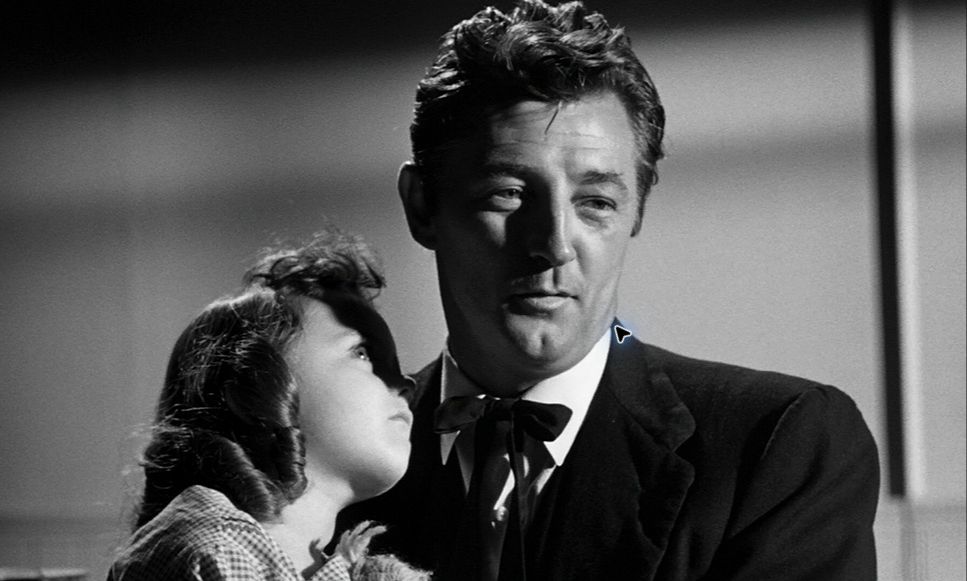
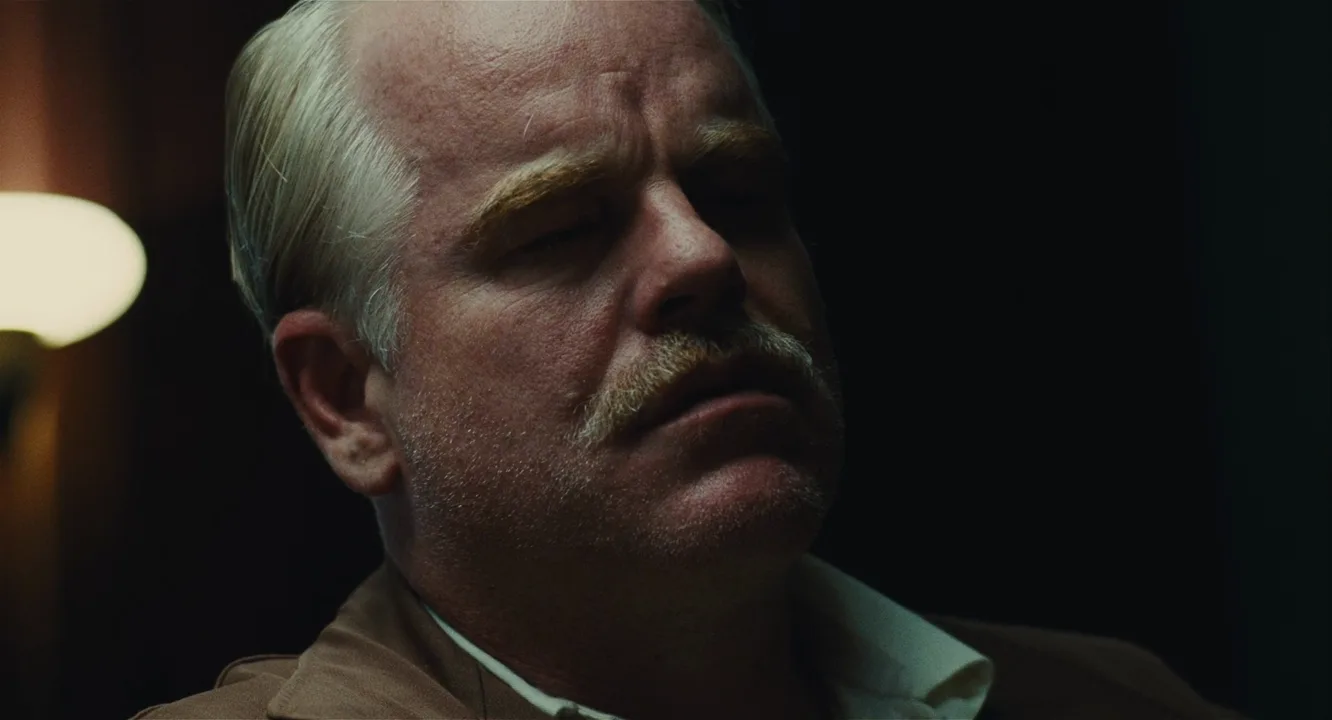
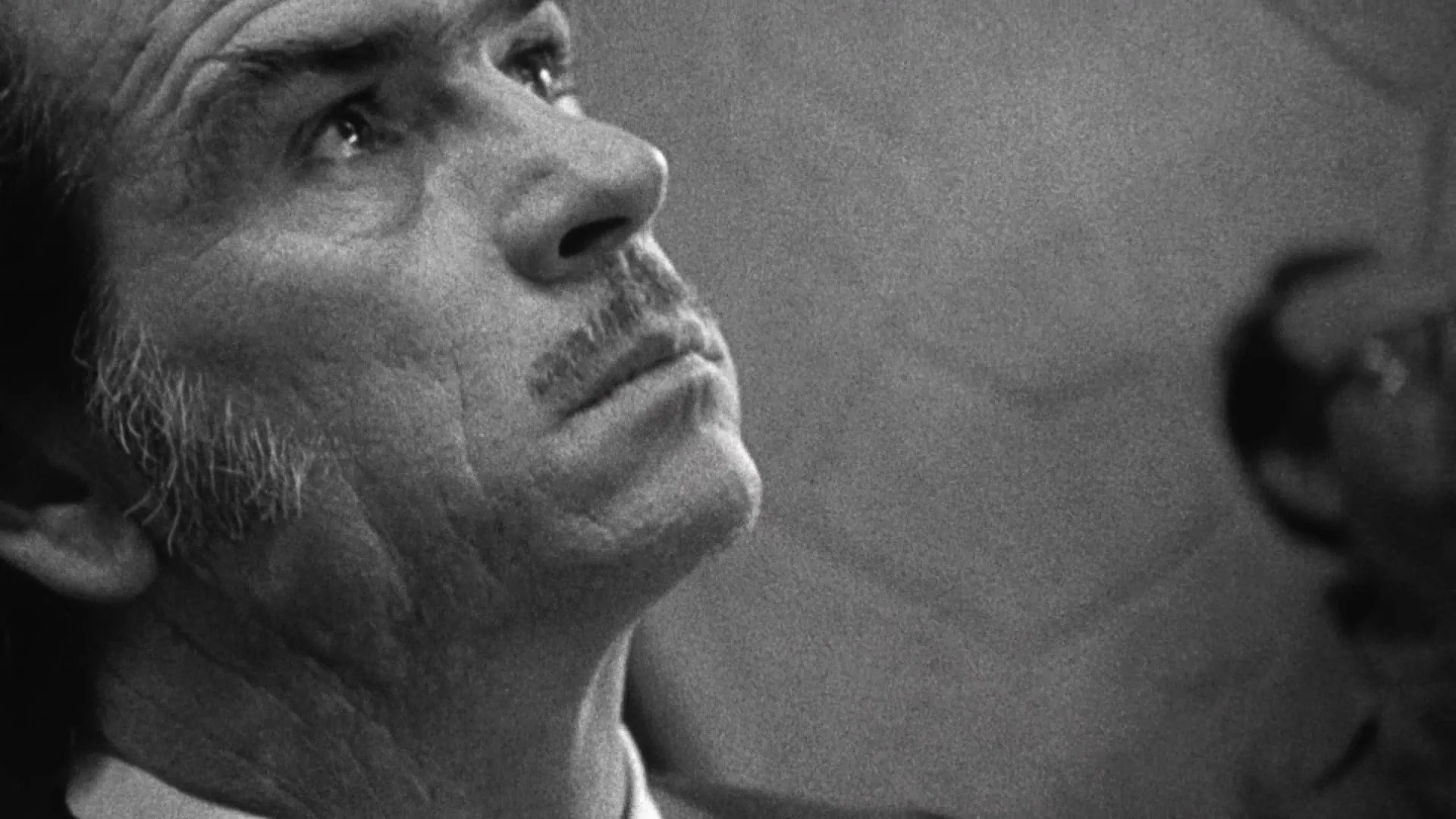
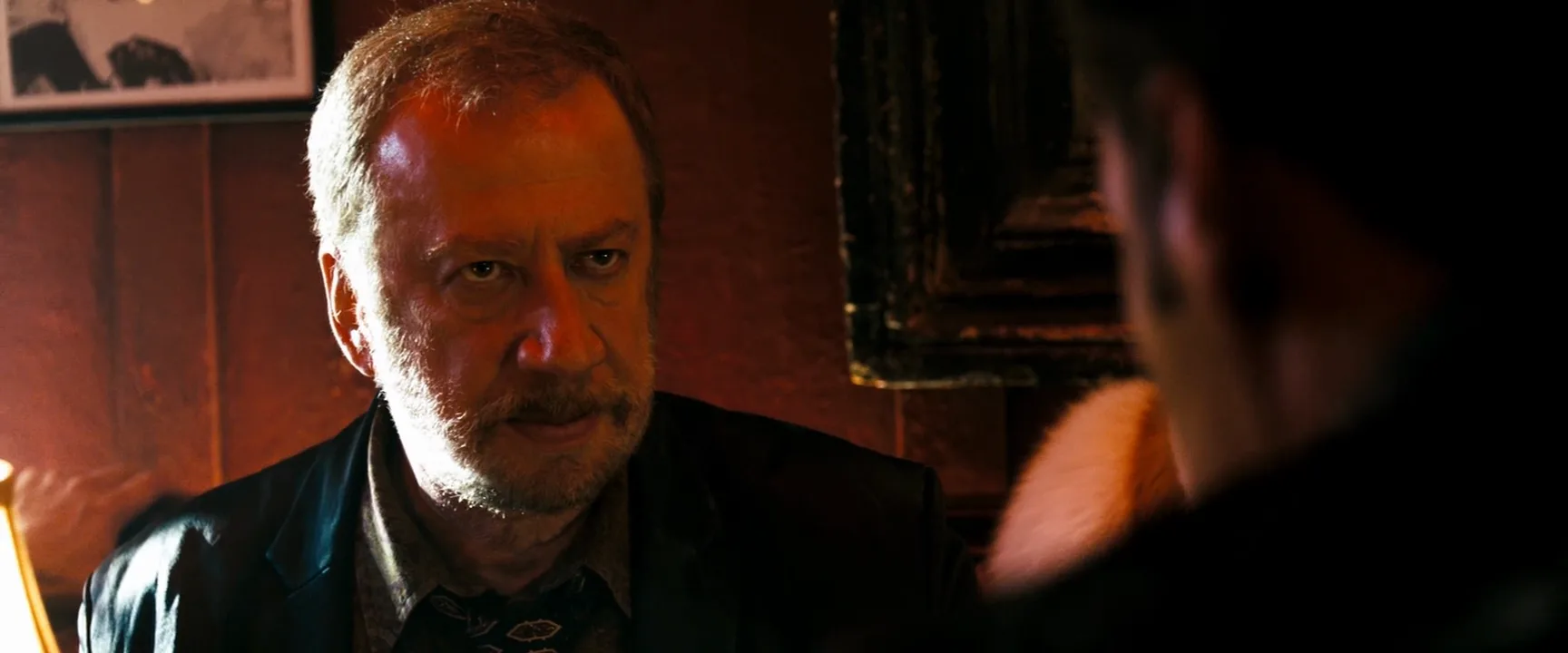
That balance is why it shows up across genres. In The Night of the Hunter (1955) a hard key carves Robert Mitchum's face while the frame stays graphic and clean. In Crimson Tide (1995) and Malcolm X (1992) the triangle gives tight close-ups weight and control. Crime films use it for weight and fatigue: Se7en (1995) lays a heavy key across deeply textured skin.
It is also a natural consequence of motivated lighting. A single window, a table lamp or a candle off to one side of an actor, slightly above the head, produces a Rembrandt pattern by itself. The DP places a practical light or a window where the story wants it, then cheats the actor's head until the triangle appears.
Rembrandt light is a middle register. With less contrast, it slides toward a friendly three-quarter portrait; with the fill removed and the background killed, it becomes the core of low-key lighting, where only fragments of the face emerge from the dark.
How to set up Rembrandt lighting
1. Place the key. Start with the key about 45° to one side of the camera–subject line and 30–45° above the actor's eyes, aimed down at the face. For a standing actor that often means a head on a stand at 2.2–2.6 m, 1.5–2.5 m from the subject. A 650 W to 1 kW tungsten Fresnel, a mid-size LED panel or a window all work; add a frame of diffusion or a book light if you want softer edges.
2. Find the triangle, then refine. Watch the shadow cheek on the monitor and move the light, not the actor, in small steps. Swing the key away from the camera until the nose shadow touches the cheek shadow; raise it until the triangle closes at the bottom. If the triangle vanishes, you went too far toward the side; if it spreads down the cheek, come back around. A turn of the head of 10–15° changes the pattern as much as moving the lamp half a meter, so give the actor a mark for the head, not only the feet.
3. Set the ratio. Rembrandt is defined by angle, but the mood is set by the fill. A key-to-fill ratio around 4:1 (two stops) keeps the shadow side detailed and naturalistic; 8:1 (three stops) is noir territory. Use a white bounce on the shadow side for a gentle lift, negative fill (black flag) to deepen it, or no fill at all when the room itself returns enough light.
4. Separate from the background. Keep the background one to three stops under the lit cheek and let it fall off. A small rim light from behind on the shadow side can outline the jaw and hair, but keep it dim or it fights the painterly look.
5. Choose lens and height. Rembrandt light is a close-up and medium close-up technique: a 50–100 mm lens at eye level, with the actor turned slightly toward the key for short Rembrandt. On wider shots the triangle is too small to read, and the light becomes plain side light.
6. Plan for movement. The pattern holds only in a narrow zone. If the actor walks or turns, either block the key moment on a mark, or accept that the face will pass through loop and split lighting on the way.
Rembrandt lighting vs. butterfly lighting
Both are single-key portrait patterns with the light above the eyes; the difference is the horizontal angle. Butterfly lighting puts the key straight in front of the face and high, so the nose casts a small symmetrical shadow under itself, both cheeks are lit and the cheekbones get a clean shadow below them. It flatters, smooths and glamorizes; classic Hollywood used it for stars' close-ups. Rembrandt moves the same light 45° to the side: the face becomes asymmetrical, one side falls into shadow and the texture of the skin comes forward.
| | Rembrandt | Butterfly | |---|---|---| | Key position | 45° to the side, above the eyes | On the camera axis, above the eyes | | Nose shadow | Runs down and across the far cheek | Small, directly under the nose | | Face | Asymmetrical, sculpted, half shadow | Symmetrical, open, smooth | | Mood | Gravity, doubt, introspection | Glamour, beauty, innocence |
On the other side sits side lighting: swing the key to 90° and the triangle disappears, the face splits cleanly down the nose and the shadow eye goes dark. Rembrandt is the last stop before that split, the angle where the face is still divided but still fully readable. If you are unsure which pattern a frame uses, look for the closed triangle: butterfly has none because both cheeks are lit, side light has none because the far cheek is fully dark.
Rembrandt Lighting examples in film
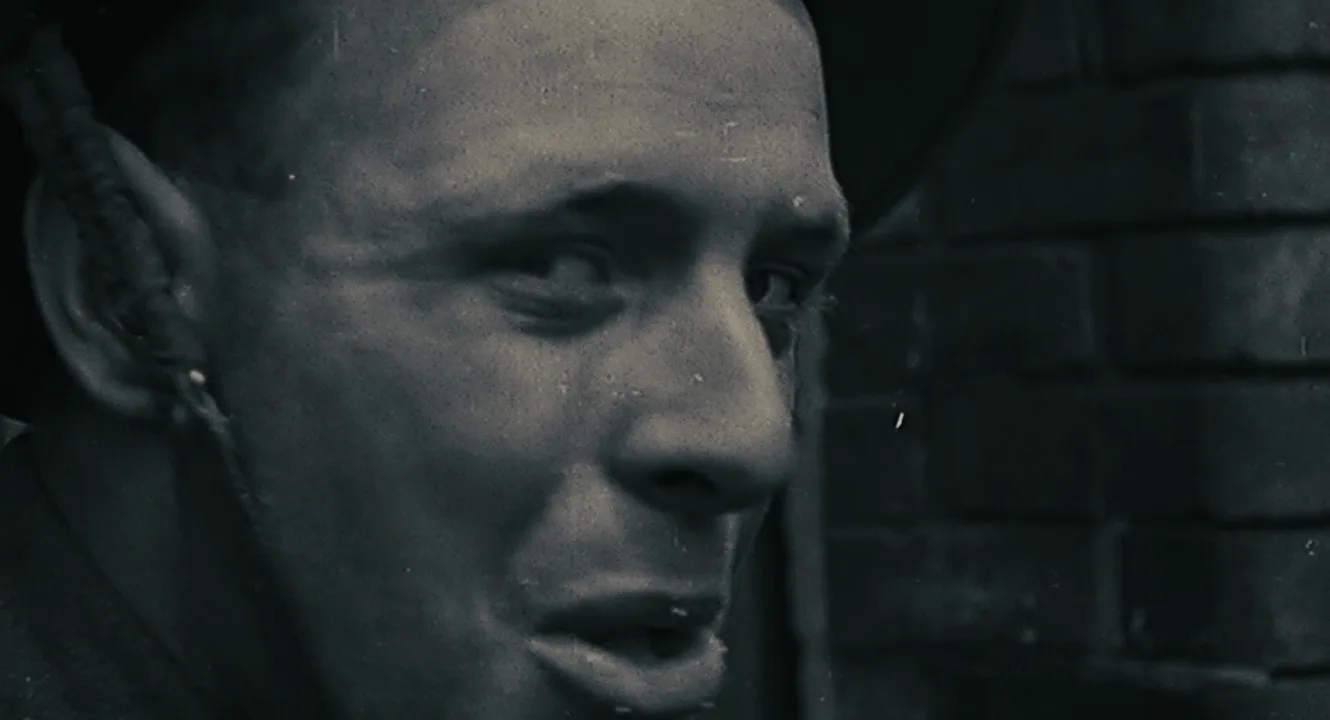
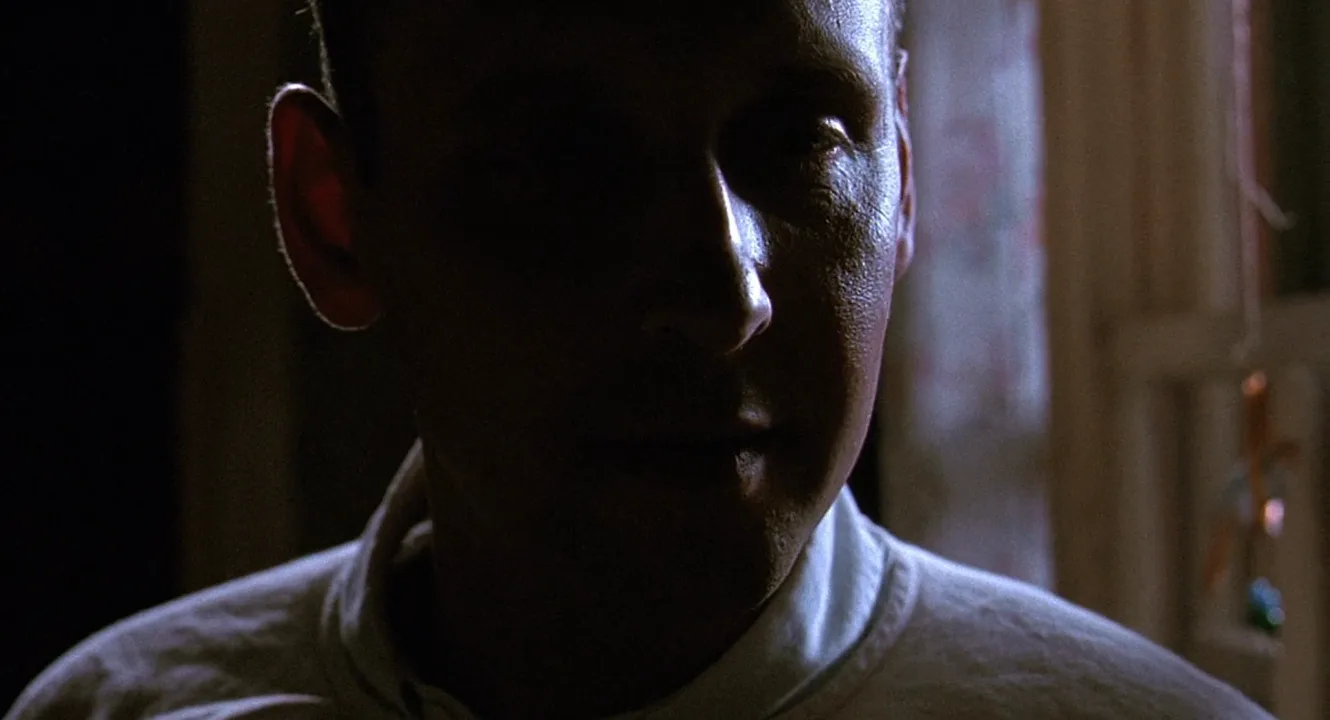
13 framesFrames where the key sits high and to one side and the shadow cheek keeps its triangle of light. Look at the cheek facing away from the key: that is where the pattern lives.
How to create a Rembrandt lighting with AI
4 promptsImage and video models know the phrase "Rembrandt lighting", but on its own it often produces a generic dark portrait. Describe the geometry instead: where the key is, how high, which cheek is in shadow and where the small triangle of light sits. In FlashBoards you can pin the film frames above next to your generations on one board, compare takes side by side and animate the one where the triangle is right. The fourth prompt re-shoots a real film shot from a text description alone, and the original plays next to the result so you can compare.
Tight cinematic close-up of a fictional woman in her fifties with close-cropped silver hair, a long straight nose, a small mole on her left cheekbone and a single silver hoop in her right ear, wearing a dark green wool coat, holding a folded handwritten letter just below her chin, against a pure black background. Lighting: a single small hard tungsten spotlight high above her head and 45 degrees to camera left, angled down at her face. No fill light, no bounce, no other light in the room. Her face is almost frontal to the camera, turned only a few degrees toward the light. The lit side of her face (frame left) is bright and crisp. The other side (frame right, her left cheek) falls into dark shadow, except for one small bright inverted triangle of light on that cheek directly under the eye: the dark shadow of her nose runs diagonally down and joins the dark shadow of her cheek, closing the triangle at the bottom. Hard-edged shadows, high contrast, catchlight in both eyes, 85mm lens at eye level, fine 35mm film grain, painterly old-master mood.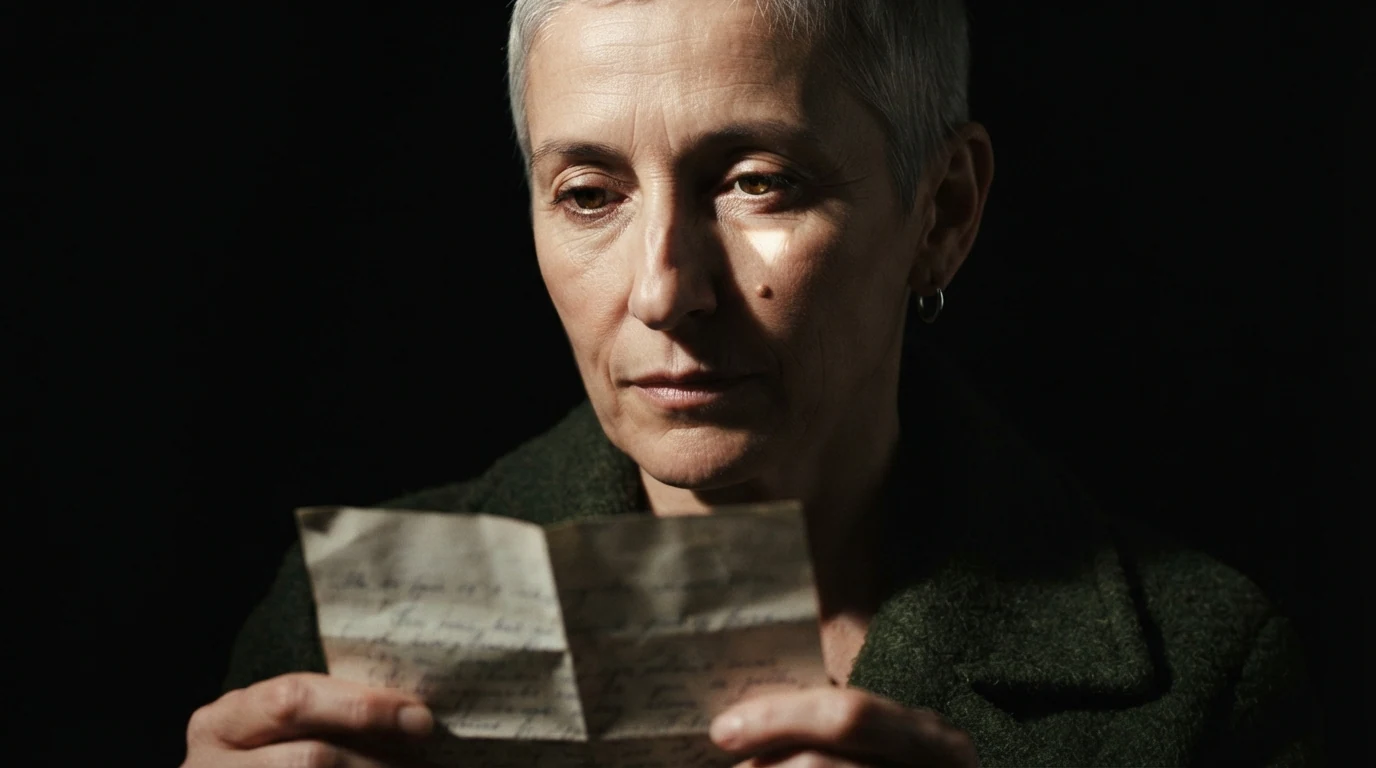
"A single small hard spotlight high above her head and 45 degrees to camera left" places the key, and "no fill light, no bounce, no other light" keeps the soft, even beauty light models default to out of the frame. The pattern is described as shapes the model can draw: the shadow side is dark "except for one small bright inverted triangle of light under the eye", with "the nose shadow joining the cheek shadow" to close it. "Almost frontal, turned only a few degrees toward the light" keeps the shadowed cheek facing the lens, a pure black background and a tight close-up make the triangle the brightest detail on that side, and the letter gives the video recipe something to animate.
Open FlashBoardsAnamorphic widescreen medium close-up of a fictional man in his thirties with a shaved head, a thick black beard trimmed short, heavy eyebrows, a thin scar across the bridge of his nose and deep brown skin, wearing a gray work shirt, standing beside a tall window in a bare concrete stairwell. Short Rembrandt lighting from soft overcast daylight: the window is high and to frame right, his head turned slightly away from it so the camera sees the shadow side of his face, a small soft-edged triangle of light on the cheek nearest the camera under his left eye, no fill, shadow side two and a half stops darker. Cool blue-gray palette, background wall in shadow, 65mm lens at eye level, quiet and tense.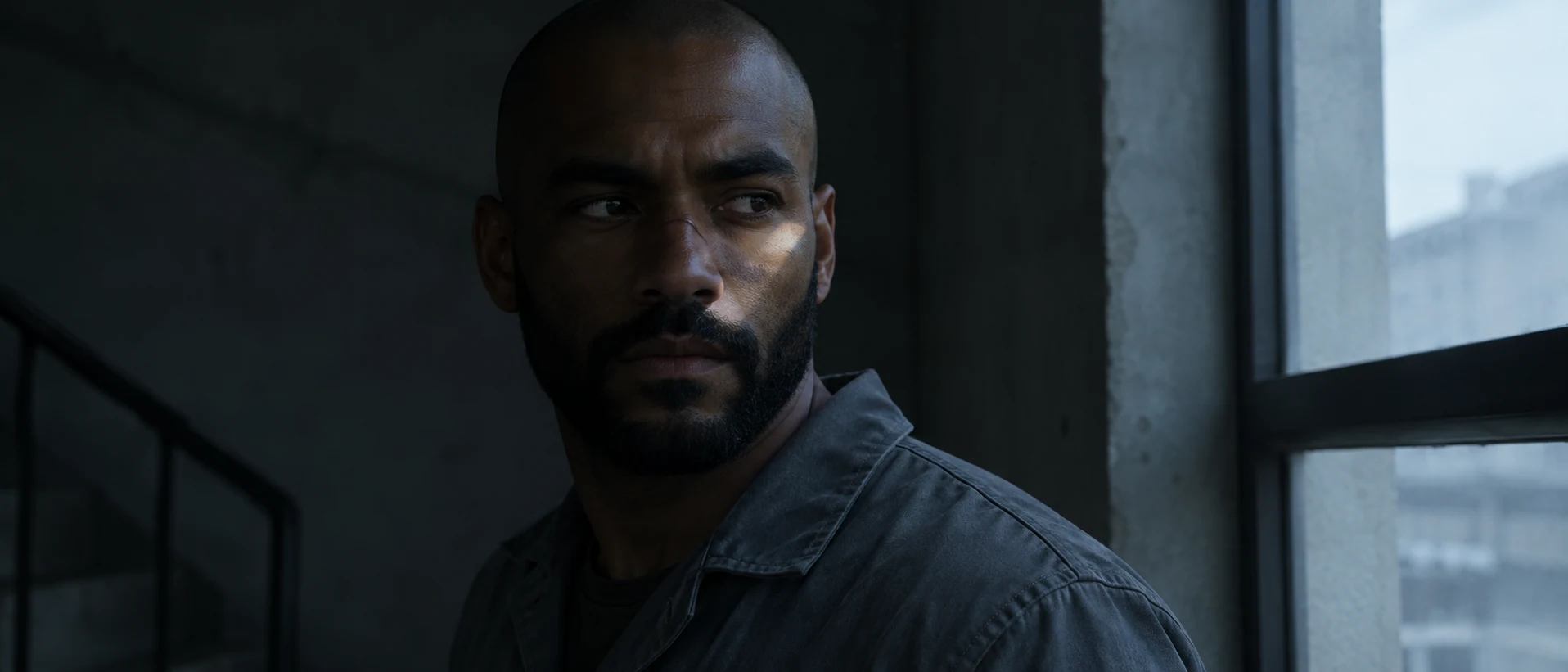
A second take changes subject, source and aspect: soft window daylight instead of a hard lamp, so the triangle has soft edges. "Head turned slightly away" plus "the camera sees the shadow side" asks for short Rembrandt, the more dramatic variant. Naming the triangle's position on the cheek nearest the camera matters: without it, models often light the side facing the lens.
Open FlashBoardsCamera: a slow, steady push-in from close-up to a tighter close-up on her eyes, starting immediately and moving about a hand's width closer by the end. Action: she is already unfolding the handwritten letter; her eyes move down across the lines as she reads, her breath catches, then she lifts her gaze slightly toward the warm key light on the left and holds still. The light stays constant: hard warm key high on the left, the small triangle of light remaining on her shadowed left cheek under the eye, background staying near black.The motion starts in the first words ("already unfolding the letter"), so the shot is alive from frame one instead of slowly drifting on a still. Lifting her gaze only slightly toward the key keeps the head angle close enough that the triangle survives. "The light stays constant" and restating where the triangle sits help hold the pattern through the push-in.
Open FlashBoards{
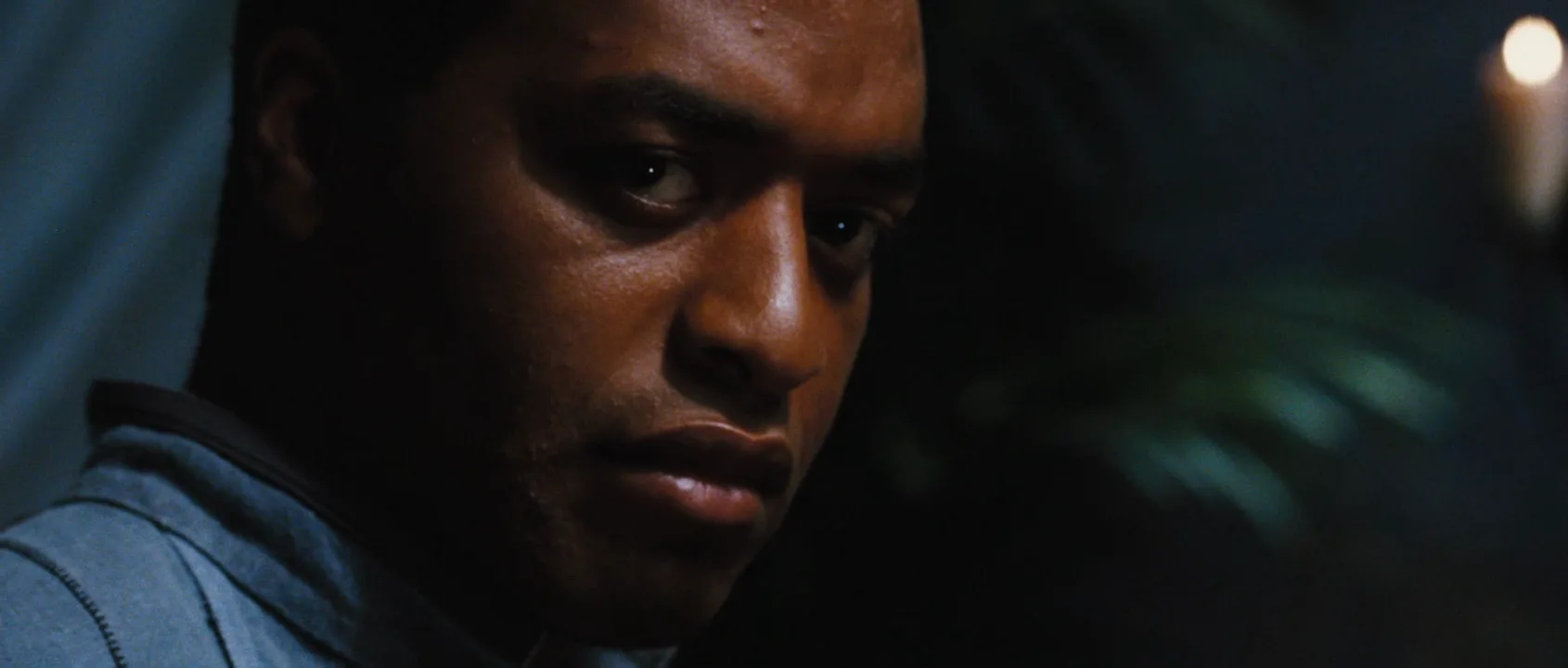
"output": "Full-screen live-action close-up from Serenity (2005) from its very first frame: one continuous shot, a single unbroken take. 2000s 35mm anamorphic widescreen film, fine grain, low-key night interior, deep teal-blue darkness and warm brown skin tones. Short Rembrandt lighting: one warm, fairly hard key light high above his eye line and about 45 degrees to frame right, on the side his face turns toward; the bridge of his nose, his far cheek and his lips catch that key, while the cheek nearest the camera (frame left) falls into shadow except for one small closed triangle of warm light under his frame-left eye, where the shadow of his nose meets the shadow of his cheekbone; very little fill, a small catchlight in each eye. Behind him, soft and out of focus: a blue-gray draped cloth on the far left, dark fern leaves glinting green on the right, and one white pillar candle with a small flame near the top-right edge.",
"characters": {
"S1": {
"name": "The Operative, played by Chiwetel Ejiofor",
"look": "man around thirty, dark brown skin, close-cropped black hair, a short dark stubble along the jaw and upper lip, a few small bumps on his forehead, a slate-blue jacket with quilted shoulder panels and a high dark navy collar band",
"voice": "low, calm, precise, quietly menacing, every word placed"
}
},
"shots": [
{
"shot": 1,
"camera": "close-up at his eye level, long anamorphic lens, shallow focus held on his head; almost locked-off, with only a slight, slow drift to the right as he turns, which brings the candle flame into the top-right edge; the framing then stays put to the end",
"voice": "S1 is silent until his single line at the very end; no other voice",
"action": [
"BEGINNING: alive from the first frame, S1 is seen from behind at frame centre: the back of his close-cropped head and his right ear, the navy collar of his slate-blue jacket along the lower left; his face is turned away from the camera, looking down toward the back right, and his head is already starting to turn to his right.",
"THEN: his head keeps turning toward frame right until his face is in profile facing frame right, eyes cast down; the warm key from frame right catches the tip of his nose, his lips and his far cheek, while his ear and the back of his head stay dark; the camera drifts slightly right and the candle flame appears at the top-right edge.",
"THEN: he continues the turn toward the camera and his head settles in the left third of the frame, face three-quarters toward the lens but still angled to frame right, head bowed, eyes down toward the lower right; the cheek nearest the camera sinks into shadow and the small triangle of light appears under his frame-left eye.",
"THEN: without moving his head, he lifts his eyes to a hard, level stare at a point just right of the lens, brows lowered, jaw set, lips closed.",
"THEN: he holds completely still, only breathing: no nod, head bowed a little, eyes fixed on the same point, the light on his face unchanged.",
"THEN: his lips part slowly and he draws one quiet breath, gaze still locked just right of the lens.",
"END: he starts to speak, only his lips and jaw moving, head and eyes fixed; the triangle of light still sits under his frame-left eye."
],
"dialogue": [
{
"speaker": "S1",
"on_screen": true,
"when": "only at the very end of the shot, after his lips have parted; nobody speaks before it",
"delivery": "quiet, level, precise, a threat said as a plain fact",
"line": "<d>[English] I have a warship in deep orbit, Captain.</d>"
}
]
}
],
"sound": {
"ambience": "the low hum of a quiet room, the soft rustle of his jacket collar as he turns, his slow breath before he speaks",
"speech": "exactly this one spoken phrase, said once, by S1 at the end of the shot; before it, nobody speaks",
"never_spoken": "no narration and no voice-over: the descriptions, performance notes and step words of this prompt are never spoken aloud",
"music": "a film score under the scene, always below the voices: low sustained dark strings with a slow, ominous pulse that thins out just before he speaks",
"subtitles": "none"
}
}Remakes the close-up of the Operative (Chiwetel Ejiofor) in Serenity (2005), dir. Joss Whedon, DP Jack N. Green, keeping his turn from behind into a key from frame right, the patch of light under the camera-side eye, the candle behind him and his one line.
The light sits in output as geometry the model can draw: a key high and 45° to frame right, the camera-side cheek in shadow except for a closed patch under the eye, very little fill. The action steps copy the original's beat, a turn from behind into the key and a lifted stare, so the pattern forms on screen, and the only spoken line is the film's own.
Common mistakes
- The word alone is not enough. "Rembrandt lighting" often yields any dark, warm portrait. Add the geometry: "key high and 45° to camera left", "small triangle of light on the shadow cheek under the eye".
- Split light instead of Rembrandt. If the far cheek goes fully dark, the model pushed the key to 90°. Ask for "nose shadow meeting the cheek shadow, closed triangle of light under the eye" and "catchlight in both eyes".
- Flat front light. Models drift toward even beauty light. State the ratio ("4:1", "shadow side two stops darker") and "very low fill".
- Wrong side in short Rembrandt. Say which way the head is turned relative to the key and which cheek faces the camera.
- Triangle lost in video. Big head turns break the pattern. Keep actions small, repeat the light setup in the video prompt and move the camera slowly.
Keep the reference frames, prompts and every generated take side by side — images and video in one canvas.
FAQ
6 questionsWhat is Rembrandt lighting in film?
It is a single-key portrait pattern: the main light sits high and about 45° to one side of the face, so the far cheek falls into shadow except for a small triangle of light under the eye. Cinematographers use it in close-ups to give a face volume and seriousness while keeping both eyes readable. It can be made with a lamp, a window or any practical source placed in that position.
How do you set up Rembrandt lighting?
Put one key light about 45° off the camera axis and 30–45° above the subject's eyes, pointed down at the face. Adjust it until the nose shadow touches the cheek shadow and leaves a closed triangle of light under the far eye. Keep the fill low, around a 4:1 ratio, and let the background fall off. Fine-tune with small head turns rather than big lamp moves.
What is the Rembrandt triangle?
The Rembrandt triangle is the small patch of light on the shadow-side cheek, bounded by the shadow of the nose and the shadow of the cheekbone. Traditionally it is no wider than the eye and no longer than the nose. If the patch opens into the lit side, you have loop lighting; if it disappears, you have split or side lighting.
What is the difference between Rembrandt and butterfly lighting?
Both put the key above the eyes, but butterfly lighting keeps it straight in front of the face, creating a small shadow under the nose and an even, symmetrical, glamorous look. Rembrandt lighting moves the key about 45° to the side, putting one cheek in shadow with a triangle of light, which makes the face asymmetrical, textured and more dramatic.
Why is it called Rembrandt lighting?
It is named after Rembrandt van Rijn, the 17th-century Dutch painter whose portraits often show a face lit by one high light from the side, with a glowing cheek against a dark ground. In cinema the name is usually traced to Cecil B. DeMille and art director Wilfred Buckland, who used single-source side light in the 1910s and called it Rembrandt lighting.
What are some Rembrandt lighting examples in movies?
Clear examples include close-ups in The Night of the Hunter (1955), Malcolm X (1992), Crimson Tide (1995), Se7en (1995) and Serenity (2005). In each, a key from high and to the side leaves one cheek in shadow with a lit patch under the eye.
Related terms
6- Butterfly LightingLighting
Butterfly lighting puts the key light high and straight in front of the face, casting a small butterfly-shaped shadow under the nose; it sculpts cheekbones and was the classic Hollywood glamour look.
- Side LightingLighting
Side lighting puts the key roughly 90° to the side of the subject, splitting the face into light and shadow and raking across texture — the most direct way to reveal volume and inner conflict.
- Key LightLighting
The key light is the main light on a subject: it sets the direction, hardness and color of the illumination, and every other source — fill, back, practicals — is balanced against it.
- Fill LightLighting
Fill light is a softer, weaker source on the side opposite the key that lifts the shadows the key creates; its level relative to the key — the lighting ratio — decides whether a face looks open and bright or moody and sculpted.
- ChiaroscuroLighting
Chiaroscuro, borrowed from Renaissance and Baroque painting, is dramatic modelling with strong light and deep shadow — usually one hard side or top source carving faces out of darkness — the backbone of German Expressionism and film noir.
- Low-Key LightingLighting
Low-key lighting keeps most of the frame in shadow, with a strong key, little or no fill and a high lighting ratio, so only fragments of faces and objects emerge from the dark — the language of noir, thrillers and horror.
Further reading
Blain Brown, Motion Picture and Video Lighting (Focal Press). Kris Malkiewicz, Film Lighting (Touchstone). Scott Eyman, Empire of Dreams: The Epic Life of Cecil B. DeMille (Simon & Schuster).