 FlashBoards Learn
Lighting · Film language
Firelight
Also called: candlelight, fire light, campfire lighting
Firelight is light from flames, or lighting built to imitate them: candles, fireplaces, torches, campfires. It is warm orange, low and small, it flickers, and it falls off into darkness within a few feet. On camera it reads as intimacy, the past or danger, and on set it is usually faked with dimmed, flickering tungsten.
- What it does
- Makes a flame the motivated key: warm, low, unsteady light that sculpts faces and leaves the room in shadow.
- Use it when
- The scene happens before electricity, around a hearth or campfire, by candle, or near something burning.
- Watch out
- A steady orange wash with no visible source and no falloff reads as a color grade, not as fire.
- Try this prompt
night interior, lit only by an open fireplace at frame left, warm orange flicker on the face, far side in deep shadow, room falls to black, 50mm
What is firelight in film?
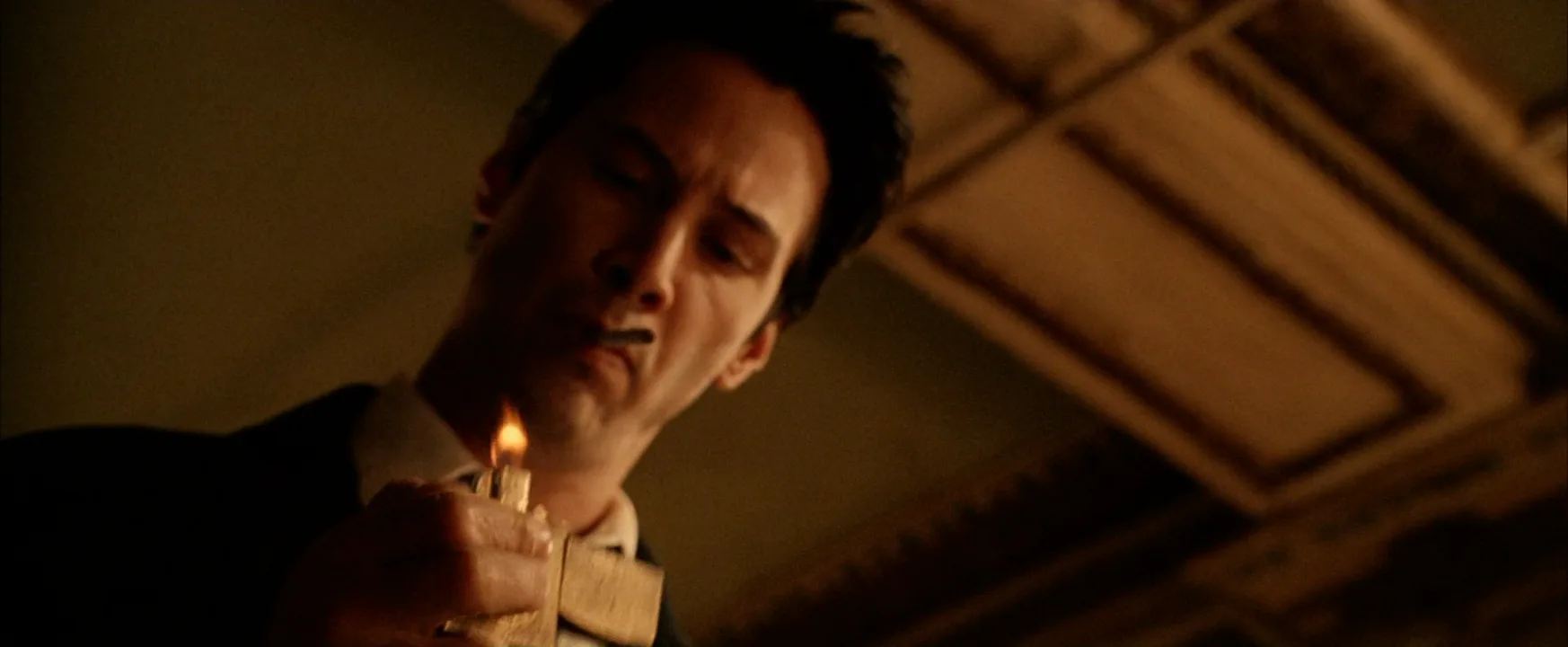
In film lighting, firelight means the scene is lit, or appears to be lit, by an open flame. Often the flame is in frame, which makes it a special case of practical lighting.
- Color. A candle burns at roughly 1800–1900K, far warmer than tungsten light at 3200K, so on a tungsten-balanced camera it reads deep amber.
- Height. The source is small and low, at table, floor or hand height, so light comes from below or the side.
- Falloff. A face a foot from a candle is lit; a wall eight feet away is nearly black.
- Movement. Flames breathe, so brightness and shadow edges keep shifting.
Why do filmmakers use firelight?
Intimacy. A flame lights only what is near it, pushing the world into darkness.
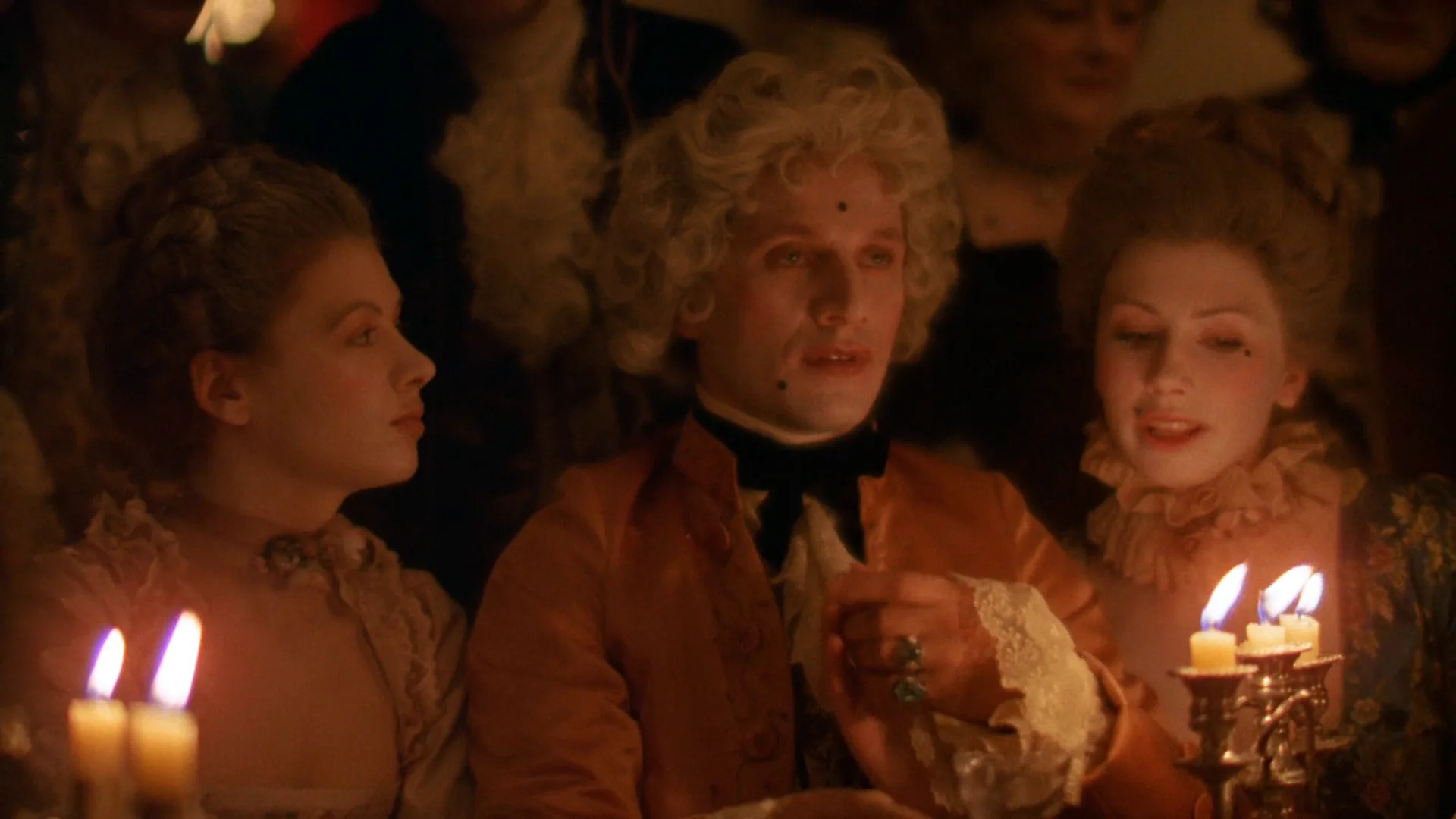
Period truth. Before electricity every night interior was lit by flame. For Barry Lyndon (1975), Stanley Kubrick and John Alcott used Zeiss lenses at f/0.7 so real candles could carry the exposure.
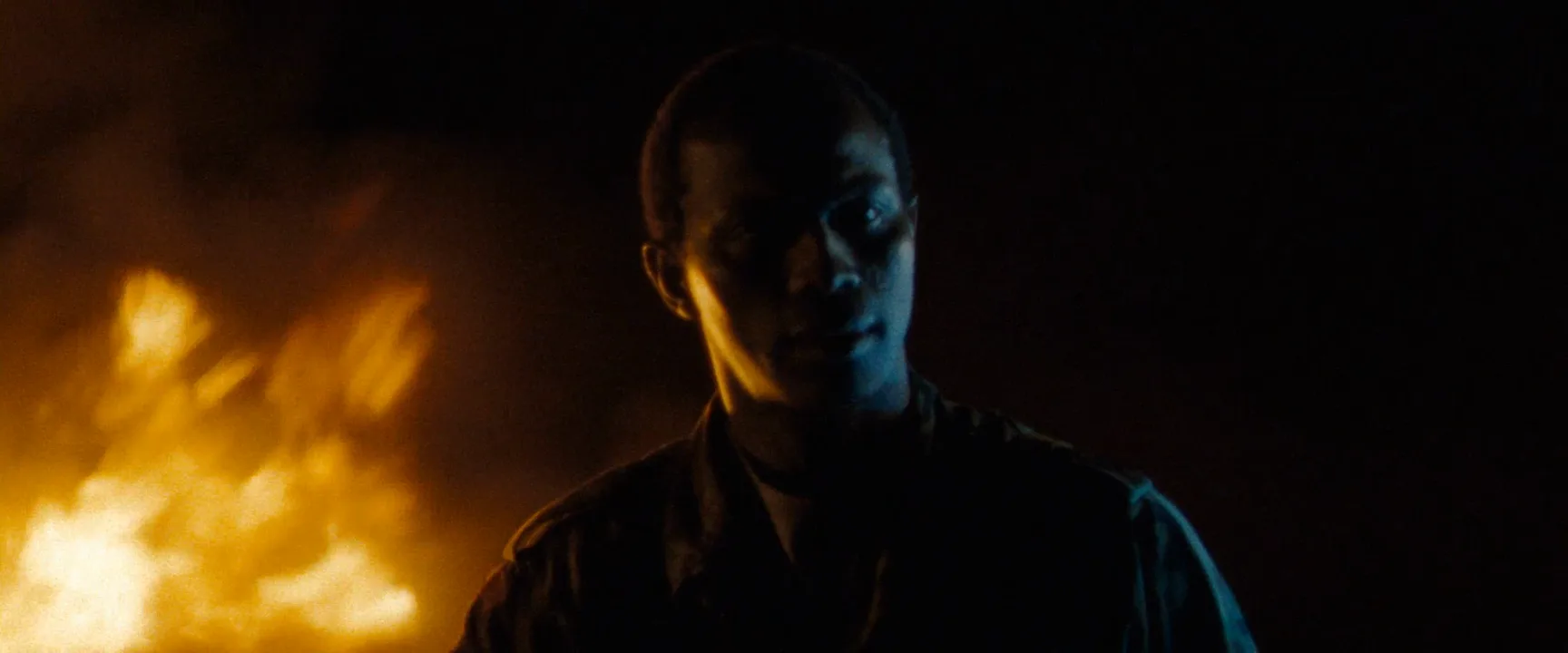
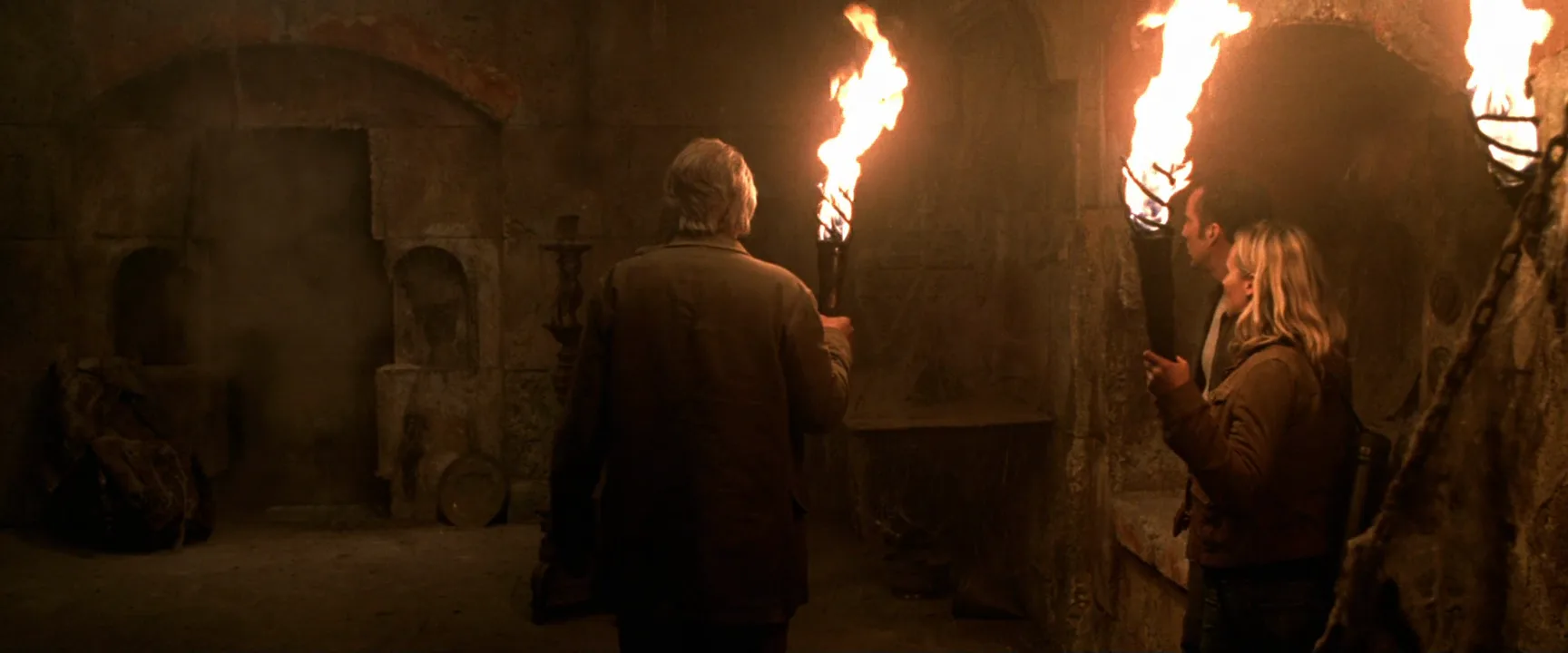
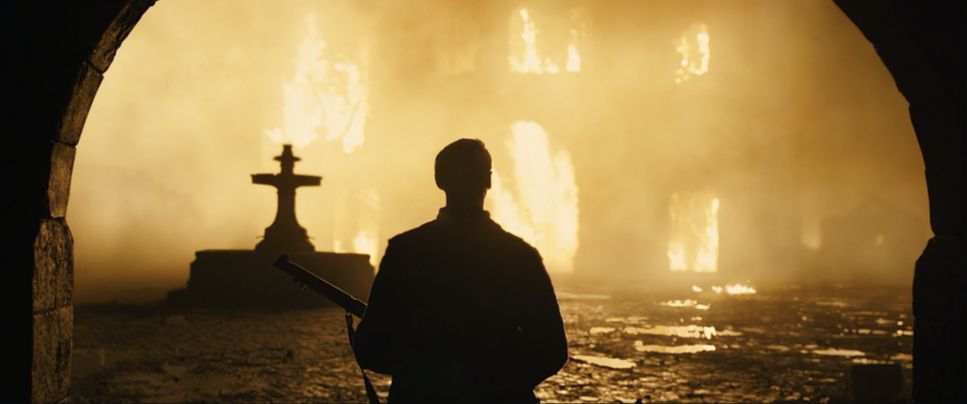
Threat. A burning house or a torch in a tunnel turns the same warm color into danger.
Shape. A low, small source produces low-key lighting almost by itself: one bright side, deep shadow, high contrast, the same logic Baroque painters used for chiaroscuro.
How to fake firelight on set
Real flames rarely give enough exposure, so most firelight is a real flame in frame plus hidden lamps that copy it.
Source. Warm tungsten fresnels or LED panels placed where the fire is: low, just out of frame, aimed the way the flame would throw light.
Color. Dim tungsten toward orange or add half to full CTO, with the camera near 3200K so the flame stays warmer than skin. See color temperature.
Flicker. Lamps on separate dimmer channels in a slow, irregular chase, an LED flicker effect, or cloth waved in front of a lamp. A regular pulse looks electric.
Falloff. Little or no fill. Let the far side of the face and the back wall go dark, and let the flame itself clip slightly.
Candlelight, campfire and torches: how the source changes the look
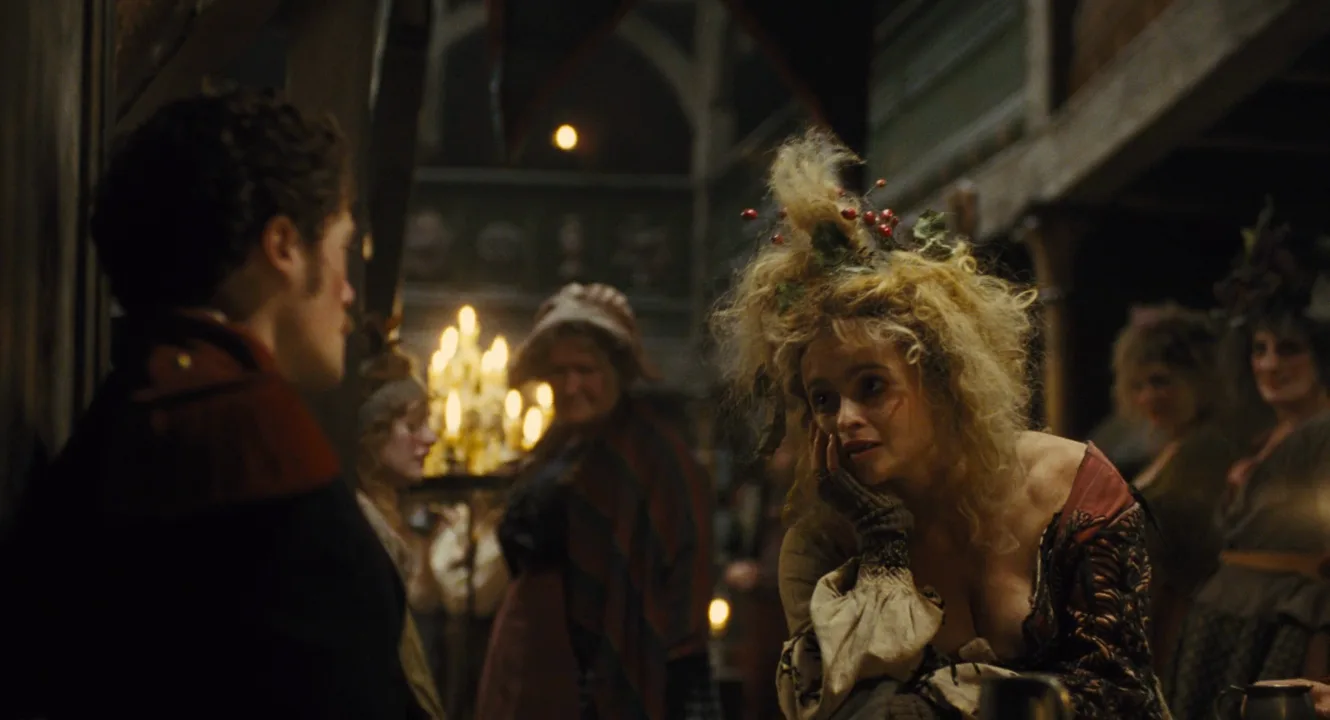
Candlelight is the smallest source: it lights a face within arm's reach, puts points of light in the eyes and fades before the walls.
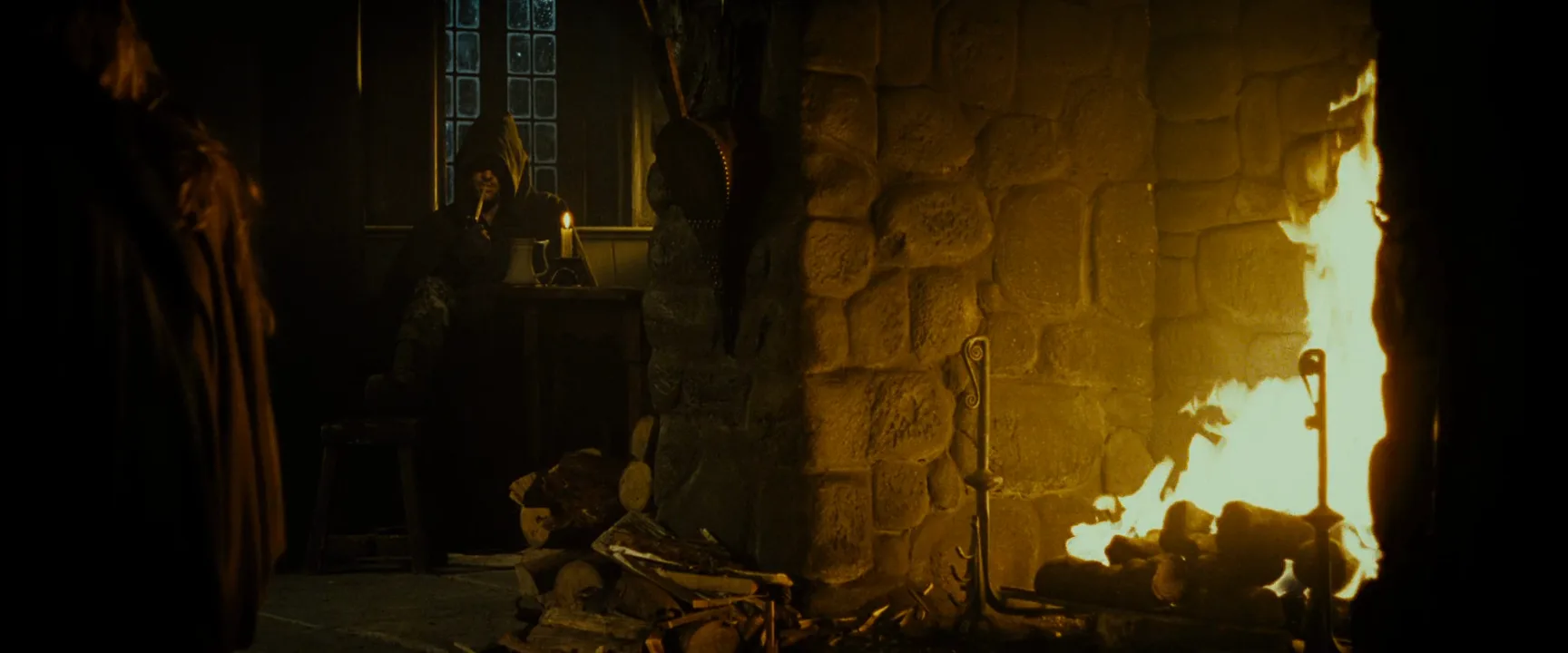
A fireplace lights from one side at seat height and covers a whole seating area, the classic warm key for a night interior.
A campfire rises from the ground in the middle of the group, so faces are lit from below and can drift into sinister under lighting.
Torches are held high and travel with the actor. Large fires become backlights that turn people into silhouettes.
Firelight vs. practical lighting
Practical lighting is any visible source in the shot, from a desk lamp to a TV. Firelight is one kind with its own rules: a lamp gives steady, even light; a flame gives unsteady amber light that falls off fast. The method is shared, but firelight adds flicker and a warm color palette.
Firelight examples in film
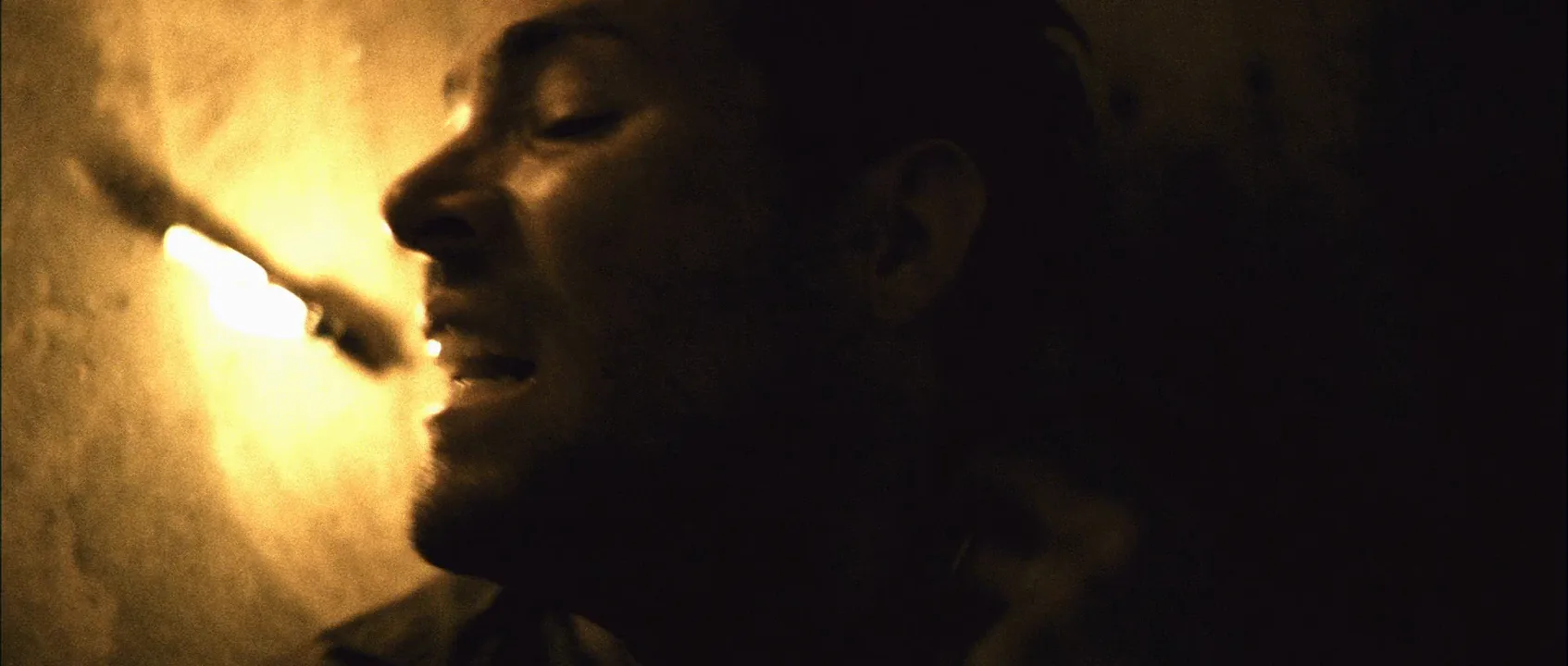
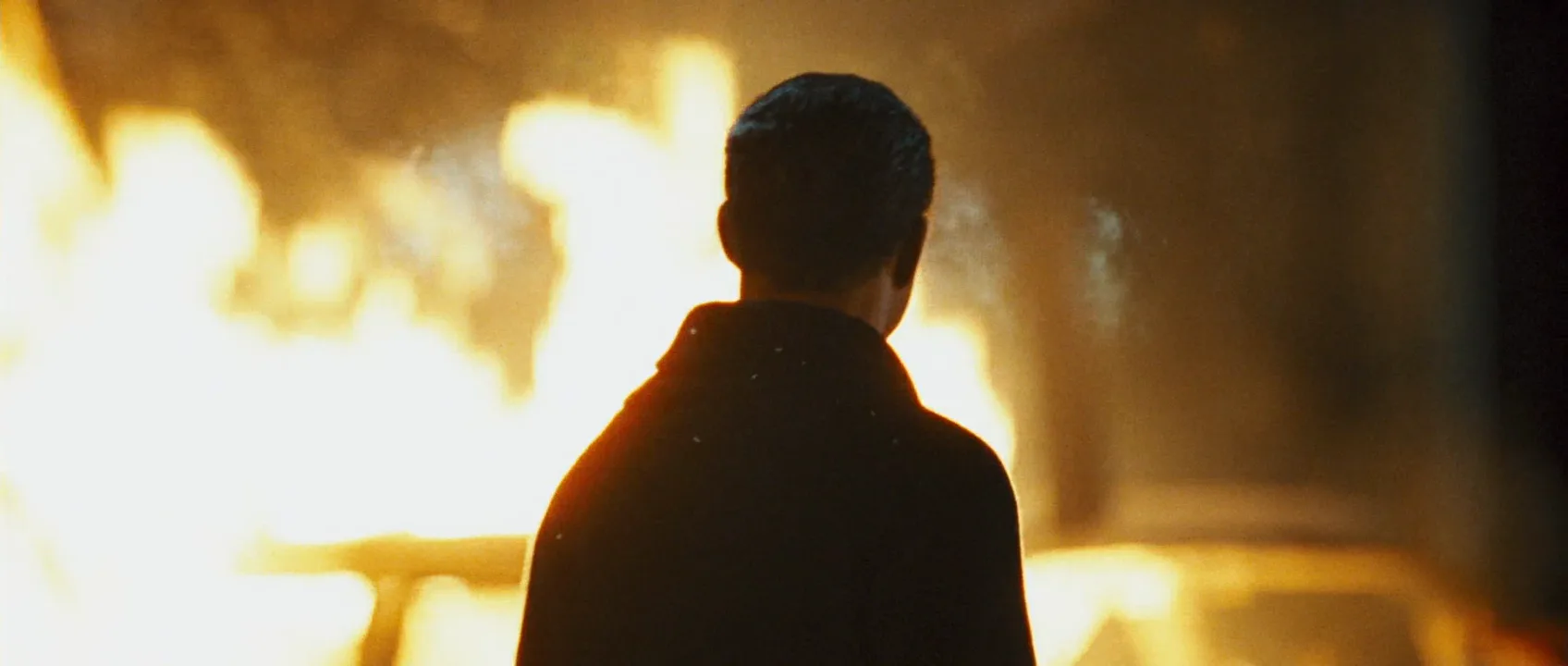
9 framesFrames where a flame is the source you believe in: note where the warm key comes from and how fast it dies.
How to create a firelight with AI
4 promptsImage models know fire is orange but often tint the whole frame instead of lighting from the flame. Place the fire, say it is the only light, and describe where the light stops. Keep all three takes on one FlashBoards board to compare falloff side by side. The fourth prompt re-shoots a real film shot from a text description alone, and the original plays next to the result so you can compare.
Cinematic medium close-up, night interior of a stone cottage. A fictional man in his sixties with a white chin-length bob, a crooked nose and a moss-green wool cardigan sits on a low stool, feeding a split log into an open fireplace at the left edge of the frame. The fire is the only light: warm orange light from low on the left models his face and hands, the far side of his face falls into deep shadow, the back wall is barely visible. Flames and embers at frame left. 50mm lens at seated eye level, fine film grain.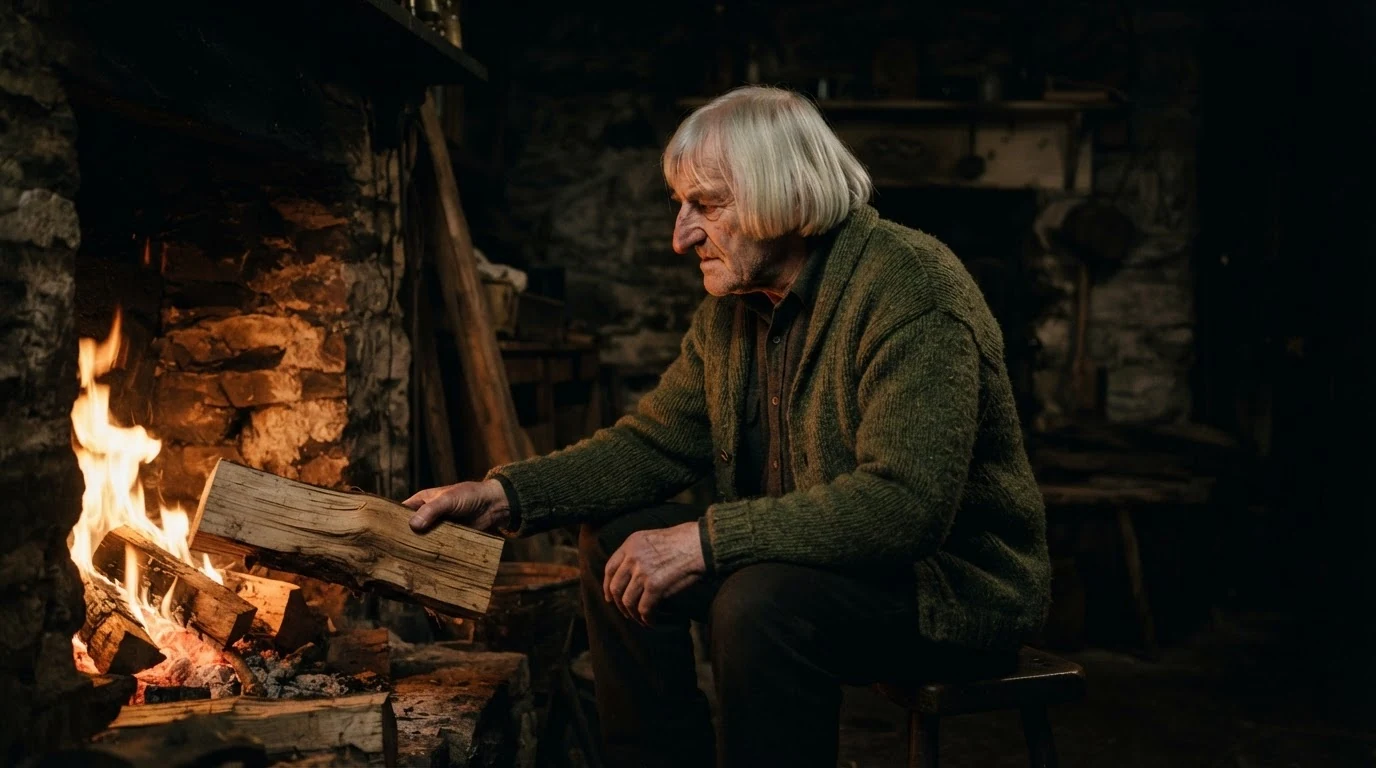
"The fire is the only light" and "from low on the left" fix direction and height; naming what falls into shadow lets the room go dark, and flames in frame motivate the light.
Open FlashBoardsWide 21:9 night exterior, a pine clearing. Three fictional hikers on logs around a small campfire: a young woman with close-cropped bleached hair and a yellow rain shell, a heavyset bearded man in red flannel, a teenage boy with round glasses and a grey beanie. The campfire is the only light: faces glow orange from below and the front, fading within a few meters. Pine trunks are dark silhouettes against a navy sky. Sparks rising. 35mm lens at seated height.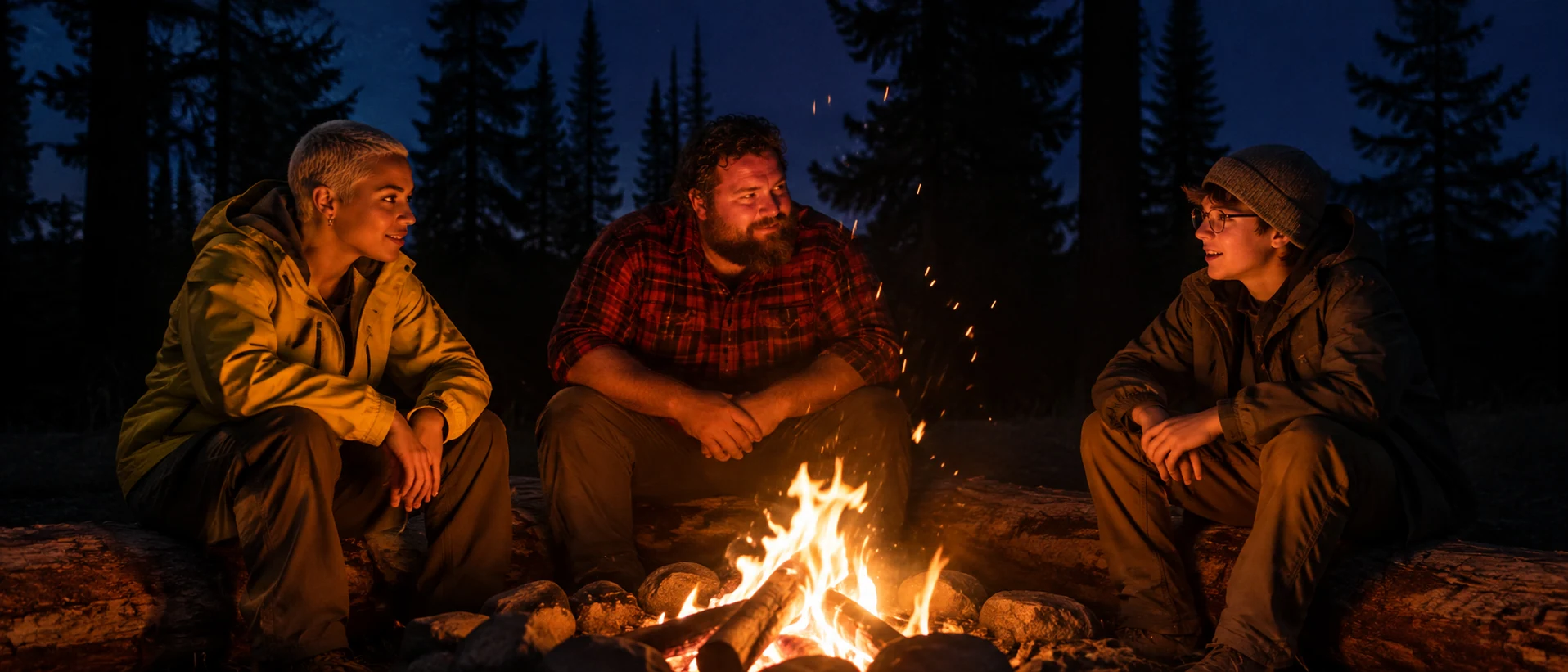
A campfire instead of a hearth. "Fading within a few meters" sets the falloff, the navy sky gives the warm pool a cool edge, and seated camera height keeps it from reading as horror.
Open FlashBoardsCamera: a slow, steady push-in from medium shot to medium close-up, starting immediately, with the flames kept at the left edge of frame the whole time. Action: The flames flicker from the first moment and the orange light on his cheek and hands pulses unevenly with them. He pushes the log deeper and a burst of sparks rises past his face. At the end he leans back and the light on his face steadies, the far side of his face in deep shadow.Motion starts on the first frame; flames held at the frame edge keep the source in shot during the push-in, and "pulses unevenly" asks for irregular flicker.
Open FlashBoards{
"output": "Full-screen live-action scene from Barry Lyndon (1975), from its very first frame: one continuous locked-off shot. Grainy 1970s 35mm, an eighteenth-century gaming salon at night lit by candle flames alone, shot wide open with very shallow focus: deep orange-amber light, skin warm and glowing on the side nearest the flames, the light falling off fast so the crowd behind the three faces sinks into brown-black shadow, barely readable.",
"characters": {
"S1": {
"name": "a young gentleman at the gaming table",
"look": "fair, clean-shaven, late twenties, pale powdered curled wig, rust-orange silk coat, black silk stock, white lace jabot, deep ruffled lace cuffs",
"voice": "low murmur"
},
"S2": {
"name": "a young woman on his right",
"look": "early twenties, round face, brown hair pinned up in soft rolls, pale rose silk gown with a lace fichu",
"voice": "silent"
},
"S3": {
"name": "a young woman on his left",
"look": "mid twenties, auburn hair piled high in braided rolls, cream silk gown with a ruffled lace collar",
"voice": "silent"
},
"V1": {
"name": "a guest at the table, never seen",
"look": "off screen",
"voice": "sharp whisper"
},
"V2": {
"name": "the croupier, never seen",
"look": "off screen",
"voice": "calm, carrying, French"
}
},
"shots": [
{
"shot": 1,
"camera": "locked-off, seated table height, normal lens, very shallow focus; medium three-shot, the same framing from start to end. S1 in the centre, S2 at frame left in profile, S3 at frame right close behind his shoulder. Lower left foreground: two lit white candles close to the lens, flames bright. Lower right foreground: a silver three-branch candelabra with three lit candles. Behind them only dark shapes of guests, far out of focus and lost in near-black shadow, since the candles light nothing beyond the three faces; the flames are the brightest thing in frame.",
"action": [
"BEGINNING: alive from the first frame, the flames flicker and the warm light on the three faces breathes with them. S1 faces the camera, head tipped down, eyes lowered to the table in front of him, murmuring; his hands stay low on the table. S2 at left is in profile facing screen right, eyes half closed, looking down. S3 at right turns her head toward S1, eyes lowered.",
"THEN: S3 lifts her eyes to S1's face and holds them there; S2 stays still, eyes down.",
"THEN: S2 raises her head and looks off to screen right past S1, eyes open, in clean profile; she holds this pose to the end.",
"THEN: S1 lifts his left hand, on the screen-right side, into the candlelight, the ruffled lace cuff catching the glow; S3 smiles and her eyes close for a moment in a soft laugh.",
"THEN: S1 brings that hand up to his chin, eyes turning down toward screen right; S3 watches him, still smiling.",
"END: S1 presses his fingertips to his lips and holds still, eyes down; S3 turns her face toward the camera, lit from below by the candelabra, a faint smile; the flames keep flickering, the background near black."
],
"dialogue": [
{
"speaker": "S1",
"on_screen": true,
"when": "from the first frame, eyes on the table",
"delivery": "murmured, under his breath",
"line": "<d>[English] Deuce. Deuce.</d>"
},
{
"speaker": "V1",
"on_screen": false,
"when": "right after S1's murmur, while S3 lifts her eyes to him",
"delivery": "a sharp hushing whisper from off screen",
"line": "<d>[English] Shh!</d>"
},
{
"speaker": "V2",
"on_screen": false,
"when": "as S1's hand reaches his chin, before his fingers touch his lips",
"delivery": "calm, formal, from across the room",
"line": "<d>[French] Rien ne va plus.</d>"
}
]
}
],
"sound": {
"ambience": "low murmur of a crowded candlelit salon, rustle of silk, the soft hiss of candle flames",
"speech": "exactly these spoken phrases, each said once, in this order",
"never_spoken": "no narration and no voice-over: the descriptions, performance notes and step words of this prompt are never spoken aloud",
"music": "a film score under the scene, always below the voices: a slow, stately baroque sarabande on low strings and harpsichord",
"subtitles": "none"
}
}Remakes the static candlelit three-shot at the gaming table from Barry Lyndon (1975), dir. Stanley Kubrick, DP John Alcott: candles low in both foreground corners, amber faces over black, the raised lace cuff, the hand to the lips and the film's own three lines carried over.
output says the salon is lit by candle flames alone and that the light falls off fast; camera puts the flames low in both foreground corners, so they motivate the key. Locked-off leaves the flicker as the only moving light.
Common mistakes
- Orange tint instead of fire. Say "the fire is the only light" and where it sits.
- No falloff. Describe what goes dark: the far cheek, the back wall, the trees.
- Mismatched direction. Put the flame and the lit side in the same sentence.
- Strobe or frozen flicker in video. Ask for light that "pulses unevenly" and give the fire an action, like sparks.
Keep the reference frames, prompts and every generated take side by side — images and video in one canvas.
FAQ
4 questionsWhat is firelight in cinematography?
Lighting motivated by open flame: candles, fireplaces, torches or campfires. It is very warm, low, flickering and falls off fast, so faces near the flame are lit and the room sinks into shadow.
How do you fake firelight on set?
Hide warm tungsten or LED units where the fire would be, low and out of frame. Dim them or add CTO, run them on separate dimmer channels in a slow random chase, and keep fill low so the light falls off.
What color temperature is candlelight?
Roughly 1800 to 1900 kelvin, much warmer than tungsten at 3200K or daylight at 5600K. On a tungsten-balanced camera it records as deep amber, which is why it reads as fire rather than a lamp.
How was Barry Lyndon shot by candlelight?
Stanley Kubrick and John Alcott used extremely fast Zeiss lenses at f/0.7, so real candles could serve as the main light. The very shallow depth of field is part of the film's soft, painterly look.
Related terms
5- Practical LightingLighting
Practical lighting uses light sources visible in the shot — table lamps, neon signs, candles, TV screens — either as the real illumination or as the visible motivation for hidden film lights.
- Low-Key LightingLighting
Low-key lighting keeps most of the frame in shadow, with a strong key, little or no fill and a high lighting ratio, so only fragments of faces and objects emerge from the dark — the language of noir, thrillers and horror.
- ChiaroscuroLighting
Chiaroscuro, borrowed from Renaissance and Baroque painting, is dramatic modelling with strong light and deep shadow — usually one hard side or top source carving faces out of darkness — the backbone of German Expressionism and film noir.
- Warm Color PaletteColor
A warm palette is dominated by reds, oranges, ambers and yellows; it usually reads as intimacy, nostalgia, heat, comfort — or, pushed hard, danger and sickness.
- Film LightingLighting
Film lighting is the craft of shaping light for the camera — its direction, quality, color and contrast — to model faces, build space, set the time of day and carry the mood of a scene.
Further reading
John Alcott on photographing Barry Lyndon, American Cinematographer (1976). Blain Brown, Motion Picture and Video Lighting (Focal Press).