 FlashBoards Learn
Lighting · Film language
Under Lighting
Also called: underlighting, under-lit, monster lighting
Under lighting puts the main light below the face and aims it upward, reversing the direction of daylight. Shadows climb from the nose and brows toward the forehead and the underside of the chin turns bright. Faces read as uncanny, menacing or theatrical, unless a campfire, lantern or phone screen explains the light.
- What it does
- Flips the face's normal shadow pattern so features look unfamiliar, masklike and threatening.
- Use it when
- You want dread, a confession by lantern or firelight, or a face lit by a screen in the dark.
- Watch out
- Unmotivated light from below looks like a campfire ghost story; show or imply the source.
- Try this prompt
close-up lit only from below by an oil lantern at chest height, shadows climbing up from nose and brows, black background, horror mood
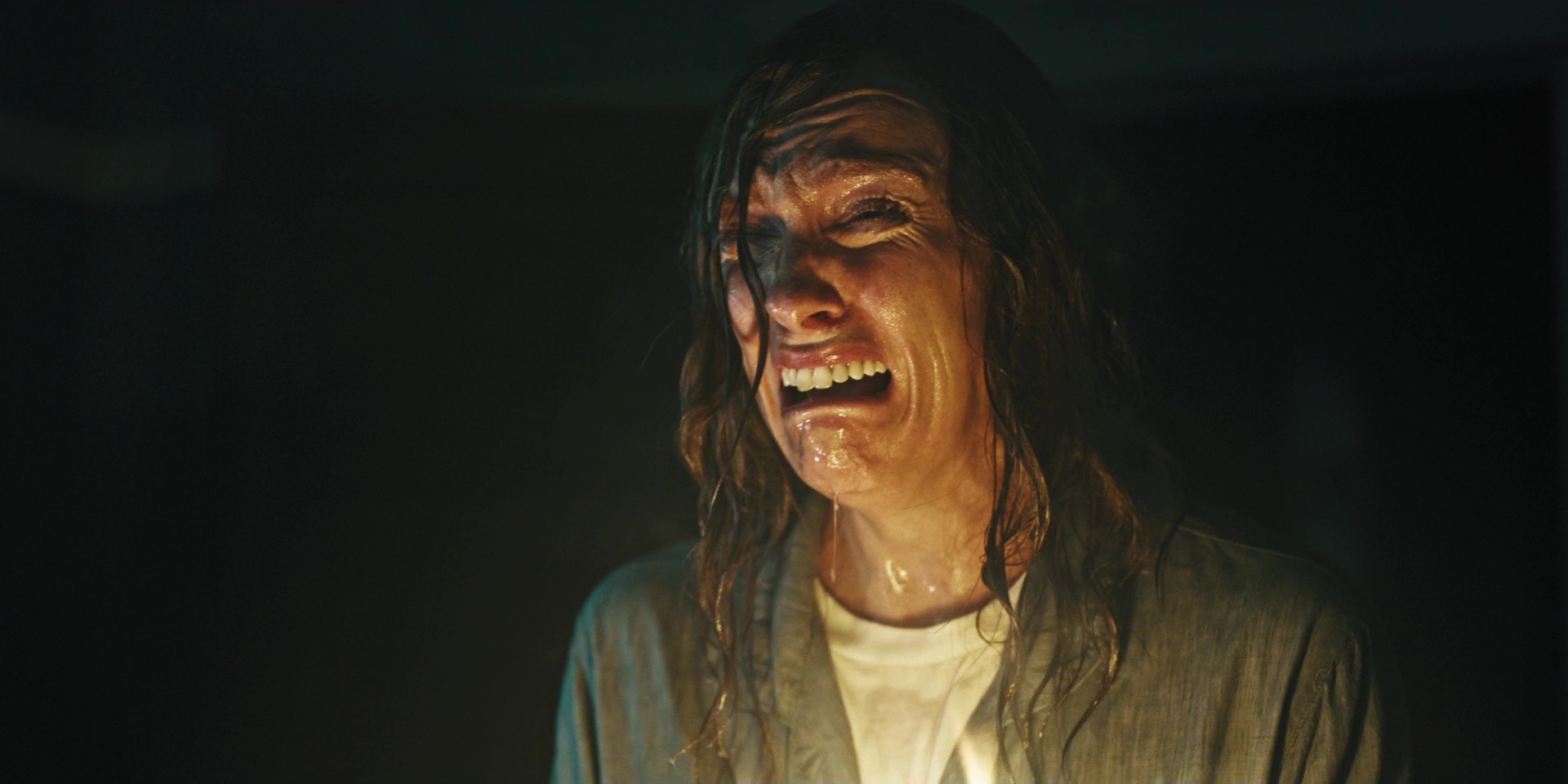
What is under lighting?
Under lighting (also underlighting, or monster lighting) is a direction of light: the key light sits below the subject's eye line, usually below the chin, and points up. Like front, side, top and back light in the film lighting toolkit, it is defined by where the source is, not by how bright or soft it is.
We read faces by a lifetime of light from above, which puts shadows under the brows, nose and chin. Under lighting inverts all three:
- Bright undersides. Chin, nostrils, jaw and the underside of any hat brim catch the most light.
- Shadows pointing up. The nose shadow climbs onto the cheeks; the brows shade the forehead.
- A tall cast shadow. A low source throws the subject's shadow high on the wall behind.
- Upward falloff. The face darkens toward the hairline.
Why does under lighting look scary?
Almost nothing in nature lights a face from below except fire and reflections, so the brain flags the result as wrong before it can say why. Familiar features become a mask, which is why the look sits so naturally inside low-key lighting and the horror film.
- Menace. A character we trusted is suddenly lit from below and looks like someone else.
- Theatre and ritual. Stage footlights lit actors from below for generations, so the look also reads as performance.
- Intimacy in the dark. A face over a candle or a phone is lit from below because that is where the light is: loneliness at 3 a.m., a prayer, a secret on a screen.
Most modern under lighting is motivated: flickering firelight, a phone, a lamp on the floor, bounce off a white tablecloth. When the source is a visible practical light, the uncanny edge softens into atmosphere; hide it, or make it too bright for what it is, and the edge returns.
How to shoot under lighting
Place the source low and close. Put the key 30–60 cm below chin height, slightly in front, aimed up at roughly 30–45°. Closer means faster falloff toward the forehead.
Choose the quality. A bare flashlight or candle flame gives crisp shadows and the classic horror look. A small LED panel or a white card lying flat under the face gives the softer glow of a screen.
Keep fill low. Hold 4:1 or more; fill from above pulls the face back to normal.
Hide the rig in the prop. Tape a tiny dimmed LED behind a phone or candle, or run a flicker effect for flames. Candles sit around 1800–2000K; screens read cool.
Watch the eyes. Add a faint eye light if the character must stay alive. Showing the flame explains the light; hiding it is scarier.
Under lighting vs. top lighting
They are mirror images. Top lighting comes from overhead and sinks the eyes into dark sockets, hiding a character's thoughts; under lighting floods the eyes and undersides while the forehead goes dark, making the face unfamiliar. Top light has everyday motivations (noon sun, a lamp over a table) and reads as oppressive; under light has few natural excuses, so it reads as uncanny or theatrical. Quick test: a nose shadow falling onto the lip means top light; one climbing the cheeks means under light.
Under Lighting examples in film
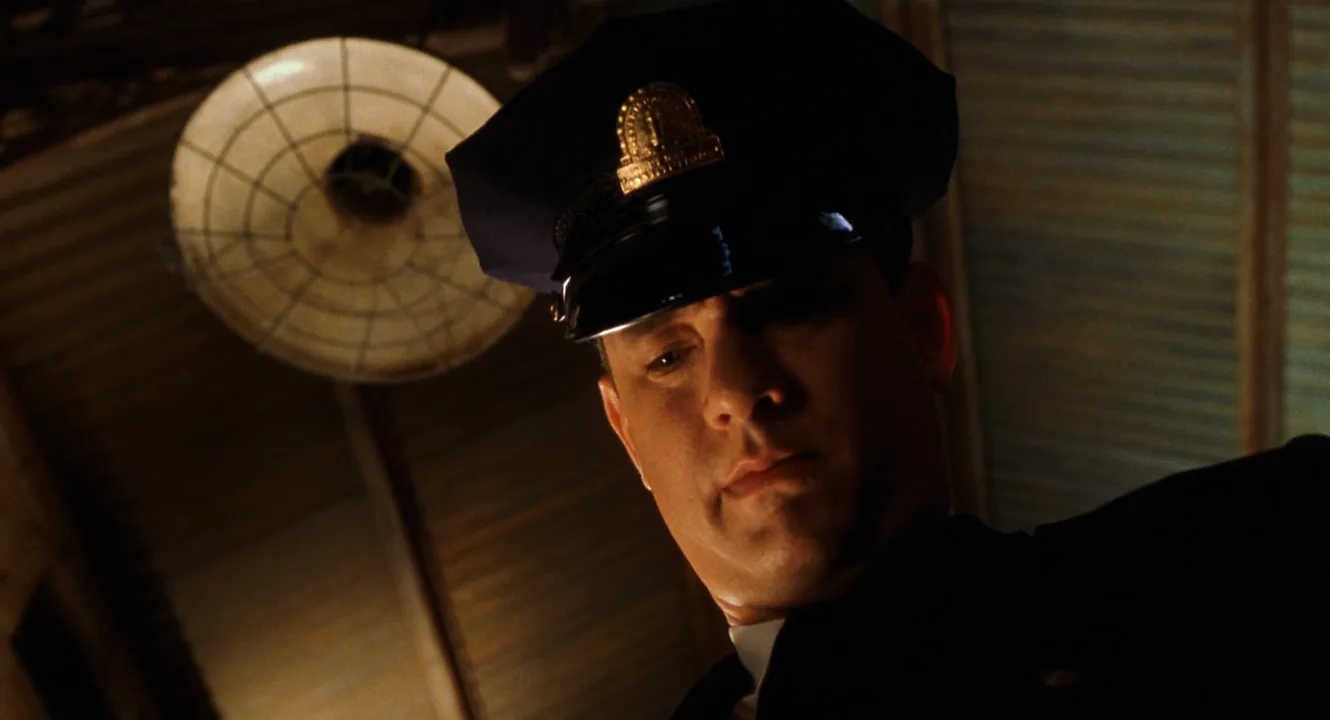
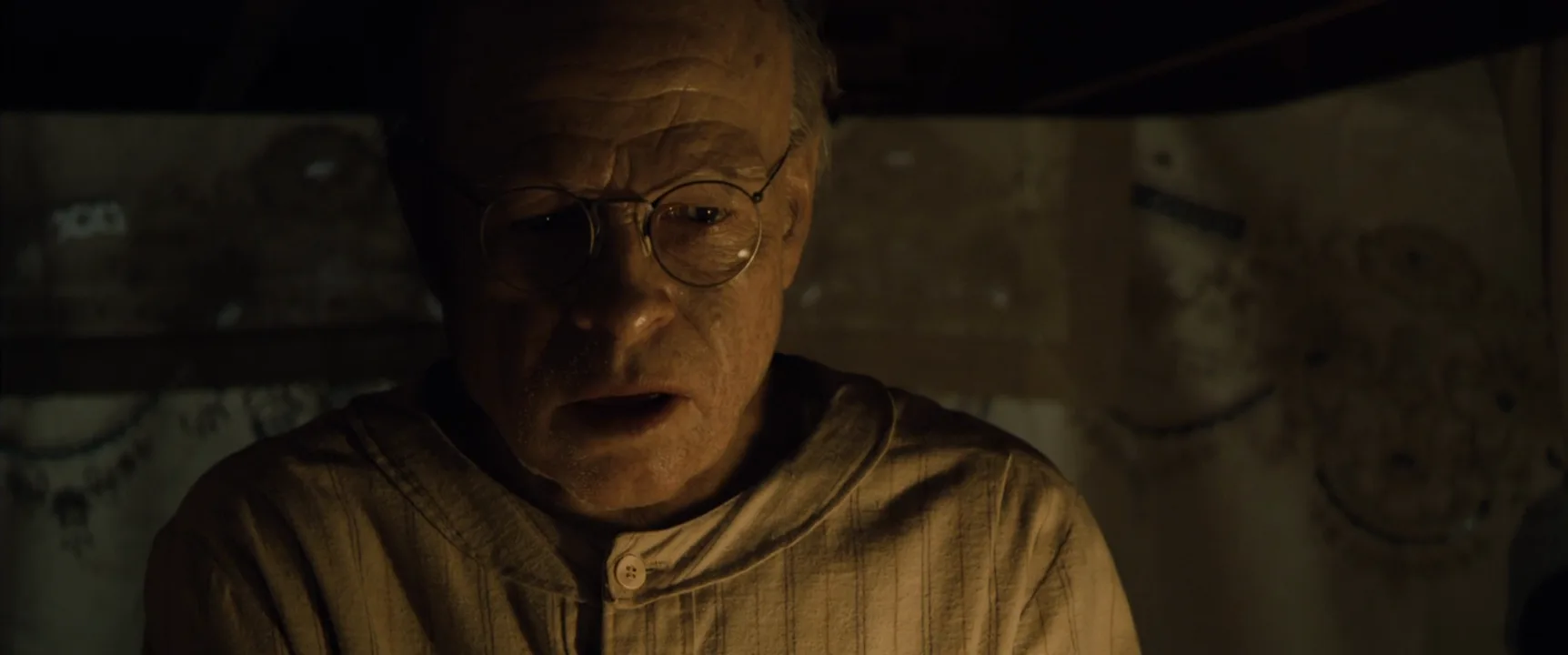
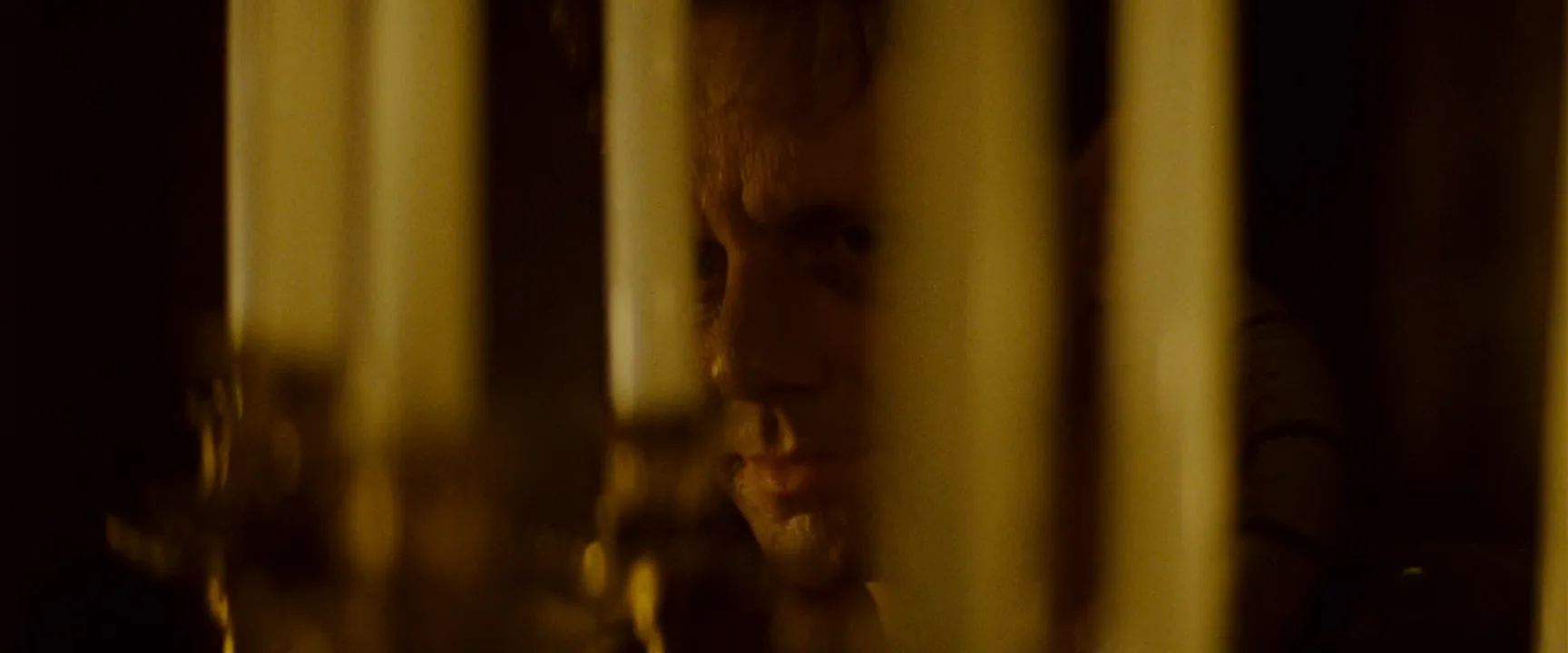
8 framesFrames where the brightest light reaches the face from below: check the chin and nostrils first.
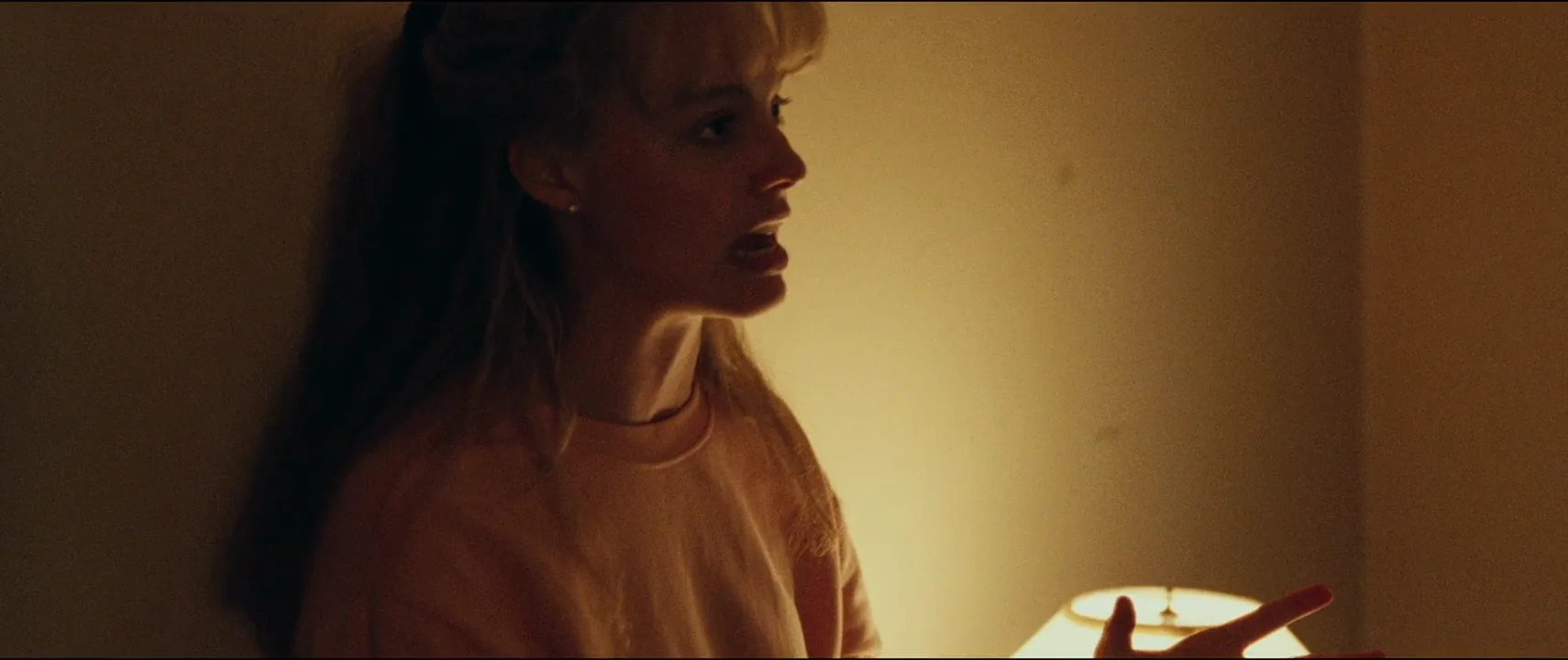
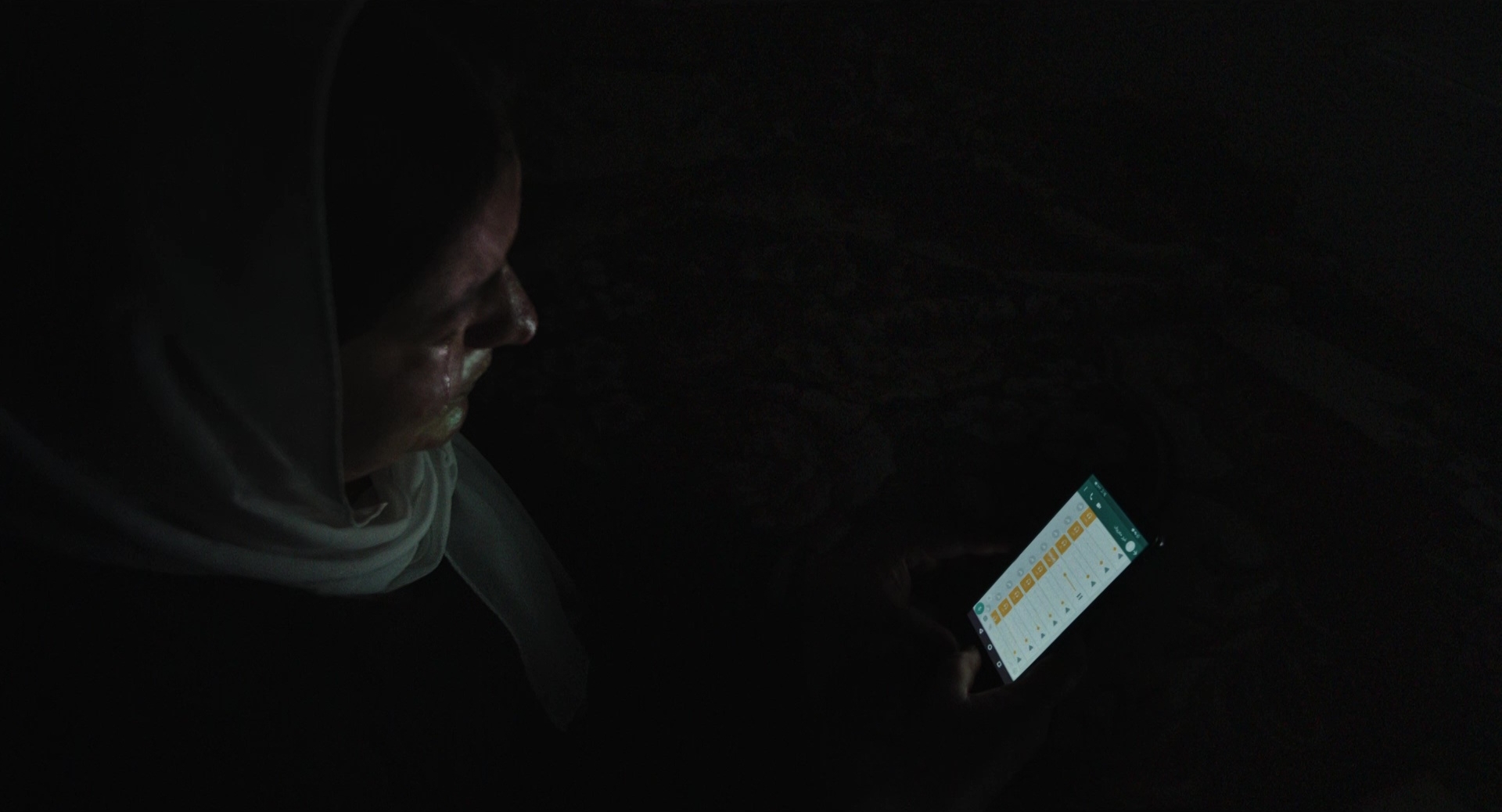
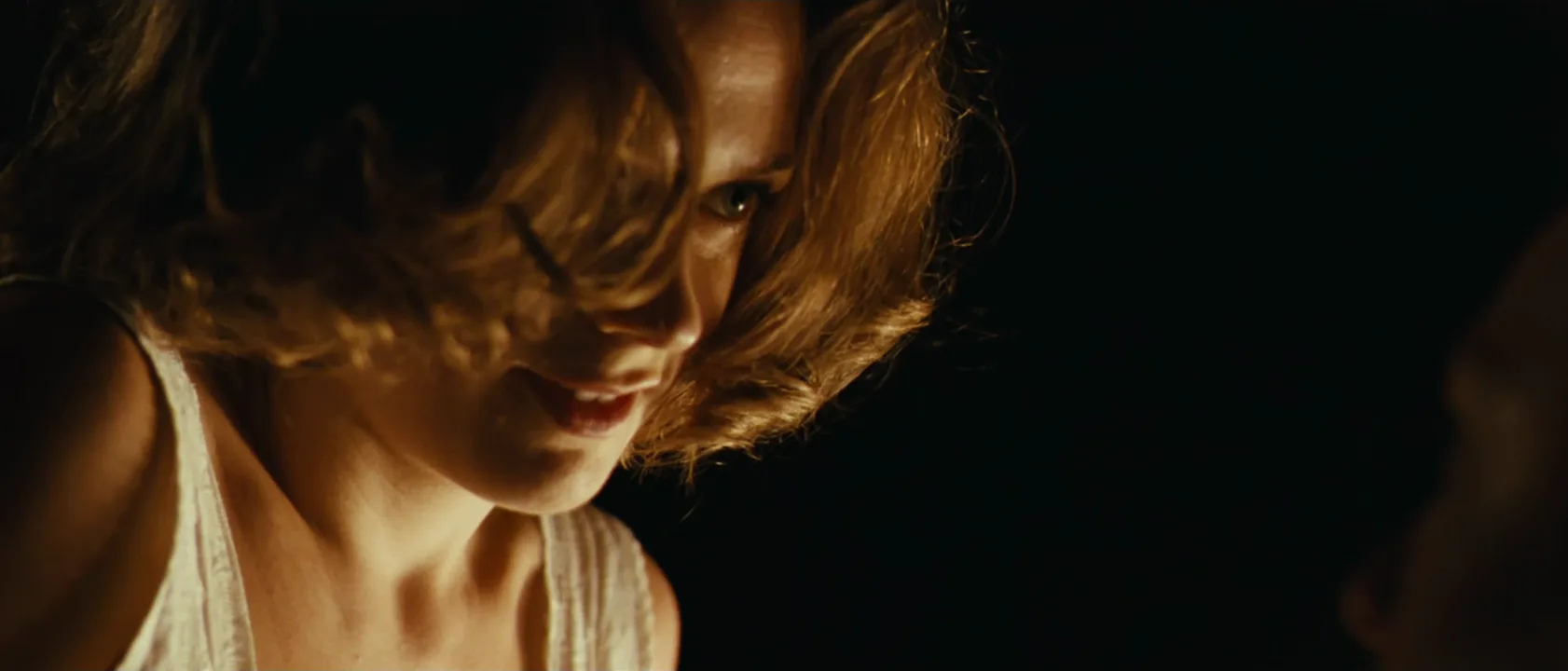
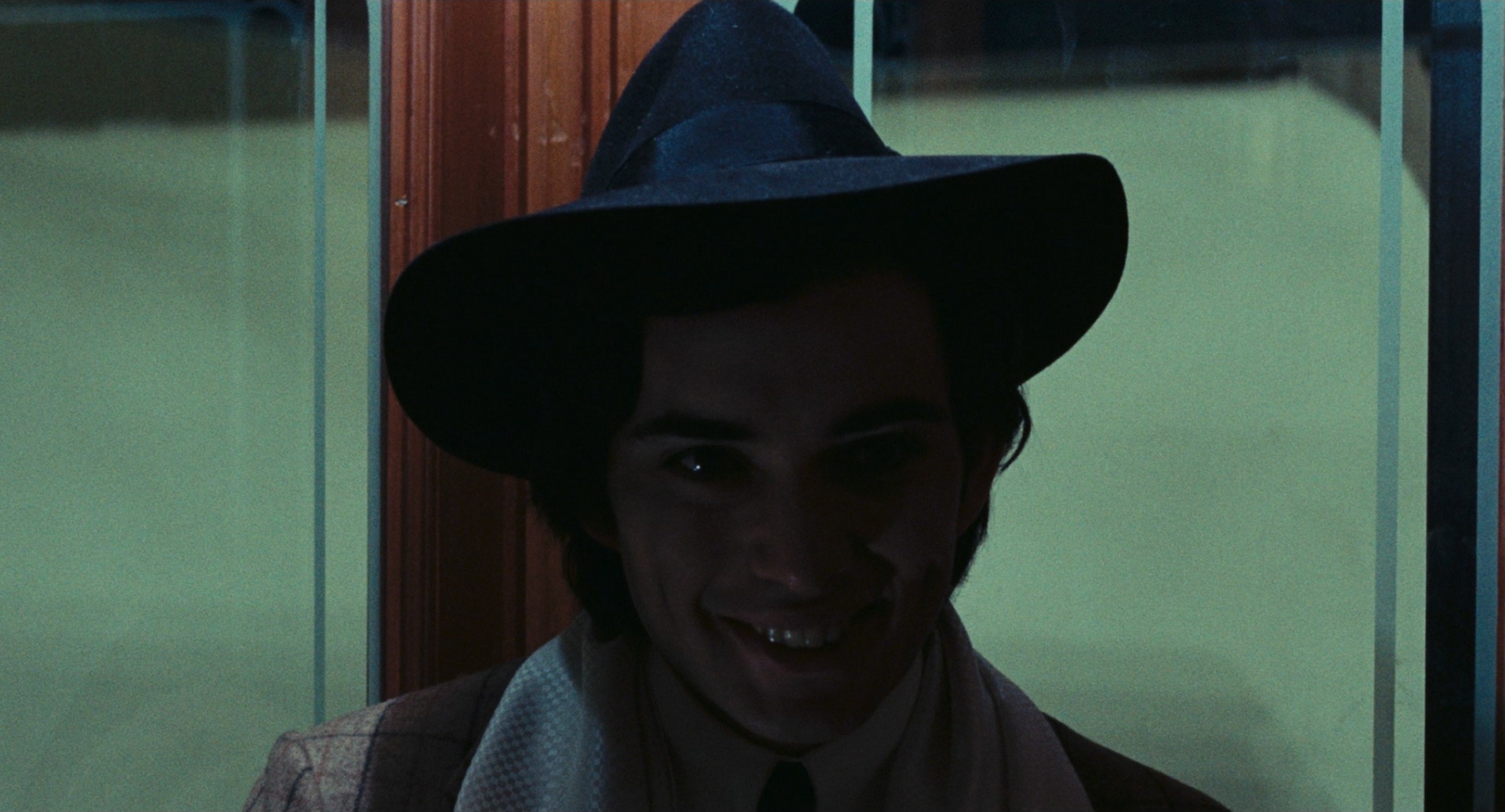
How to create a under lighting with AI
4 promptsImage models default to light from above, so write under lighting as a physical setup: the source, where it sits relative to the face, and which way the shadows point. Keep references and takes on one FlashBoards board to compare which take really lights from below. The fourth prompt re-shoots a real film shot from a text description alone, and the original plays next to the result so you can compare.
Cinematic close-up at eye level, 50mm lens: a gaunt man in his sixties with a long grey braided beard, a pale scar through his left eyebrow and a black wool fisherman's cap, in a pitch-dark stone cellar, holds a brass oil lantern at chest height just below his face. The lantern is the only light and shines upward: chin, underside of the nose and cap brim are bright, shadows climb from his nostrils and brows onto his forehead. Warm amber flicker, deep black shadows, film grain, horror mood.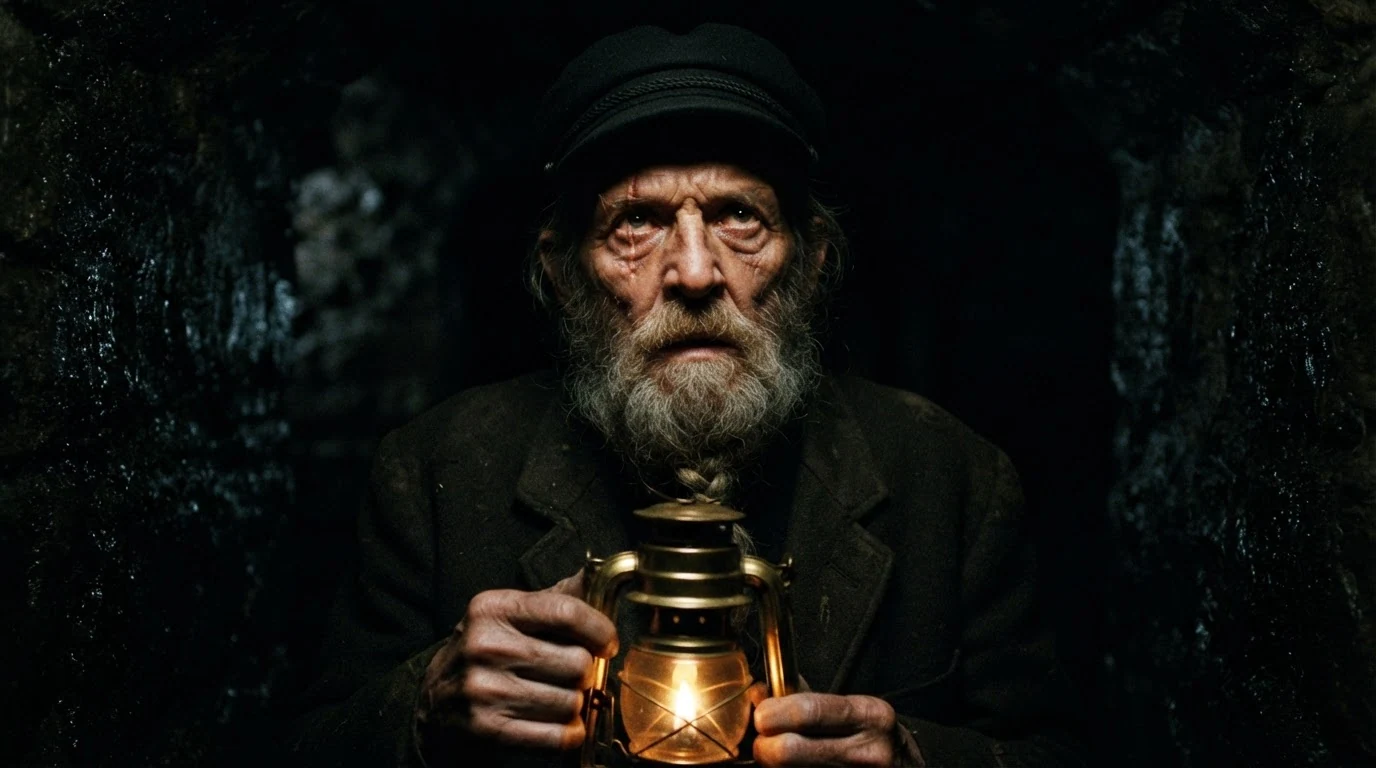
"Lantern at chest height" places a visible source below the face and "the only light" rules out a top key. "Shadows climb from his nostrils and brows" describes the inverted pattern the model must draw.
Open FlashBoardsWidescreen medium close-up of a teenage girl with short bleached hair, freckles and a thin silver septum ring, lying on her stomach on a bed in a dark bedroom, her face 40 cm above an open laptop on the mattress. The screen is the only light: a soft cool blue-white glow from below lights her chin, the underside of her nose and her lower eyelids, while her forehead and hair fade into darkness. Quiet, lonely mood, 35mm lens at mattress height, fine film grain.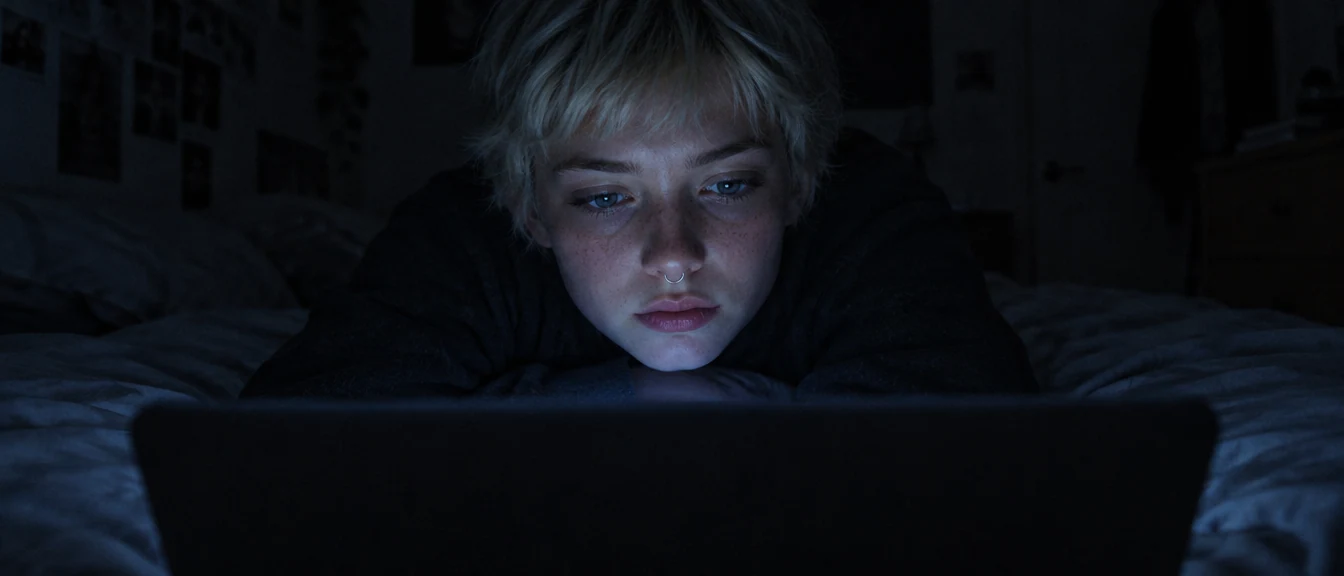
This take trades horror for intimacy. "Face 40 cm above an open laptop" fixes the source below, "soft cool blue-white glow" sets the screen's quality and color, and "forehead fades into darkness" states the upward falloff.
Open FlashBoardsCamera: slow, steady push-in from the close-up to a tighter close-up, locked at eye level. Action: The lantern flame is already flickering and the upward shadows on his forehead tremble with it. He leans slowly toward the camera, keeping the lantern at chest height, and his chin and nose brighten as they near the flame. At the end he raises his eyes to the lens and gives a thin smile.Flicker and lean start in the first frame, so the shot is alive at once. "Keeping the lantern at chest height" holds the source below the face for the whole move.
Open FlashBoards{
"output": "Full-screen live-action 2.39:1 film shot from The Curious Case of Benjamin Button (2008), from its very first frame: one continuous static shot. 35mm film stock, warm amber candlelight from below as the only light, deep brown-black shadows, a dim room with a patterned lace curtain and dark wooden shelf behind, low ceiling edge across the top of frame.",
"characters": {
"S1": {
"name": "Benjamin, played by Brad Pitt",
"look": "a small, frail man who looks about eighty: bald crown with thin white hair, deeply wrinkled face, round wire-rimmed spectacles, a cream collarless striped nightshirt buttoned at the chest",
"voice": "a soft, thin, childlike voice in an old man's body"
},
"S2": {
"name": "Thomas Button, played by Jason Flemyng",
"look": "not in frame, heard from off screen",
"voice": "a calm adult male voice"
}
},
"shots": [
{
"shot": 1,
"camera": "static, locked-off medium close-up from slightly below eye level, his face in the upper centre of frame, chest filling the bottom third; no camera movement, no focus change",
"action": [
"BEGINNING: alive from the first frame, the old man sits in the centre of frame facing the camera, head tilted slightly down, eyes looking just below the lens; the candle below frame lights his chin, the underside of his nose, his lower cheeks and the bottom rims of his spectacles, while his brow and bald crown sink into shadow",
"THEN: his lips part and move slightly as if searching for words; the candlelight flickers softly and the shadows above his nostrils and brows tremble with it",
"THEN: he tilts his head a little down and to screen left, then back to centre, his eyes lifting toward the lens; his hands stay out of frame and his shoulders stay still",
"END: he looks straight toward the camera, mouth open, and speaks gently; his face is still lit only from below, the upper part of his head dark"
],
"dialogue": [
{
"speaker": "S2",
"on_screen": false,
"when": "at the very first frame, cut off almost at once",
"delivery": "calm, heard from off screen",
"line": "<d>[English] Your turn.</d>"
},
{
"speaker": "S1",
"on_screen": true,
"when": "in the last third of the shot, after he lifts his eyes to the lens",
"delivery": "quiet, earnest, a little shy",
"line": "<d>[English] I'm not as old as I look.</d>"
}
]
}
],
"sound": {
"ambience": "a hushed room at night, the faint hiss of a candle flame, soft fabric rustle",
"speech": "exactly these spoken phrases, each said once, in this order",
"never_spoken": "no narration and no voice-over: the descriptions, performance notes and step words of this prompt are never spoken aloud",
"music": "a film score under the scene, always below the voices: a soft, wistful celesta and piano motif over low warm strings",
"subtitles": "none"
}
}Remakes the candlelit close-up of Benjamin in The Curious Case of Benjamin Button (2008), carrying over the static framing, the light from below and his line.
The prompt names the source as a candle below frame and lists exactly what it reaches: chin, underside of the nose, lower rims of the spectacles, while brow and crown sink into shadow. Keeping the camera locked lets the flicker carry the unease.
Open FlashBoardsCommon mistakes
- A key from above sneaks in. "Lit from below" alone often gives a normal portrait with a faint chin glow. Name the source, place it and call it the only light.
- Shadows point the wrong way. Write "shadows climb upward from the nostrils and brows".
- The prop rises in video. Say the lantern stays at chest height.
- Too much fill. Add "deep black shadows".
Keep the reference frames, prompts and every generated take side by side — images and video in one canvas.
FAQ
4 questionsWhat is under lighting in film?
Under lighting is lighting a subject from below, with the key light under the chin aimed upward. It reverses the direction of daylight: the underside of the nose and chin turn bright and shadows climb toward the forehead. Horror uses it for menace; candles, lanterns and phones produce it naturally.
Why is under lighting called horror lighting or monster lighting?
Because it makes faces look unfamiliar. We expect light from above, so upward shadows turn features into a mask: the eyes fill with light, the forehead goes dark, the cheekbones jut out. Horror films exploit that instinctive unease, and the flashlight-under-the-chin ghost story made it shorthand for the monstrous.
How do you do under lighting with a flashlight or phone?
Hold the light 30–60 cm below chin height, slightly in front of the face, and point it up. Keep other lights off or very dim so nothing fills the shadows. A bare flashlight gives hard, scary shadows; a phone screen gives a softer glow. Closer means more dramatic falloff.
Is under lighting always scary?
No. A face over a birthday cake, a candlelit prayer or someone reading a phone in bed is lit from below and can feel warm or lonely rather than frightening. Show the source, keep some ambient light and use familiar, soft colors when you want intimacy instead of dread.
Related terms
6- Top LightingLighting
Top lighting comes from directly overhead, lighting heads and shoulders while sinking the eyes into dark sockets — as Gordon Willis did with Marlon Brando in The Godfather; it suggests midday sun, interrogation rooms or characters we cannot read.
- Side LightingLighting
Side lighting puts the key roughly 90° to the side of the subject, splitting the face into light and shadow and raking across texture — the most direct way to reveal volume and inner conflict.
- Low-Key LightingLighting
Low-key lighting keeps most of the frame in shadow, with a strong key, little or no fill and a high lighting ratio, so only fragments of faces and objects emerge from the dark — the language of noir, thrillers and horror.
- FirelightLighting
Firelight is light from — or imitating — flames: candles, fireplaces, torches, campfires; warm, low and flickering, it falls off quickly into darkness, and on set is often faked with flicker effects on dimmed tungsten lamps.
- Horror FilmGenres
Horror is the genre designed to frighten — through threat, the uncanny and the grotesque — and it relies on darkness, negative space, sound and withheld information as much as on monsters.
- Key LightLighting
The key light is the main light on a subject: it sets the direction, hardness and color of the illumination, and every other source — fill, back, practicals — is balanced against it.
Further reading
Blain Brown, Motion Picture and Video Lighting (Focal Press).