 FlashBoards Learn
- Learn
- Screenwriting
- Dialogue
Screenwriting · Film language
Dialogue
Also called: film dialogue, screen dialogue
Dialogue is the spoken exchange between characters in a film. Good screen dialogue does three jobs at once: it shows who a character is, pushes a conflict forward and delivers what the audience needs to know, while the most important thing in the scene usually stays unsaid, carried by performance and staging.
- What it does
- Turns what characters want from each other into speech that reveals them and moves the scene.
- Use it when
- A scene needs a conflict between people, not just information passed from one to another.
- Watch out
- Characters who say exactly what they feel, or tell each other things they both already know.
- Try this prompt
Medium two-shot through a car windshield at night, an older man and a younger woman in the front seats, she stares ahead mid-sentence, he turns his keys in his hands, 35mm film still
What is dialogue in film?
In screenwriting, dialogue is everything characters say to each other on screen. On the page it has a fixed shape: the character's name in caps, an optional parenthetical, then the line in a narrow centered column.
MARA You kept the car.
DAD (not looking up) It still runs.
A film shows the face while the character says something else, so screen dialogue is usually shorter and more indirect than dialogue in prose. Nobody above mentions why the car matters, and the scene is about exactly that.
What makes good screen dialogue?
Good dialogue is behavior. Each character wants something from the other, and each line is a tactic to get it: to charm, to stall, to wound, to change the subject.
- Conflict. Two people who agree have nothing to play. The running argument in When Harry Met Sally... (1989) about whether men and women can be friends works because neither side concedes.
- Subtext. The gap between the line and the intention is subtext, and it is what actors play. The final confrontation in Chinatown (1974) lands because the film has talked around it all along.
- Voice. Cover the names and you should still know who is speaking.
- Compression. The digressions in Pulp Fiction (1994) feel loose, but they always sit on top of tension between the people talking.
- Information with a motive. Exposition works best when a character uses it as a weapon.
How to write dialogue: a working method
- Name each character's objective in one verb before writing a line.
- Enter late, leave early. Cut hellos, goodbyes and lines that agree with what just happened.
- Answer sideways. An evasion, a counter-question or a silence usually plays better than a direct answer.
- Keep turns short. Two or three lines is a sensible default; a long speech has to be earned.
- Cut names and "as you know". Characters telling each other what both already know is exposition in disguise.
- Read it aloud, ideally with actors. Stiff lines are easier to hear than to see.
Dialogue action breaks
An action break is a short line of scene description dropped between a character's lines to show a gesture mid-speech. The name then repeats with (CONT'D):
MARA You kept the car.
She runs a finger along the dashboard. It comes away clean.
MARA (CONT'D) You've been cleaning it.
A parenthetical is for a brief delivery note or for who a line is addressed to; anything the camera should see belongs in action. Break where the line turns: here the clean finger tells Mara something her father hasn't said, and her next line reacts to it.
Dialogue vs. monologue
Dialogue is an exchange: each line changes what the other person says next. A monologue is one character holding the floor while others listen, so the listener's reaction matters as much as the words. Keep most scenes in dialogue and save the monologue for the moment a character finally says what they've been holding back.
How dialogue scenes are staged and cut
On set, dialogue becomes coverage: a master, then over-the-shoulders and singles cut together as shot reverse shot. Every choice is dramatic: whose face gets the close-up, who stands over whom. In the edit, many of the strongest moments of a cut dialogue scene sit on the listener while the line plays off screen.
In FlashBoards, put the scene's lines on the board as notes, generate one frame per turn of the exchange and set them beside reference stills. Lines that only repeat what the image already says can go.
Dialogue examples in film
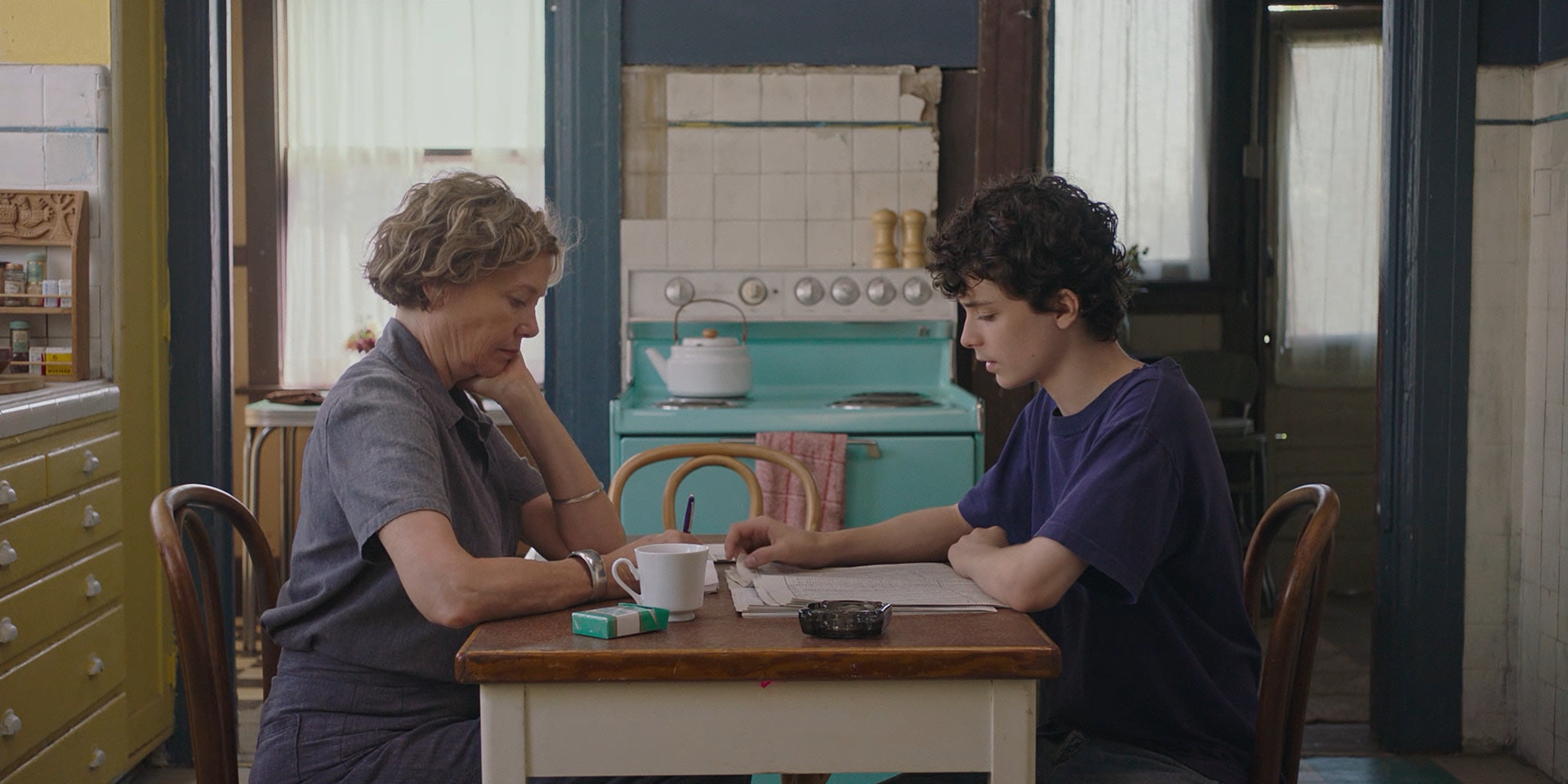
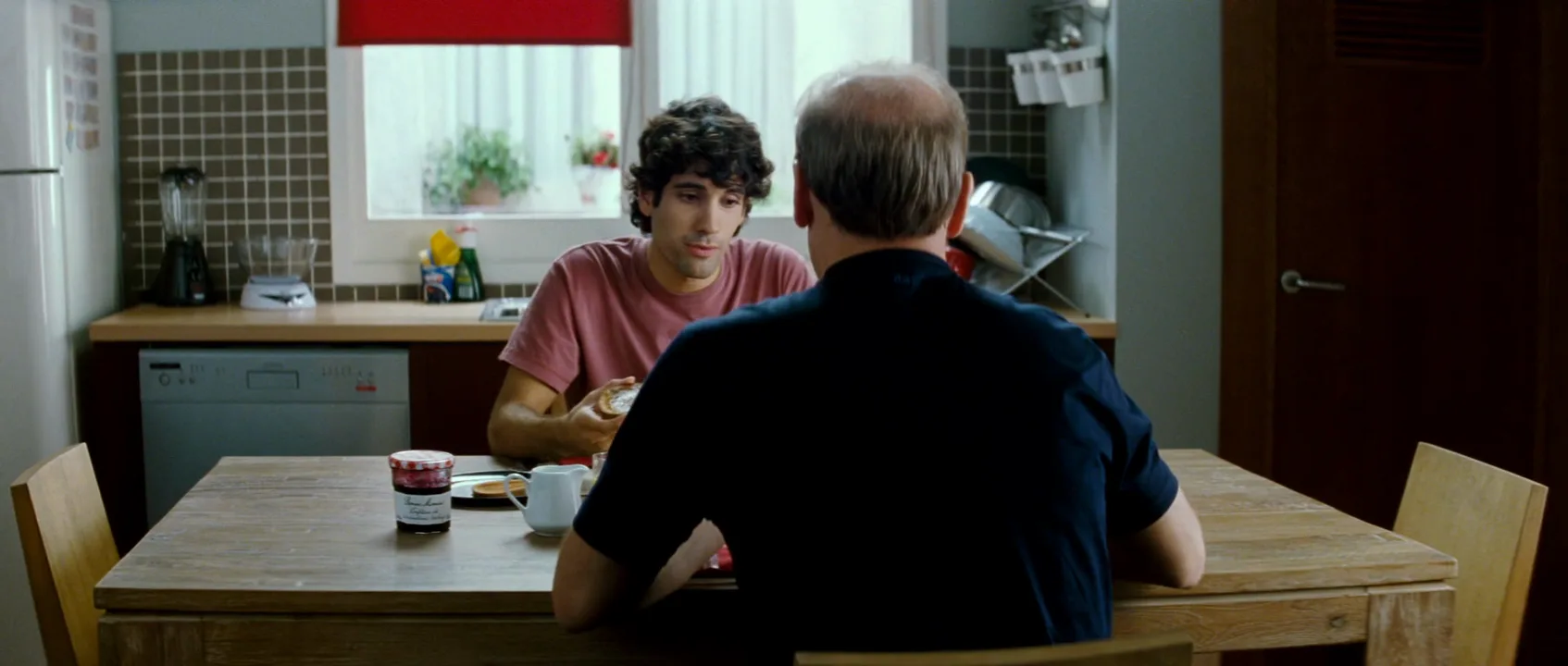
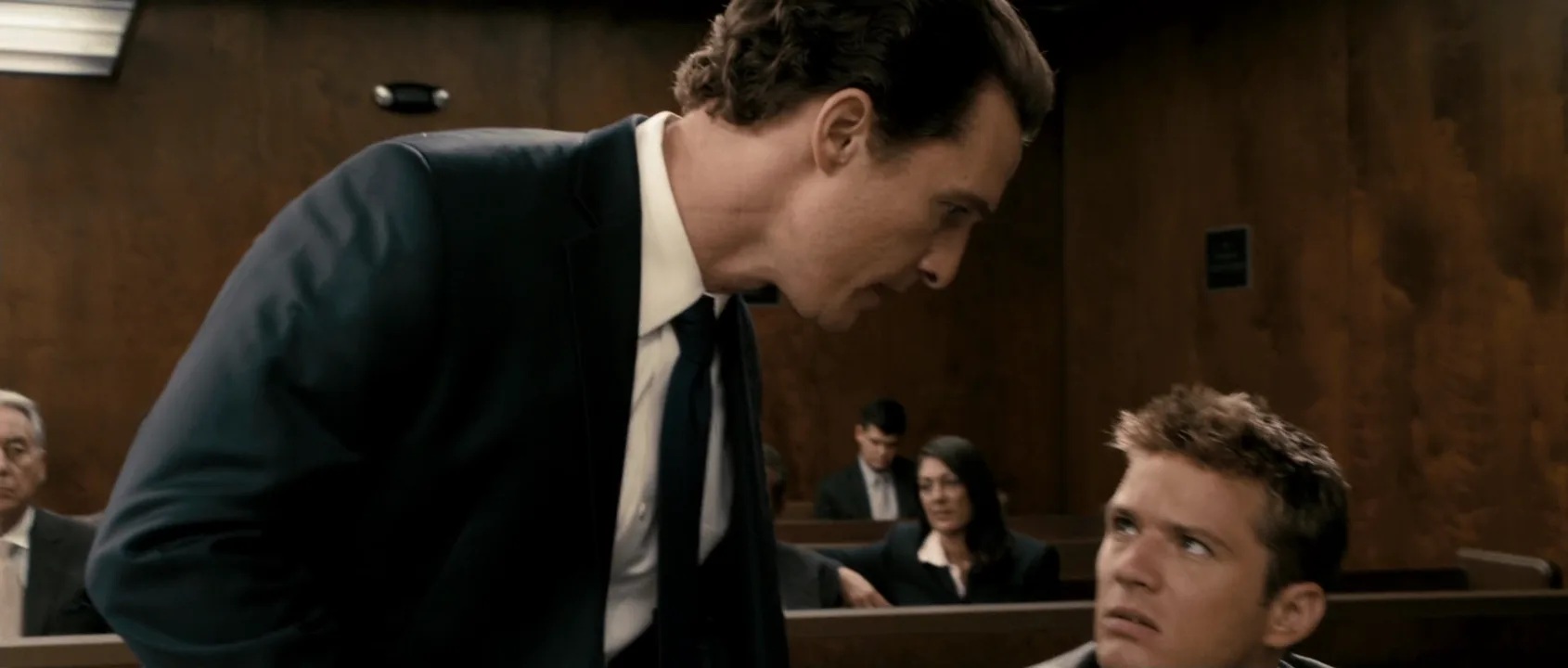
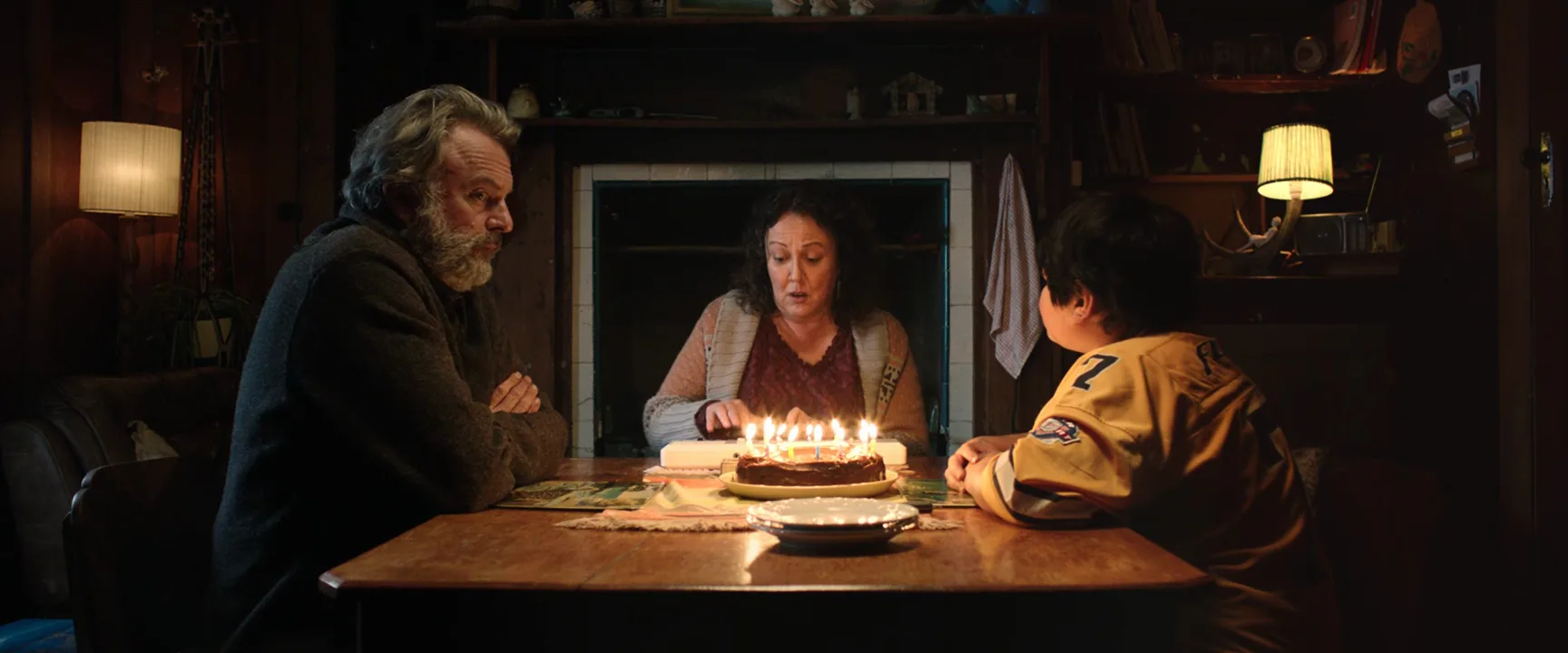
4 framesBefore anyone speaks, the staging already says who pushes, who withholds and whose reaction the scene is about.
How to create a dialogue with AI
4 promptsA dialogue scene is also a picture: who looks away, what the hands do. Stage the two-shot with Nano Banana 2 Lite, try an over-the-shoulder with GPT Image 2.5 and play the exchange with MiniMax H3 Max Turbo, all next to the script page on one FlashBoards board. The fourth prompt re-shoots a real film shot from a text description alone, and the original plays next to the result so you can compare.
Medium two-shot from outside a parked car at night, looking in through the windshield at both faces, 40mm lens, eye level. Driver: a man in his sixties with a white buzz cut and a tan canvas jacket, turning a ring of keys in his hands, looking down at them. Passenger: a woman in her thirties with dark curly hair pulled back and a green raincoat, staring straight ahead through the glass toward the camera, not at him, mouth slightly open mid-sentence. Orange streetlight, raindrops on the windshield, cool dashboard glow, 35mm film grain.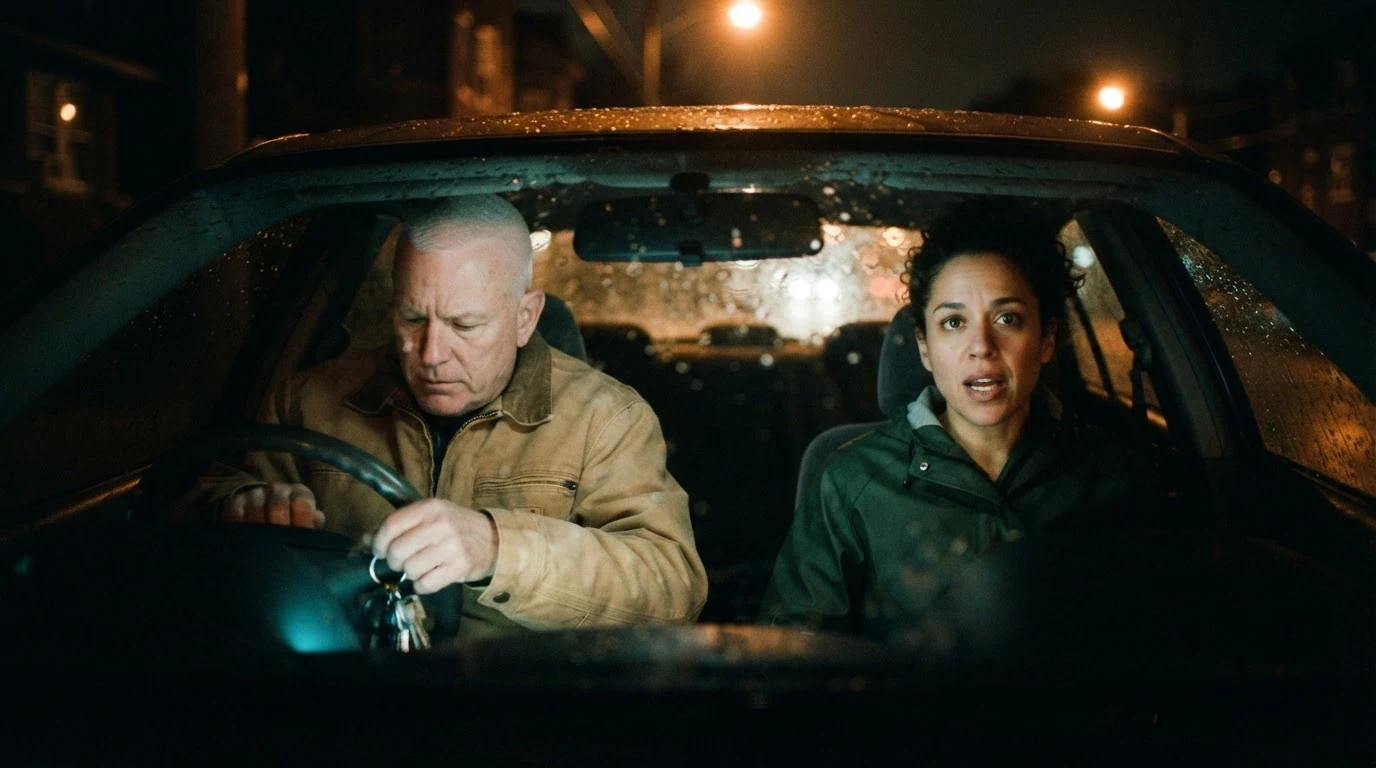
Mid-sentence makes it a spoken line, not a portrait. The subtext is in the eyelines: she talks to the windshield, he answers to the keys.
Open FlashBoardsOver-the-shoulder shot in a late-night laundromat, 50mm lens, eye level. Foreground left, soft focus: the shoulder of a tall young man with a shaved head in a gray hoodie. Background right, sharp: a woman in her fifties with a silver pixie cut and round tortoiseshell glasses folds a white towel very precisely while talking to him, eyes on the towel. Flat fluorescent light, muted teal palette, film still.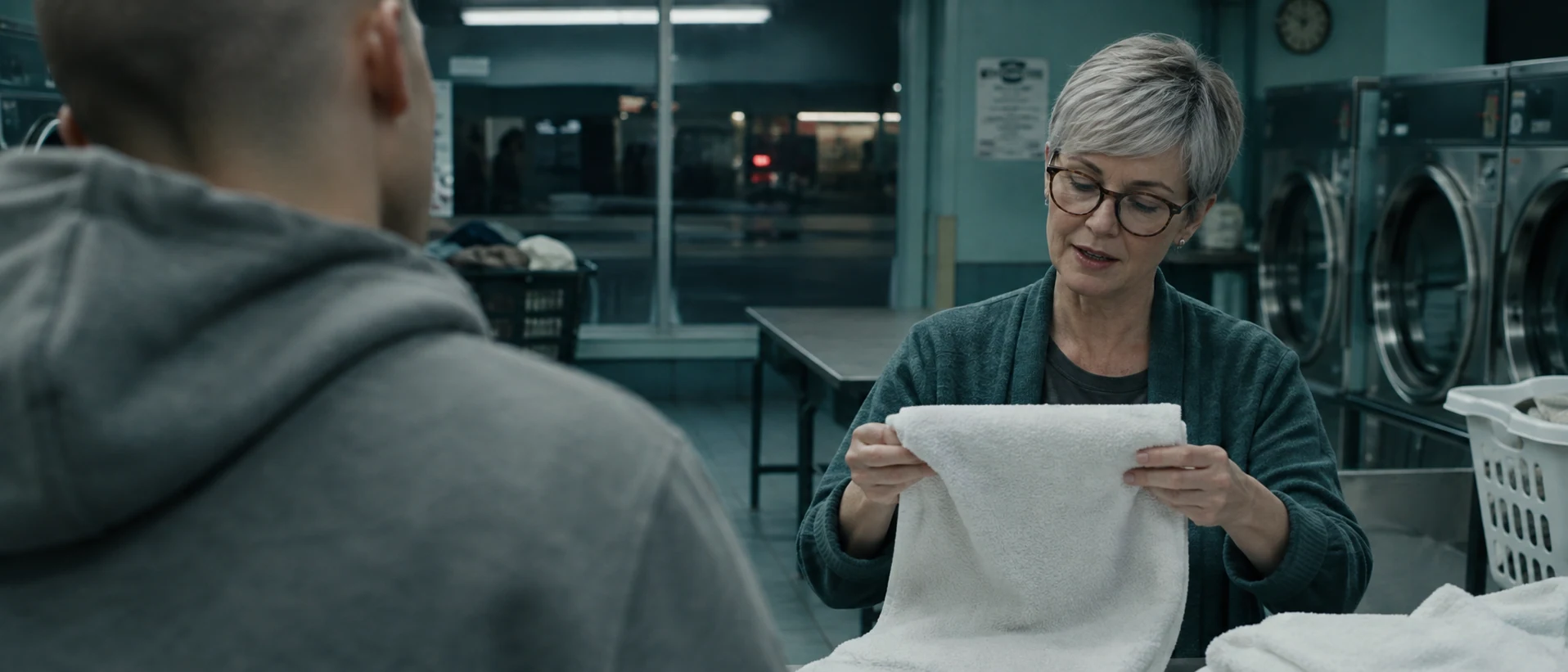
Soft foreground and sharp background tell the model whose scene it is. The towel is business: she keeps her eyes busy so she doesn't have to look at him.
Open FlashBoardsCamera: locked-off two-shot through the windshield, then a very slow push in toward the woman. Action: rain is already running down the glass and the man is turning the keys. The woman speaks one short line without turning her head. The man stops turning the keys, looks at her and answers briefly. At the end she closes her eyes and leans back against the headrest.Rain and keys in motion keep the shot alive from the first frame. One line, one answer and one physical change keep the exchange readable.
Open FlashBoards{
"output": "Full-screen live-action courtroom scene from The Lincoln Lawyer (2011), from its very first frame: one continuous shot, no cuts. 35mm anamorphic scope look, walnut-paneled courtroom under a ceiling of flat white fluorescent panels, a checkered metal vent panel on the left wall, warm brown, navy and white palette, soft even top light, fine grain.",
"characters": {
"S1": {
"name": "Mickey Haller, played by Matthew McConaughey",
"look": "defense lawyer in his early forties, lean, brown hair combed back, navy suit, white shirt, dark navy tie",
"voice": "smooth Southern drawl, quick and confident"
},
"S2": {
"name": "Louis Roulet, played by Ryan Phillippe",
"look": "his client, early thirties, short tousled light-brown hair, gray jacket, seated at the defense table",
"voice": "silence: he never speaks in this shot"
},
"S3": {
"name": "Judge Fullbright, played by Reggie Baker",
"look": "never seen: sits at the bench off screen, beyond the right edge of the camera",
"voice": "stern, weary voice from the bench, heard off screen"
}
},
"shots": [
{
"shot": 1,
"camera": "low angle from table height, medium shot of S1 from the waist up with the fluorescent ceiling above him; the camera follows him, panning right and tilting down as he bends toward S2, then panning left and tilting up as he straightens, ending on the same low medium shot of S1 as at the start",
"action": [
"BEGINNING: alive from the first frame, S1 stands in the centre of frame seen from below, looking up toward the bench just past the right of camera, brows raised, lips parted; his right hand at the lower left edge of frame is open, palm up, at hip height.",
"THEN: his hand drops out of frame; he turns his head to screen right and looks down, and the camera pans right and tilts down with him.",
"THEN: he bends at the waist toward screen right; S2 appears seated in the lower right corner, looking up at S1 from under knitted brows, rows of seated spectators soft behind them.",
"THEN: S1 brings his face close above S2's and speaks low and fast; S2 holds still, jaw tight, eyes fixed on S1's face, no nod, lips closed.",
"THEN: S1 straightens up and turns back to face the bench; the camera pans left and tilts up with him and S2 slips out of the lower right of frame.",
"END: S1 stands centred again under the ceiling lights, chin up, eyebrows raised, a half-smile, speaking up toward the bench, still mid-sentence as the shot ends."
],
"dialogue": [
{
"speaker": "S3",
"on_screen": false,
"when": "from the first frame, while S1 still looks up at the bench",
"delivery": "stern, clipped",
"line": "<d>[English] Mr. Haller, control your client.</d>"
},
{
"speaker": "S1",
"on_screen": true,
"when": "once he is bent low over S2, face close to his",
"delivery": "low, quick, almost private",
"line": "<d>[English] Good. Let me take it from here.</d>"
},
{
"speaker": "S1",
"on_screen": true,
"when": "after he straightens and faces the bench again, running to the last frame",
"delivery": "loud, smooth, a showman's half-smile",
"line": "<d>[English] Judge, I share my client's outrage.</d>"
}
]
}
],
"sound": {
"ambience": "hushed courtroom room tone, a rustle of suit fabric as S1 bends and straightens, faint murmur from the spectators",
"speech": "exactly these spoken phrases, each said once, in this order: first the judge off screen, then S1 twice; S2 never speaks",
"never_spoken": "no narration and no voice-over: the descriptions, performance notes and step words of this prompt are never spoken aloud",
"music": "a film score under the scene, always below the voices: low pulsing strings with a taut, lightly swaggering rhythm",
"subtitles": "none"
}
}Remakes the defense-table shot from The Lincoln Lawyer (2011): the prompt carried over the low angle, the camera following Haller down to Roulet and back up, and the three real lines of the exchange, word for word.
Three lines, three body positions: the judge's order lands while Haller faces the bench, he bends to his client for the private line, then straightens and turns the same outburst into a public one. The lean is the action break between the two audiences.
Open FlashBoardsCommon mistakes
- Models default to two people smiling at each other. State where each character's eyes go.
- Without mid-sentence, image models close every mouth.
- "They talk" produces nonstop mouth movement in video. Write one line and one answer, and treat the clip as a blocking test.
- Emotion words exaggerate faces; describe a physical tell instead.
Keep the reference frames, prompts and every generated take side by side — images and video in one canvas.
FAQ
4 questionsHow do you write good dialogue for a film?
Start from what each character wants and make every line a tactic to get it. Keep turns short, enter late, leave early, let characters answer sideways, and read the scene aloud.
What is dialogue in a screenplay?
Every line a character speaks, set in a narrow centered column under the name in caps. A parenthetical can note delivery; an action break shows movement mid-speech.
What is an action break in dialogue?
A short line of scene description between a character's lines that shows a gesture mid-speech; the name then repeats with (CONT'D). Use it instead of a parenthetical when the action matters to the story.
What is the difference between dialogue and a monologue?
Dialogue is an exchange in which each line changes what the other character says next. A monologue is one character speaking at length while others listen, usually at a turning point, and it weighs more when it is rare.
Related terms
6- MonologueScreenwriting
A monologue is an extended speech by one character, addressed to others in the scene, that reveals their state of mind or turns the scene at a key moment.
- SubtextStorytelling
Subtext is what characters mean but don't say — the real feelings or intentions beneath the dialogue, conveyed by performance, framing and context.
- ParentheticalScreenwriting
A parenthetical is a brief note in brackets under a character's name that tells how a line is said or to whom, used sparingly so it doesn't direct the actor.
- Editing a Dialogue SceneEditing
Editing a dialogue scene means choosing when to show the speaker, the listener or both, and where to cut on lines, pauses and reactions so the conversation keeps its rhythm and subtext.
- ExpositionStorytelling
Exposition is the information the audience needs to follow the story — who the characters are, what's at stake, how the world works — ideally delivered through action and conflict rather than explanatory speeches.
- ScreenwritingScreenwriting
Screenwriting is the craft of writing a film or series for the screen: turning an idea into structure, scenes and dialogue that can be shot, where everything the audience learns must be seen or heard.
Further reading
Robert McKee, Dialogue: The Art of Verbal Action for Page, Stage, and Screen (2016). David Mamet, On Directing Film (1991).