 FlashBoards Learn
- Learn
- Storytelling
- Subtext
Storytelling · Film language
Subtext
Also called: unspoken meaning
Subtext is what characters mean but don't say: the real feelings, fears and intentions running under the dialogue. On screen it reaches the audience through performance, staging, framing and context, so viewers read the gap between the words and the want, and feel smart for catching it.
- What it does
- Makes scenes feel alive by letting the audience infer what characters hide from each other, or from themselves.
- Use it when
- Characters can't safely say the truth: power, love, grief, guilt, threats, anything with social cost.
- Watch out
- Subtext needs a readable surface; if the audience can't tell what's at stake, hidden meaning reads as vague.
- Try this prompt
Wide two-shot across a long dining table, a couple smiling politely at opposite ends, a packed suitcase by the door behind her, soft morning light, 35mm film still
What is subtext in film?
Every scene has two layers. The text is what is literally said and done. The subtext is what is actually going on: the objective each character pursues, the feeling they manage, the thing both know and neither will name.
A line like "You look tired" can be concern, an accusation or the opening move of a breakup. The words don't decide; the situation, the performance and the camera do.
Subtext is the natural mode of screen dialogue: people rarely say exactly what they want, and film can show a face contradicting a sentence. When characters state their feelings outright, the audience has nothing left to do.
Subtext examples in film
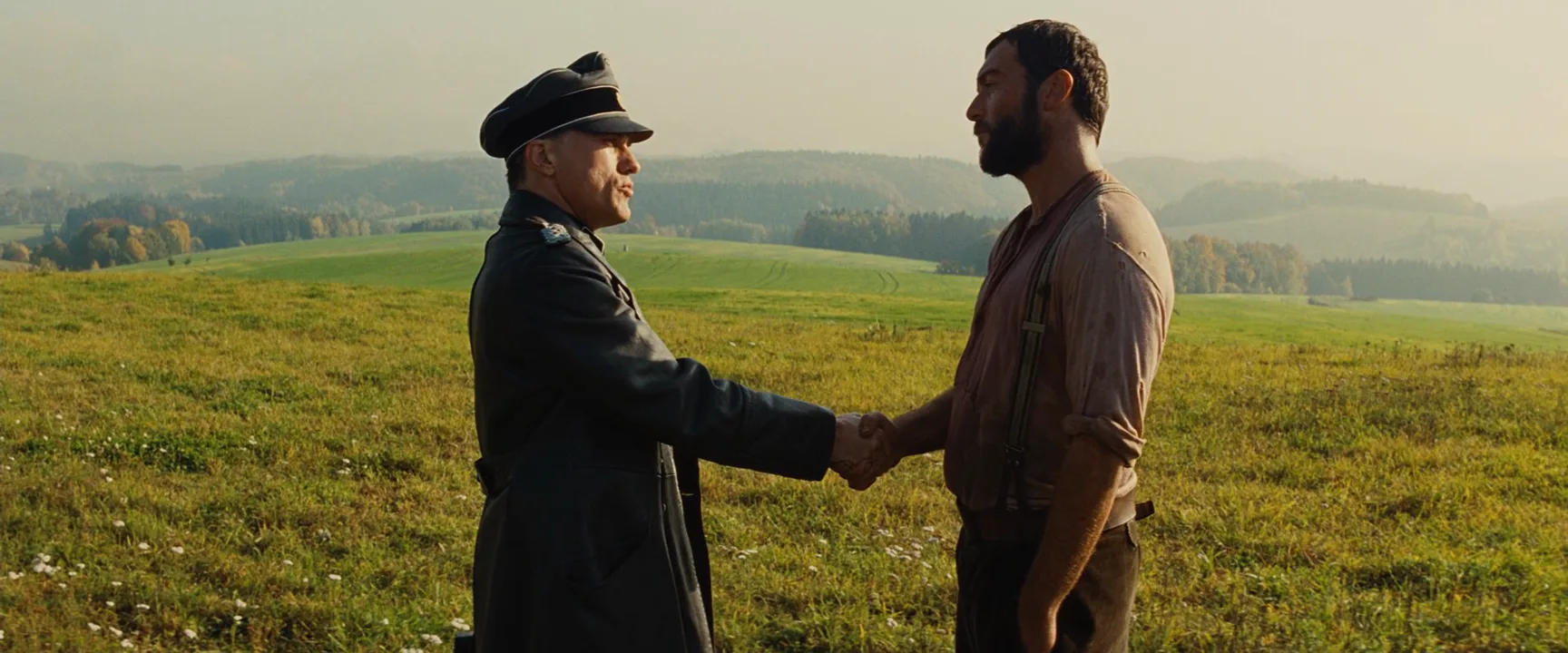
- ***Inglourious Basterds* (2009).** The opening farmhouse scene is a polite talk about milk and a missing family. Colonel Landa never threatens anyone directly, yet every courtesy tightens the screw, because we suspect what is under the floor.
- ***The Godfather* (1972).** "An offer he can't refuse" sounds generous. Everyone hears a threat.
- ***Citizen Kane* (1941).** The breakfast-table montage traces a marriage cooling through curt exchanges, a growing table and, finally, silence behind newspapers.
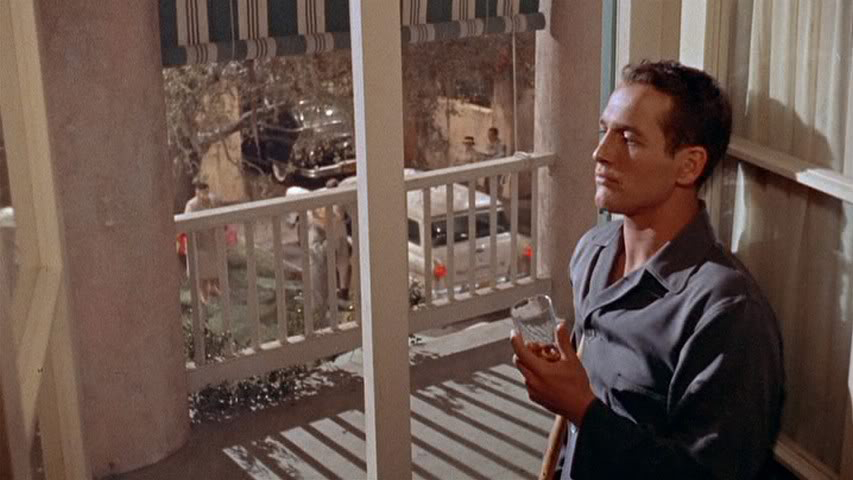
- ***Cat on a Hot Tin Roof* (1958).** Brick drinks and deflects while the family talks around what his grief is really about.
The pattern: a safe topic, a dangerous real one, and an audience that knows enough to hear both.
How to write subtext in dialogue
Subtext comes from pressure, not vagueness: a character wants something they can't ask for directly.
- Define the objective and the obstacle. She wants him to stay, but asking would cost her pride. Every line becomes a tactic.
- Give them a proxy topic. They fight about the dishes when the fight is about the marriage.
- Let action contradict words. "I'm fine" while she scrubs a clean plate.
- Cut the on-the-nose line. Draft the honest sentence, then keep only what the character would risk saying.
- Let the audience know more. When viewers hold the missing fact, ordinary lines turn double-edged, the engine of dramatic irony.
Test: summarize the scene as what they talk about and as what is happening. If the two match, there is no subtext yet.
How to direct and shoot subtext
Subtext belongs to the actors first. Good directing actors practice gives them playable actions (charm him, test her, make him leave) instead of emotions. An actor playing "hide that you're scared" produces subtext; one playing "scared" only produces text.
The camera decides what the audience notices:
- Distance. Warm words from opposite ends of a room tell us the warmth isn't real.
- The listener. A reaction shot of the person hearing the line often carries its real meaning.
- Frame size. Cutting to a close-up after a casual line says something under it matters.
- Business. A glass refilled too often.
In FlashBoards, write the scene's two summaries at the top of a board, pin reference frames and generated takes beneath them, and compare which staging lets the hidden layer read.
Subtext vs. symbolism and irony
- Subtext is character-level: what a person means beneath what they say right now.
- Symbolism is image-level: an object, color or place standing for an idea across the film.
- Irony is a gap between what is said or expected and what is true. Verbal irony is one tool of subtext; dramatic irony sets it up.
If you ask "what does this character really want here?", it's subtext. If you ask "what does this image mean in the film?", it's symbolism. Both belong to the toolkit of storytelling.
Subtext examples in film
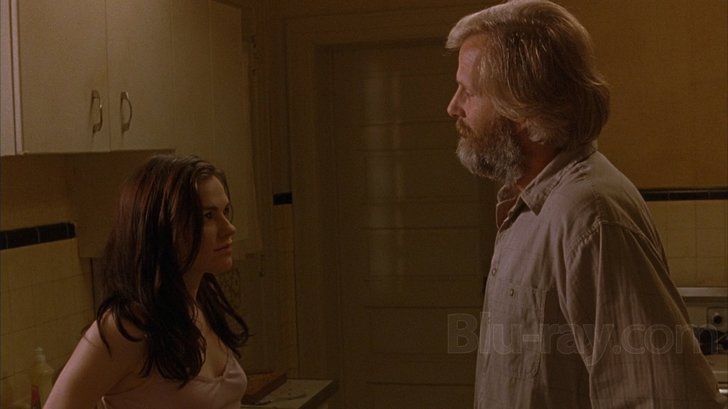
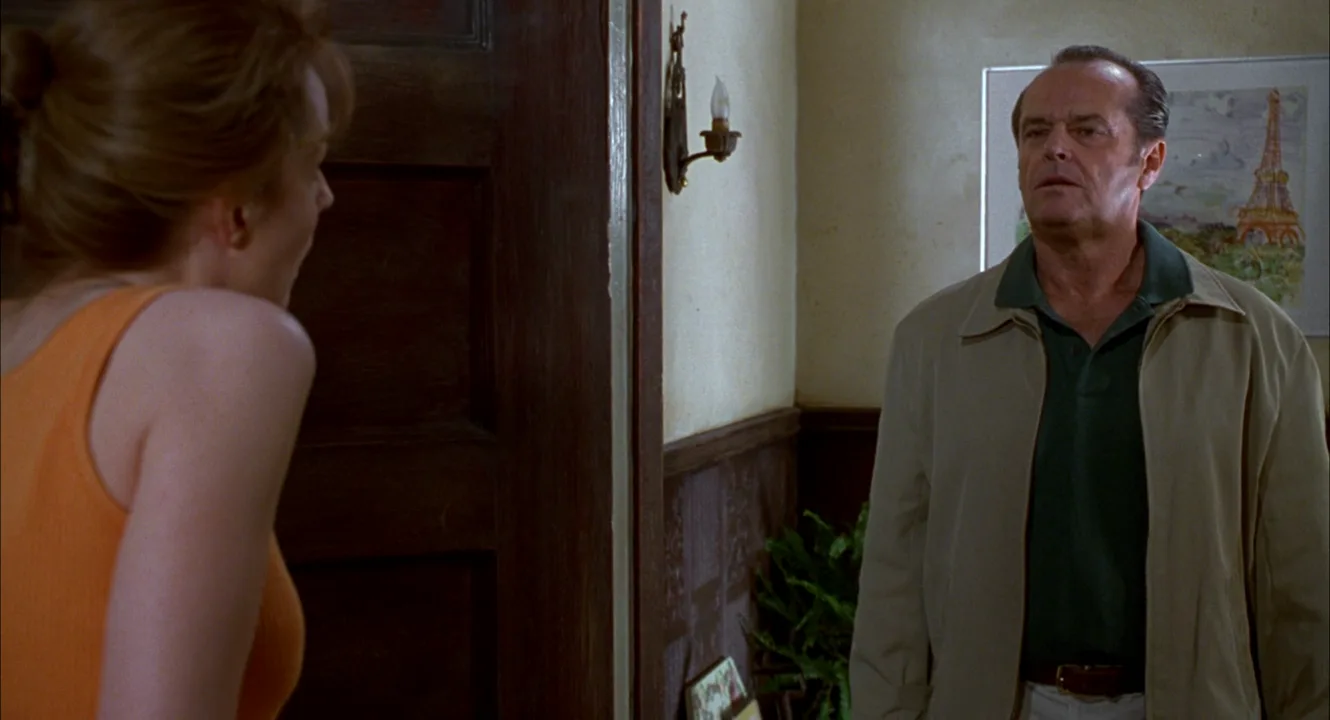
6 framesOne frame can show the setup of subtext: distance, posture, eyelines.
How to create a subtext with AI
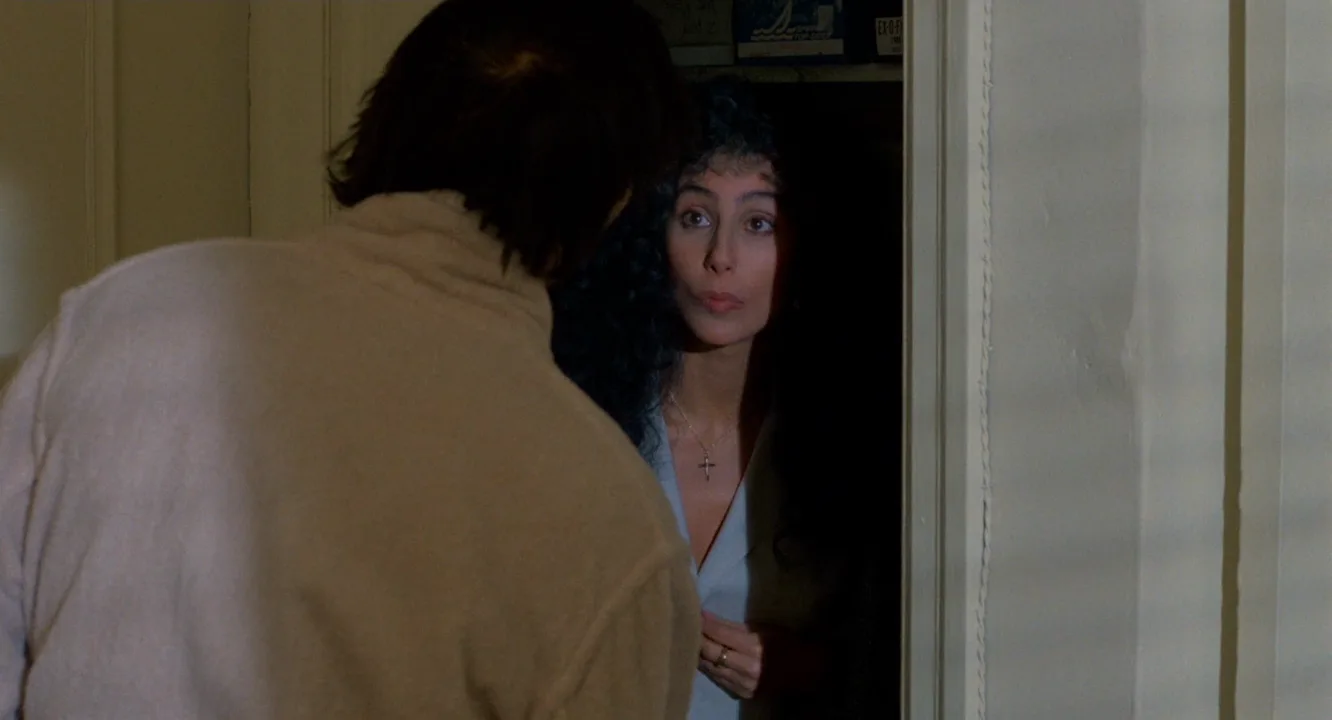
4 promptsModels render contradictions well: polite faces against a telling object, warm gestures across cold distance. Describe the surface behavior and the one detail that betrays it, then compare takes on one FlashBoards board. The fourth prompt re-shoots a real film shot from a text description alone, and the original plays next to the result so you can compare.
Wide two-shot across a long wooden dining table in a quiet kitchen, morning. At the far end a woman in her late forties with auburn hair in a loose bun and freckled forearms smiles politely, holding out a butter dish. At the near end a man in his early fifties with close-cropped grey hair and a faded blue cardigan smiles back without reaching for it. Beside the back door behind her stands a packed hard-shell suitcase. Soft window light, muted colors, 35mm lens at seated eye height, film still.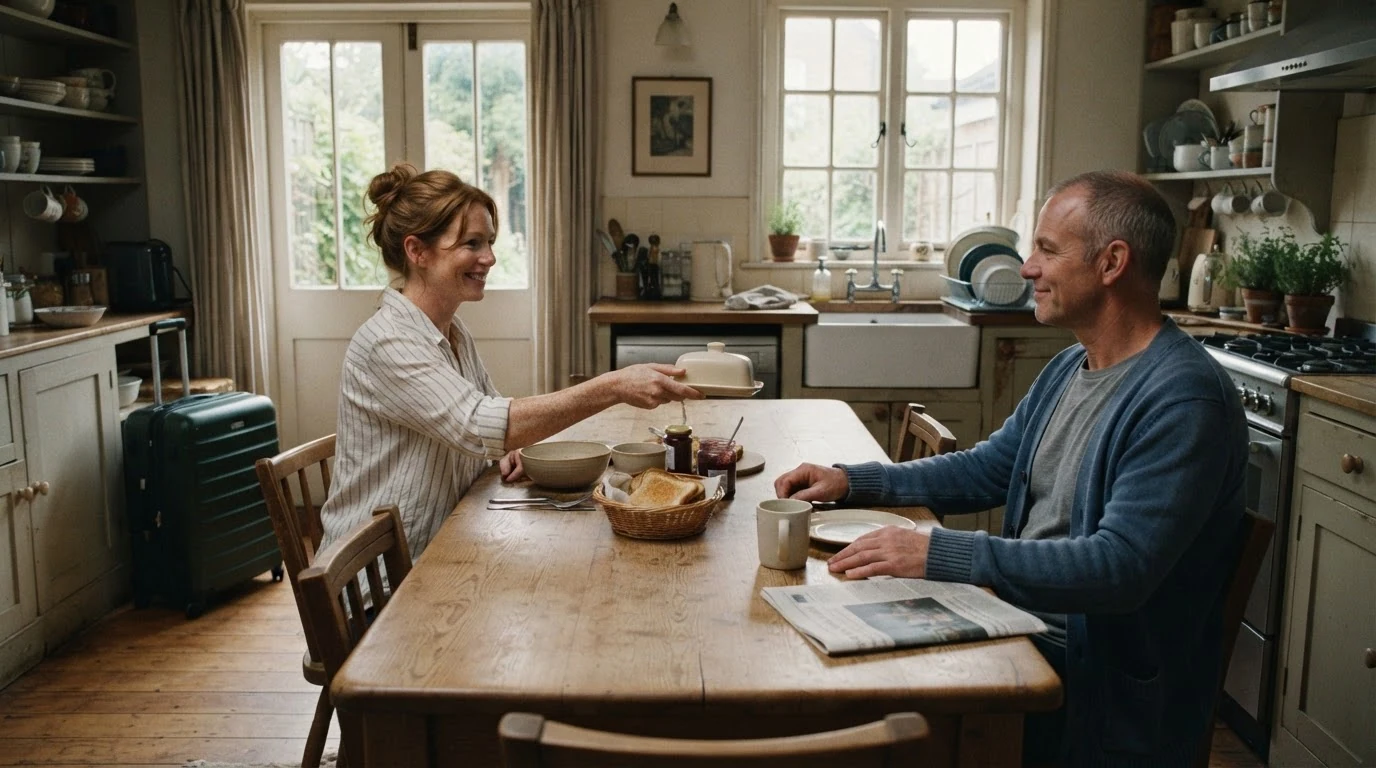
Smiles politely and without reaching for it set the surface; the packed suitcase is the fact nobody mentions. The long table adds distance.
Open FlashBoardsMedium two-shot in a gravel church parking lot after a funeral, overcast afternoon. Two brothers in their thirties in black suits shake hands. The taller one, with a red beard and a chipped front tooth, grins and grips his brother's forearm. The shorter one, clean-shaven with round wire glasses, keeps a thin smile, his free hand clenched into a fist at his side. Flat grey light, 50mm lens, cinematic still.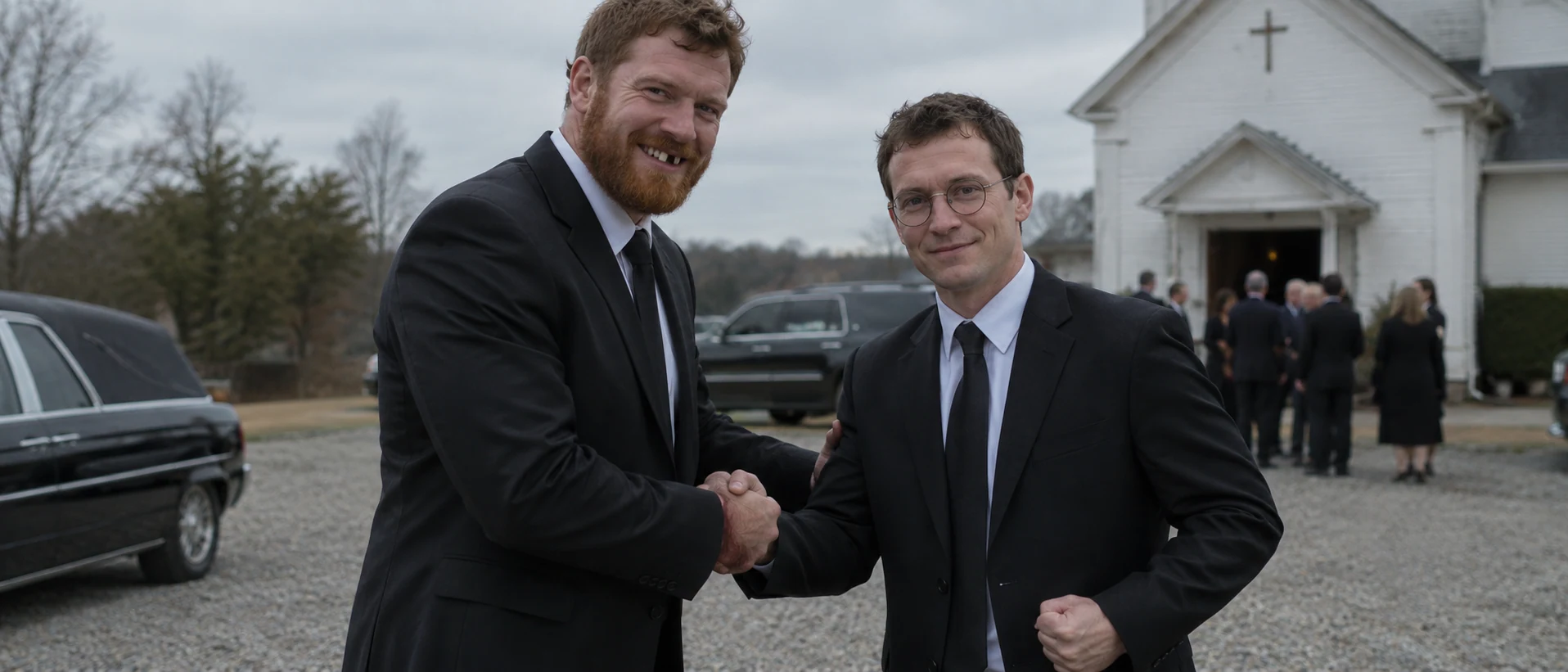
The handshake is the text; the clenched fist and thin smile are the subtext. 21:9 keeps both hands in frame.
Open FlashBoardsCamera: very slow push-in toward the woman along the table, moving from the first frame. Action: she is already holding out the butter dish and smiling. The man keeps smiling and does not take it. Her smile holds; she sets the dish down gently and glances once toward the suitcase by the door. She looks back at him and straightens her napkin, still smiling.The single glance at the suitcase is the beat. The push-in starts at once, and every object named is already in the frame.
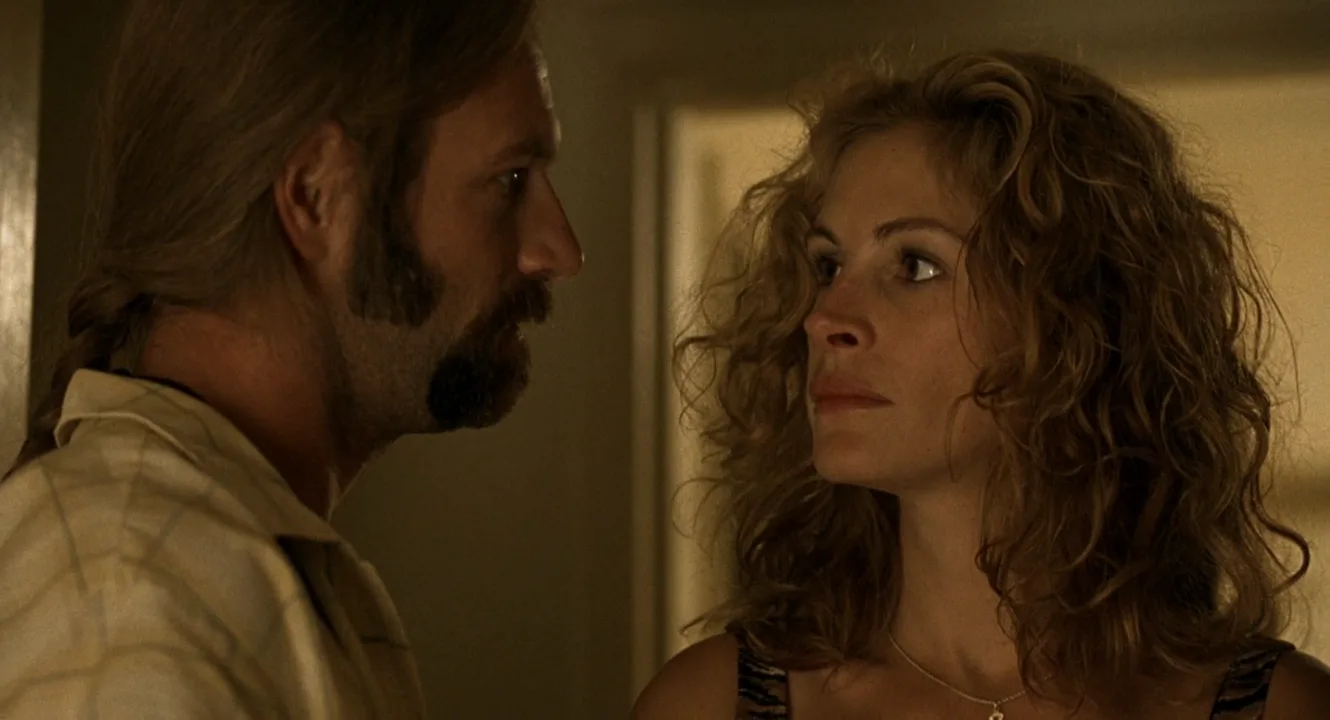
Open FlashBoards{
"output": "Full-screen live-action film shot from Erin Brockovich (2000), one continuous shot from its very first frame, no cuts. Warm dim tungsten interior of a small house at night, amber walls, a white door frame glowing behind her, 35mm grain, soft low-contrast brown and gold palette.",
"characters": {
"S1": {
"name": "George, played by Aaron Eckhart",
"look": "lean biker in his thirties, long hair in a braid down his back tied with a turquoise bead, full dark beard, loose cream plaid shirt",
"voice": "low, flat, tired, hurt under the calm"
},
"S2": {
"name": "Erin Brockovich, played by Julia Roberts",
"look": "woman in her early thirties, big loose light-brown curls, dark strappy top, thin necklace",
"voice": "silent in this shot"
}
},
"shots": [
{
"shot": 1,
"camera": "static camera at standing eye height, medium close two-shot, 40mm lens, locked off, focus holds on her face",
"action": [
"BEGINNING: alive from the first frame, George's back fills the left half of the frame, soft and out of focus, as he steps from the right across the foreground toward the left; Erin stands mid-frame right, head lowered, eyes on the floor",
"THEN: George stops in the left third and turns his head to profile, facing screen right, looking straight at her face; his hands stay low and out of frame",
"THEN: Erin lifts her head and turns it slightly toward screen left, eyes raised past his face to a point above his shoulder, lips pressed together",
"THEN: George speaks to her in profile, his jaw moving, head still; Erin holds her eyes up and away from his, mouth closed, no nod",
"END: both stay in place; he keeps looking at her, she keeps looking past him, brow slightly tense, the silence between them unbroken"
],
"dialogue": [
{
"speaker": "S1",
"on_screen": true,
"when": "right after he starts turning, from the first second",
"delivery": "quiet, flat",
"line": "<d>[English] What for?</d>"
},
{
"speaker": "S1",
"on_screen": true,
"when": "after a pause, once he stands in profile",
"delivery": "calm, almost gentle, with an edge",
"line": "<d>[English] I mean, you got a raise.</d>"
},
{
"speaker": "S1",
"on_screen": true,
"when": "straight after, closing the shot",
"delivery": "soft, resigned, the hurt held back",
"line": "<d>[English] You can afford daycare. You don't need me.</d>"
}
]
}
],
"sound": {
"ambience": "quiet house at night, faint room tone, his shirt rustling as he turns",
"speech": "exactly these spoken phrases, each said once, in this order",
"never_spoken": "no narration and no voice-over: the descriptions, performance notes and step words of this prompt are never spoken aloud",
"music": "a film score under the scene, always below the voices: a soft, sparse acoustic guitar figure with a low sustained string",
"subtitles": "none"
}
}Remakes the hallway two-shot from Erin Brockovich (2000), keeping George's three corpus lines, the locked-off framing and the eyeline that never meets.
Every spoken line is surface: money, a raise, daycare. The subtext lives in the action steps: he looks straight at her face, she keeps her eyes past his face, no nod.
Open FlashBoardsCommon mistakes
- Words like resentful or heartbroken produce theatrical faces. Ask for a polite surface plus one contradicting detail.
- A telling object buried in a prop list disappears. Name it once and place it.
- In video, keep actions small and the expression steady (still smiling).
Keep the reference frames, prompts and every generated take side by side — images and video in one canvas.
FAQ
5 questionsWhat is subtext in simple terms?
Subtext is the meaning under the words: what a character really thinks, wants or feels while saying something else. The audience picks it up from the situation, the actor's behavior and how the scene is shot, which is why "I'm fine" can mean the opposite.
What is an example of subtext in a movie?
In The Godfather (1972), "I'm gonna make him an offer he can't refuse" sounds like a deal but lands as a threat. The opening of Inglourious Basterds (2009) works the same way: a polite chat over a glass of milk that is really an interrogation.
How do you write subtext in dialogue?
Give each character an objective they can't state directly and let them pursue it through a safer topic. Let actions contradict words, cut lines where someone explains their feelings, and make sure the audience knows enough to hear the second meaning.
What is the difference between text and subtext?
Text is what is literally said and done on screen. Subtext is what is really happening beneath it: the intentions and conflicts characters hide or can't put into words. Good scenes keep the text believable while the subtext carries the drama.
Why is subtext important in film?
Film audiences watch faces and behavior, not just words. Subtext lets viewers read the gap between what characters say and what they want, which keeps dialogue natural, builds tension and avoids characters explaining feelings no real person would say aloud.
Related terms
4- DialogueScreenwriting
Dialogue is the spoken exchange between characters; good screen dialogue reveals character and conflict while leaving the most important things unsaid.
- SymbolismStorytelling
Symbolism is using a concrete object, color, place or action to stand for an abstract idea — a key, a staircase, rain, a red coat — so the image carries meaning beyond itself.
- IronyStorytelling
Irony is a gap between what is said, expected or known and what is actually meant or happens; film uses verbal, situational and dramatic irony, plus cosmic and historical variants.
- Directing ActorsDirecting & Staging
Directing actors means giving performers playable actions, objectives and circumstances rather than results — shaping a performance through rehearsal, adjustments between takes and a safe atmosphere on set.
Further reading
Robert McKee, Story: Substance, Structure, Style and the Principles of Screenwriting (1997). Judith Weston, Directing Actors (1996).