 FlashBoards Learn
- Learn
- Storytelling
- Exposition
Storytelling · Film language
Exposition
Also called: expository dialogue, exposition dump
Exposition is the information an audience needs to follow a story: who the characters are, what they want, how the world works and what is at stake. In film it works best when it arrives through action, conflict and images, so viewers learn the rules while something is already happening.
- What it does
- Gives the audience the facts, rules and stakes they need to understand and care about what happens next.
- Use it when
- A scene, a choice or a set piece will only land if the viewer already knows a specific piece of information.
- Watch out
- Characters explaining things they both already know. If no one in the scene needs the information, the audience will feel lectured.
- Try this prompt
Heist briefing around a cardboard model of a bank, crew leaning in under one work lamp, high angle, 35mm film still.
What is exposition in film?
Exposition is the information a story must hand over before the audience can follow it: character (who people are, what they want), world (the rules of a dream, a heist or a dinosaur park) and situation (the problem, the deadline, the cost of failure).
In story structure it is concentrated in the setup, the first act of the three-act structure, but it never fully stops. Deciding what the viewer needs to know, when, and through which channel is a core call of storytelling.
Exposition examples in film
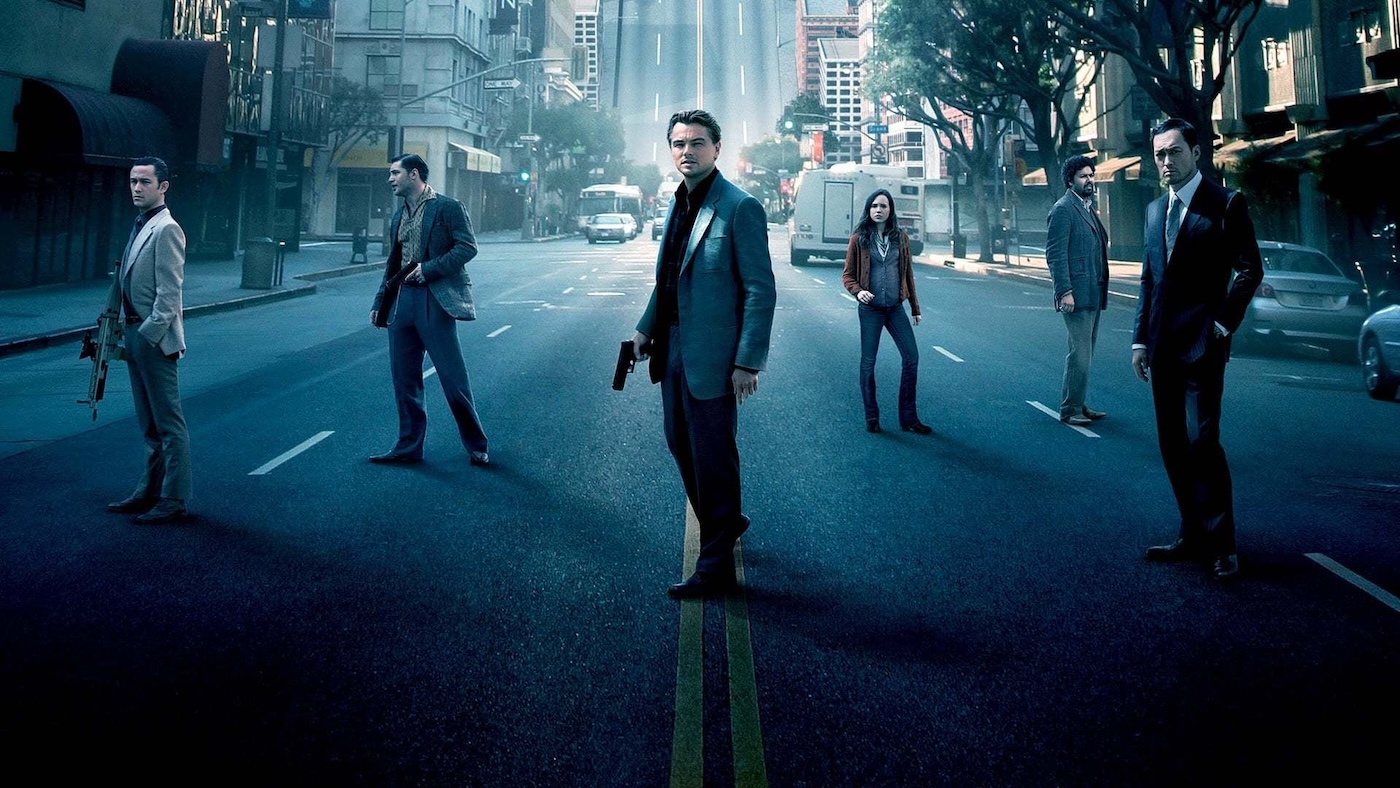
Inception (2010) hides heavy exposition inside a training arc: Ariadne is new to shared dreaming, so Cobb has a reason to explain the rules, and he does it inside a dream she starts to bend. The Matrix (1999) uses the same newcomer device, staging Morpheus's lecture to Neo as a demonstration.
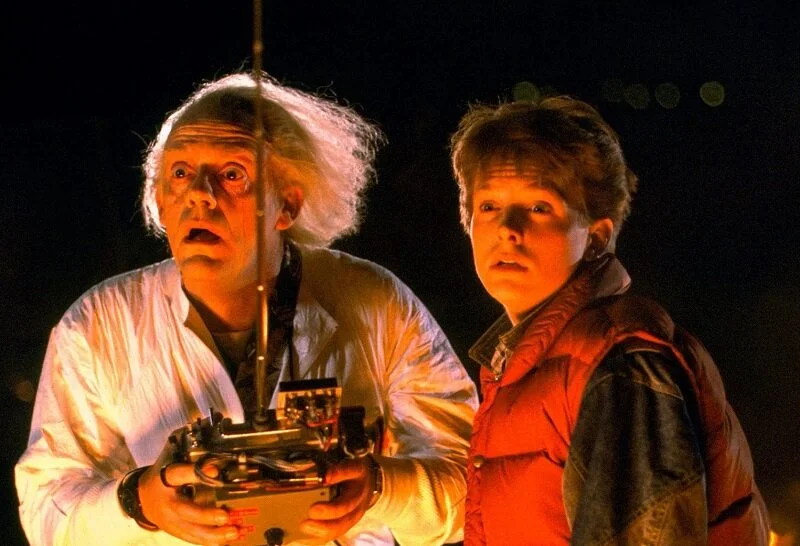
Back to the Future (1985) turns the rules of time travel into a live experiment in a mall parking lot, with a remote-controlled DeLorean. Jurassic Park (1993) explains cloning through the Mr. DNA cartoon on the park tour.
Goodfellas (1990) goes direct: Henry Hill's voice-over introduces the crew. Direct exposition works when it is fast and has a voice of its own.
What is an exposition dump?
An exposition dump is a stretch where the story stops so characters can recite facts. The classic symptom is the “as you know” line: two people telling each other what both already know. The fixes are the practical side of “show, don't tell”:
- Add conflict. Information forced out in an argument plays as drama.
- Give it a job. Deliver facts while characters pack gear, drive or plan.
- Delay it. A question held for ten minutes makes the answer feel earned.
- Cut it. If the next scene works without the fact, drop it.
Good expository dialogue carries subtext: the way characters handle the facts reveals who they are.
How to stage and shoot exposition scenes
Much exposition is solved on set, not on the page.
- Put the information on an object. A map, a scale model or a headline gives the camera something to look at.
- Build the world into the frame. An establishing shot of a queue at a water truck explains a drought faster than dialogue.
- Keep bodies moving. A walk-and-talk keeps the eye busy while the ear takes in facts.
- Cut to the listener. The reaction tells the audience how much the news matters.
In FlashBoards you can map exposition before the shoot: list what the audience must know by each sequence and generate the inserts and props that carry each fact.
Exposition vs. backstory
Backstory is content: what happened before the film begins. Exposition is delivery: getting any needed information to the audience, about the past, the rules of the world or the stakes of the next scene. The time left on a bomb is exposition with no history behind it. A flashback is one way to expose backstory; a line of dialogue or a photo on a shelf are others.
Exposition examples in film
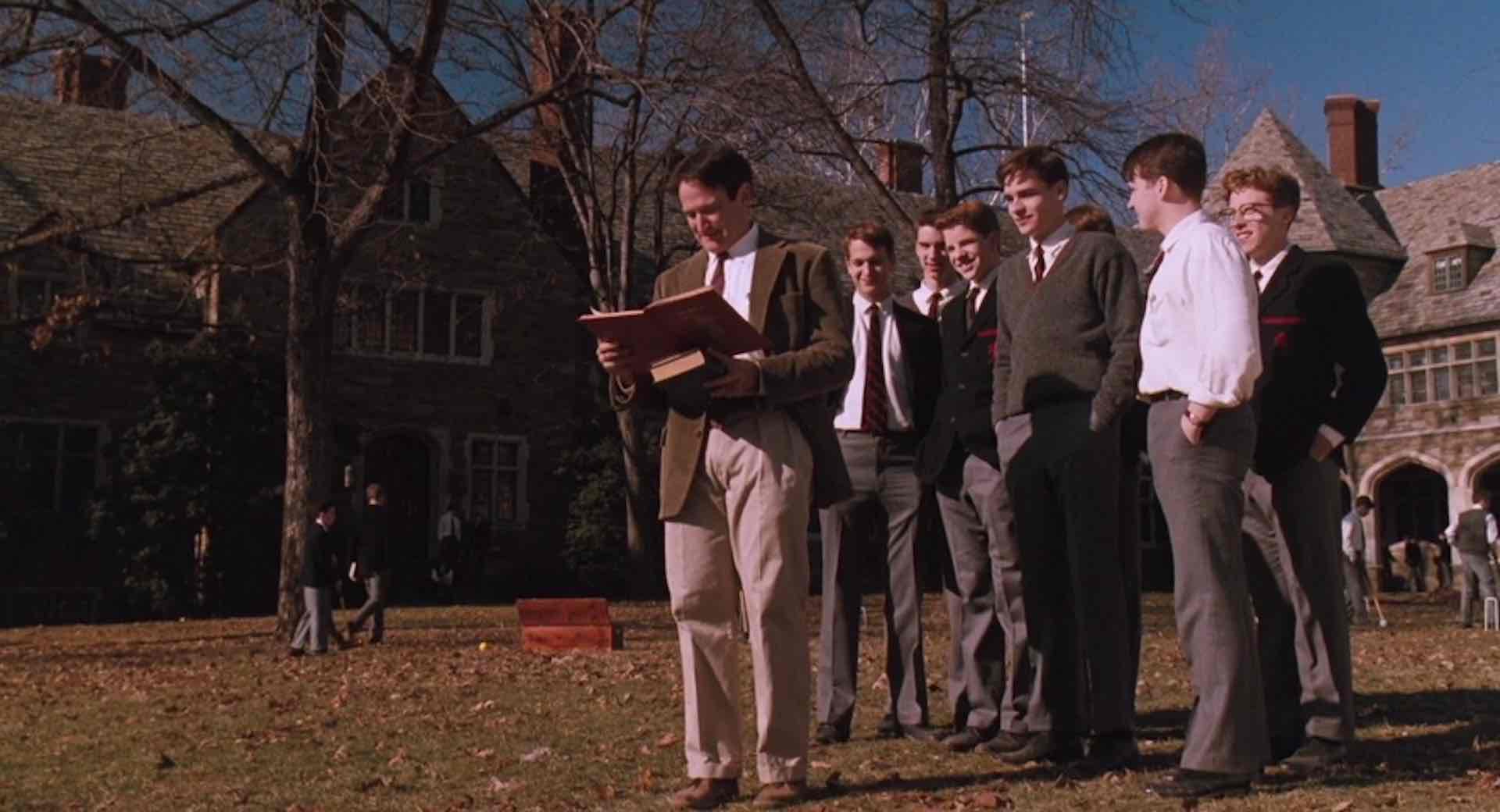
4 framesFrames where information arrives through a demonstration, not a speech.
How to create a exposition with AI
4 promptsExposition you can generate is carried by the frame: a briefing around a model, a world explained by its signs. Name the object that holds the information and let light point at it. On a FlashBoards board, keep these frames next to notes on which fact each shot delivers. The fourth prompt re-shoots a real film shot from a text description alone, and the original plays next to the result so you can compare.
High-angle shot looking steeply down from above at a heist briefing in a dim brick warehouse at night. A woman in her late fifties with cropped white hair, reading glasses on her forehead and a moss-green cardigan leans over a cardboard scale model of a three-story bank, pointing a pencil at the vault on the lowest floor. A lanky young man with a shaved head and freckles and a red-bearded man in a leather apron lean in. A tiny plastic guard figure stands at the model's front door. Camera high above the table, tilted down so we see the model's roof and floors from above, 35mm lens, one work lamp over the model, deep shadows. 35mm film still.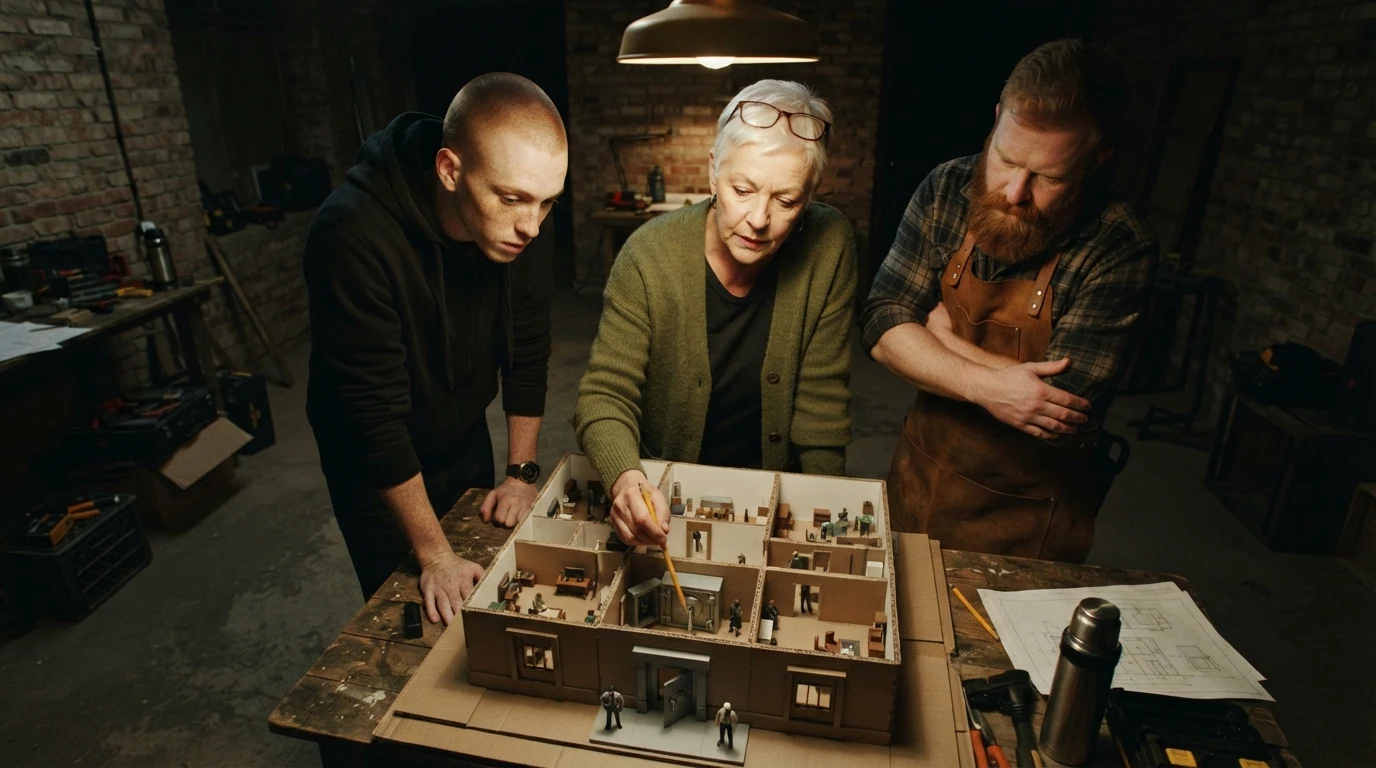
The model is the exposition: the vault is the goal, the guard figure the obstacle. One lamp makes the model the brightest thing in frame, and the high angle makes the layout readable.
Open FlashBoardsEstablishing wide shot of a dusty hillside town in a drought, harsh noon sun. A long queue of residents with empty yellow jerrycans winds toward a single white water truck; two officials in pale blue uniforms hold clipboards. A hand-painted sign on the truck reads 'ONE CAN PER FAMILY'. In the foreground, a boy of about ten with a shaved head and an oversized orange T-shirt carries two empty cans. 28mm lens, eye level, bleached colors, anamorphic widescreen film still.
World exposition without dialogue: the queue, sign and officials explain scarcity and power. A short quoted sign spells more reliably, and the boy gives the audience a point of view.
Open FlashBoardsCamera: a slow, steady push in from the high angle toward the scale model, ending closer on the woman's hands. Action: from the first frame her pencil is already sliding across the model from the front door toward the vault. She taps the vault twice. The freckled young man leans closer and the red-bearded man folds his arms. At the end she sets the tiny guard figure down beside the vault.The pencil moves from the first frame, so the clip starts alive; its route traces the plan in one gesture, and the push-in narrows attention to the information.
Open FlashBoards{
"output": "Full-screen live-action scene from Jurassic Park (1993), alive from its very first frame: one continuous shot. Early-1990s 35mm film stock, fine grain, a dim emergency storeroom lined with grey metal shelves of cardboard supply boxes and white first-aid cases, one hard white lamp from high front-left, deep black shadow over the right third, cool whites and warm browns.",
"characters": {
"S1": {
"name": "Hammond, played by Richard Attenborough",
"look": "elderly man, white hair, short white beard, round wire-rim glasses, white short-sleeved shirt; a black walkie-talkie held upright against his lips in the hand on the screen-left side, a dark folder with a rolled paper plan in the other hand, low in front of his chest",
"voice": "soft, precise, older English voice, a little breathless"
},
"S2": {
"name": "Malcolm, played by Jeff Goldblum",
"look": "dark curly hair, dark stubble, black leather jacket over a dark shirt, face almost black against the lamp, only his profile edge lit",
"voice": "silent in this shot"
}
},
"shots": [
{
"shot": 1,
"camera": "eye level, normal lens; slow dolly in with a slow pan left and a slow truck right. Starts as a medium two-shot: S1 lit in the left half from chest up, S2 in dark three-quarter profile in the right third, nearer to the lens, facing left toward S1. Ends as a tight close two-shot of both faces, S2's dark profile filling the right half in the foreground; in the last moment focus pulls from S1 onto S2's profile and S1 goes soft.",
"action": [
"BEGINNING: alive from the first frame, S1 already speaks into the walkie-talkie pressed to his lips, eyes lifted past the lens toward frame left; S2 stands still, head turned left toward S1's radio, mouth slightly open.",
"THEN: S1 draws a short breath, eyes still fixed toward frame left, and keeps talking into the radio; the rolled paper corner at screen centre stays still; S2 does not nod, his eyes stay on S1.",
"THEN: the camera keeps creeping closer; the fire extinguisher on the back wall slides out behind S2 and the white first-aid cases on the shelves come into view between the two men.",
"THEN: S1 speaks the last line with his brows drawn together, the radio still at his mouth; S2 stays still, lips parted, jaw tense, listening.",
"END: S1 lowers his eyes toward the plan, mouth closing, now soft in focus; S2's sharp dark profile fills the right half of the frame, still turned toward S1, silent."
],
"dialogue": [
{
"speaker": "S1",
"on_screen": true,
"when": "from the first frame",
"delivery": "clear, instructive, into the radio",
"line": "<d>[English] You can't throw the main switch by hand.</d>"
},
{
"speaker": "S1",
"on_screen": true,
"when": "right after his short breath",
"delivery": "patient, explaining step by step",
"line": "<d>[English] You've got to pump up the primer handle in order to get the charge.</d>"
},
{
"speaker": "S1",
"on_screen": true,
"when": "near the end, as the camera reaches the tight two-shot",
"delivery": "slower, describing it carefully",
"line": "<d>[English] It's large, flat and grey.</d>"
}
]
}
],
"sound": {
"ambience": "quiet storeroom room tone, a faint electrical hum, light crackle of walkie-talkie static",
"speech": "exactly these spoken phrases, each said once, in this order",
"never_spoken": "no narration and no voice-over: the descriptions, performance notes and step words of this prompt are never spoken aloud; S2 says nothing",
"music": "a film score under the scene, always below the voices: low suspenseful strings holding one long note with a soft, slow pulse",
"subtitles": "none"
}
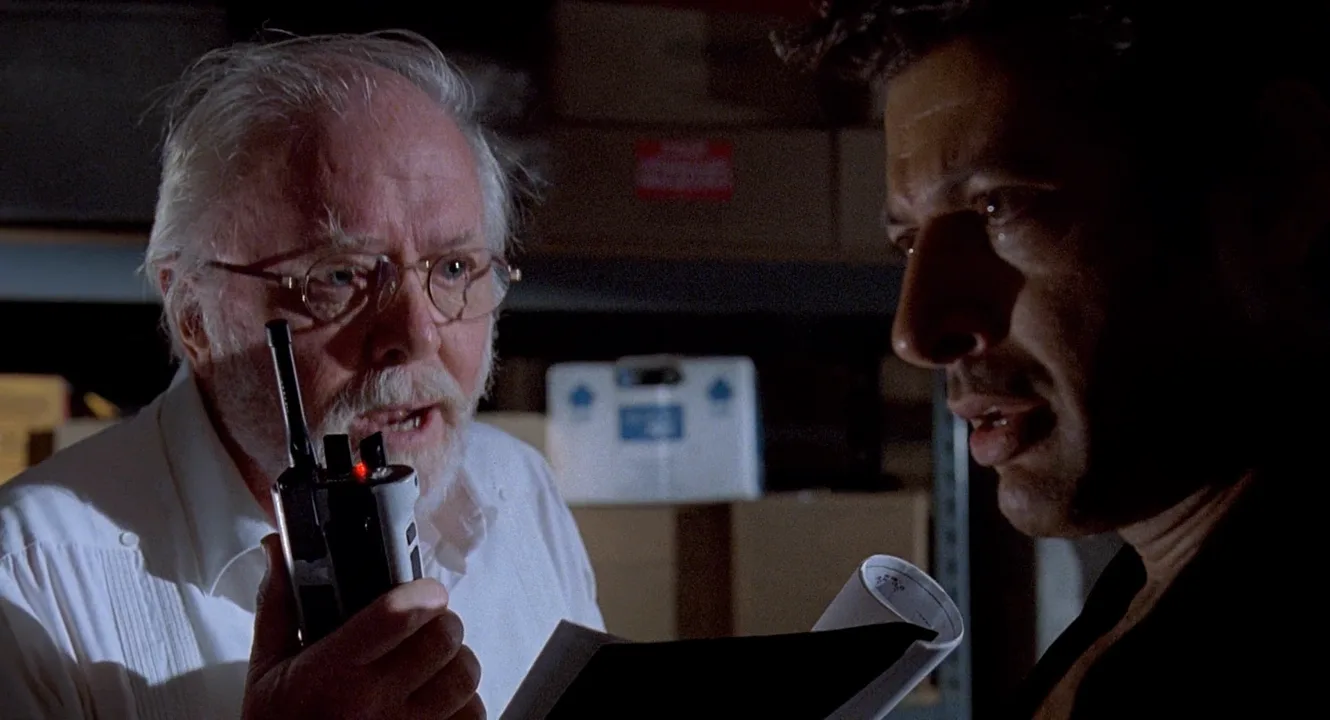
}Remakes the radio shot from Jurassic Park (1993), dir. Steven Spielberg, DP Dean Cundey: the slow dolly in from a medium to a close two-shot, Hammond lit at frame left reading the instructions into a radio and Malcolm in dark profile at frame right, with the original three lines spoken word for word.
Hammond's lines explain how the breaker works into a walkie-talkie, so the facts arrive while a task is under way. The slow dolly in toward Malcolm's dark, silent profile makes his reaction part of the information.
Open FlashBoardsCommon mistakes
- Models fill maps and models with noise. Name the one element that matters.
- Long signs come out misspelled. Keep on-screen text to a few quoted words.
- Group scenes drift into people facing the camera. Say where each person looks.
- Briefing clips freeze. Give the speaker a gesture that traces the information.
Keep the reference frames, prompts and every generated take side by side — images and video in one canvas.
FAQ
4 questionsWhat is exposition in film?
Exposition is the information the audience needs to follow a film: who the characters are, what they want, how the world works and what is at stake. It comes through dialogue, voice-over, title cards, flashbacks or production design. It works best inside scenes that already have action.
What is an exposition dump?
An exposition dump is a passage where the story stops so characters can deliver facts in explanatory speeches, often telling each other things they both already know. It stalls pacing and sounds artificial. Fix it with conflict, a task to do while talking, or a cut.
How does show, don't tell apply to exposition?
It means delivering information through what the audience sees rather than what characters say. A rationing sign and a queue explain a drought; a demonstration explains a machine. Show what is visual and tell the rest quickly.
What is expository dialogue?
Expository dialogue is dialogue whose main job is to give the audience information. It works when one character has a real reason to say it and another a real reason to hear it: a newcomer being trained or a briefing before a job. It fails when it exists only to put a fact on record.
Related terms
6- BackstoryStorytelling
Backstory is everything that happened to the characters and their world before the film begins; it shapes their motives and is revealed through hints, dialogue or flashbacks rather than dumped on the audience.
- DialogueScreenwriting
Dialogue is the spoken exchange between characters; good screen dialogue reveals character and conflict while leaving the most important things unsaid.
- Rising ActionStorytelling
Rising action is the chain of complications between the inciting incident and the climax, where obstacles pile up and stakes rise.
- Three-Act StructureStorytelling
The three-act structure splits a story into setup, confrontation and resolution, turned by plot points at roughly the quarter and three-quarter marks — the default blueprint of feature screenwriting.
- Visual StorytellingStorytelling
Visual storytelling conveys story, character and emotion through images — framing, blocking, light, color, objects and cuts — instead of dialogue; it's the core skill behind every storyboard and AI-generated shot.
- Story StructureStorytelling
Story structure is the order and shape of the events that carry a story from setup to resolution; models like the three-act structure, Freytag's pyramid, the hero's journey or Save the Cat are different maps of it.
Further reading
Robert McKee, Story (1997) — chapter on exposition. Syd Field, Screenplay: The Foundations of Screenwriting (1979).