 FlashBoards Learn
- Learn
- Storytelling
- Setting
Storytelling · Film language
Setting
Also called: story world, time and place
Setting is where and when a story takes place: the period, the location and the social world its characters live in. In film it is never just a backdrop. Locations, production design, light and sound make it concrete, and a strong setting shapes mood, creates obstacles and tells the audience what kind of story this is.
- What it does
- Places the story in a specific time, place and social world, so the audience reads mood, rules and stakes before anyone speaks.
- Use it when
- Always: every scene has a setting. Push it forward when the place itself pressures the characters or carries the theme.
- Watch out
- A generic or inconsistent setting makes a story feel weightless. Pick a few specific details and keep them consistent across scenes.
- Try this prompt
Extreme wide shot of a 1930s Nordic fishing village at dawn, red wooden boathouses, snow-dusted hills, woodsmoke, 24mm lens, 35mm film still.
What is setting in a story?
Setting answers two questions every narrative has to settle: where and when. It has three layers:
- Time. The era, the season, the time of day.
- Place. The geography down to the single room.
- Social world. Class, customs, laws and technology: what people can do here and what it costs them.
A novel can describe these; a film has to photograph them, so in cinema setting is a production problem as much as a writing one. Among the tools of storytelling it is the one the audience absorbs fastest, often in the first wide shot.
Why does setting matter in film?
A well-chosen setting works on several levels:
- It sets the mood. Blade Runner (1982) puts Los Angeles in 2019 under constant rain, smoke and neon: noir before the plot says so.
- It creates conflict. In Jaws (1975) the beach town lives on summer tourists, which is why the mayor wants the beaches open. In Cast Away (2000) the island is the antagonist.
- It reflects character. In Home Alone (1990) the big suburban house at Christmas turns from a lonely space into the battlefield an eight-year-old rigs with traps.
- It signals genre. Twin suns over a desert planet in Star Wars (1977) announce space fantasy in one image.
- It carries meaning. Manhattan (1979), shot in black-and-white widescreen, makes the city a romantic ideal its characters never live up to. That is how setting supports theme.
How filmmakers build setting on screen
On set, setting becomes decisions:
- Location or build. A real place brings texture; a stage gives control. Most films mix both, and set design fills the gaps.
- The establishing image. An establishing shot, often on an 18–24mm lens, gives geography and scale. Follow it with one telling detail: a ration card, a rotary phone.
- Period and class cues. Costume, props, vehicles and signage date the story. One anachronism breaks it.
- Light and color. Time of day, weather and palette set the emotion: low winter sun, sodium streetlights, a desaturated grade for a ruined world.
- Sound. Gulls, traffic or silence finish what the frame starts.
All of it is part of mise-en-scène. In FlashBoards you can build a setting board: scouting photos, period references and generated look tests for each place in the script, next to the storyboard frames that use them.
When the setting becomes a character
People say a setting "is a character" when it has its own history and rules, changes during the story and acts on the people inside it. The Overlook Hotel in The Shining (1980) is the classic case. The test: if moving the story elsewhere would change it completely, the setting is doing dramatic work. If you could swap it for any city without rewriting a scene, it is a backdrop.
Setting vs. worldbuilding
Setting is where and when the story happens, the part the audience sees and hears. Worldbuilding is the design behind it: the history, politics, geography and visual rules of an invented world, most of which never reaches the screen. A drama in present-day Chicago borrows a world that already exists; a far-future epic needs its world designed first, and each scene's setting is a slice of that design.
Setting examples in film
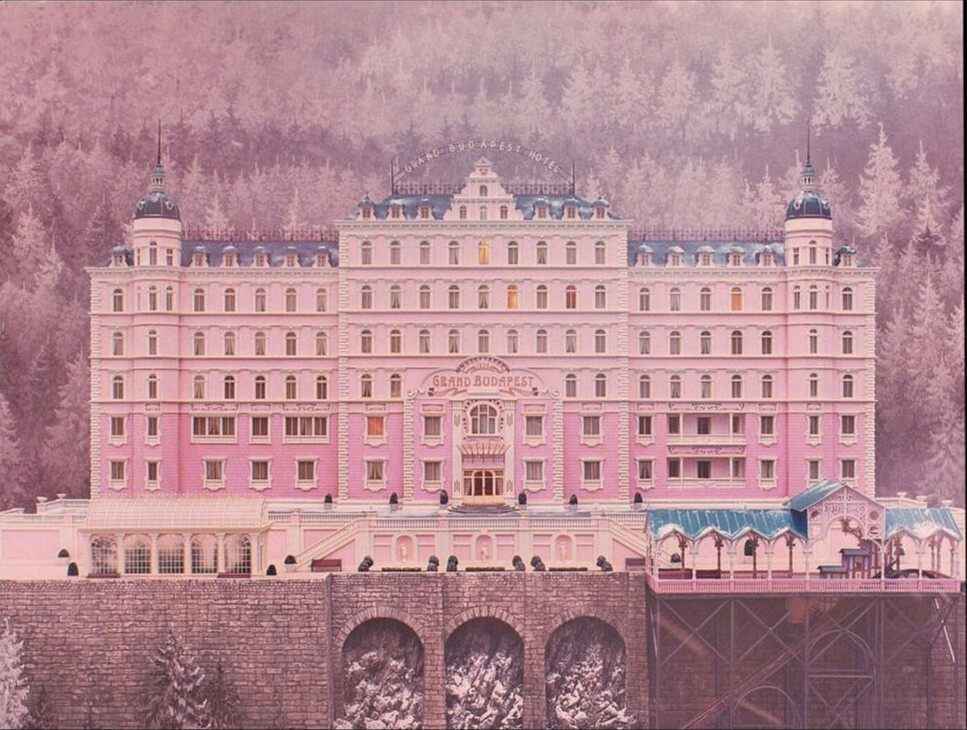
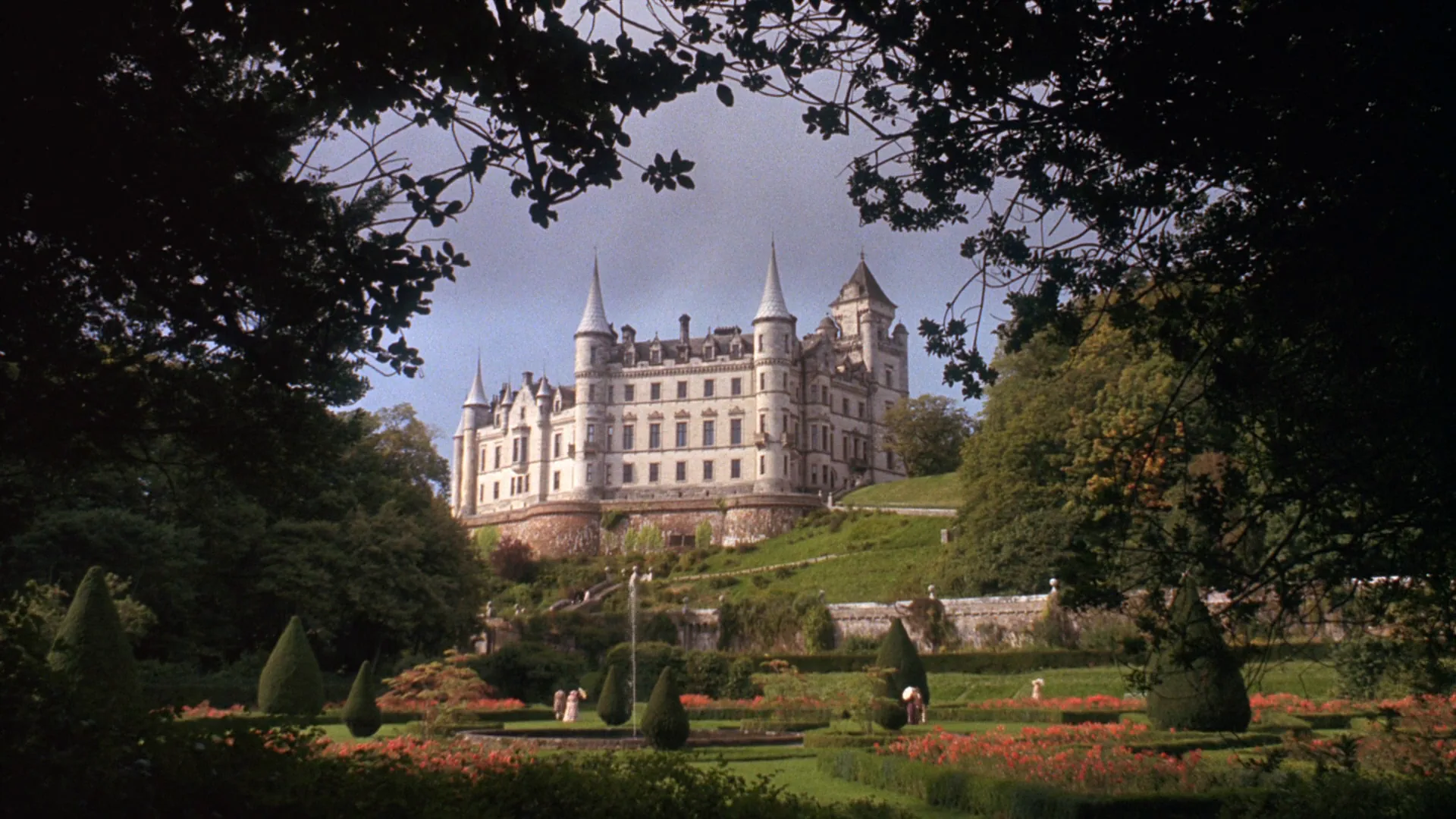
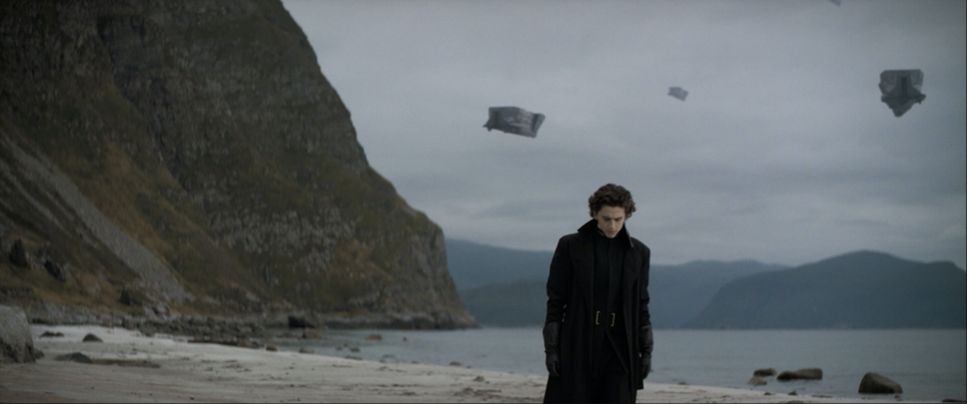
6 framesFrames where place and period do the storytelling before anyone speaks.
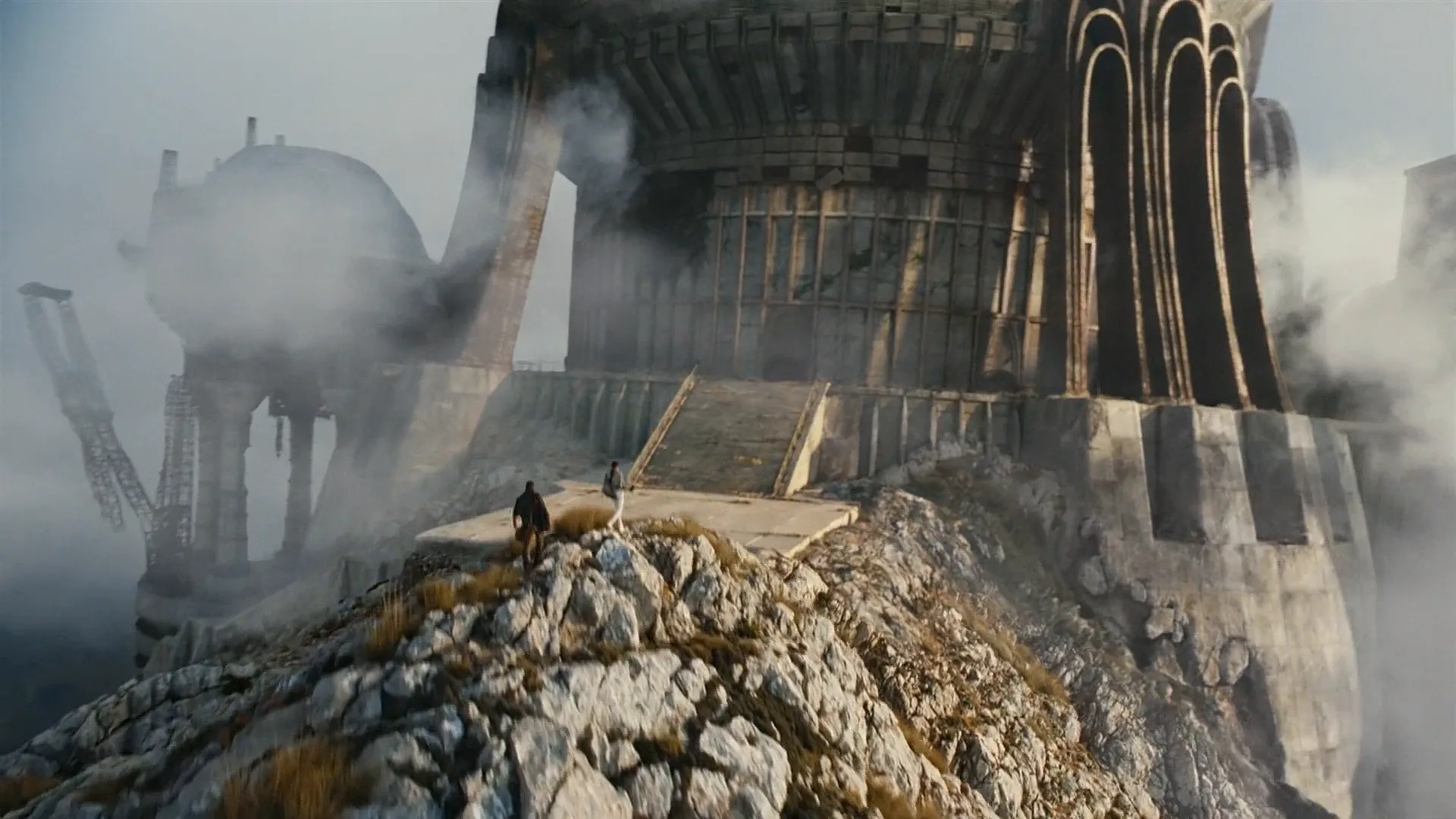
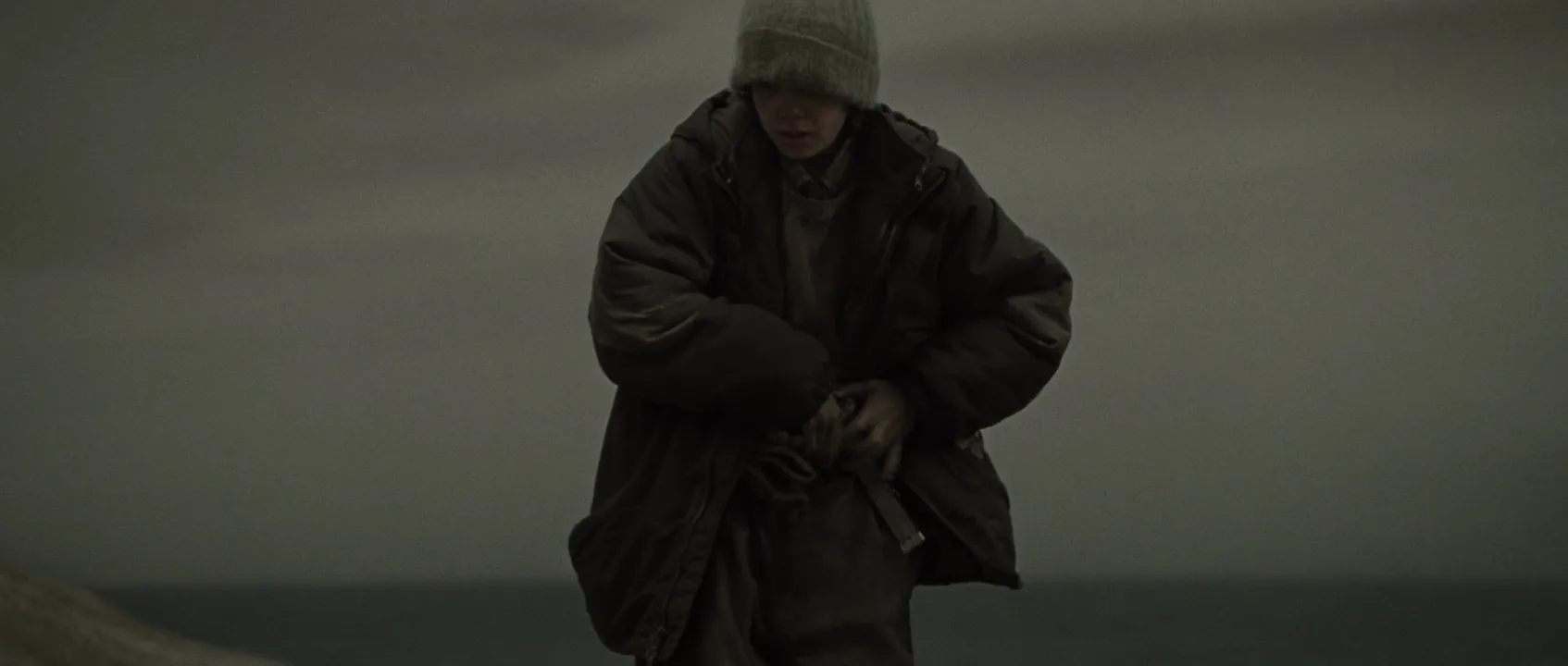
How to create a setting with AI
4 promptsWith image models, setting lives in stacked specifics: era, place, season, time of day, weather and two or three period objects. Keep characters small. In FlashBoards, pin both takes beside your location references and compare which reads the period faster. The fourth prompt re-shoots a real film shot from a text description alone, and the original plays next to the result so you can compare.
Extreme wide establishing shot of a Nordic fishing village in the 1930s at dawn. Red wooden boathouses on stilts along a stone quay, wooden rowboats tied below, snow-dusted hills behind, woodsmoke rising from two chimneys. In the right foreground a broad-shouldered fisherman in his sixties with a white chin beard, grey wool cap and yellow oilskin coat hauls a hemp rope. Cold pink dawn light, gulls overhead. 24mm lens, eye level, 35mm film still.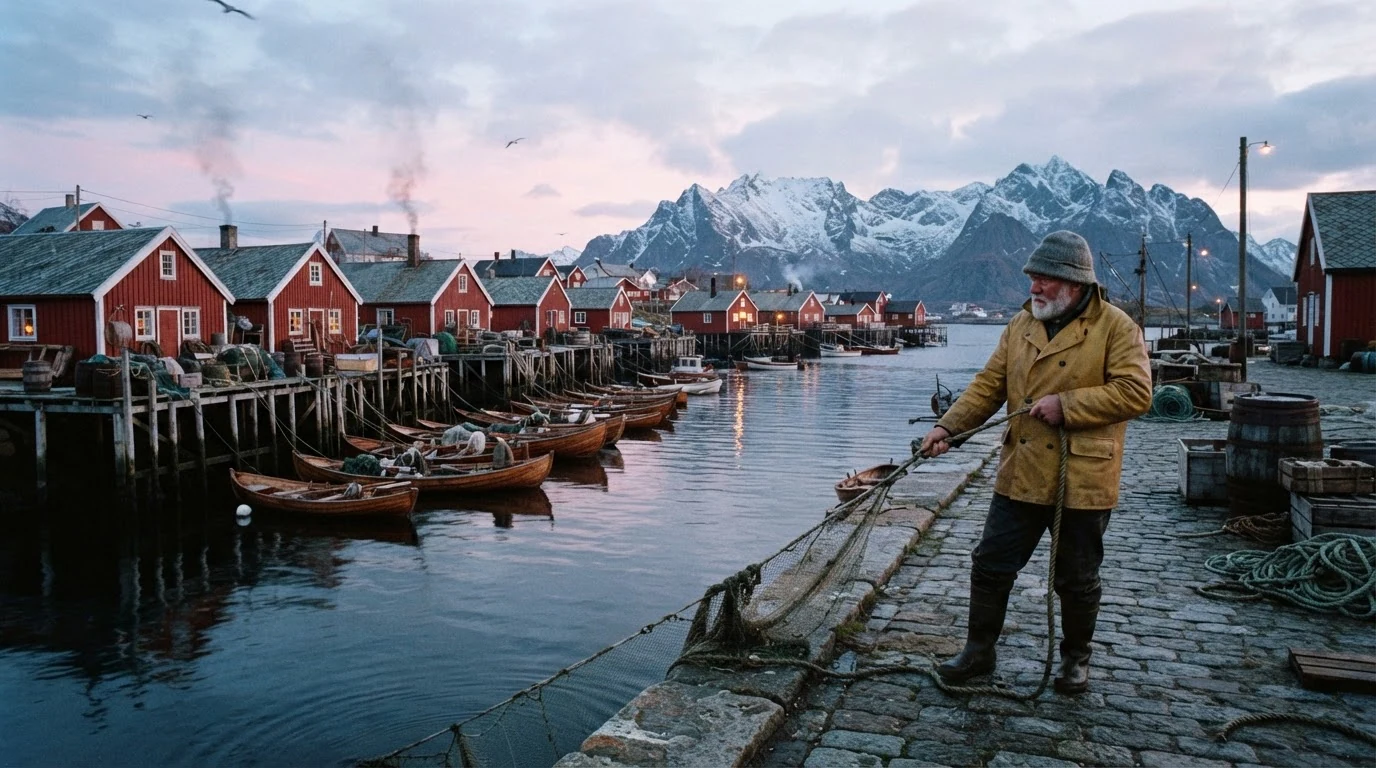
"1930s", "wooden rowboats", "hemp rope" and "wool cap" date the image; "Nordic" and "snow-dusted hills" fix the place; "dawn" and "woodsmoke" set the mood. The fisherman gives scale and an action for the video.
Open FlashBoardsWide shot of a near-future desert mining town at noon: sun-bleached prefab housing stacked three high, a rusted ore conveyor over the main street, dust in the air. In the middle ground a wiry woman in her thirties with a shaved head, copper hoop earrings and an orange work suit crosses the street carrying a water canister. Harsh overhead sun, short hard shadows, bleached ochre palette. 32mm lens, anamorphic widescreen film still.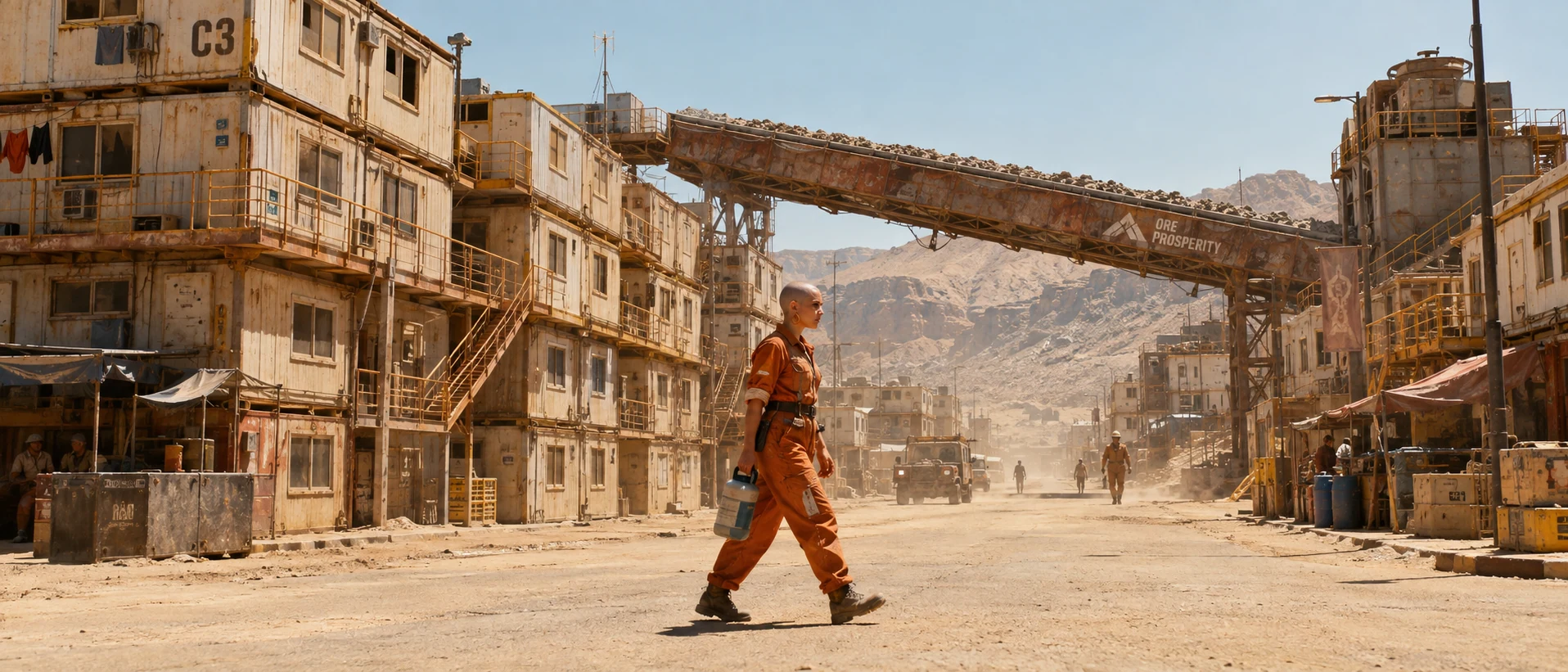
Opposite setting, same method: "prefab housing" and "ore conveyor" build era and economy; "noon" and "hard shadows" make the heat felt. The water canister shows what is scarce.
Open FlashBoardsCamera: slow lateral truck left along the quay at walking pace, eye level, ending with the boathouses filling the frame. Action: from the first frame the fisherman is already hauling the rope hand over hand while gulls circle and woodsmoke drifts sideways. At the end he loops the rope around a wooden post and straightens up, looking out at the water."Already hauling", the gulls and the smoke keep the shot alive from frame one; the truck travels only along what is already in frame, so the model has less to invent.
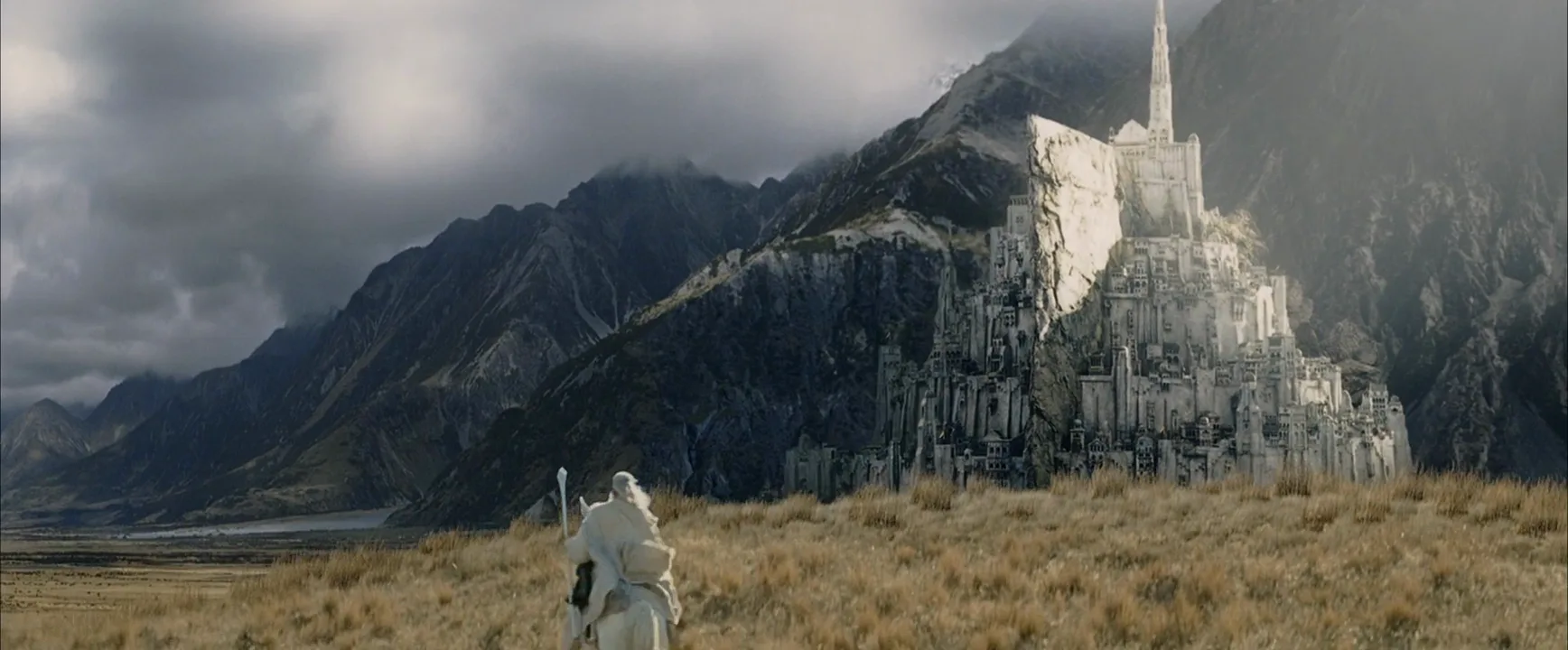
Open FlashBoards{
"output": "Full-screen live-action single continuous crane shot from The Lord of the Rings: The Return of the King (2003), alive from its very first frame. Anamorphic 35mm widescreen, overcast storm light, dry golden grass under slate-gray clouds, a mythic white stone city at the foot of a mountain range.",
"characters": {
"S1": {
"role": "lone rider, seen only from behind",
"look": "long white hooded cloak and long white hair streaming back, a long pale wooden staff held low at his screen-left side, riding a white horse at full gallop",
"voice": "silence: he never speaks"
}
},
"shots": [
{
"shot": 1,
"camera": "crane rising steadily from grass height while tilting down, eye level at the start and high wide at the end, wide lens; starts on a grassy slope, ends as an extreme wide shot of the city across the plain",
"action": [
"BEGINNING: alive from the first frame, the lens is low in dry golden grass that fills the lower two thirds of the frame; a gray cloud sky above the crest, and only the thin tip of a white tower shows over the crest in the upper right.",
"THEN: the rider on the white horse gallops into frame from the right edge, very close to the lens, moving straight away from camera up the slope; his cloak and hair fly back, the staff low at his screen-left side.",
"THEN: the camera rises; above the crest a tall white tower and the top of a white wall appear right of centre, with a dark mountain behind; the rider shrinks as he climbs toward the crest in the centre-right.",
"THEN: the camera keeps rising and tilts down; tier after tier of white walls stacked on a rock spur climb up the mountain on the right half of the frame, a great prow of rock splitting the tiers; the rider crosses the crest, small in the lower centre-left.",
"THEN: the grass drops away to reveal a flat yellow plain; the rider gallops across it toward the city, a small white shape in the lower left third.",
"END: extreme wide, the whole many-tiered white city with its outer wall at the base fills the right two thirds of the frame, the mountain range fades into cloud on the left, a shaft of sunlight lights the white rock; the tiny rider still gallops toward the gate."
],
"voice": "silence: nobody speaks in this shot, no voice at all",
"dialogue": []
}
],
"sound": {
"ambience": "wind hissing through dry grass, drumming hooves fading as the rider gallops away",
"speech": "no words in this video; the only human sounds are breaths and movement",
"never_spoken": "no narration and no voice-over: the descriptions, performance notes and step words of this prompt are never spoken aloud",
"music": "a film score under the scene, always below the voices: a broad rising theme of brass and choir that swells as the city is revealed",
"subtitles": "none"
}
}Remakes the crane-up over the grass in The Lord of the Rings: The Return of the King (2003) that reveals Minas Tirith; the prompt carries over the rising camera, the rider galloping away and the city filling the right of frame.
The whole prompt is a reveal: the camera starts low in the grass so the city is hidden, then rises in timed steps until the place fills the frame. The rider stays small, so the setting, not the character, is the subject.
Open FlashBoardsCommon mistakes
- Models default to a timeless, generic place. Stack era cues from one decade.
- Anachronisms creep in. Name the period material: "wooden crates", "hemp rope".
- The character swallows the setting. Say how large the figure is in frame.
- Light and weather contradict each other. State one light source and one sky.
Keep the reference frames, prompts and every generated take side by side — images and video in one canvas.
FAQ
4 questionsWhat is setting in a story?
Setting is the time and place in which a story happens, including its social world: era, location, season, time of day and the rules people live by. It tells the audience what is possible, sets the mood and often creates the obstacles the characters face.
What is setting in film?
In film, setting is time and place made visible and audible through locations or built sets, production design, costume, props, light, color and ambient sound. Because the camera shows everything, it has to be specific and consistent: one wrong object can pull the audience out of the period.
What are the three types of setting?
Writers usually split setting into time (era, season, time of day), place (geography down to a single room) and social environment (class, culture, technology). Some add atmosphere as a fourth. On screen they work together: a 1930s fishing village at dawn is all three at once.
What is the difference between setting and worldbuilding?
Setting is the time and place the audience sees. Worldbuilding is the deeper design behind an invented world: history, politics, geography and visual rules, most of which never appears on screen. Every story has a setting; mainly fantasy and science fiction need full worldbuilding.
Related terms
4- WorldbuildingStorytelling
Worldbuilding is designing the rules, history, geography, cultures and look of a story's world so that everything on screen feels consistent — the groundwork for production design and for coherent AI-generated scenes.
- Mise-en-ScèneFilm History & Theory
Mise-en-scène is everything placed and arranged in front of the camera — setting, props, costume, makeup, lighting, and the actors' positions and movement — and how it is composed in the frame to create meaning.
- NarrativeStorytelling
A narrative is a chain of events connected by cause and effect and told from a chosen point of view; in film, it's the story as organized by plot, image and sound.
- ThemeStorytelling
Theme is the idea a story explores — what it says about love, power, guilt or freedom — expressed not as a slogan but through the protagonist's choices and their consequences.
Further reading
Robert McKee, Story (1997), chapter "Structure and Setting". David Bordwell and Kristin Thompson, Film Art: An Introduction, chapter on mise-en-scène.