 FlashBoards Learn
- Learn
- Storytelling
- Cliffhanger
Storytelling · Film language
Cliffhanger
Also called: cliffhanger ending
A cliffhanger ends an episode, act or film at the peak of unresolved danger or revelation: the character is mid-fall, the secret has just come out, the choice is not yet made. The story stops before the answer, so the audience has to come back to find out what happens next.
- What it does
- Converts the tension of an unfinished moment into a reason to watch the next episode, act or film.
- Use it when
- An installment, act break or season has to end while the central question is still live.
- Watch out
- A cliffhanger resolved by a cheat (the hero was never really in danger) burns trust for every one that follows.
- Try this prompt
Woman with a copper braid hanging from a rain-soaked rooftop ledge at night, one hand on a bending gutter, city lights far below, high angle, 16:9
What is a cliffhanger?
A cliffhanger is an ending placed at the worst moment for the characters and the best moment for the audience's curiosity: the scene raises a question and the cut comes before the answer. It is one of the narrative techniques that belong to story structure, because it is about where a story stops.
The name is literal. Serialized novels and the silent-film serials of the 1910s ended installments with a hero hanging from a ledge or tied to the tracks, and the next chapter opened with the rescue.
Today it lives wherever a story is split into parts: episodes, seasons, act breaks, franchises. It is a cousin of suspense: suspense stretches the wait inside a scene, a cliffhanger stretches it across the gap between installments.
Types of cliffhanger endings, with examples
Danger
A life is at stake and the cut comes before the outcome. Star Trek: The Next Generation ended its third season (1990) with Picard assimilated by the Borg and Riker ordering fire on the ship that holds him.
Revelation
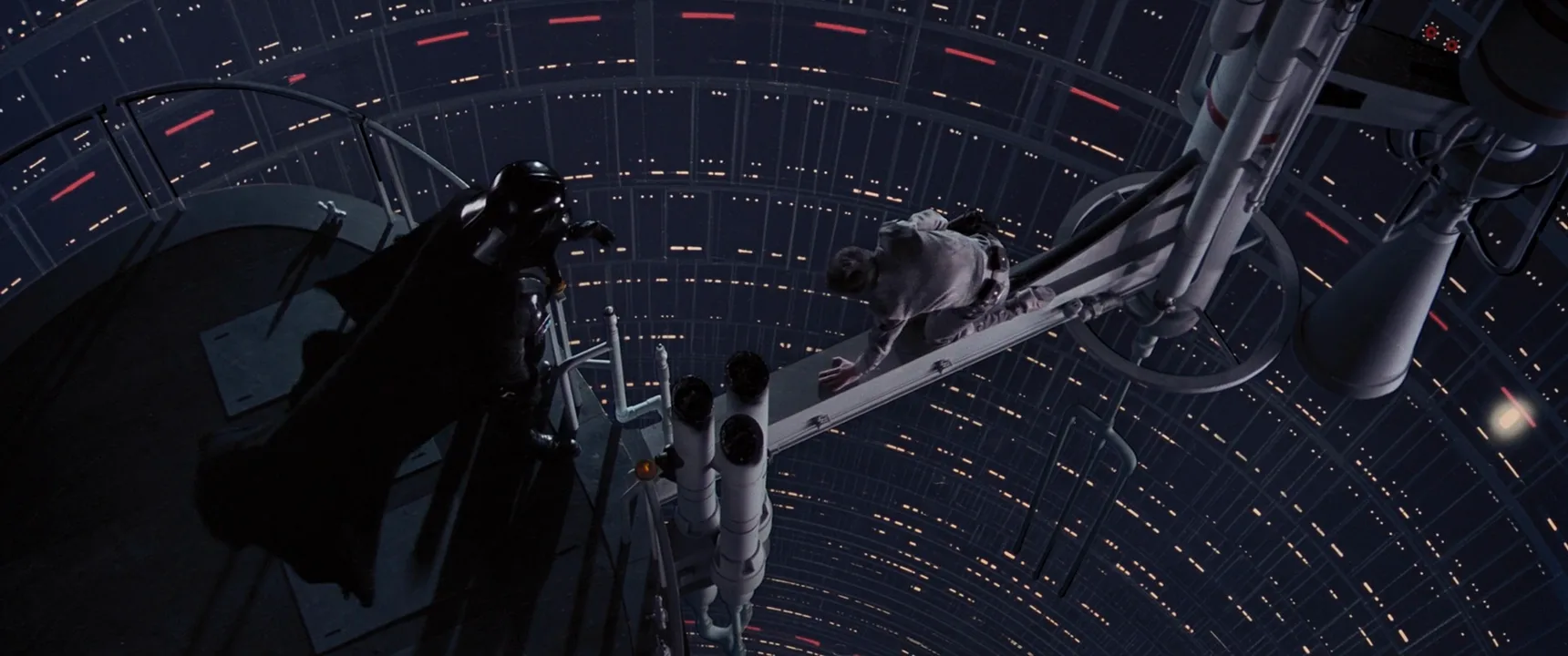
The story ends on information that changes everything, a plot twist with no time to process it. The Empire Strikes Back (1980) closes a trilogy's middle chapter with Vader's claim of fatherhood unconfirmed and Han Solo frozen and carried away.
Mystery
Dallas ended its 1980 season with J.R. Ewing shot by an unseen gunman, and "Who shot J.R.?" became a months-long public guessing game.
Decision or pursuit
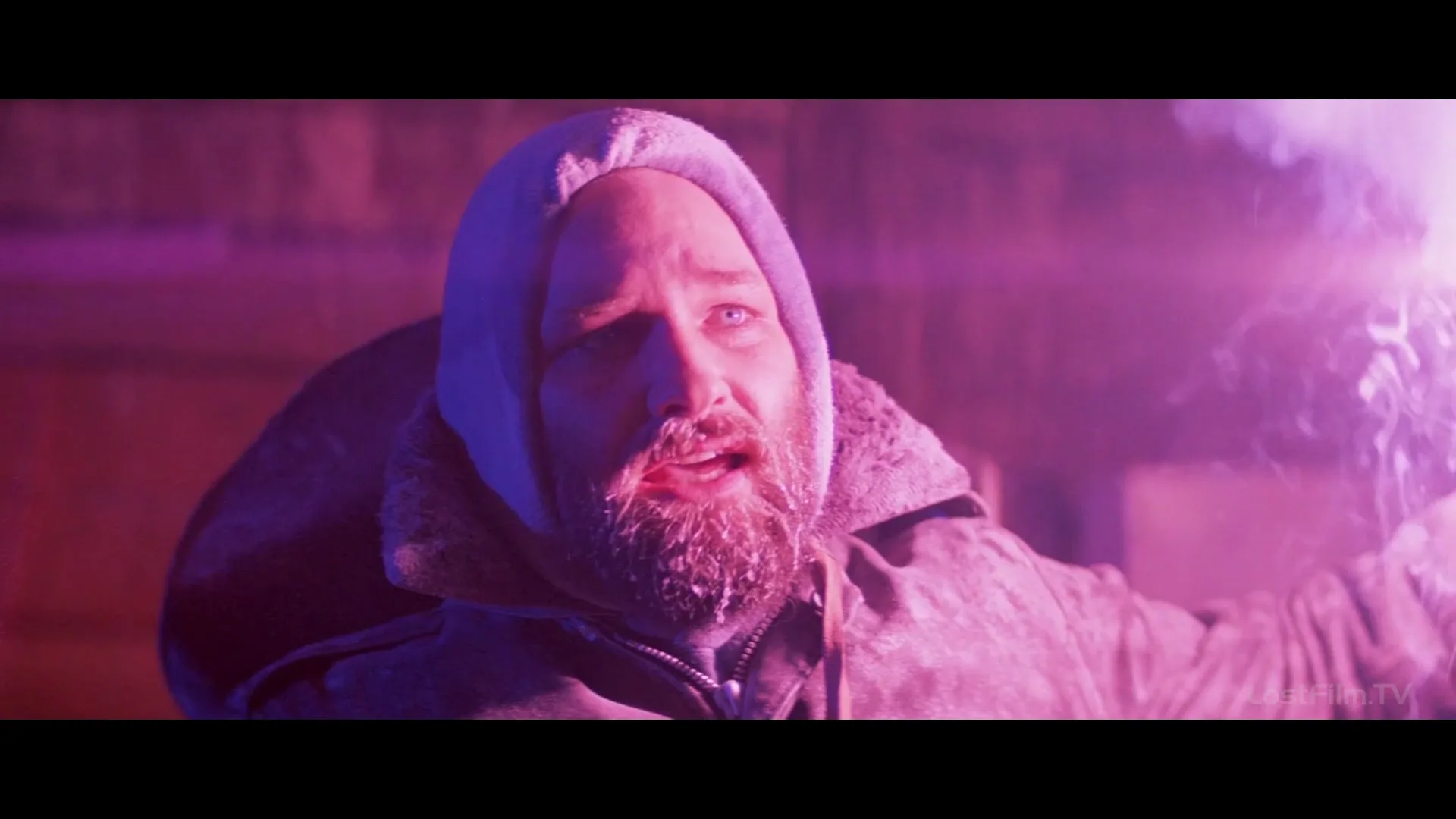
Prisoners (2013) ends with a detective hearing a faint whistle from under the ground and cuts before we see what he does. Its last seconds work like a cliffhanger.
The next journey
Back to the Future (1985) ends with the DeLorean lifting off toward the future, an ending that doubles as a launch pad for a sequel.
How to write, shoot and cut a cliffhanger
Write the question first. The audience must be able to state what they want to know in one sentence: Will she fall? Who fired? A vague question reads as an unfinished episode, not a hook.
Stop on the peak, not after it. End on maximum uncertainty: the hand slipping, the name spoken. One reaction shot is plenty; a second starts answering.
Give the final shot a clear image. Memorable cliffhangers end on a composition you can describe: a high angle down a drop, a close-up of a face absorbing news. It is the image people carry to the next episode.
Cut sound hard. A smash cut to black and silence makes the edit the cliffhanger. Let the music resolve and the tension leaks away.
Pay it off honestly. Resolve the moment by the same rules next time, often in a cold open. The serial-era cheat, replaying the moment with an escape never shown before, teaches an audience to stop caring.
In FlashBoards, lay out the last shots of every episode side by side on one board, with reference frames and a note on what each ending leaves open, so the season's hooks are visible at once.
Cliffhanger vs. open ending vs. sequel tease
- A cliffhanger withholds an answer that exists and promises to deliver it.
- An open or ambiguous ending withholds an answer on purpose and never intends to deliver it. The cut to black ending The Sopranos (2007) asks the audience to live with the question, not wait for it.
- A sequel tease, often a post-credits scene, closes the story and opens a new one.
The test: if no follow-up were ever made, would the ending feel broken? A cliffhanger would.
Cliffhanger examples in film
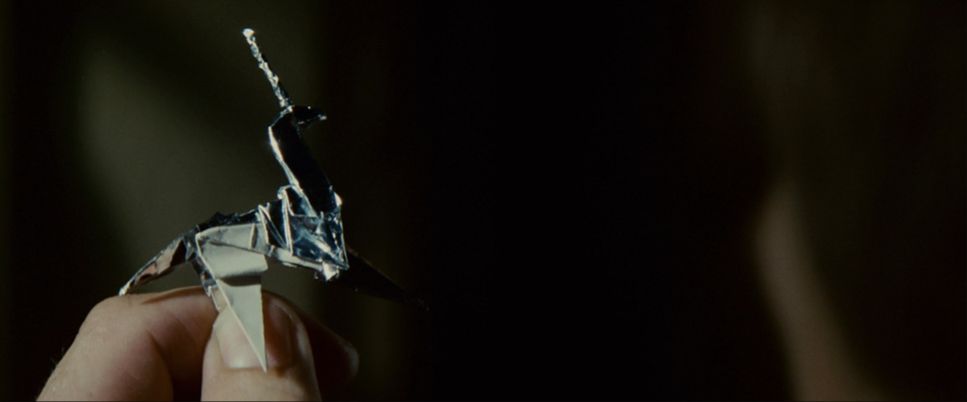
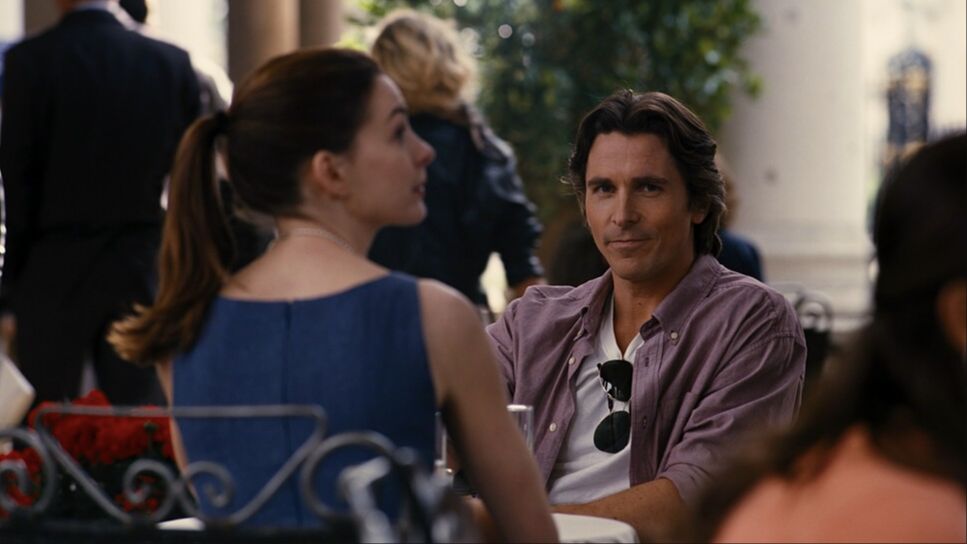
4 framesFour endings and what they leave open: one cliffhanger, two open questions, one answer.
How to create a cliffhanger with AI
4 promptsA cliffhanger lives in its last frame, so generate that frame first: the peril image, a revelation variant, then a clip that ends on the peak. Keep all three next to your episode notes on one FlashBoards board. The fourth prompt re-shoots a real film shot from a text description alone, and the original plays next to the result so you can compare.
High angle looking straight down a rain-soaked office tower at night: a woman in her thirties with a copper braid and a scar through her left eyebrow hangs from the rooftop ledge, one hand gripping a bent metal gutter, the other reaching up, street lights forty floors below, cold blue rim light, 24mm lens, cinematic still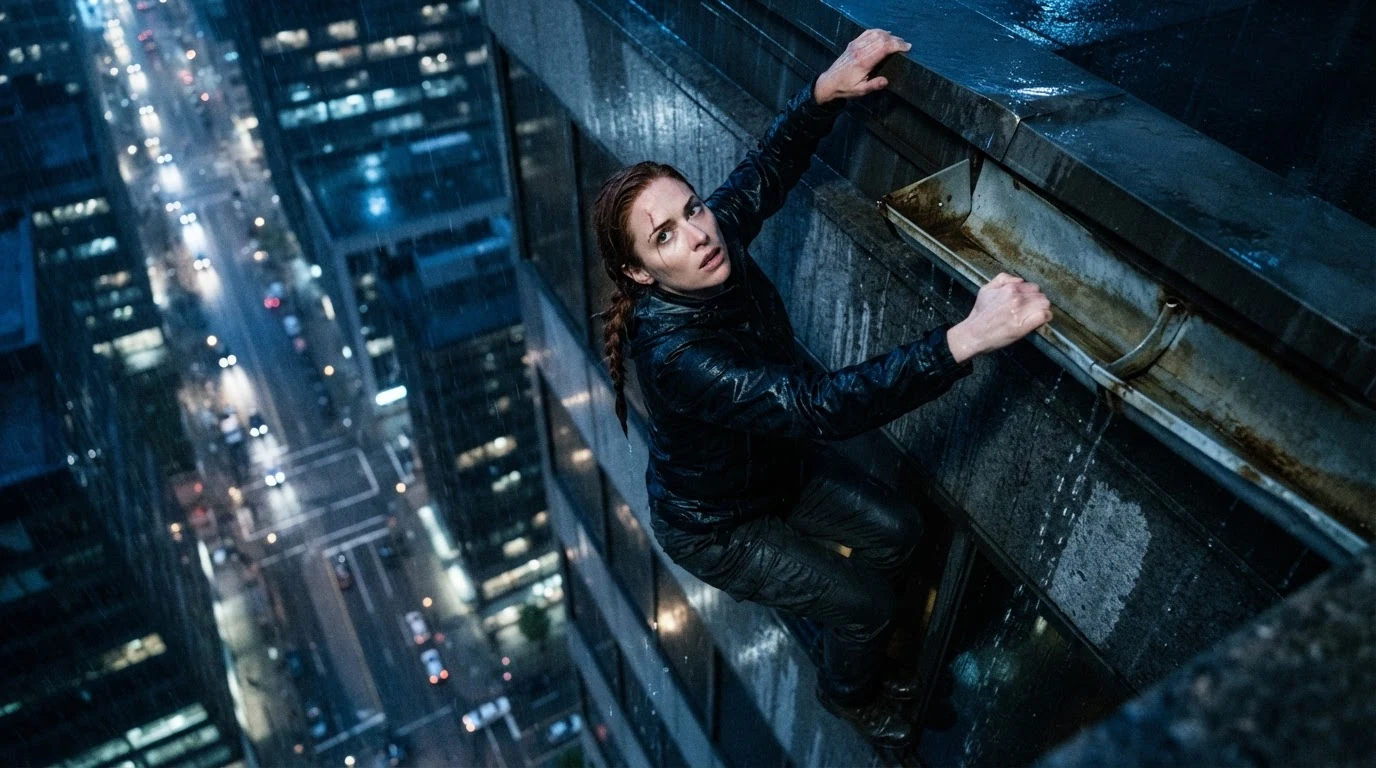
Looking straight down and forty floors below put the drop in the frame; bent metal gutter gives the next shot something that can fail.
Open FlashBoardsRevelation cliffhanger, final shot of an episode: a gray-haired detective with a thin mustache and a wool coat stands frozen in a doorway of a dim basement, his flashlight beam landing on a wall covered in photographs of himself taken through windows, his face half in shadow, wide anamorphic frame, single hard light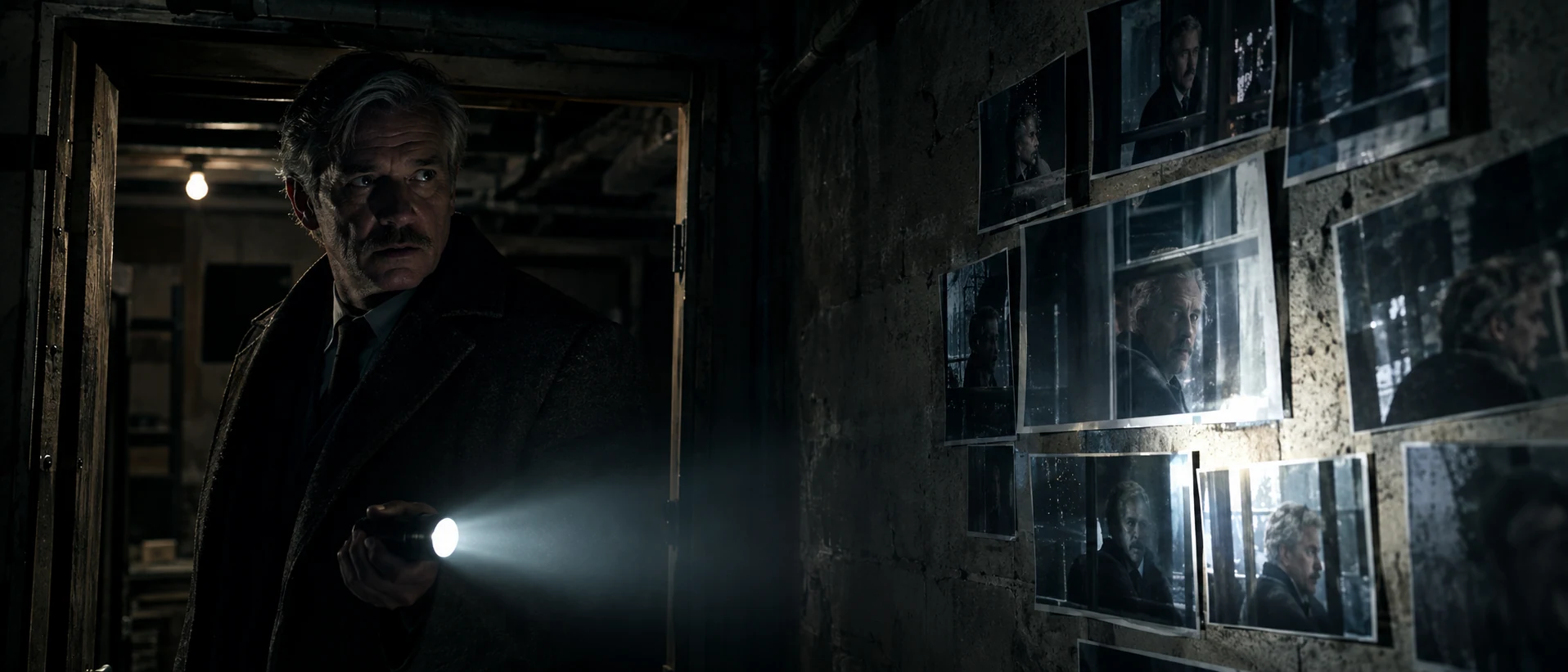
Danger replaced by information. Photographs of himself is the reveal; frozen in a doorway holds him before any reaction, the beat a cliffhanger stops on.
Open FlashBoardsCamera: locked high angle looking down, a very slow push toward her hand from the first frame. Action: rain streams off the ledge as the woman swings and strains to reach higher. The gutter bends and one bolt tears out of the concrete. She looks down at the street, then up, her grip sliding an inch. The shot ends on her hand holding on by the fingertips.Motion starts at once, so the clip never stalls; the action ends on the fingertips, the unresolved peak, and names only what is in the first frame.
Open FlashBoards{
"output": "Full-screen live-action shot from The Empire Strikes Back (1980), from its very first frame: one continuous locked-off shot, no cuts. Anamorphic scope 35mm, cold blue-gray top light, deep shadows, a dark cylindrical reactor shaft whose curved walls are lined with rows of tiny white and red lights falling away into blackness.",
"characters": {
"S1": {
"name": "Vader, played by David Prowse",
"look": "towering figure in black armour and a black helmet mask, long black cape",
"voice": "very deep, slow, resonant, calm, with mechanical breathing between phrases"
},
"S2": {
"name": "Luke Skywalker, played by Mark Hamill",
"look": "young man, tousled sandy hair, sweat-stained light gray jumpsuit with a dark utility belt, exhausted"
}
},
"shots": [
{
"shot": 1,
"camera": "locked-off, extreme high angle looking steeply down into the shaft, wide scope frame; no camera movement at all",
"action": [
"BEGINNING: alive from the first frame. S1 stands on a railed round platform in the left third, facing screen right toward S2, his black cape whipping up and out to the left in a strong updraft. S2 is in the centre-right, on a narrow steel beam that runs from the platform up to the right over the bottomless drop, crouched on hands and knees, head toward S1, his right arm drawn in against his chest, the other hand pressed flat on the beam.",
"THEN: S1 stretches one black-gloved hand out over the rail toward S2, palm open, and holds it there; his helmet stays still, turned toward S2.",
"THEN: S2 edges backward along the beam toward screen right, away from S1, one hand sliding on the steel, head low, glancing back at S1.",
"THEN: S1's cape keeps billowing and snapping in the updraft; his outstretched hand does not move.",
"END: S2 lifts his torso and half sits on the beam, legs splayed, face turned up and back toward S1, not moving further; S1 still reaches for him. The shot holds on the gap between them over the drop."
],
"dialogue": [
{
"speaker": "S1",
"on_screen": true,
"when": "from the first frame, while his hand reaches out",
"delivery": "slow, measured, coaxing",
"line": "<d>[English] Luke, you do not yet realize your importance.</d>"
},
{
"speaker": "S1",
"on_screen": true,
"when": "right after the first line and one breath, while S2 edges back, running to the last frame",
"delivery": "low, tempting",
"line": "<d>[English] You have only begun to discover your power.</d>"
}
]
}
],
"sound": {
"ambience": "deep industrial hum of the shaft and a roaring updraft, the cape flapping, S1's mechanical breathing",
"speech": "exactly these spoken phrases, each said once, in this order, only by S1; S2 says nothing",
"never_spoken": "no narration and no voice-over: the descriptions, performance notes and step words of this prompt are never spoken aloud",
"music": "a film score under the scene, always below the voices: low brooding brass and strings with a slow ominous pulse",
"subtitles": "none"
}
}Remakes the static high-angle gantry shot over the reactor shaft in The Empire Strikes Back (1980): the locked camera, Vader reaching from the platform at left with his two lines from the film, and Luke backing along the beam over the drop.
The locked-off extreme high angle keeps the drop under both figures for the whole shot. Vader's two lines from the film, the outstretched hand and Luke edging backward set up the choice, and the shot holds on the gap ends the clip before he decides.
Open FlashBoardsCommon mistakes
- Models resolve tension: a rescuing hand often appears. Say empty rooftop edge above her.
- Video models finish the action; end the prompt on the unfinished moment and keep it short.
- A character already screaming reads as aftermath. Ask for frozen or just noticing.
- Vague peril gives generic drama. Name the drop, the object that can fail and the distance.
Keep the reference frames, prompts and every generated take side by side — images and video in one canvas.
FAQ
5 questionsWhat is a cliffhanger ending?
A cliffhanger ending stops a story at a moment of unresolved danger or revelation, before the audience learns the outcome. It is designed to be answered in the next episode, season or film. The hook is a specific question the viewer can name, such as whether a character survives.
What are famous cliffhanger examples?
Well-known examples include "Who shot J.R.?" from Dallas (1980), Picard captured by the Borg in Star Trek: The Next Generation's "The Best of Both Worlds" (1990), and The Empire Strikes Back (1980), which leaves Han Solo frozen and Vader's revelation hanging.
What is the difference between a cliffhanger and an open ending?
A cliffhanger holds back an answer that the storytellers intend to deliver later; an open ending holds it back for good and asks the audience to accept the ambiguity. If the story feels broken without a follow-up, it is a cliffhanger.
Can a standalone movie end on a cliffhanger?
Yes, though it is risky. Prisoners (2013) ends one beat before the answer and lets the audience decide. It works when the main story is resolved and only a final question remains; leave the central conflict hanging with no sequel coming and viewers feel cheated.
Where does the term cliffhanger come from?
It comes from serialized fiction and early film serials, where installments often ended with a hero literally hanging from a cliff or ledge and the next chapter opened with the rescue. The phrase stuck to any ending that leaves characters, and the audience, suspended.
Related terms
5- SequelStorytelling
A sequel continues an earlier story, following the same characters or world after the events of the first film.
- Plot TwistStorytelling
A plot twist is a revelation that overturns what the audience believed about the story or a character; a good one is prepared by fair clues and recolors everything seen before.
- Post-Credits SceneStorytelling
A post-credits scene is a short scene placed during or after the end credits — a final gag, an epilogue or a tease of the next installment.
- Cold OpenStorytelling
A cold open drops the audience straight into a scene before the title card or opening credits, usually to hook them with a mystery, a joke or a jolt of action.
- Story StructureStorytelling
Story structure is the order and shape of the events that carry a story from setup to resolution; models like the three-act structure, Freytag's pyramid, the hero's journey or Save the Cat are different maps of it.
Further reading
Robert McKee, Story (1997). Scott Higgins, Matinee Melodrama: Playing with Formula in the Sound Serial (2016).