 FlashBoards Learn
- Learn
- Storytelling
- Sequel
Storytelling · Film language
Sequel
Also called: follow-up film, part two
A sequel is a film that continues an earlier story after its events, following the same characters or world into what happens next. Built on what the audience already knows, it can skip the introductions and spend its time raising the stakes, changing the characters or widening the world.
- What it does
- Carries characters, world and unresolved questions from one film into a new story set after it.
- Use it when
- The first story ended with a character or world that still has somewhere to go.
- Watch out
- A sequel that repeats the first film's beats at a bigger scale feels like a copy, not a continuation.
- Try this prompt
Fictional woman in her late fifties, cropped silver hair, scar through left eyebrow, returning to an overgrown lighthouse doorway in fog, medium wide, 35mm, 16:9
What is a sequel?
A sequel is a new installment set after an existing story. It inherits characters, locations, rules and history from the earlier film, so the audience walks in already holding the backstory.
Sequels are numbered (Part II, 2) or subtitled (The Empire Strikes Back), and a run of them becomes a trilogy or a franchise. Among the narrative techniques, the sequel works across films rather than inside one: its raw material is the ending of the story before it.
Types of sequels
Direct sequel. Picks up where the previous film stopped, as Avengers: Endgame (2019) does after Avengers: Infinity War (2018). When the first film ends on a cliffhanger, the sequel is its payoff.
Standalone sequel. The same hero in a new, self-contained adventure.
Time-jump sequel. The gap is part of the drama. Aliens (1986) wakes Ripley after 57 years adrift.
Legacy sequel. Decades later, the original cast hands the story to new characters: Blade Runner 2049 (2017), Top Gun: Maverick (2022).
Middle chapter. The second part of a trilogy deepens the conflict without resolving it, like The Lord of the Rings: The Two Towers (2002).
What makes a good sequel?
The sequels people rank above their originals change something the first film established.
- They move the character. A sequel starts a new character arc where the last one ended. The Godfather Part II (1974) takes Michael deeper into the role he accepted at the end of the first film.
- They flip a premise. Terminator 2: Judgment Day (1991) turns the first film's hunter into a protector, so the audience's memory becomes the twist.
- They change genre. Aliens moves from haunted-house horror to a war film around the same survivor.
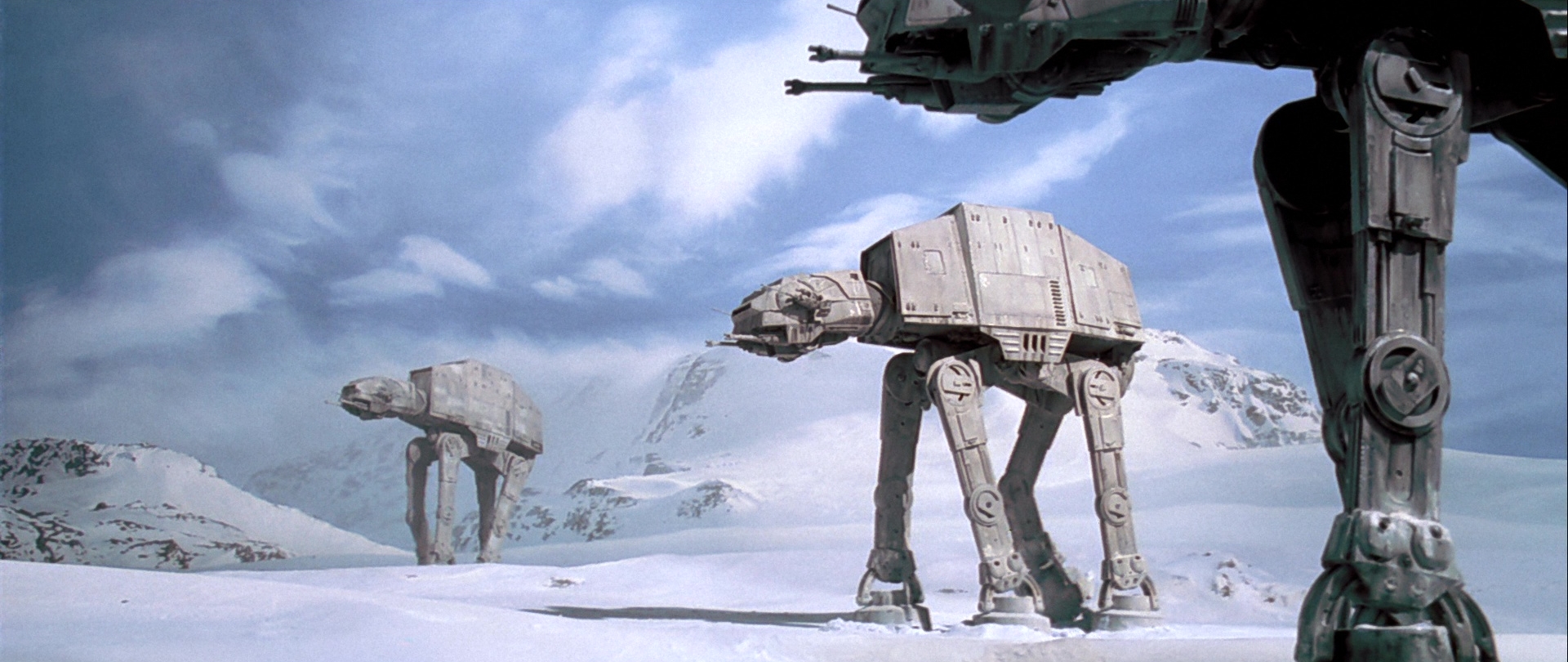
- They widen the world and darken it. The Empire Strikes Back (1980) adds ice planets and cloud cities, then ends on a revelation and a frozen hero.
The weak pattern is the remix: same structure, same villain type, only louder.
How to plan a sequel
Start from the last scene of the first film. List what it left open, what it closed and what the character learned. The sequel honors those facts or changes them on screen.
Decide how much the audience must remember. A direct sequel can open on action; a time-jump sequel usually needs a short refresher through dialogue, a prologue or a reunion.
Protect visual continuity. Returning costumes, props and scars tell viewers it is the same world. Track them like continuity, then decide what should visibly change: an older face, a ruined set, a darker palette.
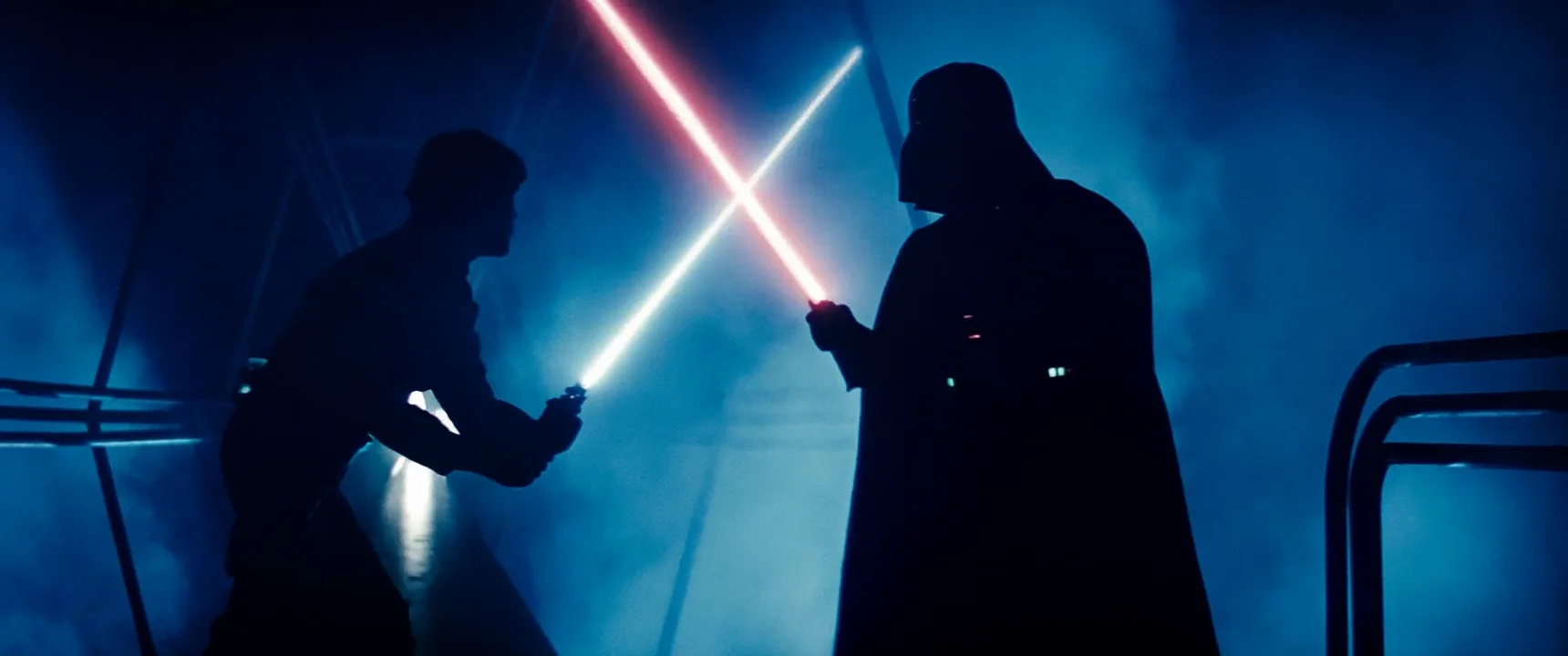
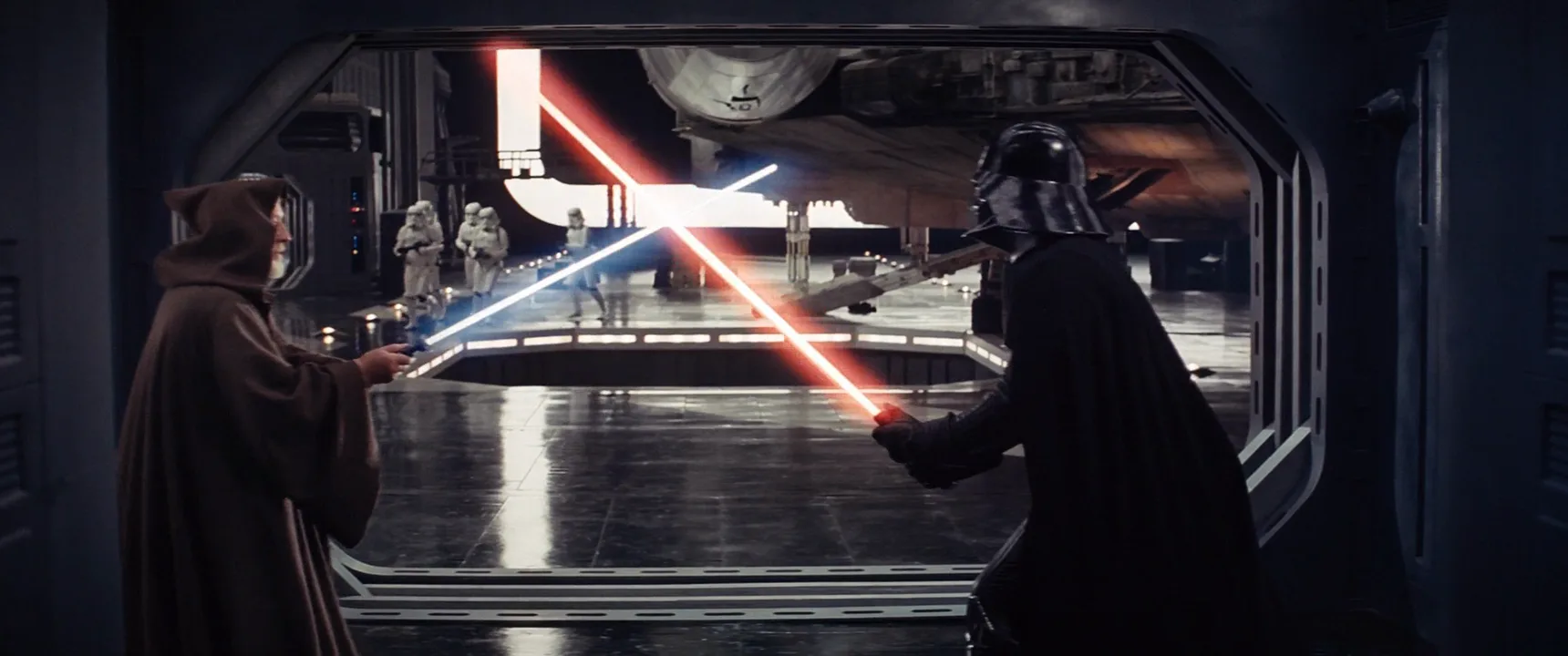
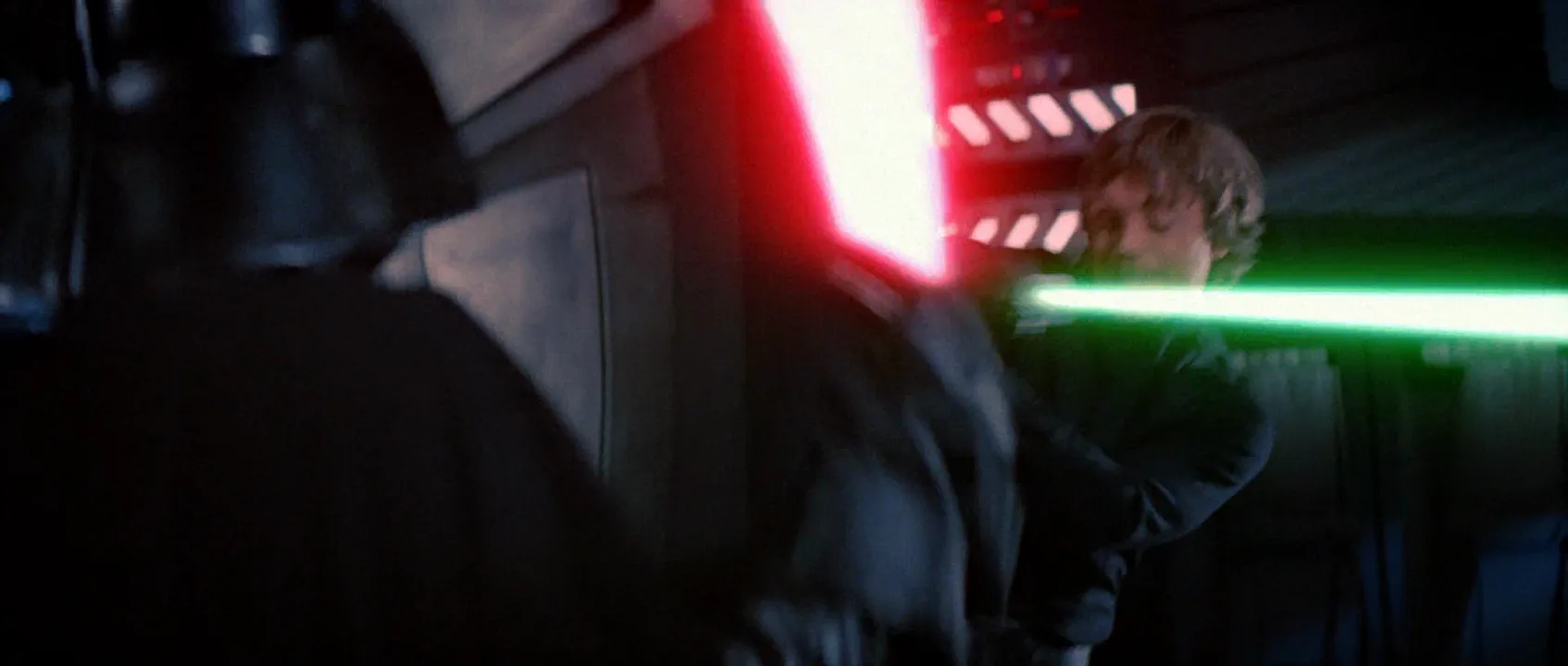
Rhyme, don't repeat. The three Vader duels of the original Star Wars trilogy stage one fight with new stakes.
In FlashBoards, keep frames from the first film next to the sequel's character sheets and new generations on one board, with notes on what carries over and what changes.
Sequel vs. prequel vs. spin-off
- A sequel is set after the original story.
- A prequel is made later but set before it, like the Star Wars films of 1999–2005.
- A spin-off moves a secondary character or element to the center of a new story.
The test is chronology inside the story, not release date. The Godfather Part II is both: it continues Michael's story and intercuts it with his father's youth decades earlier.
Sequel examples in film
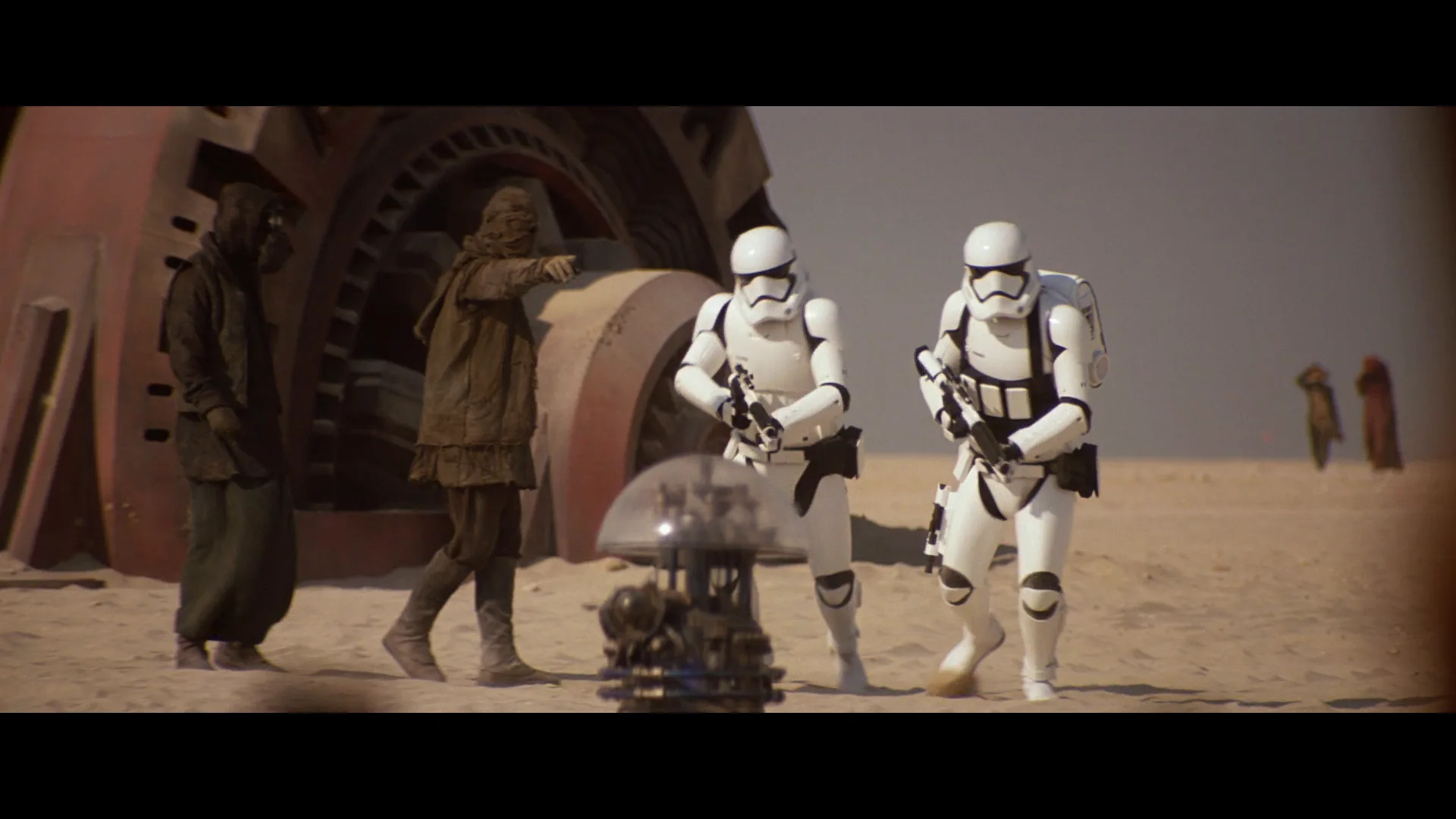
6 framesHow a sequel inherits a world and a conflict, then raises the stakes.
How to create a sequel with AI
4 promptsA sequel shows on screen as a return: a familiar face or place, changed by time. Keep the same fictional person recognizable across two eras by building both versions on one FlashBoards board and comparing them side by side before you animate. The fourth prompt re-shoots a real film shot from a text description alone, and the original plays next to the result so you can compare.
Cinematic film still, medium wide shot, 35mm lens, eye level. A fictional woman in her late fifties, long silver hair tied back in a low braid, a broad freckled face, a thin pale scar through her left eyebrow, deep lines around her eyes, stands in the doorway of an abandoned stone lighthouse, one hand on the peeling doorframe. Worn, faded olive field jacket. Ivy on the walls, morning sea fog behind her, soft overcast light, muted teal and rust palette.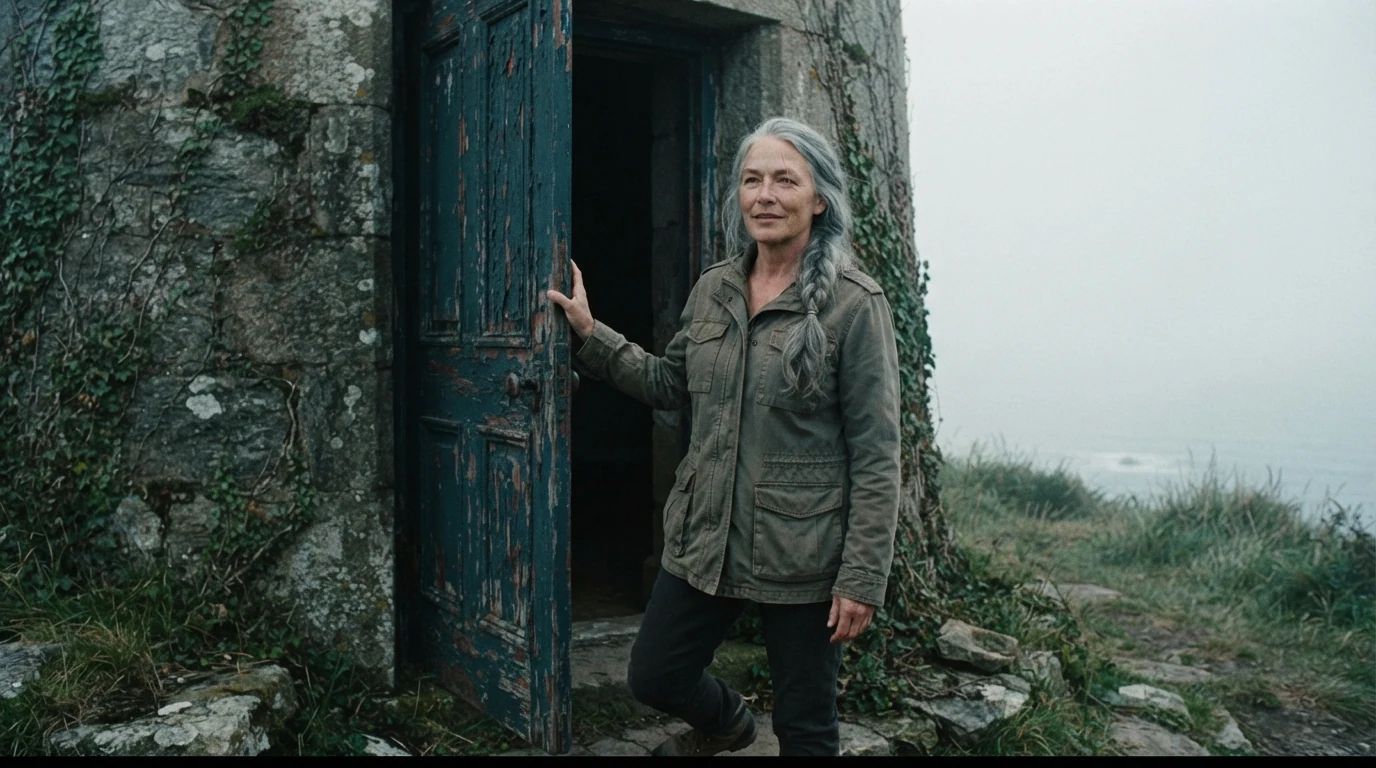
Late fifties, silver hair, deep lines, a worn, faded jacket and an abandoned, ivy-covered place carry the passage of time. The scar and jacket are identity anchors to repeat in every take.
Open FlashBoardsCinematic film still, medium wide shot, 35mm lens, eye level. A fictional woman in her late twenties, long dark hair tied back, a thin fresh scar through her left eyebrow, stands in the doorway of a freshly painted white stone lighthouse, one hand on the new doorframe. New olive field jacket. Bright sea behind her, warm low sun, saturated colors.
The first film's version of the same frame. Matching framing, lens and gesture makes the two images rhyme; scar and olive jacket hold identity while fresh paint and warm sun set the earlier era.
Open FlashBoardsCamera: slow, steady push-in from medium wide to medium shot across the whole clip. Action: The woman is already sliding her hand along the peeling doorframe as fog drifts past. She turns to look back over her shoulder toward the sea and holds the look. Then she faces the dark interior and steps through the doorway.Already sliding and fog drifts make the shot alive from the first frame; the look back toward the sea is the sequel beat, the character measuring the years before re-entering the story.
Open FlashBoards{
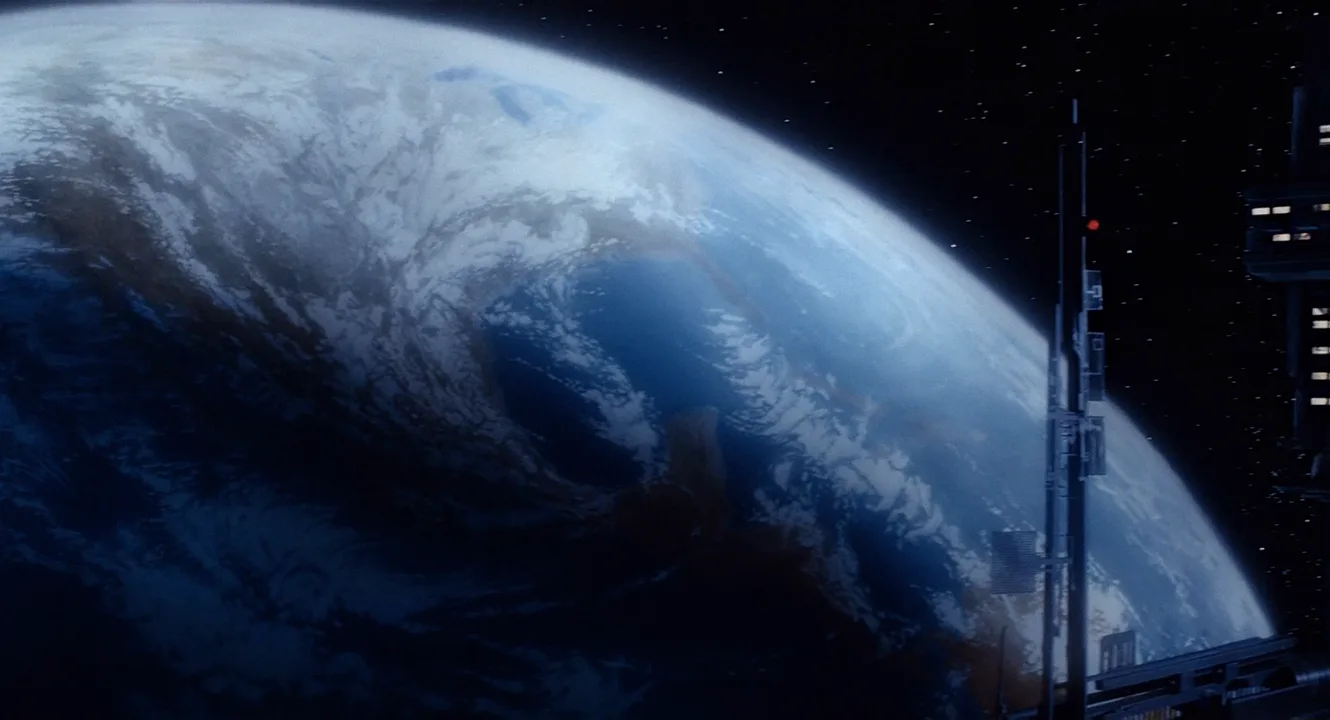
"output": "Full-screen live-action shot from Aliens (1986) from its very first frame: one continuous shot, no cuts. 1980s 35mm film with fine grain and deep inky blacks, practical model-miniature effects look, cold steel-blue palette: a blue-white Earth with swirling cloud bands, lit by hard sunlight from the upper left, and a vast dark gunmetal space station in high orbit, its hull dotted with hundreds of small warm-yellow window lights and tiny red marker lights.",
"characters": {},
"shots": [
{
"shot": 1,
"camera": "a steady, continuous pan right at medium speed from one fixed point in space, normal lens, deep focus; it starts with the planet filling the frame and ends with the station filling the right two-thirds; no zoom, no roll, no shake",
"action": [
"BEGINNING: alive from the first frame, the camera is already panning right; the curved face of the Earth fills almost the whole frame, its glowing blue limb arcing from the lower left corner up to the top edge right of centre, a wedge of black starry space in the upper left corner; white cloud spirals and a brown continent slide slowly toward frame left",
"THEN: the planet keeps drifting left and its far edge comes into view on the right side of the frame, a thin glowing blue rim curving down against black space",
"THEN: a thin dark antenna mast with small red lights enters from the right edge, rising from the bottom of the frame, silhouetted against the planet's rim, and slides left",
"THEN: tall dark station towers covered in rows of small warm window lights enter from the right edge one after another, hanging side by side and joined by long horizontal girders and trusses",
"THEN: the station spreads across the right half of the frame while the Earth shrinks into the left half",
"END: the Earth's glowing curve sits in the lower left third behind the mast; the huge dark station with hundreds of lit windows fills the centre and right of the frame; a bright white star of light flares at the upper right between the girders, sparse stars in the black"
],
"dialogue": [],
"voice": "silence: nobody speaks in this shot, no voice at all"
}
],
"sound": {
"ambience": "a deep, low mechanical hum of the station and nothing else",
"speech": "no words in this video; the only human sounds are breaths and movement",
"never_spoken": "no narration and no voice-over: the descriptions, performance notes and step words of this prompt are never spoken aloud",
"music": "a film score under the scene, always below the voices: slow, cold sustained strings with a faint, distant brass swell, quiet and eerie",
"subtitles": "none"
}
}Remakes the orbital pan to Gateway Station in Aliens (1986), dir. James Cameron, DP Adrian Biddle: the prompt carried over the pan right across the Earth, the mast and lit station towers entering from the right edge and the closing flare, played without words as in the original.
The camera is already panning right from the first frame, and the THEN steps bring the mast, the lit towers and the flare in from the right edge in the original's order. That reveal is how a time-jump sequel re-enters its world: a familiar planet, then an unfamiliar city in orbit, telling the audience how far things moved on before anyone speaks. Empty dialogue and explicit silence keep a narrator out.
Open FlashBoardsCommon mistakes
- Models age a face by only graying the hair. Name several markers and an exact age range.
- Identity drifts between eras. Repeat the fixed details word for word.
- The old location comes back looking new. State the decay: ivy, peeling paint, fog.
- In video, put the first movement in the first sentence, or you get a slow zoom on a still.
Keep the reference frames, prompts and every generated take side by side — images and video in one canvas.
FAQ
4 questionsWhat is a sequel in film?
A sequel is a film that continues an earlier story after its events, usually with the same characters, world or central conflict. It relies on what the audience already knows, so it can skip introductions and focus on new stakes. Classic examples are The Empire Strikes Back (1980), Aliens (1986) and Terminator 2: Judgment Day (1991).
What is the difference between a sequel and a prequel?
The difference is where the story sits in time, not when it was released. A sequel is set after the original film's events; a prequel is made later but set before them, showing how the characters reached the starting point we know. The Godfather Part II (1974) does both at once.
What is a legacy sequel?
A legacy sequel arrives decades after the original, brings back its older characters and hands the story to a new generation, trading on nostalgia while trying to earn a fresh start. Star Wars: The Force Awakens (2015), Blade Runner 2049 (2017) and Top Gun: Maverick (2022) are well-known examples.
Is a sequel the same as a part two?
Mostly, yes. "Part two" is a plain name for a second installment, and every part two is a sequel. But a sequel can also be the third or fifth film in a series, and some two-part stories are a single film split in half, so the second half plays like a second act.
Related terms
2- CliffhangerStorytelling
A cliffhanger ends an episode, act or film at a moment of unresolved danger or revelation, so the audience has to come back to find out what happens.
- Post-Credits SceneStorytelling
A post-credits scene is a short scene placed during or after the end credits — a final gag, an epilogue or a tease of the next installment.
Further reading
Syd Field, Screenplay: The Foundations of Screenwriting. Robert McKee, Story: Substance, Structure, Style and the Principles of Screenwriting.