 FlashBoards Learn
Editing · Film language
Juxtaposition in Film
Also called: contrast editing, visual juxtaposition
Juxtaposition in film is placing two contrasting images side by side, inside one frame or across a cut, so their collision produces a meaning neither carries alone. A baptism against murders, a waltz over spacecraft, a glass house in a wild valley: the viewer does the math and feels the idea.
- What it does
- Makes the audience infer an idea, irony or tension from two images that pull against each other.
- Use it when
- You want a point to land without dialogue: innocence vs. violence, wealth vs. poverty, nature vs. machine.
- Watch out
- If the two halves aren't equally readable, the viewer sees one image, not a comparison.
- Try this prompt
Wide shot split down the middle: a lantern-lit birthday party on the left, a demolition site through a chain-link fence on the right
What is juxtaposition in film?
Juxtaposition is the oldest idea in film editing and the one Soviet montage theory was built on: shot A plus shot B doesn't equal A and B, it equals a third thing. In Strike (1925) Sergei Eisenstein cut the massacre of workers against the slaughter of a bull.
It works in two places:
- Across a cut. The second shot reframes the first. This is the editing form, and it shades into montage.
- Inside one frame. Two elements staged together so the composition argues: a tiny figure against a colossal machine, a dark suit in a white corridor.
Sound counts too: a cheerful song over a brutal image.
Why do filmmakers use juxtaposition?
An idea the audience assembles hits harder than one they're told.
- Moral irony. The baptism in The Godfather (1972) is cross-cut with the killings Michael has ordered. His vows play over the violence.
- Tonal shock. A Clockwork Orange (1971) sets "Singin' in the Rain" against an assault.
- Romance against violence. Drive (2011) follows a soft-lit elevator kiss with a savage beating in the same small box.
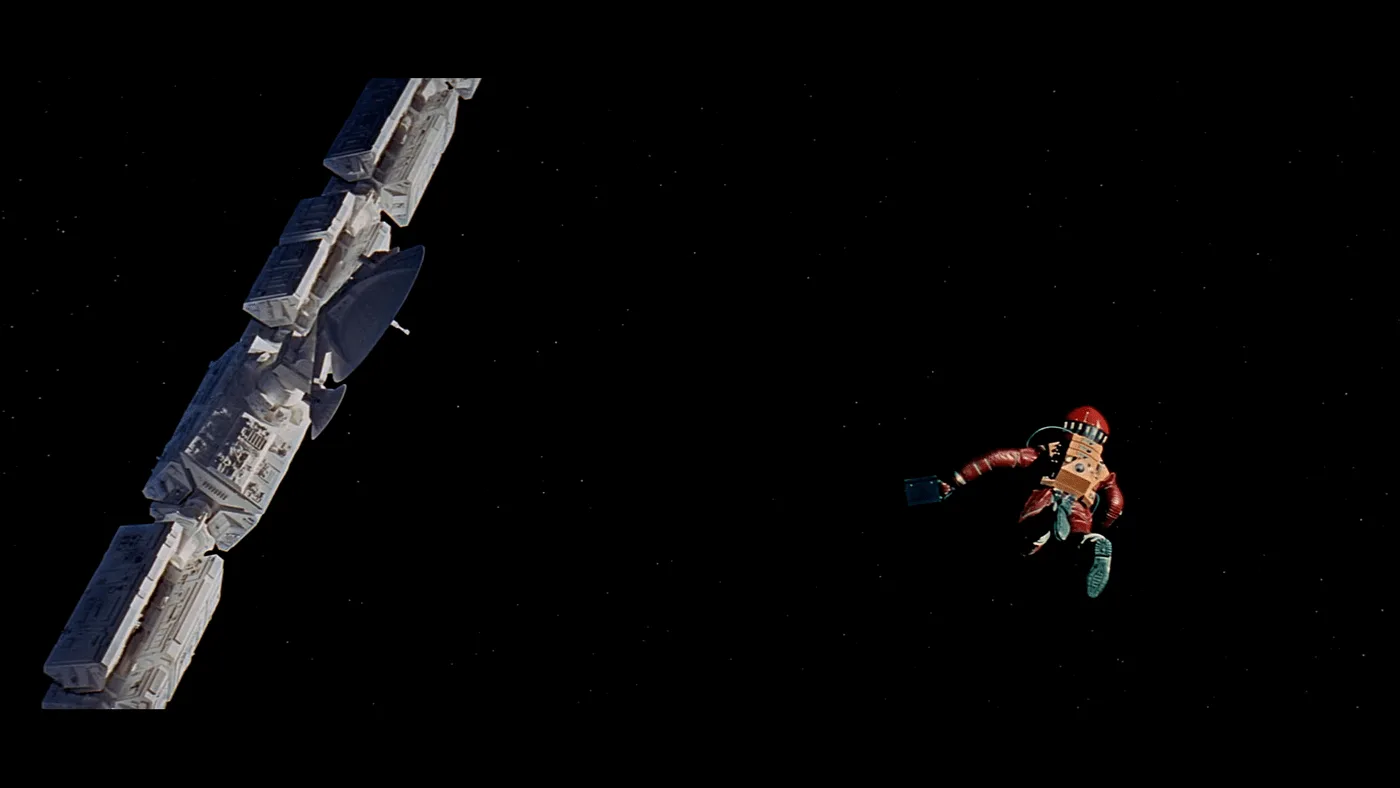
- Scale. 2001: A Space Odyssey (1968) keeps setting small bodies against vast machines, and sets spacecraft docking to a Strauss waltz.
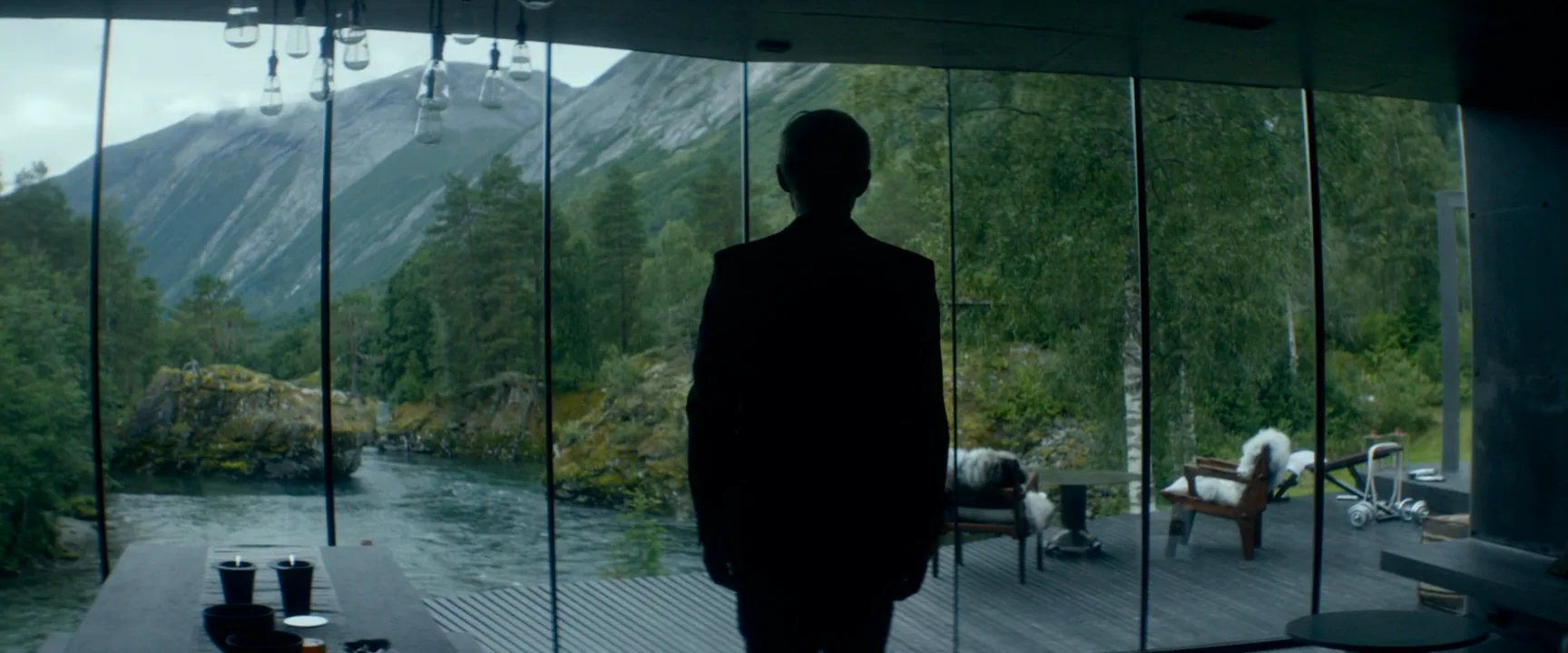
- Nature vs. technology. Ex Machina (2015) puts a glass research house in a wild mountain valley.
Held in a single image, a pairing like this becomes a visual metaphor.
How to create juxtaposition, shot by shot
Pick one axis of contrast and push it: warm vs. cool, tiny vs. huge, clean vs. ruined, still vs. violent.
In the frame:
- Split the composition with architecture (a window mullion, door frame, fence) into two readable zones.
- Separate by light. Tungsten on one side, daylight or blue LED on the other, about a stop and a half apart so neither goes to black.
- Separate by scale. A figure at 5–10% of frame height against a large mass reads as insignificance. Shoot wide (24–35mm) and deep (f/5.6–f/8).
- Separate by focus plane. One element in extreme close-up in the foreground, the other at mid-distance.
Across the cut:
- Match the framing, change the content. Same size and screen position make the difference jump out; this borders on a match cut.
- Give both shots equal weight. Similar lengths say "compare these."
- Cut on the peak of shot A and enter B at its peak.
- Let sound carry across the cut to pin the two together.
To show both at once without cutting, use a split screen.
Juxtaposition vs. the Kuleshov effect
The Kuleshov effect is a narrower case: a neutral face cut against soup, a coffin or a child reads as hunger, grief or tenderness.
Juxtaposition is broader. Both images carry strong content, and the point is their conflict, not a transfer of feeling. Kuleshov asks "what is this person feeling?"; juxtaposition asks "what does it mean that these two things exist together?"
Juxtaposition in Film examples in film
8 framesFrames where two opposing elements share one image through scale, color, tone or focus.
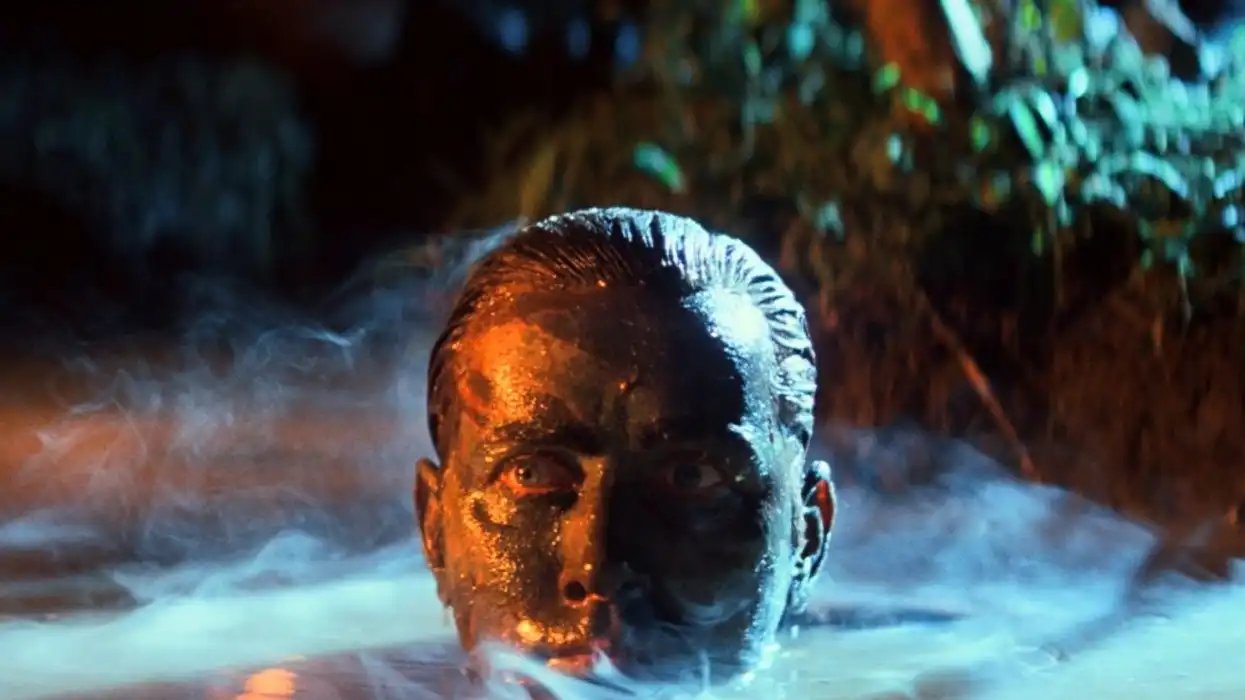
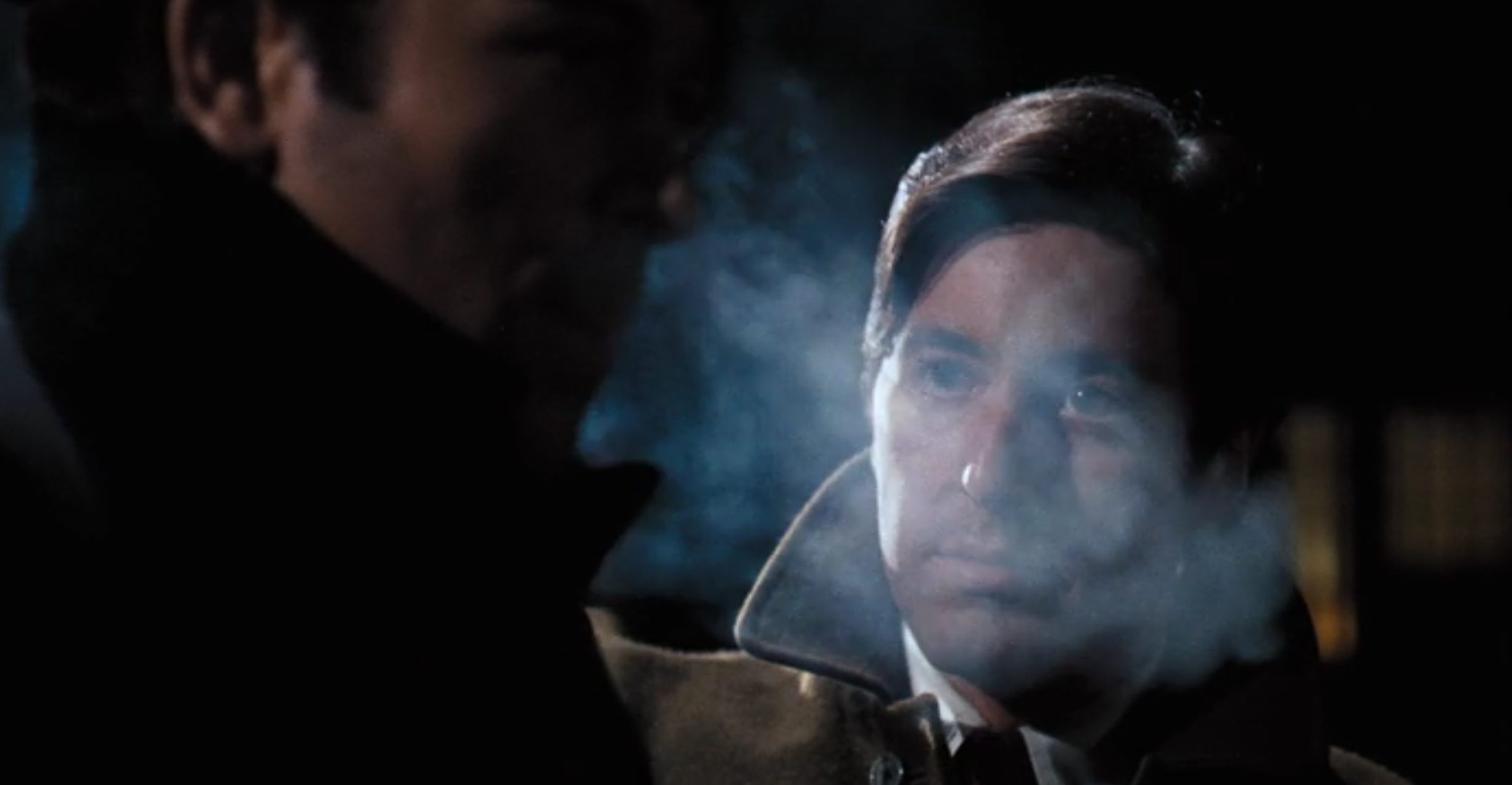
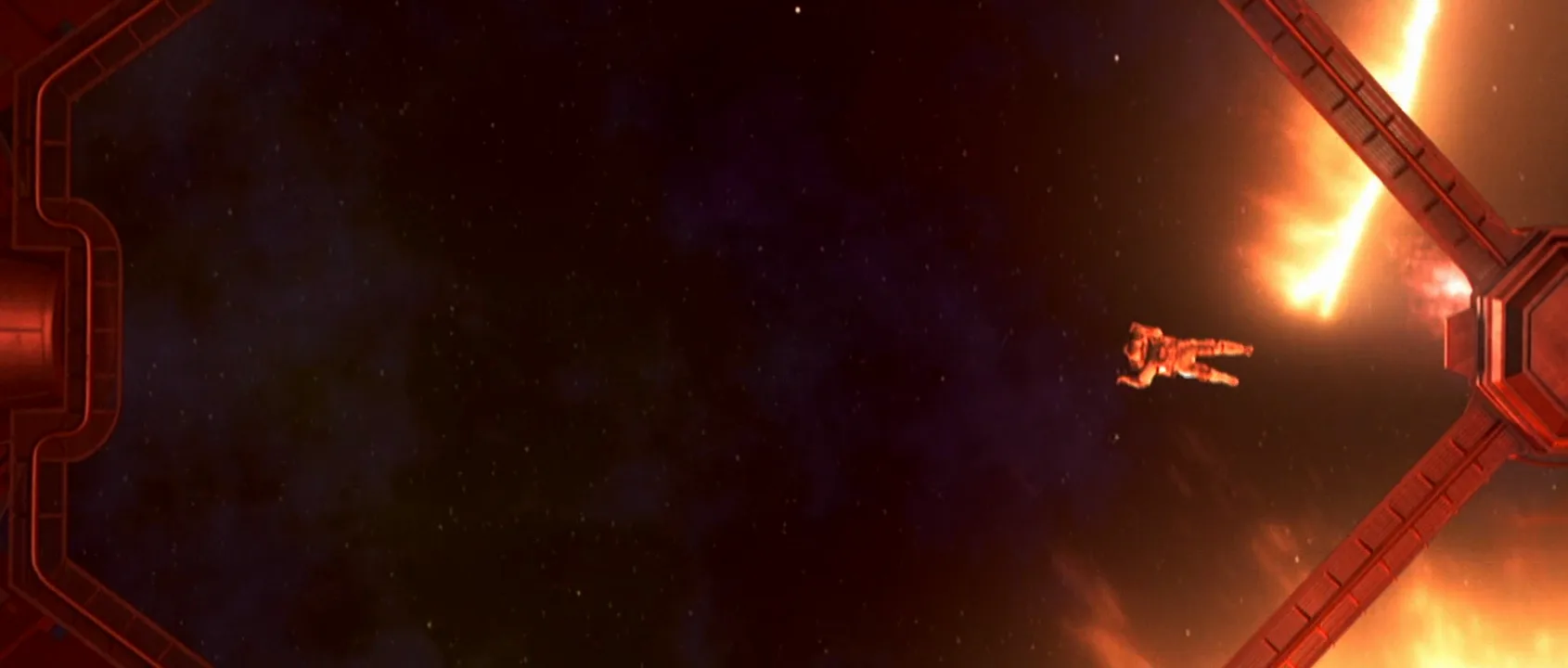
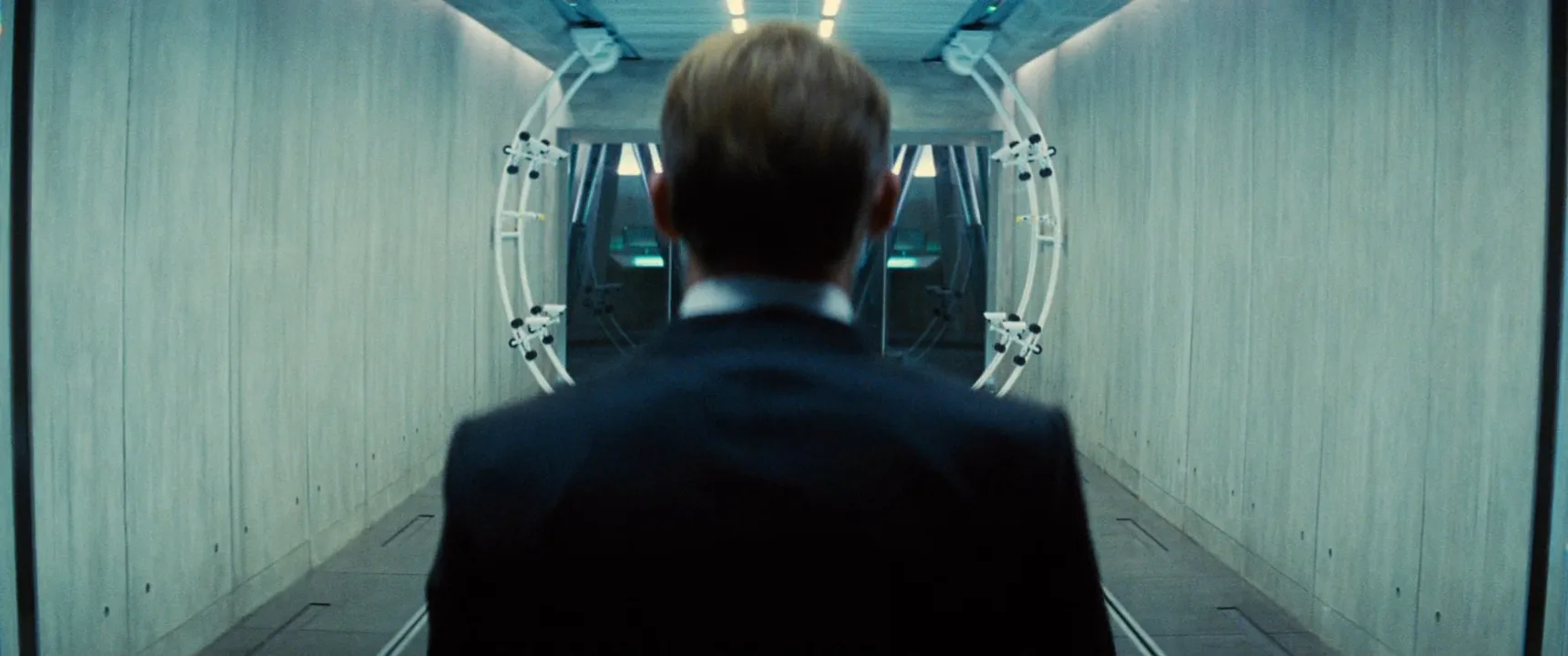
How to create a juxtaposition in film with AI
4 promptsImage models like one coherent mood, so they average a juxtaposition into a single tone. Name both halves, give each its own zone and light. In FlashBoards, pin film references beside your takes on one board and compare them side by side. The fourth prompt re-shoots a real film shot from a text description alone, and the original plays next to the result so you can compare.
Wide shot at eye level, 35mm lens, frame split down the middle by a chain-link fence. Left half: a backyard birthday party, paper lanterns glowing warm orange, a pink cake with lit candles, a girl of about seven with red braids and a yellow dress leaning in to blow them out. Right half, beyond the fence: a grey demolition site, a yellow excavator tearing into a half-collapsed brick house, pale dust in the air. Deep focus, both halves equally sharp, cinematic film still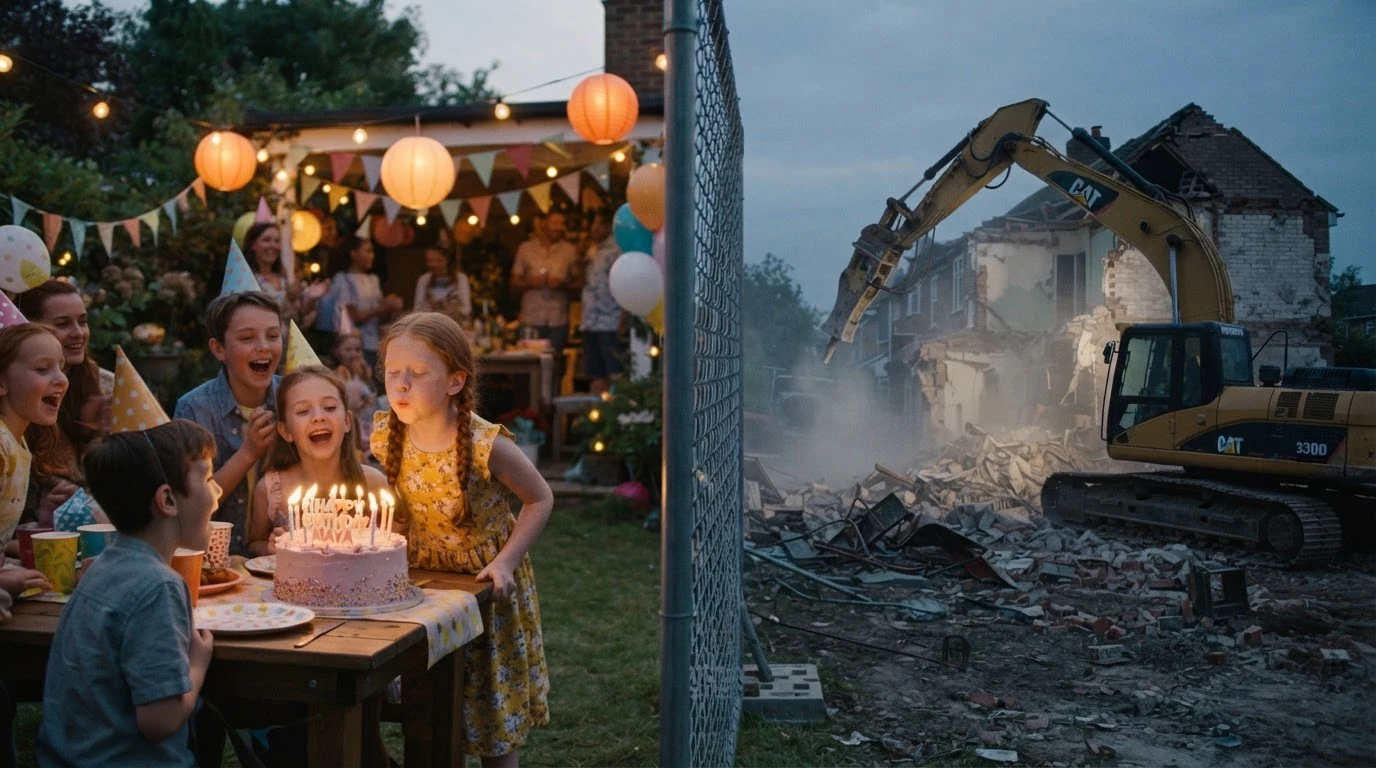
Split down the middle by a chain-link fence gives the model a physical divider, so it builds two zones instead of blending them. Warm orange vs. grey sets the color axis; both halves equally sharp keeps either side from becoming background.
Open FlashBoardsNight, wide shot from a rooftop, 28mm lens. Left third: a crowded rooftop pool party, guests in sequins, turquoise pool glowing, string lights. Right two thirds, across a narrow street: a dark office tower with a single lit window where a cleaner in her fifties with a grey bun and blue uniform mops the floor alone under flat fluorescent light. Cinematic film still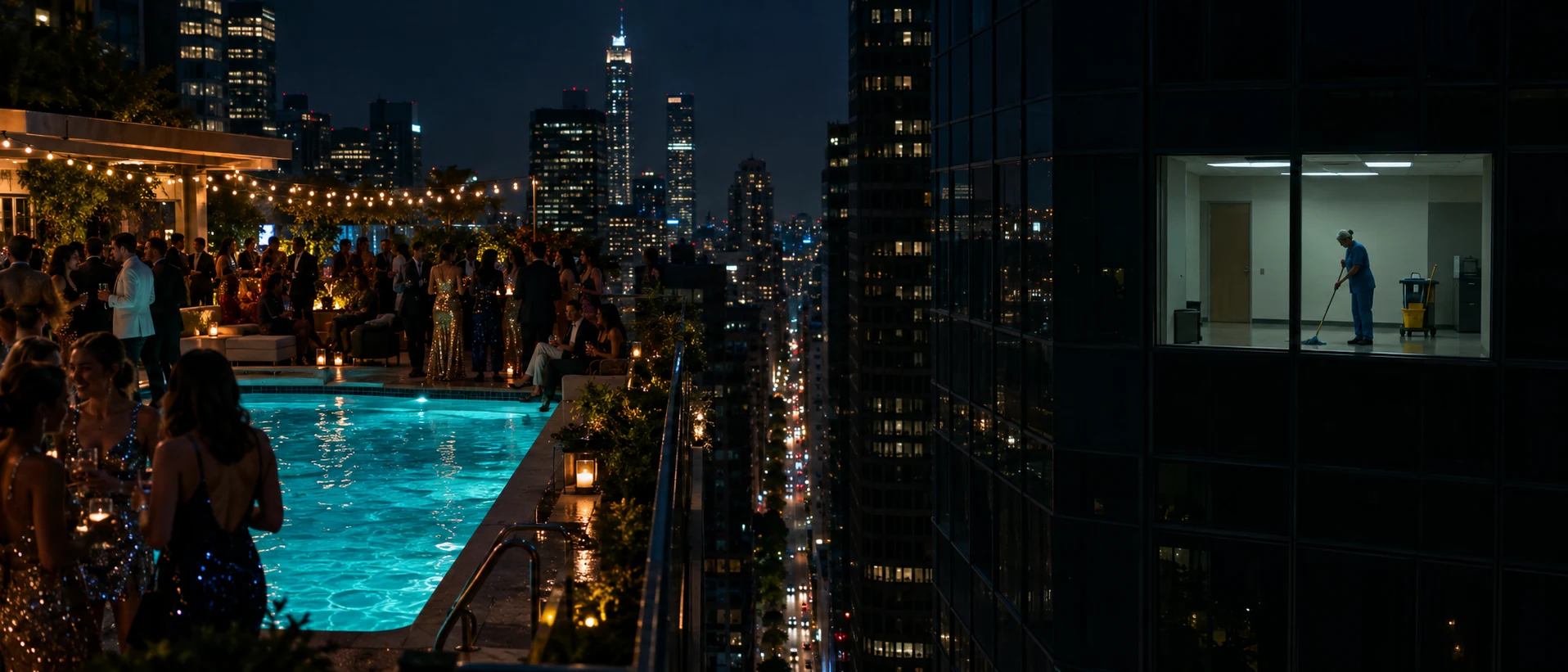
A social contrast in a wider aspect. Left third vs. right two thirds gives the lone figure room to feel isolated; single lit window keeps her readable, and string lights vs. fluorescent carry the contrast.
Open FlashBoardsCamera: locked-off static wide shot, the fence stays in the center of the frame. Action: from the first moment the girl leans in and blows out the candles while the lanterns sway; at the same time the excavator arm swings down and a section of brick wall collapses. The girl straightens and laughs as thin candle smoke rises, while a cloud of grey dust rolls toward the fence and settles over the rubble.A locked-off camera keeps the split intact; any move would favor one side. Both actions start from the first moment and are paired beat for beat, so the juxtaposition plays in time as well as space.
Open FlashBoards{
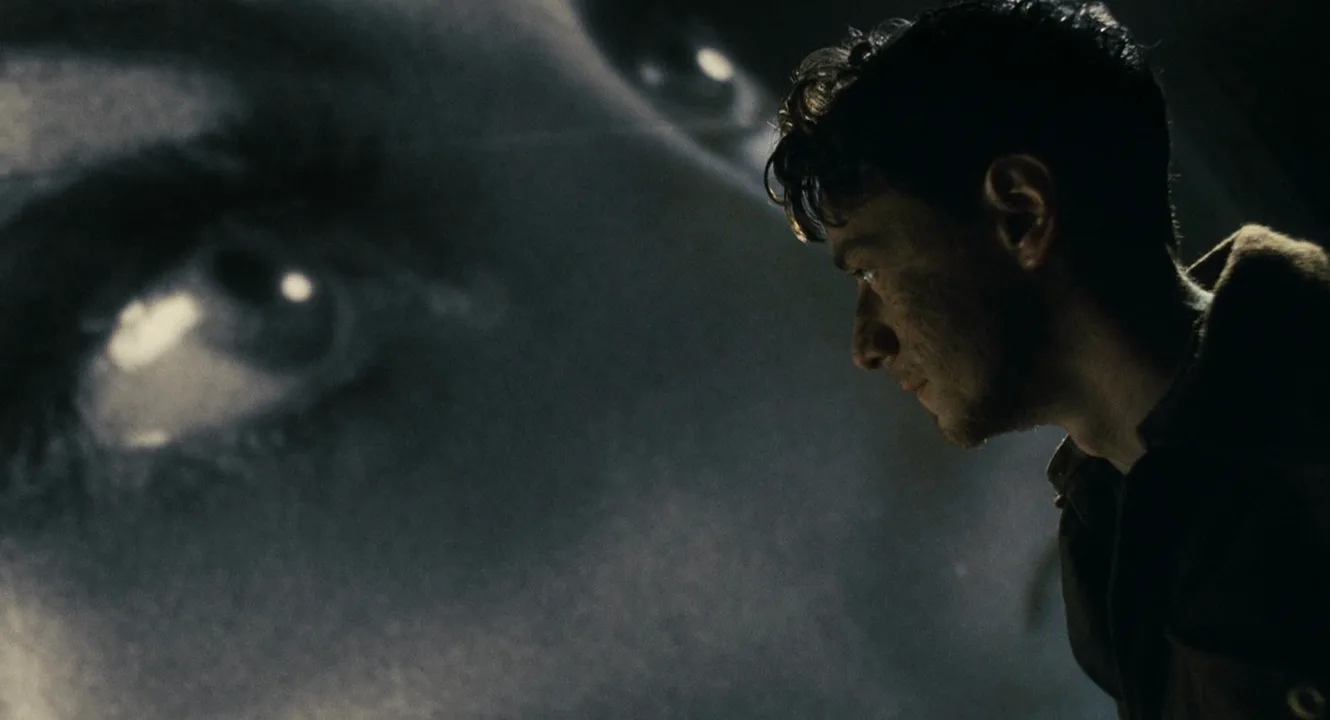
"output": "Full-screen live-action scene from Atonement (2007) from its very first frame: one continuous shot. 1940s wartime France at night, behind a huge cinema screen: a black-and-white film is projected onto the screen from the other side, and a woman's giant face in extreme close-up fills the whole background. 35mm film grain, the only light is the cold silver glow coming through the screen, deep black shadows, steel-gray and olive palette, faint dust hanging in the air.",
"characters": {
"S1": {
"name": "Robbie Turner, played by James McAvoy",
"look": "exhausted British soldier in his late twenties, short dark curly hair falling over his forehead, stubble, dirt and dried blood smeared across his cheek and temple, khaki wool army coat with a turned-up sheepskin collar, a canvas strap over the shoulder",
"voice": "silent"
}
},
"shots": [
{
"shot": 1,
"camera": "medium close-up at eye level, 50mm lens, the camera follows S1 and trucks left at his slow walking pace, keeping him in the right third of the frame, in profile facing frame left, from the first frame to the last; the projected face on the screen behind him slides slowly toward frame right as the camera trucks left; focus stays on S1, the giant face soft behind him",
"voice": "silence: nobody speaks in this shot, no voice at all",
"action": [
"BEGINNING: alive from the first frame, S1 is already walking slowly toward frame left in the right third, almost a black silhouette, head bowed, eyes lowered to the floor ahead of him at frame left; the left two thirds of the frame are the giant projected face, one enormous pale eye with a bright catchlight at the top left and the long curve of a lit nose and cheek below it, the eye many times taller than his whole head.",
"THEN: he steps forward into the light coming through the screen, and the silver glow lands on his profile, catching the dirt on his cheek and the curls at his forehead; the second giant eye of the projected face slides in from the left edge, so both enormous eyes now hang beside his small bowed head.",
"THEN: the camera keeps trucking left with him; the large eyes, open and glistening, drift toward frame right behind him while he keeps his head bowed and his gaze on the floor at frame left, shoulders slumped, never looking up at the screen, his lips closed.",
"THEN: the projected image on the screen changes to a pale, softly lit plane of skin, and the whole background turns into a hazy wash of bright gray light with a dark curve at the right edge.",
"END: S1 still walks slowly in the right third, head bowed, face in profile to frame left, a small dark figure against the glowing gray screen; his expression never changes, tired and blank, mouth closed."
],
"dialogue": []
}
],
"sound": {
"ambience": "the steady whir of a film projector heard from the far side of the screen, a soft hiss of old film sound, slow heavy boots on wooden boards, his tired breathing",
"speech": "no words in this video; the only human sounds are breaths and movement",
"never_spoken": "no narration and no voice-over: the descriptions, performance notes and step words of this prompt are never spoken aloud",
"music": "a film score under the scene, always below the voices: slow mournful strings with a soft low piano, weary and dreamlike",
"subtitles": "none"
}
}Remakes the Atonement (2007) shot of Robbie Turner walking behind a cinema screen filled by a huge black-and-white face; the prompt kept the truck left, the silver light through the screen, his bowed silence and the tiny-man, giant-eye scale gap.
The JSON names Robbie Turner and keeps the corpus truck left, so the giant projected eyes slide past his bowed head; explicit silence and a mournful score leave the scale gap alone to carry the meaning.
Open FlashBoardsCommon mistakes
- One mood wins. The whole frame gets one tint. Give each half its own light source.
- One side goes soft. Write both halves equally sharp or deep focus.
- The contrast gets resolved into a festive ruin. Keep a physical divider (fence, window, wall) between the two worlds.
- Video drifts to one subject. Lock the camera and give each side its own action from the first second.
Keep the reference frames, prompts and every generated take side by side — images and video in one canvas.
FAQ
5 questionsWhat is juxtaposition in film?
Juxtaposition in film is placing two contrasting images next to each other, in the same frame or in consecutive shots, so the audience reads a new meaning from the comparison. Soviet montage theory built on it: two colliding shots create a third meaning. Image and sound can be juxtaposed too.
What are some famous examples of juxtaposition in film?
The Godfather (1972) cross-cuts a christening with a series of killings. Strike (1925) cuts a massacre against a slaughterhouse. A Clockwork Orange (1971) pairs a cheerful song with an assault, and Drive (2011) follows a tender elevator kiss with sudden violence.
What is visual juxtaposition?
Visual juxtaposition is contrast built into a single composition rather than an edit: a tiny figure against a vast structure, warm light beside cold. Architecture, light or focus divides the frame so the viewer compares both elements in one look.
What is the difference between juxtaposition and contrast in film?
Contrast is a visual property: difference in brightness, color or texture. Juxtaposition uses contrast to make a point. A dark suit in a white corridor has contrast; it becomes juxtaposition when the pairing means something, like an intruder in a sterile world.
Is juxtaposition the same as the Kuleshov effect?
No. In the Kuleshov effect a neutral face takes on different emotions from the shot next to it, so meaning transfers onto the face. In juxtaposition both images carry strong content, and meaning comes from their conflict.
Related terms
7- Kuleshov EffectEditing
The Kuleshov effect is the finding that viewers read the same neutral face differently depending on the shot cut next to it — food, a coffin, a child — so meaning comes from the edit, not the single shot.
- Match CutEditing
A match cut joins two different shots through a shared shape, movement, composition or sound — the bone that becomes a satellite in 2001 — so the cut draws a link between them.
- Cross-CuttingEditing
Cross-cutting alternates between two or more lines of action happening in different places, usually at the same time, so each strand builds tension or meaning against the other.
- MontageEditing
A montage is a sequence of short shots, usually set to music, that compresses time or builds an idea — weeks of training, a relationship, a city waking up — in a minute or two.
- SymbolismStorytelling
Symbolism is using a concrete object, color, place or action to stand for an abstract idea — a key, a staircase, rain, a red coat — so the image carries meaning beyond itself.
- Visual MetaphorStorytelling
A visual metaphor presents one thing as another through images or editing — a caged bird for a trapped heroine, a cut from a crowd to a herd — so the audience grasps an idea without it being stated.
- Film EditingEditing
Film editing is the selection and ordering of shots — where each one starts, ends and what follows it — to build continuity, rhythm and meaning out of the raw footage.
Further reading
Sergei Eisenstein, Film Form: Essays in Film Theory (1949). David Bordwell and Kristin Thompson, Film Art: An Introduction. Walter Murch, In the Blink of an Eye (2001).