 FlashBoards Learn
- Learn
- Film History & Theory
- Subjective Cinema
Film History & Theory · Film language
Subjective Cinema
Also called: subjective camera, subjective shot, first-person cinema
Subjective cinema puts the audience inside a character's perception. Sometimes that means a literal subjective camera at their eyes. It also covers focus, sound, movement and editing bent to match what the character feels. The viewer doesn't just watch someone panic, grieve or trip. For a moment, they share it.
- What it does
- Makes the viewer experience a scene through one character's senses and state of mind instead of watching from outside.
- Use it when
- The story depends on what a character perceives: fear, intoxication, injury, memory, confusion or obsession.
- Watch out
- Long stretches of pure first-person lose the face we identify with. Cut back to the character or frame from just behind them.
- Try this prompt
First-person view at eye height, own hands with chipped green nail polish gripping a ferry rail at night, city lights smeared in shallow focus, slight head tilt, 24mm, film still.
What is subjective cinema?
Subjective cinema shapes image and sound to match a character's inner experience rather than a neutral observer's view. In film theory it's usually described as a spectrum:
- Optical subjectivity. The camera stands in for the character's eyes: the POV shot, subjective shot or first-person cinema.
- Semi-subjective framing. The camera rides just behind or beside the character, sharing their position without becoming them.
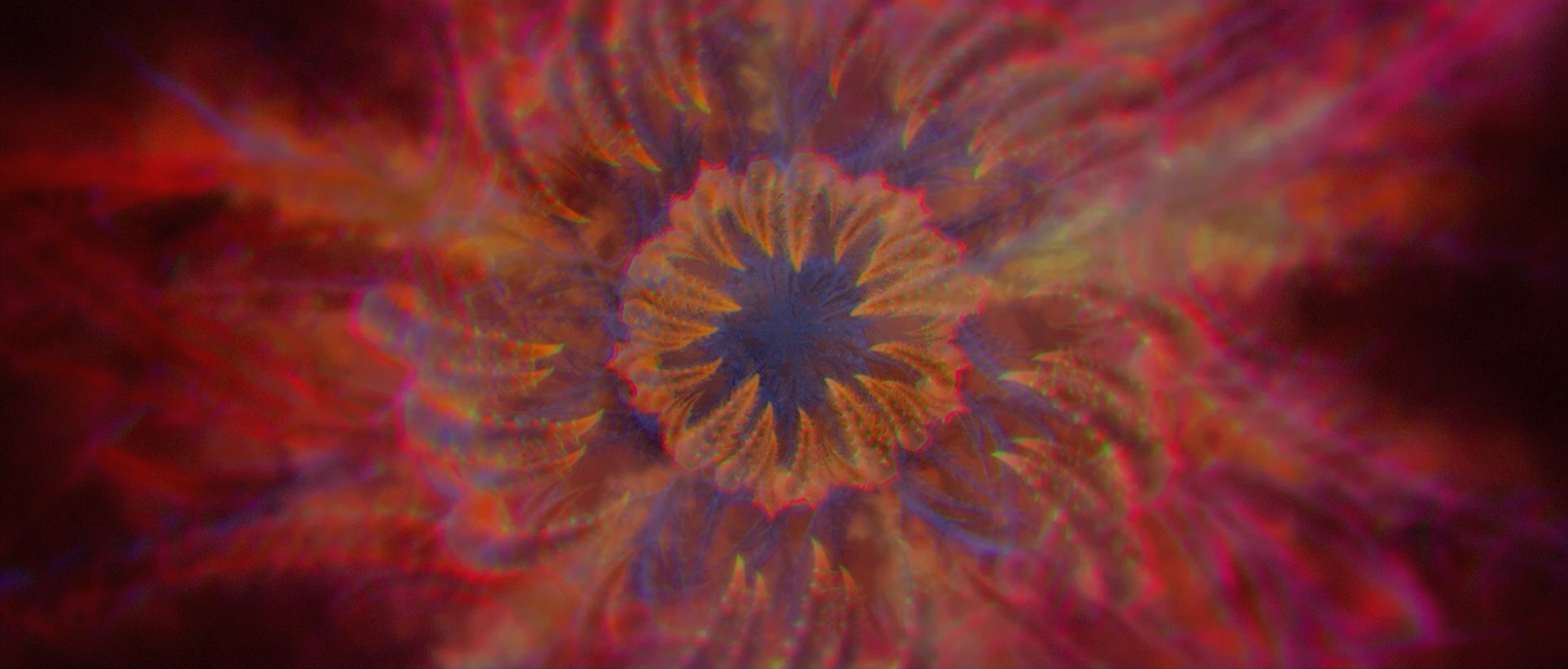
- Mental subjectivity. Image and sound show a state of mind: blur, muffled sound, warped time, hallucination.
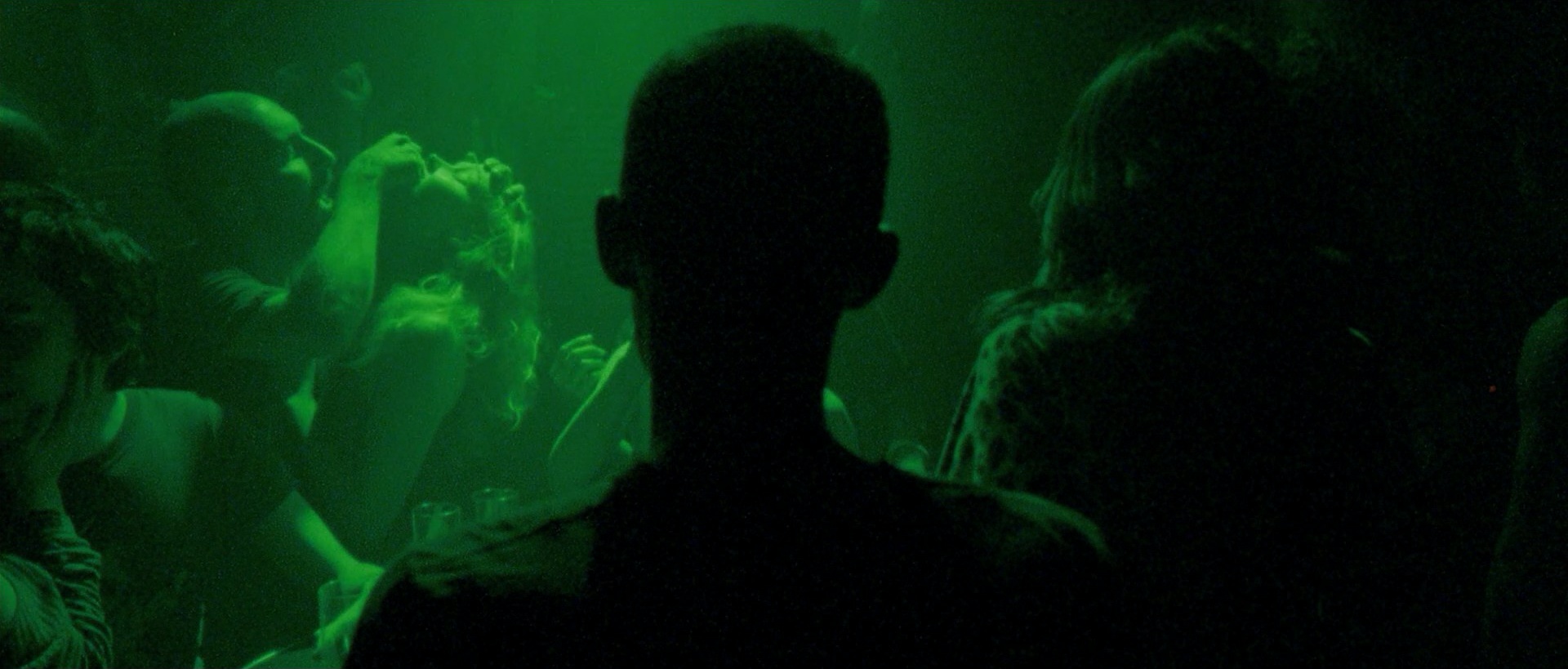
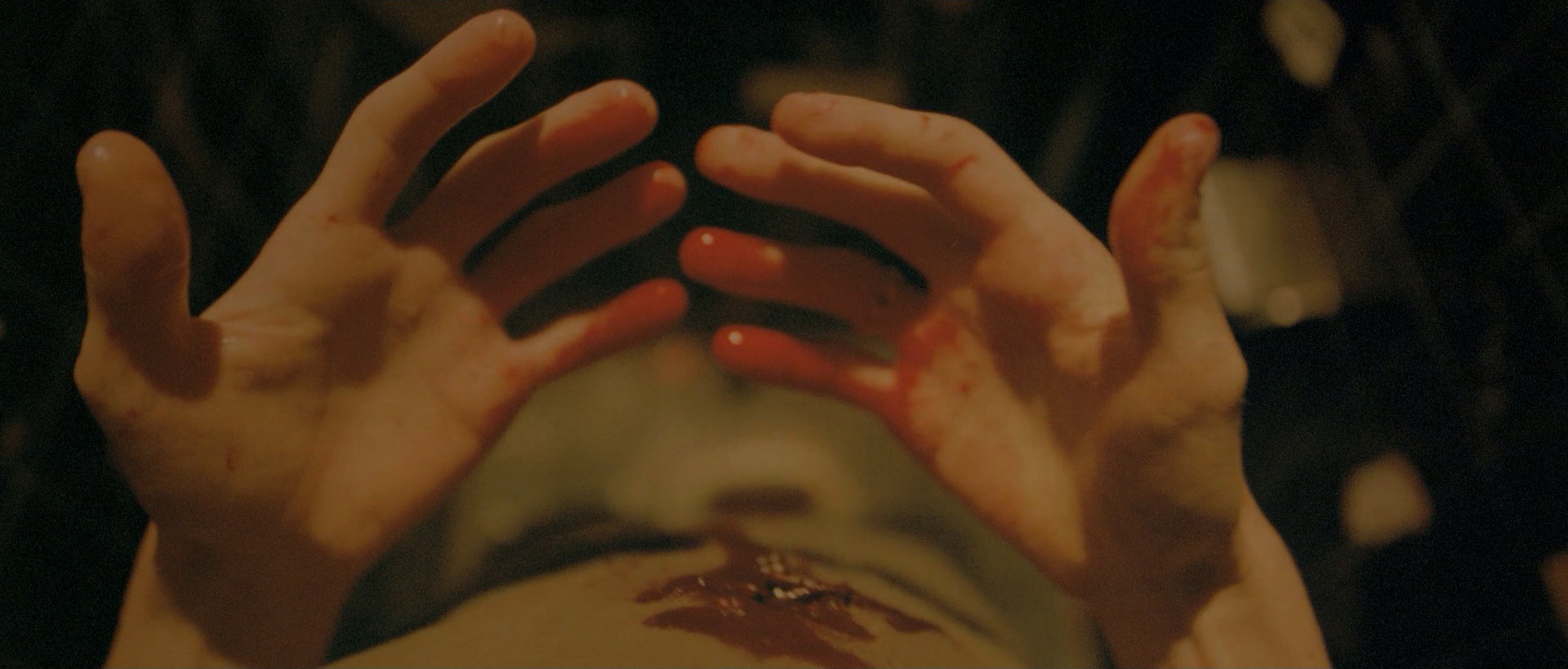
The extreme case is Lady in the Lake (1947), shot almost entirely through the detective's eyes. Enter the Void (2009) runs the whole spectrum: first-person with blinks, behind-the-head flashbacks, a drug trip and a disembodied view floating over Tokyo.
The tools: camera, focus, sound and editing
Most subjective scenes combine several tools:
- Camera. Eye-height framing with head-like motion. A Snorricam locks the face while the world lurches; handheld shake reads as nerves or exhaustion.
- Focus. Very shallow focus narrows attention the way anxiety does. Son of Saul (2015) keeps its protagonist sharp and leaves the horrors around him soft.
- Sound. Muffled or dropped sound is the cheapest route into a head. On Omaha Beach in Saving Private Ryan (1998), the battle goes dull and distant around a shell-shocked Captain Miller.
- Editing and time. Jump cuts, repetition and slow motion follow the character's sense of time. Drugged or feverish states have their own grammar, covered in altered state effect.
Why filmmakers use subjective cinema
Tie the image to one character and the viewer learns things at the character's pace, the opposite of an omniscient point of view. Horror uses this to hide the threat: the killer's-eye opening of Halloween (1978) makes the viewer complicit. Thrillers use it to mislead, because a story filtered through one mind can come from an unreliable narrator.
The limit is well known: audiences identify with faces, not lenses. Lady in the Lake is remembered as a fascinating failure because we rarely see the hero react. So most films use subjectivity in bursts (a POV, a reaction shot, a sound drop) and step back out.
How to shoot a subjective sequence
- Decide whose head you're in. Establish the character in a close-up, cross into their perception, plan the exit.
- Lens and height. For optical POV, a 24–35mm lens on full frame at the actor's eye height, about 1.6 m standing.
- Move like a body. Handheld or gimbal with small head turns; the character's hands or feet at the frame edge.
- Degrade the image with the mind. Softer focus, a wider shutter angle or step-printing for smear, blooming exposure or a tilting horizon as the state worsens.
- Design the sound first. Choose what the character hears, what vanishes and what gets louder.
- Blink. A few frames of black read as eyelids and sell a first-person camera instantly.
On a FlashBoards board, map where the scene enters and leaves a character's head: reference frames beside the storyboard panels, with sound notes on each.
Subjective cinema vs. POV shot
A POV shot is one technique: the camera shows exactly what a character sees, usually between a shot of them looking and their reaction. Subjective cinema conveys experience and doesn't need a POV. A close-up where the sound drops out or a hallucination sequence is subjective without matching anyone's eyeline. Every POV shot is subjective; most subjective scenes are not POV shots.
Subjective Cinema examples in film
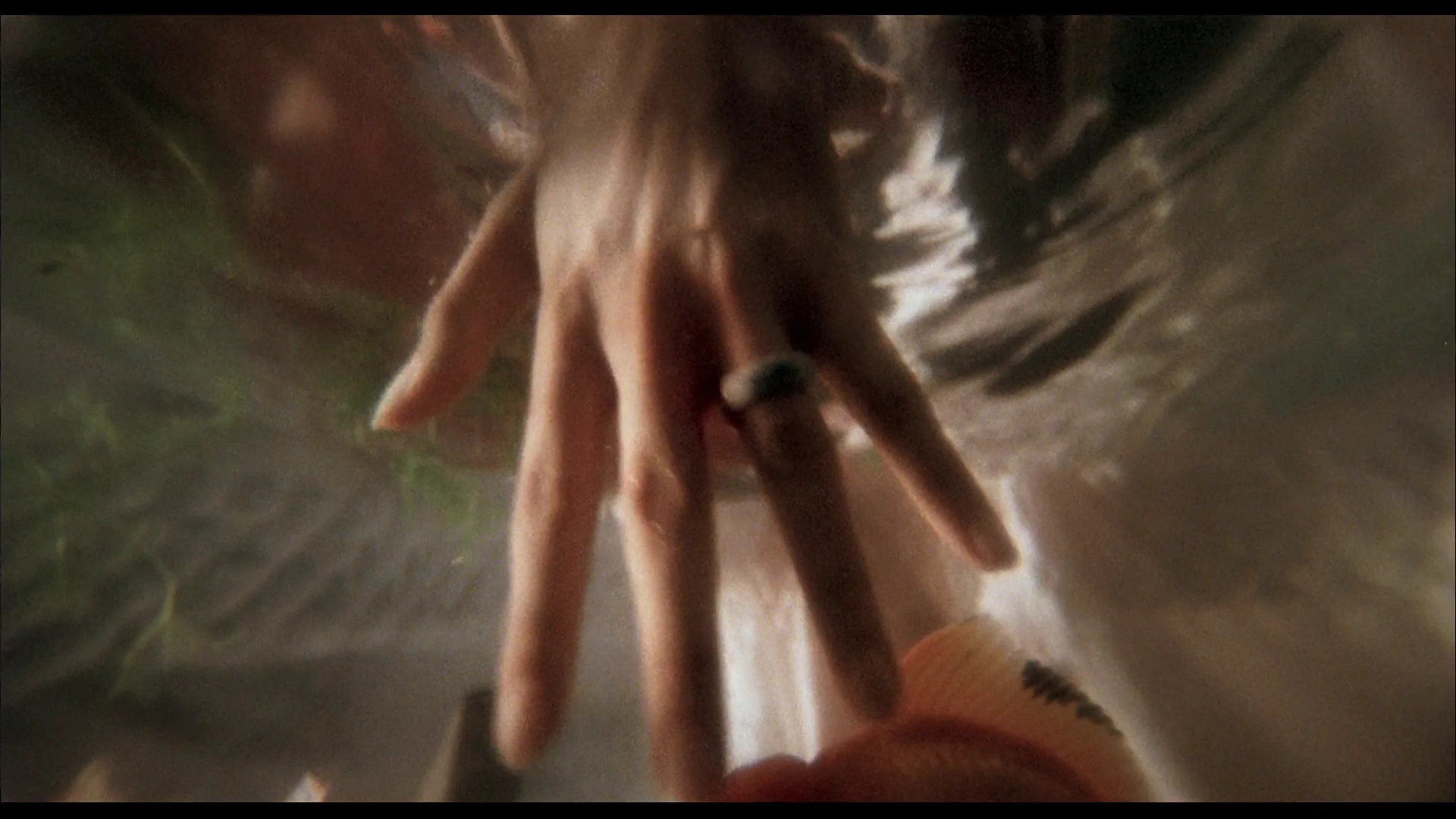
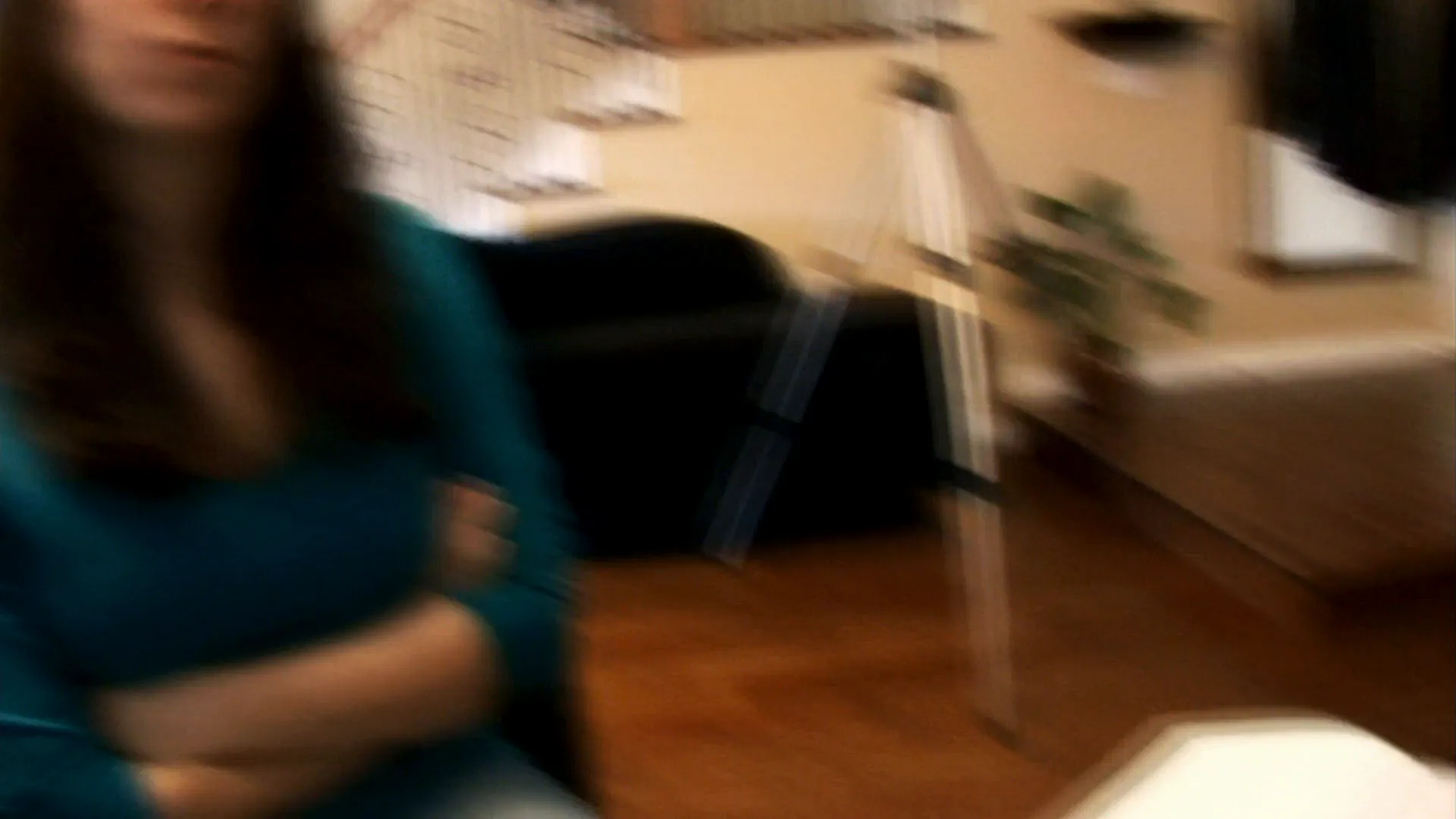
6 framesFrom literal first-person to pure mental imagery.
How to create a subjective cinema with AI
4 promptsImage models handle optical subjectivity if you name the body parts that prove whose view it is. Start with a first-person frame in Nano Banana 2 Lite, try a behind-the-head take in GPT Image 2.5, animate the first frame with MiniMax H3 Max Turbo, and compare them on one FlashBoards board. The fourth prompt re-shoots a real film shot from a text description alone, and the original plays next to the result so you can compare.
First-person point of view at standing eye height, 24mm lens. The viewer's own pale hands, with chipped green nail polish and a thin silver ring, grip a wet white railing at the bottom of the frame. Beyond it, a night harbor city dissolves into smeared orange and teal bokeh on dark water. Horizon tilted 8 degrees, only the hands in focus, cinematic film still.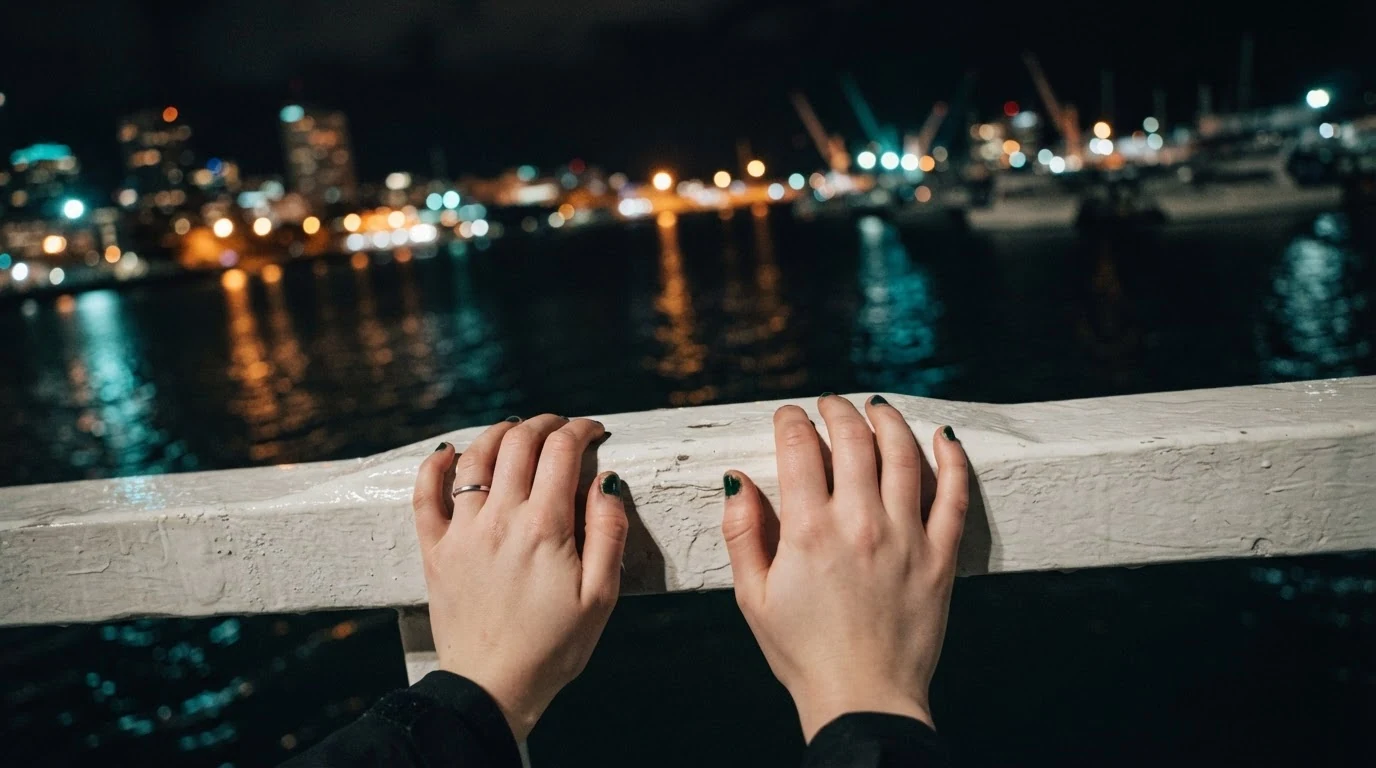
"First-person" plus hands entering from the bottom edge fixes whose view this is. The tilt, smear and focus held on the hands turn a plain POV into a state of mind.
Open FlashBoardsSemi-subjective shot from directly behind a young man's head: close-cropped bleached hair, a small scar on the back of his neck, black bomber jacket collar, filling the left third of the frame, slightly out of focus. Ahead, a narrow corridor lit by flickering red and green neon, sharp and receding. Camera 10 cm behind his head at eye height, 28mm lens, grainy anamorphic film still.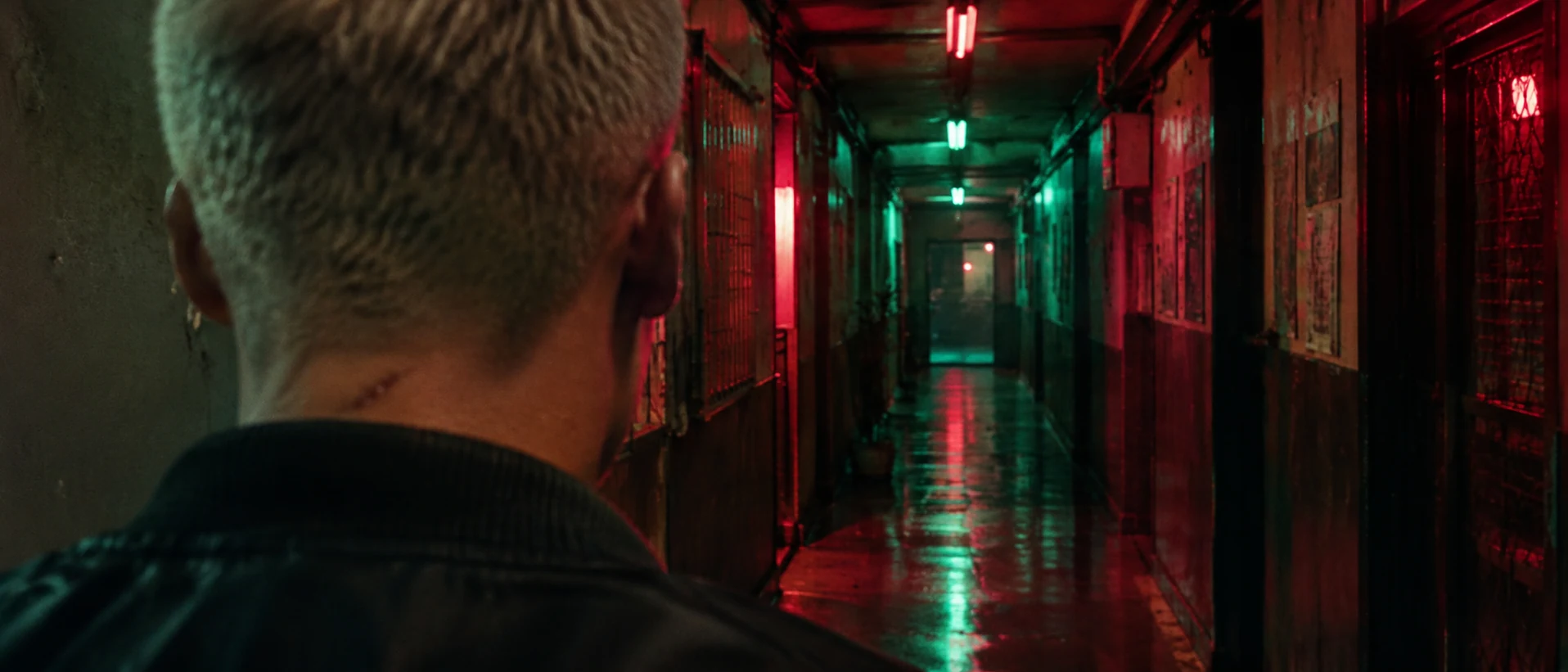
"Directly behind" and the 10 cm distance stop the model from drawing a profile or a two-shot. Soft head, sharp corridor: we see where he's going from his place.
Open FlashBoardsCamera: first-person handheld at eye height, already swaying like an unsteady head, drifting slowly left along the railing. Action: the hands tighten on the wet railing and slide left. The city lights pulse and smear as the view dips, then the horizon rolls back level. At the end the hands loosen and the lights sharpen for a moment.The sway is stated first so the clip starts alive, and the action stays on hands and lights already in frame. The dip and recovery read as a dizzy spell.
Open FlashBoards{
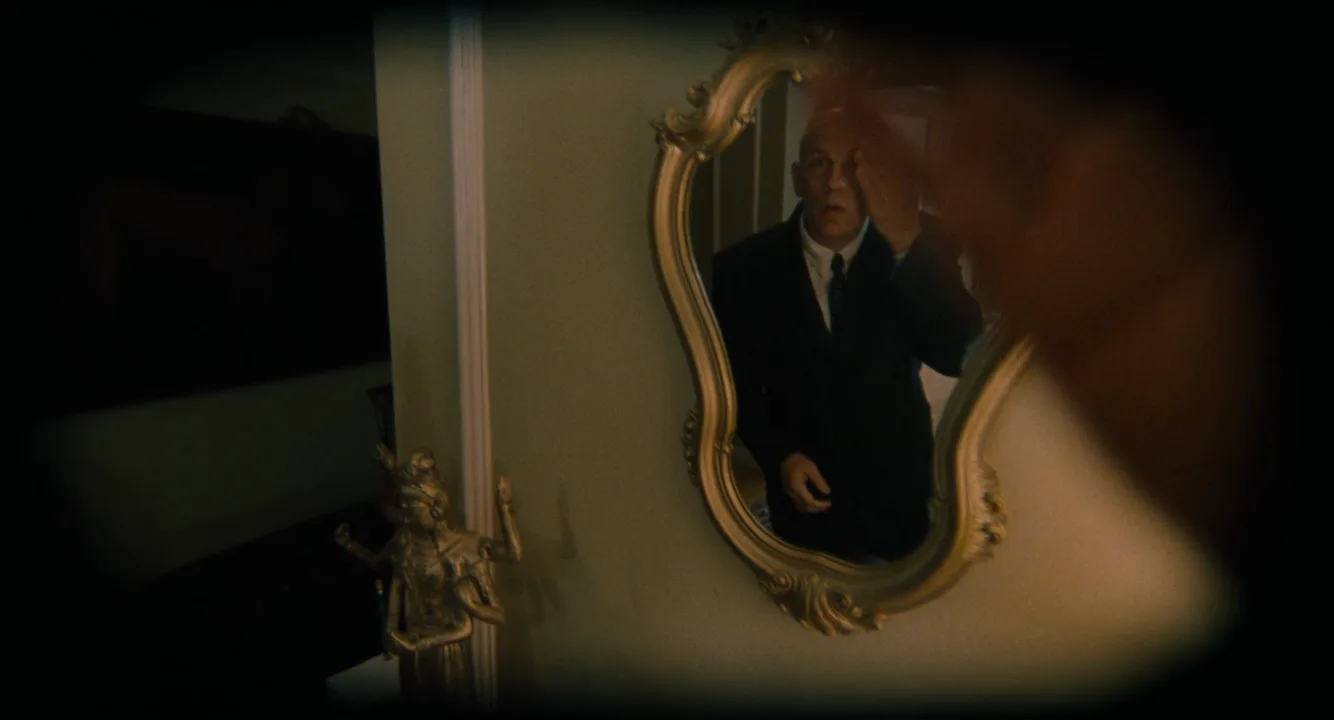
"output": "Full-screen live-action film shot from Being John Malkovich (1999), alive from its very first frame: one continuous first-person shot, no cuts. We look through John Malkovich's own eyes: a soft dark oval vignette rings the whole frame like the edge of a peephole, slight fisheye bulge. Warm tungsten hotel-suite light, amber and cream walls, gold rococo mirror, black suit, 35mm film grain.",
"characters": {
"S1": {
"name": "John Horatio Malkovich, played by John Malkovich",
"look": "bald man in his mid-40s, pale skin, black single-breasted suit, white shirt, narrow dark tie; seen only as his reflection in the mirror and as his own blurred hand near the lens",
"voice": "silence: he does not speak"
}
},
"shots": [
{
"shot": 1,
"camera": "first-person POV at standing eye height, handheld with a slow head-like drift; starts tilted down at a side table, then swings up and right in one smooth head turn to frame a wall mirror centre-right, then holds almost still on the mirror with a slight drift right",
"voice": "silence: nobody speaks in this shot, no voice at all",
"action": [
"BEGINNING: alive from the first frame, the view looks down and slightly left at a marble side table: a dark green cordless phone on the left, a small silver tray in the middle, the gilded base of a lamp on the right, all tilted inside the dark oval vignette.",
"THEN: the head turns up and to the right in one smooth move; the table slides out of the bottom-left of frame and a cream wall with an ornate gold rococo mirror swings in and settles centre-right.",
"THEN: in the mirror, Malkovich's reflection stands facing us in the black suit, both hands at his collar, fingers tightening the tie knot; his eyes look straight into the mirror, into the lens.",
"THEN: he lowers his left hand to his waist and lifts his right hand to his face; his own hand, huge and out of focus, sweeps up past the bottom-right of the lens.",
"THEN: in the reflection his right palm rubs slowly across his forehead and over his bald scalp, eyes still fixed on the mirror, mouth closed.",
"THEN: the blurred hand sweeps back down past the lower left of the lens as his arm drops.",
"END: he stands still, both hands clasped loosely at his waist, staring blankly at his own reflection, no smile; the view drifts a little right and holds on the mirror inside the dark oval."
],
"dialogue": []
}
],
"sound": {
"ambience": "quiet hotel room tone, the rustle of a suit sleeve, a soft breath close to the ear",
"speech": "no words in this video; the only human sounds are breaths and movement",
"never_spoken": "no narration and no voice-over: the descriptions, performance notes and step words of this prompt are never spoken aloud",
"music": "a film score under the scene, always below the voices: sparse plucked strings and a low wavering woodwind, curious and uneasy",
"subtitles": "none"
}
}Remakes the portal shot from Being John Malkovich (1999): the peephole vignette, the head turn from the side table to the mirror and the blurred hand crossing the lens.
The vignette and the hand crossing the lens tell the model this is a body's view, not a camera's. The head turn from table to mirror is listed in order.
Open FlashBoardsCommon mistakes
- Without hands, feet or a body edge, models drift to a neutral third-person shot. Put the body in frame and write "first-person" first.
- Ask for distortion as behavior: tilted horizon, smeared lights, focus only on the hands. Words like "trippy" give generic filters.
Keep the reference frames, prompts and every generated take side by side — images and video in one canvas.
FAQ
4 questionsWhat is a subjective camera or subjective shot?
A subjective camera is placed and moved as if it were a character's eyes, so each subjective shot shows what that character sees or perceives. Hands at the frame edge, people looking into the lens and head-like movement sell the effect. It usually sits between a shot of the character and their reaction, so we know whose experience it is.
What is an example of subjective cinema?
Enter the Void (2009) is the textbook case: first-person views with blinks, flashbacks from behind the hero's head and a floating view over Tokyo. Lady in the Lake (1947) is shot almost entirely through the detective's eyes. Being John Malkovich (1999) literally puts the viewer behind an actor's eyes.
What is the difference between subjective and objective camera?
An objective camera watches as an invisible observer. A subjective camera takes a character's position or perception, so the viewer sees and hears what they do. Most films are mostly objective and move into subjectivity for key moments, then step back out.
Is first-person cinema the same as found footage?
Not quite. In found footage a character operates a real camera inside the story, as in Paranormal Activity (2007). First-person cinema makes the camera the character's eyes, with no physical camera in the story. Both limit the viewer to one perspective.
Related terms
6- POV ShotCamera Angles
A POV shot shows exactly what a character sees by placing the camera at their eyes — usually right after a shot of them looking — so the audience shares their perspective, including movement, obstruction or distortion.
- Altered State EffectPost-Production & VFX
An altered-state effect makes the image behave like a drugged, drunk or feverish mind — warped lenses, smeared motion, doubled exposures, color shifts, rubbery time — so the audience shares the character's perception.
- SnorricamCamera Movement
A Snorricam is a rig strapped to the actor's body with the camera aimed back at them, so their face stays locked in the frame while the world lurches around — a staple for drunkenness, panic or euphoria.
- Unreliable NarratorStorytelling
An unreliable narrator is a storyteller — through voice-over or a point-of-view protagonist — whose account the audience can't fully trust because they lie, misremember or misread what happens.
- Omniscient Point of ViewStorytelling
Omniscient point of view lets the story know and show more than any single character — cutting between places and minds freely — as opposed to restricted narration tied to one protagonist.
- Film TheoryFilm History & Theory
Film theory is the body of ideas about what cinema is and how it produces meaning and pleasure — from Soviet montage and Bazin's realism to auteur theory, psychoanalytic and feminist criticism.
Further reading
Edward Branigan, Point of View in the Cinema: A Theory of Narration and Subjectivity in Classical Film (1984). David Bordwell and Kristin Thompson, Film Art: An Introduction, chapter on narrative form (range and depth of story information).