 FlashBoards Learn
Genres · Film language
Biopic
Also called: biographical film, biographical picture, biodrama
A biopic is a fiction film that dramatizes the life of a real person, either across decades or through one decisive episode. It compresses time, merges people and invents private scenes so that documented facts play as a story, asking the viewer to believe a performance as a portrait.
- What it does
- Turns a documented life into a dramatic arc the audience can feel from inside.
- Use it when
- A real person's choices carry a conflict strong enough to hold a feature.
- Watch out
- Cradle-to-grave structure turns into a greatest-hits reel with no spine.
- Try this prompt
Period biopic still, medium close-up, fictional 1958 jazz singer at a chrome ribbon microphone, tungsten key, haze, 35mm grain
What is a biopic?
A biopic (short for biographical picture) is a scripted, acted film about a person who actually lived. It belongs to the film genres as a branch of drama, but borrows freely: Bohemian Rhapsody (2018) plays as a musical, American Gangster (2007) as a crime film, Lawrence of Arabia (1962) as a desert epic.
Because viewers know the person was real, they measure the story against what they already know. That is why biopics lean on recognizable moments — a famous speech, a known photograph — and why the lead performance is judged so hard.
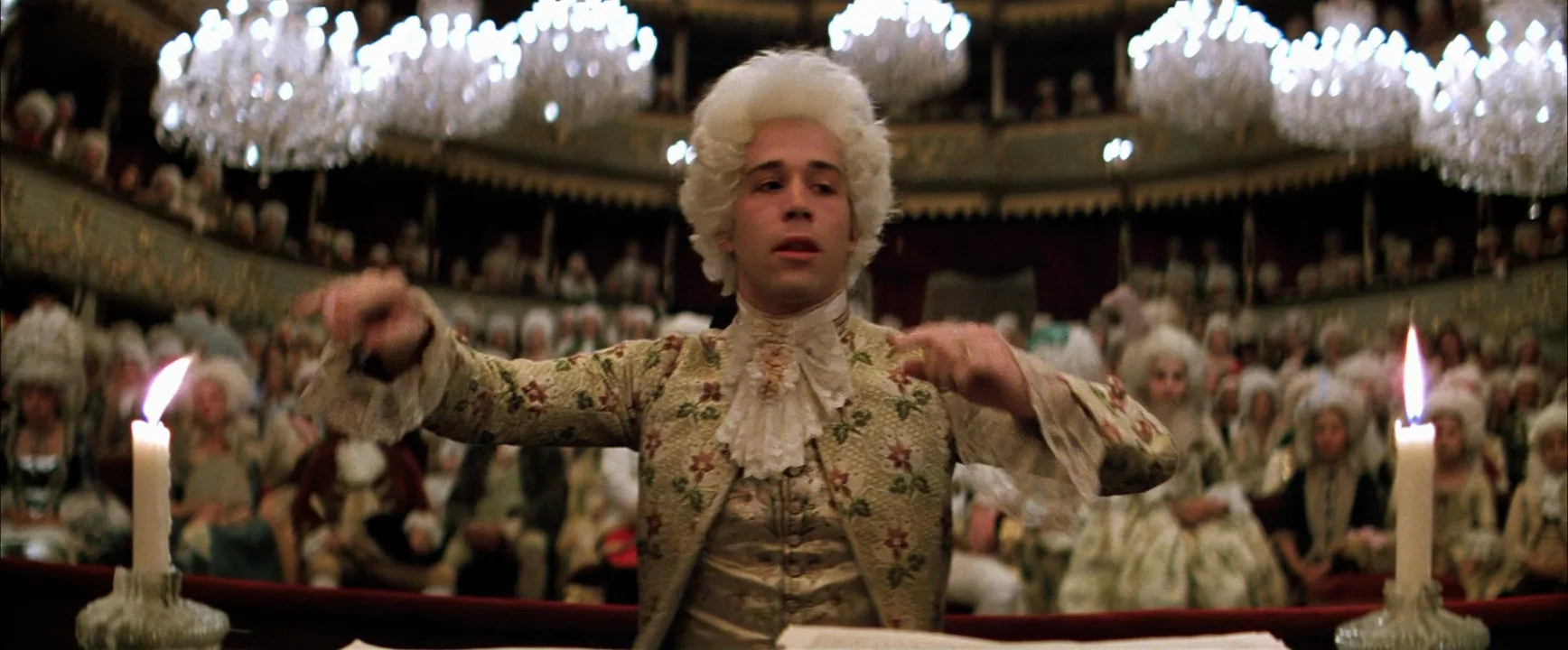
None of it is a record. Writers merge people, move events by years and invent private conversations. Amadeus (1984) builds its plot on a Mozart–Salieri rivalry largely of its own making, and it works because the invention serves a theme: mediocrity facing genius.
What are the main types of biopic?
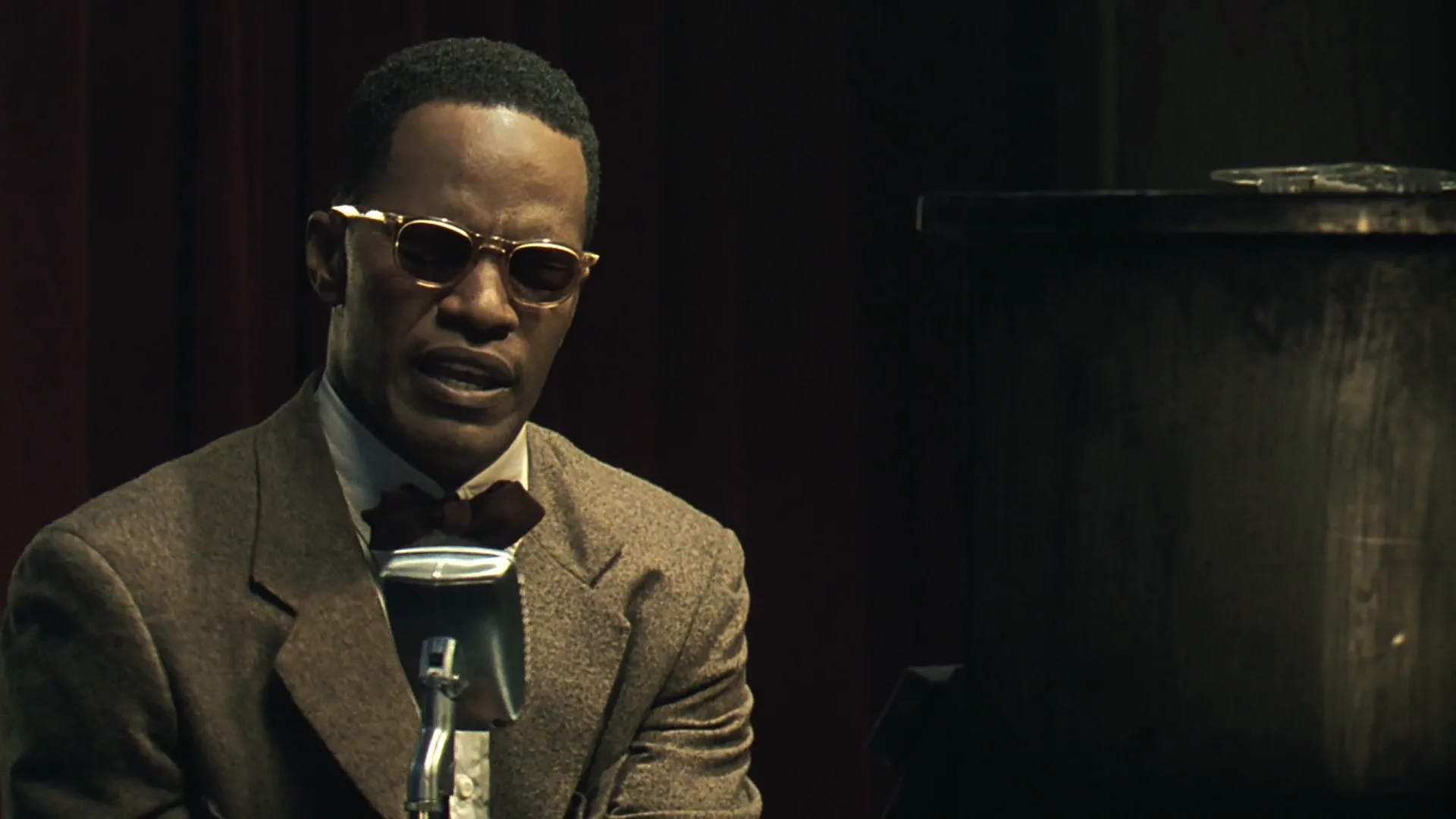
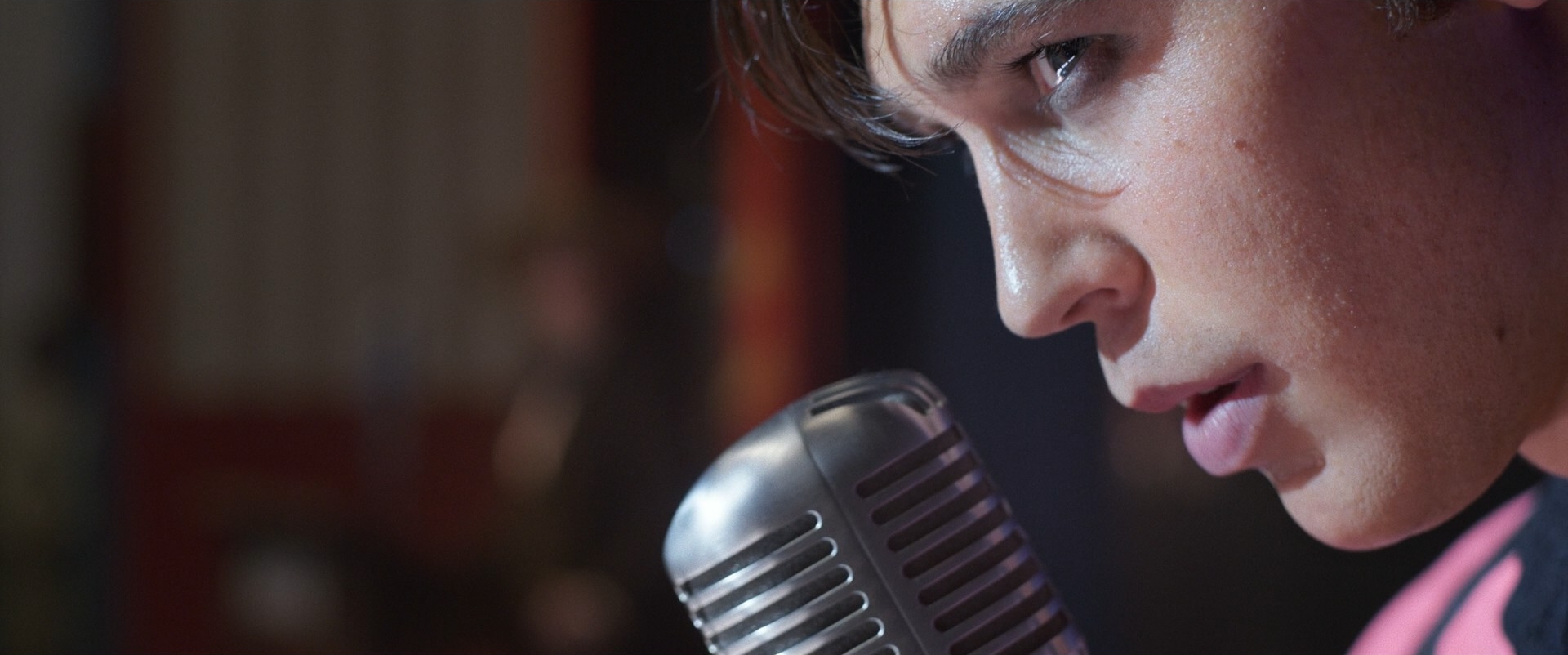
Cradle to grave. The classic studio model runs from childhood through rise, crisis and legacy, as in Ray (2004) and Elvis (2022). The risk: scenes tick off milestones and the film loses its spine.
The decisive episode. One stretch stands for the whole life. Lincoln (2012) centers on passing the Thirteenth Amendment; Steve Jobs (2015) plays backstage before three product launches. A narrow frame gives a clock and one conflict.
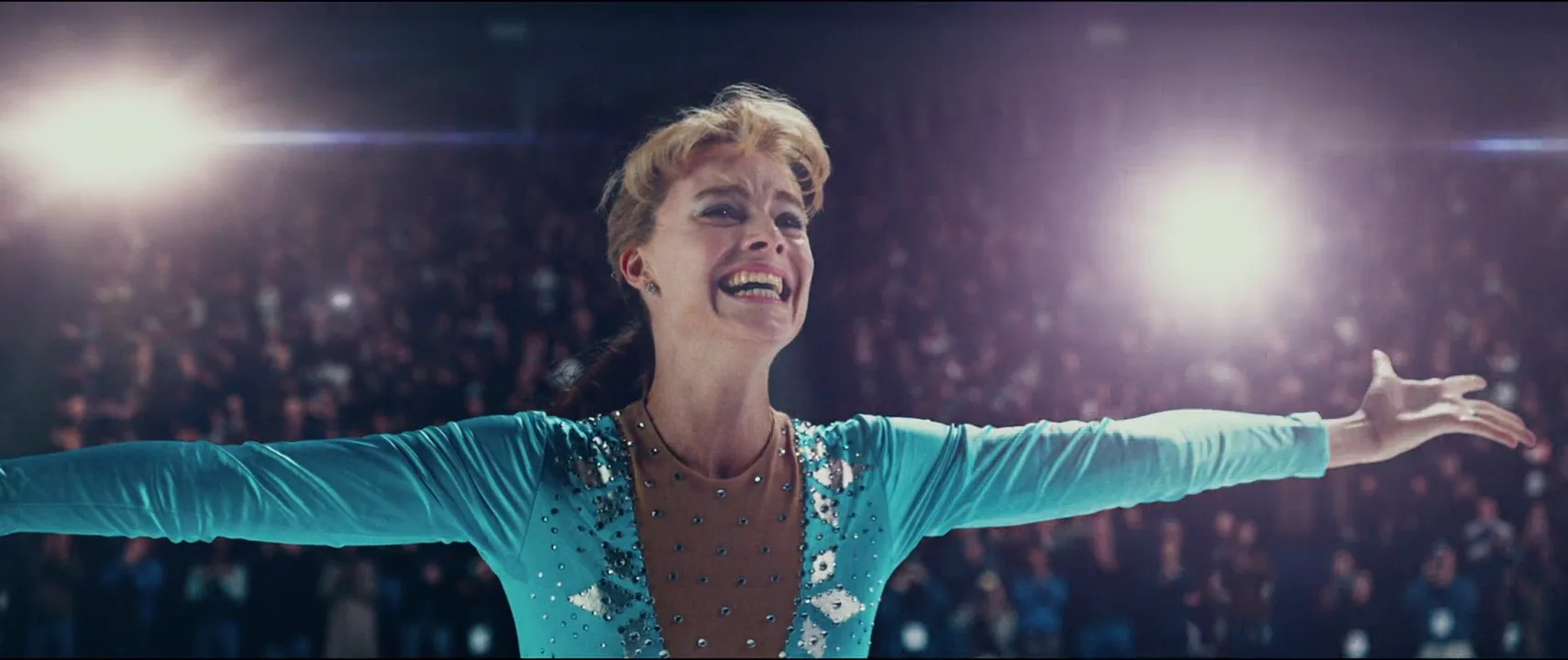
The framed confession. A narrator looks back and the life plays as flashback: old Salieri confesses to a priest in Amadeus; I, Tonya (2017) cuts between staged interviews and the past, letting characters dispute each other's version to camera.
The deconstructed portrait. I'm Not There (2007) splits a Bob Dylan-inspired figure among six actors, arguing a public life has no single version — close to a character study.
Why filmmakers make biopics
The audience knows the ending, so tension moves from what happens to why and at what cost. Oppenheimer (2023) spends its energy on guilt and politics, not on whether the bomb works.
Biopics are also actor showcases — voice, posture, prosthetics — often with immersive preparation in the spirit of method acting. The camera stays close — at the microphone, the podium, the mirror — where the public figure meets the private one.
How to shoot a biopic
Build a reference board first. Collect photographs, newsreels and interviews. Images the audience already knows become anchor frames you recreate almost exactly; scenes between them get more freedom.
Let the era choose the look. Match lenses and grain to how the period was recorded: lower-contrast vintage glass, a warm tungsten palette for the 1950s, heavier grain for the 1970s. Steve Jobs moved from 16mm to 35mm to digital across its three acts; Oppenheimer split its timelines between color and black and white.
Stage icon moments, then go closer. For a restaged concert like the Live Aid finale of Bohemian Rhapsody, place the camera where the famous footage was shot, then cut in tighter than the original cameras could: 50–85mm at eye level on face and hands.
Mind the seams. If you intercut real archival footage, grade your recreations to meet it halfway. Aging makeup needs soft frontal light; hard side light shows prosthetic edges.
Biopic vs. documentary
Both tell a real life, but a biopic is staged fiction with actors and written dialogue, while documentary filmmaking builds from what exists: interviews, archives, the person on camera. A documentary can only show what was recorded; a biopic can show a private moment nobody filmed — its power and its risk. If an actor plays the person, it's a biopic.
Biopic examples in film
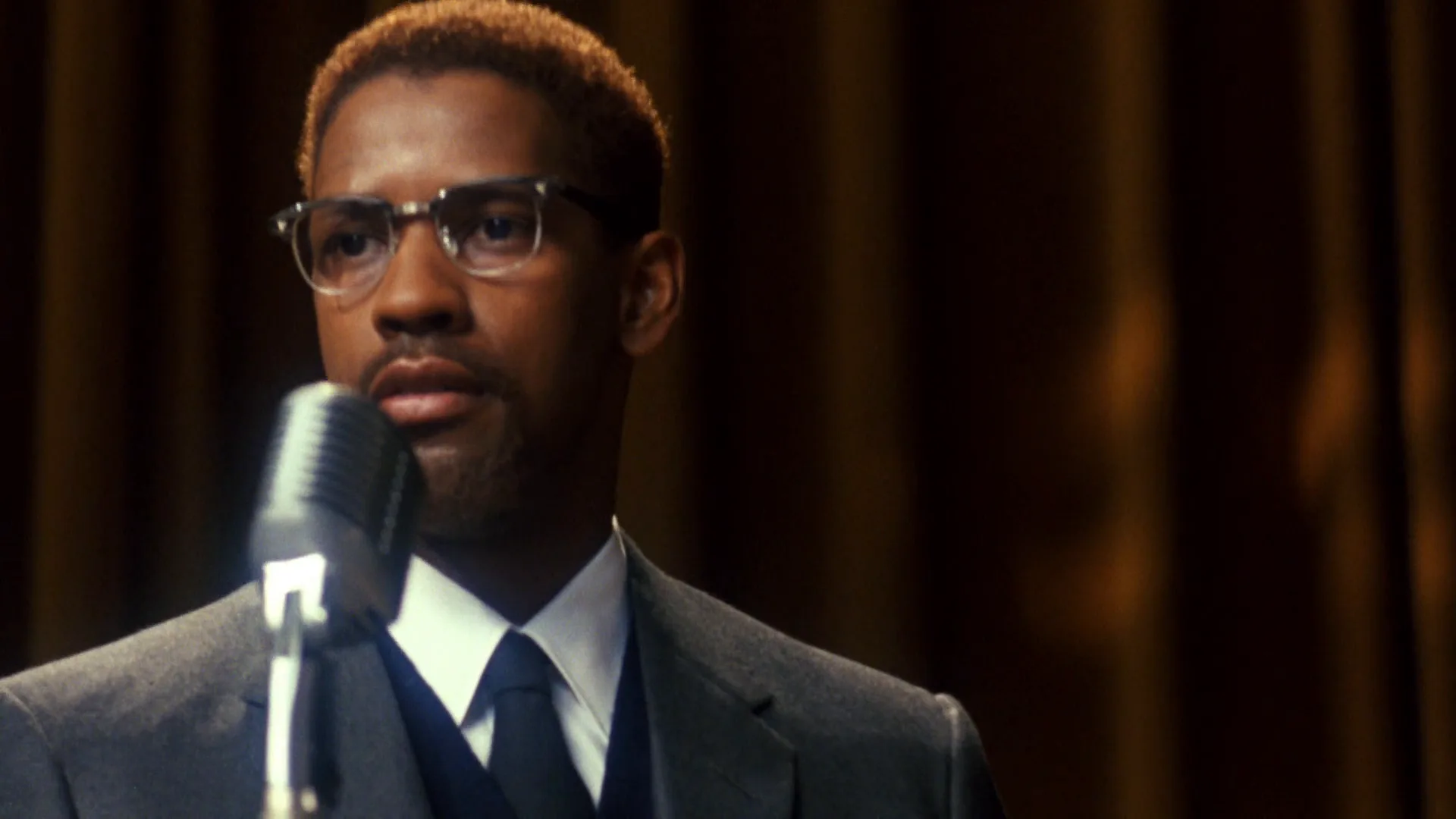
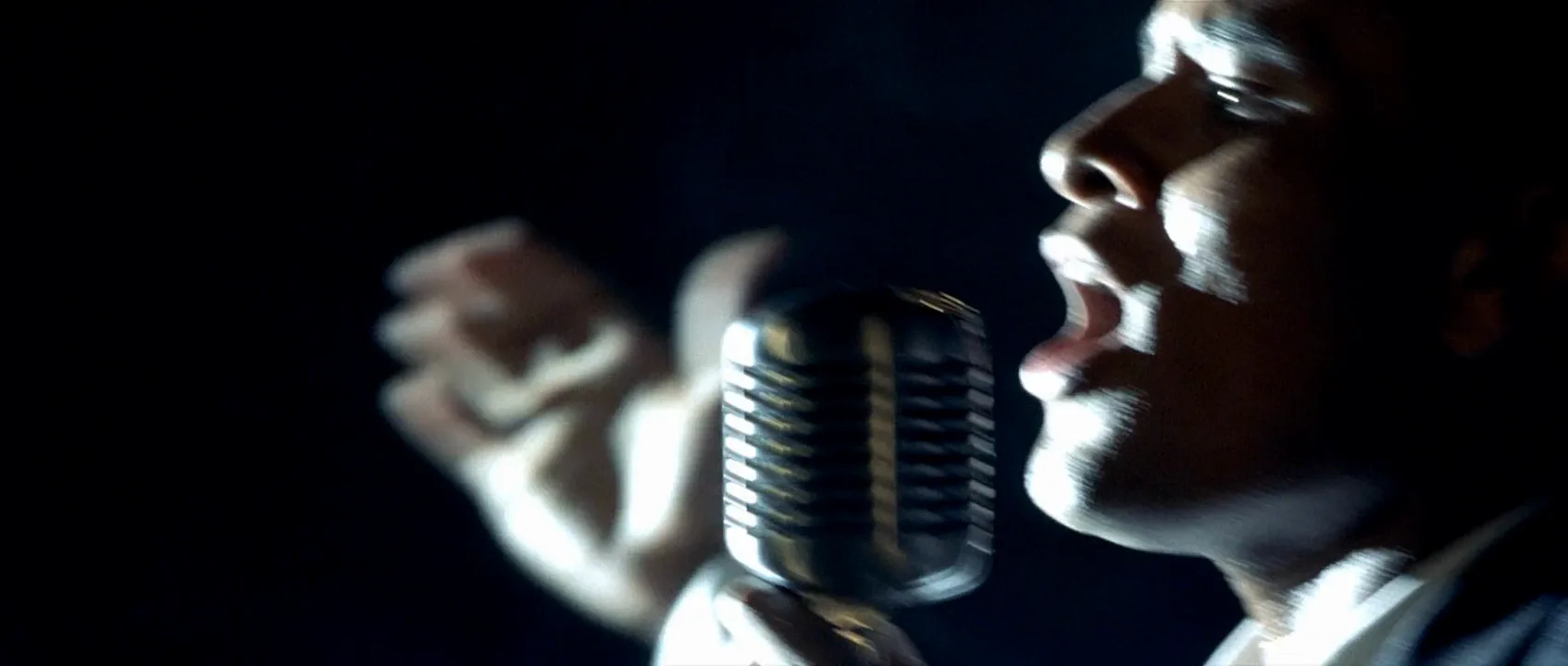
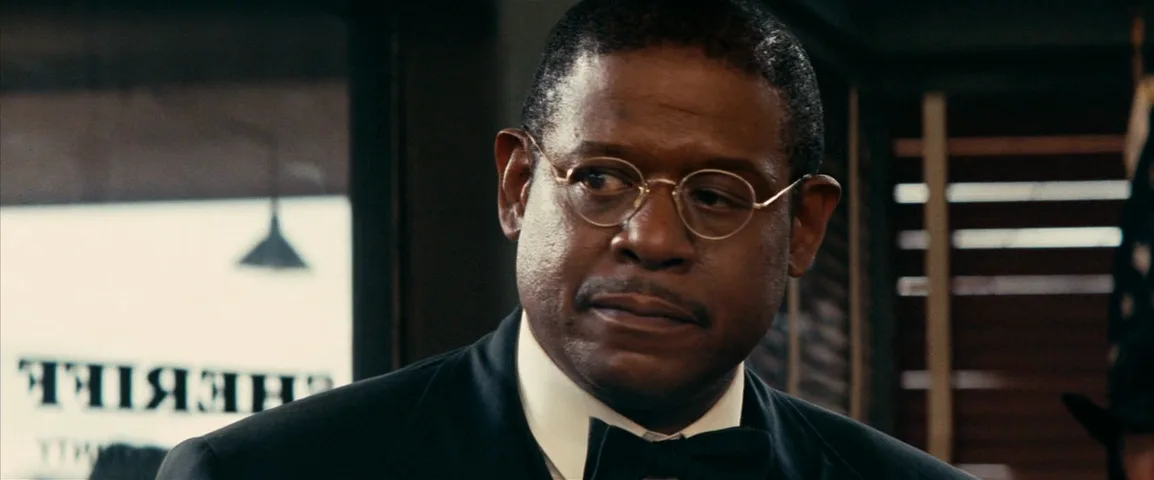
8 framesFrames from biographical and fact-based films. The genre keeps returning to the same stages: concert hall, club microphone, arena, podium.
How to create a biopic with AI
4 promptsAn AI biopic look comes from period detail plus an invented person — never a likeness of a real figure or actor. Carry the era through light, lens, grain and props, and on a FlashBoards board pin period photographs beside your generations to compare takes side by side. The fourth prompt re-shoots a real film shot from a text description alone, and the original plays next to the result so you can compare.
Period biopic film still, medium close-up at eye level, 1958 radio studio. A fictional jazz singer, a woman in her forties with close-cropped gray natural hair, a small scar above her left eyebrow and a dark green satin dress, sings into a chrome ribbon microphone, eyes half closed. Warm tungsten key light from camera left, light haze, dark wood panels behind, amber palette, 50mm lens, 35mm film grain.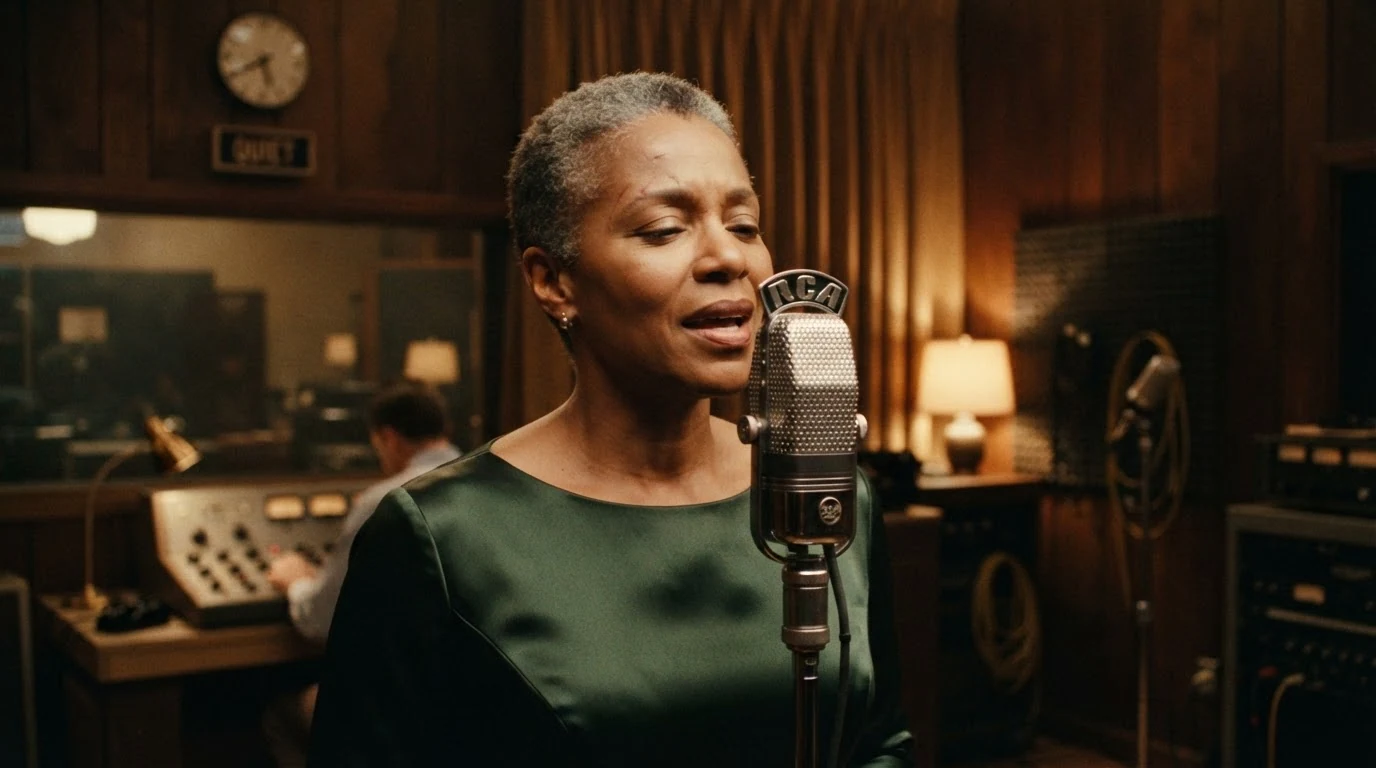
"1958 radio studio", "ribbon microphone" and "tungsten" set the era without naming anyone real. The scar, hair and dress keep the fictional singer repeatable; "35mm film grain" adds period texture.
Open FlashBoardsWide period biopic frame recreating a 1912 press photograph: a fictional labor organizer, a tall man in his fifties with a long red-brown beard streaked with gray, a crooked nose and a flat wool cap, speaks from a wooden platform to a crowd of mill workers on a cobbled street. Overcast daylight, brick mill walls, camera at chest height looking slightly up, 40mm lens, muted sepia grade, film grain.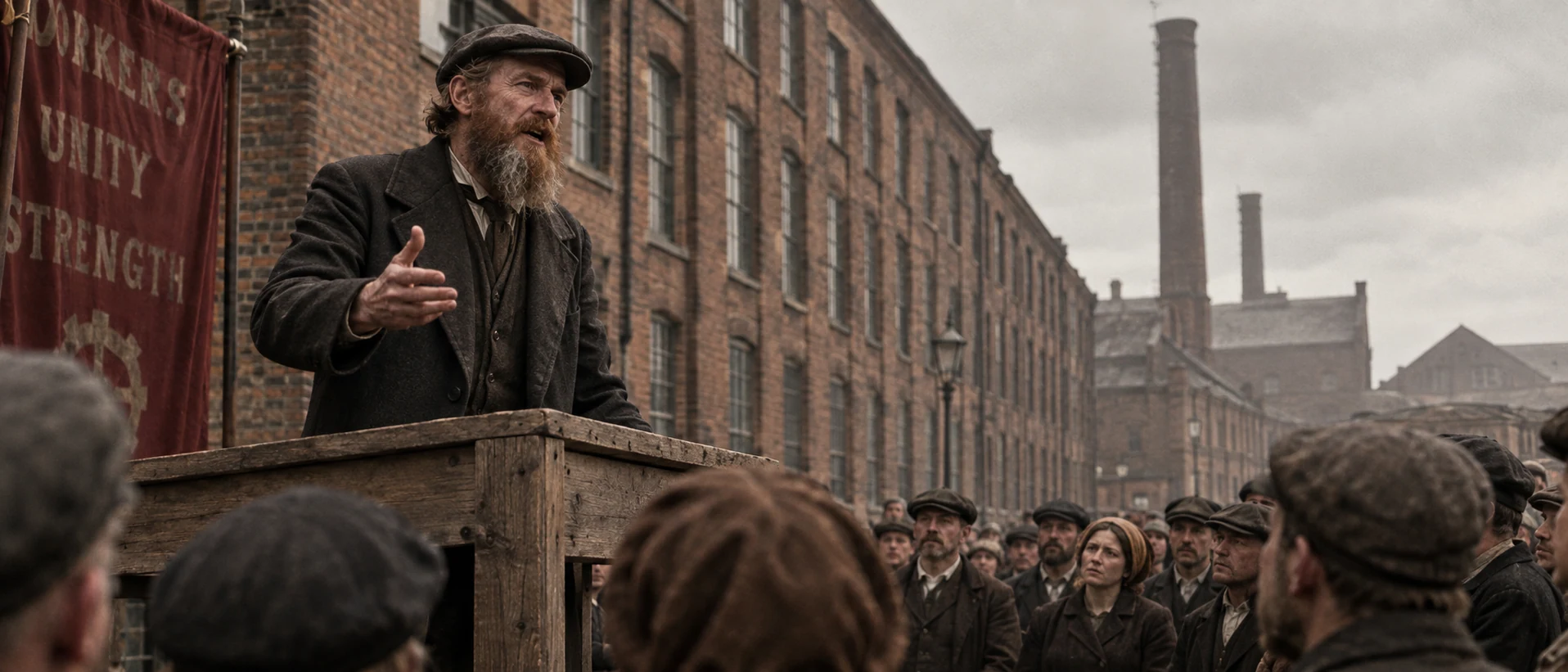
"Recreating a 1912 press photograph" makes the model compose like an iconic archival image — the anchor-frame approach. The 21:9 frame and slight low angle make it a public moment.
Open FlashBoardsCamera: a slow, steady push-in from medium close-up to close-up, moving from the first frame and ending when her face fills the frame. Action: she is already singing mid-phrase, chest rising with each breath. She leans toward the chrome microphone and holds a long note with her eyes closed. As the note ends she opens her eyes and looks toward camera left with a small smile. Haze drifts through the tungsten light.The action starts mid-phrase, so the shot is alive from the first frame. The push-in has a clear start and end, and the prompt names only what the first frame contains.
Open FlashBoards{
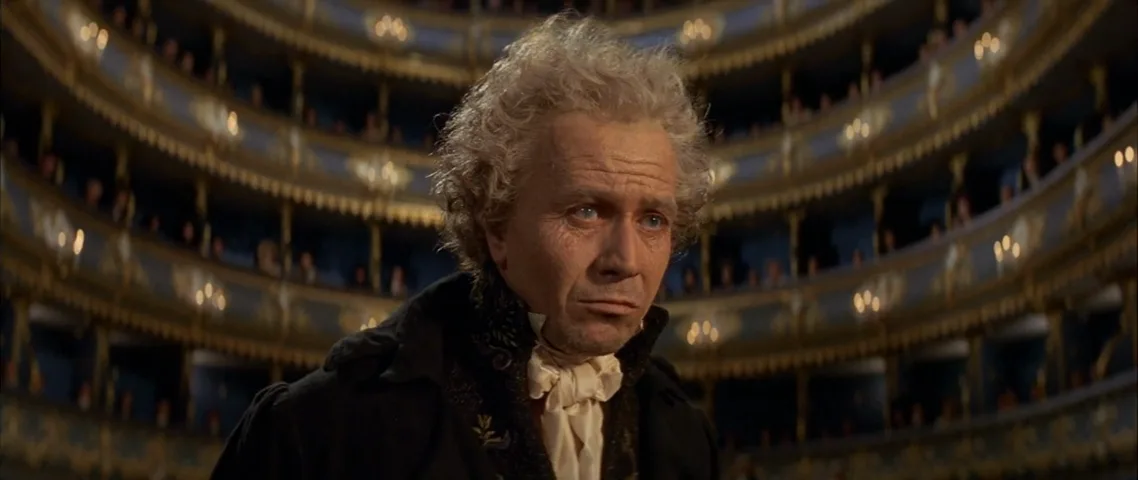
"output": "Full-screen live-action period scene from Immortal Beloved (1994) from its very first frame: one continuous shot, no cuts. Grainy 1990s anamorphic 35mm film stock, the Vienna opera house on the night of a symphony premiere in 1824, candles and oil lamps, warm amber-gold palette with deep brown shadows, curved gilded tiers of boxes packed with a formally dressed audience filling the whole background.",
"characters": {
"S1": {
"name": "Ludwig van Beethoven, played by Gary Oldman",
"look": "man in his fifties, thick wild wavy silver-white hair swept back off a high forehead, clean-shaven, heavy brows, pale weathered skin, black high-collared frock coat with dark embroidered lapels, loose white silk cravat",
"voice": "silence: he never speaks"
},
"S2": {
"name": "the conductor",
"look": "stooped elderly man, bald crown, black tailcoat, seated behind a music stand with a lit candle on it",
"voice": "silence: he never speaks"
}
},
"shots": [
{
"shot": 1,
"camera": "anamorphic 21:9 frame at eye level, long lens, camera almost static with a very slow creep forward; opens as a medium shot with S1 right of centre and S2 at the left edge, ends as a close-up of S1's head and shoulders centred in frame, the gilded tiers behind him soft and out of focus",
"action": [
"BEGINNING: alive from the first frame, S1 stands right of centre, head lowered, walking slowly straight toward the camera; S2 sits at the left edge of frame behind his candlelit music stand, and a second candle flame glows low in the bottom right corner.",
"THEN: as S1 keeps stepping forward, S2 and his music stand slide out of frame on the left and the bottom candle drops out of frame below; S1 now fills the right half, head tilted down toward screen left, eyes lowered, brows knitted, the corners of his mouth pulled down.",
"THEN: S1 stops walking and stands still, both arms hanging at his sides out of frame; he keeps his eyes down, blinks slowly, his lips press together, no nod, no word.",
"THEN: he slowly raises his eyes and then his chin, his gaze lifting to just past the left side of the lens, the frown easing into a stunned, wet-eyed stare.",
"END: his face is centred and square to the camera, eyes open wide and glistening, looking just past the lens, lips slightly parted, holding perfectly still in the warm candlelight while the tiers of the audience stay a soft blur behind him."
],
"dialogue": [],
"voice": "silence: nobody speaks in this shot, no voice at all"
}
],
"sound": {
"ambience": "the muffled rustle and murmur of a packed opera house, heard as if from far away through deaf ears",
"speech": "no words in this video; the only human sounds are breaths and movement",
"never_spoken": "no narration and no voice-over: the descriptions, performance notes and step words of this prompt are never spoken aloud",
"music": "a film score under the scene, always below the voices: slow hushed strings and low brass swelling into one solemn, overwhelming chord",
"subtitles": "none"
}
}Remakes the premiere shot from Immortal Beloved (1994), dir. Bernard Rose, DP Peter Suschitzky, keeping the conductor and candles at the edges, Beethoven's slow walk toward camera, his lowered then lifted gaze and the close-up against the tiers.
The prompt is structured JSON: Beethoven, played by Gary Oldman, is named with the film and year, the conductor and candles sit at the frame edges, and one slow creep from medium shot to close-up takes a public premiere down to a private face. Nobody speaks, so the prompt spells out the silence and leaves only a low line of score.
Open FlashBoardsCommon mistakes
- Modern faces in period clothes. Ask for period hair, skin texture and film grain.
- Accidental likeness. "Like a famous singer" pulls toward a real face; describe invented features.
- Costume-party sets. Vague "1950s" gives pastiche; name concrete props and the era's light source.
- Frozen video. A prompt that opens on a pause yields a slow zoom on a still; start mid-motion.
Keep the reference frames, prompts and every generated take side by side — images and video in one canvas.
FAQ
4 questionsWhat is a biopic?
A biopic, short for biographical picture, is a scripted movie in which actors portray a real person. It may cover a whole life or a single chapter, shaping documented facts into a dramatic story by compressing time, combining characters and inventing private scenes. It is fiction built on history, not a factual record.
What are some of the best biopic movies?
Frequently cited examples include Lawrence of Arabia (1962), Amadeus (1984), Malcolm X (1992), Ray (2004), Lincoln (2012) and Oppenheimer (2023). For contrasting approaches, compare the framed confession of I, Tonya (2017) with the six-actor portrait of I'm Not There (2007).
How accurate are biopics?
Rarely fully accurate, by design. A two-hour film compresses years into scenes, merges minor figures into composite characters and writes dialogue nobody recorded. The better question is whether its inventions stay faithful to the person's choices and the stakes of the time. For the record itself, read a biography.
Is a biopic the same as a movie based on a true story?
Not exactly. A biopic centers on one real person's life or career. A film based on a true story may center on an event — a rescue, a trial, a heist — with several real people and no single biographical focus. Every biopic is based on a true story, but not every true-story film is a biopic.
Related terms
7- Documentary FilmmakingFilmmaking Process & Crew
Documentary filmmaking records real people and events rather than staged fiction, built from observation, interviews, archival footage and narration, and shaped into a story in the edit.
- DramaGenres
Drama is the broad genre of serious stories about realistic characters in emotional or moral conflict, where the stakes are internal and relationships rather than spectacle.
- Character StudyGenres
A character study is a film driven by the inner life of one person rather than by plot: events matter only as far as they reveal who the character is and how they change or fail to change.
- Method ActingActing & Casting
Method acting, developed by Lee Strasberg from Stanislavski, has actors draw on their own memories and sometimes stay in character off camera to produce emotionally real performances.
- NarrativeStorytelling
A narrative is a chain of events connected by cause and effect and told from a chosen point of view; in film, it's the story as organized by plot, image and sound.
- FlashbackStorytelling
A flashback interrupts the present story to show an earlier event, usually signalled by a dissolve, a change of color or grade, or a sound cue, to reveal backstory or motive.
- Film GenresGenres
A film genre is a category of films that share recognizable conventions of story, setting, character and style — western, horror, musical, noir — letting audiences know what to expect and filmmakers play with it.
Further reading
Dennis Bingham, Whose Lives Are They Anyway? The Biopic as Contemporary Film Genre (Rutgers University Press, 2010). George F. Custen, Bio/Pics: How Hollywood Constructed Public History (Rutgers University Press, 1992).