 FlashBoards Learn
Genres · Film language
Character Study
Also called: character-driven film, character piece
A character study is a film driven by the inner life of one person rather than by plot. Events matter only for what they reveal about who that person is and whether they change. The viewer leaves knowing a human being, not solving a story: think Taxi Driver, Black Swan or The Master.
- What it does
- Puts one person's psychology at the center and bends plot, framing and pacing around it.
- Use it when
- The most interesting thing in your story is a person, not what happens to them.
- Watch out
- Without a pressure on the character, the film drifts into a mood piece with nothing at stake.
- Try this prompt
Close-up of a tired night-shift worker alone at 4 a.m., looking off-frame, 85mm, one fluorescent tube, deep shadow
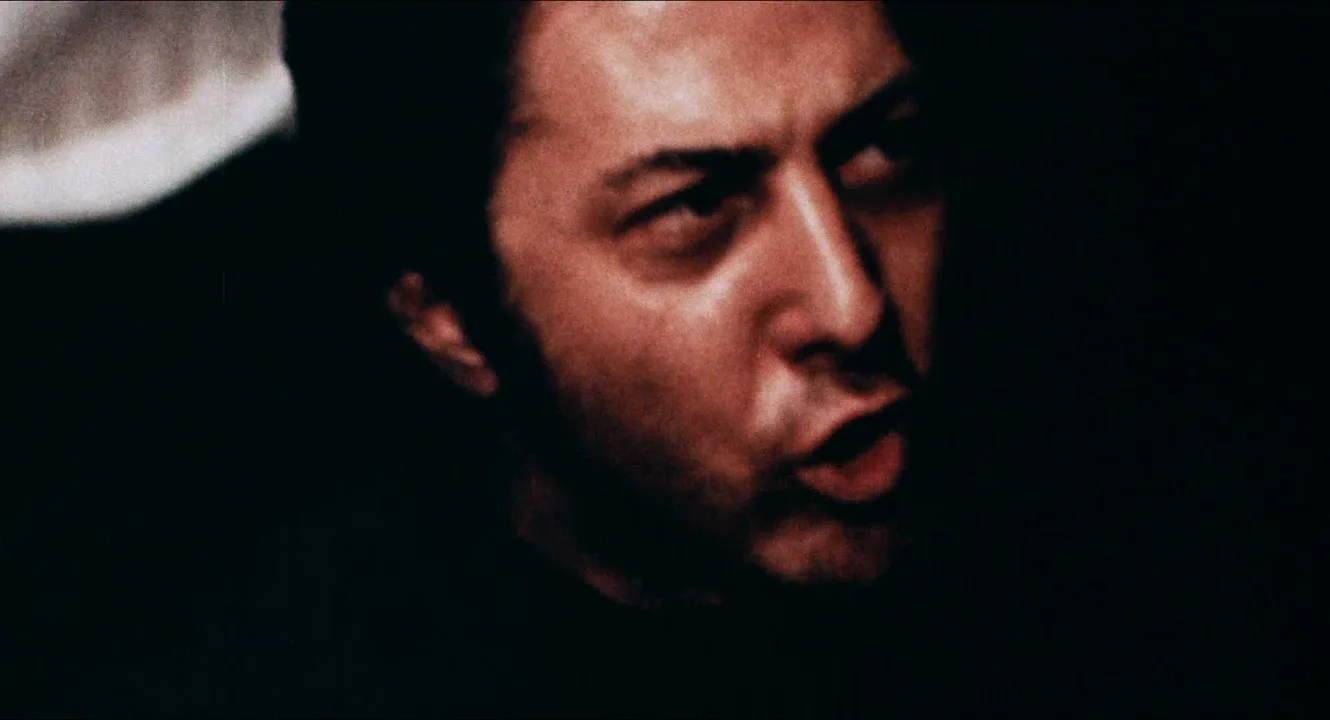
What is a character study film?
A character study is a film whose real subject is a person. It sits inside drama and can borrow from any of the film genres, but the test is simple: remove the plot, keep the character, and the film is still about something.
Plot still exists. Travis Bickle drives a cab, Nina rehearses Swan Lake, Llewyn Davis looks for a couch to sleep on. But events are chosen to expose the character from new sides, not to build toward a twist. Critics also say character piece.
The character need not be likeable, and need not grow: many studies center on an anti-hero, and a character arc is optional. Inside Llewyn Davis (2013) ends almost where it began, and that loop is the point.
Why do filmmakers make character studies?
Because a face held long enough becomes the story. A plot-driven film asks "what happens next?"; a character study asks "who is this?" The audience starts reading small behavior: how someone eats, avoids a look, rehearses a sentence in a mirror.
Taxi Driver (1976) keeps us in Travis's cab and apartment until his loneliness curdles into something dangerous. Citizen Kane (1941) turns the idea inside out: a study of one man assembled from the memories of others, none of which adds up to him.
For directors it is a test of characterization by image: what the camera notices tells us who the protagonist is before anyone says it.
How to shoot a character study
One rule: stay with the person.
- Coverage. Build on singles and the close-up. Wides become rarer and louder; save them for moments of isolation.
- Lens. 50–85mm at conversational distance keeps the face natural and the background soft. A 24–35mm lens close to the face pulls us into their space.
- Height. Eye level or slightly below; break it only when the character's status shifts.
- Point of view. Black Swan (2010) often follows Nina from just behind her shoulder, so we never get ahead of her.
- Movement. A handheld camera that breathes with the actor reads as intimacy; a locked-off frame reads as observation.
- Light. Motivated and often low-key: one practical, half the face in shadow.
- Time. Let takes run past the line. The beat after someone stops talking is where subtext shows up.
Character study vs. plot-driven film
In a plot-driven film the character serves the story: their traits exist to make the heist or the investigation work. In a character study the relationship flips: the story is a series of pressures chosen to crack one person open.
A test in the edit: in a character study, scenes that only show the person alone (washing up, driving, practicing) are often the ones you cannot cut.
Character study movies worth studying
- Citizen Kane (1941), Orson Welles
- Midnight Cowboy (1969), John Schlesinger
- Taxi Driver (1976), Martin Scorsese
- The Killing of a Chinese Bookie (1976), John Cassavetes
- Black Swan (2010), Darren Aronofsky
- The Master (2012), Paul Thomas Anderson
- Inside Llewyn Davis (2013), Joel and Ethan Coen
- Lady Bird (2017), Greta Gerwig
Character Study examples in film
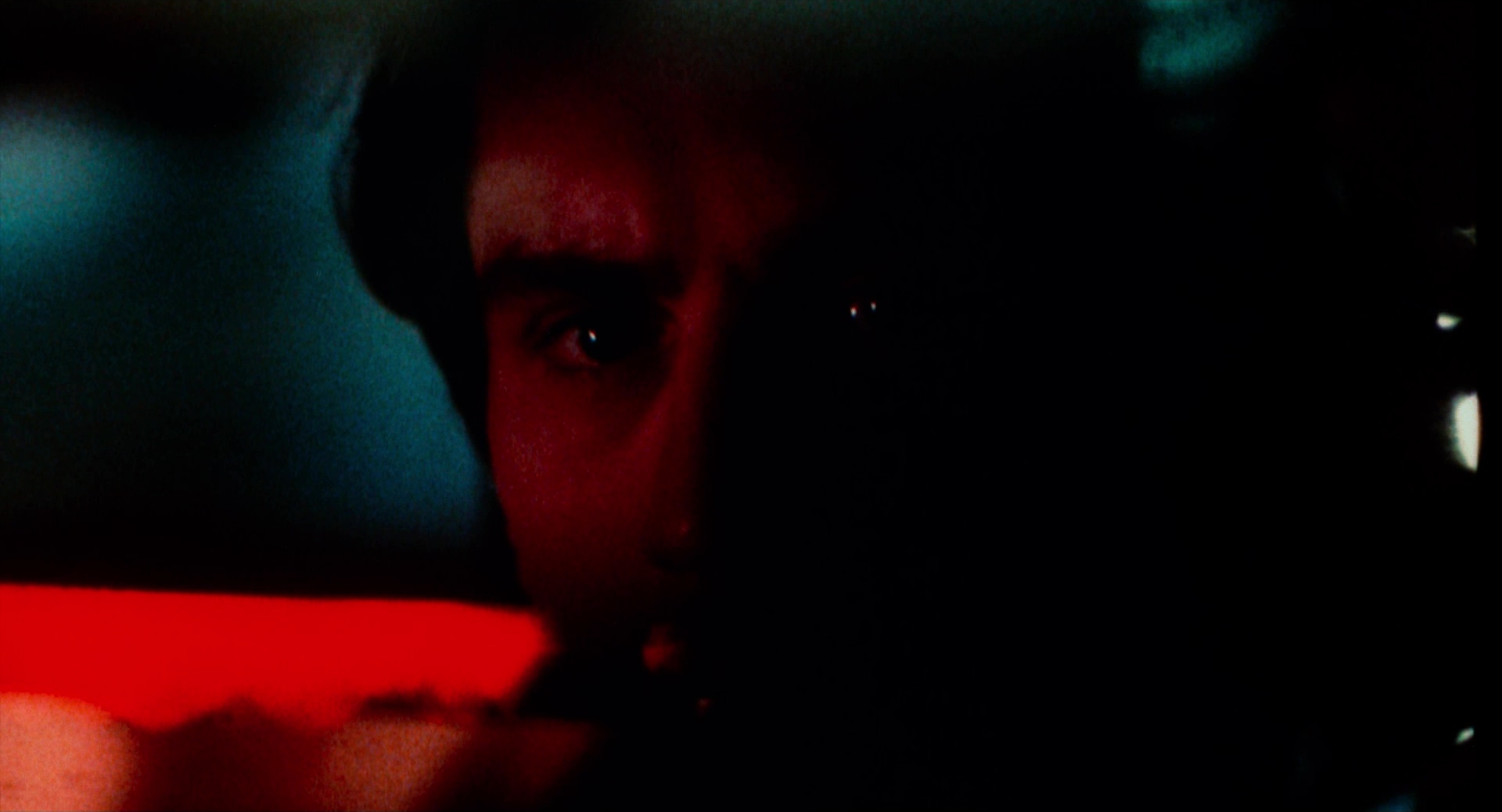
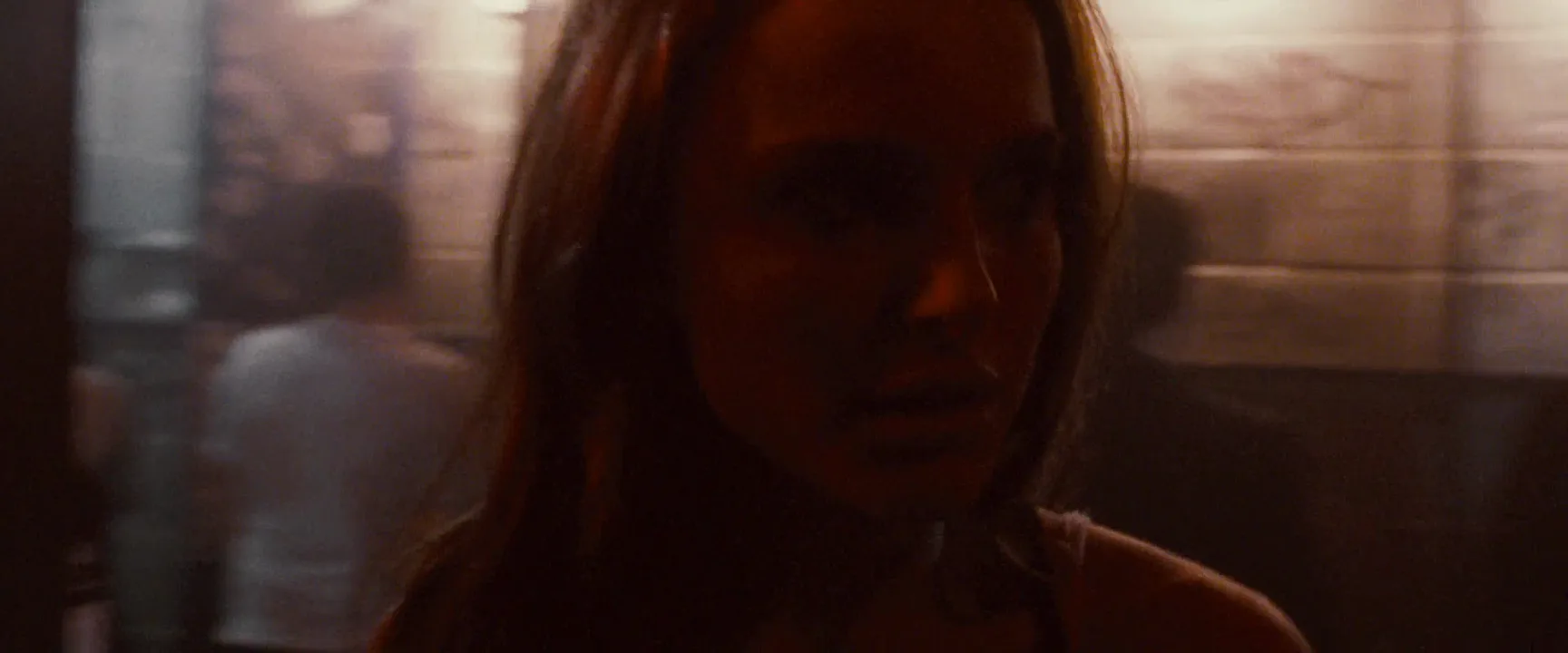
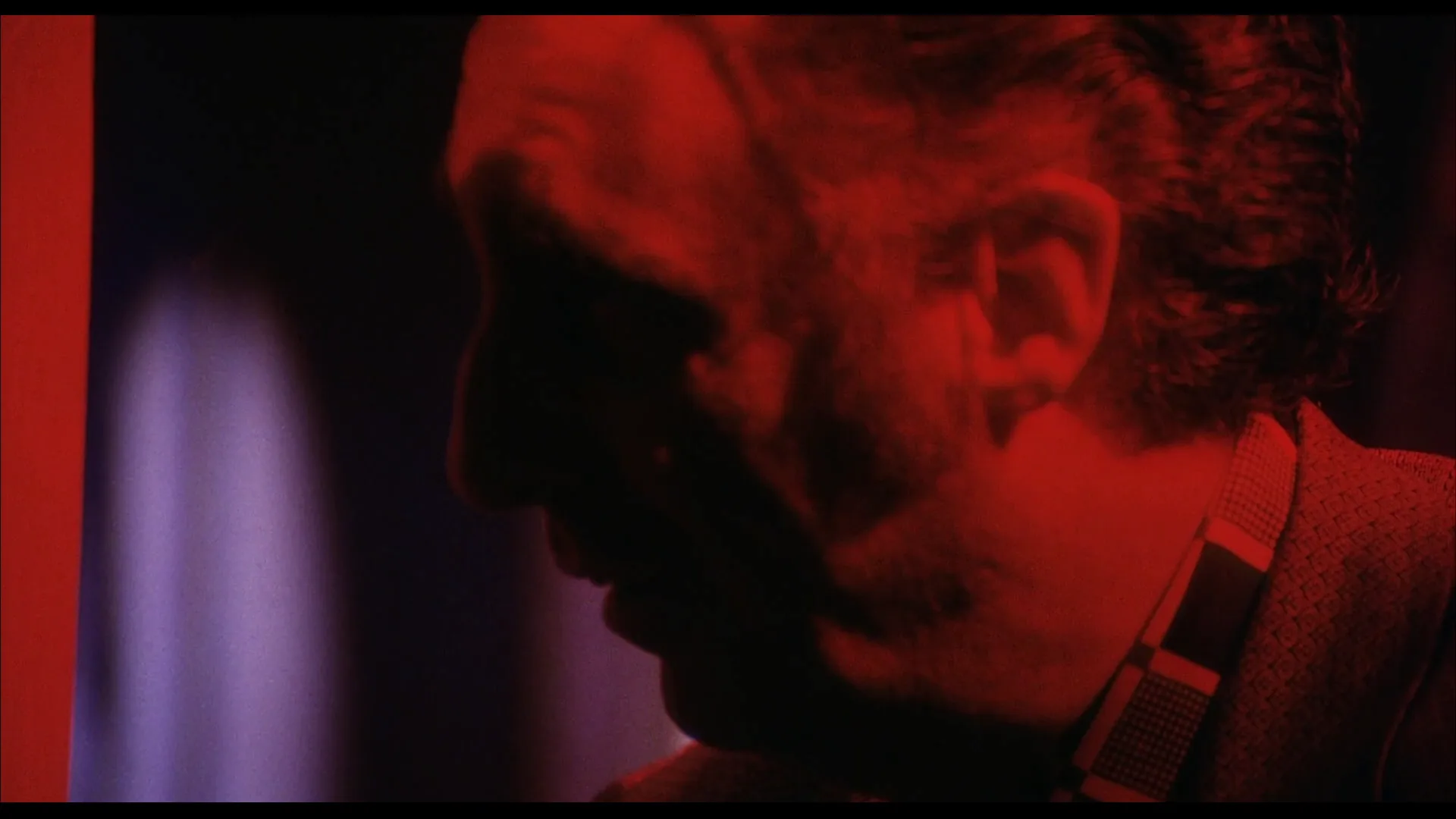
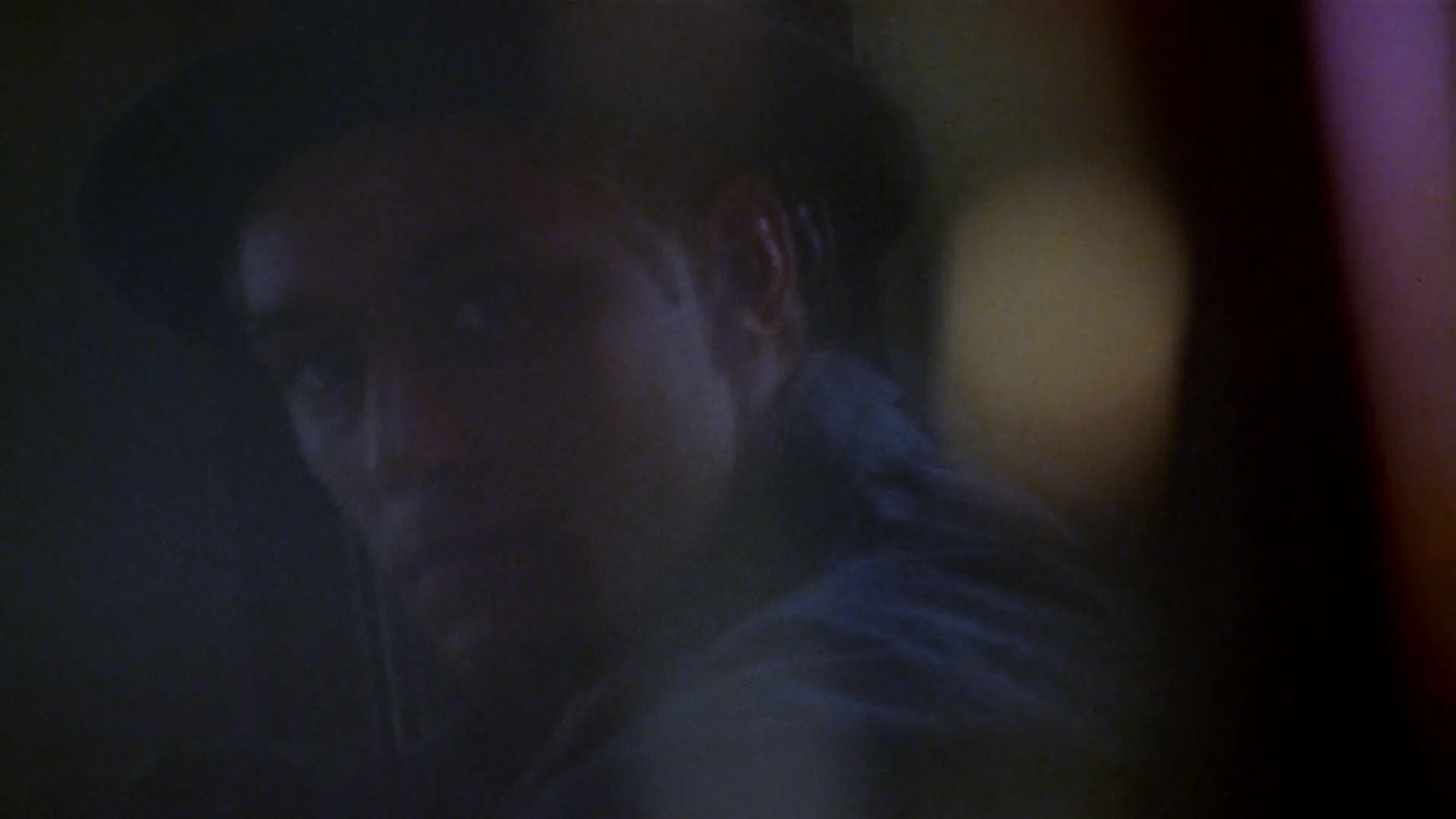
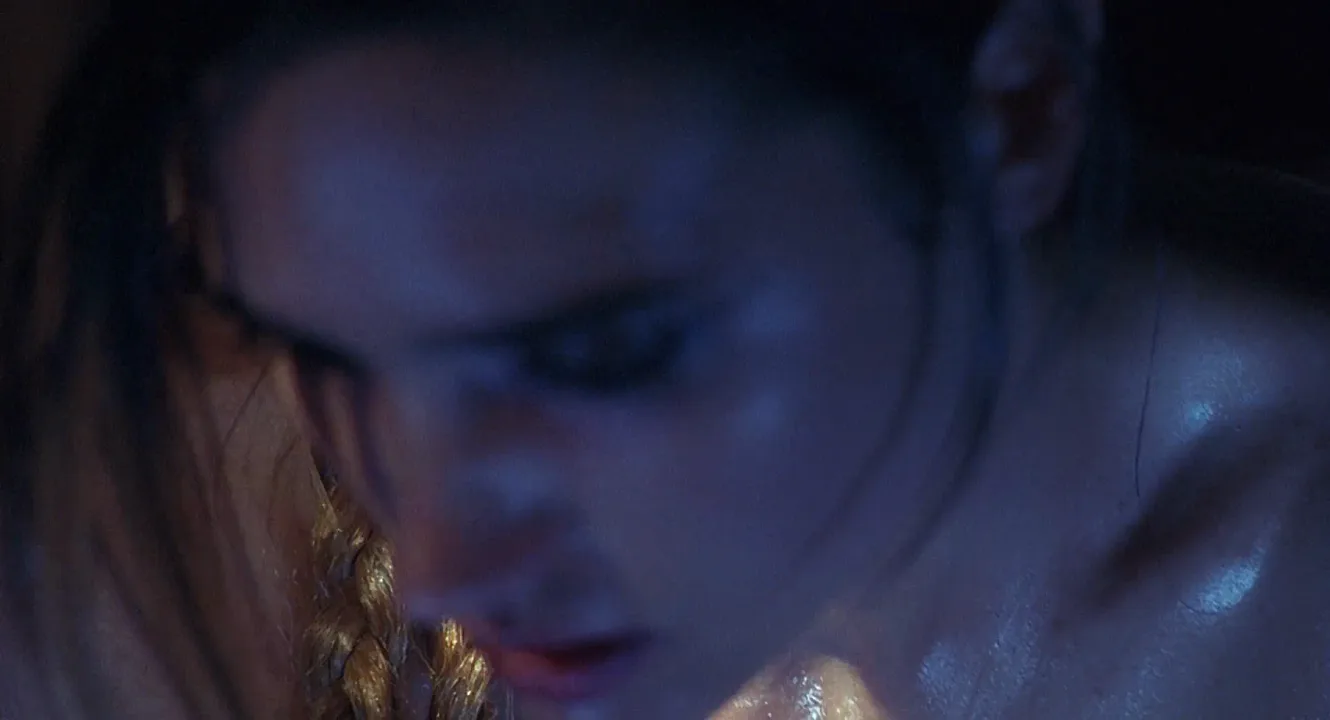
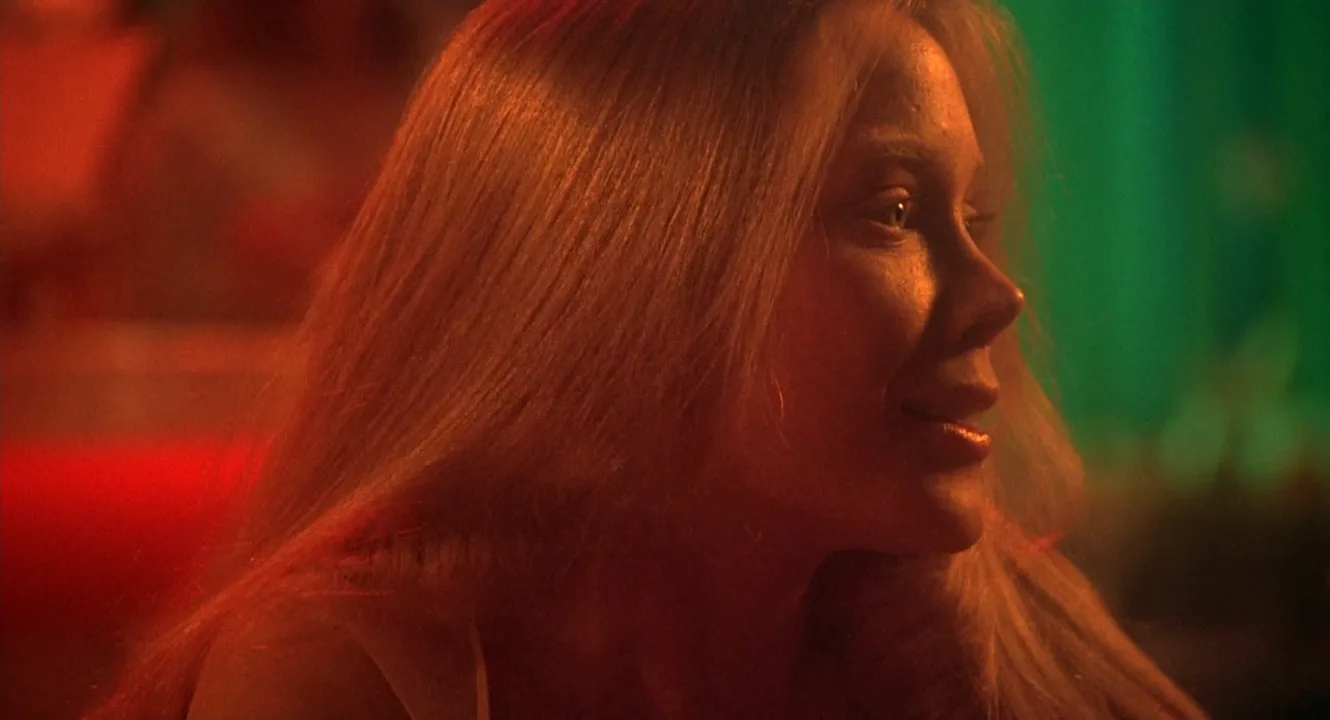
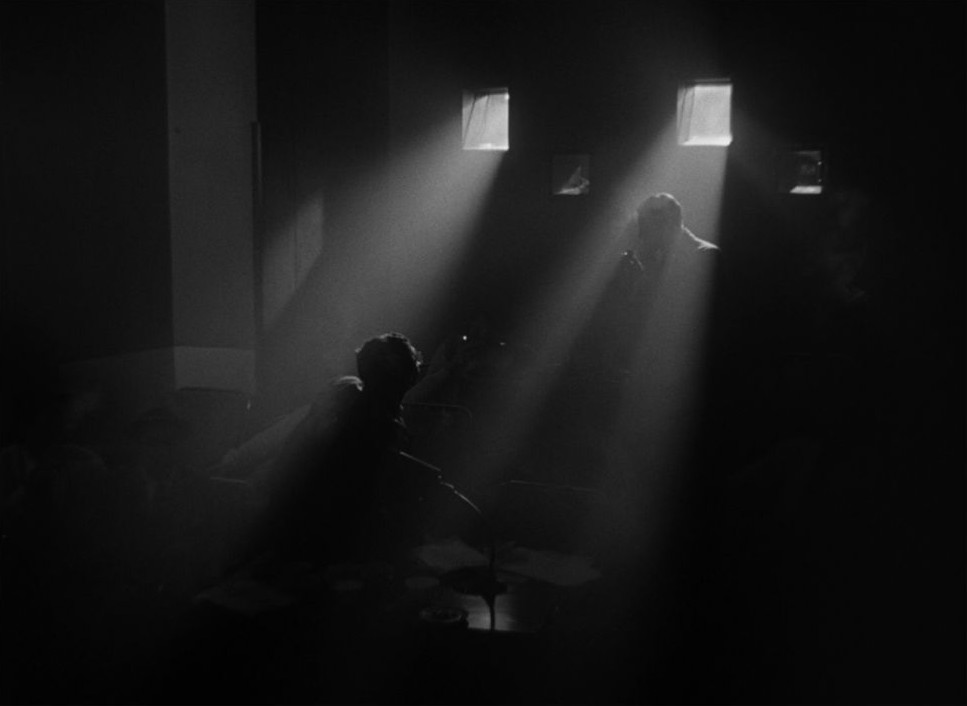
8 framesCharacter studies live in close-ups: the face half-lit, the gaze off-frame, someone thinking.
How to create a character study with AI
4 promptsImage models default to posed, centered portraits looking at the lens. A character study needs the opposite: a person caught mid-thought, specific wear and tear, one motivated light. Keep references, character notes and every take on one FlashBoards board to see which face tells you who this person is. The fourth prompt re-shoots a real film shot from a text description alone, and the original plays next to the result so you can compare.
Eye-level medium close-up of a woman in her early sixties alone at a formica table in an empty bus depot cafeteria at 4 a.m. Cropped silver hair, deep laugh lines, a small gap between her front teeth, navy work jacket, both hands around a paper cup of coffee. She looks off-frame left, not at the camera, lost in thought. 85mm lens, shallow depth of field, framed on the right third with dark space on the left. One cold fluorescent tube overhead, half her face in shadow. Muted colors, 35mm film still.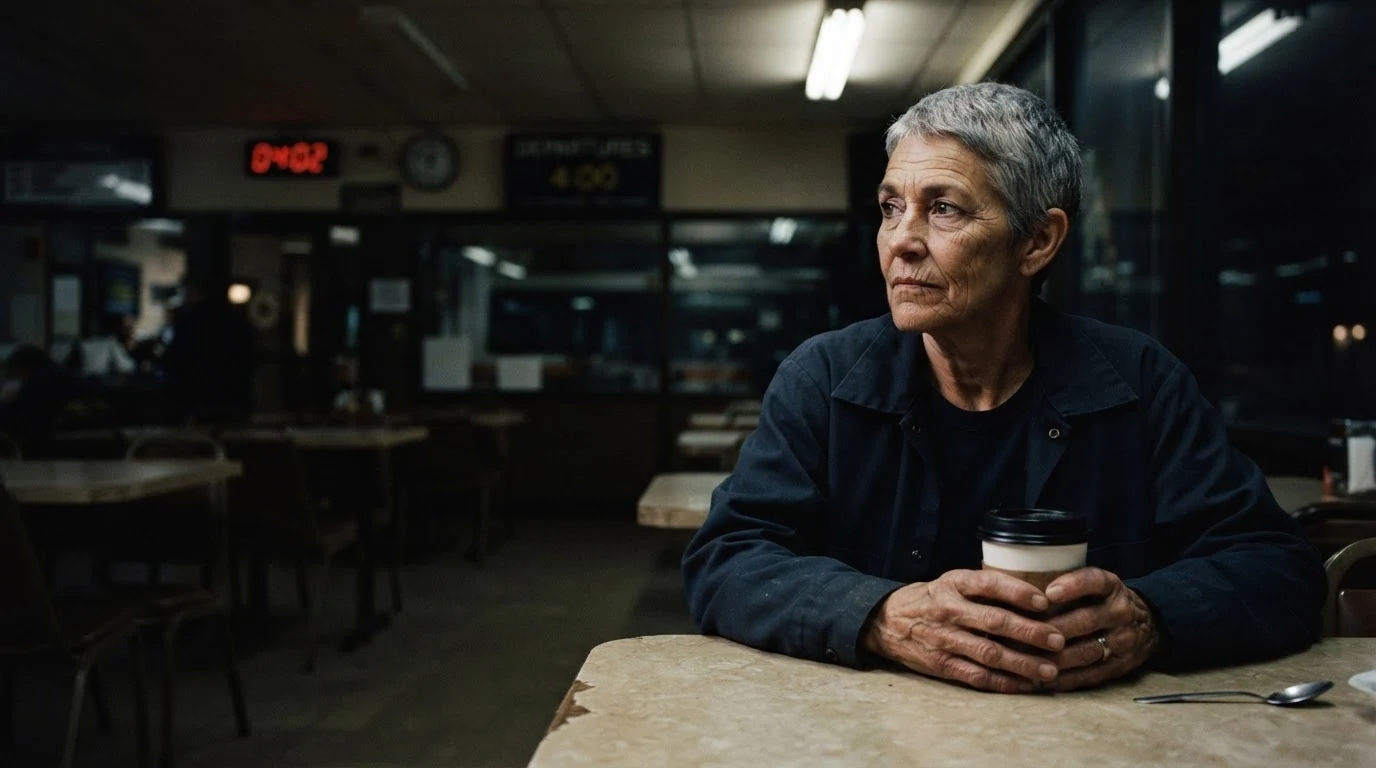
Concrete wear (laugh lines, work jacket, the cup) gives the model a person, not a model. "Looks off-frame left, not at the camera" breaks the portrait pose, and the empty left side gives her thought somewhere to go.
Open FlashBoardsWide eye-level shot of an empty hotel ballroom after a wedding, chairs stacked, confetti on the carpet, one chandelier on. A man in his mid-twenties with a shaved head, a thin mustache and an oversized brown suit stands alone on the right third, tie loosened, holding an untouched slice of cake on a paper plate, looking at his faint reflection in a dark window. 35mm lens, deep focus, warm chandelier light against cool window light. 35mm film still.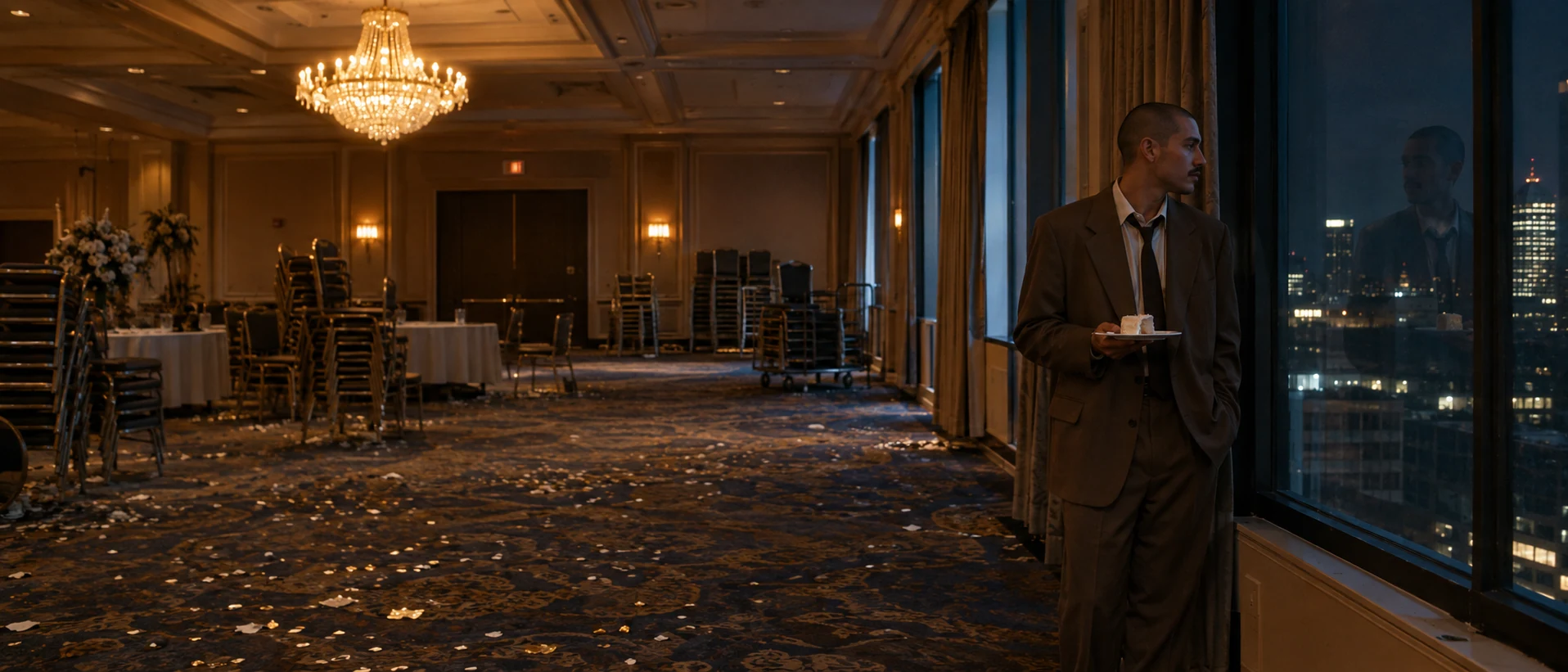
This take studies the character through space. At 21:9 the empty room becomes part of his portrait; the untouched cake and the reflection reveal a state of mind without a line.
Open FlashBoardsCamera: very slow, steady push-in from the medium close-up to a tight close-up of her face. Action: from the first frame steam rises from the cup and her thumb rubs slowly along its rim. She almost smiles at a memory. The smile fades, she lowers her eyes to the cup and lets out a long, quiet breath.The push-in closes in as she turns inward. Steam and the thumb make the shot alive from the first frame; the fading smile is one small inner event, not a performance.
Open FlashBoards{
"output": "Full-screen live-action single continuous shot from its very first frame, one unbroken take with no cuts, in the style of the prom scene from Carrie (1976). Mid-1970s 35mm film, soft diffusion, gentle grain, a crowded high-school prom at night. Saturated red stage light falls on her from the left, a deep green curtain glows out of focus on the right, and during the shot the red light slowly turns violet-blue.",
"characters": {
"S1": {
"name": "Carrie White, played by Sissy Spacek",
"look": "slight young woman of seventeen, long straight strawberry-blonde hair falling down her back and over her shoulder, pale freckled skin, a sleeveless pale pink satin prom dress with thin straps",
"voice": "soft, breathy, almost a whisper"
},
"S2": {
"name": "Tommy Ross, played by William Katt",
"look": "never seen: he sits just off frame right, facing her",
"voice": "warm, easy, a relaxed young man's voice from off screen right"
}
},
"shots": [
{
"shot": 1,
"camera": "static, eye level, long lens, tight close-up of S1 in right-facing profile, her face in the right half of the frame, her hair filling the left half, shallow focus; almost no movement, only a faint slow drift, the framing stays the same from start to end",
"action": [
"BEGINNING: alive from the first frame, S1 sits with her chin resting on one hand, head tipped slightly forward, laughing with a wide open smile that shows her teeth, eyes crinkled, looking off frame right at S2; a blurred dancer in a pale shirt with a pendant slides past the lens along the left edge of the frame and out.",
"THEN: while S2 speaks from off frame right she keeps listening, her head lifting slightly back; the big laugh softens into a gentle smile.",
"THEN: the smile slowly fades; her lips stay a little parted and her eyes stay fixed up and off frame right, wide and searching, no nod, the hand under her chin does not move.",
"THEN: the red light on her hair and cheek begins to turn violet.",
"END: in violet-blue light she softly says her line to S2 with barely moving lips, still in profile, still gazing off frame right in quiet wonder, one slow blink."
],
"dialogue": [
{
"speaker": "S2",
"on_screen": false,
"when": "early in the shot, while she is still laughing",
"delivery": "warm, casual, shrugging it off",
"line": "<d>[English] Anyway, it's the last year. Why not?</d>"
},
{
"speaker": "S1",
"on_screen": true,
"when": "near the end, after the light has turned violet",
"delivery": "hushed, amazed, almost to herself",
"line": "<d>[English] It's so beautiful!</d>"
}
]
}
],
"sound": {
"ambience": "a large gym full of people: murmuring crowd, shuffling feet and a dance band heard from across the hall",
"speech": "exactly these spoken phrases, each said once, in this order",
"never_spoken": "no narration and no voice-over: the descriptions, performance notes and step words of this prompt are never spoken aloud",
"music": "a film score under the scene, always below the voices: a dreamy, romantic slow ballad with soft strings and a gentle piano",
"subtitles": "none"
}
}Remakes the held profile close-up of Carrie at the prom in Carrie (1976), keeping the locked-off long lens, the chin on the hand, Tommy's off-screen line, her fading laugh, her own line and the red light turning violet.
The camera is locked off and never cuts away, so the whole shot rests on one face. Tommy's line stays off screen, and her answer, the fading laugh and the red light turning violet carry her inner change.
Open FlashBoardsCommon mistakes
- Glamour portrait. Models smooth skin and center a face looking at the lens. Write "looks off-frame" and name wear: tired eyes, a worn jacket.
- Generic people. "A sad man" gives a stock face. Give age, hair, one distinctive feature and an object in hand.
- Flat light. Name one motivated source and "half her face in shadow".
- Overacting in video. Ask for small physical actions and one inner beat per shot.
Keep the reference frames, prompts and every generated take side by side — images and video in one canvas.
FAQ
4 questionsWhat is a character study in film?
A character study is a film centered on one person's psychology rather than an elaborate plot. Events are chosen to reveal who the character is, their habits, contradictions and pressures, and the film succeeds when that person feels fully real. Classic examples include Taxi Driver, Citizen Kane and Black Swan.
Is a character study a genre?
Not strictly. It is a mode that usually lives inside drama but can cross into horror, comedy or crime: Black Swan is a character study shaped like psychological horror, Lady Bird one shaped like a coming-of-age comedy. The label tells you the weight sits on a person, not on story mechanics.
What is the difference between a character study and a character-driven film?
The terms overlap. A character-driven film is any story whose plot grows from its characters' choices, and it can have several leads. A character study is narrower: built around one person or a very small group, where exploring that person is the film's purpose rather than a means to a plot.
Does the main character have to change in a character study?
No. Many character studies show a person who cannot or will not change, and that refusal is the subject: Inside Llewyn Davis ends nearly where it begins. What matters is that the film deepens our understanding, whether the character grows, falls apart or stays the same.
Related terms
6- Character ArcStorytelling
A character arc is the inner change a character goes through over the story — from a flaw or false belief to a new understanding (or a fall) — driven by the choices the plot forces on them.
- CharacterizationStorytelling
Characterization is how a film reveals who a character is — through actions, choices, speech, appearance, how others react to them and what the camera lets us notice.
- ProtagonistStorytelling
The protagonist is the main character whose goal drives the story and whose choices the audience follows; they don't have to be good, just central.
- Anti-HeroStorytelling
An anti-hero is a protagonist who lacks conventional heroic qualities — selfish, cynical or morally compromised — yet still carries the story and the audience's attention.
- SubtextStorytelling
Subtext is what characters mean but don't say — the real feelings or intentions beneath the dialogue, conveyed by performance, framing and context.
- DramaGenres
Drama is the broad genre of serious stories about realistic characters in emotional or moral conflict, where the stakes are internal and relationships rather than spectacle.
Further reading
Robert McKee, Story (1997), on character and characterization. James Naremore, Acting in the Cinema (1988).