 FlashBoards Learn
Genres · Film language
Satire
Also called: satirical film, political satire
A satire film uses exaggeration, irony and ridicule to attack something real: a government, an industry, a class, a habit of thought. The laugh is the delivery system for a critique, so the audience leaves amused and slightly implicated, as with Dr. Strangelove or Network.
- What it does
- Turns a real institution or behavior into a joke that exposes how absurd or dangerous it already is.
- Use it when
- You have a target in the real world and an argument about it, and direct attack would sound like a lecture.
- Watch out
- If the actors wink or the camera mugs, the critique dissolves into sketch comedy; play it straight.
- Try this prompt
deadpan symmetrical wide shot, fictional minister cutting a ribbon on a bridge that ends mid-river, flat noon light, 24mm
What is a satire film?
Satire is less a genre with fixed settings than a mode that can sit on top of almost any of the film genres. Any story becomes satire when its exaggerations point at a real target the audience recognizes. It usually lives under comedy, but the aim differs: comedy wants you to laugh, satire wants you to laugh and then notice what you were laughing at.
Three tools do the work. Exaggeration stretches a real tendency until its logic shows, as when the generals of Dr. Strangelove (1964) treat nuclear war as a procedural problem. Irony opens a gap between what characters say and what the film shows. Ridicule strips authority of dignity: Chaplin's dictator dancing with a balloon globe in The Great Dictator (1940) is a tyrant reduced to a child with a toy.
On screen satire is not a literary device but a mode built from casting, design, framing and editing.
Why do filmmakers use satire?
Satire says something harsh about power without sounding like a sermon. Network (1976), written by Paddy Chayefsky and directed by Sidney Lumet, pushed television's appetite for outrage so far that it read as fantasy at release, and today plays closer to reportage.
It also reaches subjects too grim for straight drama. Kubrick began Dr. Strangelove as a serious thriller and leaned into the absurdity it kept producing. Spike Lee's Chi-Raq (2015) moves the Greek comedy Lysistrata to Chicago to talk about gun violence. Paul Verhoeven's Starship Troopers (1997) hides its critique of militarism inside fake recruitment reels that some viewers took at face value.
Types of satire film
- Political: Dr. Strangelove, Wag the Dog (1997), The Death of Stalin (2017).
- Media: Network, Being There (1979), Don't Look Up (2021).
- Social and class: Triangle of Sadness (2022).
- Dystopian: A Clockwork Orange (1971), Brazil (1985), Idiocracy (2006).
Gentle, Horatian satire teases folly and forgives it. Angry, Juvenalian satire slides into black comedy. Satire told as mockumentary borrows documentary's credibility and turns it on its subject.
How to shoot satire
Play it straight. Actors commit to their characters' logic with full sincerity, and the camera treats absurd events as normal. A deadpan performance in a calm frame is funnier and more damning than mugging.
Borrow the target's visual language. A news broadcast lit like the news, a propaganda reel with heroic low angles. The joke works because the form is accurate and the content is not.
Formal, locked-off frames. Wides on a tripod, 24–35mm, camera at eye level, symmetry and stiff arrangements of people. Roy Andersson and Ruben Östlund hold long static wides so the audience notices every absurd detail.
Flat, institutional light. Overhead fluorescents, noon sun, even fill. Save beauty light for what you mock as advertising.
Caricature in design, not in the lens. Exaggerate one element per character (an enormous desk, a medal ribbon too long) and keep the rest believable. Heavy lens distortion reads as a cartoon.
Satire vs. parody
Parody mocks a specific work, style or genre: Airplane! (1980) targets disaster movies, not aviation policy. Satire targets the real world.
They often combine: Starship Troopers parodies wartime newsreels to satirize militarism. A quick test: if the joke works for someone who has never seen the source films, it is satire; if it depends on knowing the original scene, it is parody.
Satire examples in film
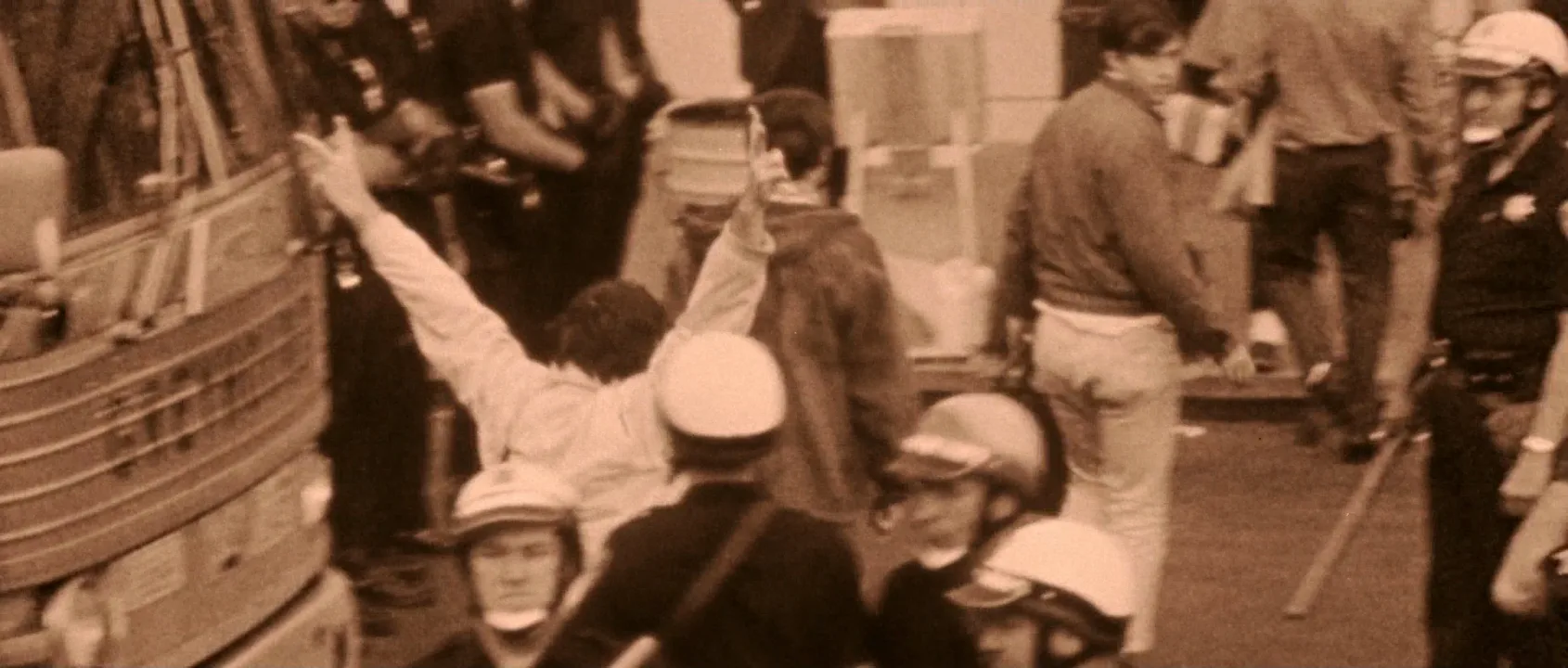
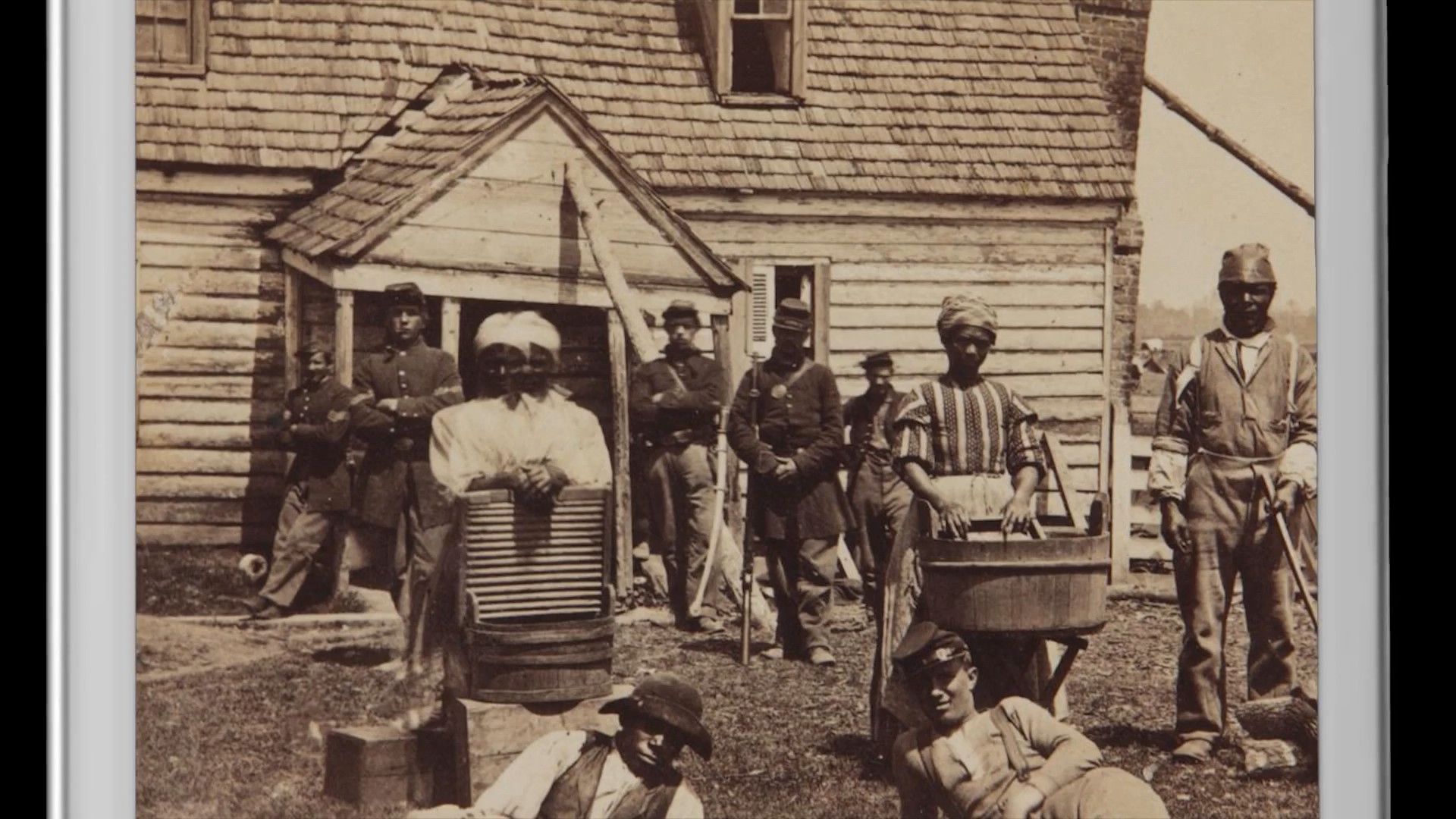
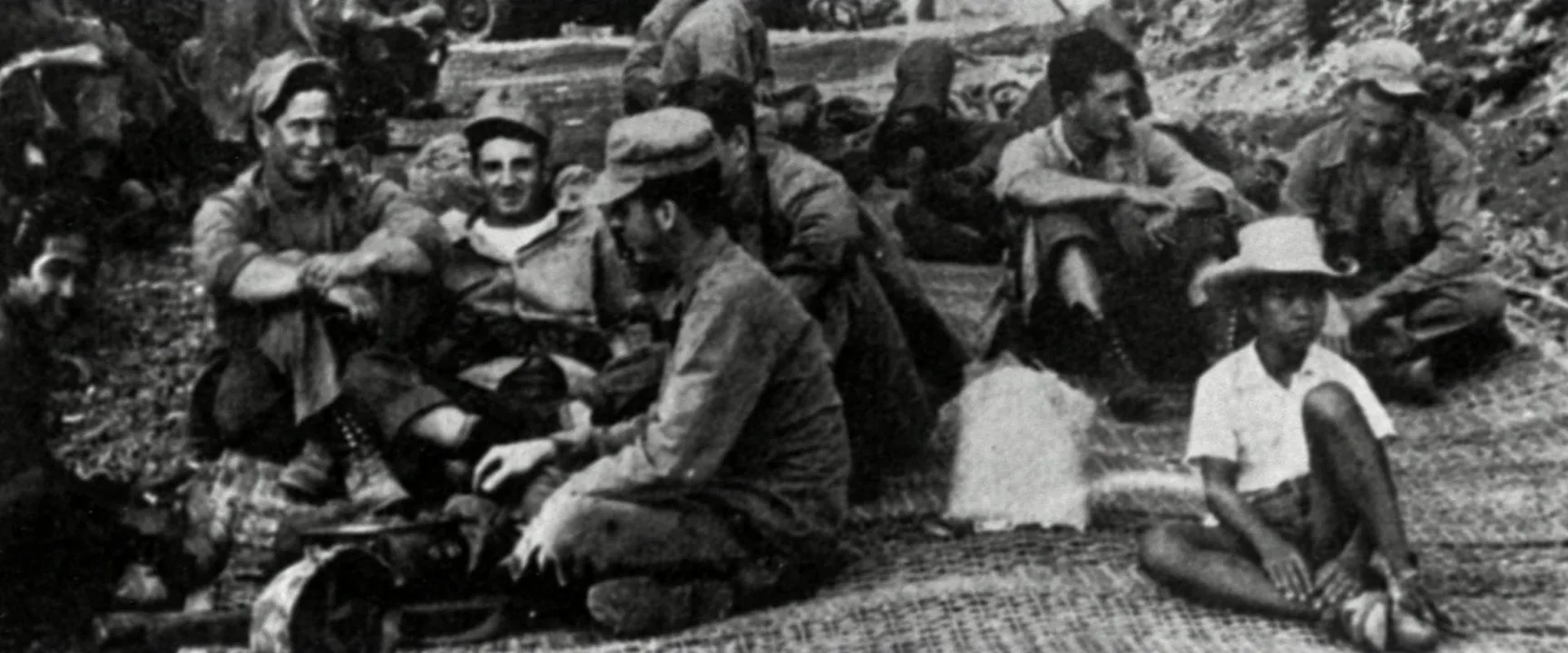
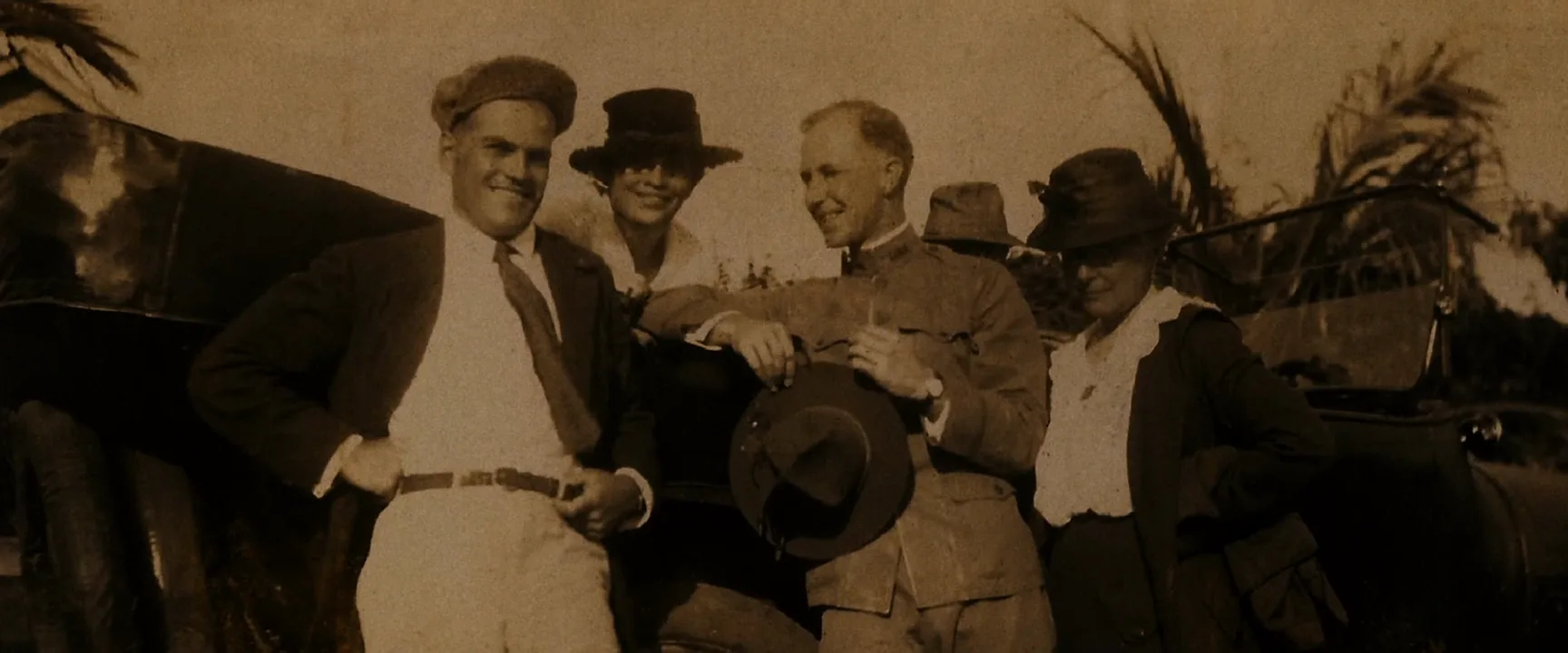
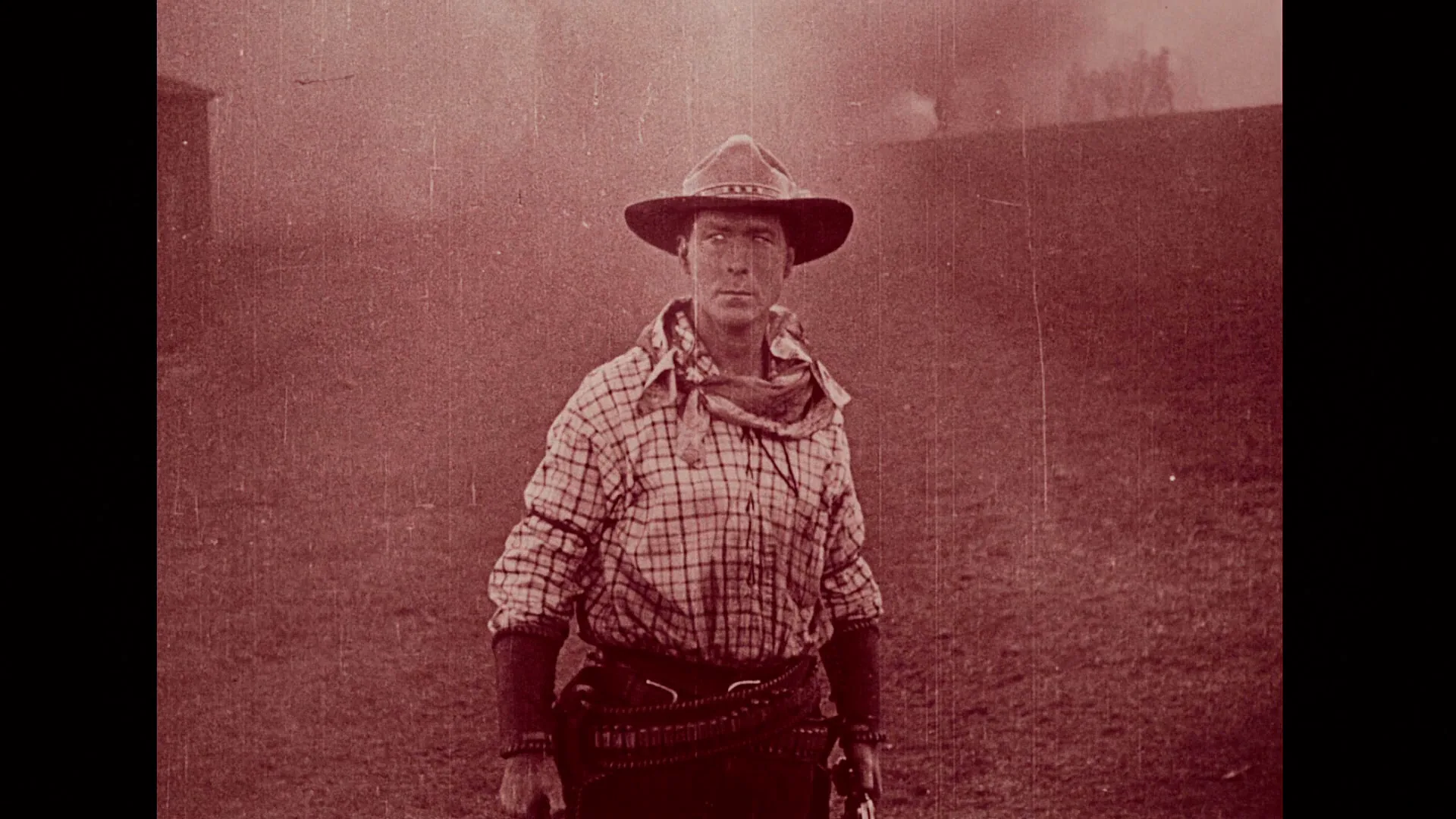
6 framesSatire's most reliable visual move is borrowing a serious register (the archive photo, the newsreel, the formal tableau) and bending it. Some frames are satires; others show the straight look satire copies.
How to create a satire with AI
4 promptsImage models default to glossy and heroic, the opposite of satire. Ask for formality and flatness: a symmetrical wide, eye-level camera, even light, sincere faces, one absurd detail. Keep references and takes on one FlashBoards board to compare which keeps the joke dry. The fourth prompt re-shoots a real film shot from a text description alone, and the original plays next to the result so you can compare.
Deadpan symmetrical wide shot, 24mm lens, camera at eye level. A fictional government minister, a tall bald man in his sixties with a grey handlebar mustache and a navy suit with an oversized gold medal ribbon, cuts a red ribbon with giant ceremonial scissors at the start of a new concrete bridge that ends abruptly halfway across a wide brown river. Six officials in identical grey suits stand in a line behind him, applauding politely with serious faces. Small brass band on the left, a row of plain solid orange flags with no emblems on the right. Flat overcast noon light, muted colors, composed like an official press photograph.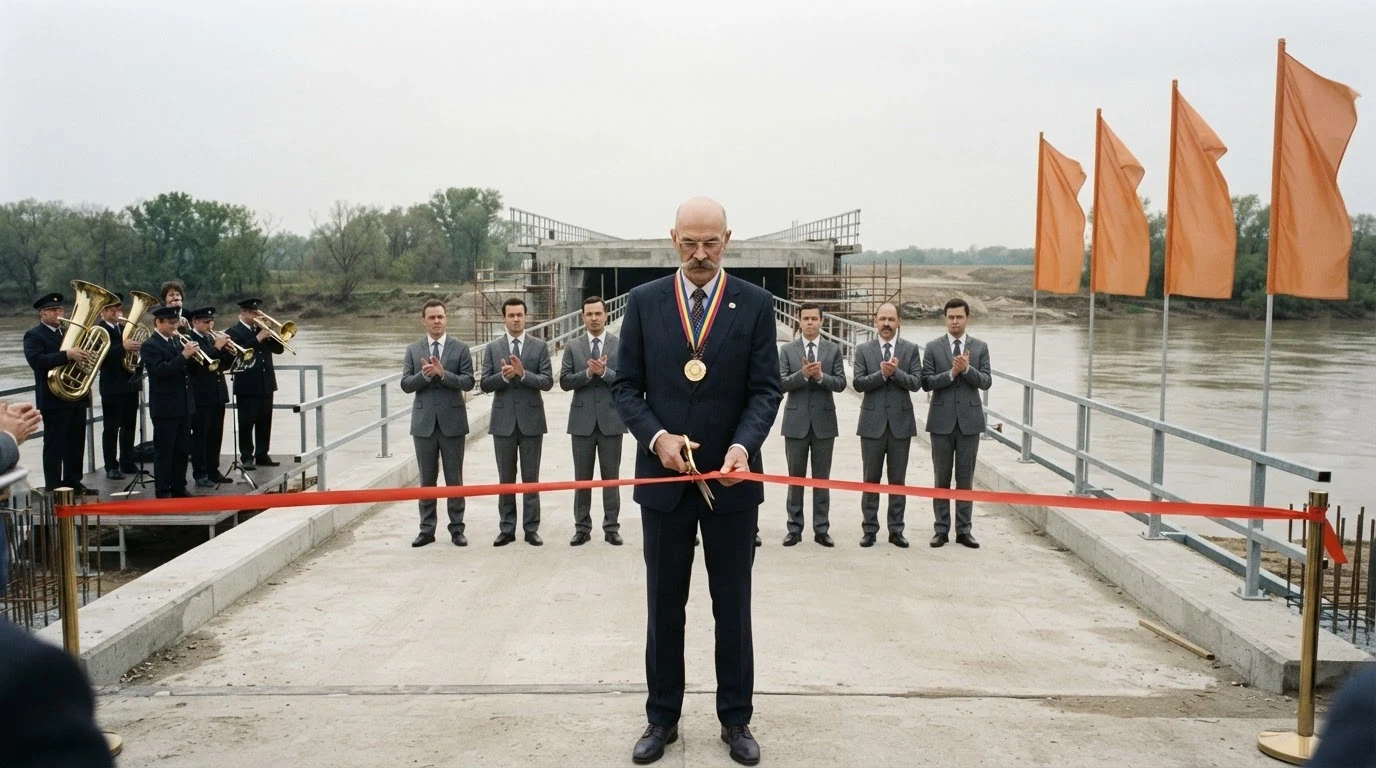
"Deadpan symmetrical wide shot", "camera at eye level" and "official press photograph" set the straight frame. The half-finished bridge is the one exaggeration; "serious faces" keeps the joke in the image, not the acting.
Open FlashBoardsGlossy television commercial frame, anamorphic 21:9. A fictional spokeswoman in her mid-thirties with a copper bob, freckles and a white tennis outfit stands on a sunny luxury balcony, eyes closed in bliss, inhaling from a gold aerosol can labeled "PURE SUMMIT AIR". Behind her the city skyline disappears into thick brown smog. Warm golden backlight, lens flare, soft beauty light on her face, product held perfectly to camera.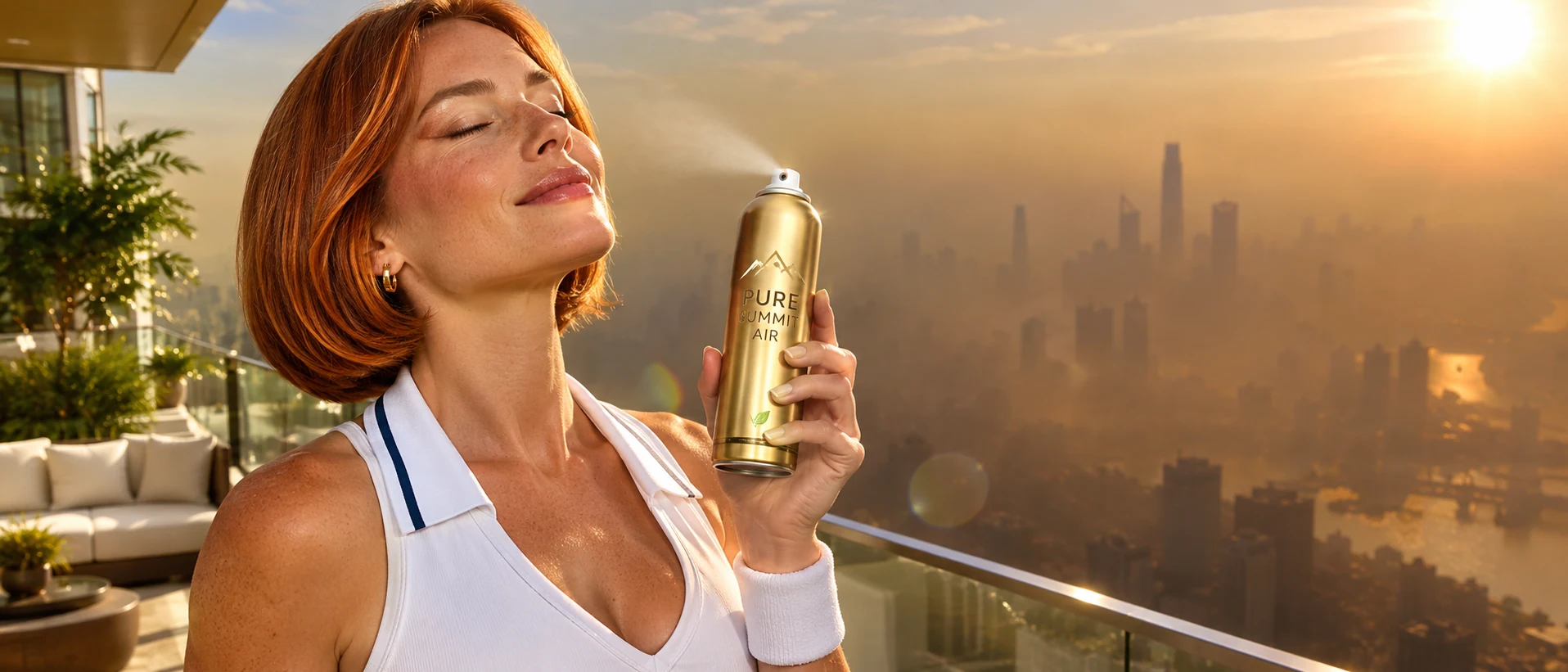
The satire comes from copying advertising exactly: "glossy television commercial", "beauty light" and "product held to camera" build the ad register, and the smog skyline contradicts it.
Open FlashBoardsCamera: locked-off tripod, perfectly still symmetrical wide shot for the whole take. Action: The minister is already closing the giant scissors; the red ribbon snaps and both ends flutter to the concrete. He raises the scissors proudly while the six officials behind him clap in unison with straight faces. The brass band plays, cheeks puffing, and the flags ripple in the wind. The minister turns and gestures grandly along the bridge.The static camera refuses to react, which is the joke. The action starts mid-cut so the shot is alive from the first frame, and everything named is already in recipe 1's image.
Open FlashBoards{
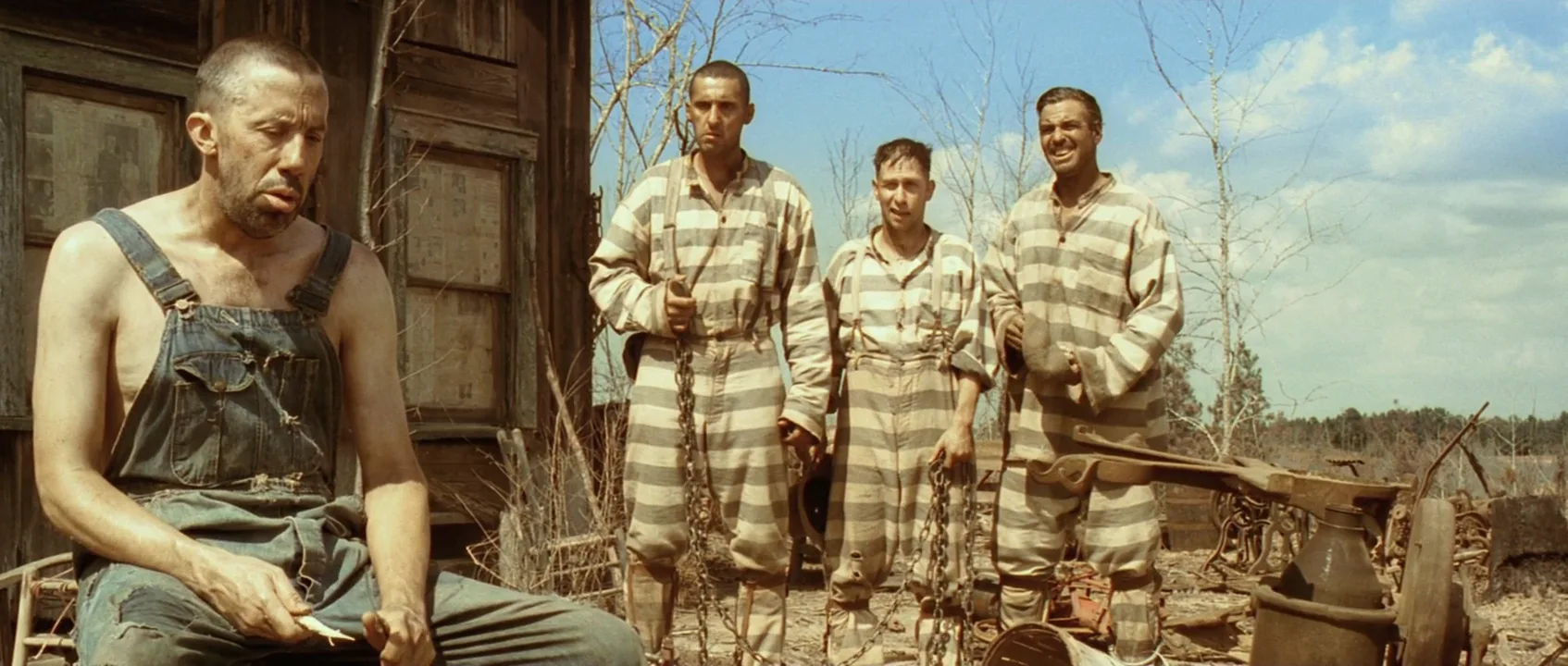
"output": "Full-screen live-action scene from O Brother, Where Art Thou? (2000), from its very first frame: one single continuous shot, a deadpan tableau. 35mm film with a golden sepia grade: bleached yellow-brown grass, drained greens, hard flat midday sun, bright blue sky with white cumulus clouds, 2.39:1 scope frame. A poor 1930s Mississippi farmyard: the weathered gray plank wall of a shack with a small boarded window on the left, dry dead weeds, rusty farm junk (a plow beam, iron wheels, a tin milk can) in the middle ground on the right, bare leafless trees, flat dry fields and a far line of pines on the horizon.",
"characters": {
"S1": {
"name": "Wash Hogwallop, played by Frank Collison",
"look": "lean sun-tanned man in his forties, head shaved to stubble, bare-chested under faded denim bib overalls, bare arms, gray work trousers; a small pocketknife and a stick of wood in his hands",
"voice": "flat, slow, drawling Southern, bored"
},
"S2": {
"name": "Pete Hogwallop, played by John Turturro",
"look": "wiry grown man in his forties with a shaved head, dark stubble and heavy brows, chain-gang uniform of wide horizontal gray-and-cream stripes, a heavy iron chain gripped in both hands at his waist, hanging to his ankles",
"voice": "silent in this shot"
},
"S3": {
"name": "Delmar O'Donnell, played by Tim Blake Nelson",
"look": "grown man in his mid-thirties, as tall as the others' shoulders, thin adult face with dark stubble and lines around the eyes, short tousled dark hair under a battered tan felt hat, the same striped chain-gang uniform with suspenders, a chain in his hands",
"voice": "silent in this shot"
},
"S4": {
"name": "Everett, played by George Clooney",
"look": "handsome man with dark hair slicked back and a thin mustache, the same striped chain-gang uniform, a dark brown hat held in his hands in front of his belly",
"voice": "smooth, genteel, over-polite Southern orator"
}
},
"shots": [
{
"shot": 1,
"camera": "static tripod camera at seated eye level, 32mm lens, a wide deadpan frame that holds almost exactly the same to the end, only a slight slow settle; S1 sits in the left third foreground, big in frame, seen from the thighs up in three-quarter profile facing right; S2, S3 and S4 stand shoulder to shoulder in a stiff row in the middle ground at the center, full figures from head to shins, facing the camera and S1: S2 on the left, S3 in the middle, S4 on the right; open sky and farm junk fill the right third",
"action": [
"BEGINNING: alive from the first frame, S1 is hunched forward on his seat, head low at the top-left edge, looking down at the knife in his hands; S2 stands stiff and frowning, staring at S1; S3 lifts his felt hat off his head with the hand on screen left, tilting his head politely; S4 leans in toward S1 with a wide toothy grin, hat held low in front of him.",
"THEN: S3 lowers the hat to his side, bareheaded, mouth half open in a nervous smile; S4 raises his hat to his chest with both hands, still grinning; S1 sits up straight and turns his face toward the camera, eyes blank, and greets S2 without any warmth.",
"THEN: S1 turns his head to screen right toward the three men, lower lip pushed out, then drops his eyes back to his lap and asks his question while looking down; S2 stays rigid, chain in both hands, mouth closed.",
"THEN: S1 bends over his work, whittling the stick with the knife in the hand on screen left, the wood in the hand on screen right, eyes on the wood; S4 bows forward a little at the waist, eyebrows raised, with an eager, ingratiating smile, and introduces himself, his lips visibly moving.",
"END: S2 turns his head sharply to screen right and gives S4 a sour sideways look; S3 stands with his mouth hanging open; S4 finishes on a bright grin; S1 keeps whittling, head bowed, as if nobody were there."
],
"dialogue": [
{
"speaker": "S1",
"on_screen": true,
"when": "after he sits up and turns his face forward, early in the shot",
"delivery": "flat, unimpressed",
"line": "<d>[English] Hello, Pete.</d>"
},
{
"speaker": "S1",
"on_screen": true,
"when": "right after, as his eyes drop back to his lap",
"delivery": "bored drawl, without looking up",
"line": "<d>[English] Who are your friends ?</d>"
},
{
"speaker": "S4",
"on_screen": true,
"when": "in the second half of the shot, as he bows forward",
"delivery": "florid, over-courteous",
"line": "<d>[English] Pleased to make your acquaintance, Mr Hogwallop.</d>"
}
]
}
],
"sound": {
"ambience": "hot still afternoon, dry insects buzzing, a faint breeze through dead grass, the soft scrape of the knife on wood, a clink of chain",
"speech": "exactly these spoken phrases, each said once, in this order",
"never_spoken": "no narration and no voice-over: the descriptions, performance notes and step words of this prompt are never spoken aloud",
"music": "a film score under the scene, always below the voices: a sparse old-time banjo and fiddle picking a slow, dry country tune",
"subtitles": "none"
}
}Remakes the deadpan farmyard tableau from O Brother, Where Art Thou? (2000), dir. Joel Coen and Ethan Coen, DP Roger Deakins: Wash whittling in the left foreground, the three chained convicts in a stiff row, the doffed hat, the three lines of dialogue and the unmoving camera carried over.
The satire sits in the camera and action fields, not in the faces: a static tripod frame, three convicts shoulder to shoulder in a stiff row like a group portrait, and a host who keeps whittling, head bowed through Everett's florid greeting. The film's own lines are quoted word for word, so the over-polite manners play against the chains.
Common mistakes
- Models push faces toward mugging. Ask for "serious faces" and let one object carry the absurdity.
- Heroic low angles and dramatic light creep in when a prompt mentions power. State "camera at eye level" and "flat overcast light".
- Never ask for a real politician or celebrity; describe a fictional person and let costume and setting point to the type.
Keep the reference frames, prompts and every generated take side by side — images and video in one canvas.
FAQ
4 questionsWhat is a satire film?
A satire film uses exaggeration, irony and ridicule to criticize something real, such as a government, the media, a social class or a common behavior. It is funny on the surface, but the humor carries an argument. Classic examples include Dr. Strangelove (1964), Network (1976) and The Great Dictator (1940).
What is the difference between satire and parody?
Parody imitates a specific film, style or genre to mock its conventions, as Airplane! does with disaster movies. Satire aims at the real world: politics, institutions, behavior. They often work together, as when a satire parodies a propaganda newsreel or a TV commercial to attack what that form sells. The target decides which one you are watching.
What are some famous political satire films?
Widely cited political satires include The Great Dictator (1940), Dr. Strangelove (1964), Being There (1979), Wag the Dog (1997) and The Death of Stalin (2017). Each takes a real political mechanism, such as deterrence, spin or succession, and pushes it until its absurdity shows.
How do you make a satire film feel sharp instead of silly?
Play everything straight. Actors believe their characters' logic completely, and the camera frames absurd events as normal: locked-off wides, eye-level angles, flat institutional light. Copy the visual language of your target, such as news graphics, ads or official photographs, and exaggerate one element at a time. Mugging and winking tell the audience it is only a joke.
Related terms
5- ParodyGenres
A parody imitates the style, clichés and famous scenes of a specific work or genre and exaggerates them for comic effect — Airplane!, Young Frankenstein, Galaxy Quest.
- Black ComedyGenres
Black comedy finds laughs in subjects normally treated as taboo or tragic — death, violence, illness, war — and makes the audience uneasy about what it is laughing at.
- IronyStorytelling
Irony is a gap between what is said, expected or known and what is actually meant or happens; film uses verbal, situational and dramatic irony, plus cosmic and historical variants.
- AllegoryStorytelling
An allegory is a story whose characters and events stand, as a whole, for something else — a political system, a moral idea, a historical moment — so the literal plot carries a second meaning throughout.
- ComedyGenres
Comedy is the genre built to make the audience laugh — through character, situation, wordplay or physical gags — and it usually bends toward a happy or reconciling ending.
Further reading
Gilbert Highet, The Anatomy of Satire (1962). Sidney Lumet, Making Movies (1995).