 FlashBoards Learn
- Learn
- Production Design
- Costume Design
Production Design · Film language
Costume Design
Also called: costume designer, film costume design, costuming
Costume design is the creation of everything a character wears, from silhouette and fabric to color, fit and wear. Before an actor speaks, the costume tells the viewer who this person is, when they live, how much power they have, and later, how they have changed.
- What it does
- Tells the audience who a character is, their era, status and arc, before a line of dialogue.
- Use it when
- Every film; it matters most in period pieces, ensembles and stories where a character transforms.
- Watch out
- Costumes that look new: real clothes are worn, faded, repaired and fitted to a body.
- Try this prompt
Full shot, 1910s woman in a worn oxblood wool greatcoat with frayed cuffs, gray harbor pier, 35mm at chest height
What is costume design in film?
Costume design covers every garment, shoe, hat and piece of jewelry a character wears, plus how those clothes age across the story. It sits inside production design: the production designer builds the world, the costume designer dresses the people in it, and both work from one color palette.
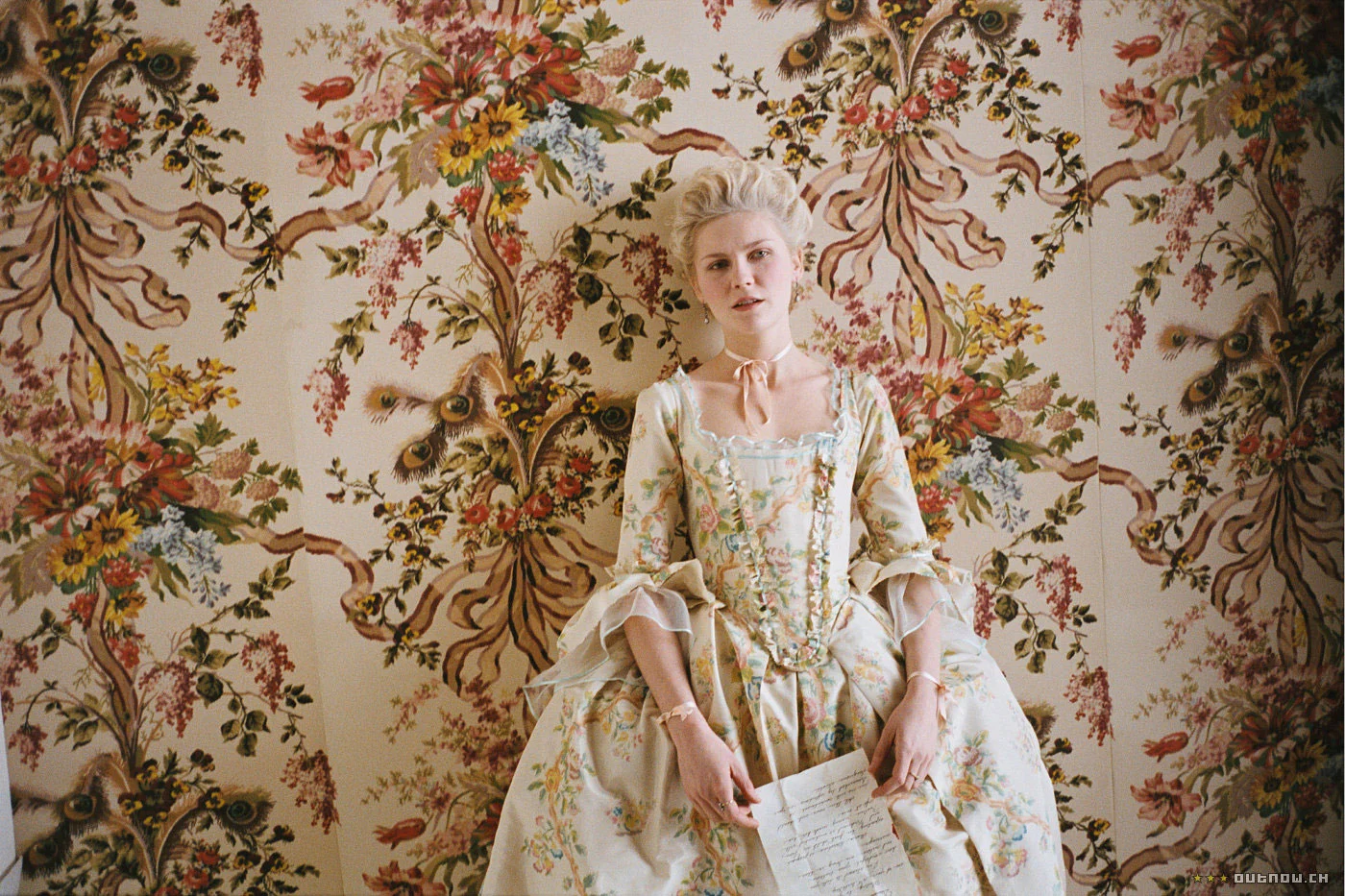
A costume is not fashion. Its shape tells the era, fabric and fit tell class, repairs and stains tell history, and a change of costume often marks a turn in the character arc.
What does a costume designer do?
The work starts with a script breakdown: every costume change, which scenes share a story day, where clothes get torn or bloody. Research and sketches or reference boards follow.
Costumes are built, bought, rented or altered. Period films build much of the principal wardrobe; contemporary films shop and then age the clothes. Fittings adjust how a garment moves, and multiples, identical copies for stunts and damage, let a shot be repeated.
Why costume design matters to the story
Costume works before any line of dialogue:
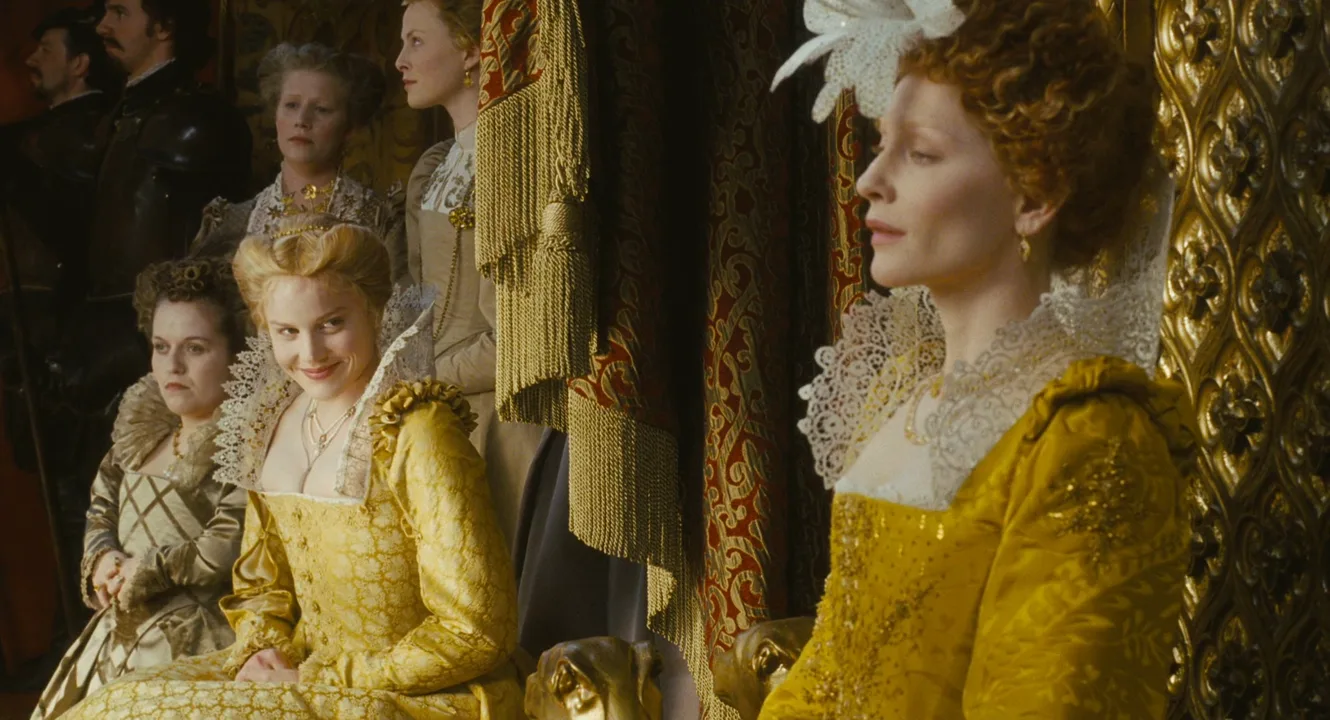
- Status. In a court scene the most elaborate garment marks the center of power.
- Belonging. Uniforms erase individuals; the one person out of uniform is the outsider.
- Arc. Moving from borrowed clothes to one's own shows change without words.
- Icon. Dorothy's ruby slippers in The Wizard of Oz (1939) became the character.
Costume color: blend in or stand out
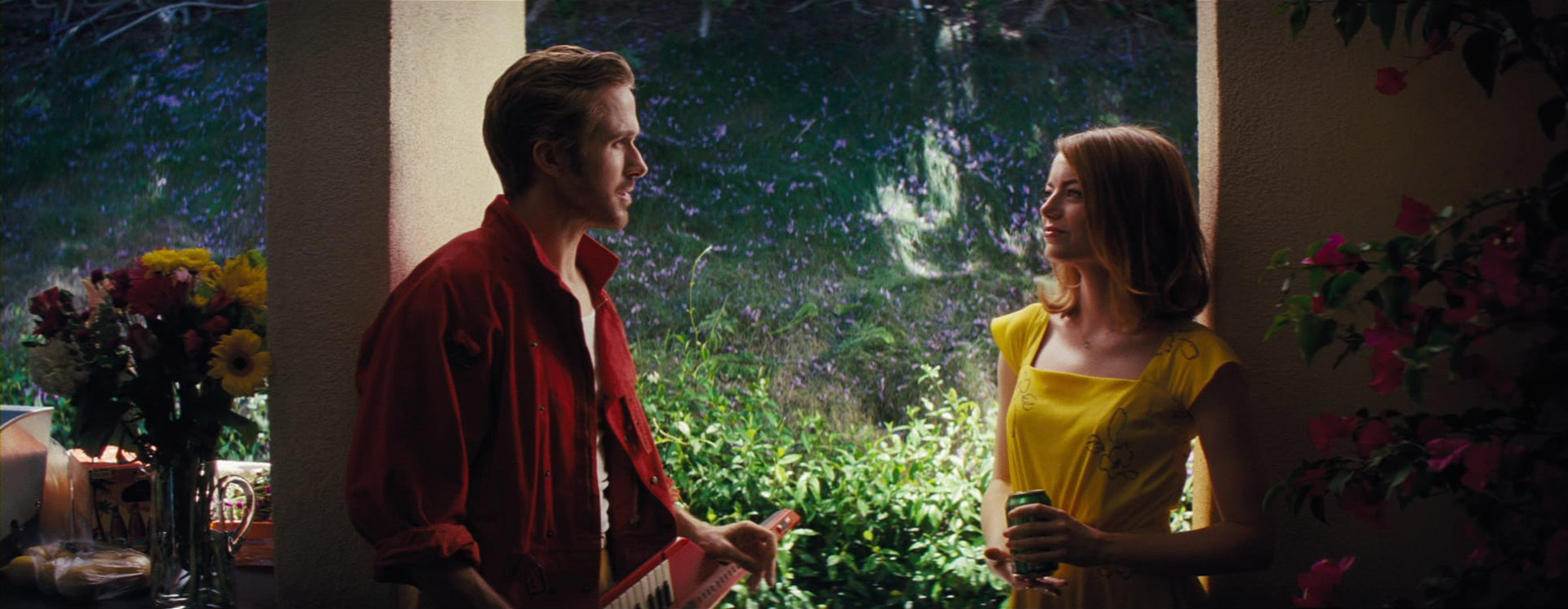
Dress a character in the palette of the set and they sink into their world. Give them the one hue the set lacks and the eye finds them first in any group.
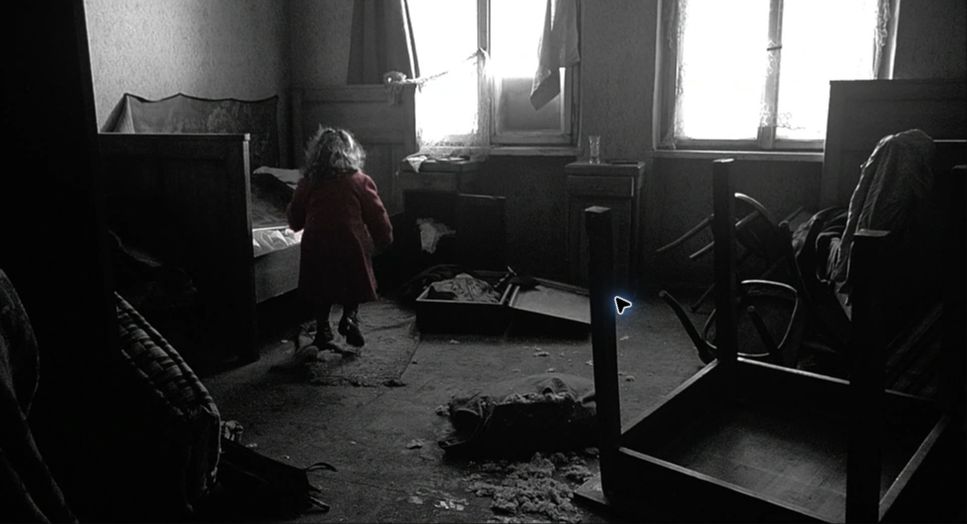
The extreme case is the red coat in Schindler's List (1993), a costume turned into selective color inside a black-and-white film. La La Land (2016) uses saturated primary-colored dresses so the leads glow against the city. Color can also track an arc, from muted to bold or bold to drained; when a hue repeats with a meaning it becomes color symbolism.
The wardrobe department on set
Wardrobe is both the costume department and the full set of clothes each character wears. The costume designer leads it, a costume supervisor runs budget and stock, and set costumers stay with the actors on the floor.
On set, wardrobe owns clothing continuity: which button is open, how the sleeve is rolled, how much mud is on the boots. Costumers photograph every look after each setup.
How to shoot and light costume
Test costumes on camera under the real lighting plan before day one.
- Whites and blacks. Pure white clips and black velvet swallows detail, so whites are often dyed to ivory.
- Fine patterns. Tight stripes and small checks can shimmer as moiré on a digital sensor.
- Raking light. Wool and embroidery come alive when the key skims across them from the side.
- Show the silhouette. Introduce a key costume in a full shot, 32–40mm at chest height.
Plan costume, set design and light together.
Costume Design examples in film
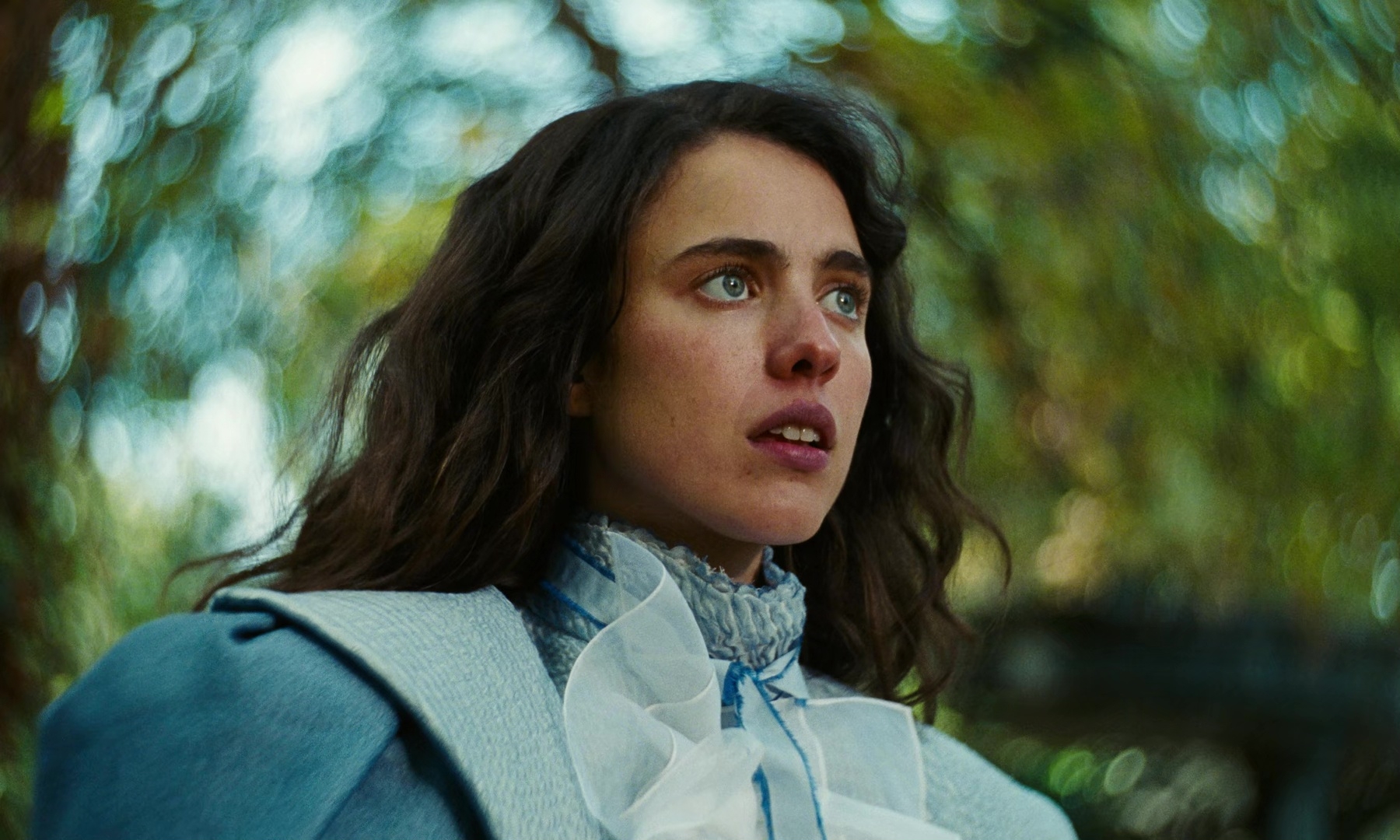
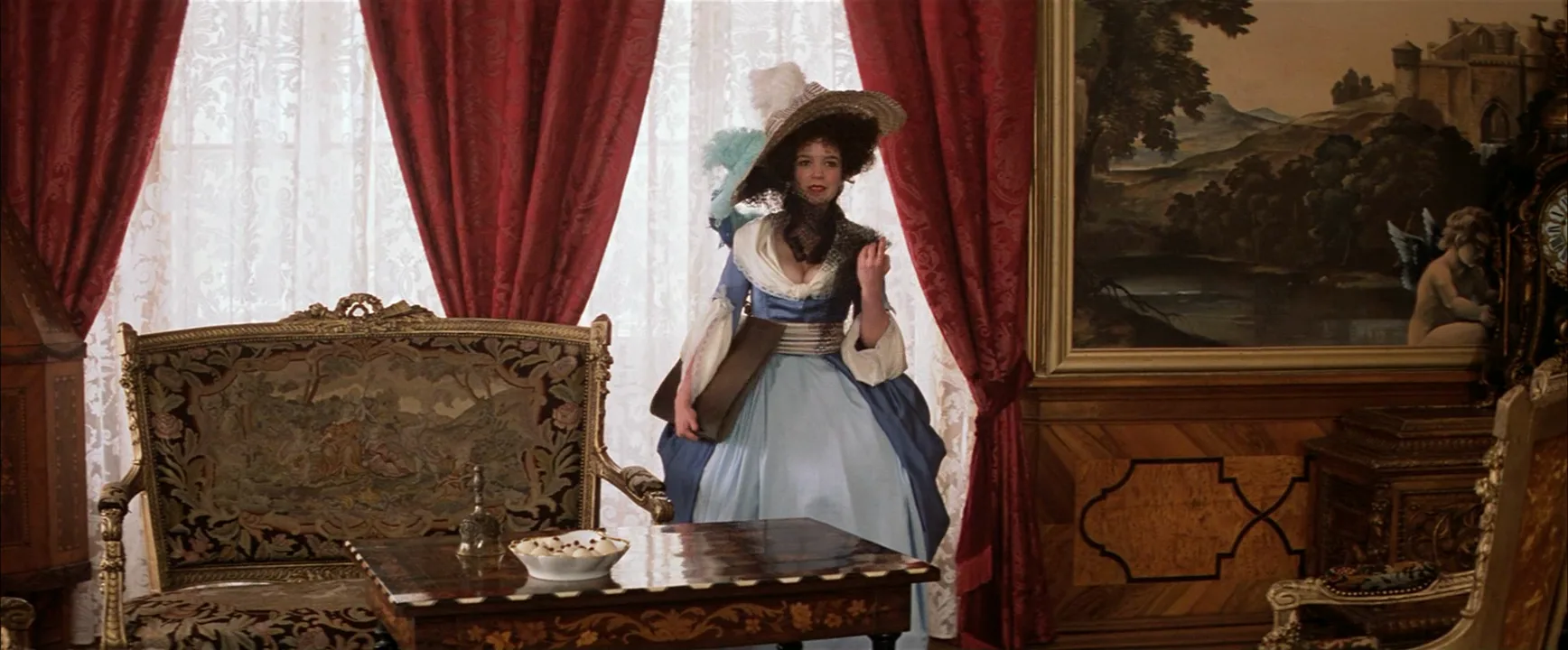
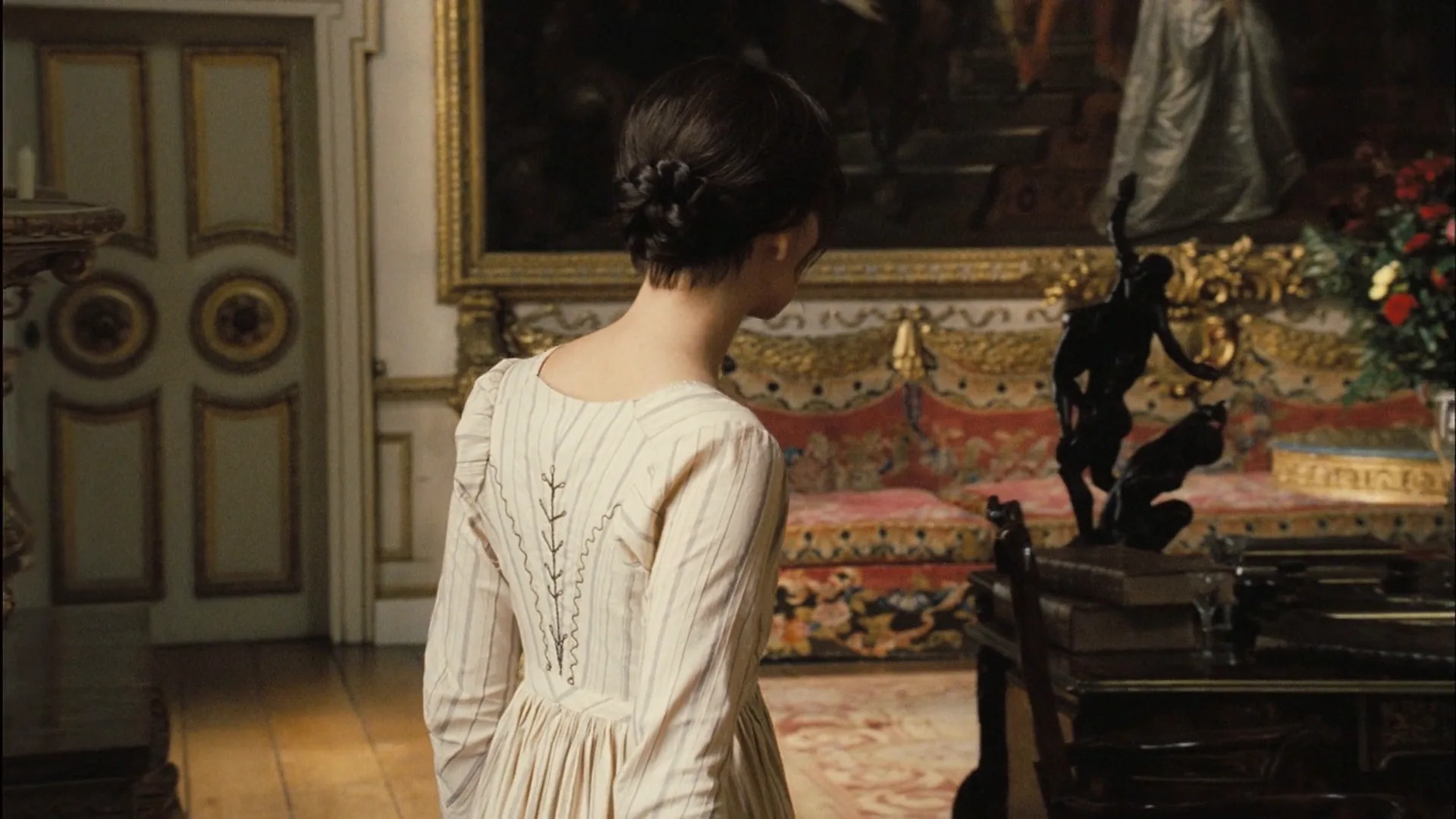
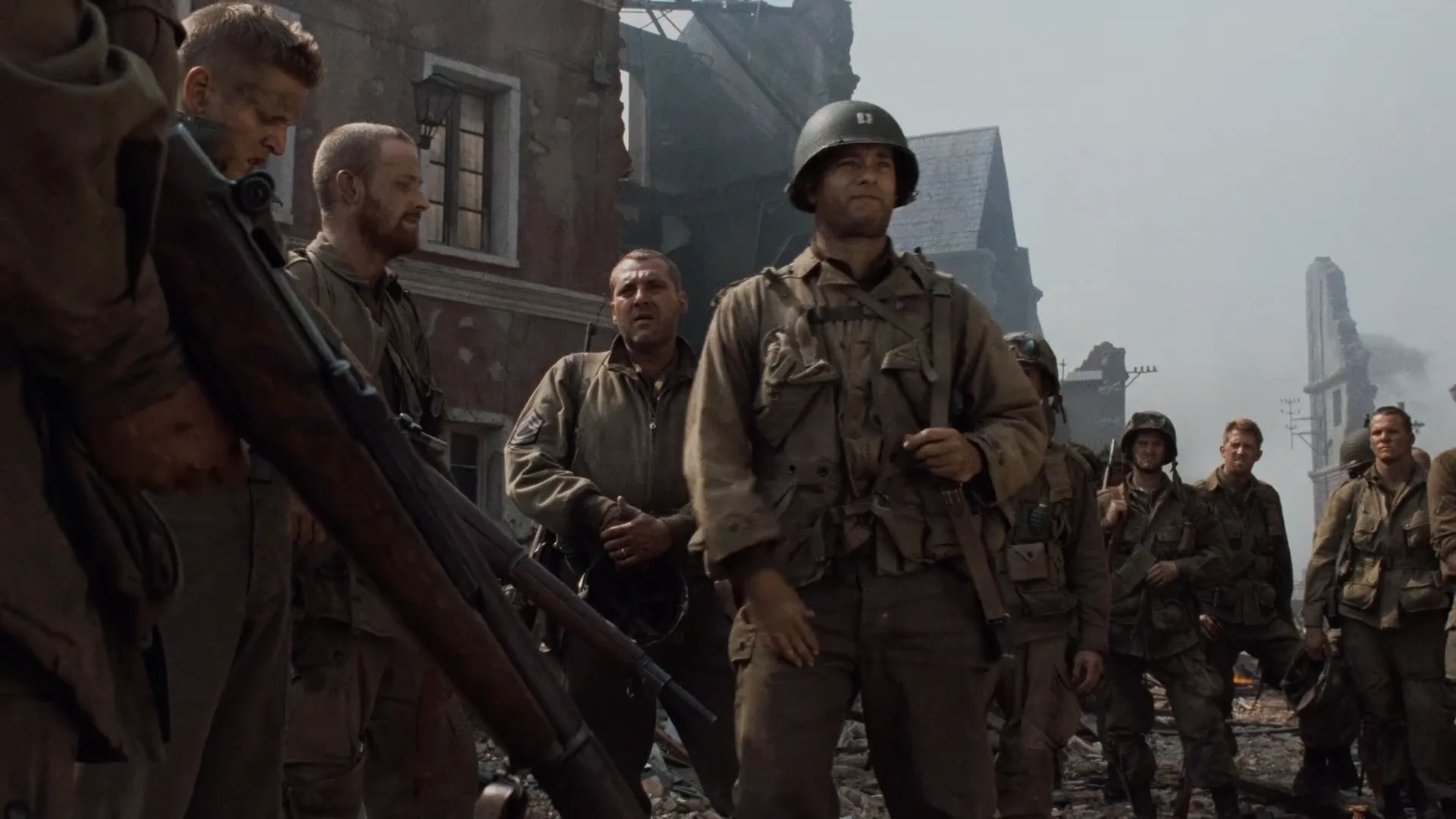
8 framesFrames where the costume tells the story: rank, era, color and wear in one image.
How to create a costume design with AI
4 promptsImage models dress people generically unless you name each garment, its fabric, color and condition. Write the costume like a wardrobe breakdown, and keep references, costume notes and takes on one FlashBoards board so the look holds from shot to shot. The fourth prompt re-shoots a real film shot from a text description alone, and the original plays next to the result so you can compare.
Cinematic full shot of a woman in her thirties on a weathered wooden harbor pier, overcast morning, 1910s. Long narrow face, crooked nose, freckles, dark auburn hair under a small brown felt hat. Costume: ankle-length oxblood-red wool greatcoat with a wide shawl collar, brass buttons, frayed cuffs and a mud-stained hem; high-necked cream blouse; scuffed brown lace-up boots; worn leather satchel across her body. Pier, sea and sky in muted slate gray, so the oxblood coat is the strongest color. 35mm lens at chest height, whole figure from hat to boots in frame, soft side light showing wool texture, film grain.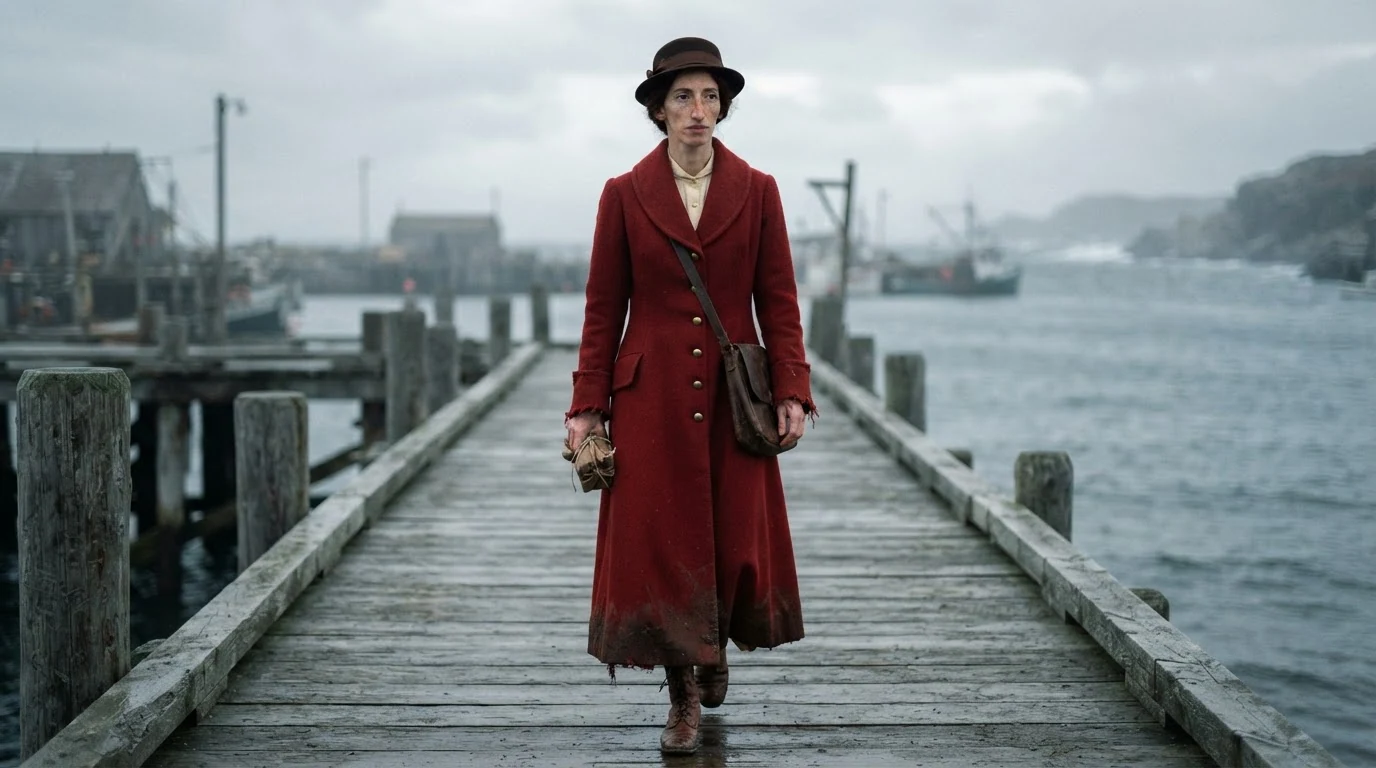
Whole figure from hat to boots keeps the silhouette readable; frayed cuffs and a mud-stained hem prevent a costume-shop look; the muted gray surroundings make the coat stand out.
Open FlashBoardsWidescreen medium-wide shot of a candlelit 18th-century dining room. Seated at right, a heavyset man in his fifties with a broad jaw, a powdered wig and a small chin scar, in a deep green silk coat embroidered with gold thread and a lace cravat. Standing at left with a silver jug, a thin teenage servant with cropped black hair and large ears, in a gray linen shirt, a brown wool waistcoat with one mismatched button and a stained canvas apron. Warm candlelight raking across the fabrics. 50mm lens at seated eye height.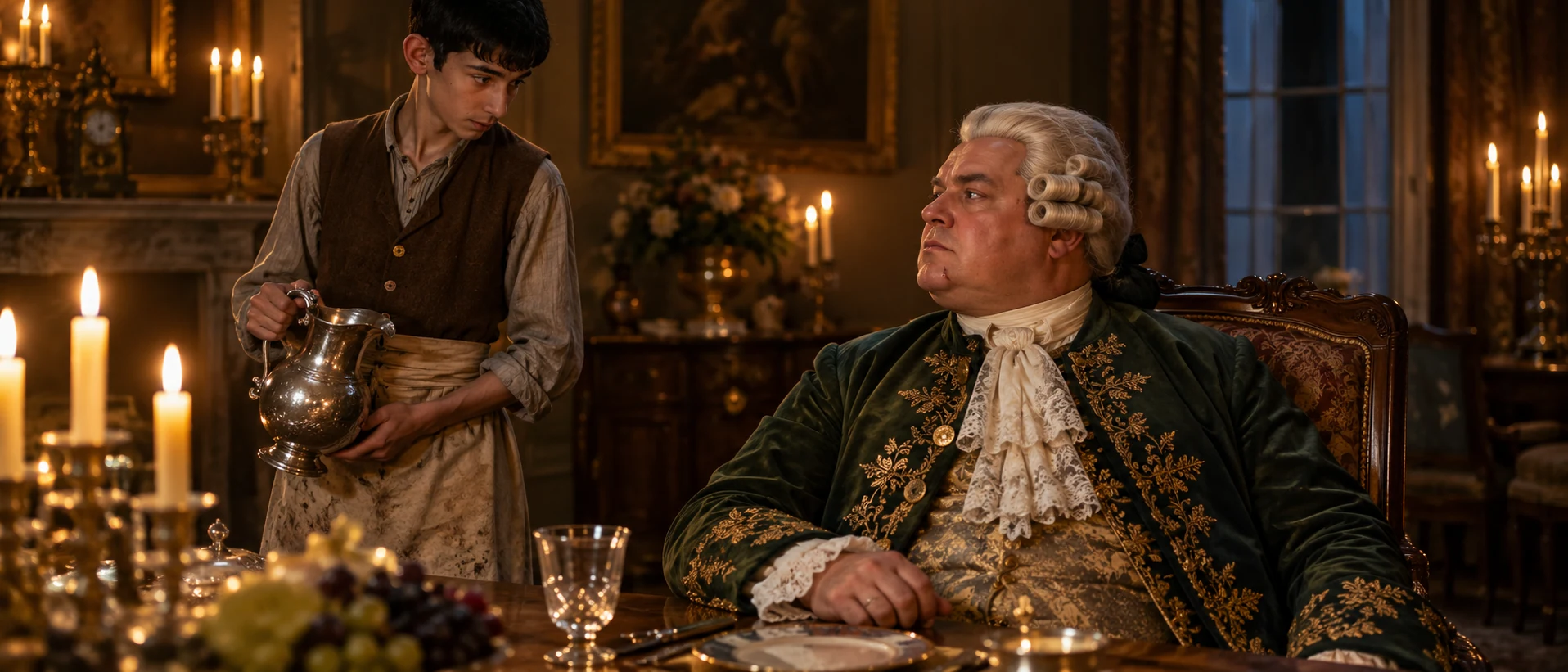
Costume as hierarchy: the material words carry the status (silk, gold thread, lace against linen and canvas), and one mismatched button makes the servant's clothes look used.
Open FlashBoardsCamera: slow steady push-in at chest height, from full shot to medium-wide shot, straight toward the woman. Action: She is already walking toward camera along the pier, the oxblood wool greatcoat swinging around her boots and the wind lifting its shawl collar. She grips the leather satchel strap and slows. She stops, turns her head to look out over the gray sea, and the heavy coat settles around her legs.Walking and wind start on the first frame, so the fabric moves at once; repeating the garment words keeps the costume stable.
Open FlashBoards{
"output": "Full-screen live-action shot from Pride & Prejudice (2005) from its very first frame: one continuous smooth follow shot, no cuts. A gilded 18th-century English state room: deep red velvet drapes, cream-and-gold carved doors, a long sofa upholstered in faded red-and-gold tapestry, dark carved side tables with bronze statuettes, a crystal vase of red and pink roses. Warm afternoon daylight falls in from the left and pools on honey-colored parquet; rich reds, golds and browns, soft contrast, 2000s 35mm film grain. Her plain cream cotton dress is the only pale, simple thing in the room.",
"characters": {
"S1": {
"name": "Elizabeth Bennet, played by Keira Knightley",
"look": "slim young woman, dark brown hair twisted into a low loose knot at the nape with a few loose strands; a plain ivory cotton day dress with faint gray pin stripes, a crossover V neckline, long fitted sleeves, a narrow high waist, a row of small hooks and thread ties running down the center back of the bodice, a softly gathered ankle-length skirt; the cotton is slightly creased and worn",
"voice": "silent"
}
},
"shots": [
{
"shot": 1,
"camera": "head height, normal 40mm lens, starts as a medium close shot of her from behind over her right shoulder, her head and shoulders in the right-centre of frame; the camera pans slowly right and then follows behind her at walking pace, ending a little wider as a medium shot of her back from the thighs up, centered; focus stays on her the whole time",
"action": [
"BEGINNING: alive from the first frame, S1 stands in the right-centre of frame, her back three-quarters to the camera, her head turned to frame right so her cheek and jaw show in profile, gazing off toward the right side of the room; a red velvet drape fills the left edge of frame, a gilded door behind her.",
"THEN: the camera begins to pan right; the red drape slides out of frame to the left and the tapestry sofa appears behind her.",
"THEN: S1 starts to walk slowly away from the camera into the room, bearing right, her head still turned slightly right, both arms hanging loose at her sides.",
"THEN: she faces straight ahead, now fully back to the camera, and the hooks and ties down her back and the gathered skirt swaying over the parquet come into full view.",
"THEN: a black bronze statuette on a dark carved table slides into frame at the right and passes behind her to the left as she walks on toward the vase of roses.",
"THEN: a large dark green-gray bronze lion statue glides into the right foreground, out of focus, filling the right third of frame.",
"END: S1 slows and stops in the centre of frame in front of the vase of roses, head tipping slightly to the right toward the flowers, hands still at her sides; the bronze lion in the right foreground and the tapestry sofa beyond her frame her plain pale dress against the red and gold."
],
"voice": "silence: nobody speaks in this shot, no voice at all",
"dialogue": []
}
],
"sound": {
"ambience": "the hush of a large empty room, her soft footsteps on parquet, the faint rustle of her cotton skirt, a clock ticking somewhere in the house",
"speech": "no words in this video; the only human sounds are breaths and movement",
"never_spoken": "no narration and no voice-over: the descriptions, performance notes and step words of this prompt are never spoken aloud",
"music": "a film score under the scene, always below the voices: a slow, wistful solo piano melody over soft sustained strings",
"subtitles": "none"
}
}Remakes the Pride & Prejudice (2005) shot of Elizabeth Bennet walking into a gilded state room: the prompt carries over her plain striped cotton dress, the pan right into a follow from behind, her head turn and the bronze lion sliding into the foreground.
The JSON names the real garment, not a made-up one: a plain ivory cotton dress with back hooks and a gathered skirt, walked slowly away from the camera through a red-and-gold room so the costume reads as the outsider. The shot stays silent under a quiet piano score.
Open FlashBoardsCommon mistakes
- Modern clothes in a period scene. Name the garments and fabrics, not just a date.
- Costume-shop newness. Add wear: frayed cuffs, faded knees, mud on the hem.
- Silhouette cropped away. Ask for a full shot when the costume is the point.
- Color drift. Name one strong hue and call everything else muted.
- Morphing in video. Keep the move slow, repeat the garment words, avoid tiny patterns.
Keep the reference frames, prompts and every generated take side by side — images and video in one canvas.
FAQ
5 questionsWhat does a costume designer do in film?
A costume designer creates each character's look through clothing. They break down the script to count costume changes, research the period, sketch or assemble references, then build, buy, rent or alter garments. They run fittings, plan duplicates for stunts and damage, and age new clothes so they look lived in, working closely with the director, production designer and cinematographer.
What is the difference between costume design and wardrobe?
Costume design is the creative work of deciding what each character wears and why. Wardrobe is the department that carries it out, and the name for the full stock of clothes on a production. The costume designer leads wardrobe; a costume supervisor manages budget and crew, and set costumers dress actors and track continuity.
What are some iconic movie costumes?
Well-known examples include Dorothy's ruby slippers in The Wizard of Oz (1939), Audrey Hepburn's black dress in Breakfast at Tiffany's (1961), the long black coats of The Matrix (1999) and the red coat in Schindler's List (1993). Each turns one simple, readable element into a symbol of the character.
How does costume color affect a scene?
Costume color decides where the eye goes and whether a character belongs. A costume that matches the set makes a character blend in or feel trapped; a hue the set lacks makes them the focal point. A shift in a character's costume color across the film can mark their arc.
How do you keep costumes consistent in an AI film?
Write one fixed costume description per character, covering silhouette, fabric, color, fit and wear, and paste it unchanged into every prompt. Generate a full-body reference frame first and animate from it. Keep all takes on one board and compare them side by side to catch drifting buttons, collars or colors.
Related terms
4- Production DesignProduction Design
Production design is the creation of the entire physical world of a film — locations, sets, props, colors and textures — led by the production designer together with the director and cinematographer.
- Art DirectorProduction Design
In film, the art director runs the art department under the production designer — turning the designer's concept into drawings, budgets and builds, and managing set designers, construction and set decoration.
- Set DesignProduction Design
Set design is the planning and construction of the physical spaces a scene is shot in — from a single room built on a stage to an entire street — so that architecture, scale and texture express the story.
- Character ArcStorytelling
A character arc is the inner change a character goes through over the story — from a flaw or false belief to a new understanding (or a fall) — driven by the choices the plot forces on them.
Further reading
Deborah Nadoolman Landis, Dressed: A Century of Hollywood Costume Design (2007). Deborah Nadoolman Landis, FilmCraft: Costume Design (2012).