 FlashBoards Learn
- Learn
- Storytelling
- Visual Storytelling
Storytelling · Film language
Visual Storytelling
Also called: show, don't tell, cinematic storytelling, visual narrative
Visual storytelling is telling story, character and emotion through images instead of words: where the camera stands, who is in the frame, how it is lit and colored, which objects matter and what the next cut adds. In film it is the working form of "show, don't tell", and it starts on the storyboard.
- What it does
- Lets the audience understand what happened and what a character feels before anyone says it.
- Use it when
- Writing a beat, planning a shot, or cutting a scene that currently leans on a line of dialogue to explain itself.
- Watch out
- Pretty frames are not storytelling: if an image doesn't change what the audience knows or feels, it is decoration.
- Try this prompt
Wide shot of a kitchen table set for two at dawn, an elderly woman eats alone, the other chair empty with folded reading glasses on the plate, soft window light, 35mm film still
What is visual storytelling?
Visual storytelling is the part of filmmaking that carries meaning through what the audience sees. A line of dialogue can tell you a man is lonely; a shot of him setting two places at a table and eating alone shows it, and the audience believes what it works out for itself more than what it is told.
It is not a single technique but a way of using all of them: the frame, the staging, light and color, objects and places, and the cut.
Cinema learned this before it learned to talk. In the silent film era, the most ambitious directors tried to keep intertitles to a minimum because the image had to do the work. Sound added dialogue, but it didn't retire the principle: a scene that plays with the sound off is usually a scene that is built well. Everything placed and arranged in front of the lens is mise-en-scène; visual storytelling is the decision about what that arrangement should mean at this moment in the story. It sits at the center of the storytelling hub because every other device, from a flashback to a plot twist, eventually has to become a picture.
What does "show, don't tell" mean in film?
"Show, don't tell" is the writer's version of the same rule: replace a statement with an action or an image the audience can read. It doesn't ban dialogue. It bans dialogue that explains what the picture could have shown, the kind of exposition where characters tell each other things they both already know.
Three canonical cases show how much a camera can carry:
- **The opening of Rear Window (1954).** Before the hero has a conversation, a slow pan across his apartment shows a leg in a cast, a smashed camera and photographs of a racing crash. We know his job, his injury and his appetite for risk from objects alone.
- **The "Married Life" sequence in Up (2009).** A whole marriage, from the wedding to the widower's empty chair, told in a few minutes without dialogue. The repeated jar of coins for a trip that keeps getting spent is the story in miniature.
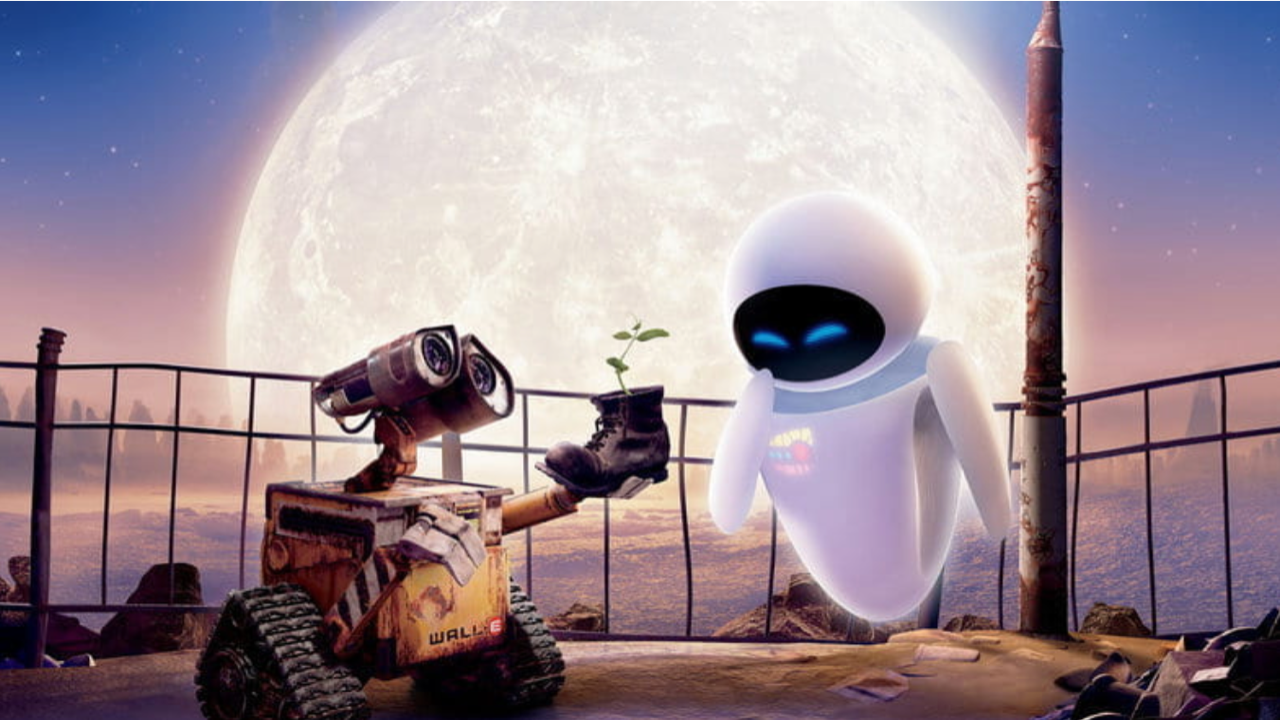
- **The first act of WALL-E (2008).** A robot alone on an abandoned Earth, with almost no speech. Routine, collected objects and one old musical on a tape tell us who he is and what he wants.
The writer's side of this is a script built on action lines rather than speeches, taken to its limit in a dialogue-free screenplay. When the words say one thing and the image says another, the gap becomes subtext, and it is often the most interesting thing in the scene.
Visual storytelling techniques and what each one tells
Distance is intimacy. A close-up puts the audience inside a character's reaction; a wide shot makes the same person small against their world.
The frame tells you who holds power. Height, angle and position in the frame decide who dominates. Negative space around a figure reads as isolation; a character boxed inside a doorway or window, a frame within a frame, reads as trapped or watched.
Blocking is the relationship made visible. How far apart two people stand, who crosses to whom, who ends the scene in the foreground: blocking turns a shifting relationship into a map.
Light decides what is known. The Godfather (1972) opens in a dark office while a sunlit wedding runs outside; Gordon Willis's top light keeps Don Corleone's eyes in shadow. The moral split is in the exposure before the plot explains it.
Color can carry an arc. A palette that cools, warms or drains across a film tracks what happens to its people. The red coat in Schindler's List (1993), the one color in a black-and-white film, turns a single child into the audience's measure of the catastrophe. That is color symbolism working as plot.
Objects hold the story. In Jaws (1975) the shark is mostly unseen; yellow barrels on the water show where it is and how much strength it has. A prop that stands for an idea is symbolism; one that keeps returning and gathers meaning is a motif.
The cut makes the meaning. In 2001: A Space Odyssey (1968) a bone thrown into the air becomes an orbiting spacecraft, and millions of years of history happen in one match cut. The Kuleshov effect is the same principle in a lab: the audience reads a neutral face differently depending on what it is cut against.
Format can be a signal. The Grand Budapest Hotel (2014) changes aspect ratio to mark its time periods; Memento (2000) tells its two timelines apart by black-and-white and color.
Visual storytelling examples from film
The films that teach this best build one visual idea into the whole design, then let scenes vary it.
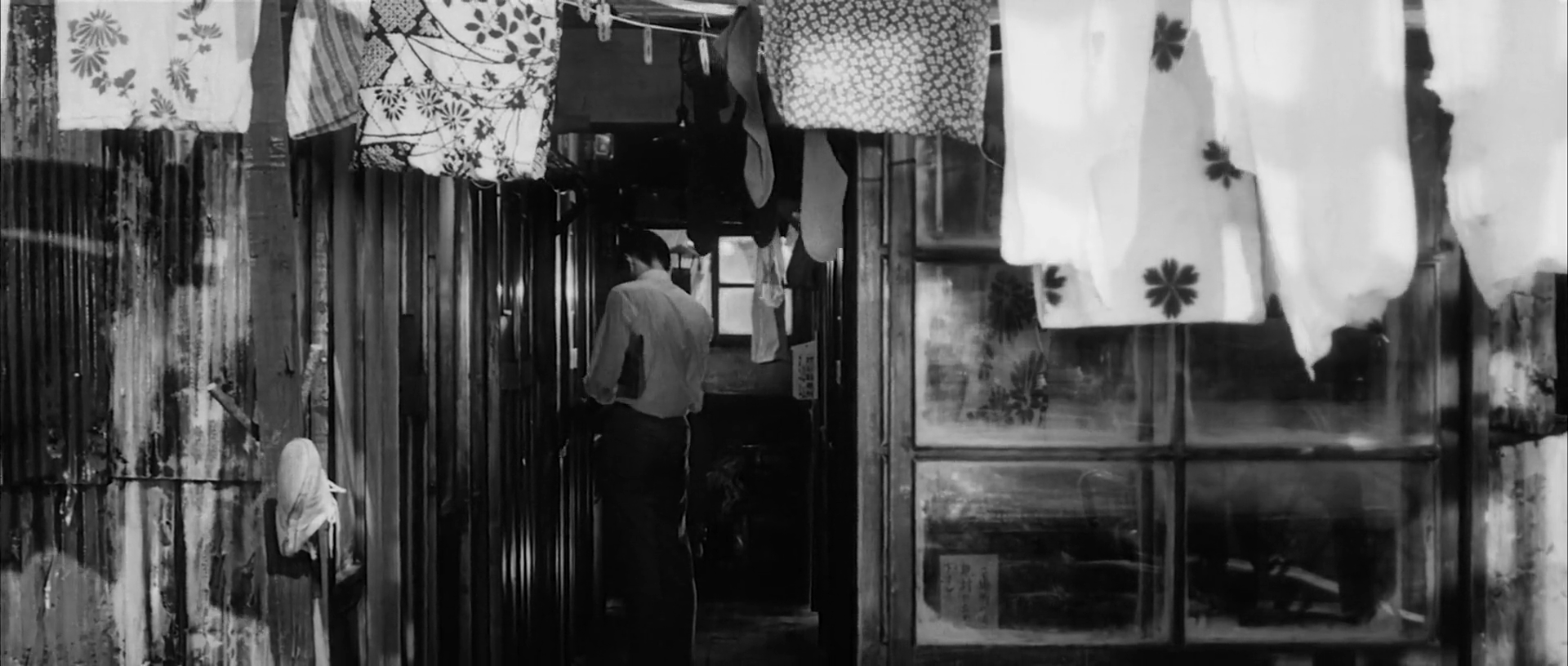
- ***High and Low* (1963).** Akira Kurosawa puts a wealthy executive's house on a hill above the city, visible from the crowded streets below where the kidnapper lives. Every shot of the house from below, or of the city from its windows, restates the class divide behind the crime.
- ***Parasite* (2019).** Bong Joon-ho keeps his characters moving up and down stairs, from a half-basement flat to a house on a hill. Class becomes a direction of travel you can see, most of all when rain sends water, and people, downhill.
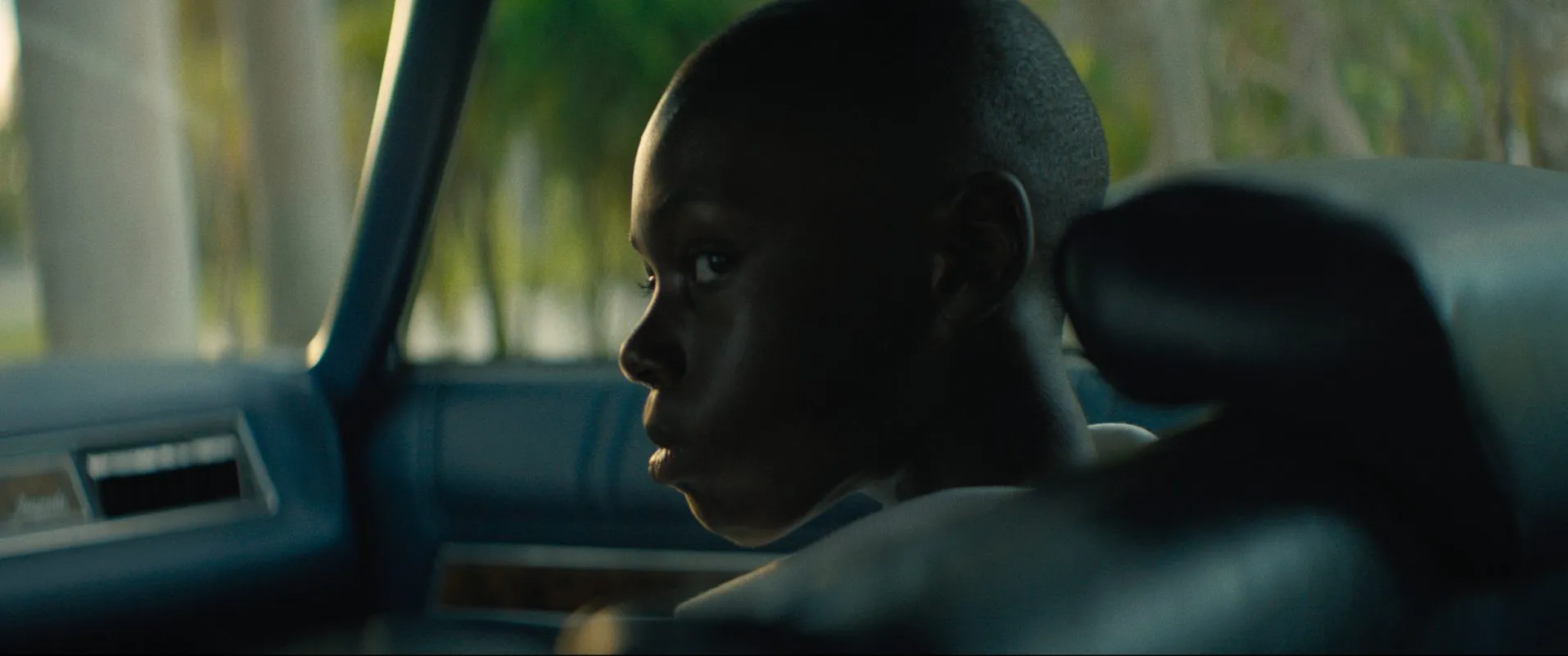
- ***Moonlight* (2016).** Three actors play one man across three chapters, and the film trusts close framing, saturated color and long silences to carry what its reticent hero can't say.
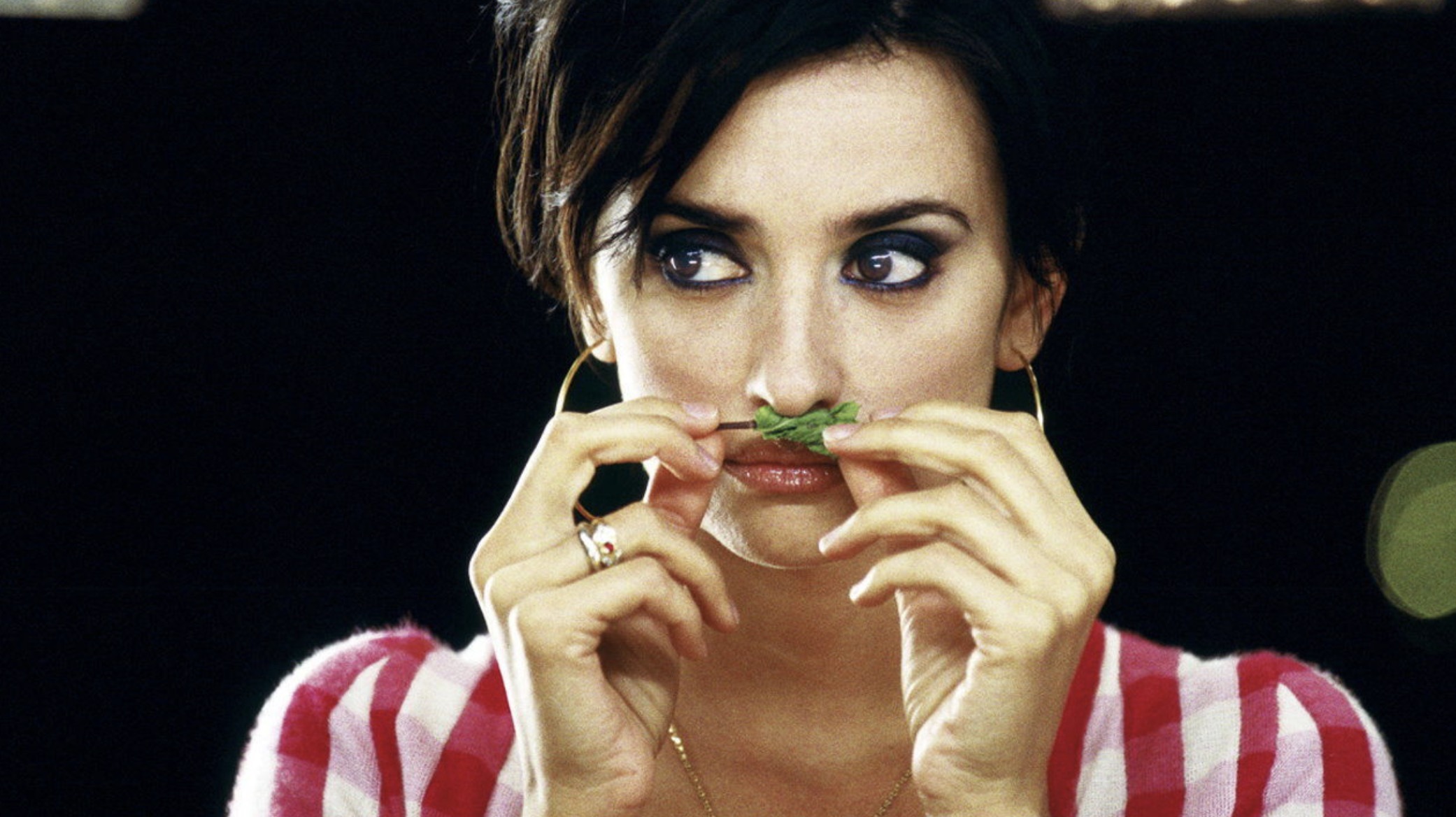
- ***Volver* (2006).** Pedro Almodóvar characterizes his heroine through costume and color as much as dialogue: saturated reds, and a woman who is always working with her hands, cleaning, cooking, running a kitchen. You know her before she explains herself.
- ***Mad Max: Fury Road* (2015).** George Miller developed the film largely through storyboards rather than a conventional screenplay, and kept the key action near the center of frame so very fast cutting stays readable.
Each film chooses a few visual ideas (height, closeness, color) and repeats them until the audience reads them without noticing.
How to tell a story visually: a shot-by-shot method
Use this on any scene before you shoot or generate a frame.
- Write the beat as a visible change. Not "she realizes he lied" but "she sees his wet coat on the hook, the one he said he never wore out". If you can't name what the camera sees, the beat isn't ready.
- Pick the one image that carries the beat. One panel per beat on the storyboard. If two panels look alike, you probably have two beats playing the same way.
- Decide whose scene it is. Put the camera on that character's side, closer and at their eye height. Keep the other person slightly wider or over the shoulder.
- Choose distance and lens for the feeling. A 24–28mm lens a few feet away keeps the room and the space between people in play; an 85–100mm from farther back isolates a face against a soft background. Save the tightest shot for the turn of the scene.
- Stage the bodies before the camera. Start the characters where the relationship stands, end them where it has moved to. The change in distance is the story of the scene.
- Light what matters. Motivate the light from a window or lamp, then let shadow withhold what the audience shouldn't see yet.
- Plant objects early. A prop seen in act one and paid off later does the explaining for you.
- Watch it with the sound off. Cut the panels into a rough animatic and play it mute. Wherever the story goes blank, a line of dialogue is doing a picture's job.
FlashBoards is built for steps 2 and 8: lay the scene out left to right on one board, reference frames from films next to each beat, a generated frame under each, notes on top. A missing or repeated image shows up before anyone is on set.
Visual storytelling vs. mise-en-scène
The two terms overlap but aren't the same.
- Mise-en-scène is a descriptive term from film analysis: everything placed in front of the camera and arranged in the frame (set, props, costume, light, actors and their movement). It names the material.
- Visual storytelling is the purpose that material serves across time. It includes mise-en-scène, plus the camera's choices, the order of shots and the way an image set up early pays off later.
A frame can have rich mise-en-scène and still tell nothing. Cinematography answers how the image looks; visual storytelling answers why it is there.
Visual Storytelling examples in film
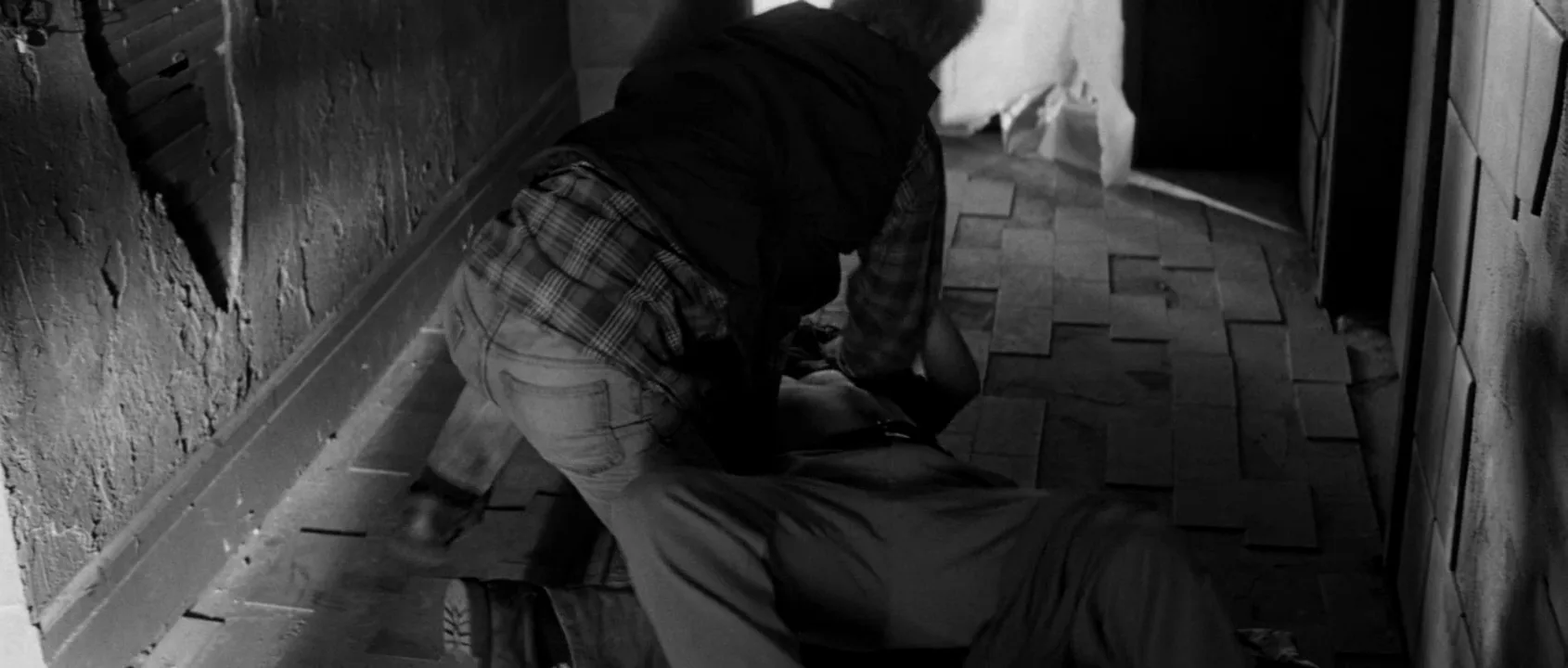
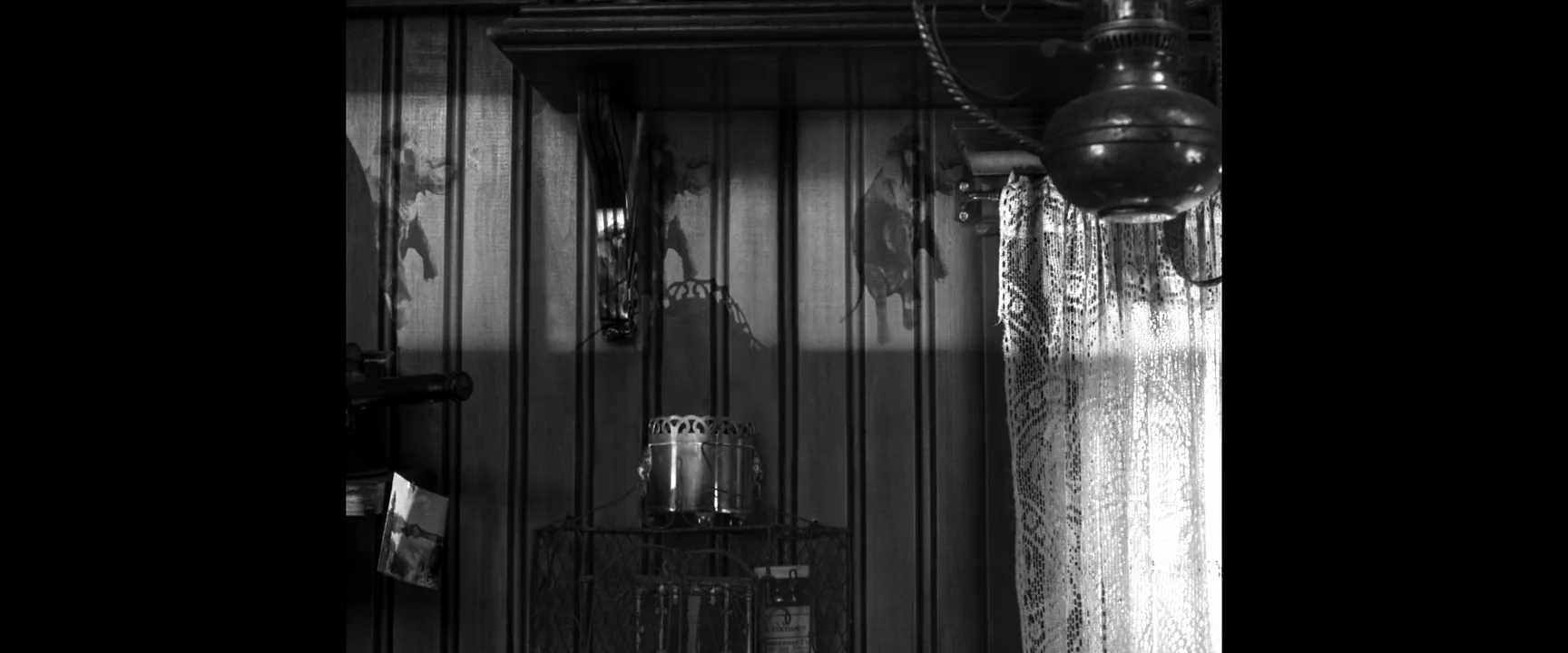
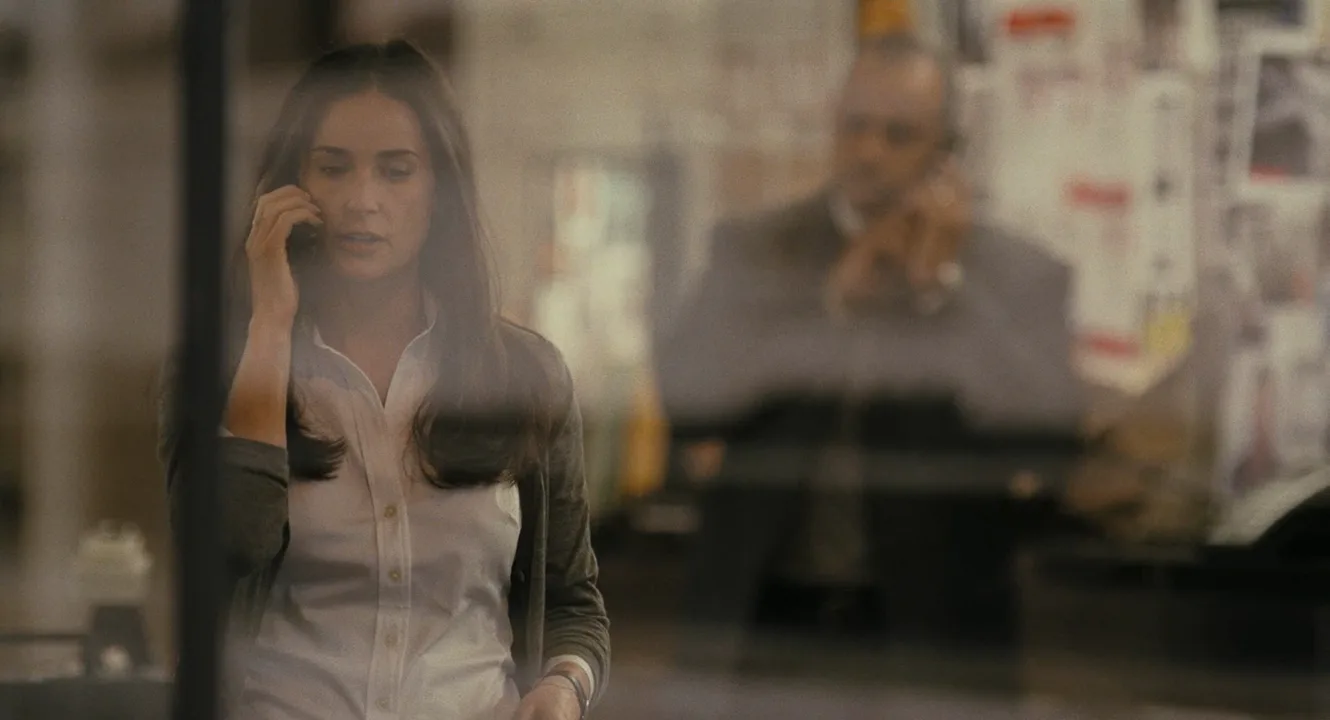
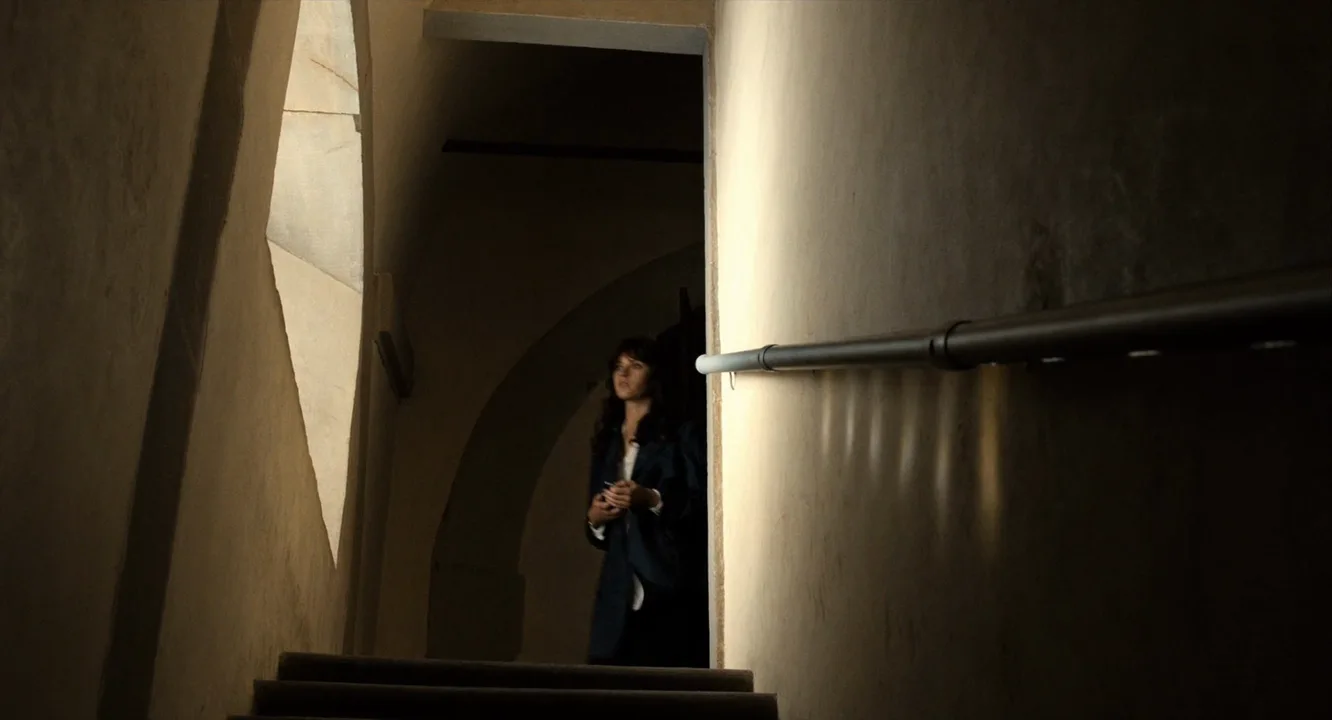
9 framesFrames where the image, not the dialogue, carries the information: a prop, a height, a color, a format.

How to create a visual storytelling with AI
3 promptsModels respond to descriptions of things: if you can't name the objects, positions and light that carry the beat, the model can't either. Nano Banana 2 Lite builds the start frame, GPT Image 2.5 tries the same idea in a different visual language, and MiniMax H3 Max Turbo plays the beat forward from the first frame. Put all three next to the scene's beat notes on one FlashBoards board and compare.
Wide shot, 28mm lens, camera at seated eye height, a small kitchen at dawn. A woman in her seventies with a short silver bob, a thin scar on her chin and a mustard wool cardigan sits alone at a table set for two, eating toast. The second chair is pushed in; on the second plate lies a pair of folded tortoiseshell reading glasses beside a full cup of tea. Soft gray window light from the left, the rest of the room in shadow, muted colors, 35mm film still, quiet and still.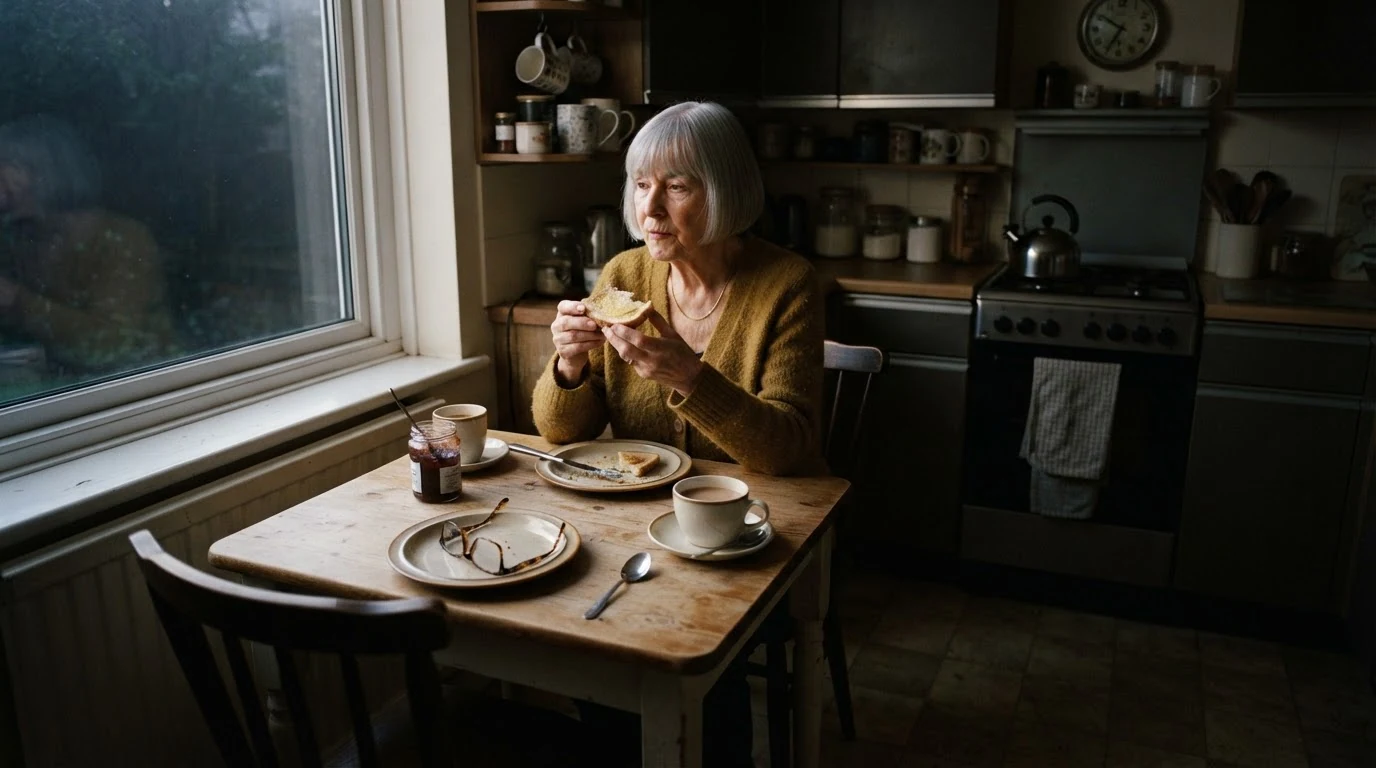
The story lives in the second place setting: table set for two, chair pushed in, folded reading glasses on the plate, full cup of tea. The wide 28mm keeps the empty chair in the same frame as her, and light from the left, room in shadow puts the eye on the table.
Open FlashBoardsAnamorphic widescreen film still, night, light rain. Camera across a narrow street at standing eye height, 50mm lens. On the right two thirds of the frame, a warm, brightly lit restaurant window: a family of five laughing around a birthday cake with lit candles. On the far left, alone in blue shadow on the wet sidewalk, a delivery rider in his twenties with a shaved head, a gap between his front teeth and a yellow rain jacket, holding an insulated food bag, looking in. Warm amber inside, cold blue outside, reflections on the wet street, shallow depth of field.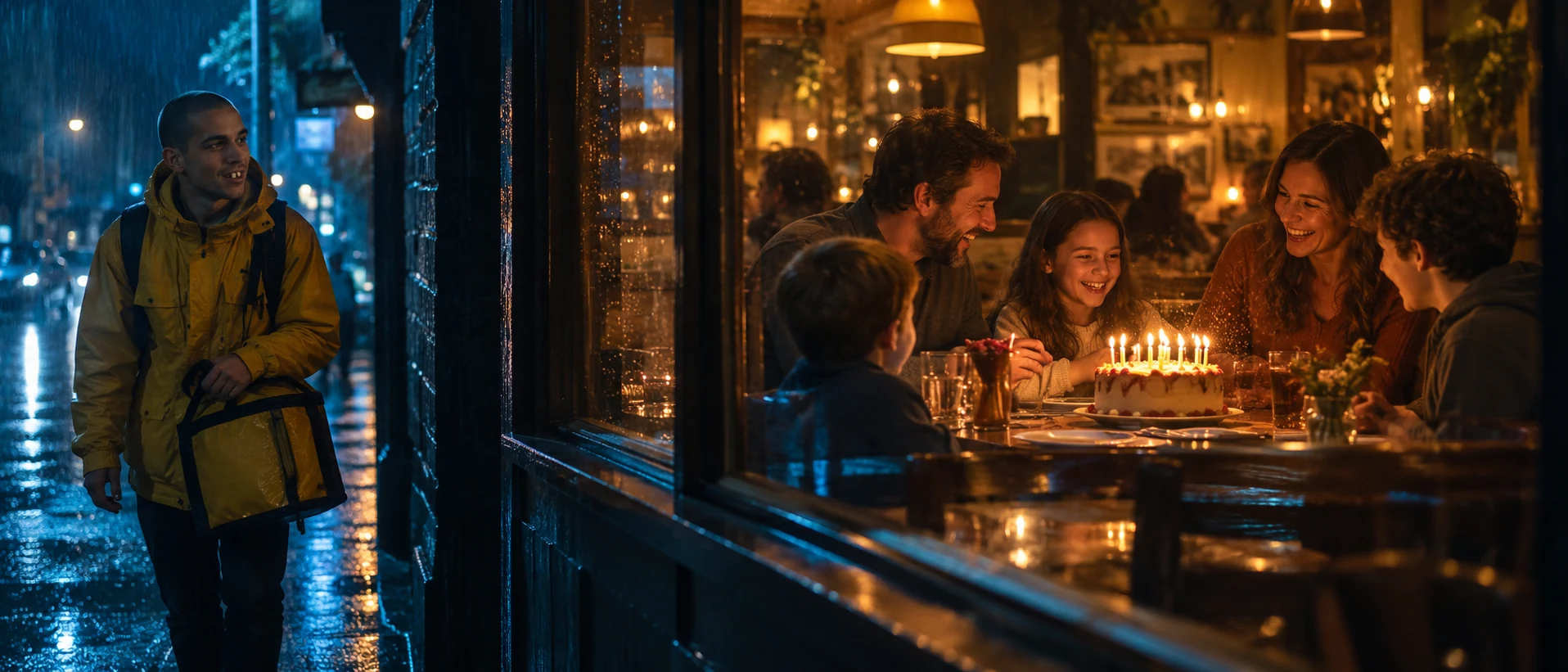
This take tells the story through composition and color instead of props. The window works as a frame within a frame, and the split of warm amber inside, cold blue outside does the class commentary. Putting the rider on the far left, alone with the family filling the rest of the 21:9 frame makes the distance between them the subject.
Open FlashBoardsCamera: static at first, then a very slow push in toward the second place setting across the whole shot, keeping the folded glasses and the full cup in the lower left of the frame, ending on a medium shot of the woman with the empty place beside her. Action: The woman is already chewing her toast as the shot begins. She sets the toast down, reaches across the table and slides the full cup of tea a few inches closer to the empty place, then straightens the folded reading glasses on the plate. She rests her hand on the table beside them and looks down at the glasses on the empty plate. Gray dawn light stays soft and steady.Motion starts in the first frame (already chewing), so the model doesn't drift on a still. The action is three small, visible gestures (slides the cup closer, straightens the glasses, looks down at them) that turn the frame's implication into a beat: she still keeps his place. The slow push in toward the second place setting, with the glasses and cup held in frame, narrows the shot to the relationship at the end.
Open FlashBoardsCommon mistakes
- Abstract words get generic pictures. "Lonely", "grieving" or "class divide" produce a sad face or a stock city; name the objects, positions and light that show it.
- Models fill the frame evenly. If the empty chair or the lone figure is the point, say where it sits in frame ("on the far left, alone") and what is in shadow.
- Props drift in video. Mention the key object in the video prompt again (the cup, the glasses) so it stays on the table instead of vanishing.
- A second person appears when the story needs an absence. Describe what is there instead ("the second chair is pushed in"), never "no husband".
Keep the reference frames, prompts and every generated take side by side — images and video in one canvas.
FAQ
5 questionsWhat is visual storytelling in film?
Visual storytelling in film is conveying plot, character and emotion through images instead of dialogue: framing, camera angle, blocking, light, color, props, locations and editing. A good visually told scene can be understood with the sound off. It is the core skill behind storyboards, live action, animation and AI-generated shots alike.
What does "show, don't tell" mean in filmmaking?
It means replacing statements with visible actions and images the audience can read for itself. Instead of a character saying she is broke, show her counting coins for a bus fare. It doesn't ban dialogue; it bans dialogue that explains what the picture could show.
What are some visual storytelling examples in movies?
Classic examples: the opening pan of Rear Window (1954) establishing the hero's injury and job through objects; the dialogue-free marriage montage in Up (2009); the bone-to-spacecraft match cut in 2001: A Space Odyssey (1968); the red coat in Schindler's List (1993); the stairs of Parasite (2019); and the hilltop house above the city in High and Low (1963).
What are the main elements of visual storytelling?
The frame (shot size, angle, composition), staging and blocking of actors, lighting, color, production design and props, camera movement, and editing. Each can carry information on its own; strong films combine a few of them into one consistent visual idea, like height for class in Parasite or darkness for moral compromise in The Godfather.
Is visual storytelling the same as cinematography?
No. Cinematography is the craft of making the image: lens, exposure, lighting, camera movement. Visual storytelling is the purpose behind those choices, and it also depends on the script, production design, blocking and editing. A beautifully shot frame that tells the audience nothing new is good cinematography and weak visual storytelling.
Related terms
5- Mise-en-ScèneFilm History & Theory
Mise-en-scène is everything placed and arranged in front of the camera — setting, props, costume, makeup, lighting, and the actors' positions and movement — and how it is composed in the frame to create meaning.
- StoryboardFilmmaking Process & Crew
A storyboard is a sequence of drawn or generated panels, one per planned shot, showing framing, action and camera movement with notes — a visual draft of the film before anything is shot.
- SymbolismStorytelling
Symbolism is using a concrete object, color, place or action to stand for an abstract idea — a key, a staircase, rain, a red coat — so the image carries meaning beyond itself.
- MotifStorytelling
A motif is an image, sound, object or line that recurs through a film and gathers meaning with each return, supporting the theme.
- Kuleshov EffectEditing
The Kuleshov effect is the finding that viewers read the same neutral face differently depending on the shot cut next to it — food, a coffin, a child — so meaning comes from the edit, not the single shot.
Further reading
Bruce Block, The Visual Story (Focal Press). Steven D. Katz, Film Directing Shot by Shot (Michael Wiese Productions). Alexander Mackendrick, On Film-making (Faber & Faber).