 FlashBoards Learn
- Learn
- Cameras & Capture
- Stop Trick
Cameras & Capture · Film language
Stop Trick
Also called: arret, substitution splice
A stop trick (also called arrêt or substitution splice) stops the camera, changes something in front of it and restarts from exactly the same position. On screen, a person or object appears, vanishes or transforms in a single frame. It was the first special effect of cinema, and it still delivers instant, deadpan magic.
- What it does
- Makes people and objects appear, vanish or swap in one frame, with no fade and no visible cut.
- Use it when
- You want instant magic: a disappearance, a transformation, a comic gag or a jolt of horror.
- Watch out
- Any shift in camera, light or background between the two takes turns the trick into a visible jump.
- Try this prompt
Locked-off frontal wide shot, magician beside a seated woman on a small painted stage, flat front light, black-and-white film grain
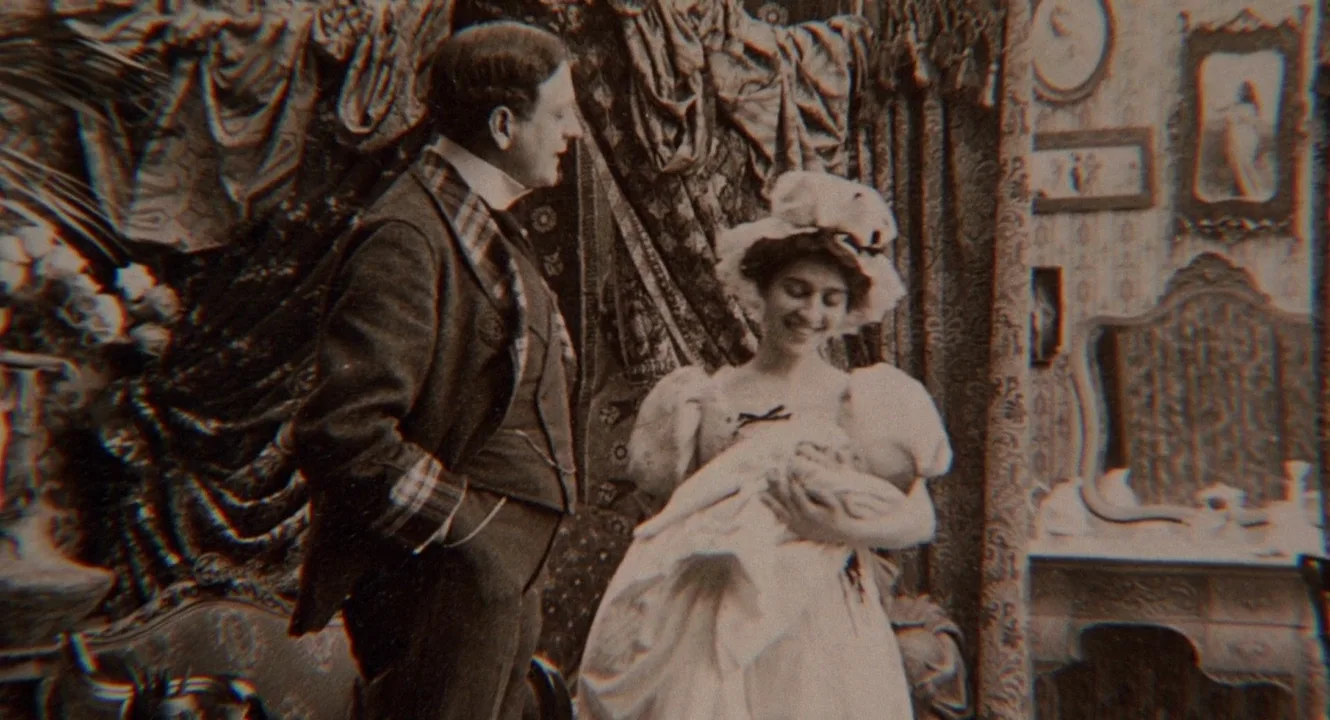
What is a stop trick?
The camera sits on a fixed mount and records. The operator stops, everyone on set freezes, something is added, removed or swapped, and the camera rolls again. Because frame, lens and background are identical on both sides of the pause, the two takes read as one continuous shot, and the change seems to happen between two frames.
The French name is arrêt, and historians also say substitution splice: studies of surviving Méliès prints show he cut the film at the change and trimmed frames so the frozen actors lined up. The trick is planned as in-camera editing and finished at the splicing bench, and it sits in the cameras and capture toolkit because everything depends on a camera that does not move.
Who invented the stop trick?
The first known use predates Méliès. In The Execution of Mary Stuart (1895), made for the Edison company by Alfred Clark, the camera stops as the queen kneels, the actor is swapped for a dummy, and the axe falls on the dummy.
Georges Méliès made the technique famous. By his own account, his camera jammed while filming Paris traffic, and on screen an omnibus turned into a hearse. In The Vanishing Lady (1896) he covers a seated woman with a cloth, reveals an empty chair, conjures a skeleton in her place and brings her back. His silent films combine stop tricks with painted sets, smoke, trapdoors and double exposure.
Why do filmmakers still use the stop trick?
A stop trick has no transition, and that is the effect. A dissolve says something is changing; a stop trick says it already has. The flatness reads as magic in fairy tales and comedy, as a jolt in horror when a figure is suddenly in the doorway, and as rhythm in music videos where outfits switch on the beat.
Both halves are real photography of one set, so shadows and grain match for free. Stop motion and pixilation, such as Norman McLaren's Neighbours (1952), repeat the same stop on every frame.
How to shoot a stop trick
- Lock the camera. Heavy tripod, sandbags, remote trigger, nobody touches it. A true static shot is not optional: a one-pixel nudge becomes a visible jump.
- Lock the automatics. Manual focus, fixed exposure, ISO and white balance, stabilization off.
- Control the light. Interiors or flat overcast; drifting sun changes the background between takes.
- Mark and freeze. Tape marks, a reference frame on the monitor and a clear "Freeze" cue. Keep rolling through the swap if you can.
- Stage a cover. A gesture, a cloth, a puff of smoke or a flash hides small mismatches.
- Cut frame by frame. Find the frames where the frozen bodies match best, trim 2–6 frames of settle, and check the join with a difference blend.
Stop trick vs. jump cut
Both join two takes from one position and remove a slice of time. A jump cut lets the viewer see the skip: the subject has moved, and the gap is the point. A stop trick hides the gap: everything holds still except the one thing that changes, so no time seems to pass. A jump cut says "later"; a stop trick says "impossible." If your actors can't hold the freeze, the trick collapses into a jump cut. Its sibling illusion from the same era is reverse motion.
Stop Trick in motion
1 clipsThese loops show stop trick in motion, where a still frame can't: watch how the effect plays out over a few seconds.
Stop Trick stills
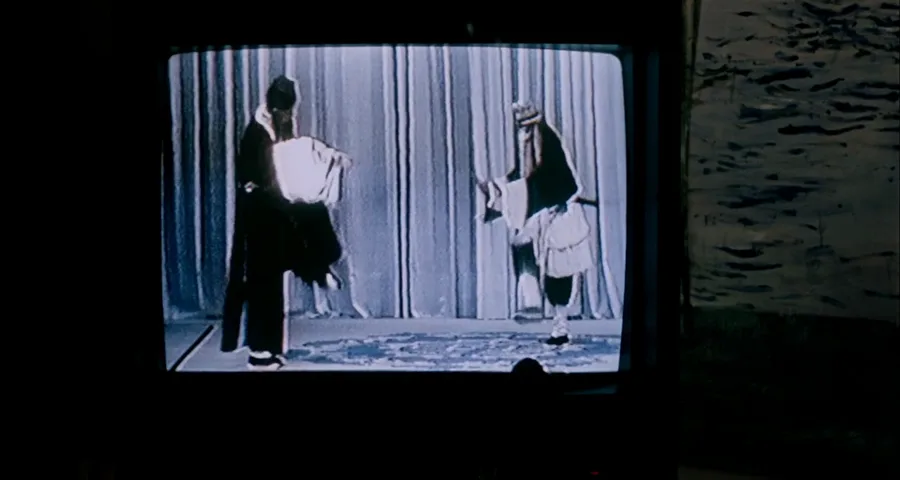
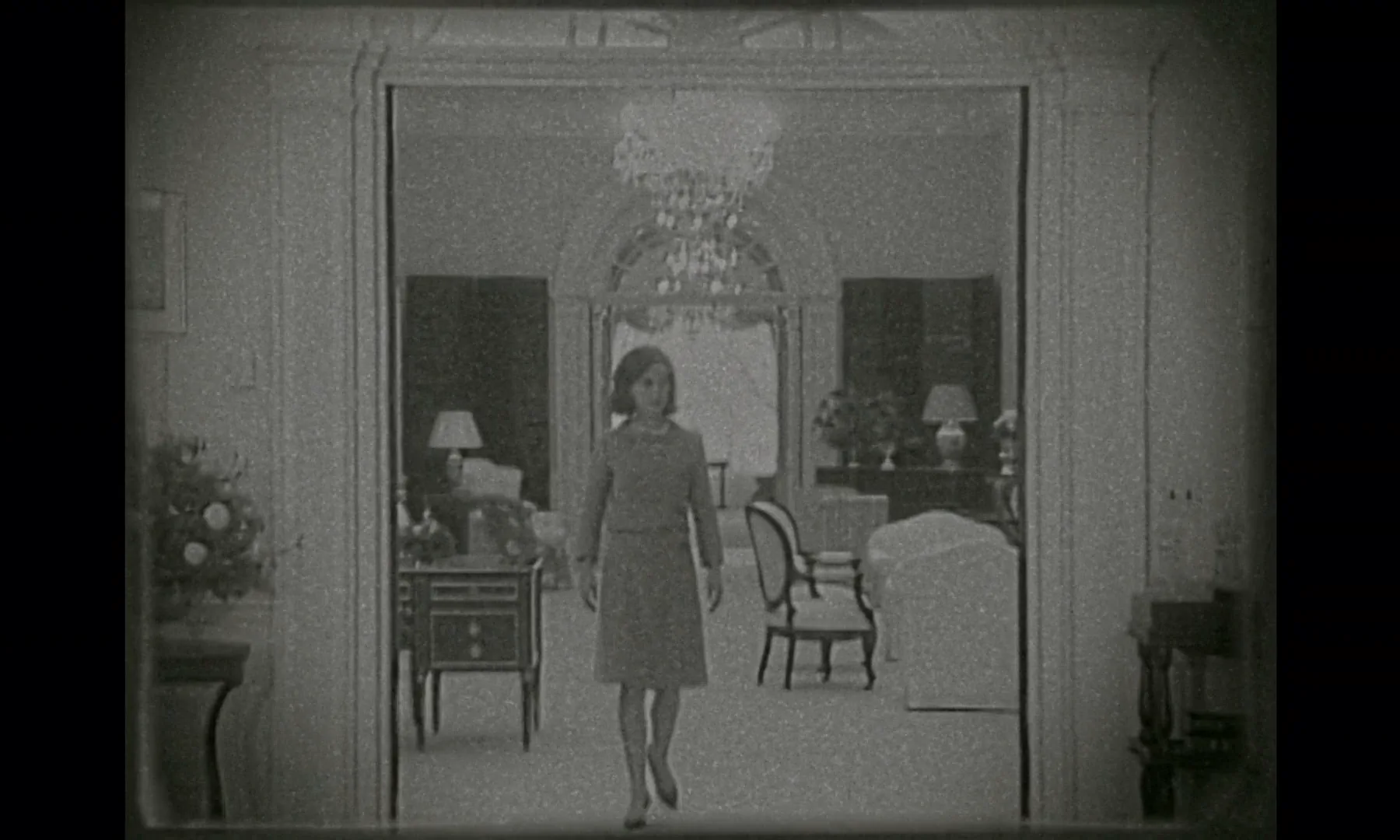
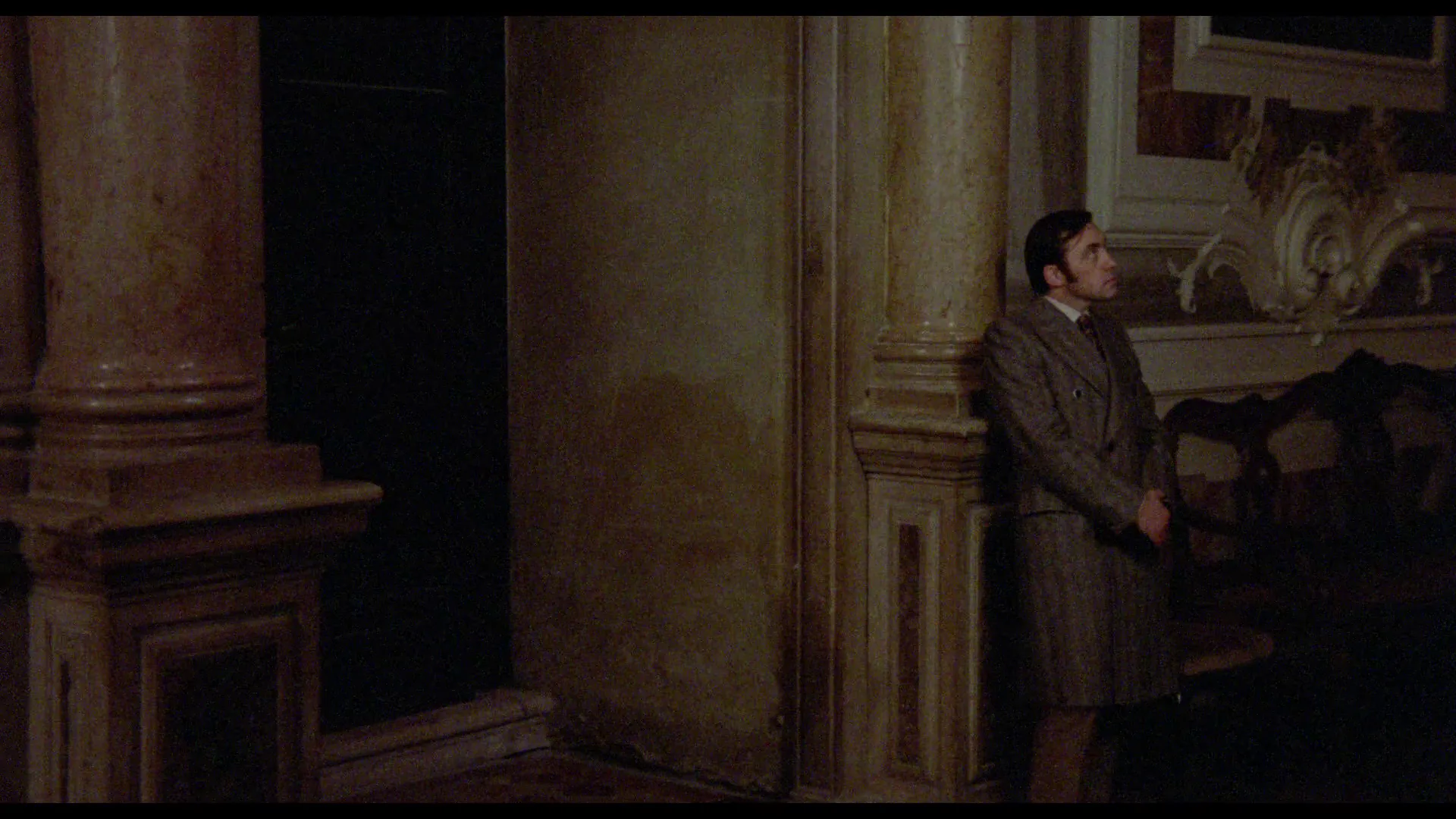
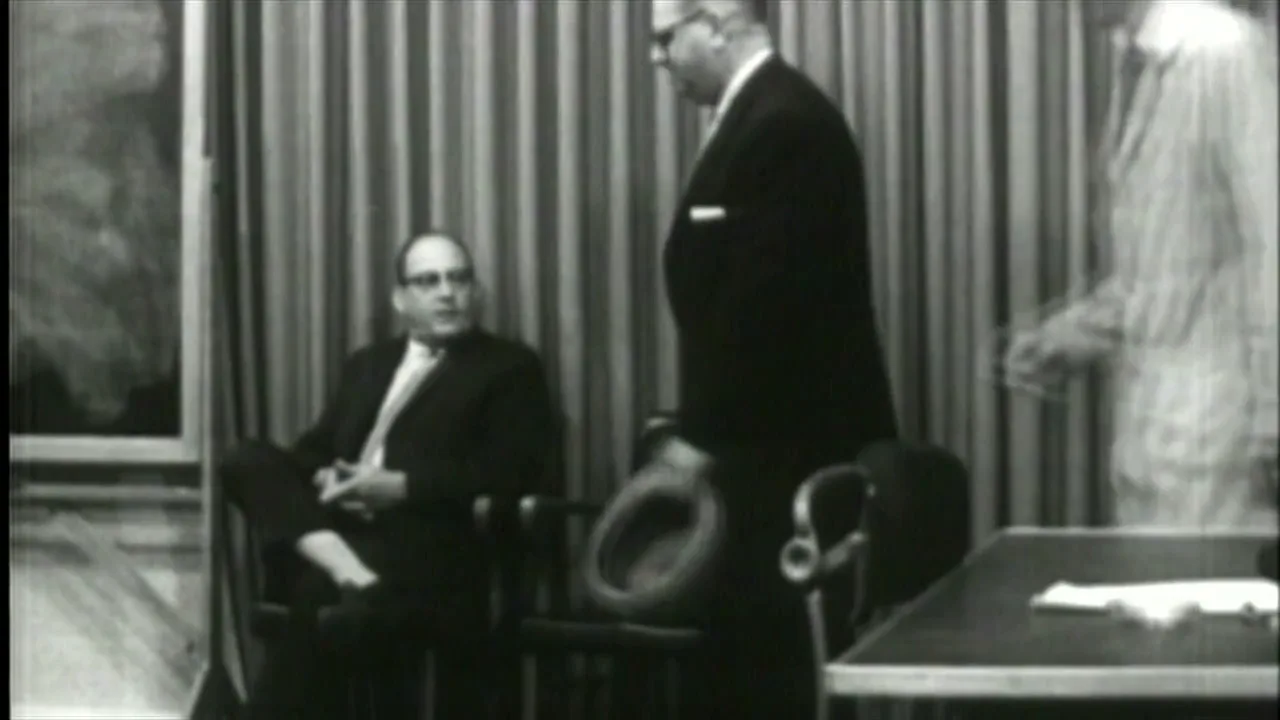
5 framesA stop trick lives between two frames, so no still can show the change. These frames show what it depends on: a frontal locked frame, a set that stays put and room for something to appear.
How to create a stop trick with AI
3 promptsVideo models don't stop the camera, so direct the trick as two matched stills you cut between, or as one locked shot with the change written as an instant swap. Keep plates and Méliès references on one FlashBoards board and compare them side by side.
Locked-off frontal wide shot of a small theater stage, camera centered at chest height, 35mm lens, whole set visible. Painted parlor backdrop with drapes, evenly lit. A gaunt magician in his fifties with a waxed ginger mustache, bald crown and black tailcoat stands left of center holding a large black cloth open. To his right a young woman with a round face and dark curls pinned high, in a white lace blouse and grey skirt, sits upright on a wooden chair. Flat front light, black-and-white film grain.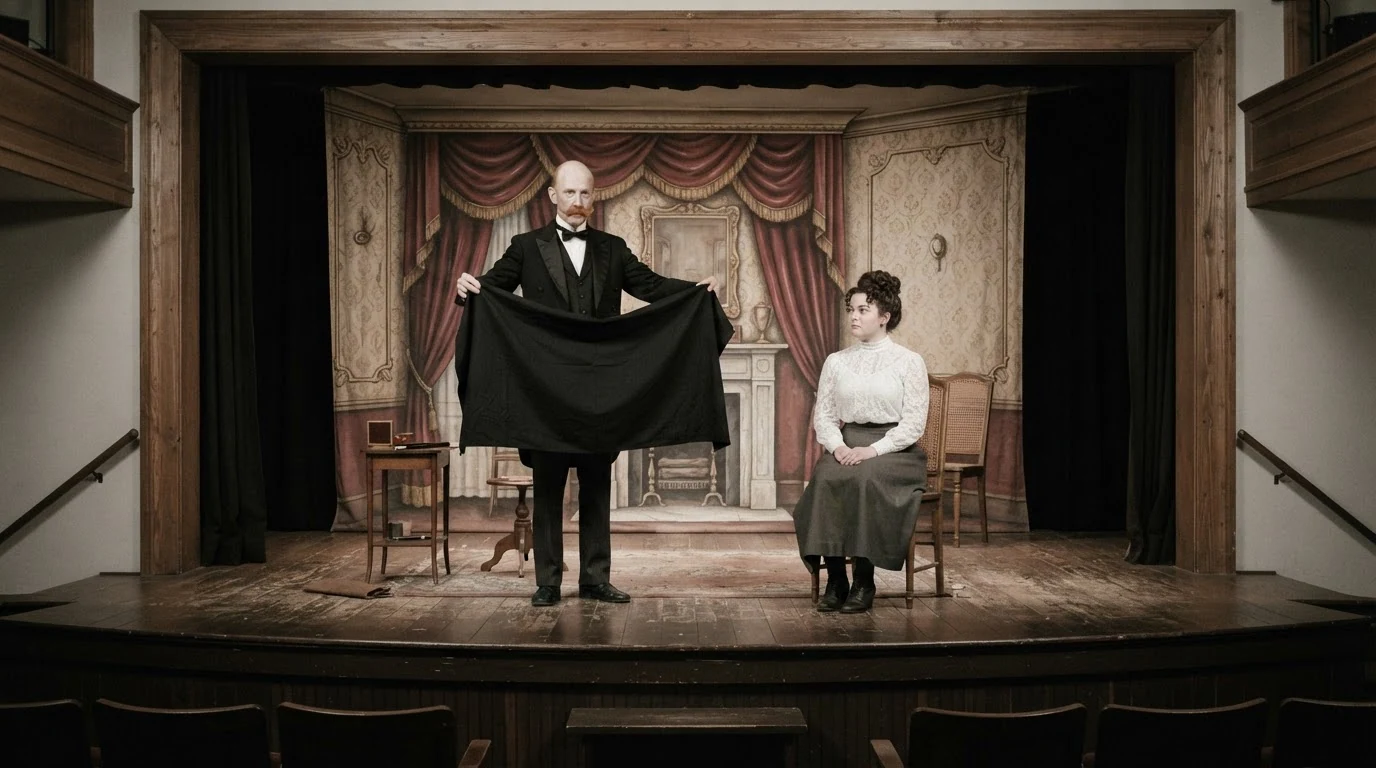
Locked-off frontal wide and centered rebuild the Méliès proscenium view. The open cloth sets up the cover, and two specific fictional performers give the video model identities to hold.
Open FlashBoardsStatic tripod wide shot, 28mm lens at eye height, level and symmetrical: a narrow tiled laundromat at night, round-door dryers along the back wall, fluorescent tubes, a wooden bench in the center. On it sits a stocky man in his forties with a shaved head, thick salt-and-pepper beard and mustard work jacket, holding an open newspaper. Deep focus, cool fluorescent color.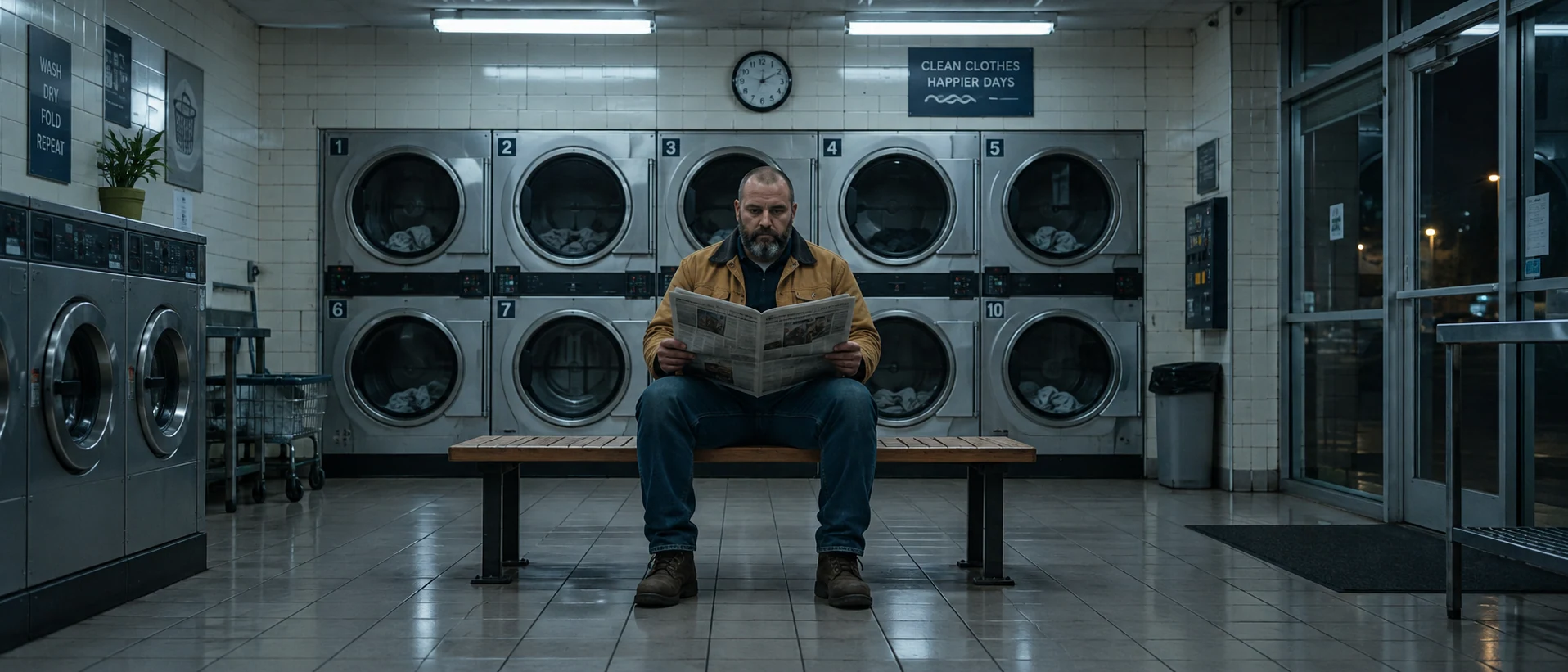
Plate A of a modern stop trick; static, level and deep focus make it matchable. For plate B, reuse it as a reference: "identical camera, framing and light; the bench holds only the newspaper."
Open FlashBoardsCamera: completely static on a locked tripod, frontal and centered for the whole shot. Action: The magician is already swinging the black cloth over the seated woman, covering her to the knees. He holds for a beat, then whips the cloth away in one sharp pull, and in that instant a white skeleton sits upright on the chair in her place. He steps back and bows to the camera.Already swinging makes the shot alive from frame one; in that instant pushes toward a substitution, not a morph. If it still morphs, generate covered and revealed clips and cut on the pull.
Open FlashBoardsCommon mistakes
- Models morph the change over a second. Write in that instant, give it a cover (cloth, smoke, flash), or cut two clips.
- The camera drifts. State completely static on a locked tripod and keep the frame wide.
- Plates don't match. Make plate B from plate A as a reference and check the pair with a difference blend.
Keep the reference frames, prompts and every generated take side by side — images and video in one canvas.
FAQ
4 questionsWhat is a stop trick in film?
An in-camera effect: the camera stops, something in front of it is added, removed or replaced, and filming resumes from exactly the same position. Played back, the two takes look like one shot, so the change appears instant. It was cinema's first special effect.
Did Georges Méliès invent the stop trick?
Not quite. The earliest known example is The Execution of Mary Stuart (1895), made for Edison, where the actor is swapped for a dummy before the beheading. Méliès, from 1896, turned the stop trick into a signature style of vanishings and transformations.
What is a substitution splice?
The historians' term for a stop trick finished in editing. The filmmaker cuts the negative at the change and removes frames so bodies and props line up across the join. Méliès worked this way, which is why his substitutions look so clean.
Is a stop trick the same as stop motion?
No, though they are related. A stop trick uses one pause to make one change, such as a person vanishing. Stop-motion animation repeats the pause on every frame, moving puppets or objects slightly each time, and pixilation applies that method to live actors.
Related terms
6- Jump CutEditing
A jump cut joins two shots of the same subject from nearly the same angle, so time visibly skips forward and the cut itself becomes noticeable — used for energy, unease or elapsed time.
- Reverse MotionCameras & Capture
Reverse motion plays action backwards — originally by running film backwards through the camera or optical printer, now by reversing clips in the edit — so smoke returns to a cigarette or, as in Tenet, time itself seems to run the other way.
- Practical EffectsPost-Production & VFX
Practical effects are created physically on set — animatronics, prosthetic makeup, miniatures, pyrotechnics, rain and wind machines — and captured by the camera rather than generated with CGI in post.
- In-Camera EditingEditing
In-camera editing means shooting shots in their final order and length, or building transitions physically on set, so the film is effectively cut during the shoot rather than afterwards.
- Silent FilmFilm History & Theory
Silent film is cinema without synchronized recorded dialogue, dominant until the late 1920s: stories were told through pantomime, intertitles, expressive lighting and live music in the theater.
- Film TransitionsEditing
Transitions are the ways one shot or scene gives way to the next — the plain cut, dissolve, fade, wipe, match cut and hidden or stylised moves like whip and mask transitions.
Further reading
Georges Méliès, Les Vues cinématographiques (1907). Paul Hammond, Marvellous Méliès (1974). Elizabeth Ezra, Georges Méliès: The Birth of the Auteur (Manchester University Press, 2000).