 FlashBoards Learn
- Learn
- Film History & Theory
- Film Analysis
Film History & Theory · Film language
Film Analysis
Also called: movie analysis, film criticism analysis, close reading of film
Film analysis is the close study of how a film makes meaning. It moves past what happens to how each moment is shown — through mise-en-scène, cinematography, editing, sound and narrative — and asks why those choices produce the effect they do. Good analysis turns an impression into an argument backed by evidence on screen.
- What it does
- Explains how a film produces its meaning and emotion by tracing specific choices of framing, staging, cutting and sound.
- Use it when
- You write an essay or video essay, study a director before a shoot, or need to explain why a reference scene works.
- Watch out
- Describe what is on screen before you interpret it; a reading the frames can't support is opinion, not analysis.
- Try this prompt
High-angle wide shot, a lone man at the far end of a long dinner table, rows of empty chairs, cold overhead light, deep focus, 16:9 film still.
What is film analysis?
Film analysis treats a film as a set of decisions. Someone chose where the camera stands, when the cut comes and what we hear under the image. Analysis identifies those decisions, describes them precisely and argues what they do to the viewer.
It is the practical end of film theory: theory offers lenses (realism, auteur theory, feminist or psychoanalytic readings), and analysis applies them to a specific scene, often a single shot. The question is never just "what happens?" but "why is it shown this way?"
What do you look at when analyzing a film?
Work through the layers one at a time, then see how they combine:
- Narrative. Structure, point of view, what the story withholds and when it reveals it.
- Mise-en-scène. Setting, props, costume, performance, blocking and light.
- Cinematography. Shot size, angle, lens, depth of field, movement, color.
- Editing. Shot length, rhythm, what is cut against what; montage can create a meaning neither shot holds alone.
- Sound. Dialogue, effects, music, silence.
Then look for patterns: a color, object or framing that returns and changes, like a motif.
How to analyze a film, step by step
- Watch once without notes. Register where you felt tense, bored or moved. The reaction is data.
- Pick a scene that caused it. Rewatch it three or four times, pausing on key shots.
- Describe before you interpret. "Wide shot, camera about 3 m high, the man small in the lower third" comes before "he feels powerless."
- Ask what else was possible. A close-up, a faster cut, a different score: a choice's effect shows against its alternatives.
- Connect it to the whole film. Does the choice repeat, reverse or pay off later?
- State a thesis. One sentence on how the film makes its meaning, backed by three or four concrete moments.
In FlashBoards this works as a board: drop frame grabs in order, add timecodes and notes, and group frames that share a motif.
A short film analysis example
Take the scene in Citizen Kane (1941) where young Charles is signed over to a banker. Description first: his mother and the banker sign papers at a table in the foreground, and through the window deep in the frame the boy plays in the snow. Deep focus keeps every plane sharp.
Interpretation second: the boy's future is decided in the frame he occupies, but he is too small and too far away to take part. A thesis for the whole film can grow from here: Kane keeps framing its hero as trapped by forces arranged around him, even at the height of his power.
Film analysis vs. film review
A film review is written for someone deciding whether to watch: setup, judgement, verdict, no spoilers. Film analysis assumes the reader has seen the film, spoils freely and makes the verdict beside the point. A review says whether a film works; an analysis explains how. A video essay is often film analysis made with the film's own images.
Film Analysis examples in film
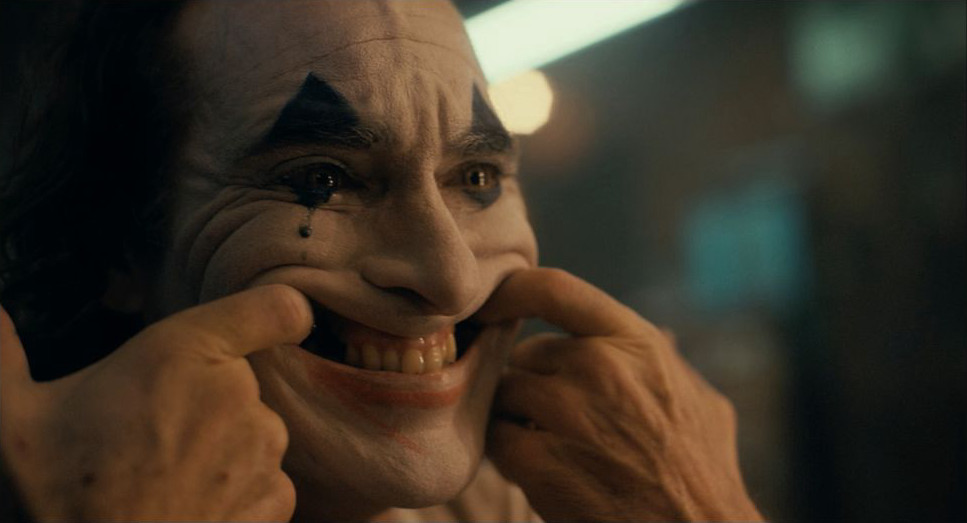
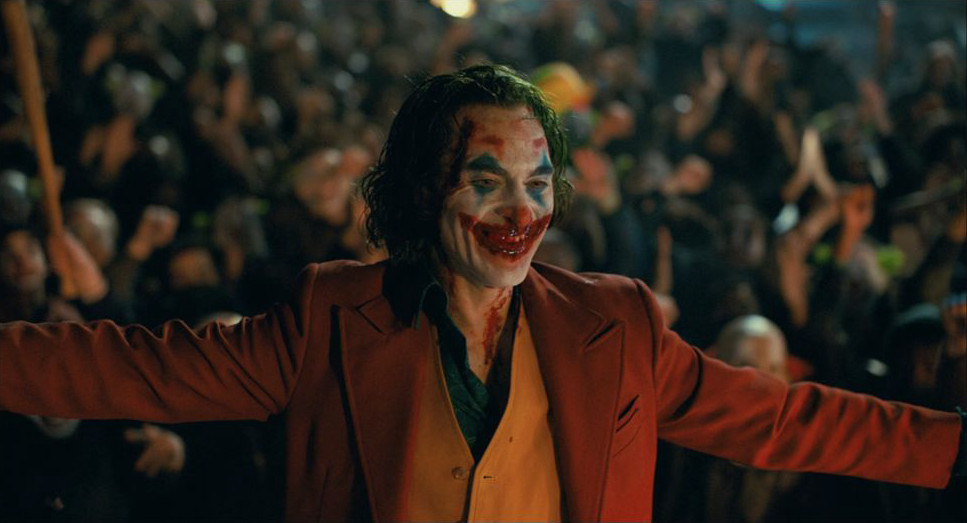
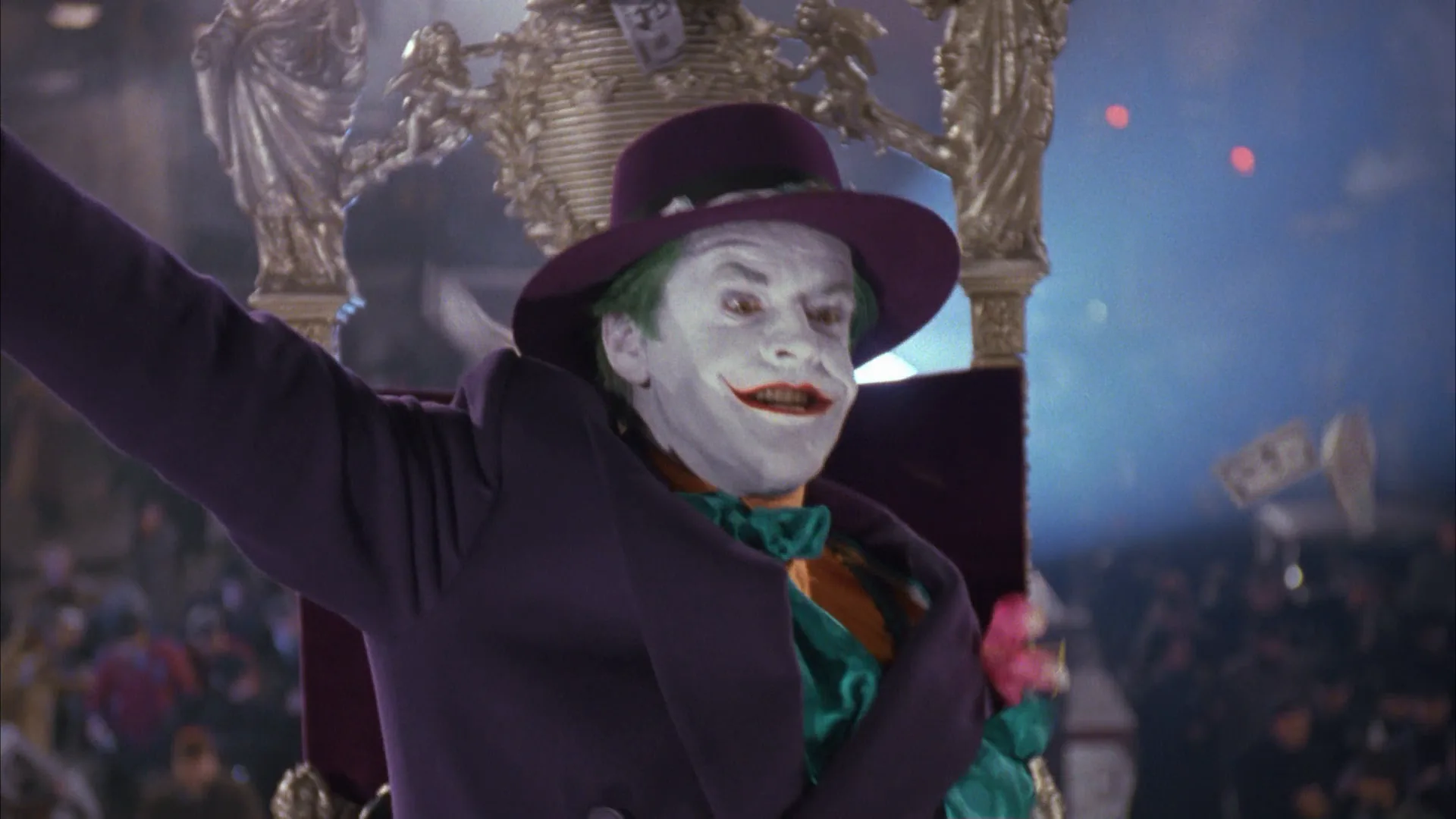
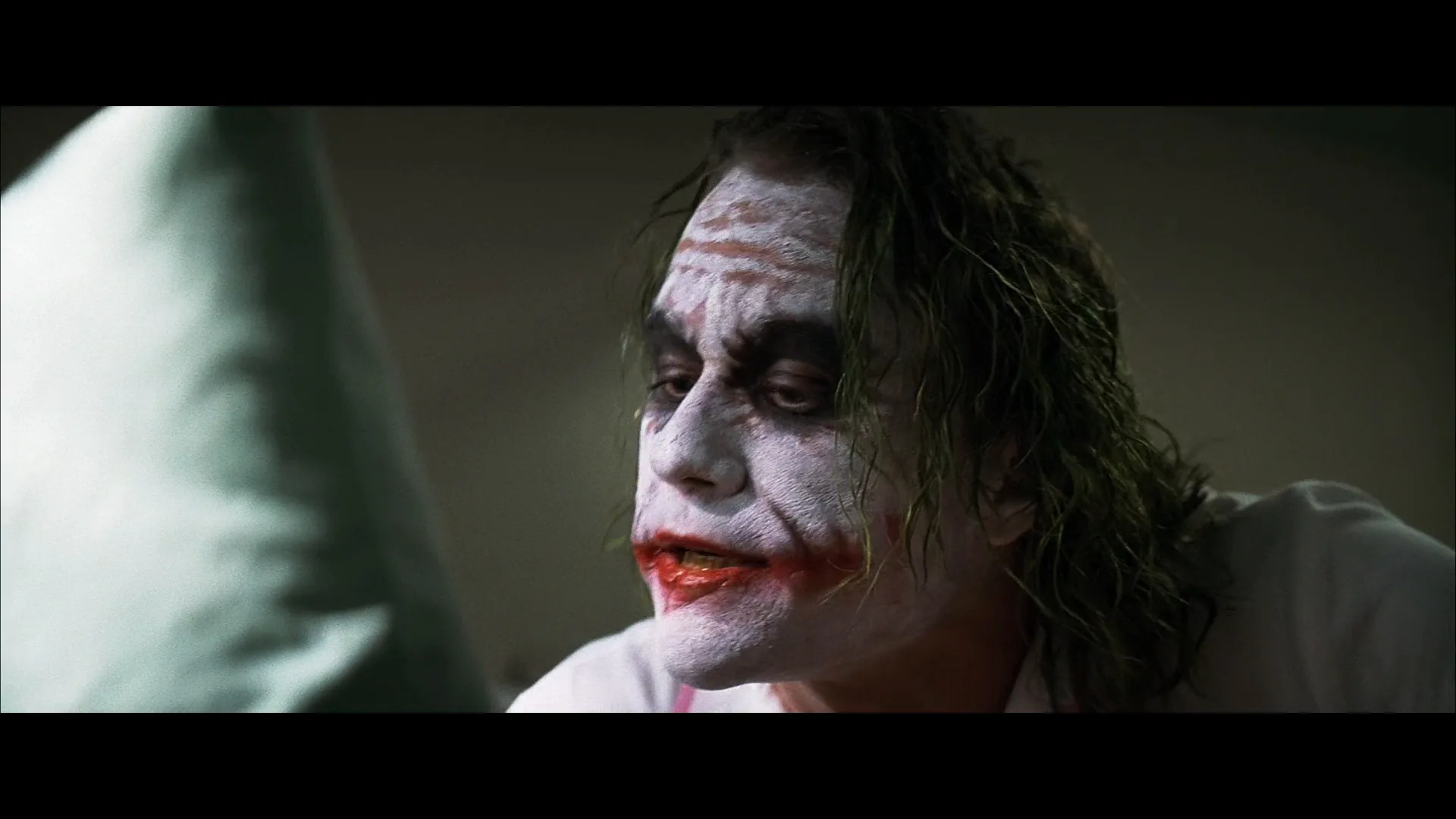
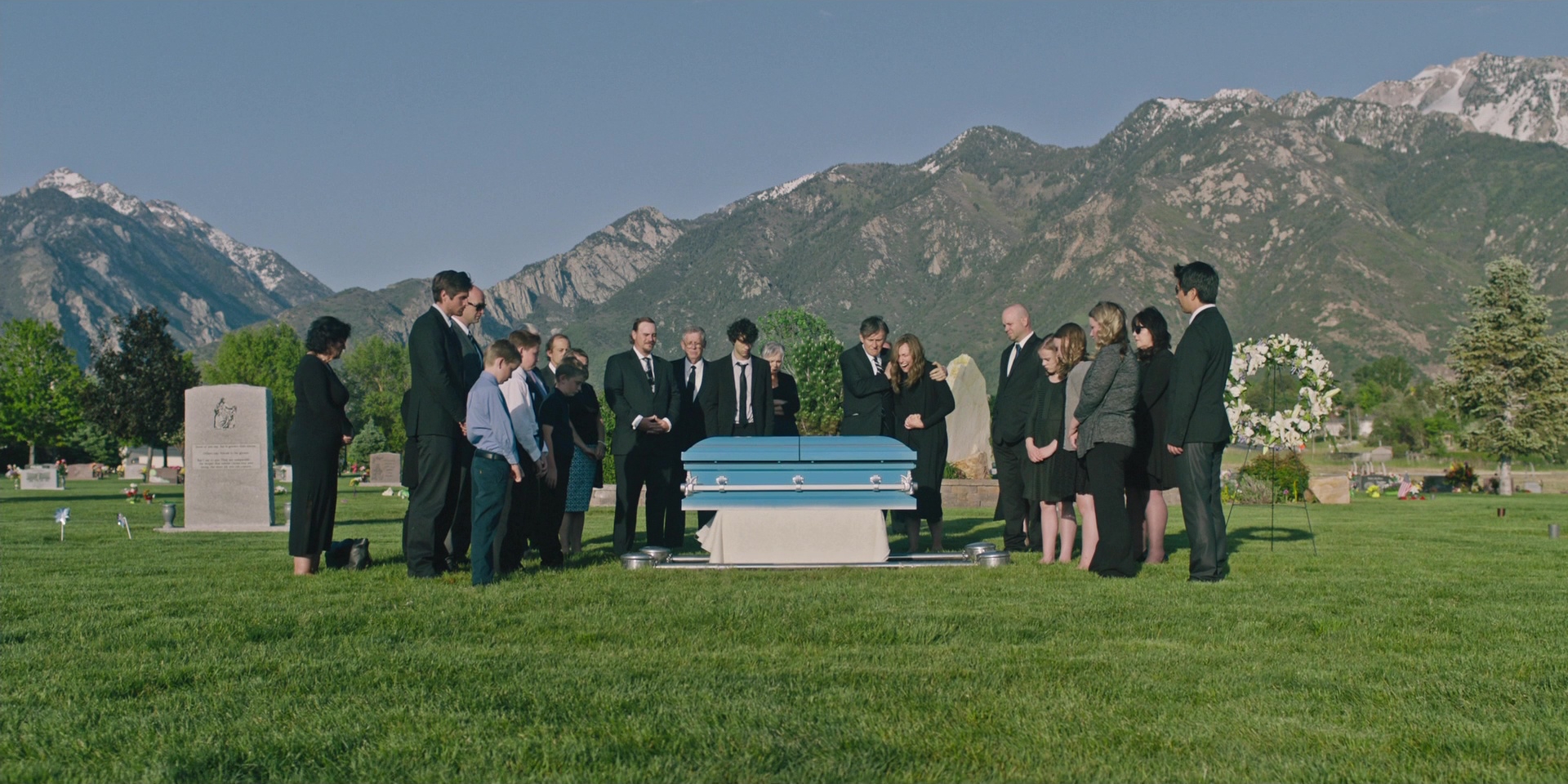
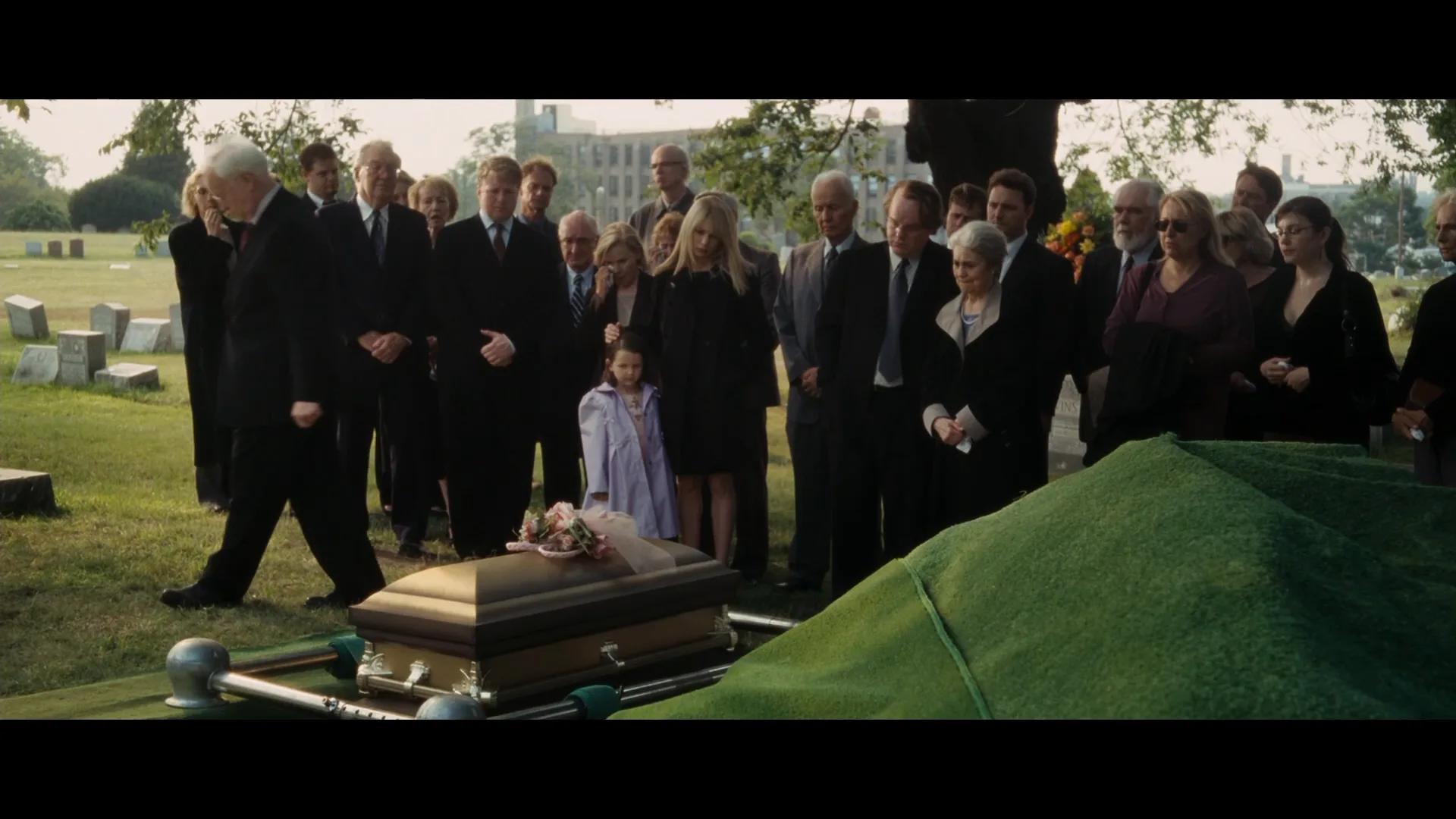
6 framesReading frames is the core skill of film analysis. The first four show three films staging the same character; the last two, the same ritual.
How to create a film analysis with AI
4 promptsImage models make a useful analysis tool: generate the same scene twice, change one variable, and see how the meaning shifts. Keep both takes side by side on a FlashBoards board and note what each choice does. The fourth prompt re-shoots a real film shot from a text description alone, and the original plays next to the result so you can compare.
High-angle wide shot down the length of a long wooden dinner table after a family meal. At the far end sits a heavyset man in his fifties with a grey horseshoe mustache, thinning red hair and a mustard cardigan, hands flat on the table. Twelve empty chairs pushed in along both sides, dirty plates, half-empty wine glasses. Camera 3 m high, tilted down about 35 degrees, 28mm lens, deep focus. Cold overhead light, grey-blue palette, the man small in the upper center. Cinematic film still.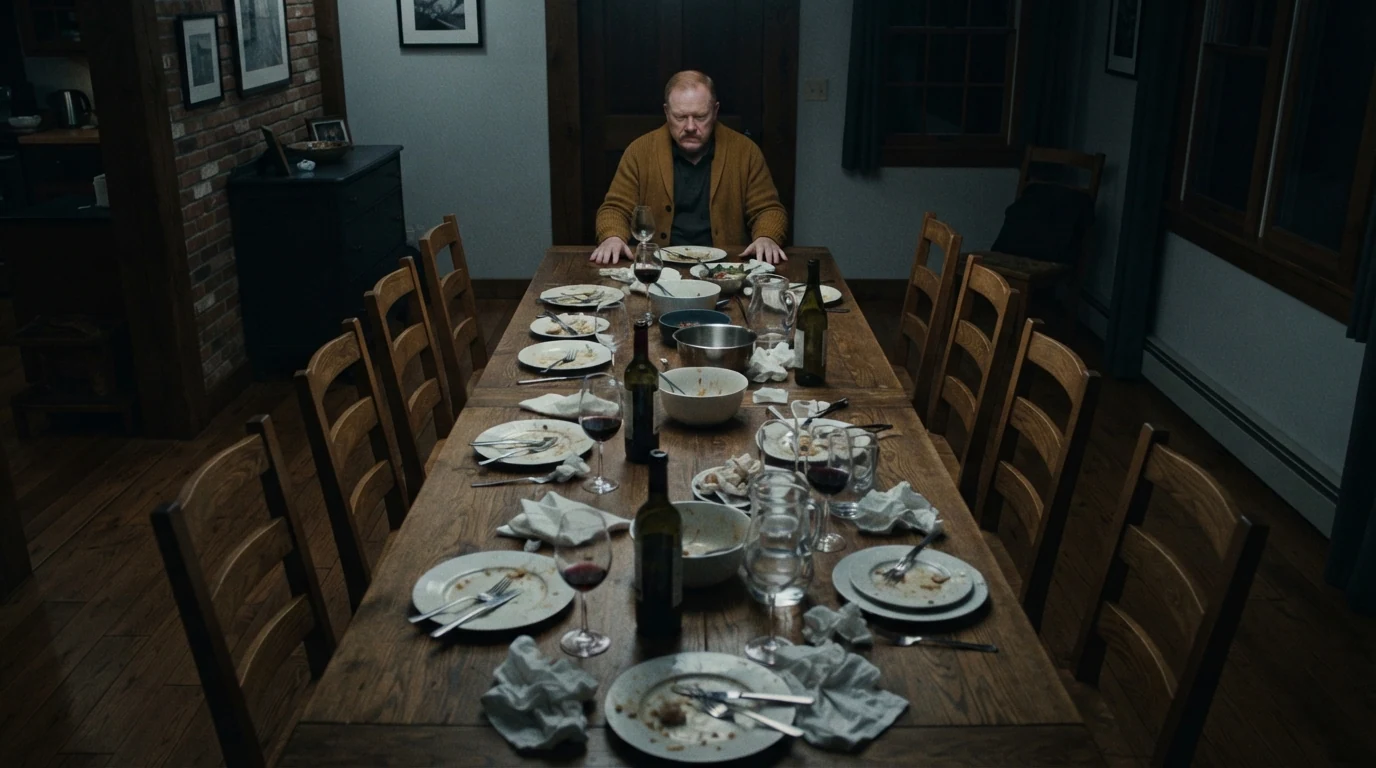
"Camera 3 m high, tilted down" and "small in the upper center" let the table and empty chairs dominate him; cold light and the grey-blue palette add isolation. This is version A and the video's start frame.
Open FlashBoardsLow-angle medium close-up across a long wooden dinner table after a family meal. A heavyset man in his fifties with a grey horseshoe mustache, thinning red hair and a mustard cardigan sits at the head of the table, hands flat on the wood, looking into the lens. Camera at table height, 50mm lens, the table edge leading toward him, dirty plates soft in the foreground. Warm amber light from one lamp beside him, deep shadows behind. Cinematic film still.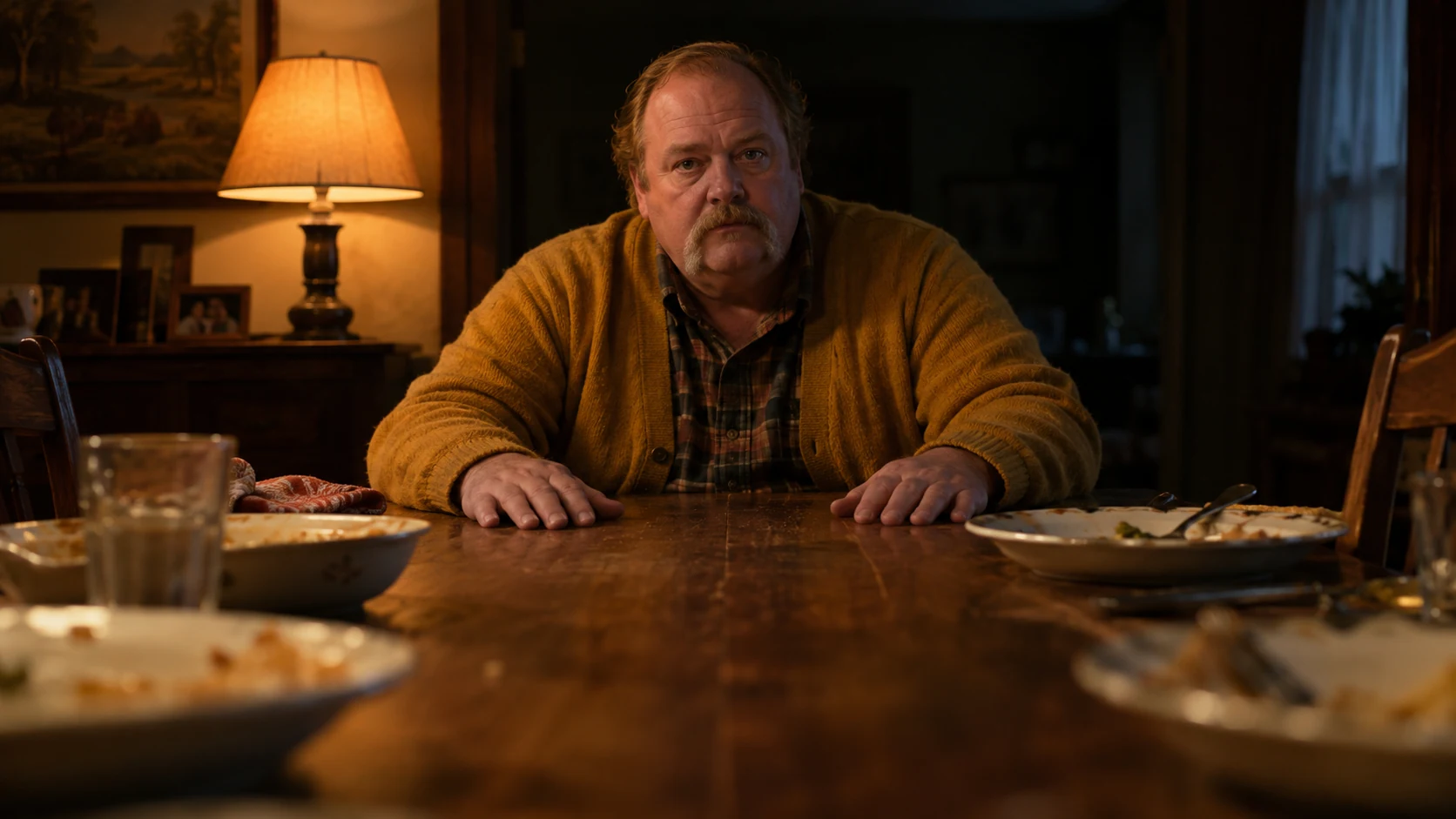
Same man, same table; only angle, distance and light change. "Low-angle," "camera at table height" and "looking into the lens" turn the defeated figure of recipe 1 into a patriarch holding court.
Open FlashBoardsCamera: slow, steady push in from the high position along the table toward the man, ending halfway down the table, still looking down on him. Action: from the first frame the man is already sliding a dinner plate toward himself. He stacks it on the plate in front of him, then rests both hands on the stack. At the end he lifts his head and looks along the rows of empty chairs.The push-in keeps the high angle, so it tightens on him without restoring his power. Starting mid-action keeps the clip alive, and every object named is already in recipe 1's frame.
Open FlashBoards{
"output": "Full-screen live-action scene from Synecdoche, New York (2008) from its very first frame: one continuous locked-off shot, no cuts. 35mm scope photography, soft overcast late-afternoon daylight, pale hazy sky, muted greens, blacks and plum, low contrast, fine grain. A cemetery lawn with low gray headstones at the left and a pale institutional building behind the trees in the background.",
"characters": {
"S1": {
"name": "Caden Cotard, played by Philip Seymour Hoffman",
"look": "stocky man in his forties, short dark beard, wire-rim glasses, dark suit, white shirt, dark tie; stands in the second row right of center, just behind a gray-haired old woman",
"voice": "silence: he does not speak"
},
"S2": {
"name": "an elderly mourner",
"look": "tall, stooped man in his late seventies, thick white hair, black suit, white shirt, dark red tie",
"voice": "silence: he does not speak"
},
"S3": {
"name": "a small girl",
"look": "about five, brown hair, knee-length lavender coat; stands in the front row left of center, a blonde woman in black right behind her",
"voice": "silence"
},
"S4": {
"name": "the mourners",
"look": "about thirty men and women of mixed ages in black suits, dark coats and dark dresses, shoulder to shoulder in two loose rows across the whole frame; a woman at the far left holds a hand to her face; a gray-haired old woman in front of S1 holds a folded paper program in both hands",
"voice": "silence"
}
},
"shots": [
{
"shot": 1,
"camera": "static tripod at chest height, slightly above the casket lid, wide lens, deep focus, the whole group sharp. Foreground: a small bronze casket on a chrome lowering frame in the lower left third with a spray of pink roses and a pale ribbon on its lid; a mound draped in bright green artificial grass cloth fills the lower right third. The rows of mourners fill the middle band from edge to edge; trees and the pale building in the soft background. The camera never moves.",
"action": [
"BEGINNING: alive from the first frame, S2 is bent low over the casket in the left third, his right hand resting on the lid beside the roses, head bowed toward it; S3 stands just right of him, looking down at the casket; everyone else stands still with heads lowered.",
"THEN: S2 lifts his hand off the lid and straightens up slowly, still facing the casket.",
"THEN: he turns toward screen left and walks with small, heavy steps along the front of the first row, from the casket to the left edge of frame, arms hanging, eyes on the grass.",
"THEN: at the far left edge he stops and turns back to face the casket, his side to the lens.",
"END: S2 stands at the far left with his hands clasped in front of him and his head lowered toward the casket; S1 has not moved, hands clasped low, head bowed, gaze on the casket; the blonde woman rests a hand on S3's shoulder; a woman at the far right lifts a hand to her eyes. No one else moves."
],
"voice": "silence: nobody speaks in this shot, no voice at all",
"dialogue": []
}
],
"sound": {
"ambience": "quiet open-air cemetery, soft breeze in the trees, faint birdsong, the old man's shoes on the grass, the rustle of coats, a sniff from the crowd",
"speech": "no words in this video; the only human sounds are breaths and movement",
"never_spoken": "no narration and no voice-over: the descriptions, performance notes and step words of this prompt are never spoken aloud",
"music": "a film score under the scene, always below the voices: a slow, hushed solo piano with soft sustained strings, mournful and restrained",
"subtitles": "none"
}
}Remakes the graveside wide from Synecdoche, New York (2008), keeping its static frame, overcast light, the old man's walk from casket to the left edge and Caden Cotard (Philip Seymour Hoffman) motionless in the crowd.
The camera block pins the static wide with casket and grass-covered mound in front, so the ritual reads as a tableau. Four action beats carry the one movement that matters, casket to the left edge, while explicit silence and a hushed piano cue hold the mood.
Open FlashBoardsCommon mistakes
- Models drift toward eye level. Give camera height and tilt in numbers, not just "high angle."
- Change one variable per take, or you can't tell which one shifted the meaning.
- Empty chairs tend to fill with extra diners. Say "pushed in" and give their count.
Keep the reference frames, prompts and every generated take side by side — images and video in one canvas.
FAQ
4 questionsHow do you analyze a film?
Watch it once for the experience, then pick a scene that produced a strong reaction and rewatch it several times. Describe the shots precisely (size, angle, light, cuts, sound), ask what alternatives the filmmakers had, connect the choices to patterns across the film, and end with a one-sentence thesis backed by concrete moments.
What are the main elements of film analysis?
Most analyses cover five layers: narrative, mise-en-scène (setting, costume, performance, blocking, light), cinematography (framing, angle, lens, movement, color), editing (rhythm and juxtaposition) and sound. Strong analysis shows how these layers work together in one scene instead of listing them separately.
What is the difference between film analysis and film criticism?
Film criticism is the broader practice of writing about films and usually includes a judgement. Film analysis is the explanatory part: how the film produces its meaning and effects. A critic may analyze a scene to support a verdict, but analysis stands on its own without deciding whether the film is good.
How long should a film analysis essay be?
A focused analysis of one scene works in 1,000 to 1,500 words; a whole-film essay often runs 2,500 or more. Focus matters more than length: one clear thesis, a handful of well-described moments as evidence and precise vocabulary.
Related terms
6- Film ReviewFilm History & Theory
A film review is a critic's evaluation of a film for readers who may not have seen it — a short plot setup, judgement of craft and performances, and a verdict, without spoiling the ending.
- Mise-en-ScèneFilm History & Theory
Mise-en-scène is everything placed and arranged in front of the camera — setting, props, costume, makeup, lighting, and the actors' positions and movement — and how it is composed in the frame to create meaning.
- Video EssayFilm History & Theory
A video essay analyzes a film, filmmaker or idea through edited clips, narration and on-screen graphics — criticism written in the language of cinema itself, a staple of YouTube film analysis.
- Visual StorytellingStorytelling
Visual storytelling conveys story, character and emotion through images — framing, blocking, light, color, objects and cuts — instead of dialogue; it's the core skill behind every storyboard and AI-generated shot.
- SymbolismStorytelling
Symbolism is using a concrete object, color, place or action to stand for an abstract idea — a key, a staircase, rain, a red coat — so the image carries meaning beyond itself.
- Film TheoryFilm History & Theory
Film theory is the body of ideas about what cinema is and how it produces meaning and pleasure — from Soviet montage and Bazin's realism to auteur theory, psychoanalytic and feminist criticism.
Further reading
David Bordwell, Kristin Thompson and Jeff Smith, Film Art: An Introduction (McGraw-Hill). Timothy Corrigan, A Short Guide to Writing About Film (Pearson).