 FlashBoards Learn
- Learn
- Production Design
- Backdrop
Production Design · Film language
Backdrop
Also called: painted backdrop, scenic backdrop, translight, backing
A backdrop in film is a large painted or printed surface hung behind a set to stand in for the world beyond it: a sky, a skyline, a mountain range. It lets a stage pass for a place, keeps light and weather under control, and gives the frame a picture where a wall would end it.
- What it does
- Puts a distant world behind a built set, so the scene can be shot indoors under full control.
- Use it when
- Windows and balconies on stage sets, stylized or theatrical worlds, night exteriors, skies that must not change between takes.
- Watch out
- Too sharp, too bright or lit by the actor's key, a backdrop reads as flat paint; keep it softer and separately lit.
- Try this prompt
Actress on a built stage balcony, huge hand-painted backdrop of a coastal town at dusk behind her, visible brushstrokes, 35mm
What is a backdrop in film?
In production design, a backdrop (also a backing, scenic backing or drop) is the picture at the back of the stage. The set design builds what actors touch: floors, walls, a balcony rail. The backdrop supplies what they only look at: the city outside the window, the hills past the terrace.
It is a flat surface, often tens of feet wide, hung from the grid well behind the built pieces. Seen past a doorway or railing and slightly out of focus, a flat painting reads as miles of depth. A scenic artist paints it in forced perspective, with the horizon where the camera's eye line meets it.
Painted backings, translights and printed drops
- Painted backdrop. Scenic paint and dyes on muslin or canvas; any style, from photoreal to storybook.
- Day/night backing. Opaque paint on the front, dyes on translucent cloth: front light gives day, backlight switches on windows and streetlamps for night.
- Translight. A large photographic transparency lit from behind. It glows like a real view and can light the set.
- Printed backing. A photo printed on fabric and front-lit, the fast modern replacement for many painted skylines.
When the view must move with the camera, productions switch to projection, LED volumes or compositing in post.
Why do filmmakers use backdrops?
Control. A painted sunset lasts all day, every take matches, and a night exterior can be shot at noon. Hitchcock's Rope (1948) lit the Manhattan skyline outside its one apartment to move from afternoon into night.
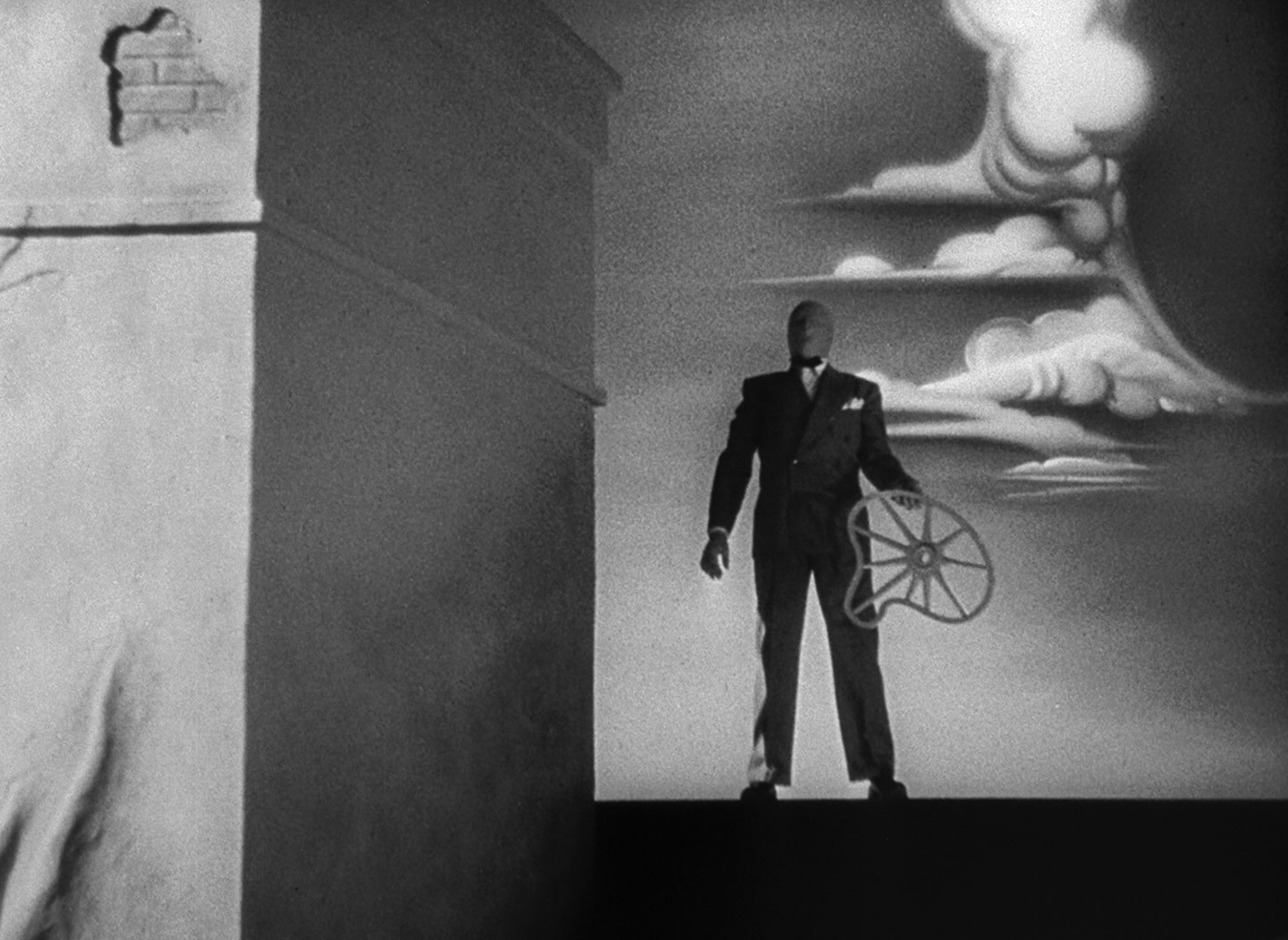
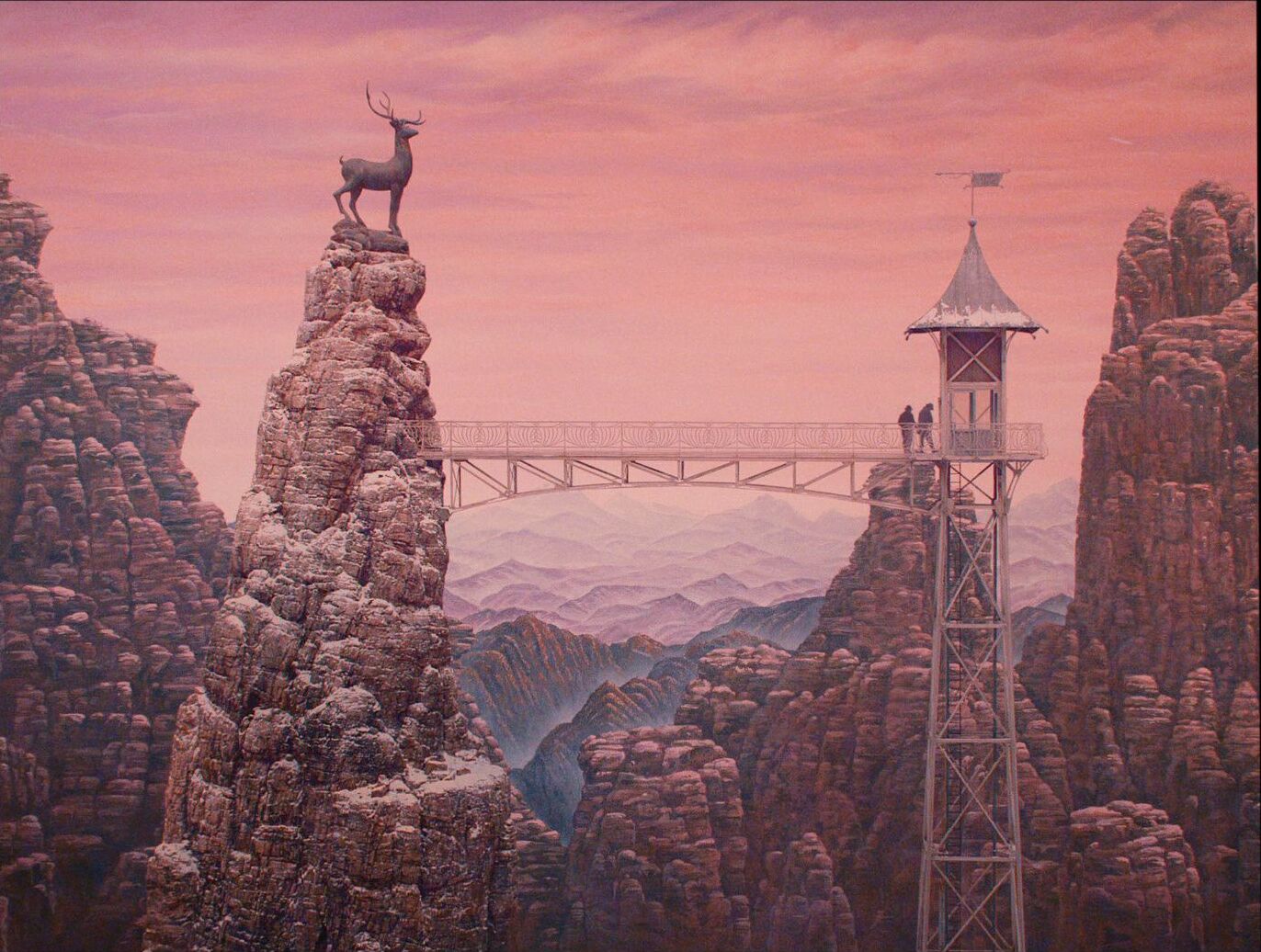
Style. Some films want the paint to show. Marnie (1964), with its painted ship at the end of a street, still divides viewers on whether the artifice is a flaw or a choice. Wes Anderson's recent films lean into it, and Barbie (2023) built its toy world on stages with painted skies and hills.
Depth. A backdrop gives a set its far plane: set piece in front, actor in the middle, painting behind. Pin references and AI tests on one FlashBoards board so designer and DP judge scale together.
How to light and shoot a backdrop
- Distance. Hang it well behind the set, commonly 15–30 ft (5–10 m) past a window flat, so shadows never land on it and focus falls off.
- Separate light. Strip lights along the top, a ground row along the bottom, even across the surface. The actor's key must not spill onto it.
- Exposure. A daylight view usually sits about a stop over the interior; night backings sit darker, with only windows glowing.
- Focus. Keep it slightly soft. A shallow depth of field hides canvas texture and seams.
- Eye line. Shoot near the camera height the painter planned for, or the painted perspective breaks.
- Air. Light haze between set and backdrop pushes the painting back.
Backdrop vs. cyclorama
A backdrop carries a picture of a specific place. A cyclorama carries none: a seamless, cornerless wall lit as white, black, sky or chroma green. A green cyc leads to background replacement, where the world is added in post; a backdrop is in camera, seen by the actors and lit with the set.
Backdrop examples in film
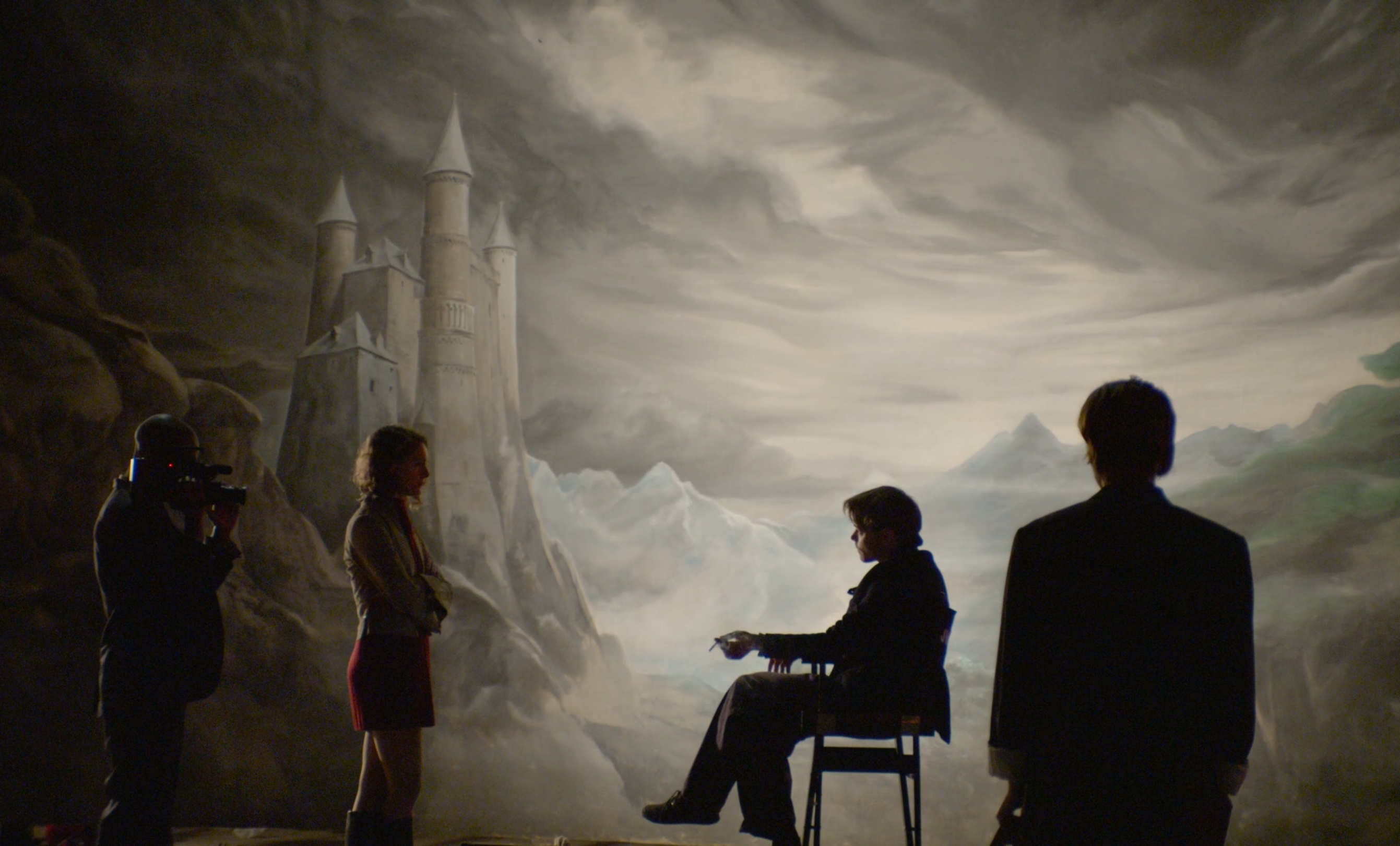
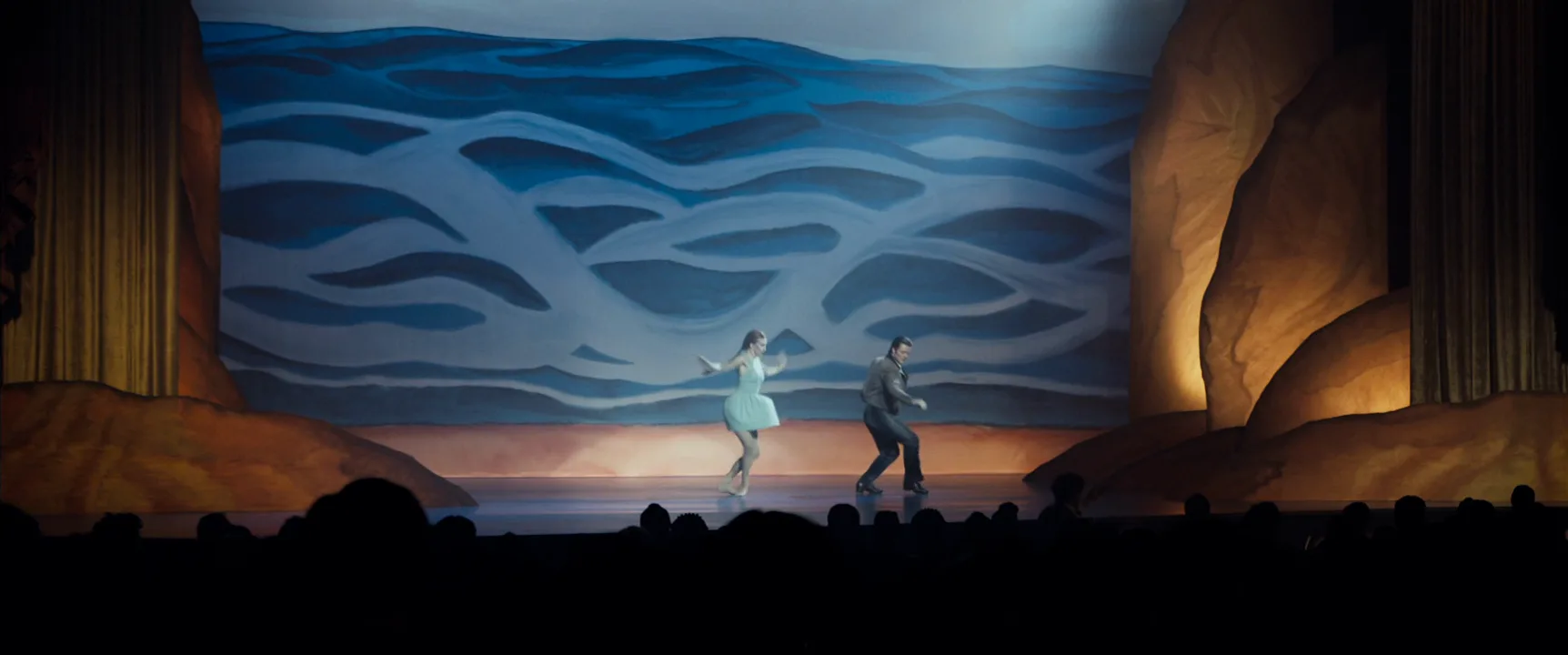
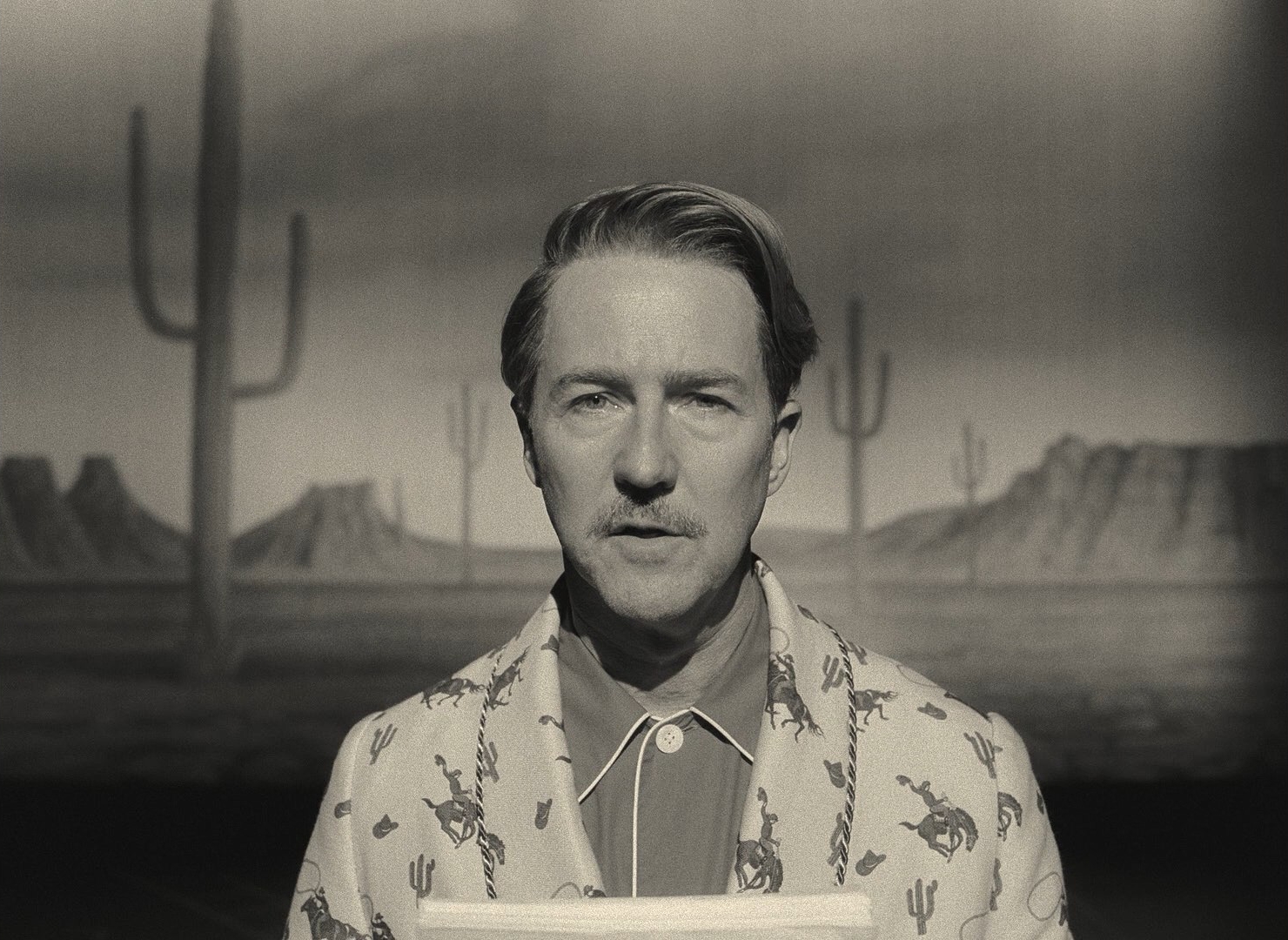
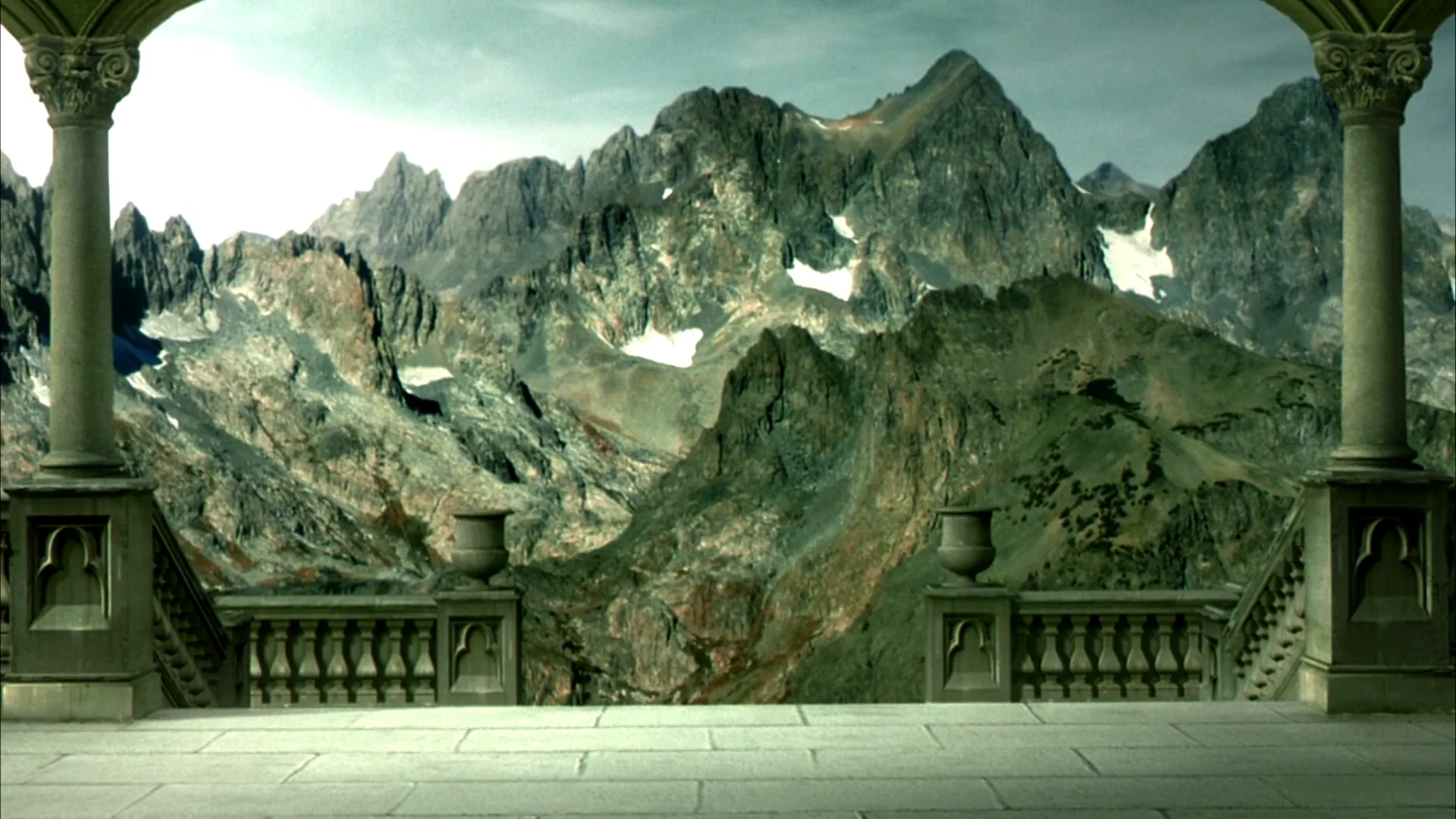
9 framesFrames where the world behind the actors is paint, print or light.
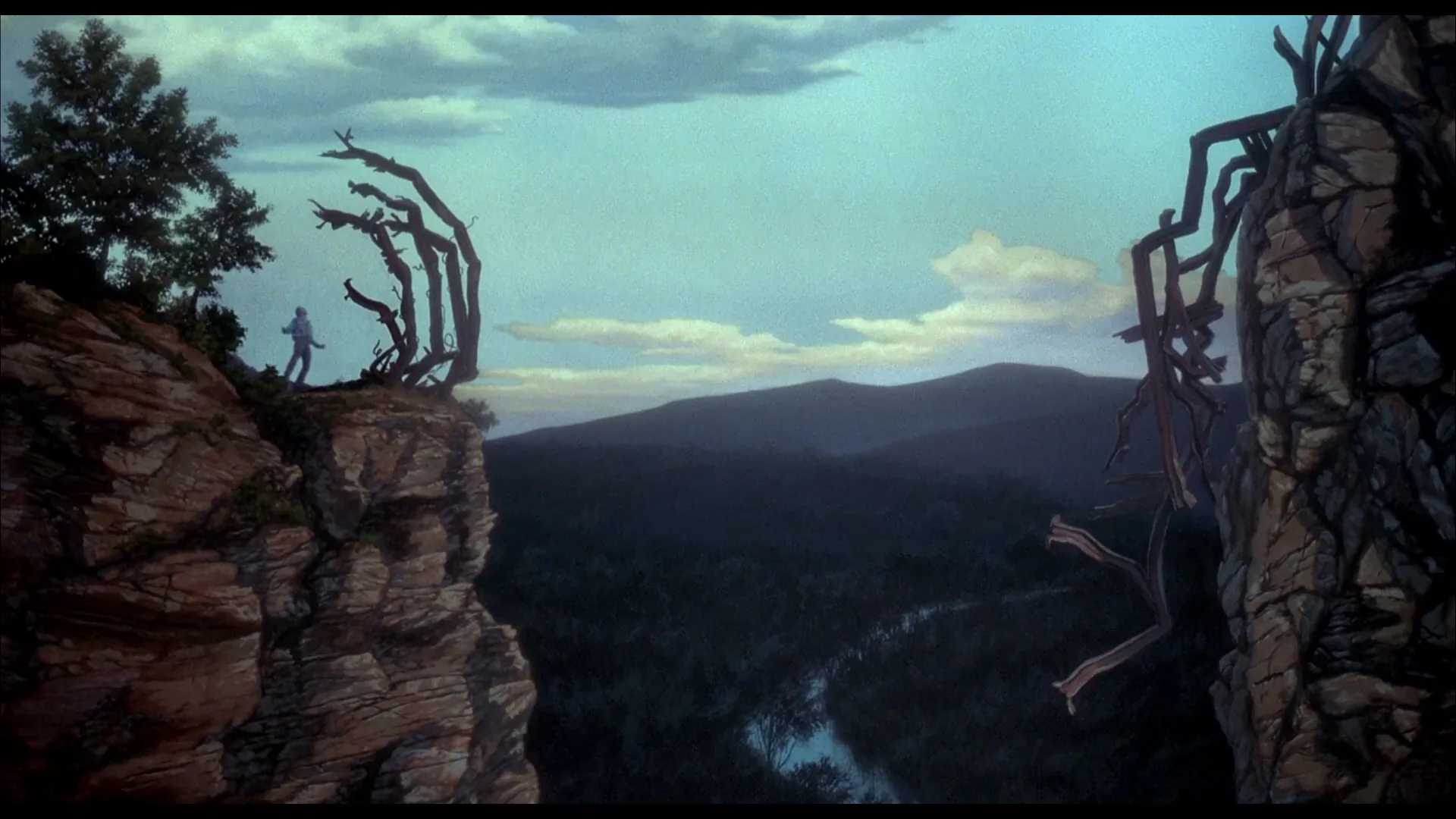
How to create a backdrop with AI
4 promptsImage models default to real places, so name the backdrop as an object: a painted canvas behind a built set, lit on its own. Generate the start frame, try a second take, then animate the actor while the painting stays still, all next to your film references on one FlashBoards board. The fourth prompt re-shoots a real film shot from a text description alone, and the original plays next to the result so you can compare.
Wide shot on a 1950s studio soundstage: a built hotel balcony with wrought-iron railing and potted palms in the foreground, a woman in her forties with a silver-streaked bob and mustard trench coat leaning on the rail. Behind her hangs a huge hand-painted backdrop of a coastal town at dusk with pastel houses and a lighthouse, visible brushstrokes, slightly soft focus, evenly lit from above. Warm key light on the woman only, 35mm lens at eye height, Technicolor palette.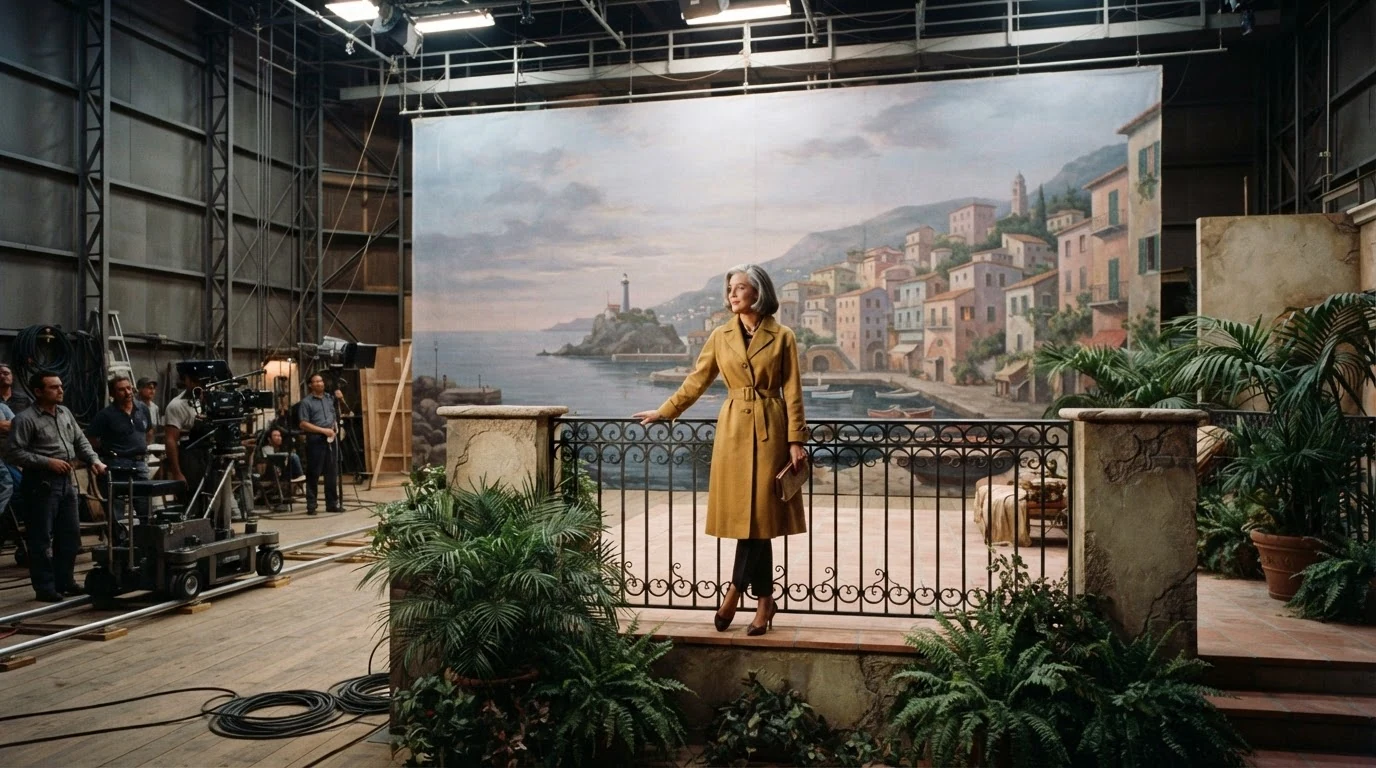
Hand-painted backdrop, visible brushstrokes and slightly soft focus stop the town from becoming a real location; the built balcony is the layer the backing sits behind, and separate light keeps them apart.
Open FlashBoardsSymmetrical theatrical tableau on a wooden stage: a teenage boy with red curly hair, freckles and a patched denim jacket sits on a white fence. Behind him a painted canvas backdrop of wheat fields under giant cream clouds, slightly wrinkled, its bottom edge visible above the stage floor. Flat frontal light, 50mm lens at chest height, muted pastel palette.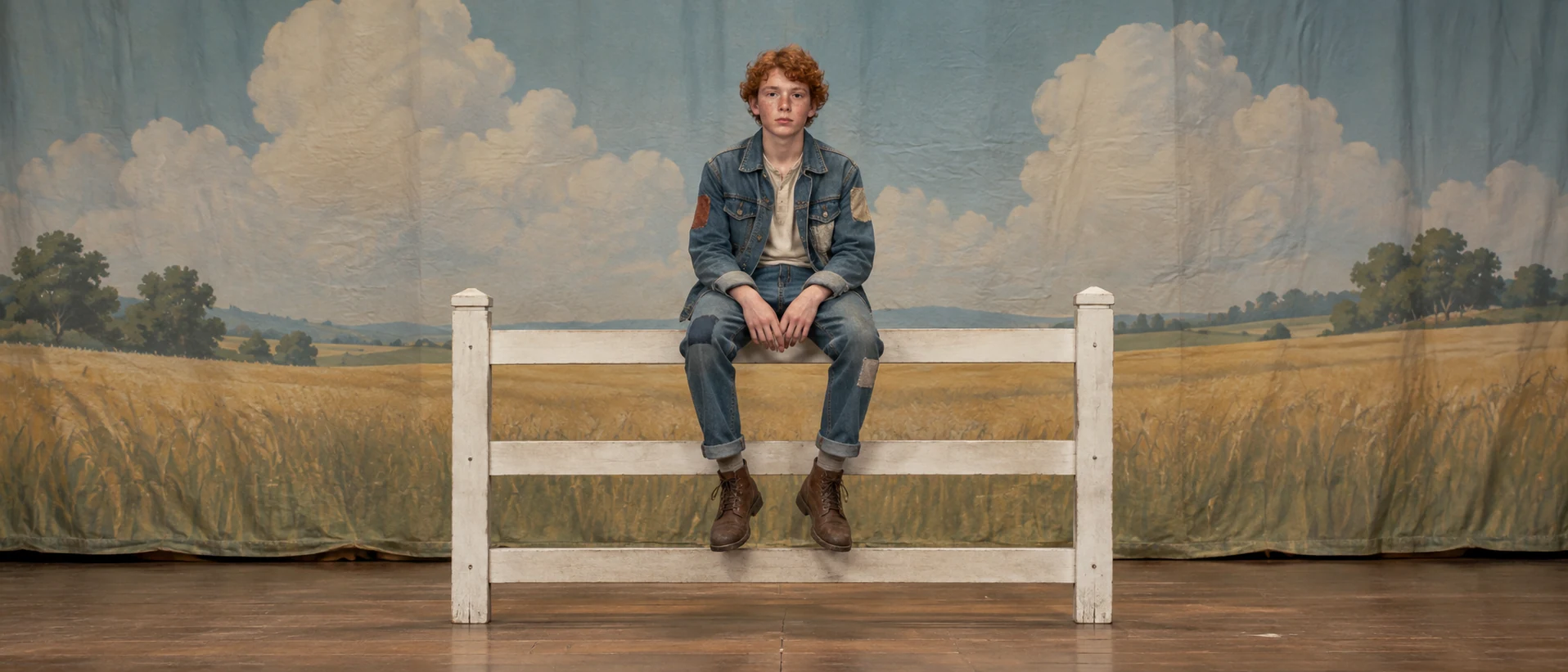
This take shows the artifice on purpose: slightly wrinkled and bottom edge visible make the drop an object, and flat frontal light gives the stage-play look.
Open FlashBoardsCamera: slow dolly left along the balcony railing at walking pace for the whole shot, keeping the woman in the right third. Action: The woman is already lifting her head from the rail; she turns toward the painted town, pulls her coat tighter and takes one step along the balcony. The painted backdrop stays still and flat behind her.Motion starts immediately, so the shot doesn't creep in on a still. The painted backdrop stays still and flat keeps the model from animating painted clouds or waves.
Open FlashBoards{
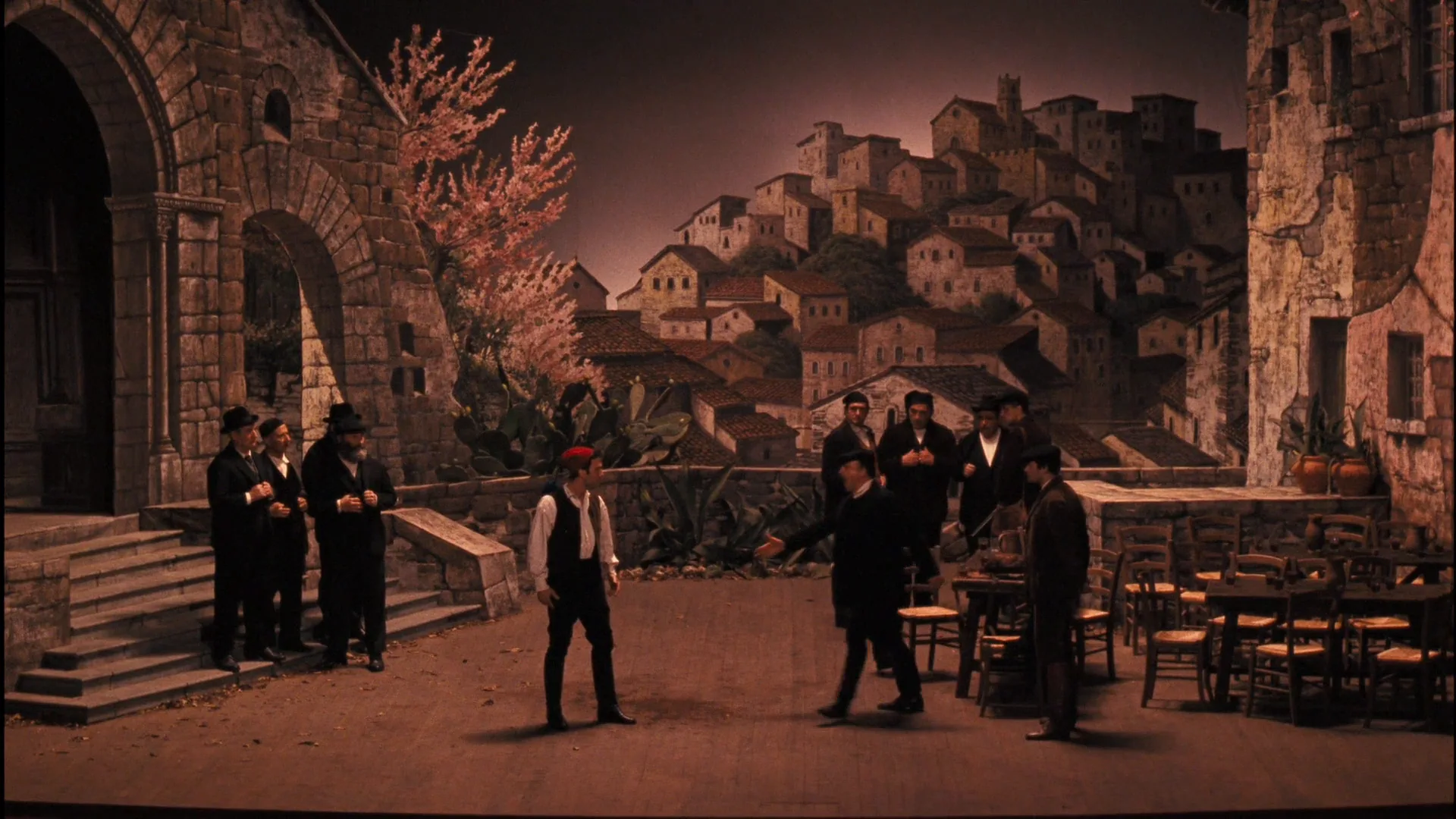
"output": "Full-screen live-action scene from The Godfather Part III (1990), from its very first frame: one continuous shot, no cuts. 1990s 35mm film stock with soft grain: an opera performance seen from the stalls, a built Sicilian village square on a wooden stage in front of a huge hand-painted canvas backdrop of a hill town. Dim warm rose-and-amber stage light, sepia-rose palette, a soft dark vignette of sky above the painted rooftops.",
"characters": {
"S1": {
"name": "a young villager, an opera singer on the stage (not named in the film's cast)",
"look": "slim, dark hair under a small red cap, loose white shirt with long sleeves, black waistcoat, black trousers",
"voice": "silence"
},
"S2": {
"name": "an older villager, an opera singer on the stage (not named in the film's cast)",
"look": "sturdy, dark flat cap, long black coat buttoned to the neck, dark trousers",
"voice": "silence"
},
"S3": {
"name": "the chorus of villagers, opera singers (not named in the film's cast)",
"look": "men in black suits and waistcoats, dark hats and caps: three by the church steps, bearded one among them, five more by the caf\u00e9 tables",
"voice": "silence"
}
},
"shots": [
{
"shot": 1,
"camera": "locked-off, static, eye level from the middle of the stalls, wide lens, extreme wide shot of the whole stage: a stone church with a tall arched doorway and steps on the left, a pink blossoming tree behind it, a low stone parapet across the middle, a stone house and caf\u00e9 tables with rush-seat chairs on the right, the painted backdrop filling the back of the frame; the framing never changes",
"voice": "silence: nobody speaks in this shot, no voice at all",
"action": [
"BEGINNING: alive from the first frame, S1 stands alone centre-left on the bare stage floor, feet apart, arms loose at his sides, head turned to screen right toward the group by the caf\u00e9 tables; three S3 men stand side by side on the lowest church steps at the left edge, hands clasped at their chests, facing S1; S2 stands at the front of the right-hand group of S3, near the caf\u00e9 tables in the right third.",
"THEN: S2 leaves the right-hand group and walks steadily to screen left across the empty floor toward S1, long even strides, eyes on S1; the S3 men on the right turn their heads to follow him; the three on the steps stay still.",
"THEN: S1 stays planted, only his head tracking S2, then takes one step to screen right and raises his right hand in front of him.",
"END: S2 stops a pace from S1 in the middle of the square, and the two men clasp right hands in a handshake at chest height, small figures under the painted town; everyone else holds still.",
"The backdrop behind them never moves: a hand-painted hill town of pale ochre houses with terracotta roofs climbing to a bell tower on the hilltop, painted small to fake distance, visible brushstrokes and canvas texture, lit evenly and a little softer than the actors, a dark rose sky fading to black above it."
],
"dialogue": []
}
],
"sound": {
"ambience": "a hushed opera house, footsteps on hollow wooden stage boards, a faint rustle from the audience in the stalls",
"speech": "no words in this video; the only human sounds are breaths and movement",
"never_spoken": "no narration and no voice-over: the descriptions, performance notes and step words of this prompt are never spoken aloud",
"music": "a film score under the scene, always below the voices: an opera orchestra in the pit, low tense strings with a slow pulse under a quiet held horn note",
"subtitles": "none"
}
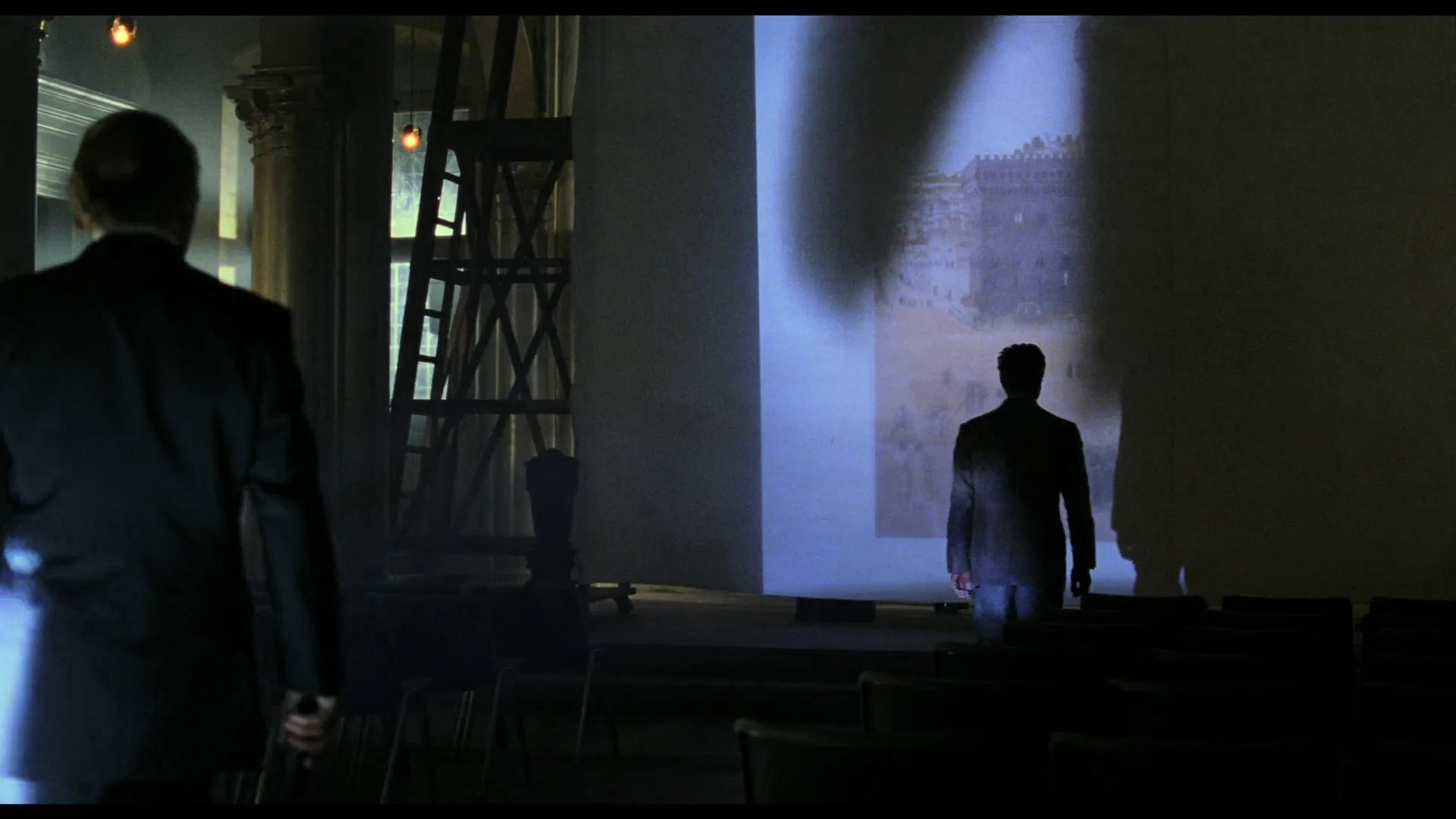
}Remakes the static wide of the opera stage in The Godfather Part III (1990): the stalls view, church steps, café tables, the chorus, the walk into a handshake and the painted hill town behind.
A locked-off extreme wide keeps the painting behind small figures; painted small to fake distance and never moves make it a stage drop, and the scripted walk and handshake give the actors a beat while the town stays paint.
Open FlashBoardsCommon mistakes
- The painting turns real. Say hand-painted backdrop and visible brushstrokes, or you get a photographic town.
- No separation. A backdrop as sharp and bright as the actor looks pasted in; ask for slightly soft focus and separate light.
- Wrong scale. State camera at eye height so the painted horizon stays behind the actor, not above.
- Moving paint. Video models animate painted skies and seas; say the backdrop stays still and flat.
Keep the reference frames, prompts and every generated take side by side — images and video in one canvas.
FAQ
4 questionsWhat is a backdrop in film?
A backdrop is a large painted or printed surface hung behind a stage set to show what lies beyond it: sky, city or landscape. Seen through windows or past a railing and usually slightly out of focus, it gives the set distance, so a scene can be shot on a stage under full control of light and weather.
What is a painted backdrop called on a film set?
Crews call it a backing, scenic backing or drop. A painted backdrop is done by scenic artists on canvas or muslin; a translight is a backlit photographic transparency; a printed backing is a photo on fabric. A day/night backing shows day under front light and lit night windows under backlight.
Is a backdrop the same as a green screen?
No. A backdrop is the final image, recorded in camera, visible to the actors and lit with the set. A green screen is a placeholder replaced in post. Backdrops save post work and give actors a real view; green screen allows camera moves and backgrounds a flat painting can't follow.
Are painted backdrops still used in movies?
Yes. Printed and painted backings are still standard outside windows on stage sets, and some directors choose paint for its look, as Wes Anderson does. LED volumes took over many moving-camera exteriors, but a static view through a window is often cheaper as a backing.
Related terms
7- CycloramaFilmmaking Process & Crew
A cyclorama (cyc) is a seamless curved wall or tightly stretched backdrop with no visible corner between floor and wall, lit evenly so the background reads as endless white, black, chroma green or sky.
- Background ReplacementPost-Production & VFX
Background replacement keeps the actor or object and swaps what is behind them — via green or blue screen keying, rotoscoping, masks or LED volumes.
- Set DesignProduction Design
Set design is the planning and construction of the physical spaces a scene is shot in — from a single room built on a stage to an entire street — so that architecture, scale and texture express the story.
- SoundstageFilmmaking Process & Crew
A soundstage is a large soundproofed building with a high grid for lights where sets are built and filmed under full control of light, sound and weather.
- Forced PerspectiveCameras & Capture
Forced perspective places actors or objects at carefully chosen distances from the camera so they appear larger, smaller, nearer or farther than they are — the in-camera trick behind giant-and-small scenes shot without digital effects.
- Depth LayeringComposition & Framing
Depth layering builds a shot in distinct planes — foreground, midground and background — each holding something meaningful, so the flat screen gains volume and several actions or ideas can be read at once.
- Production DesignProduction Design
Production design is the creation of the entire physical world of a film — locations, sets, props, colors and textures — led by the production designer together with the director and cinematographer.
Further reading
Richard M. Isackes and Karen L. Maness, The Art of the Hollywood Backdrop (2016).