 FlashBoards Learn
- Learn
- Storytelling
- Characterization
Storytelling · Film language
Characterization
Also called: direct characterization, indirect characterization
Characterization is how a film reveals who a character is: through actions, choices, speech, appearance, how others react to them and what the camera lets us notice. Direct characterization tells the audience a trait; indirect characterization shows it and lets viewers draw the conclusion themselves, which is why film leans on it.
- What it does
- Turns a name on the page into a specific person the audience can read, predict and care about.
- Use it when
- Introducing a character, staging a scene where a trait must drive a choice, or dressing a set and a costume.
- Watch out
- Traits announced in dialogue feel like exposition; a choice under pressure says more than any description.
- Try this prompt
Wide shot of a cramped watch-repair workshop at night, a woman in her sixties with cropped silver hair hunched at the bench, dozens of stopped clocks on the wall, 35mm film still
What is characterization?
A character is the person in the story. Characterization is the method: every piece of information the film hands the audience to build a picture of that person, starting before the first line of dialogue.
A novelist can write she was proud and lonely. A film rarely gets that luxury. The camera records surfaces, so traits have to become things that can be photographed: a gesture, a room, a costume, a decision, the way someone flinches when she walks in. That is why characterization sits at the center of storytelling on screen. The trait planted in the first ten minutes is usually the one the climax will test.
Direct vs. indirect characterization
Direct characterization states a trait outright: a narrator, a title card, or another character saying he's the best pilot we have. It is fast and unambiguous. Amélie (2001) uses it with a wink, as the narrator lists its heroine's small private pleasures.
Indirect characterization shows behavior and lets the audience infer the trait. Its channels are often remembered as STEAL:
- Speech: what they say and what they avoid saying, where subtext lives.
- Thoughts: in film, voice-over, a point-of-view shot or a held close-up.
- Effect on others: how the room changes when they enter.
- Actions: choices and habits, especially under pressure.
- Looks: face, costume, posture, the space they live in.
Film favors the indirect kind because audiences trust what they see. Direct lines work best from a biased source: an enemy's compliment characterizes both speakers.
How films reveal character: examples
The strongest introductions compress a person into one action. Raiders of the Lost Ark (1981) opens with Indiana Jones reading a temple's traps, swapping the idol with care, then running for his life when it goes wrong: skilled, bold and slightly over his head, without a speech.
There Will Be Blood (2007) spends its opening with Daniel Plainview alone in a mine shaft, working in near silence, crawling on after a fall. Before he speaks, we know how far he will go.
In Jaws (1975), Quint enters a town meeting by dragging his nails down a chalkboard.
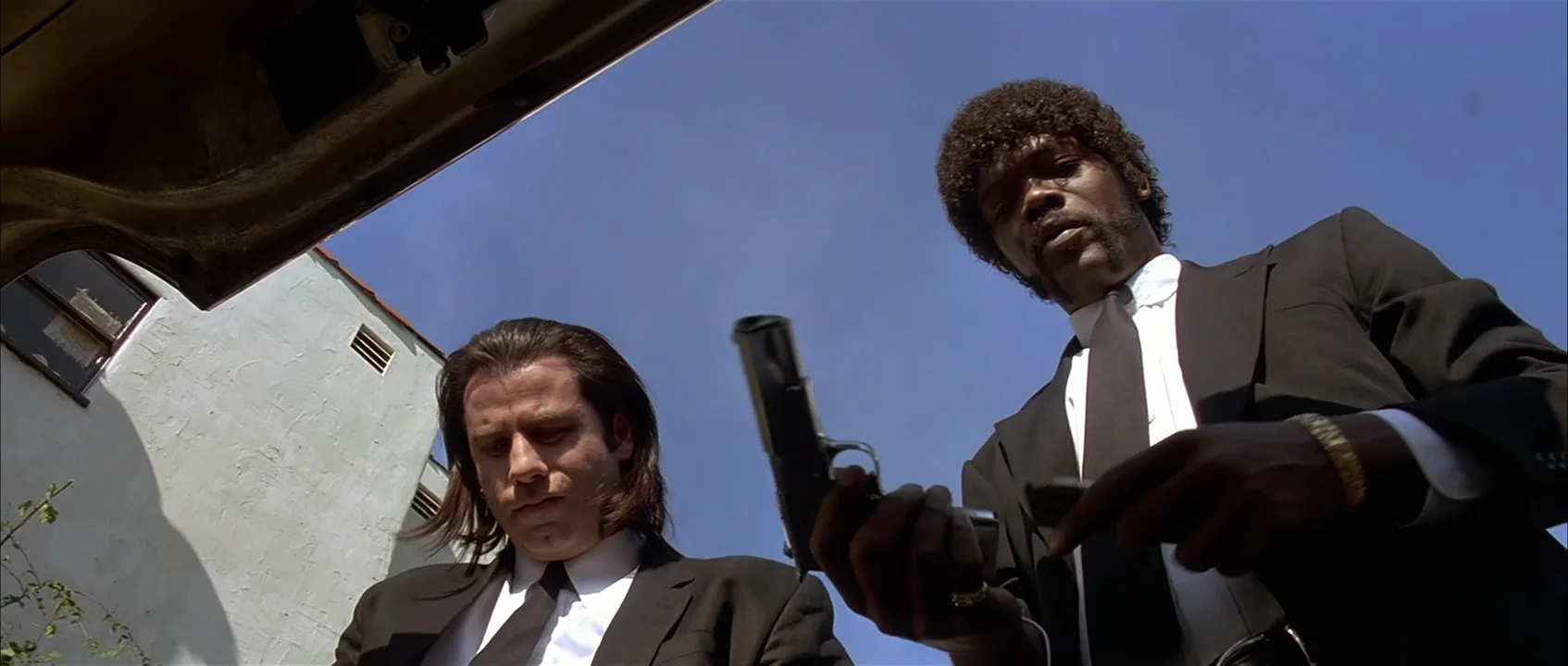
Pulp Fiction (1994) introduces two hitmen chatting about fast food on the way to a job: specific men, not generic heavies. A believable backstory sits under moments like these, but it should press on present behavior, not arrive as a lecture.
How to direct characterization on set
Plan characterization as deliberately as coverage.
- One defining action per introduction. She is meticulous becomes she wipes the counter before setting down her keys.
- Let the camera notice. An insert of hands, shoes or an object tells the audience the detail matters.
- Dress the set as a biography. Pick three meaningful details, not general clutter.
- Costume as self-image. Costume design shows whether they dress to blend in, impress or armor up.
- Stage reactions. Other actors' faces when a character enters are characterization you get for free.
- Stay consistent. A character sheet fixes face, wardrobe and signature props across scenes and AI generations.
In FlashBoards, pin the character sheet, wardrobe references and frames of similar introductions next to the storyboard of the entrance scene, then generate variations of the defining shot and compare which details read fastest.
Characterization vs. character arc
Characterization answers who is this person right now? A character arc answers how do they change by the end?
Characterization is the baseline the arc is measured from. If the opening doesn't establish a clear trait, the audience can't register the moment it breaks. A habit from act one that returns changed in act three is often the clearest sign the arc has landed. Richly characterized figures can also stay flat on purpose, like many detectives and mentors.
Characterization examples in film
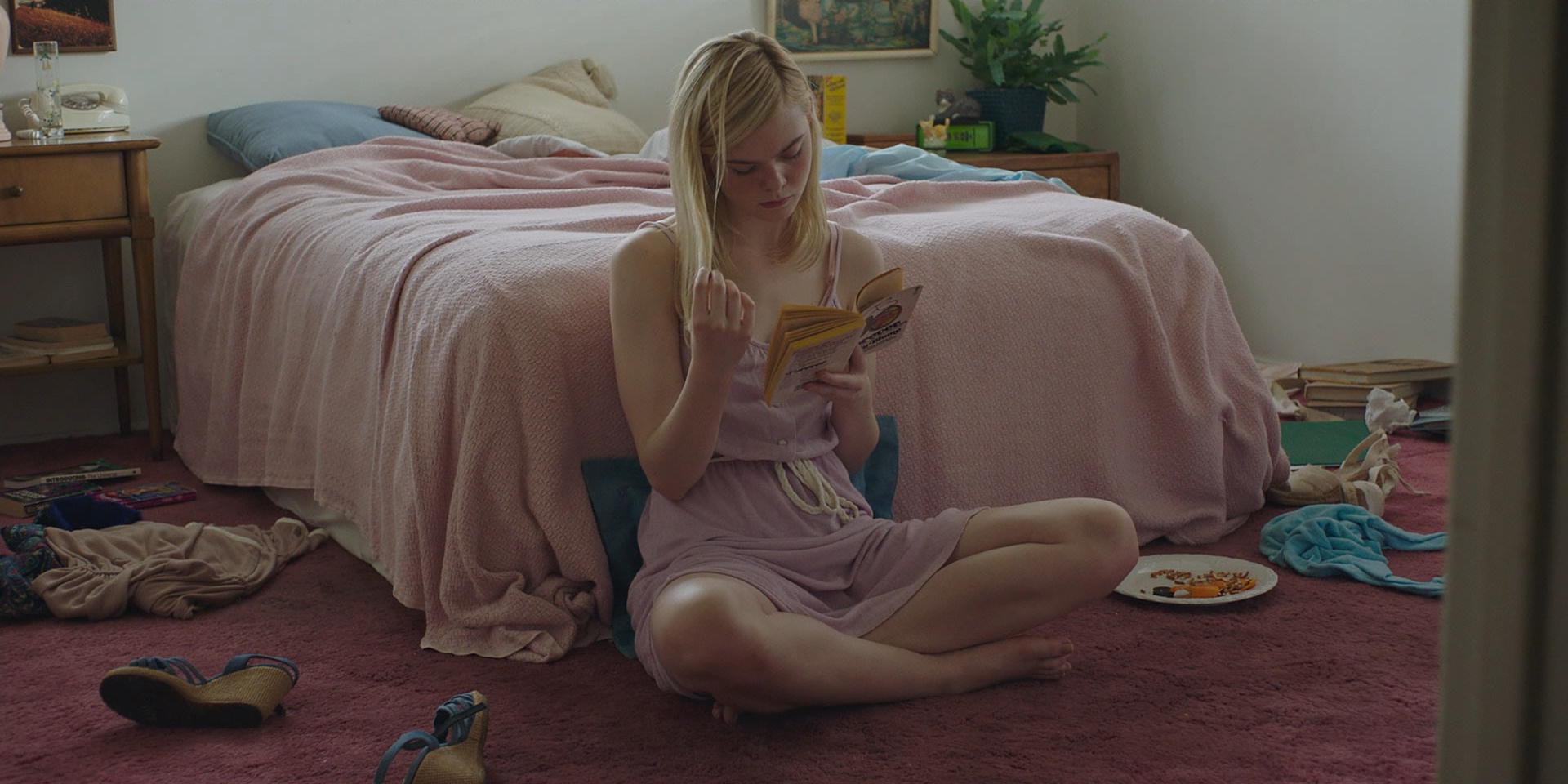
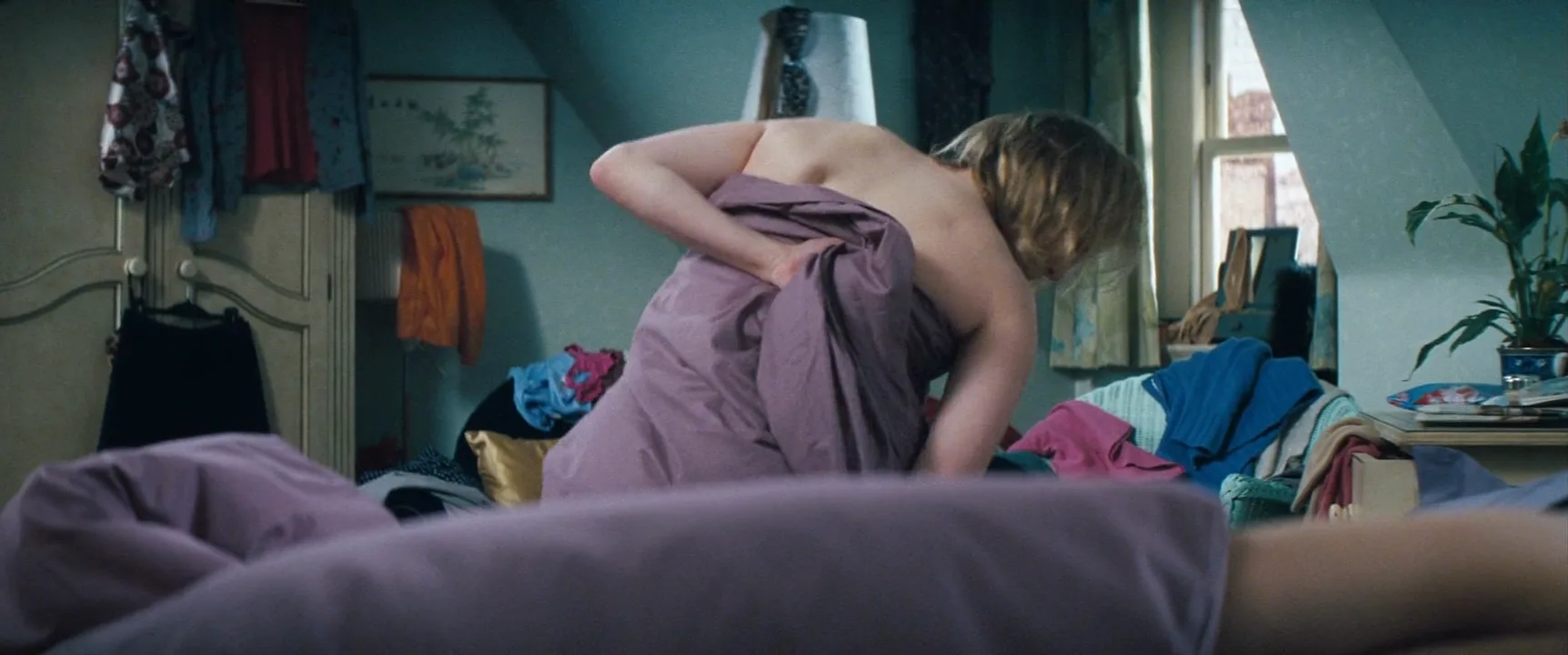
5 framesFrames where costume, space or objects characterize before a line is spoken.
How to create a characterization with AI
4 promptsImage models default to a generic portrait. Describe the person through photographable evidence instead: a few objects, a posture, one action. Keep the character sheet and every take on one FlashBoards board to see which details carry the trait. The fourth prompt re-shoots a real film shot from a text description alone, and the original plays next to the result so you can compare.
Wide shot of a cramped watch-repair workshop at night, a woman in her late sixties with cropped silver hair and a thin scar through her left eyebrow, jeweler's loupe on her eye, hunched at a wooden bench under a green-shaded lamp. Dozens of stopped wall clocks all show ten past four, a cold cup of tea by her elbow, a child's crayon drawing pinned above the bench. Warm lamplight, deep shadows, 35mm lens, film still.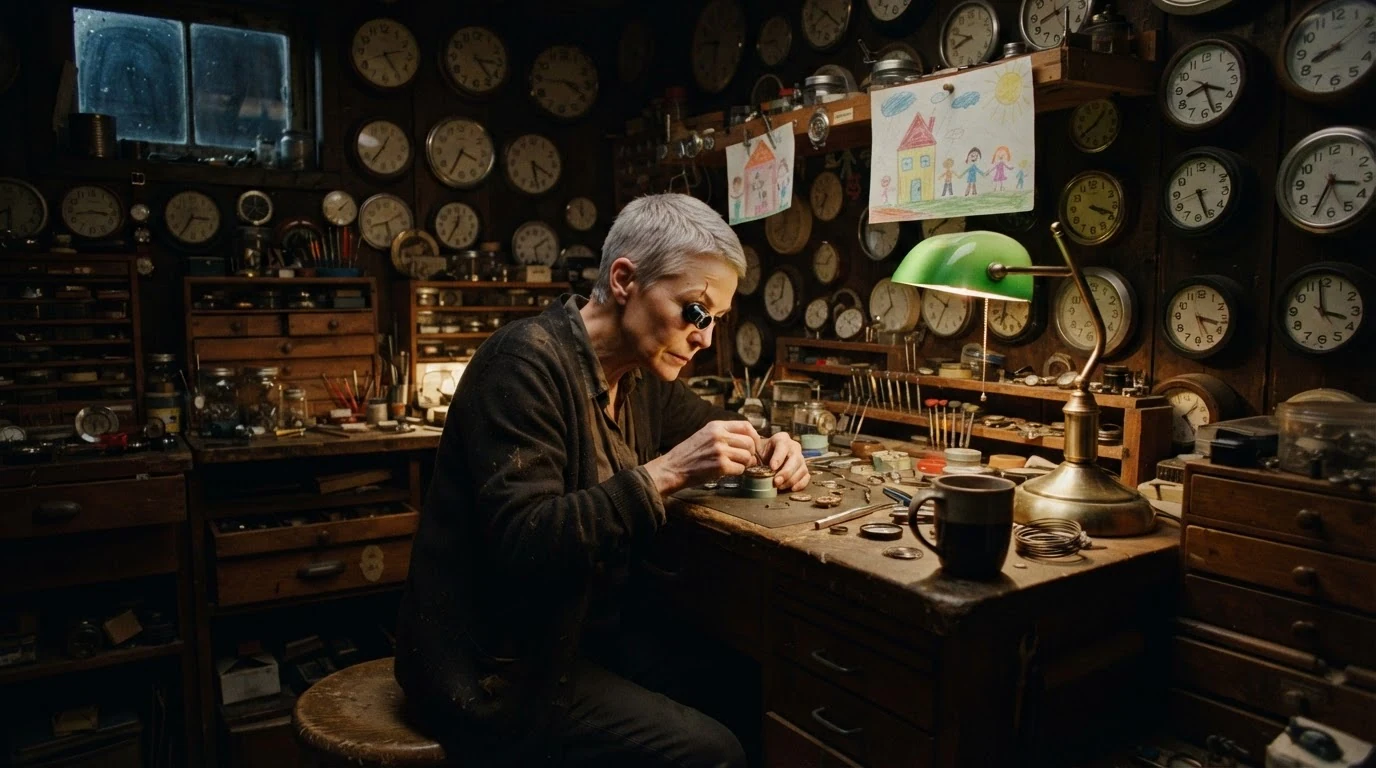
No personality adjectives. Stopped clocks, cold tea and a child's drawing do the characterizing: precise, absorbed, holding on to something.
Open FlashBoardsMedium wide shot of a spotless white minimalist apartment in morning light, a bike courier in his mid-twenties with a shaved head and a chipped front tooth eating cereal standing up at a bare counter. A road bicycle hangs on the wall like a painting, six identical grey hoodies on one rail. 28mm lens, soft window light, cinematic still.
The opposite trait by the same method: eating standing up, identical hoodies and bicycle hung like a painting signal order and speed.
Open FlashBoardsCamera: slow steady push-in from the wide shot to a medium shot of the woman at the bench, moving the whole time. Action: she is already turning a tiny screwdriver inside an open pocket watch. She pauses and looks up at the child's drawing for a moment. Then she lowers her eyes and goes back to the watch, tightening the screw with steady hands.The pause and the return to work are the characterizing choice. Starting mid-motion keeps the shot alive from the first frame.
Open FlashBoards{
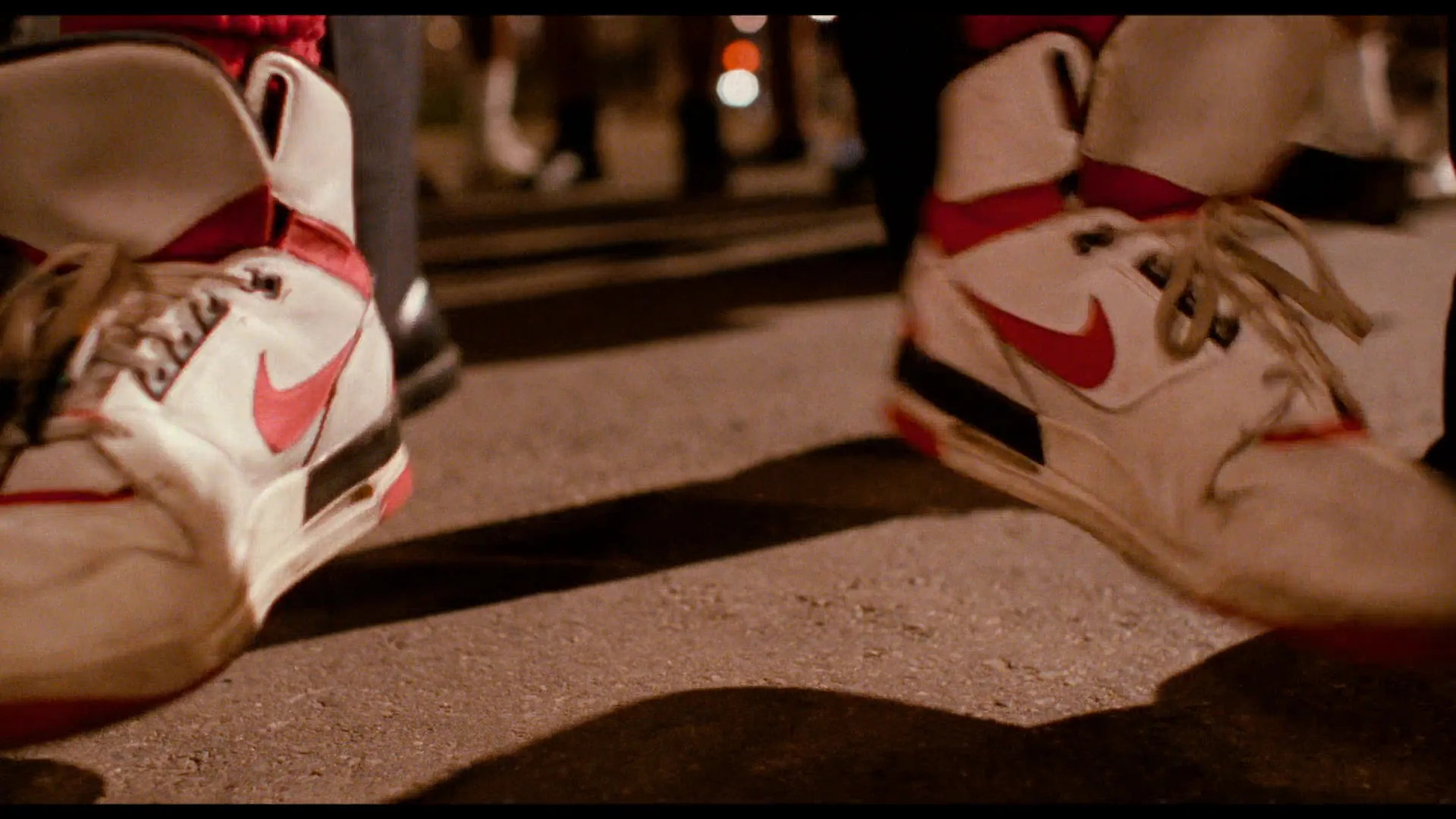
"output": "Full-screen live-action single continuous shot from Do the Right Thing (1989), alive from its very first frame: one shot, no cuts. Late-1980s 35mm color film stock with visible grain, hot summer night on a crowded Brooklyn street, hot orange-amber sodium streetlight from the front left bathing everything in warm brown-orange tones and throwing long hard shadows across the asphalt, saturated red and white against warm brown pavement, a row of small out-of-focus orange and white lights high in the background.",
"characters": {
"S1": {
"name": "Radio Raheem, played by Bill Nunn",
"look": "seen only from the shins down: bright white leather high-top basketball sneakers with a red curved side stripe, red collar and black heel panel, tall padded tongues flopped forward, long loose tan laces, thick red socks",
"voice": "silent: he makes no sound in this shot"
},
"S2": {
"name": "police officers around him, among them Officer Long, played by Rick Aiello",
"look": "seen only from the calves down: polished black leather lace-up shoes and dark navy uniform trousers",
"voice": "they do not speak in this shot"
},
"S3": {
"name": "a man in the crowd, off screen",
"look": "never seen",
"voice": "hoarse, desperate shout"
},
"S4": {
"name": "another man, off screen",
"look": "never seen",
"voice": "harsh, furious bark"
}
},
"shots": [
{
"shot": 1,
"camera": "static camera resting on the asphalt at ankle height, normal lens, extreme close-up of S1's two sneakers filling most of the frame, background legs soft out of focus; the framing holds with only a slight slow drift, no pan and no tilt; the feet move in and out of the frame edges",
"action": [
"BEGINNING: alive from the first frame, S1's two sneakers are already stumbling frantically on the asphalt, never standing still: the screen-left sneaker swings forward in a motion blur while the screen-right one scrapes sideways, laces flying, heels jerking up off the ground.",
"THEN: S1's feet stamp, slip and kick in fast desperate steps, fighting for footing, toes dragging on the pavement as if his body above the frame is being hauled backward by force; S2's black shoes step in close between and behind them.",
"THEN: a black shoe plants right beside the screen-right sneaker; the screen-left sneaker twists onto its outer edge, its tongue flapping.",
"THEN: the sneakers keep scuffing in short uneven steps, lurching toward the lens and back again, while the packed crowd legs in the background stay blurred.",
"END: the screen-right sneaker slides forward toward the camera and fills the right half of the frame, scuffed white leather gleaming in the amber light, the screen-left one lifting at the heel at the left edge, black shoes crowding close behind."
],
"dialogue": [
{
"speaker": "S3",
"on_screen": false,
"when": "already being shouted at the very first frame, ending within the first moment",
"delivery": "hoarse, pleading shout",
"line": "<d>[English] Gary, that's enough, man!</d>"
},
{
"speaker": "S3",
"on_screen": false,
"when": "around the middle of the shot, while the black shoe plants beside the sneaker",
"delivery": "desperate shout",
"line": "<d>[English] Gary, that's enough!</d>"
},
{
"speaker": "S4",
"on_screen": false,
"when": "right after that, near the end of the shot",
"delivery": "harsh, furious",
"line": "<d>[English] Shut the fuck up!</d>"
}
]
}
],
"sound": {
"ambience": "a crowd yelling and screaming around a street scuffle, hard soles scraping and stamping on asphalt, heavy breathing heard close",
"speech": "exactly these spoken phrases, each said once, in this order",
"never_spoken": "no narration and no voice-over: the descriptions, performance notes and step words of this prompt are never spoken aloud",
"music": "a film score under the scene, always below the voices: low ominous sustained strings over a slow, heavy drum pulse",
"subtitles": "none"
}
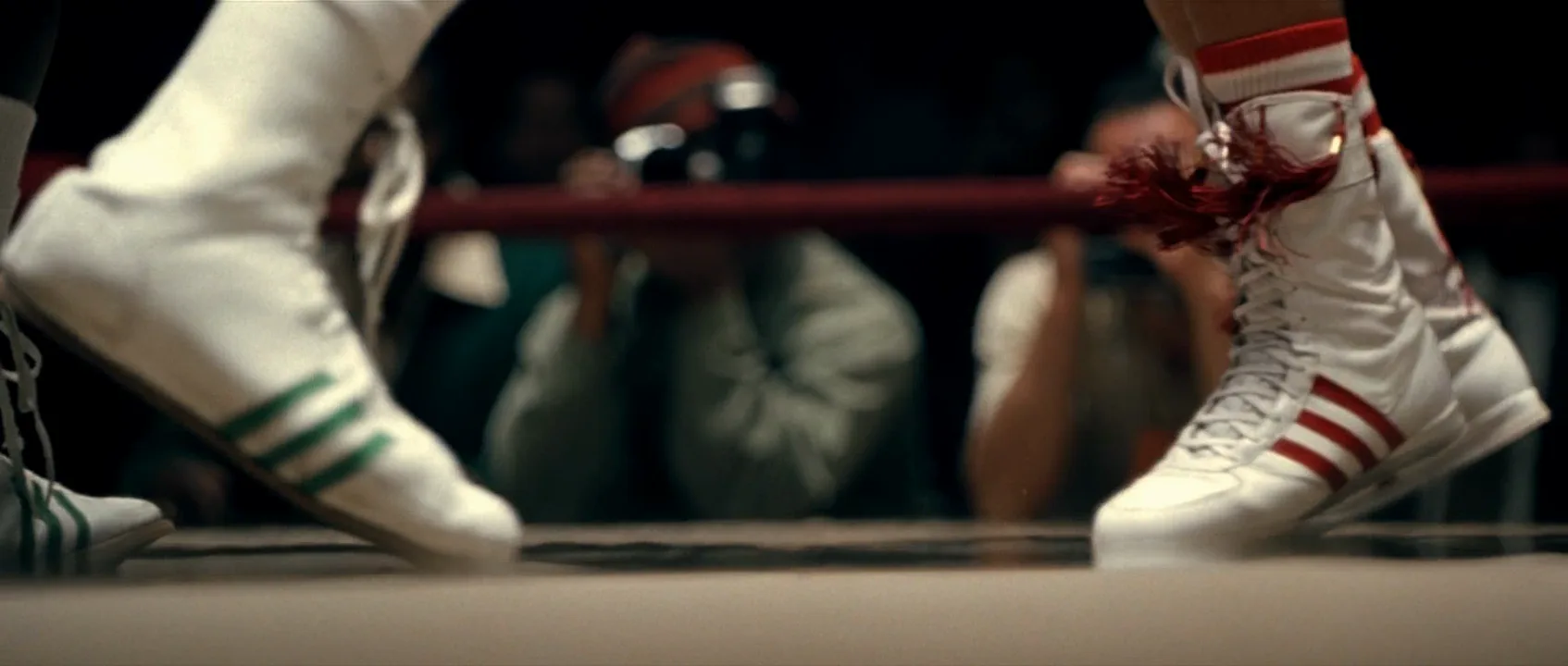
}Remakes the ground-level shot of Radio Raheem's sneakers during the police chokehold in Do the Right Thing (1989), keeping the static low camera, the stumbling high-tops among black police shoes, the amber night light and the crowd's exact shouts.
Costume carries the character even when his face is gone: the camera stays at pavement level on Radio Raheem's white-and-red high-tops, the sneakers he is known by, while black police shoes close in and the crowd shouts off screen. The prompt quotes the film's lines word for word.
Open FlashBoardsCommon mistakes
- Adjectives like lonely or arrogant produce exaggerated faces. Replace them with objects and actions that imply the trait.
- Long prop lists become clutter. Name three details that each mean something.
- In video, characters over-act. Ask for one small physical action.
Keep the reference frames, prompts and every generated take side by side — images and video in one canvas.
FAQ
5 questionsWhat is characterization in film?
It is the way a movie builds our understanding of a character: actions and choices, speech, appearance and costume, the spaces they live in, how others react and what the camera singles out.
What is the difference between direct and indirect characterization?
Direct characterization states a trait outright, through a narrator, a title card or another character. Indirect characterization shows behavior, speech, appearance or reactions and lets the audience infer the trait. Film relies mostly on the indirect kind.
What are the five methods of indirect characterization?
A common mnemonic is STEAL: Speech, Thoughts, Effect on others, Actions and Looks. In film, thoughts come through voice-over, point-of-view shots or held close-ups, and looks extend to costume, posture and set dressing.
What is the difference between character and characterization?
A character is the person in the story. Characterization is the technique that reveals that person to the audience: the scenes, details, lines and images that make them readable and predictable.
How do you introduce a character in a film?
Give the character one defining action in their first scene, something the actor physically does that shows their core trait under pressure. Support it with costume and setting, stage how others react, and let the camera hold on one telling detail.
Related terms
5- Character ArcStorytelling
A character arc is the inner change a character goes through over the story — from a flaw or false belief to a new understanding (or a fall) — driven by the choices the plot forces on them.
- Character SheetScreenwriting
A character sheet is a one-page reference that fixes who a character is: for writers it lists traits, goals and history; for artists it shows the face, costume and turnaround views so every drawing, shot or AI generation stays consistent.
- Character ArchetypeStorytelling
A character archetype is a recurring role that audiences recognize across cultures — the mentor, the trickster, the shadow, the herald — which writers adapt rather than copy.
- BackstoryStorytelling
Backstory is everything that happened to the characters and their world before the film begins; it shapes their motives and is revealed through hints, dialogue or flashbacks rather than dumped on the audience.
- Color SymbolismColor
Color symbolism uses colors as signs — red for love, danger or power, green for envy or sickness — but in film the meaning is set by context and repetition inside the story, not by a universal chart.
Further reading
Blake Snyder, Save the Cat! (2005). Robert McKee, Story: Substance, Structure, Style and the Principles of Screenwriting (1997).