 FlashBoards Learn
- Learn
- Camera Angles
- Overhead Shot
Camera Angles · Film language
Overhead Shot
Also called: bird's-eye view, top shot, top-down shot, god's-eye view
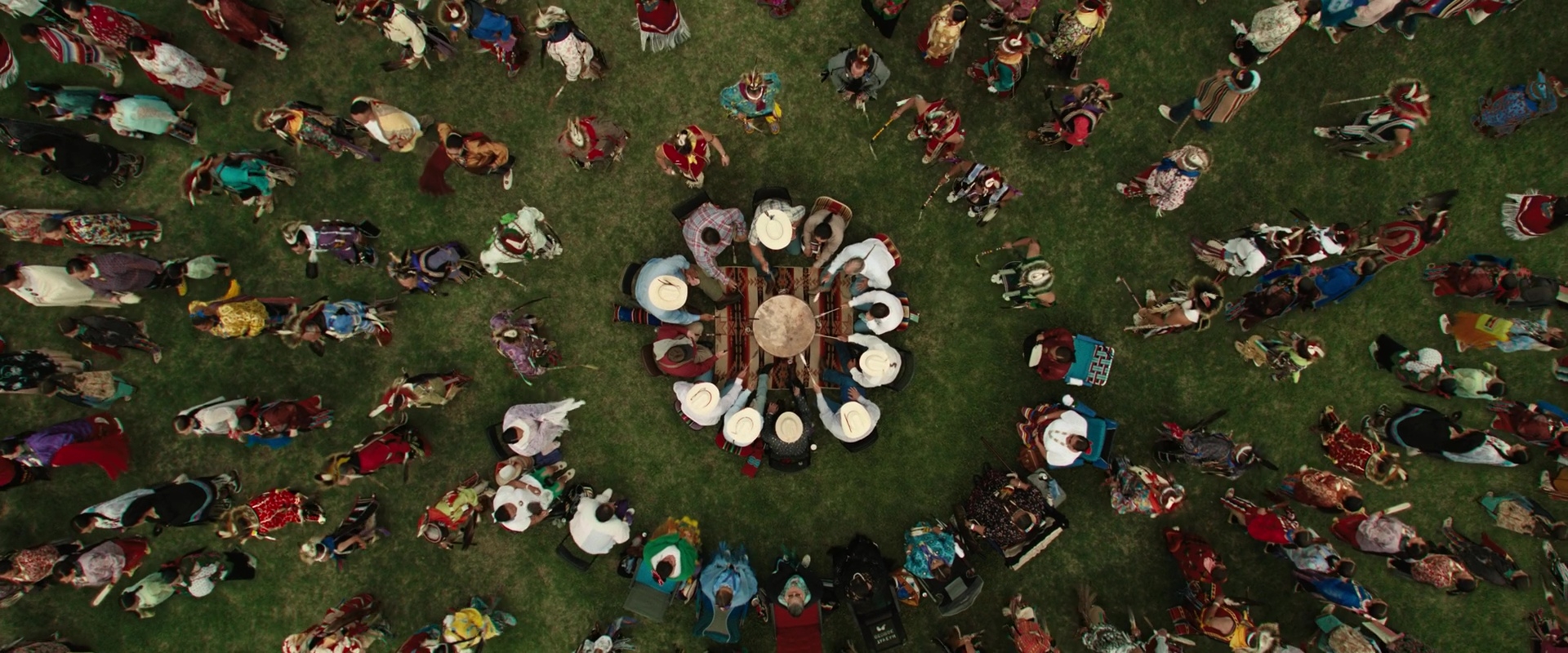
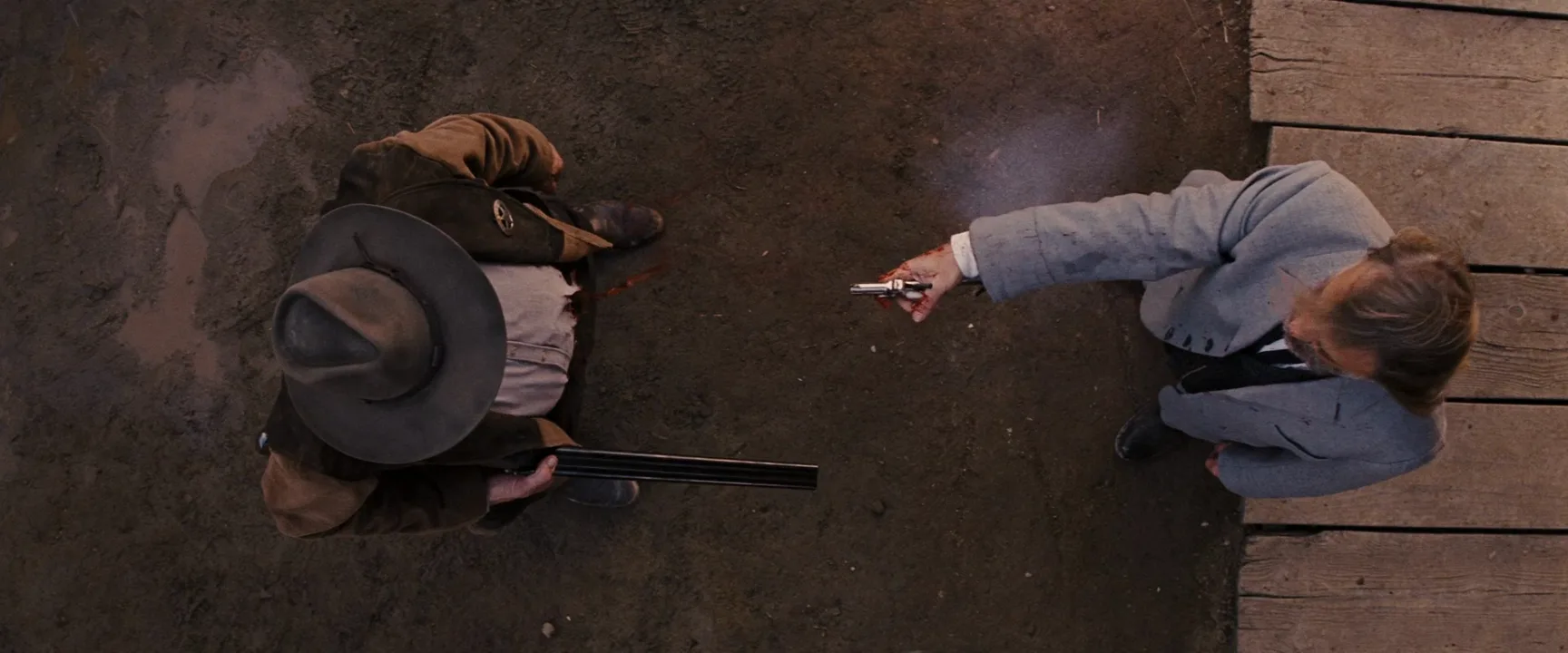
An overhead shot looks straight down on the scene from directly above, at or near 90 degrees. With no horizon or walls in frame, the floor becomes the background and people flatten into a map-like pattern, so the viewer watches from a detached, all-seeing position. It is also called a bird's-eye view, top shot or god's-eye view.
- What it does
- Turns a scene into a plan view: bodies become shapes, blocking becomes graphic, the audience watches from a height no character occupies.
- Use it when
- You want pattern, detachment, a sense of fate or surveillance, clear fight geography, or a clean insert of hands and objects.
- Watch out
- It hides faces and kills eye contact; hold it too long and the audience stops feeling with the character and starts studying the diagram.
- Try this prompt
Top-down overhead shot, camera directly above looking straight down, a woman lying on a cracked frozen lake, arms spread, no horizon, flat graphic composition, overcast light
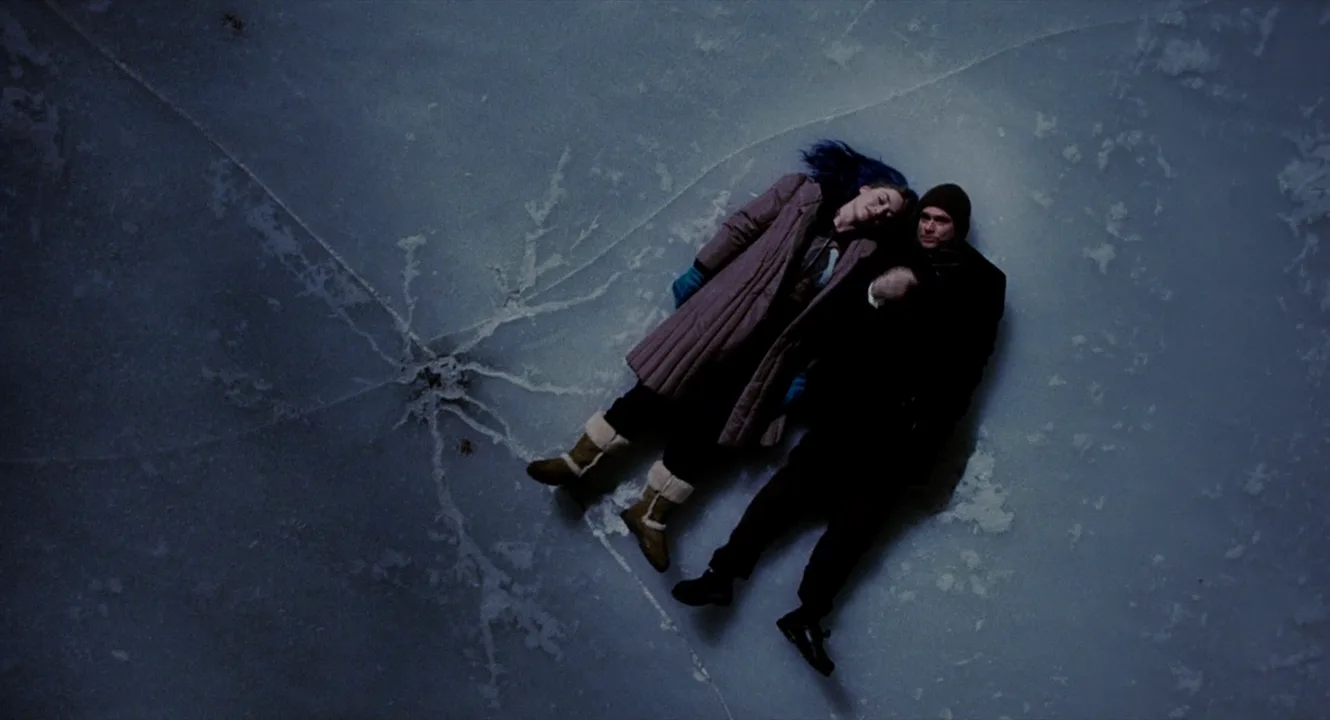
What is an overhead shot?
An overhead shot is a camera angle in which the lens looks straight down from directly above. The optical axis is vertical or close to it; roughly 80 to 90 degrees reads as overhead. With no horizon and usually no walls, the floor becomes the entire background and the scene turns into a plan view: people read as shapes, movement as lines.
On set it is a top shot, a top-down shot or simply the overhead; critics say bird's-eye view or god's-eye view. All mean the same angle. Among the camera angles it sits at the far end of the scale, beyond the high-angle shot: keep tilting down until the horizon leaves the frame and you arrive here.
The angle defines it, not the height or the platform. A top shot can be 60 centimeters above a plate or 300 meters above a city, hung from a ceiling rig, a crane or a drone, and it can be anything from a close-up of hands to an extreme wide of a stadium.
Why do filmmakers use overhead shots?
Nobody sees a room from the ceiling, and that strangeness is the point: the overhead lifts the audience out of the characters' shoes.
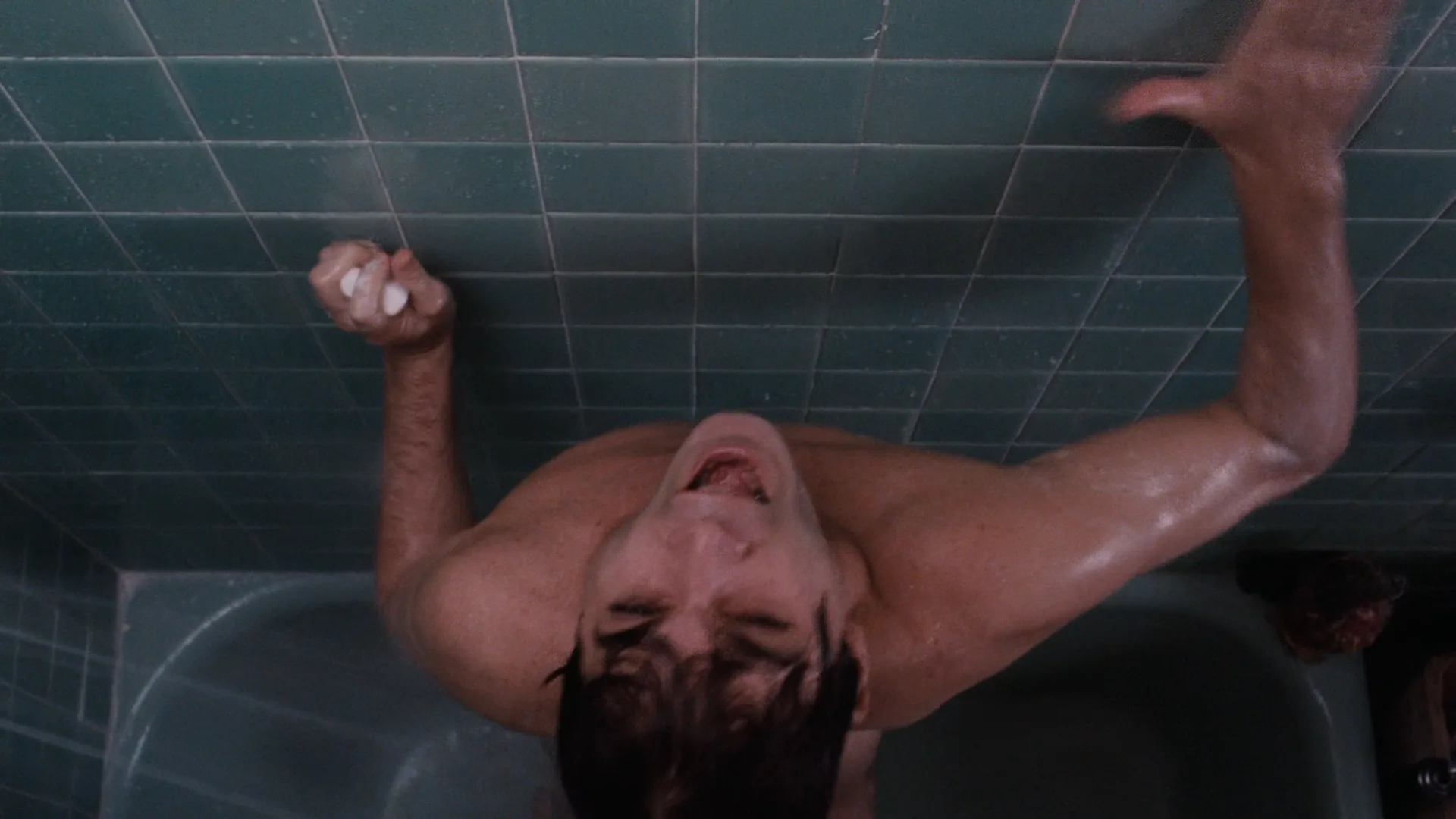
- Detachment and fate. From directly above, a character cannot meet our eyes. In Psycho (1960) Hitchcock cuts to a camera high above the stairwell for the attack on the detective Arbogast; the distance withholds the killer's face and makes the moment feel ordained rather than witnessed.
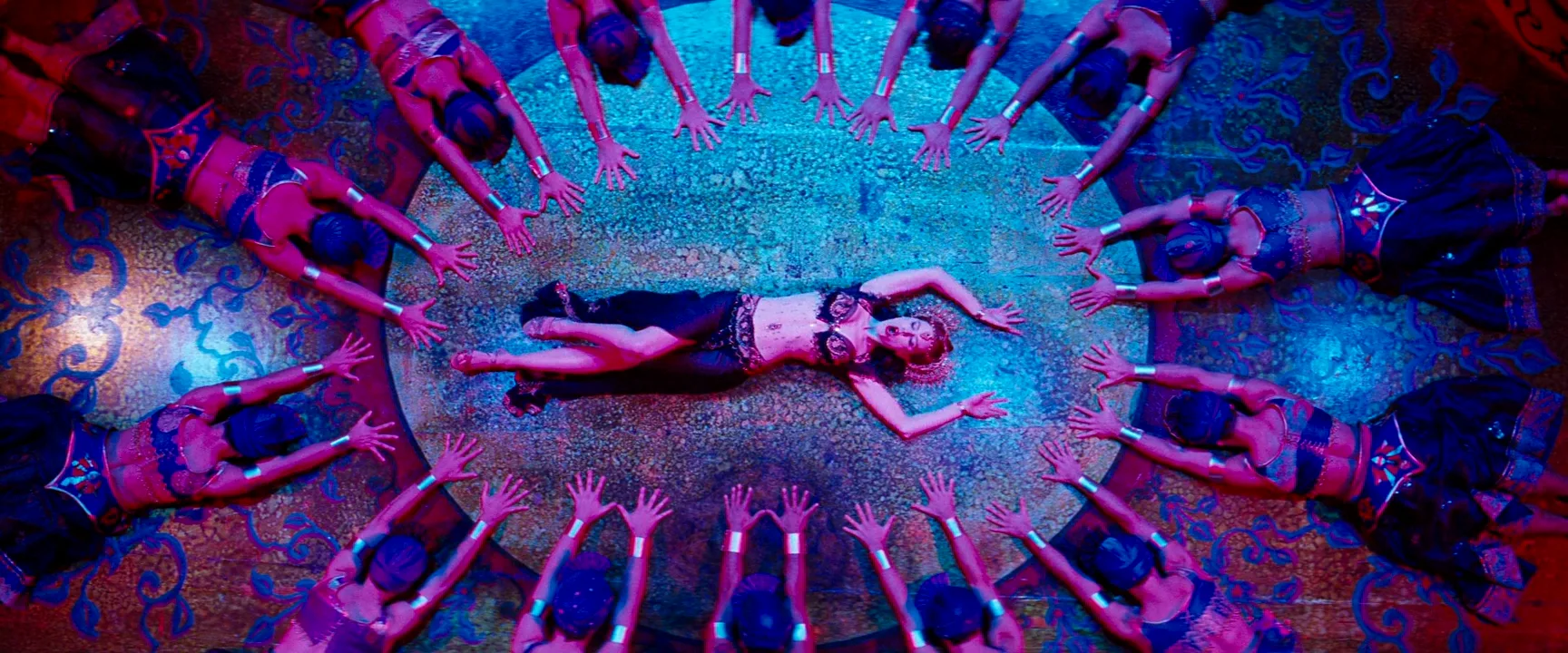
- Pattern. Busby Berkeley's 1930s musical numbers put the camera in the rafters and turned rows of dancers into kaleidoscopes. With perspective lines gone, a top shot is the purest tool for symmetry.
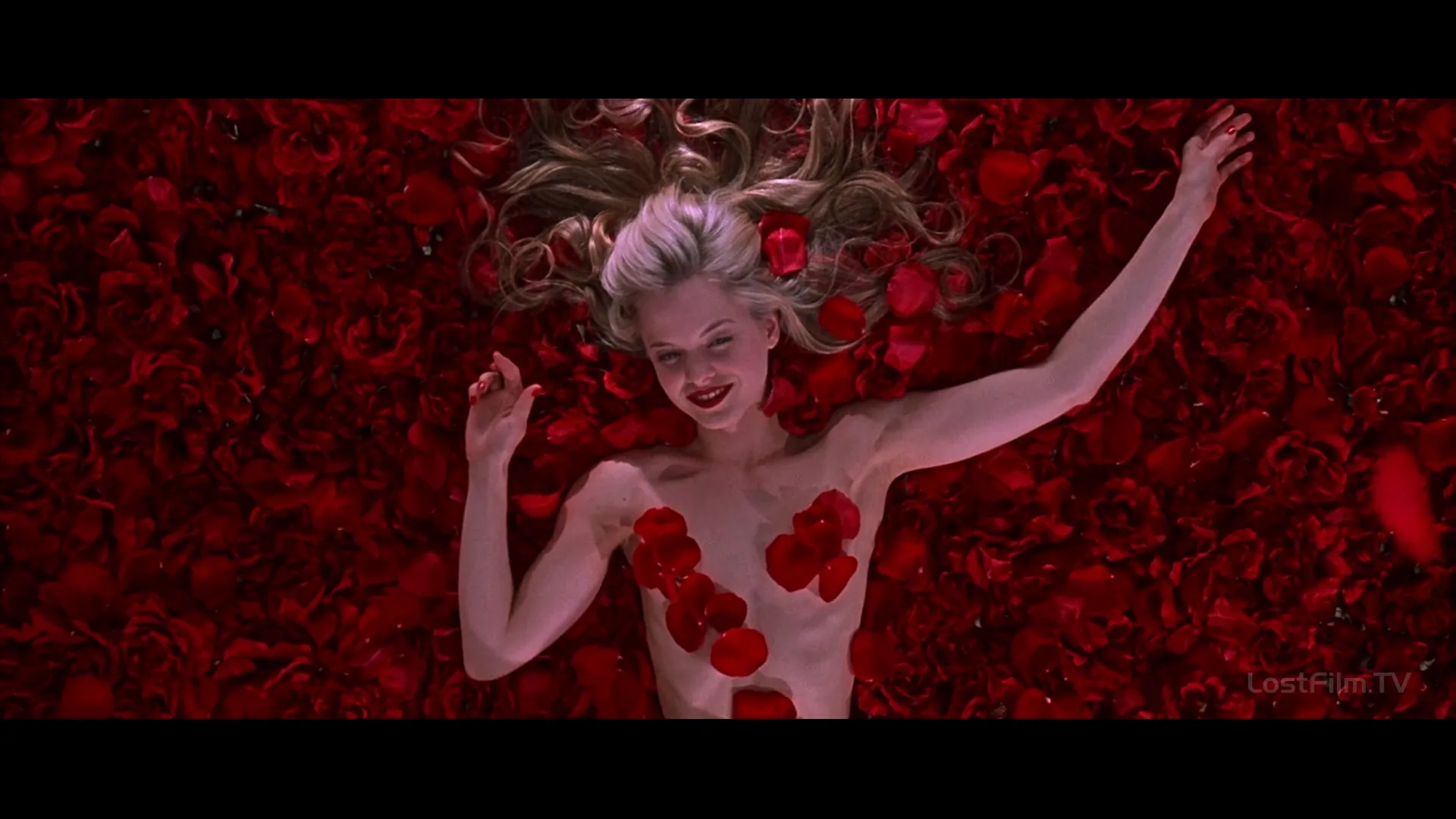
- Exposure and stillness. A body lying on its back, seen from above, is completely open to the viewer, as in the rose-petal fantasy of American Beauty (1999) or the frozen lake in Eternal Sunshine of the Spotless Mind (2004).
- Geography. In fights and crowd scenes the overhead shows exactly who is where.
- Aftermath and surveillance. Taxi Driver (1976) ends its shootout with a slow overhead move across the carnage, a cold inventory after the heat.
Because it hides faces, the overhead rarely carries a scene's emotional peak. It usually opens a sequence, closes one, or interrupts it for a beat of perspective.
How to shoot an overhead shot
Rigging
The ceiling is the first problem: a typical room gives 2.4 to 2.7 meters, leaving the lens barely two meters from the floor. On a stage, build the set without a ceiling or with a removable one. On location, use a speed-rail goal post between two heavy stands with the camera underslung on a remote head, a jib with the head tilted a full 90 degrees, or an overhead arm on a C-stand for tabletop work. Anything above rooftop height belongs to a drone. A camera hanging over actors always needs a safety cable.
Lens and height
Coverage width is roughly distance times sensor width divided by focal length: from 2.2 meters, a 24mm lens on Super 35 sees about 2.3 meters of floor, enough for one person lying down. For a bed and two people, drop to 16 or 18mm or raise the camera to 3.5 meters. A wide-angle lens this close makes standing people lean outward; for a flat, architectural look, go higher and longer.
Level and blocking
Put a bubble level on the matte box; a few degrees off vertical produces keystoned lines that look like a mistake. Block in plan, because the floor diagram is literally the shot. Dress the floor like a wall and check costume against it. Actors lying down should turn their faces up or into clean profile.
Light
The camera now occupies the spot where top lighting usually hangs, so fixtures move outside the frame edges. Flat light straight down looks like a floor plan. A low, hard side source throws long shadows that restore shape and time of day and keeps the rig's own shadow out of frame.
Overhead close-up
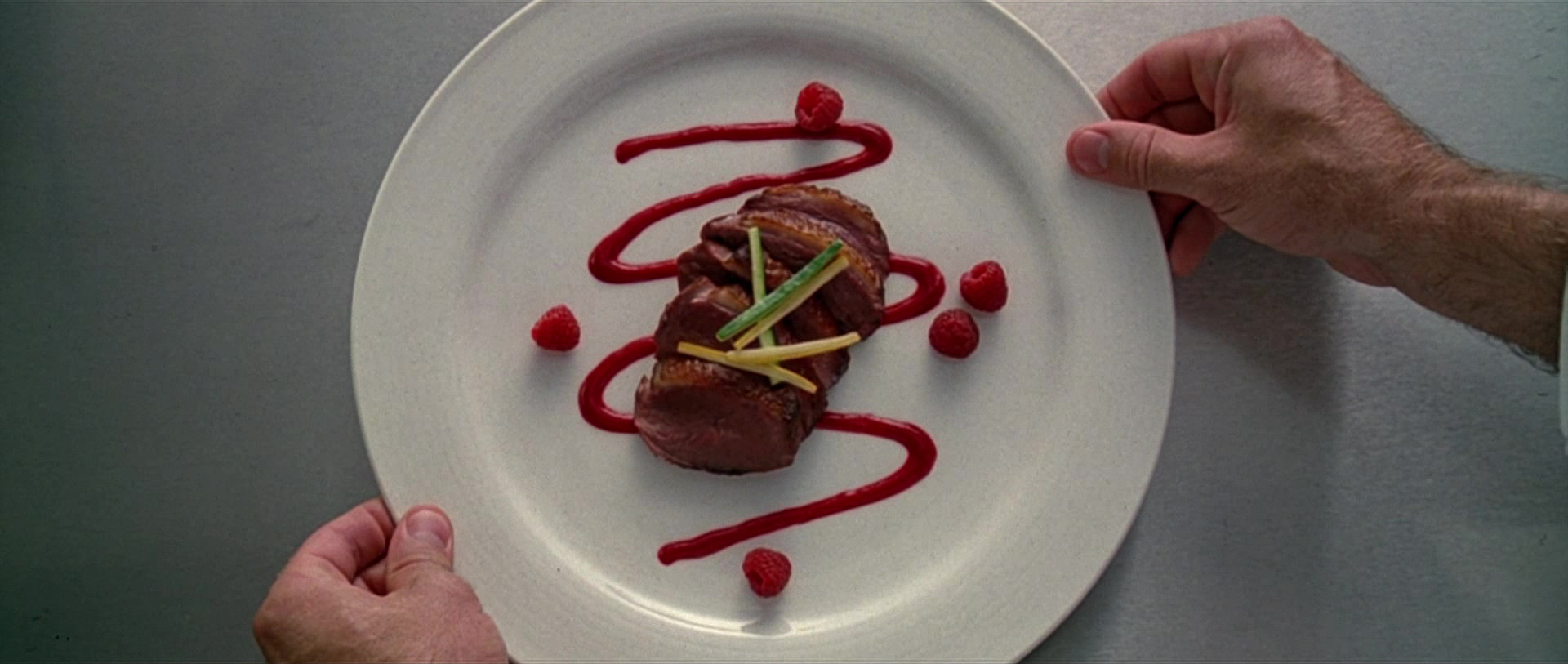
An overhead close-up shows hands, food, paper or a small object from almost directly above. It combines the detail of a close-up with the flat, designed look of a top shot, and it is the default framing for cooking, writing, packing and assembly. In dramatic films it usually works as an insert shot: a two-second cut to a plate being dressed or a suitcase being zipped.
Every object sits at the same distance from the lens, so arrangement becomes the content: the order of tools, the symmetry of a place setting, the precision of a gesture. Wes Anderson built part of his visual signature on objects laid flat to the frame like a catalog page.
Use a 50 to 100mm lens 60 centimeters to 1.2 meters above the surface, keep the sensor parallel to the table so the whole plane holds focus at a moderate stop, and let hands enter from the bottom of frame so they read as the character's own.
Overhead tracking shot
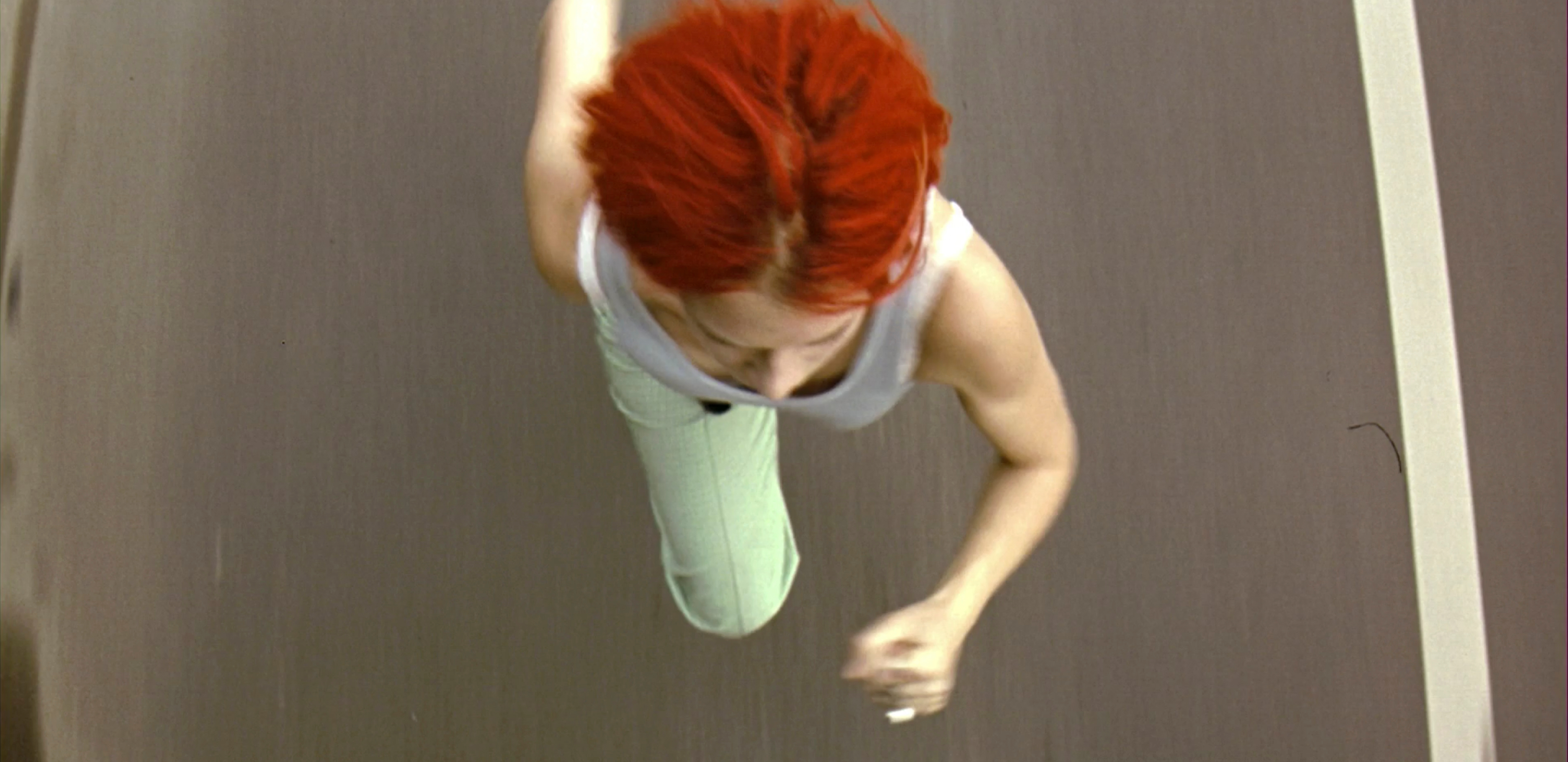
An overhead tracking shot keeps the lens pointed straight down while the camera travels with a subject: above a car on a straight road, a runner, a waiter moving between tables. Movement becomes a line drawn across a map, and we see both the subject and the space it crosses. It is a tracking shot with the horizon removed.
A well-known example is the search sequence in Minority Report (2002), where the camera glides above an apartment building as if its ceilings had been lifted off, looking down into room after room: a dollhouse view in which we see what each tenant cannot.
Match speed precisely so the subject holds its spot in frame. On stages that means a crane on track or a cable cam; outdoors, a drone at constant altitude. Add a slow camera roll and the map becomes a spinning dial.
Overhead conveyor
The overhead conveyor flips the idea: the camera stays completely still, looking straight down, and people or objects pass beneath it in a steady flow, as if on a belt. Umbrellas crossing an intersection, swimmers in lanes. The frame is fixed; the world supplies the motion.
With no faces to follow, the audience reads the shot as rhythm, so it tends to carry time rather than story: rush hour, a working day, a season. That makes it a strong transition or title backdrop. Keep one direction of travel consistent with the film's screen direction, let entries and exits happen cleanly at the edges, and hold 8 to 15 seconds. One figure moving against the flow becomes the story the moment it appears.
Overhead shot vs. aerial shot vs. high-angle shot
All three look down, but each is defined by something different.
- High-angle shot: defined by tilt. The camera is above eye level and angled down, typically 15 to 60 degrees. Background stays visible; the point is status, making the subject look smaller.
- Overhead shot: defined by the axis. The lens points straight down at about 90 degrees, and the ground is the background. It is about pattern, detachment and plan-view clarity.
- Aerial shot: defined by the platform. An aerial shot is filmed from a drone, helicopter or plane. Most aerials are oblique, with the horizon in frame; only when the lens points straight down is an aerial also an overhead.
Quick test: if you can see the horizon, it is not an overhead; if the camera is on the ground or a set rig, it is not an aerial. A crane shot can pass through two of them in one move, starting at a high angle and rising until it looks straight down.
Overhead Shot examples in film
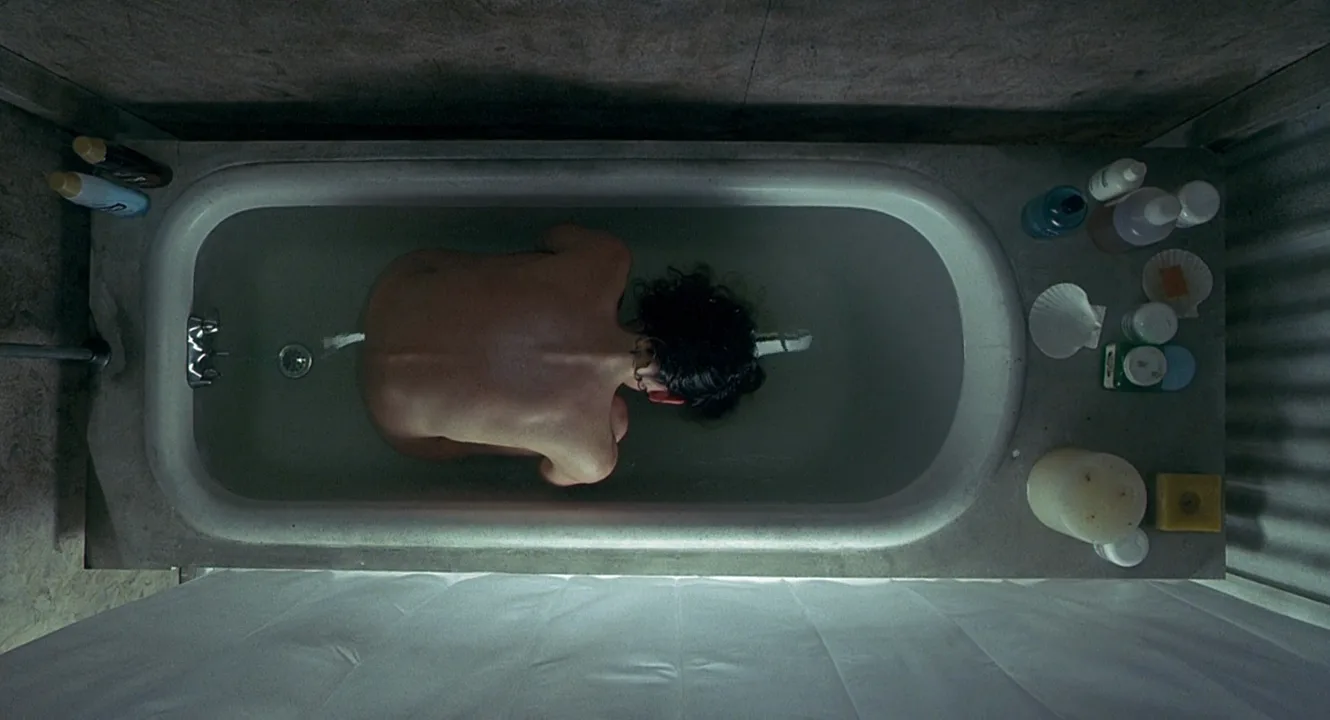
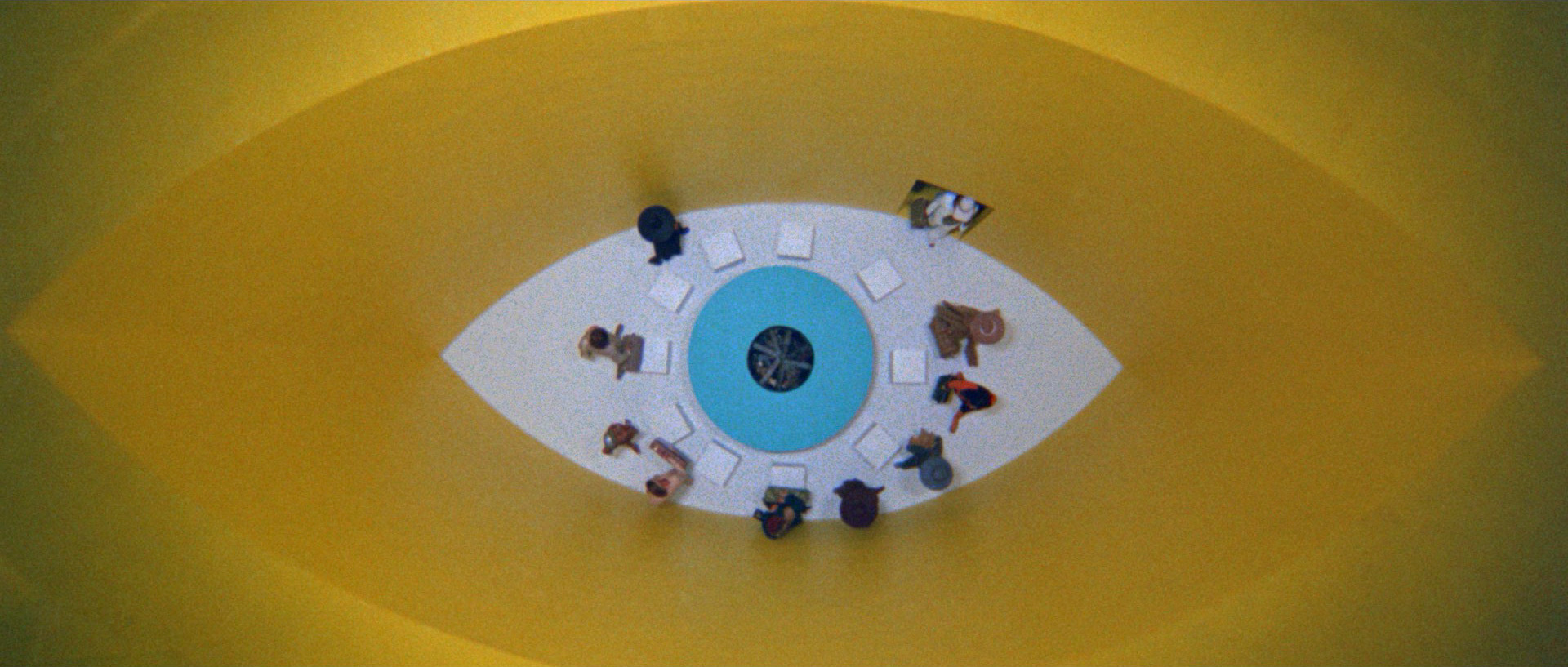
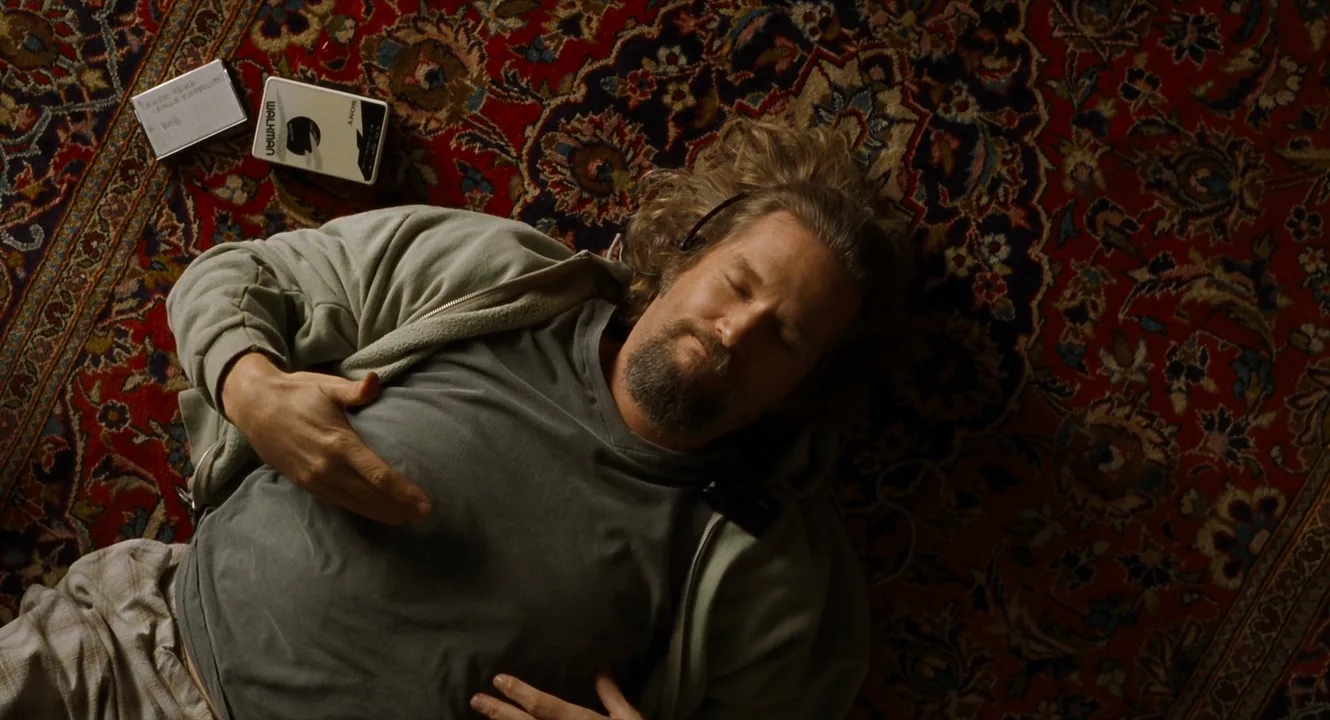
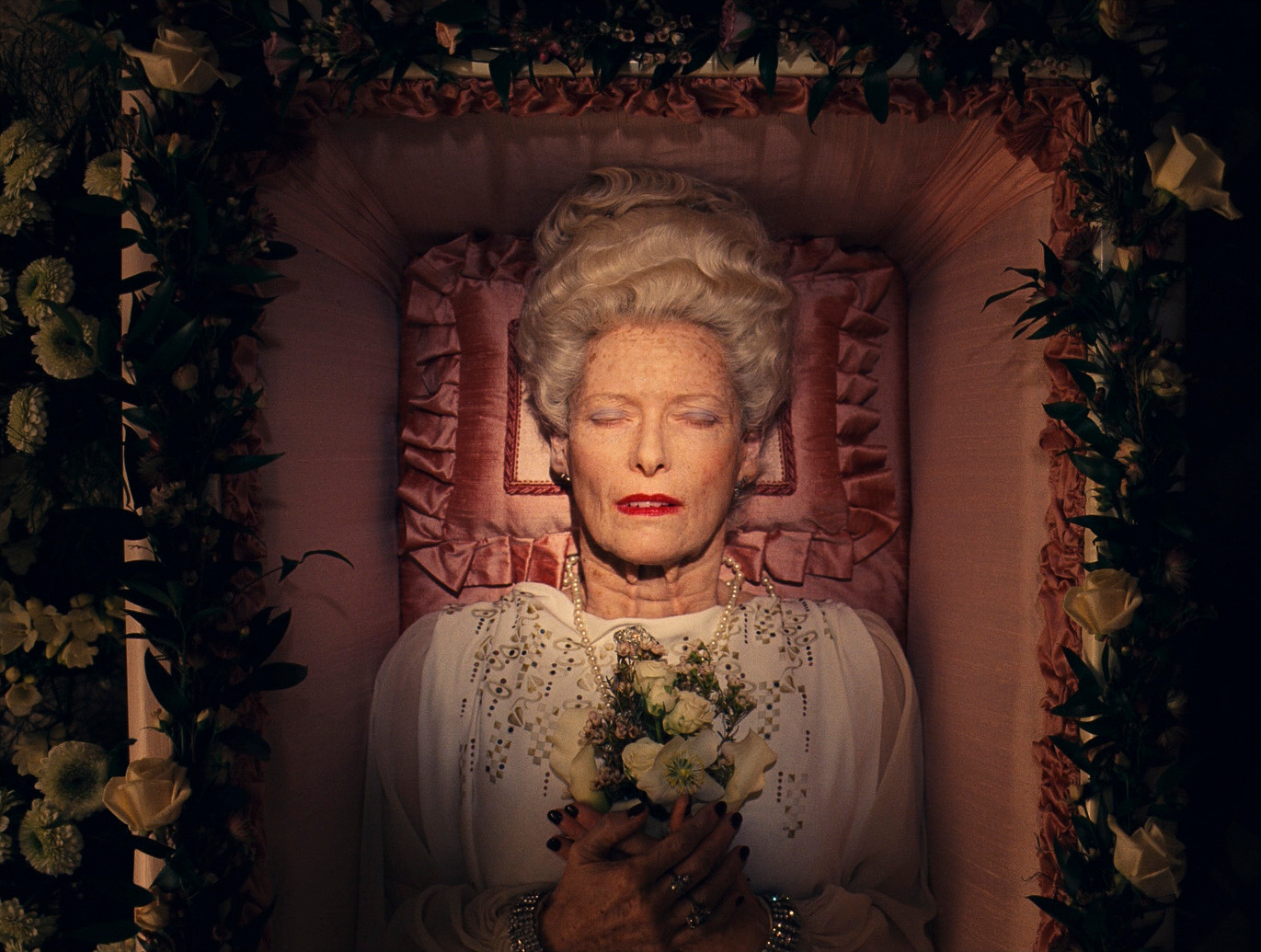
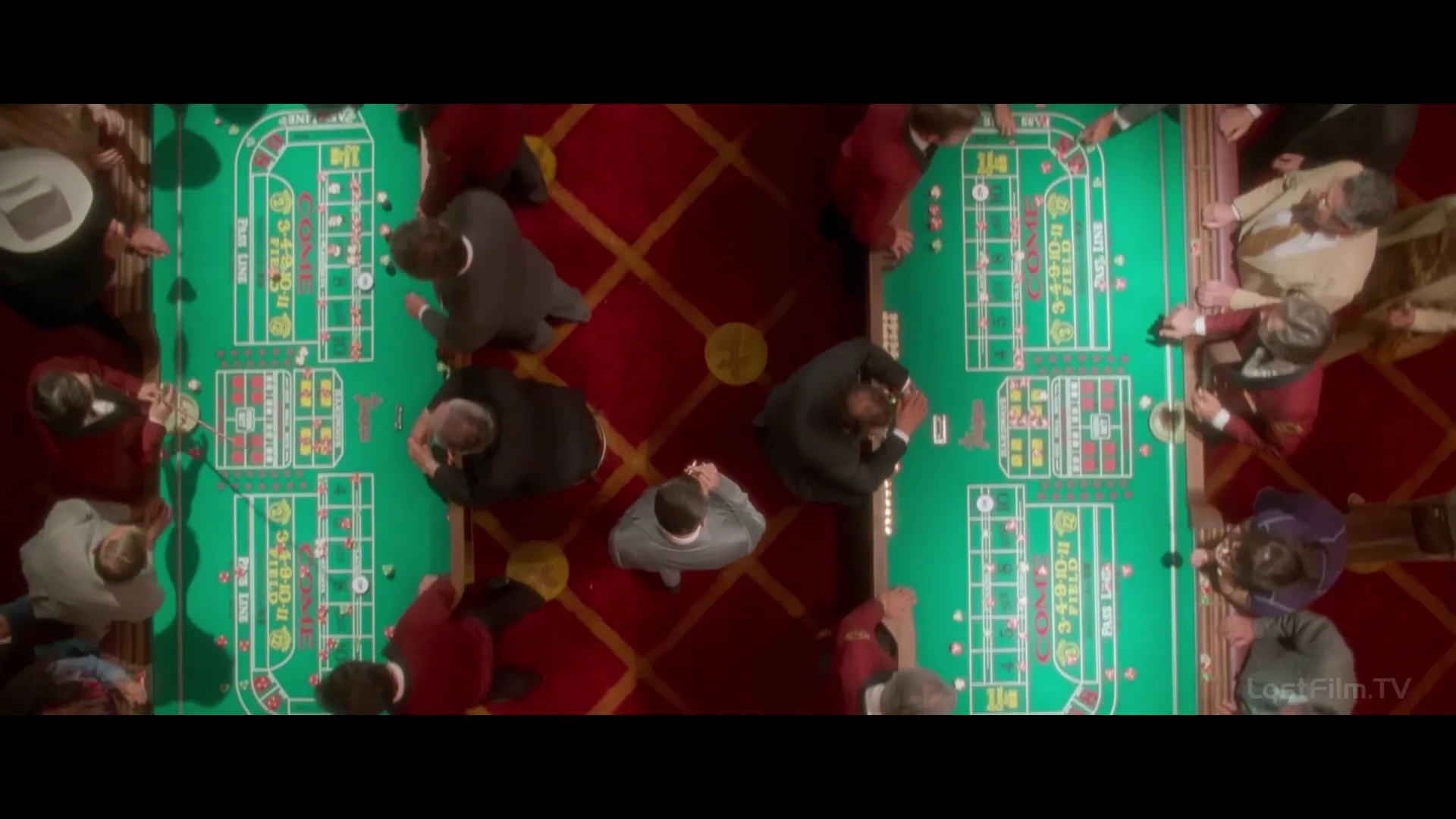
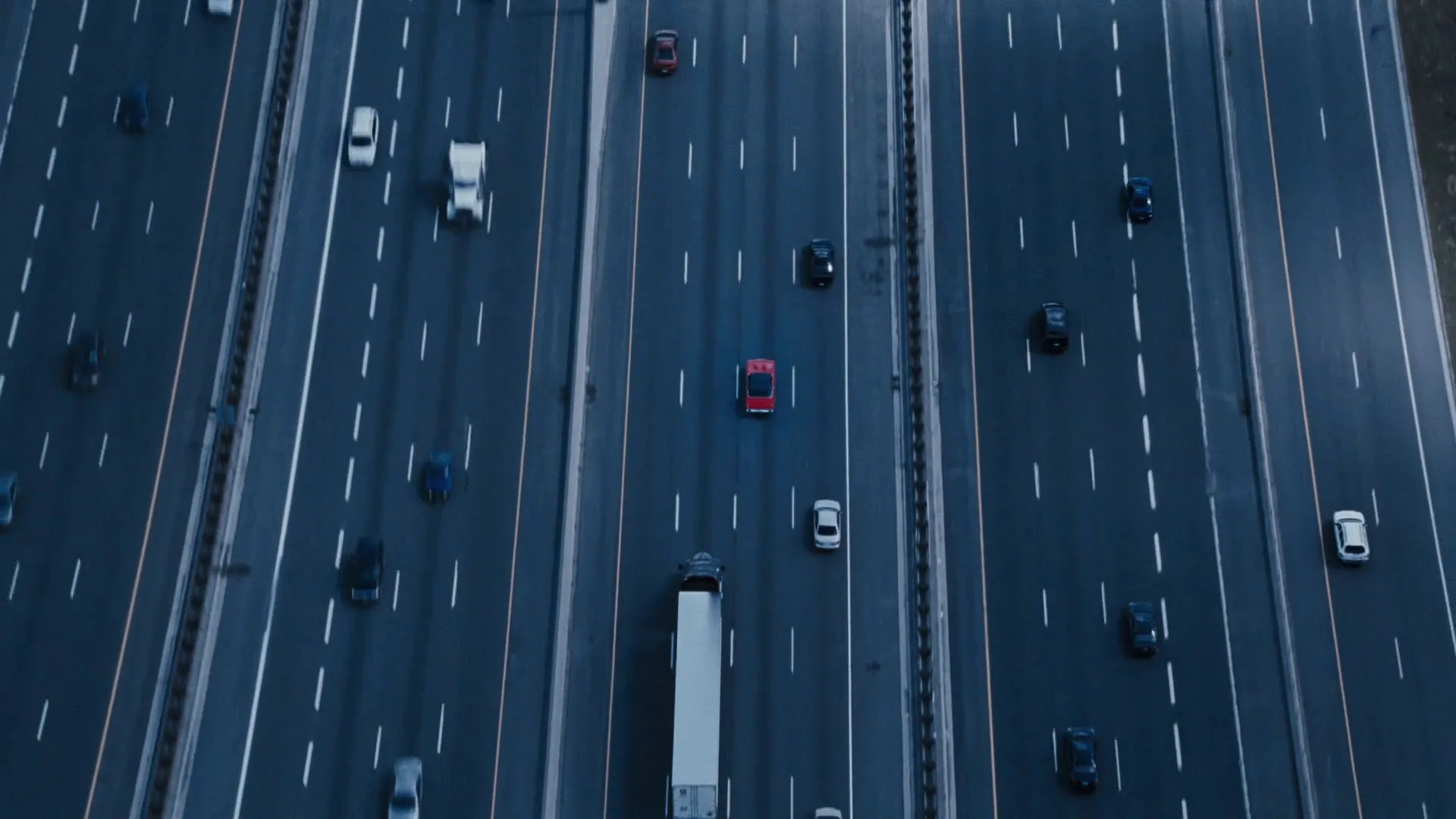
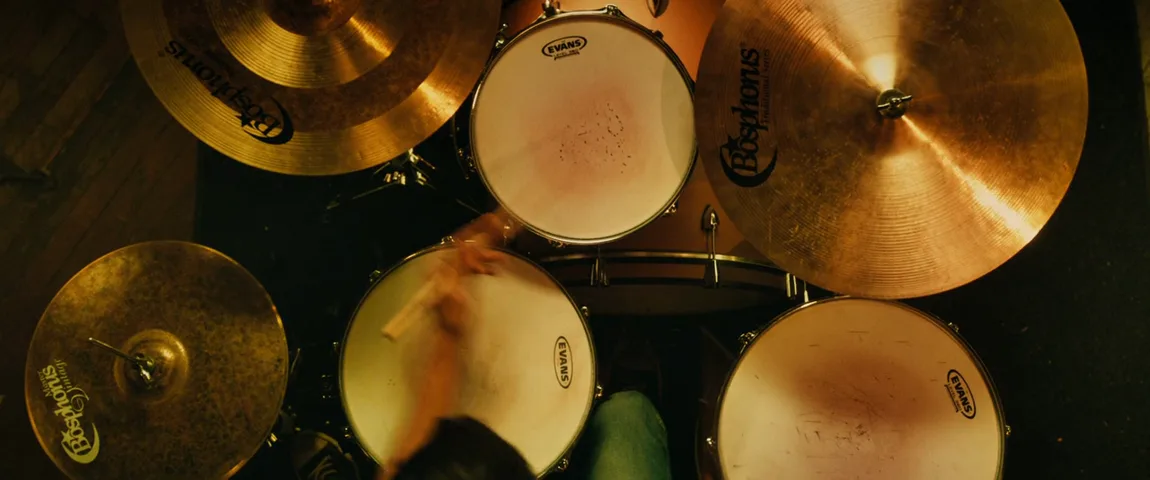
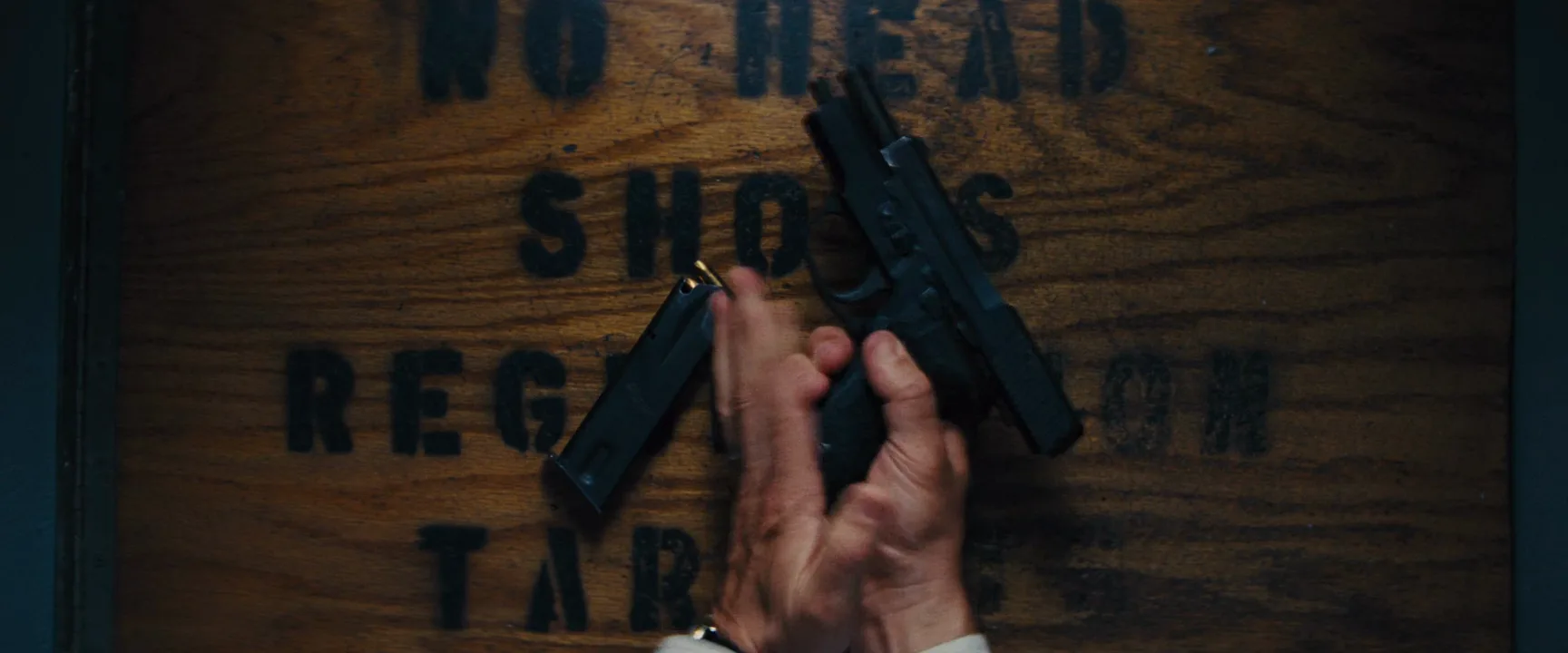
16 framesSixteen overhead frames from feature films, from graphic top shots and overhead close-ups to a highway seen from the air. Notice how often the subject is lying down and how much work the floor does.
How to create a overhead shot with AI
4 promptsImage and video models default to eye level, so an overhead has to be spelled out in geometry, not mood. In FlashBoards, build the start frame with Nano Banana 2 Lite, try a second take in GPT Image 2.5, then animate the best frame with MiniMax H3 Max Turbo, keeping reference top shots, takes and blocking notes on one board so you can compare them side by side until the angle is truly 90 degrees. The fourth prompt re-shoots a real film shot from a text description alone, and the original plays next to the result so you can compare.
Top-down overhead shot, camera directly above looking straight down at 90 degrees. A young woman in a red wool coat lies on her back on a cracked frozen lake, arms spread, dark hair fanned out on the ice, fracture lines radiating around her. The ice fills the entire frame edge to edge and is the only background. Flat graphic composition, soft overcast light, 24mm lens, cinematic still.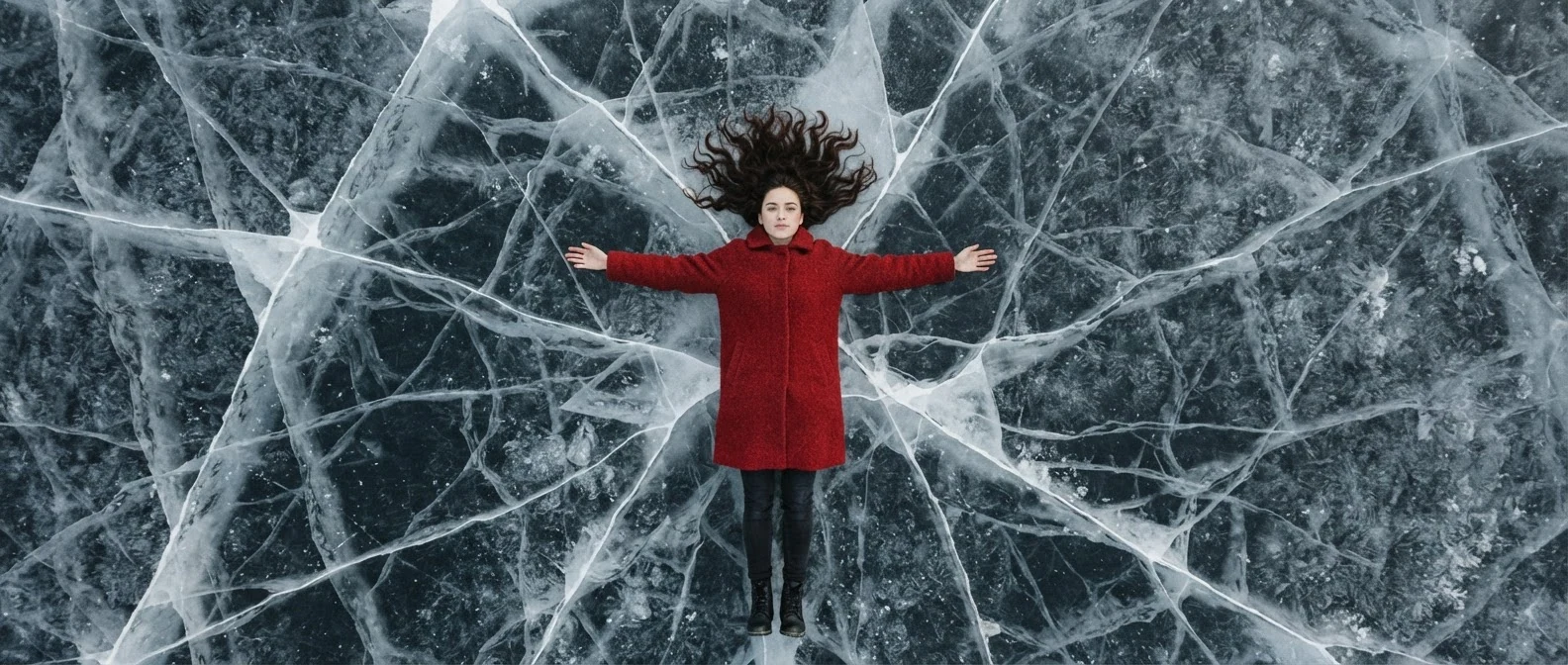
Directly above looking straight down at 90 degrees sets the axis; the ice fills the entire frame edge to edge leaves no room for a horizon, which blocks the drift back to a 45-degree high angle. Lies on her back and hair fanned out on the ice keep gravity consistent with the view.
Open FlashBoardsOverhead close-up, flat lay, camera directly above an oak kitchen table. Two hands entering from the bottom of the frame chop parsley on a round wooden board; a knife, three ceramic bowls and a lemon arranged in a neat grid. The tabletop fills the frame edge to edge, parallel to the sensor. Warm window light from the left casting short shadows, 50mm lens.
A second take on the same angle at a different scale. Flat lay and parallel to the sensor remove perspective; hands entering from the bottom read as the cook's own. The side light keeps the depth a pure top-down image would lose, and the 4:3 frame suits a tabletop insert.
Open FlashBoardsCamera: top-down, lens pointed straight down the whole time, rising slowly and steadily straight up from the first frame while turning a quarter turn clockwise, ending high above the lake. Action: From the first frame, fine snow skates across the ice in the wind and the woman's hair and coat hem stir. In the middle she slowly draws her arms in across her chest as the cracks around her shrink in the frame. At the end she lies still, a small red shape at the center of a wide field of cracked white ice.Rising slowly and steadily straight up with lens pointed straight down the whole time gives a pure vertical move instead of a tilt-up reveal, and the quarter turn adds the slow roll that makes a top shot feel like a map. From the first frame, fine snow skates across the ice puts motion in the opening image, and every detail in the action (snow, hair, coat, cracks) is already in recipe 1's frame, so nothing new gets invented.
Open FlashBoards{
"output": "Full-screen live-action scene from Casino (1995), from its very first frame: one continuous shot. Mid-1970s Las Vegas casino, 35mm anamorphic scope film look, warm tungsten light falling from overhead fixtures, deep red carpet with a gold diamond lattice and round gold medallions where the lines cross, two long bright green felt craps tables, rich saturated reds and greens, fine grain.",
"characters": {
"S1": {
"name": "a casino floor man, an unnamed extra",
"look": "trim man with short slicked-back dark hair, pale gray suit, seen only from directly above as the top of his head, his shoulders and his hands clasped in front of him at the waist",
"voice": "silent: he never speaks"
},
"S2": {
"name": "the craps dealers, unnamed extras",
"look": "men in dark red jackets and white shirts standing along the inner rims of the tables, one holding a long thin wooden stick",
"voice": "silent: they never speak"
},
"N1": {
"name": "Nicky Santoro, played by Joe Pesci",
"look": "never seen in this shot; he is heard only as the narrator's voice over the picture",
"voice": "quick, nasal New York voice-over, admiring and matter-of-fact"
}
},
"shots": [
{
"shot": 1,
"camera": "true top-down overhead: the lens points straight down at 90 degrees from high above the casino floor for the whole shot, wide scope framing with one table in the left half and one in the right half and a strip of red carpet between them; the camera glides steadily toward the top of the frame, keeping S1 in that carpet aisle just left of centre, and rises slowly higher (pedestal up) so the floor flattens into a map",
"action": [
"BEGINNING: alive from the first frame, only the rounded ends of the two green tables show along the top edge, crowded with gamblers leaning on the padded rails, a woman in a plum dress bent over the left one; S1 walks up the carpet aisle between them toward the top of frame, hands clasped in front of him.",
"THEN: the camera travels with him, so both tables slide down through the frame until their green felt, white betting layouts and chip stacks fill the picture from top to bottom; S2 dealers stand along the inner rims, heads bowed over the felt.",
"THEN: on the left table a dealer pushes chips across the felt with his long stick while players reach in from the outer rail; S1 keeps the same steady pace, head level, never looking up.",
"THEN: the far rounded ends of both tables come down from the top edge and a dealer in a dark red jacket leans far across the left table; open red carpet with gold medallions spreads over the top of frame.",
"END: a gray-haired man in a dark suit and red tie walks in from the top edge toward the bottom, a couple in pale clothes stands talking at the right; S1, now a little higher in frame, still walks toward the top with his hands clasped, and the whole floor reads as flat green ovals on a red and gold grid."
],
"dialogue": [
{
"speaker": "N1",
"on_screen": false,
"when": "from the first frame, as the shot opens on the table ends",
"delivery": "quick voice-over, finishing a thought",
"line": "<d>[English] He had to know everything.</d>"
},
{
"speaker": "N1",
"on_screen": false,
"when": "right after the first line, running on while S1 walks the length of the tables",
"delivery": "same voice-over, admiring, in one breath",
"line": "<d>[English] He'd find out the inside stuff nobody else knew and that's what he'd put his money on.</d>"
}
]
}
],
"sound": {
"ambience": "busy casino floor: crowd murmur, dice rattling against a table wall, chips clicking, a distant slot-machine bell, all kept low under the voice-over",
"speech": "exactly these spoken phrases, each said once, in this order, all by the off-screen narrator; nobody in the picture speaks",
"never_spoken": "no narration and no voice-over except Nicky's two lines above: the descriptions, performance notes and step words of this prompt are never spoken aloud",
"music": "a film score under the scene, always below the voices: a brisk, jaunty 1970s groove with walking bass, muted brass and a light swing beat",
"subtitles": "none"
}
}Remakes the craps-pit top shot from Casino (1995), dir. Martin Scorsese, DP Robert Richardson, keeping the straight-down lens, the gray-suited walker between two green tables, the floor sliding past like a map and Nicky's voice-over.
The camera line locks the lens straight down at 90 degrees for the whole shot and names the move as a glide toward the top of frame plus a slow rise, so the tables slide down past a walker who stays centered instead of the view tipping into a tilt. Nicky's two voice-over lines come verbatim from the film, and the prompt says nobody in the picture speaks, so no extra's lips move.
Open FlashBoardsCommon mistakes
- The angle drifts to 45 degrees. State the axis twice (directly above, looking straight down) and say the ground fills the frame edge to edge, so there is no space for a horizon.
- Standing people drawn as if lying down. From above, a standing person is mostly head and shoulders; write only heads and shoulders visible, foreshortened.
- Faces at impossible angles. Specify face turned up toward the camera or in profile for lying figures.
- Video ends with a tilt-up reveal. Describe the move as a straight rise or a lateral track and add lens pointed straight down the whole time.
- The frame just sits there while the camera creeps in. Open the
Action:line with motion already in the picture (wind, water, hands) so the shot is alive from the first frame. - Garbled text on objects. Keep labels out of overhead inserts or add them in post.
Keep the reference frames, prompts and every generated take side by side — images and video in one canvas.
FAQ
5 questionsWhat is another name for an overhead shot?
An overhead shot is also called a bird's-eye view, top shot, top-down shot or god's-eye view. Crews usually say top shot or overhead; critics and film students tend to say bird's-eye view. All describe the same angle: the lens looking straight down from directly above, at or near 90 degrees, with no horizon in frame.
Is a bird's-eye view the same as an aerial shot?
Not quite. Bird's-eye view describes the angle, straight down; aerial describes the platform, a drone, helicopter or plane. Most aerial shots look out obliquely with the horizon visible, so they are not bird's-eye views. A drone pointing straight down is both. A top shot from a set rig two meters above a table is not aerial at all.
What is the difference between an overhead shot and a high-angle shot?
A high-angle shot looks down from above eye level, usually 15 to 60 degrees, and still shows background, walls or horizon; it changes how powerful a character seems. An overhead tilts to about 90 degrees, so the ground becomes the background and the scene flattens into a map-like pattern. It is about design and distance more than status.
How do you film an overhead shot without a crane?
For tabletop work, use a C-stand with an extension arm and a light camera, sandbagged and secured with a safety line. For larger scenes, build a speed-rail goal post between two heavy stands and hang the camera underslung on a remote head. A stepladder and a wide lens work for tests; outdoors, a drone covers anything above rooftop height.
Why do directors use bird's-eye view shots?
To create distance and a sense of fate, to reveal patterns and symmetry that eye level cannot show, to make a lying figure look exposed, to clarify the geography of a fight or crowd, and to suggest surveillance. Because the angle hides faces, it usually opens, closes or punctuates a scene rather than carrying its emotional peak.
Related terms
3- Aerial ShotCamera Shots
An aerial shot is filmed from a camera in the air — a helicopter, drone or plane — high above the scene, revealing geography, scale and movement across a landscape or city that no ground position could show.
- High-Angle ShotCamera Angles
A high-angle shot looks down on the subject from above eye level, shrinking them in the frame and in status — often used to make a character seem small, vulnerable, trapped or overwhelmed.
- Crane ShotCamera Movement
A crane shot is filmed from a camera on a crane or jib arm that can rise, descend and sweep through the air — often lifting away from an intimate moment to a wide view of the whole place, or swooping down to open a scene.
Further reading
Blain Brown, Cinematography: Theory and Practice (Routledge). Steven D. Katz, Film Directing Shot by Shot (Michael Wiese Productions).