 FlashBoards Learn
- Learn
- Camera Shots
- Aerial Shot
Camera Shots · Film language
Aerial Shot
Also called: drone shot, helicopter shot, aerial view shot, aerial establishing shot
An aerial shot is filmed from a camera in the air — a drone, helicopter or plane — looking across or down on a scene from far above. It shows what no ground position can: the shape of a landscape, the layout of a city, the size of a person against it, and movement across great distances.
- What it does
- Reveals geography and scale from the air, shrinking people and vehicles against the land.
- Use it when
- Opening a film or sequence, following a journey or chase, or showing how alone or small a character is.
- Watch out
- An unmotivated drone reveal is a cliché; give the move a reason and a clear start and end.
- Try this prompt
Aerial shot from 800 feet, horizon in the top fifth, a single red car tiny on a winding road through black volcanic desert, low sun
What is an aerial shot in film?
An aerial shot is defined by where the camera is: physically airborne, carried by a helicopter, a drone, a plane or occasionally a balloon or cable rig high above the ground. It is usually framed as an extreme long shot, with people small or absent, and it usually moves, because aircraft rarely hold still.
The angle is not what makes it aerial. An aerial camera can look out at the horizon (an oblique aerial, the most common kind) or point straight down (an aerial top-down). A view from a rooftop, a balcony or a crane that looks down on a street is a high-angle shot, not an aerial, however high it feels. Within the camera shots vocabulary, aerial shots sit at the far end of the scale: the biggest spaces, seen from the greatest distance.
For decades aerials meant a plane or helicopter and big budgets. Since the 2010s drones have made low, close aerials cheap enough for almost any production, so the term now covers everything from a treetop glide to a pass over a mountain range.
Why do filmmakers use aerial shots?
To establish place. An aerial is the fastest way to tell the audience where they are. It is the classic establishing shot for a city, coastline or valley. The Sound of Music (1965) opens by flying over the Alps before finding Maria on a hilltop; West Side Story (1961) opens on views looking straight down on Manhattan before descending to the street.
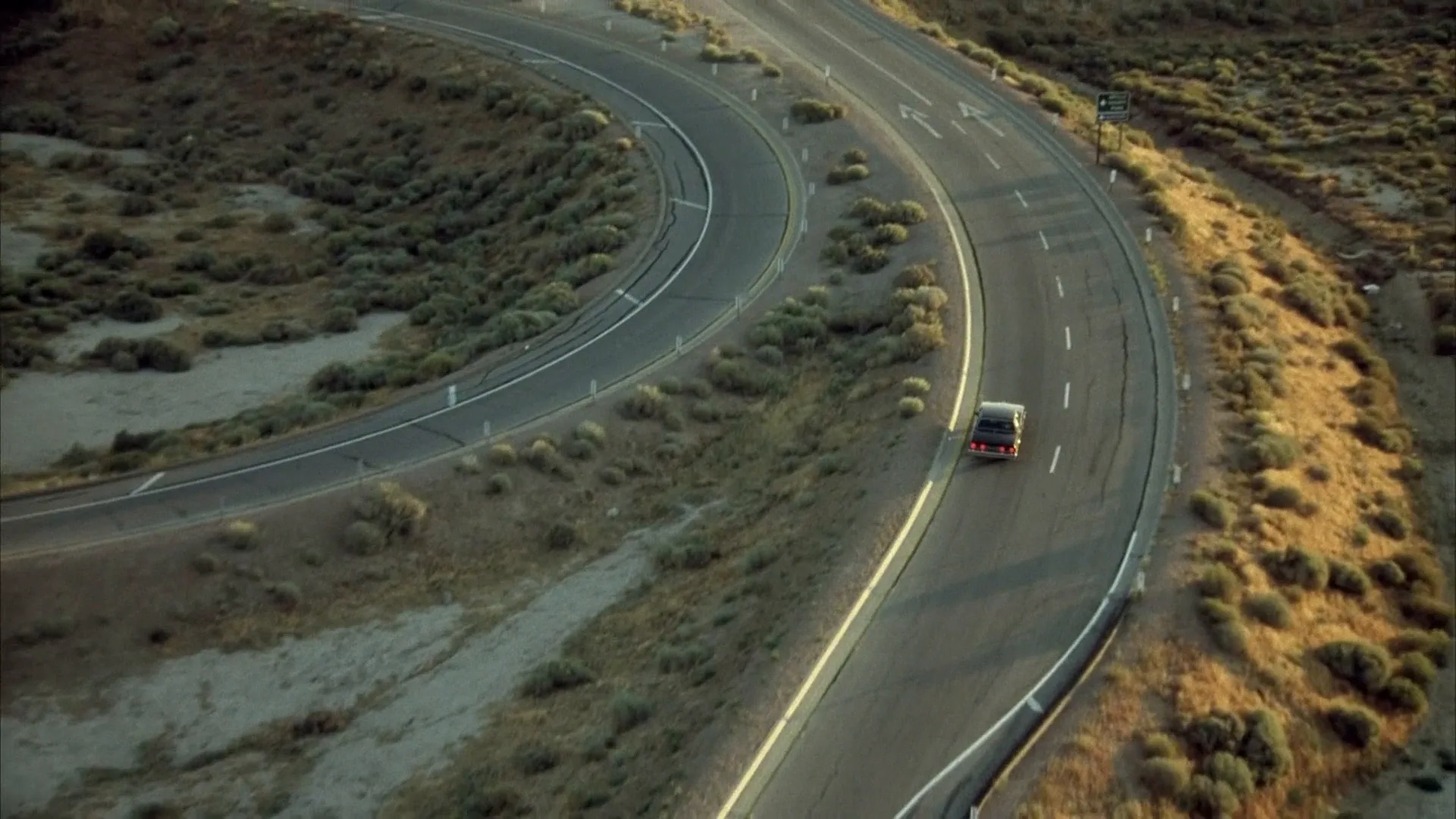
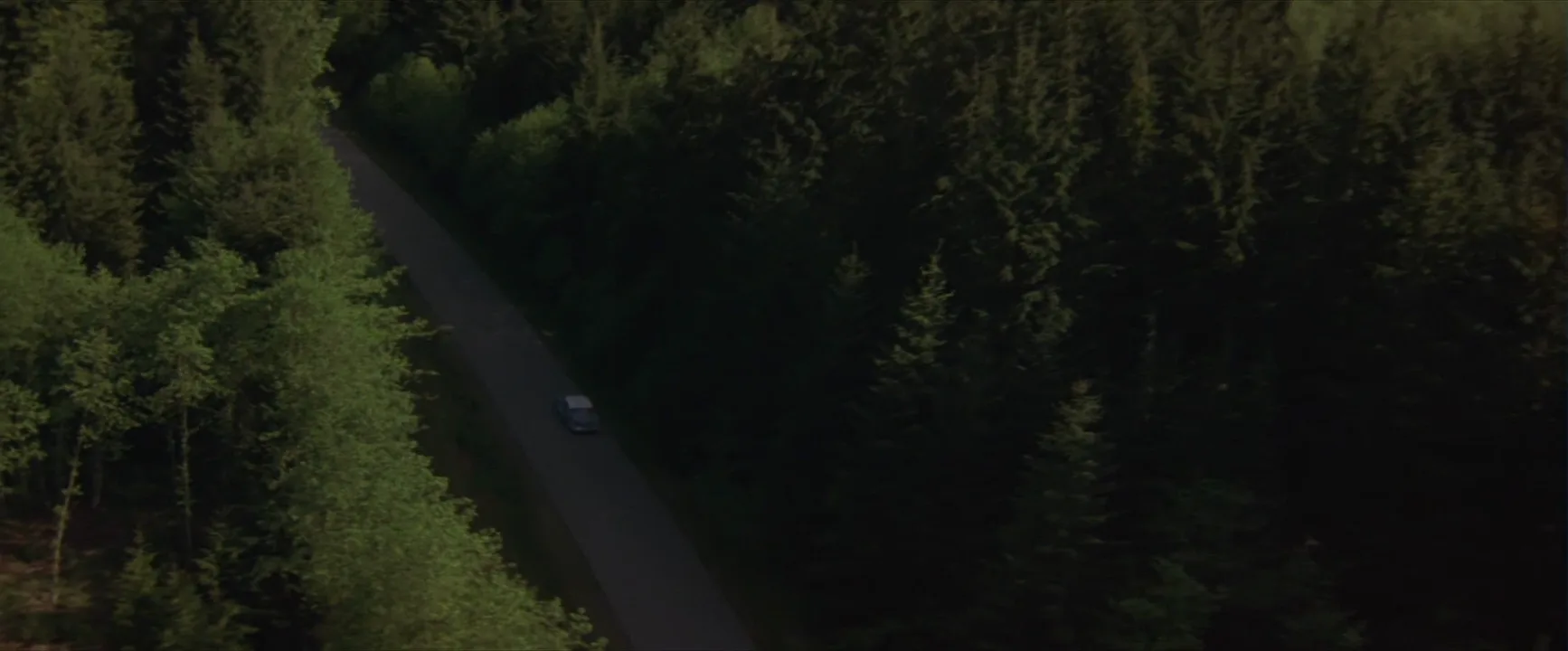
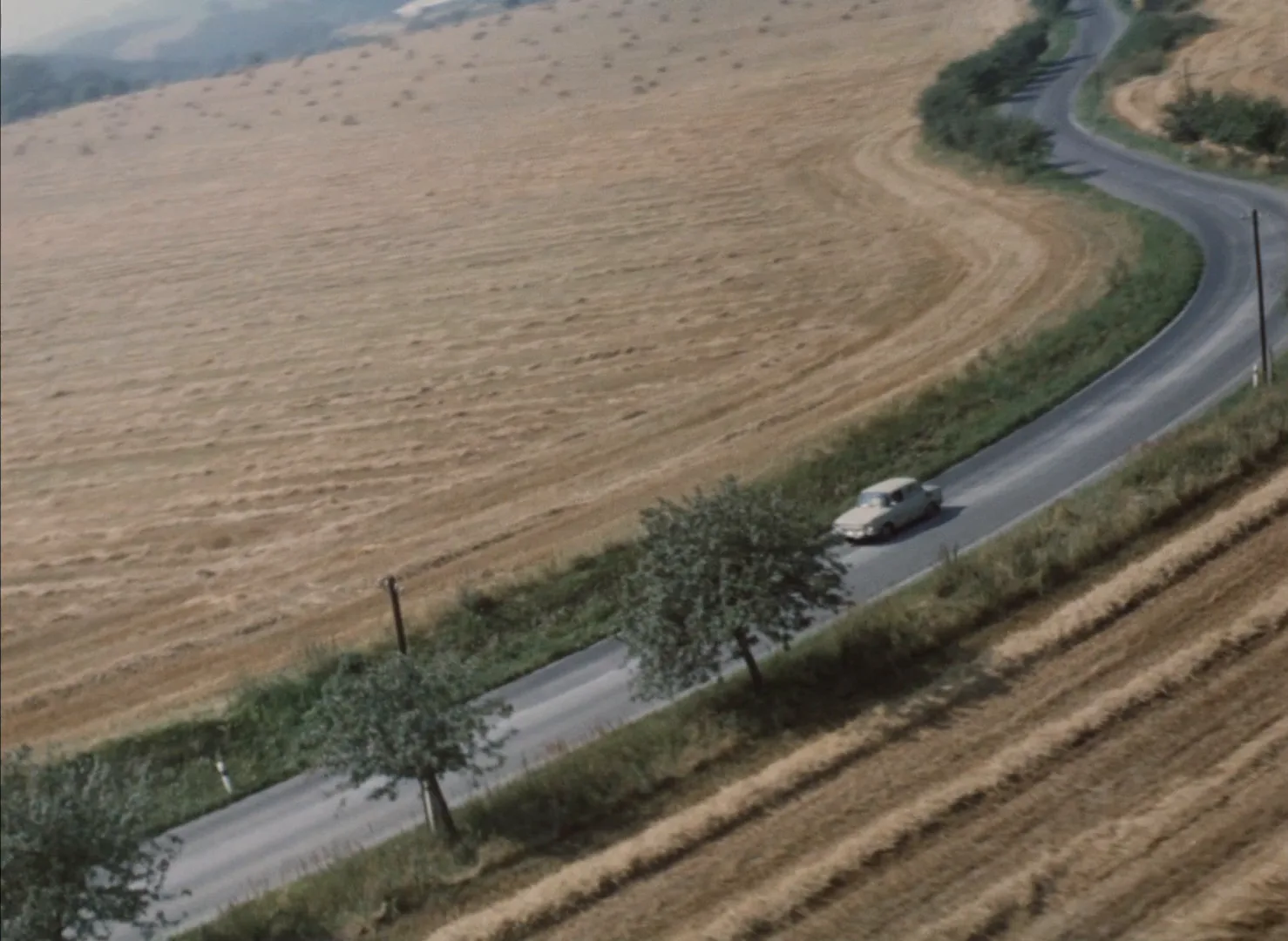
To show scale and isolation. A car alone on a mountain road, a figure on a salt flat: altitude makes people tiny and the land enormous. The opening of The Shining (1980) follows a small yellow car up a winding road through the mountains, and the distance of the camera makes the trip feel watched rather than shared.
To track a journey. Road movies, chases and treks use aerials to show direction and distance in one image: where the characters came from, where the road goes, how much empty ground lies between.
To shift perspective. Cutting from close faces to a high aerial pulls the viewer out of the characters' heads into a detached, almost fated view. Between acts it works as punctuation.
Aerial level: how high is an aerial shot?
Aerial level is the camera height category above everything a human or a ground rig can reach. The scale runs ground level, knee, hip, shoulder, eye level, high, and then aerial. Even a large telescoping crane shot tops out at a few dozen feet; aerial level begins roughly where cranes stop.
Three working bands:
- Low aerial, 15–100 ft. Just above trees, rooftops or a moving car. Foreground objects slide past fast, giving strong parallax and a real sense of flight. This is drone territory.
- Mid aerial, 100–400 ft. Streets, fields and vehicles read as a layout. People become figures. In the US, drones flown under the FAA's Part 107 rules are generally limited to 400 ft above ground without a waiver.
- High aerial, 500 ft and above. Cities turn into maps and landscapes into texture. Only helicopters and planes work here; a long lens can still find a single car or boat in the frame.
Low aerials travel with a character; high aerials watch them from a distance.
How to shoot an aerial shot
Platform. Drones win for low, close, slow moves and tight spaces; helicopters win for altitude, speed, range and heavy camera packages. A cable cam works for repeatable passes over a stadium or set.
Lens. Wide lenses (18–35mm on Super 35) suit low drone flights where the ground rushes past. From a helicopter, zooms into the hundreds of millimeters let the aircraft stay high and far away while the frame stays tight on a car or a rider. A telephoto lens also flattens terrain; a wide-angle lens exaggerates depth and speed.
Light. Fly early or late. A low sun throws long shadows that give hills, dunes and buildings relief; at noon the same landscape looks flat. Overcast light suits moody, graphic top-downs.
Speed and direction. Slow relative movement makes landscapes feel vast; fast movement close to the ground feels urgent. Decide the move before takeoff: push forward to reveal, pull back to shrink the subject, rise over an obstacle, orbit a landmark, or run alongside a vehicle as an aerial tracking shot.
Shutter. Keep a 180-degree shutter with ND filters. Very short shutter speeds, common on small drones in bright sun, remove natural motion blur and make aerial motion look jittery.
Keep it clean. Level the horizon unless a bank is intended, watch for propellers or landing gear entering the frame, and rehearse picture vehicles with radio cues so the car hits its mark when the aircraft does.
What is a helicopter shot?
A helicopter shot is an aerial filmed from a helicopter, today almost always with a gyro-stabilized camera system mounted on the nose or side of the aircraft and operated remotely from inside the cabin. Older setups used side mounts with an operator in an open door.
The helicopter is the tool for high, fast and long: passes over cities and coastlines, shots that follow a car at highway speed for a full minute, flights through mountain valleys. It carries full-size cinema cameras and long zooms, stays up for hours, and can climb to heights no drone is allowed to reach.
The trade-offs are cost, noise and rotor wash. A helicopter cannot fly low over actors or crowds, it kicks up dust and spray near the ground, and flight time is expensive, so every pass is planned in detail.
What is a drone shot?
A drone shot is an aerial flown with a remote-controlled multirotor. Small drones carry an integrated camera; heavy-lift drones carry a full cinema camera on a stabilized gimbal. They can start on the ground and rise, fly a few feet above a walking actor, slip between trees or glide over a rooftop, all far more cheaply than a helicopter.
Typical drone moves: the rising reveal over a ridge or building; the pull-back that starts on a character and climbs away until they are a dot; the slow orbit around a landmark; the top-down that turns a road or a crowd into a pattern; and the low tracking run beside a vehicle.
Limits matter. Heavy-lift flights with a cinema camera are short, wind grounds small drones, and rules restrict altitude and flights over people. A fast, acrobatic variant flown through goggles is the FPV drone shot, which dives and threads through gaps instead of gliding. The biggest creative risk is overuse: a drone reveal on every location becomes wallpaper, so use it when the height actually tells the audience something.
Aerial shot vs. overhead shot and high angle
All three look down; the difference is where the camera is and how steeply it points.
- Aerial shot describes the platform: the camera is in the air, hundreds of feet up, and may look out toward the horizon or down.
- Overhead shot describes the direction: the lens points straight down at about 90 degrees. It can be taken from a ceiling rig or a crane a few feet above a bed or a table, with no aircraft at all.
- High-angle shot describes a tilt: the camera is above eye level and looks down on a subject from any support, usually to make them look smaller or weaker.
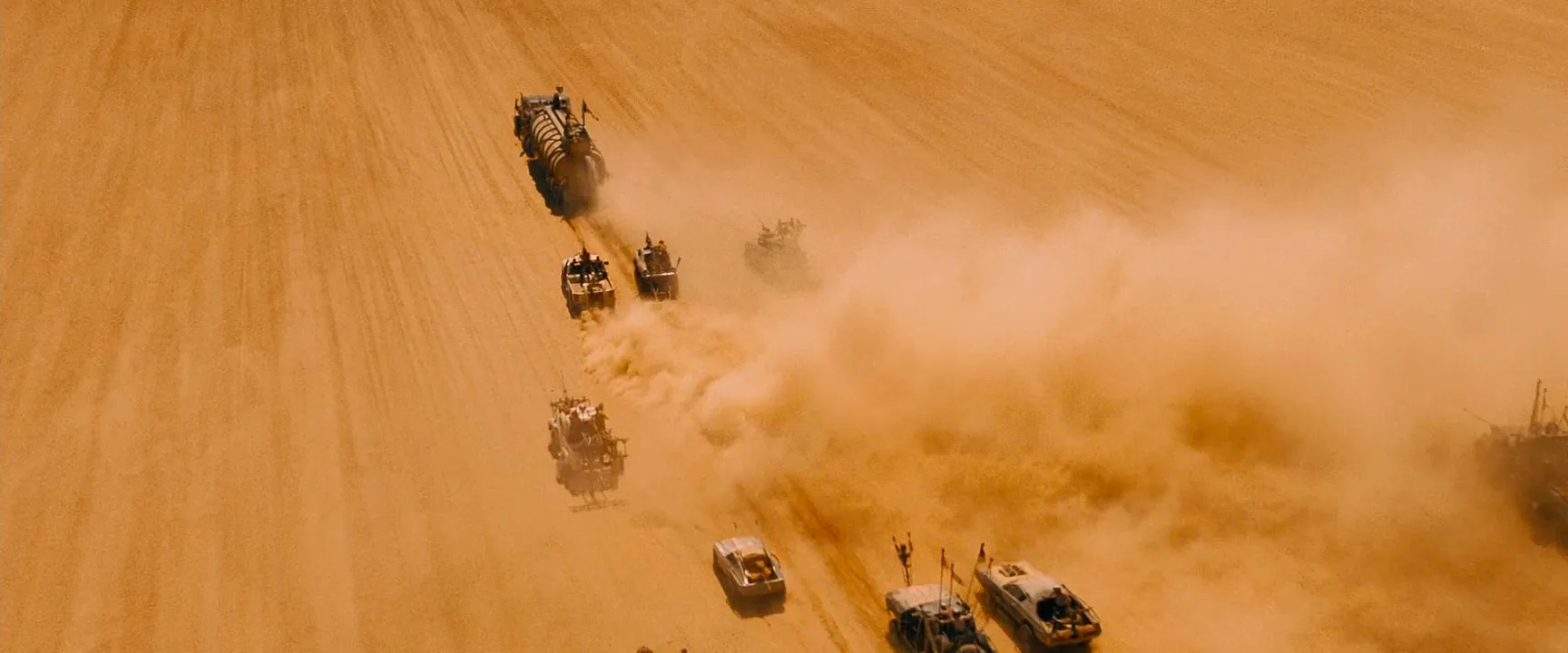
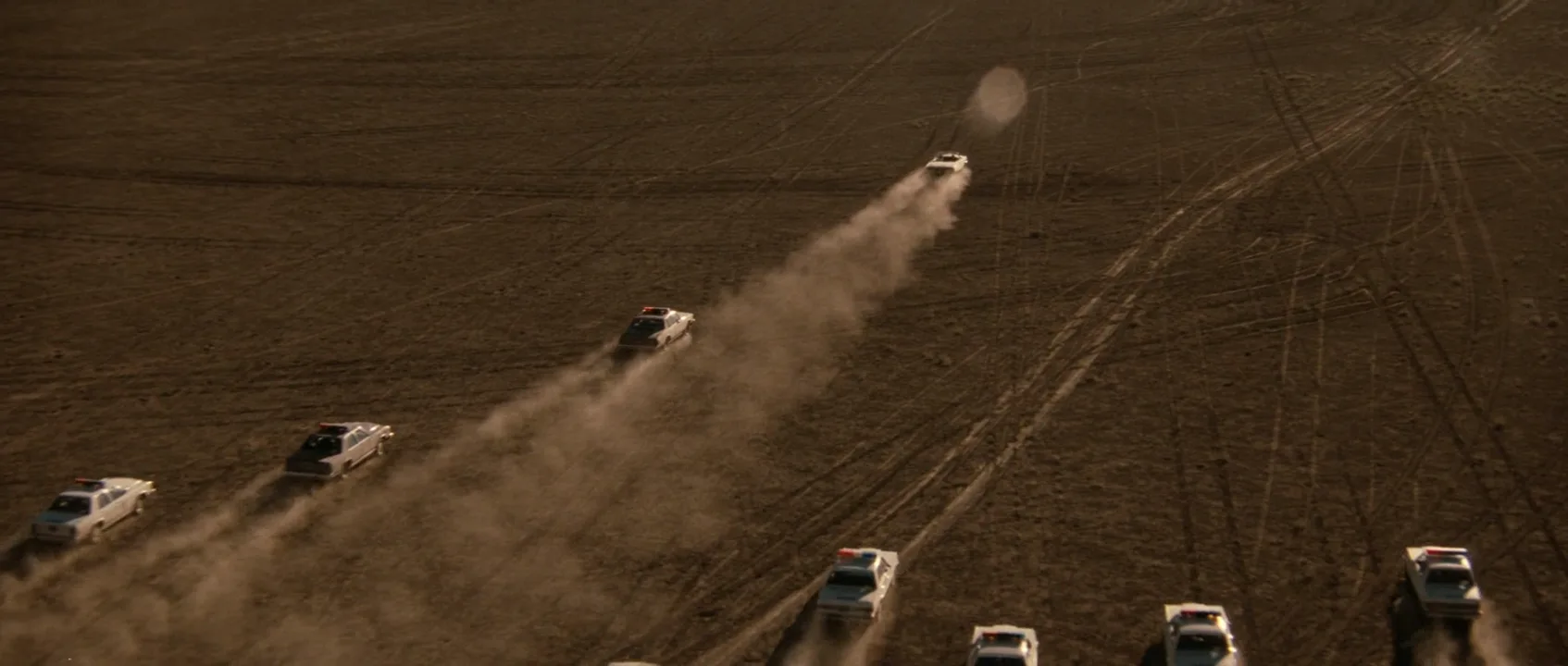
When an airborne camera points straight down, the shot is both aerial and overhead: an aerial top-down, like the desert convoy from Mad Max: Fury Road in the gallery below. A bird's-eye view of two people lying on a floor, filmed from a rig just above them, is overhead but not aerial. And a look down from a balcony is high angle, not aerial.
Aerial Shot in motion
12 clipsWatch the ground, not the subject. In a real aerial the land itself moves: roads swing under the lens, horizons rise and sink, and cars, boats and people shrink as the camera climbs or pulls away. The clips run from helicopter journeys and chases to straight-down views, low drone passes and cities seen from the sky.
Aerial Shot stills

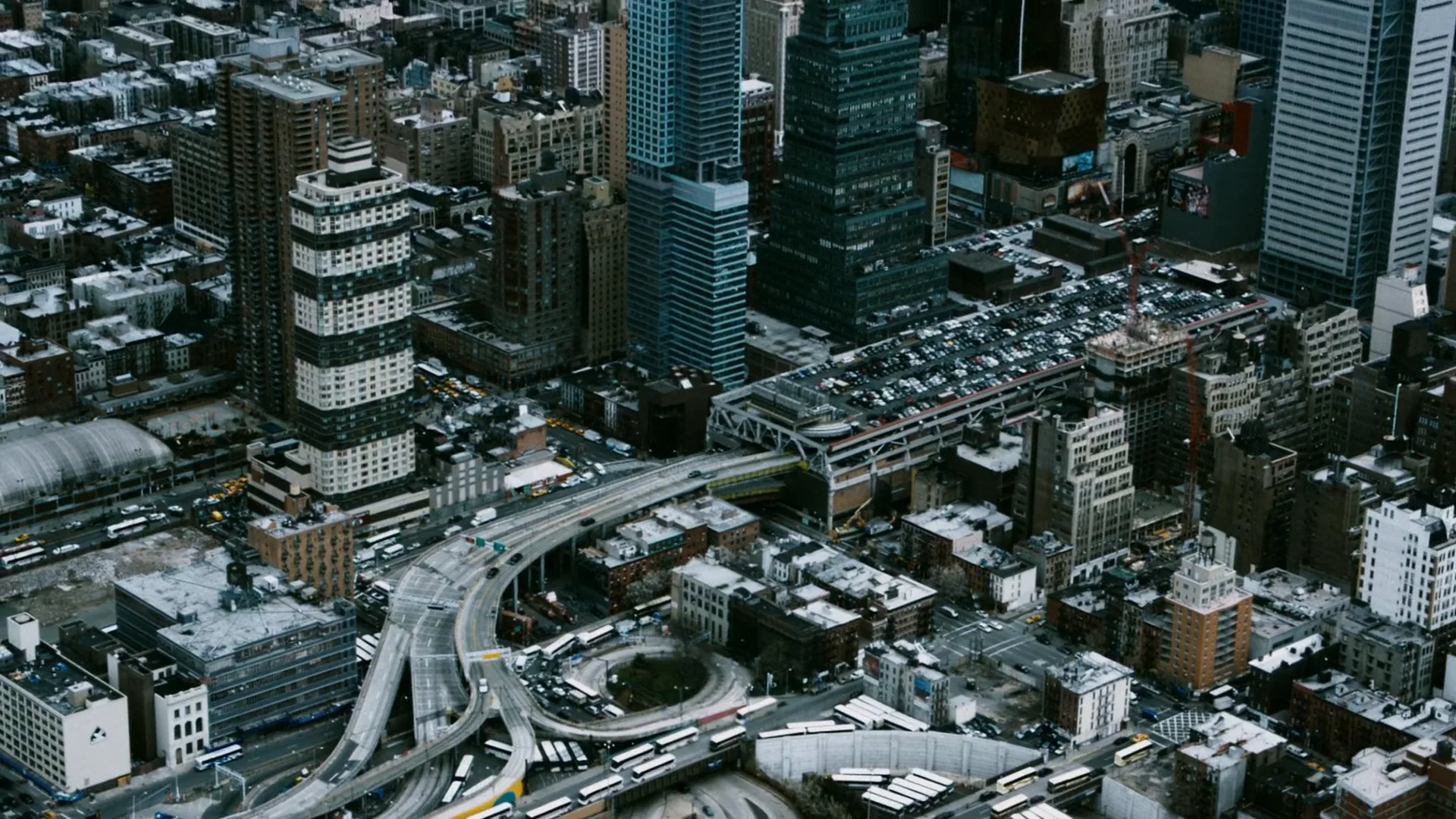
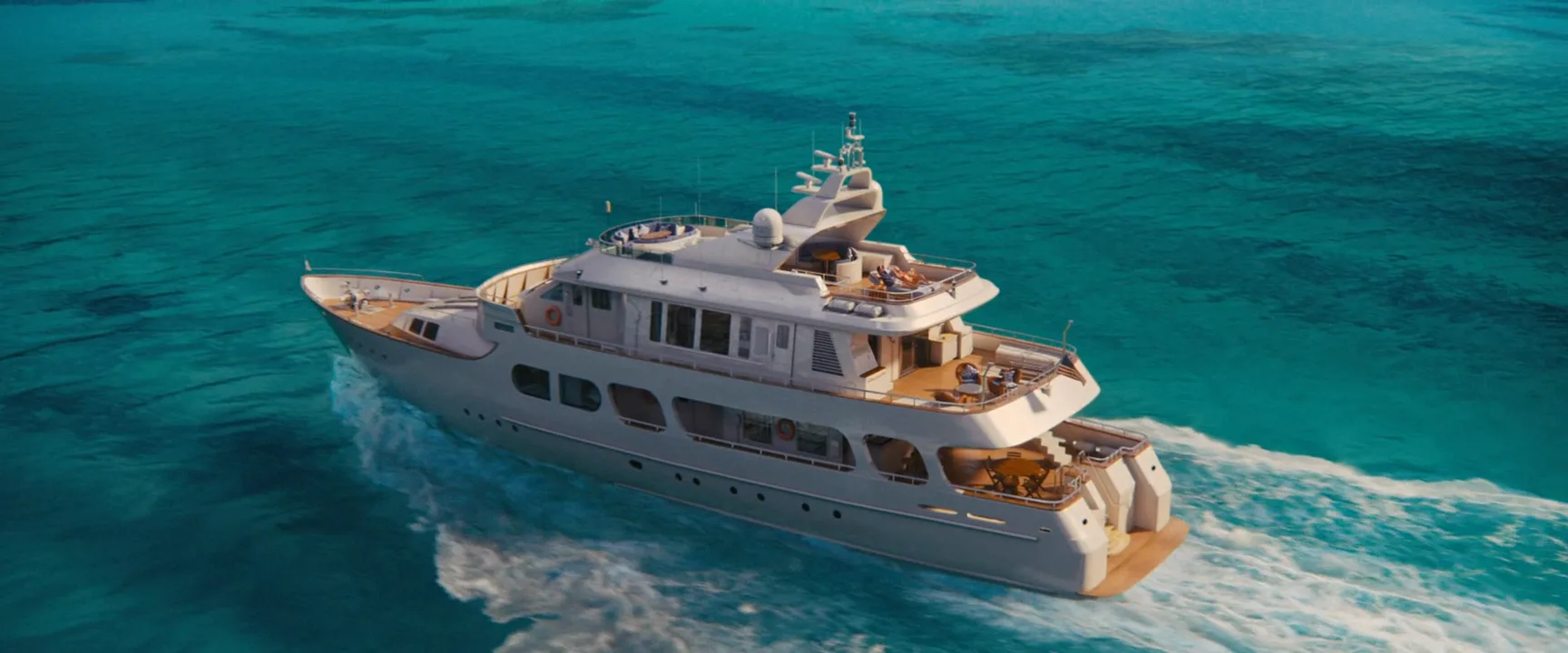
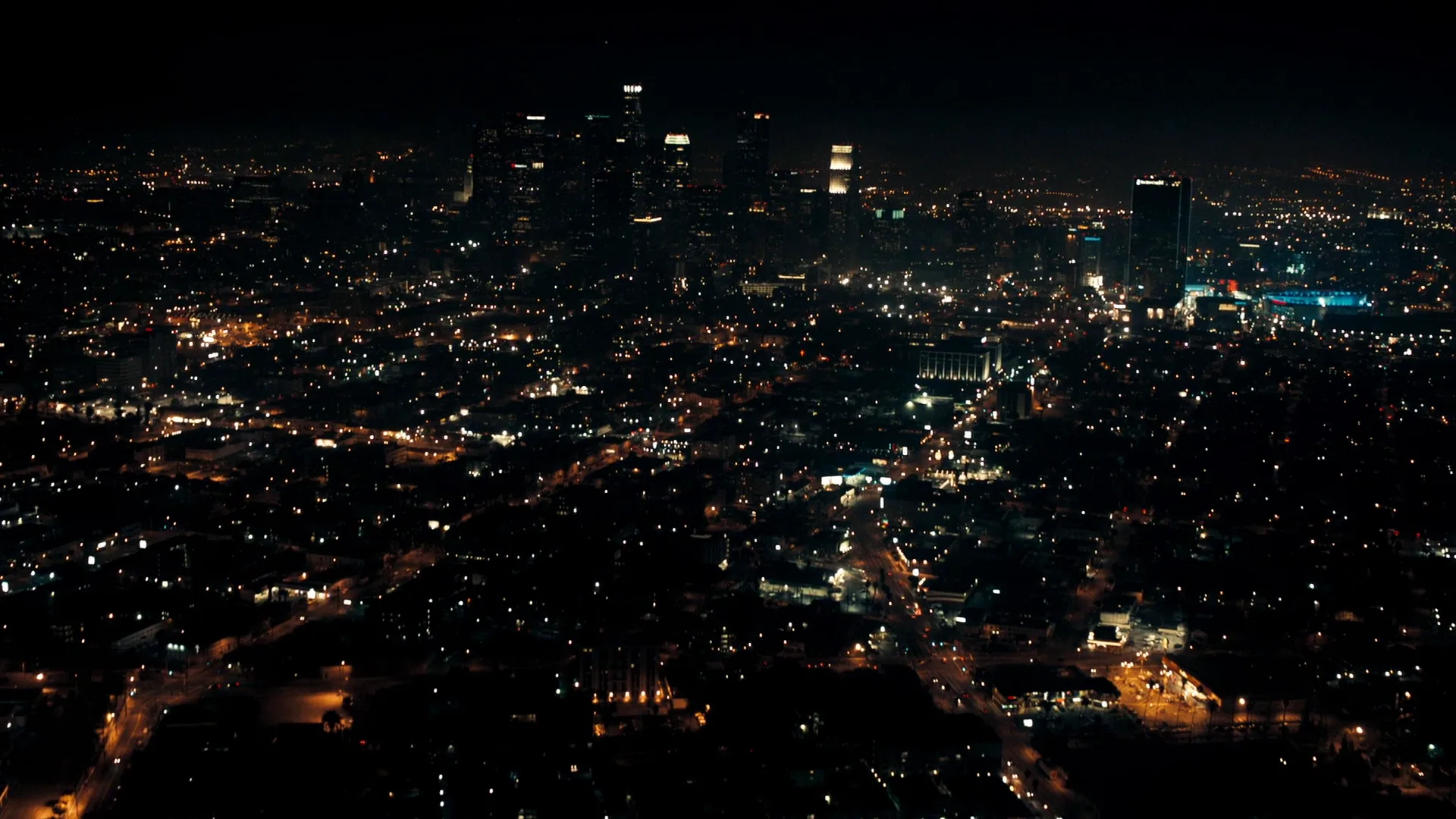
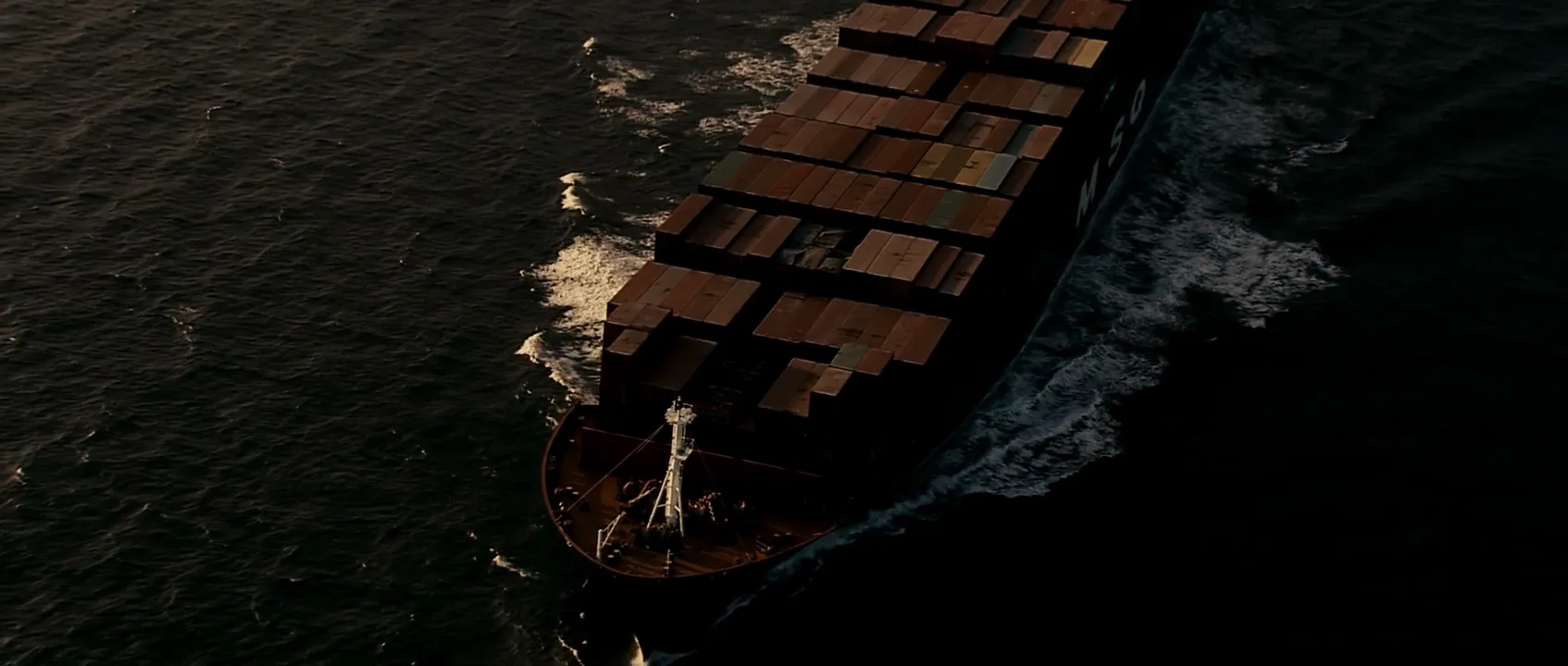
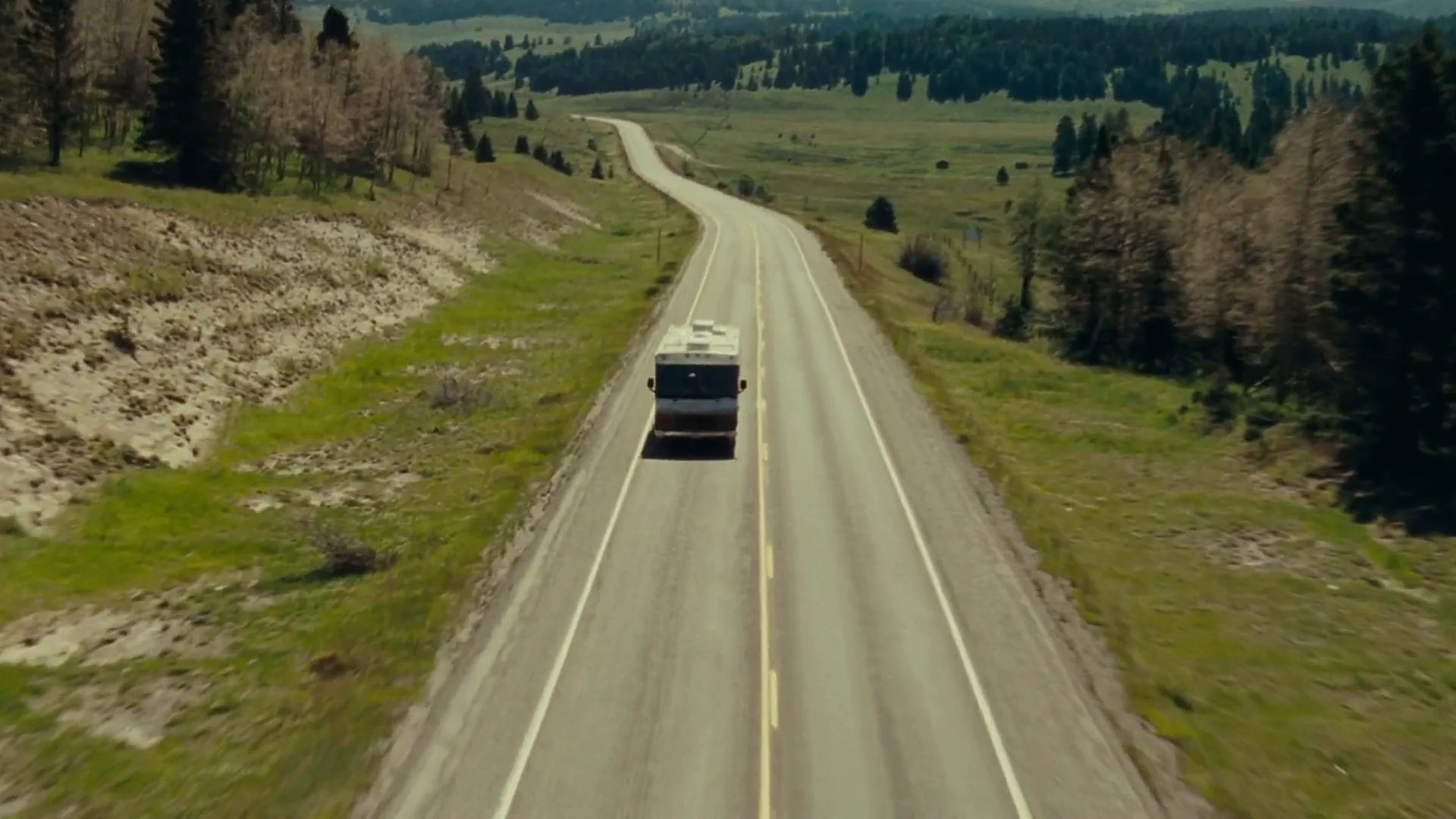
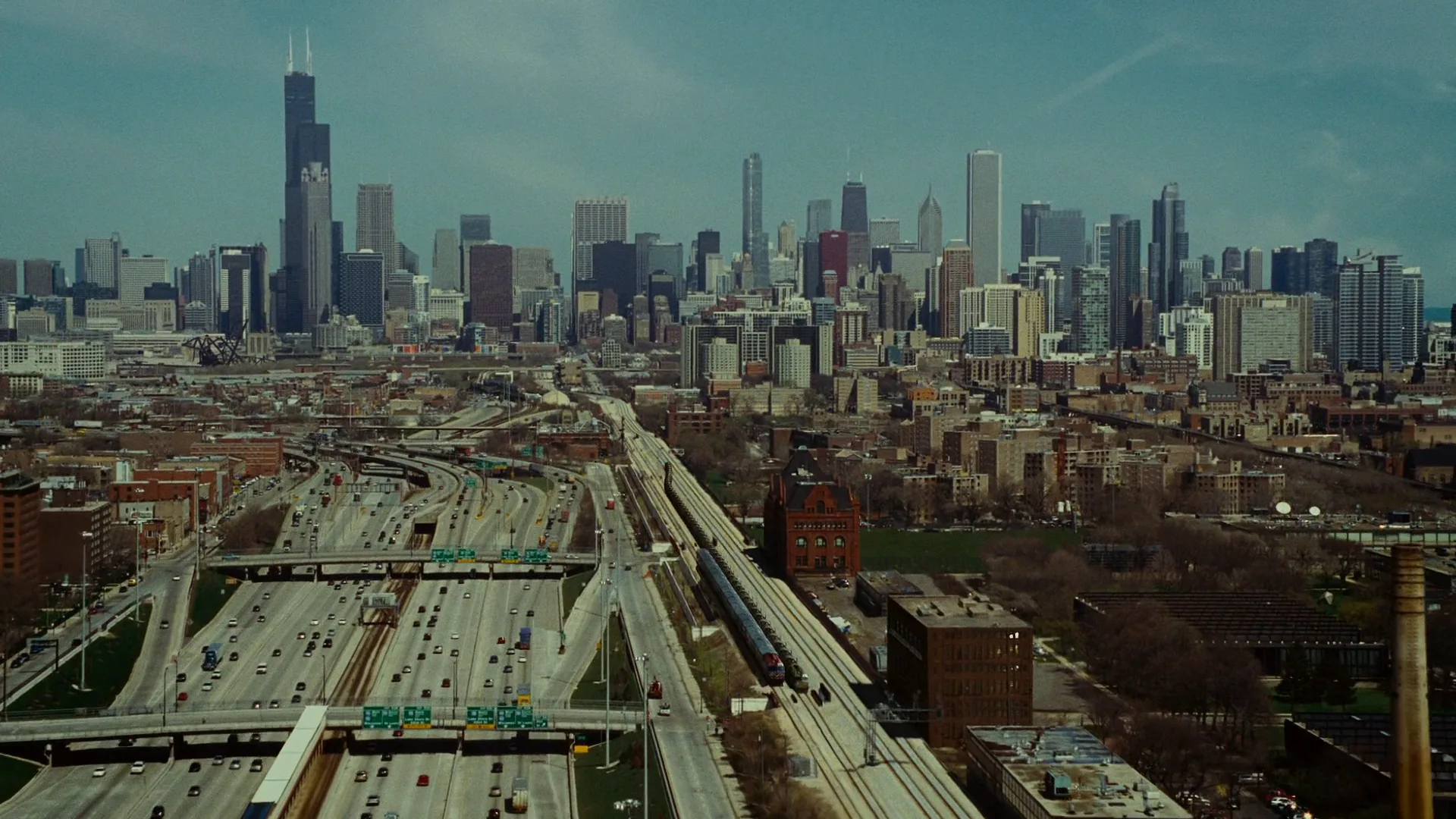
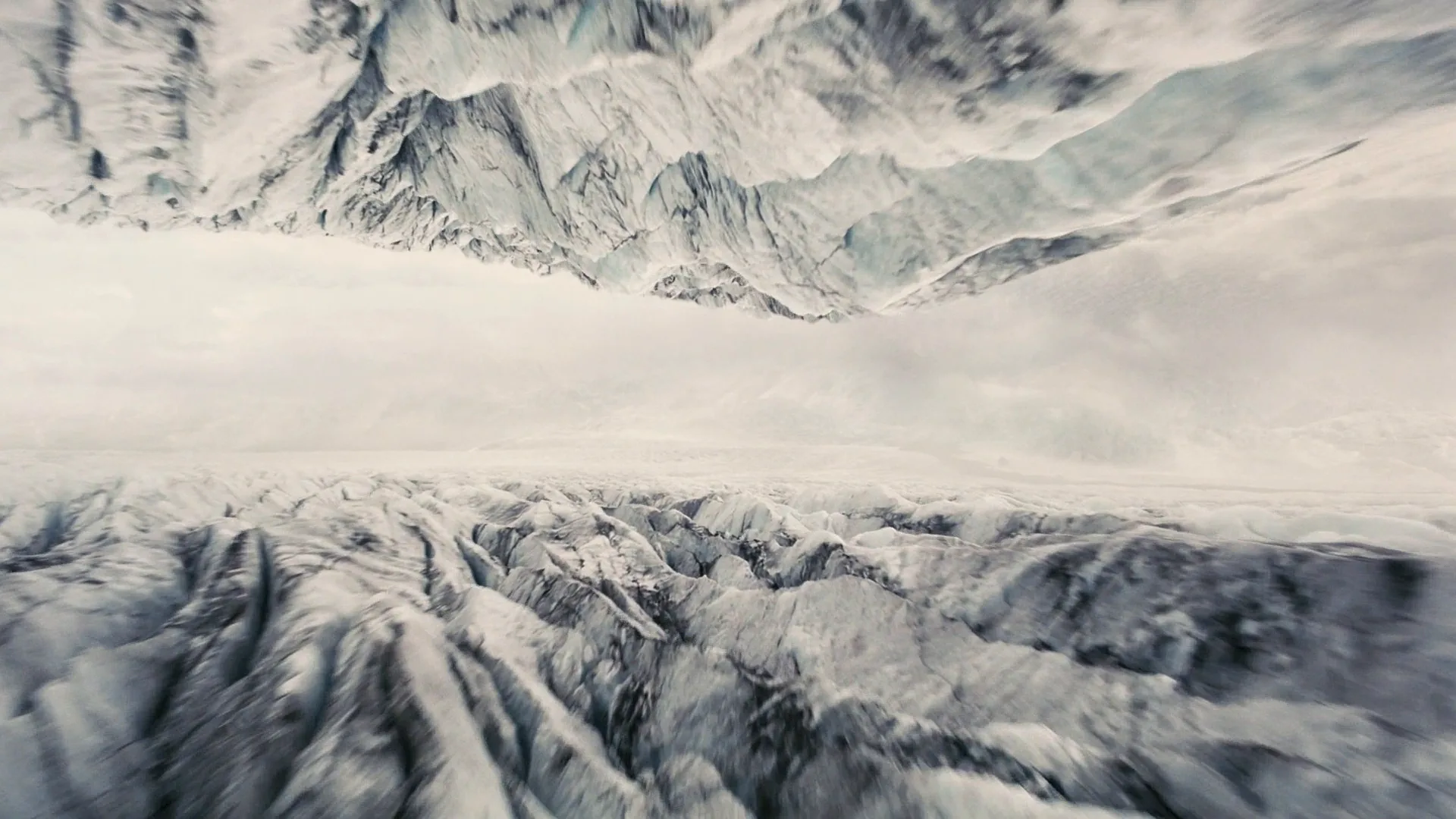
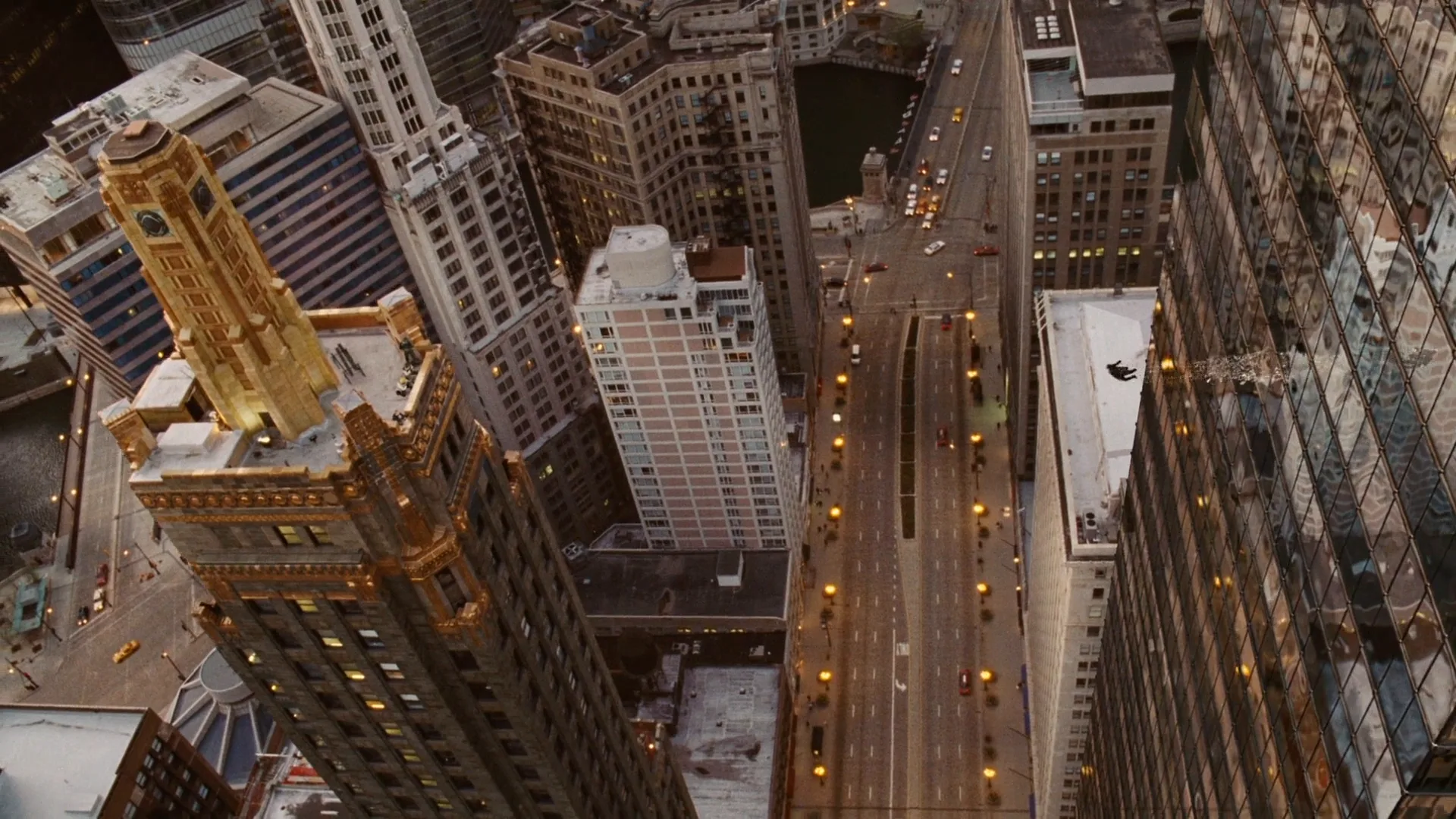
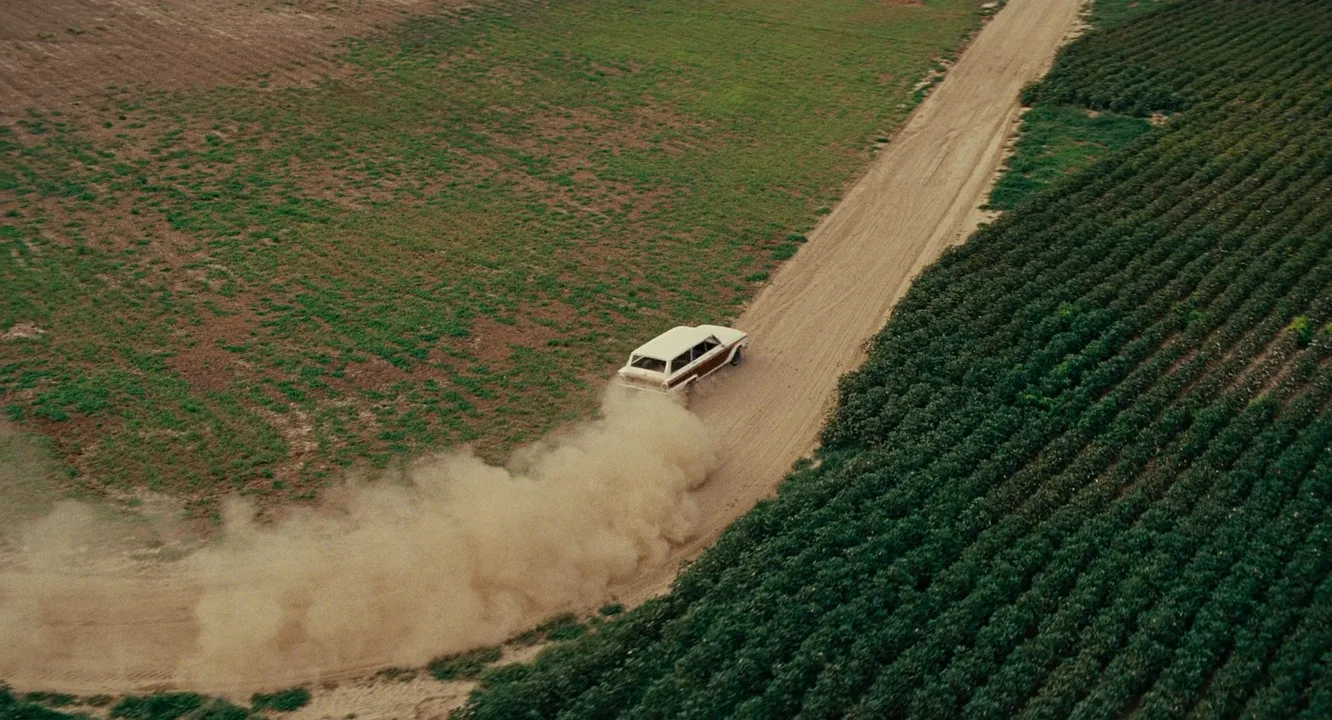
14 framesFourteen aerials from feature films: single vehicles on roads for scale, chases, cities by day and night, ships at sea, and one landscape with nothing to measure it by.
How to create a aerial shot with AI
4 promptsModels reach for aerial framing readily, but they drift toward satellite-map flatness, toy-like miniatures or car-commercial angles, and in video they rarely hold a steady altitude. Give them a platform, a height in feet, an angle to the horizon and a size for the subject. Below, Nano Banana 2 Lite builds an oblique helicopter start frame, GPT Image 2.5 tries the straight-down drone variant, and MiniMax H3 Max Turbo turns the first frame into a tracking aerial. In FlashBoards you can pin real aerial frames beside your generations on one board and compare altitude, light and scale across takes side by side. The fourth prompt re-shoots a real film shot from a text description alone, and the original plays next to the result so you can compare.
Aerial shot from a helicopter at about 800 feet, oblique angle with the horizon in the top fifth of the frame: a single red car on a two-lane road winding through black volcanic desert, the car tiny in the lower third and trailing a thin plume of pale dust, long shadows from a low late-afternoon sun, light haze over distant hills, deep focus, cinematic film still, 35mm film grain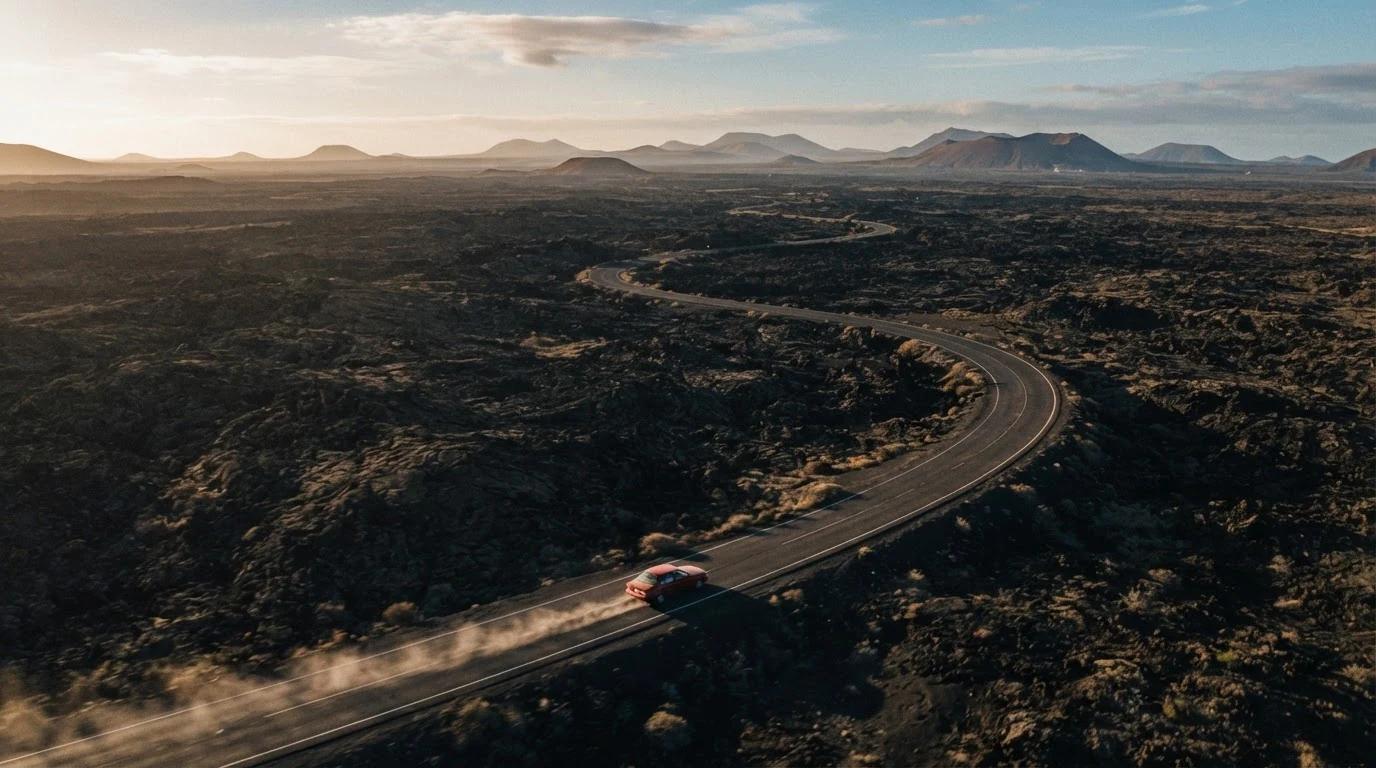
From a helicopter at about 800 feet and horizon in the top fifth fix platform and angle. The car tiny in the lower third fixes scale; without it models zoom in to a three-quarter car-ad view. Low sun and haze give the terrain relief and depth, and the dust plume gives the video recipe something already in motion.
Open FlashBoardsAerial top-down shot from a drone at about 300 feet, camera pointing straight down: a small wooden fishing boat crossing shallow turquoise water over a pale sand bar, a curved white wake behind it, a strip of beach and the shadows of palm trees along the left edge of the frame, high sun, crisp detail from edge to edge, cinematic film still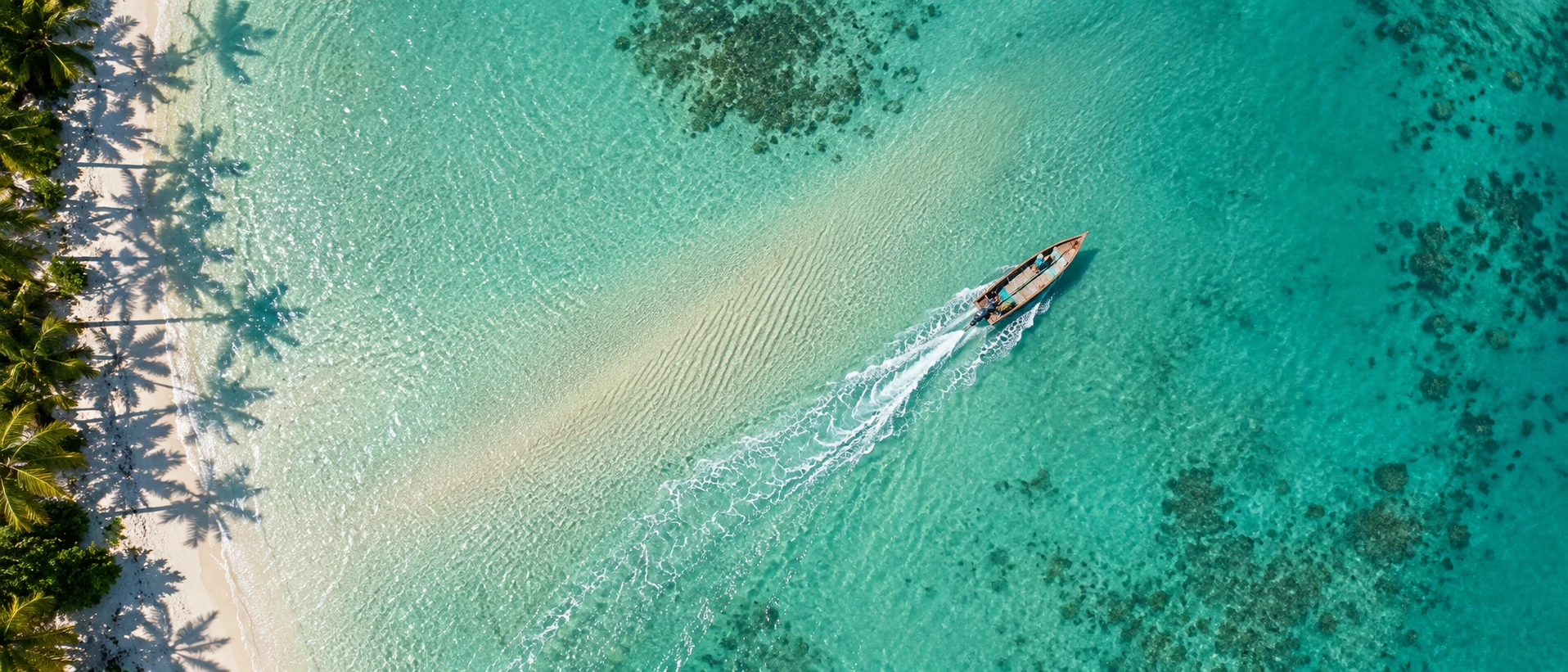
A second take with different grammar: pointing straight down makes it an aerial top-down rather than an oblique view, and about 300 feet tells the model the camera is airborne, not on a ceiling rig. The curved wake shows direction without a horizon, and crisp detail from edge to edge keeps it from turning into a blurred miniature.
Open FlashBoardsCamera: a helicopter aerial flying forward alongside the red car at the same speed, smooth and steady for the whole shot, holding the same height; the horizon stays level in the top fifth of the frame and the car stays tiny in the lower third. Action: the car is already driving fast along the winding road as the shot begins, dust lifting behind it. In the middle it leans into a long bend and the dust plume swings wide across the black ground. At the end it comes out onto a straight stretch, the long shadows of the low hills sliding past beneath the camera.At the same speed and car stays tiny in the lower third hold the scale, which video models otherwise lose by zooming in on the subject. Holding the same height and horizon stays level stop the drifting climbs and banks. The car is moving and the dust rising from the first frame, so the shot is alive at once, and everything named (road, bend, dust, shadows) is already in the start frame.
Open FlashBoards{
"output": "Full-screen live-action aerial shot from The Wolf of Wall Street (2013), alive from its very first frame: one continuous helicopter shot with no cuts. Glossy saturated 35mm film look, warm late-afternoon Caribbean sun, shallow turquoise sea with darker reef patches, white yacht, soft film grain.",
"characters": {
"S1": {
"name": "Jordan, played by Leonardo DiCaprio",
"look": "never seen in this shot; he is heard only as the narrator's voice over the picture",
"voice": "confident, easygoing New York narrator, quick and pleased with himself"
}
},
"shots": [
{
"shot": 1,
"camera": "helicopter aerial that starts low and close above the top deck of a large white motor yacht, seen from above its right side at a three-quarter angle, bow toward the left of frame and stern toward the lower right, and holds that side view for the whole shot while the yacht keeps a straight heading to the left; the camera flies steadily backward and climbs, panning left to keep the yacht centered and slowly tilting up, until the yacht is a small white shape in the lower middle of a wide sea",
"action": [
"BEGINNING: alive from the first frame, the yacht already cruising fast to the left, its top deck filling the frame: a satellite dome, a hot tub and two sunbathers lying on white loungers on teak decking.",
"THEN: the camera pulls away and rises; the yacht's whole right side comes into view, three white decks with rows of windows, and a long foaming wake spreads behind the stern toward the lower right.",
"END: the yacht, still seen side-on, shrinks to a small white shape crossing open turquoise water parallel to the distant shore, and a thin green coastline with pale sand rises into the top of the frame: an aerial pull-back that reveals scale."
],
"dialogue": [
{
"speaker": "S1",
"on_screen": false,
"when": "soon after the shot begins, as the camera starts to pull away from the deck",
"delivery": "relaxed, boastful voice-over",
"line": "<d>[English] For three weeks, we sailed the Naomi through the Caribbean, eventually taking her home to Long Island, where we bought a house.</d>"
},
{
"speaker": "S1",
"on_screen": false,
"when": "right after the first line, as the coastline rises into the top of the frame",
"delivery": "same voice-over, savoring it",
"line": "<d>[English] Seven acres on the Gold Coast of Long Island.</d>"
}
]
}
],
"sound": {
"ambience": "steady wind and the yacht's engines and hull cutting through water, heard from far away below the helicopter",
"speech": "exactly these spoken phrases, each said once, in this order",
"never_spoken": "no narration and no voice-over except Jordan's two lines above: the descriptions, performance notes and step words of this prompt are never spoken aloud",
"music": "a film score under the scene, always below the voices: bright, swelling strings with an easy, triumphant lift",
"subtitles": "none"
}
}Remakes the yacht shot from The Wolf of Wall Street (2013): the prompt carries over the start just above sunbathers on the top deck, the camera flying back and climbing with a slow tilt up, the rising coastline, and Jordan's (Leonardo DiCaprio) voice-over from that moment.
Flies steadily backward and climbs, panning left … slowly tilting up is the original's move, taken from its corpus label, and the rising coastline gives the pull-back an end point, so the scale reveal lands. Holds that side view for the whole shot was added after a first take swung round behind the stern; it keeps the yacht in profile so its shrinking length and wake stay readable. Jordan's two voice-over lines come verbatim from the film, and the score line keeps the model from leaving the shot silent.
Open FlashBoardsCommon mistakes
- It looks like a map. Pure top-down views without depth read as satellite imagery. Keep the horizon in frame or add haze, film still and a lens.
- It looks like a miniature. Some outputs blur the top and bottom of the frame like tilt-shift. Ask for deep focus or crisp detail from edge to edge.
- Scale drifts. People as big as cars break the illusion; say figures a few pixels tall or the car tiny in the lower third.
- Overhead instead of aerial. Overhead alone often gives a ceiling-height view of a table. State an altitude in feet and the aircraft.
- The camera wanders. Video models add orbits, climbs and speed changes. Name one move, its speed and the height it holds, and add horizon stays level.
- The video starts frozen. With only a camera move in the prompt, MiniMax H3 Max Turbo tends to creep toward a still landscape. Start
Action:with something already moving: a car driving, dust rising, water breaking.
Keep the reference frames, prompts and every generated take side by side — images and video in one canvas.
FAQ
5 questionsWhat is an aerial shot in film?
An aerial shot is a shot taken from a camera in the air — on a drone, helicopter or plane — high above the scene. It is usually an extreme long shot that shows landscape, cities or vehicles from far above, and it is used to establish location, show scale and follow journeys. A high view from a rooftop or crane is a high angle, not an aerial.
What is the difference between a drone shot and a helicopter shot?
Both are aerial shots; the difference is the aircraft. Drones fly low, close and slow, can start on the ground and weave near actors, and cost far less. Helicopters fly higher, faster and longer, carry heavy cinema cameras and long zooms on stabilized mounts, but cannot safely fly low over people and are expensive per hour.
Is an aerial shot the same as a bird's-eye view?
Not exactly. A bird's-eye or overhead view points the camera straight down, and it can be shot from a ceiling rig a few feet above the action. An aerial shot means the camera is airborne; it can look toward the horizon or straight down. When an aerial camera points straight down, the shot is both.
How high is an aerial shot?
Anything above the reach of cranes counts, roughly from a few dozen feet up. Low drone aerials fly 15–100 feet above the ground and feel like flight; mid aerials at 100–400 feet show streets and fields as layouts; helicopter aerials at 500 feet and above turn cities into maps. In the US, drones are generally capped at 400 feet without a waiver.
Do you need permission to film aerial shots with a drone?
Usually, yes. In the US, commercial drone work falls under the FAA's Part 107 rules: a remote pilot certificate, altitude limits and restrictions near airports and over people, with waivers for exceptions. Other countries have their own aviation rules, and cities or parks may need location permits, so check before planning any flight.
Related terms
5- Overhead ShotCamera Angles
An overhead shot looks straight down on the scene from directly above, at about 90 degrees, flattening it into a map-like graphic pattern — also called a bird's-eye or god's-eye view.
- High-Angle ShotCamera Angles
A high-angle shot looks down on the subject from above eye level, shrinking them in the frame and in status — often used to make a character seem small, vulnerable, trapped or overwhelmed.
- Establishing ShotCamera Shots
An establishing shot opens a scene or sequence by showing where — and often when — it takes place, typically a wide view of a building, street, city or landscape before the film cuts closer to the characters.
- Extreme Long ShotCamera Shots
An extreme long shot shows a vast space in which people are tiny or absent — landscapes, cityscapes, battlefields — so environment, scale and isolation matter more than any character.
- FPV Drone ShotCamera Movement
An FPV shot is flown with a small, agile drone piloted through video goggles, letting the camera dive, weave and thread through gaps, doorways and crowds in one continuous rollercoaster-like move.
Further reading
Joseph V. Mascelli, The Five C's of Cinematography (1965). Federal Aviation Administration, Small Unmanned Aircraft Systems rules (14 CFR Part 107).