 FlashBoards Learn
Lighting · Film language
High-Key Lighting
Also called: high key, high-key
High-key lighting is a bright, even lighting style with strong fill and a low key-to-fill ratio, so light tones dominate the frame and shadows stay soft and shallow. It makes a scene feel open, safe and legible — the look of sitcoms, romantic comedies, commercials and dreamlike white heavens.
- What it does
- Fills the frame with light tones and soft, shallow shadows, so the scene reads as open, optimistic and easy to watch.
- Use it when
- Comedy, romance, commercials, sunny memories, heavens and dream spaces, or clinical worlds that should feel sterile.
- Watch out
- Bright is not the same as blown out: keep detail in faces and whites, and give the subject some separation from a pale background.
- Try this prompt
high-key lighting, bright even soft light, strong fill, pale background one stop brighter than the face, soft faint shadows, pastel palette
What is high-key lighting?
High-key lighting describes a scene whose tones sit mostly at the top of the exposure scale: pale walls, bright backgrounds, light wardrobe and faces with only a gentle falloff from the lit side to the shadow side. The name comes from the tonal key of the image, not from the key light itself — a high-key frame can have a perfectly normal key, as long as everything else is lifted to meet it.
Three things define it technically:
- A low lighting ratio. The key-to-fill ratio is usually between 1:1 and 2:1, rarely above 3:1. Plenty of fill light means the shadow side of a face is barely a stop darker than the lit side.
- Bright backgrounds. Walls, sky and set are placed at or above skin exposure — often half a stop to two stops brighter — so the frame reads light overall.
- Soft sources. Large, diffused lights and bounce create feathered shadow edges. Soft light is not strictly required, but a hard source at a low ratio still draws crisp shadow lines, which pulls the look away from high key.
The result is an image with low contrast, plenty of visible detail and very little mystery, which makes it one of the first decisions in film lighting.
High key is a relationship between tones, not a light level. Hard noon sun against a dark wall is bright but not high key: the shadows are deep and the ratio is high.
Why do filmmakers use high-key lighting?
High-key lighting tells the viewer to relax. With every face readable, attention goes to performance, dialogue and timing.
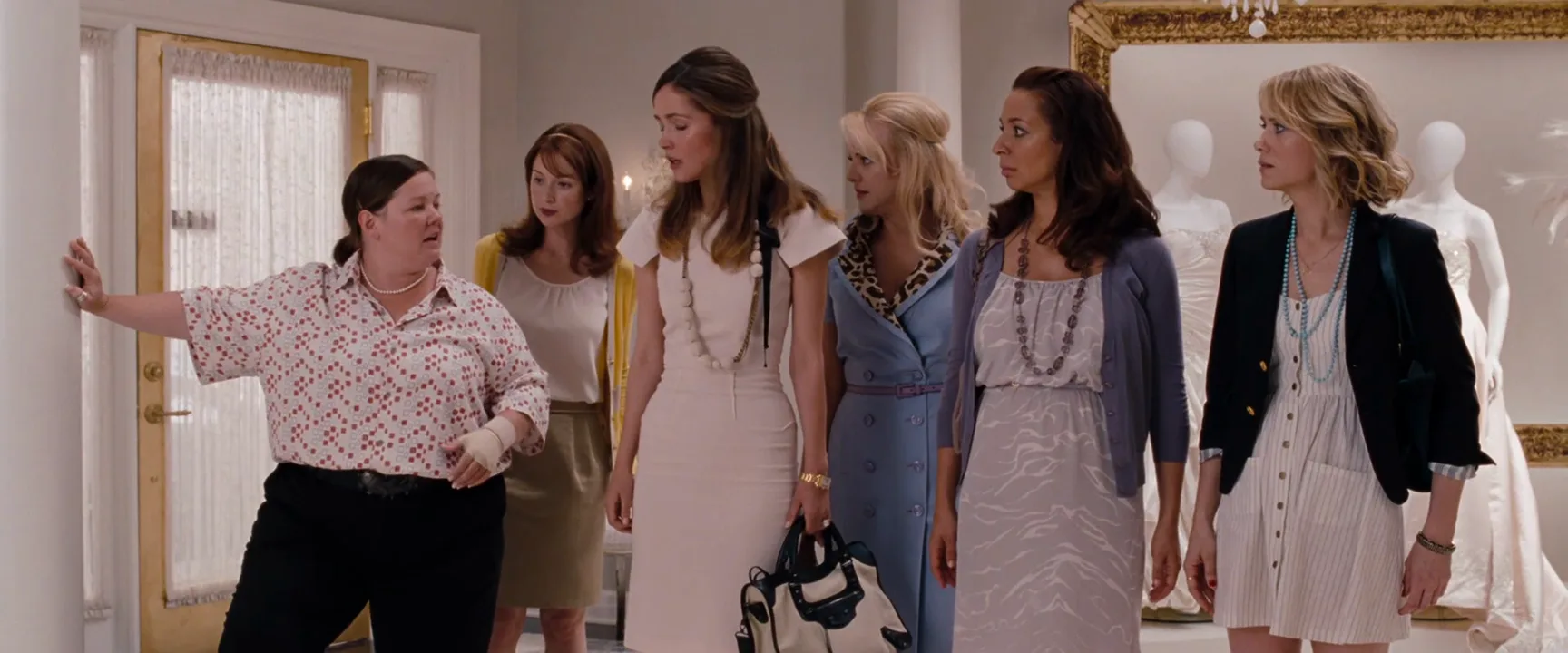
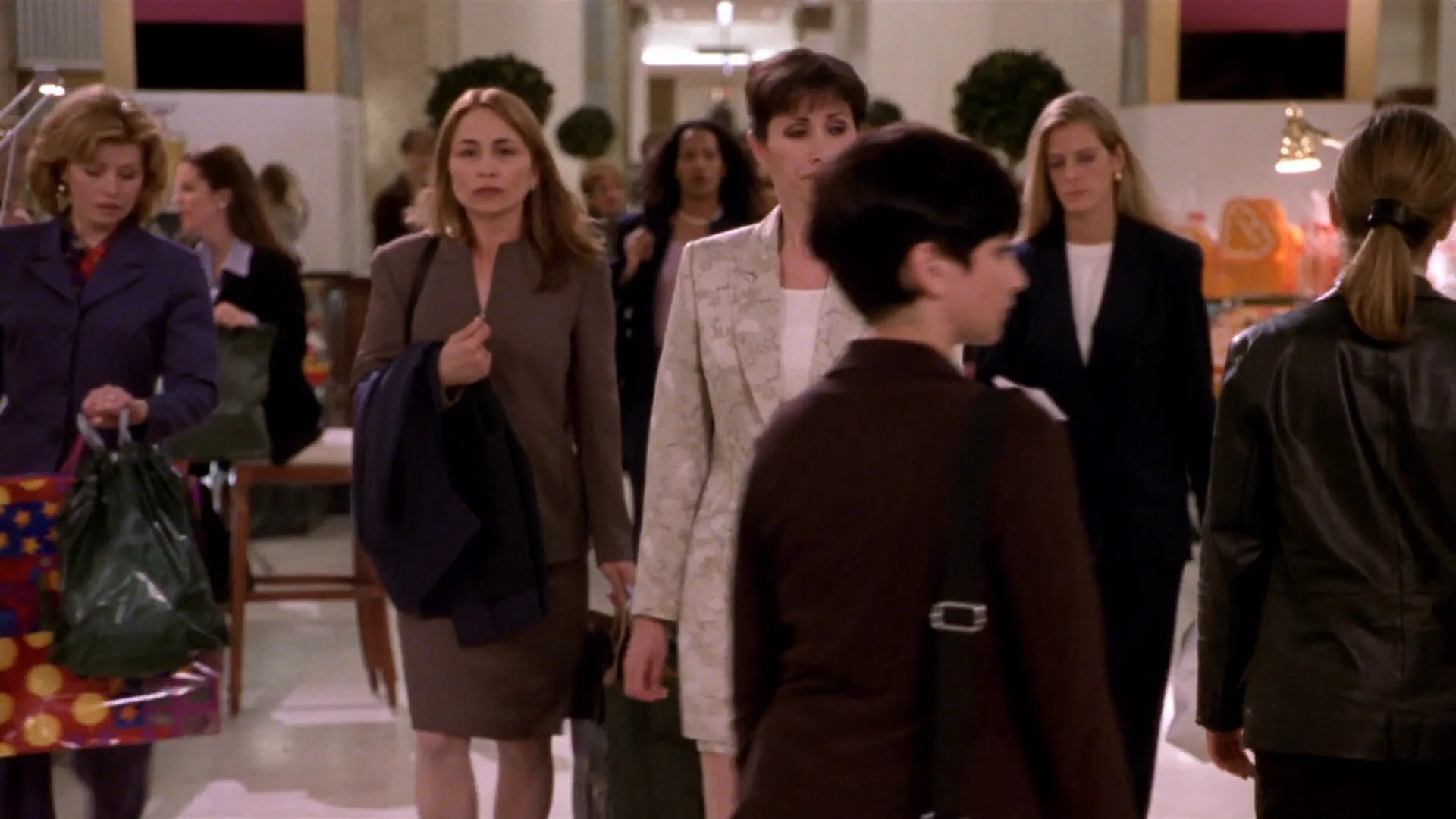
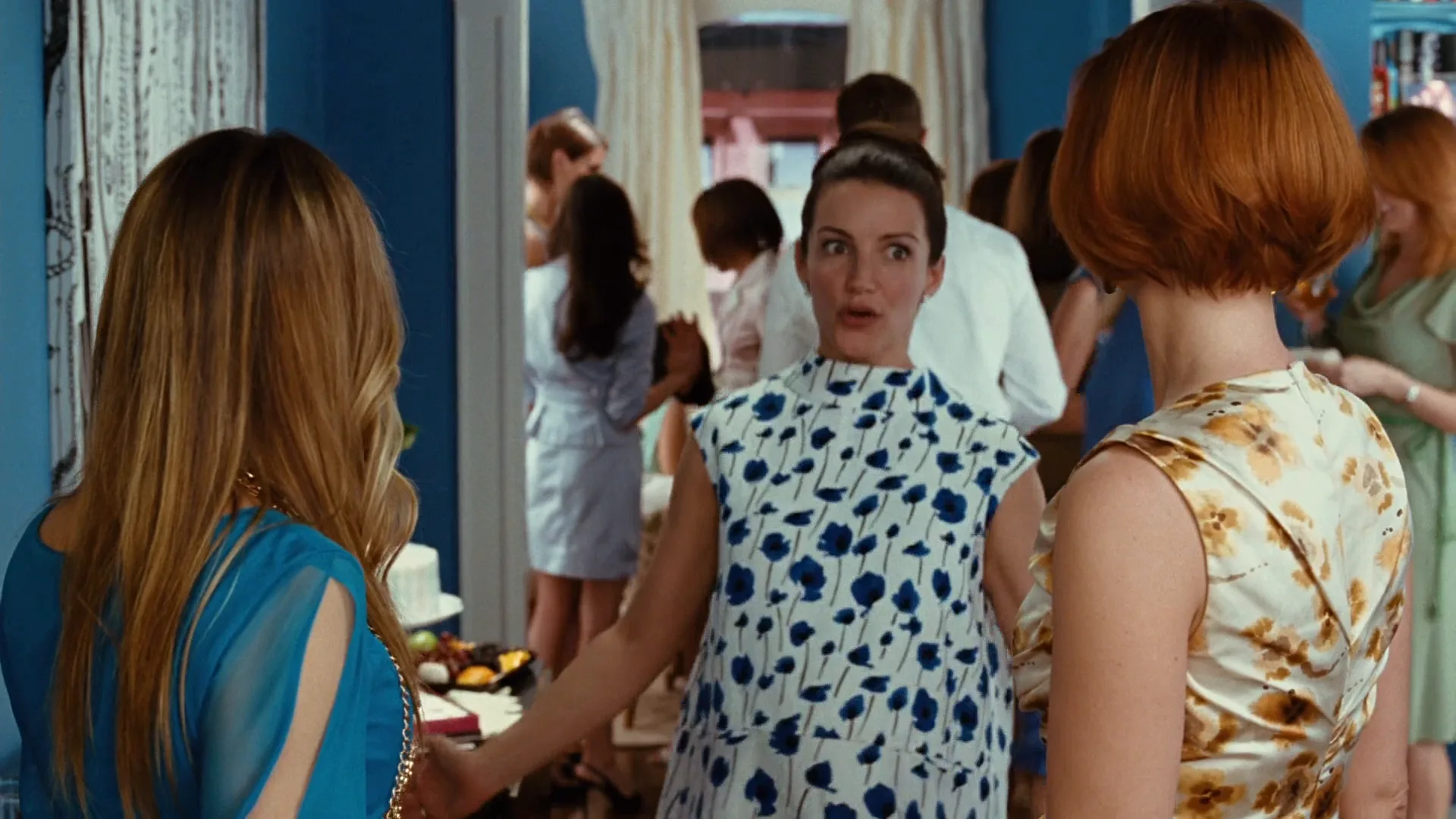
Comedy and the sitcom. When Karl Freund lit I Love Lucy (1951) for three cameras shooting at once in front of a studio audience, he used broad, even, overhead-heavy light with lots of fill — the template for multi-camera television. Feature comedies keep the principle because a joke lands on a reaction, and a reaction half in shadow is a joke half lost. The bridal-shop scenes in Bridesmaids (2011) and the department store in What Women Want (2000) show the pattern in the gallery below: white sets, pale floors, faces lifted evenly.
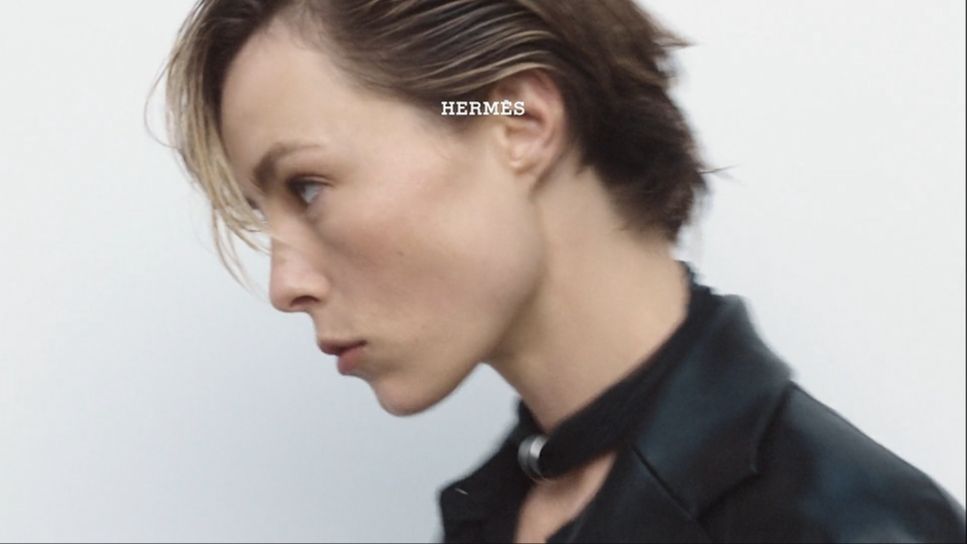
Commercials and fashion. Advertising uses high key because it sells clarity: skin and product look clean, and a white seamless puts all attention on the subject.
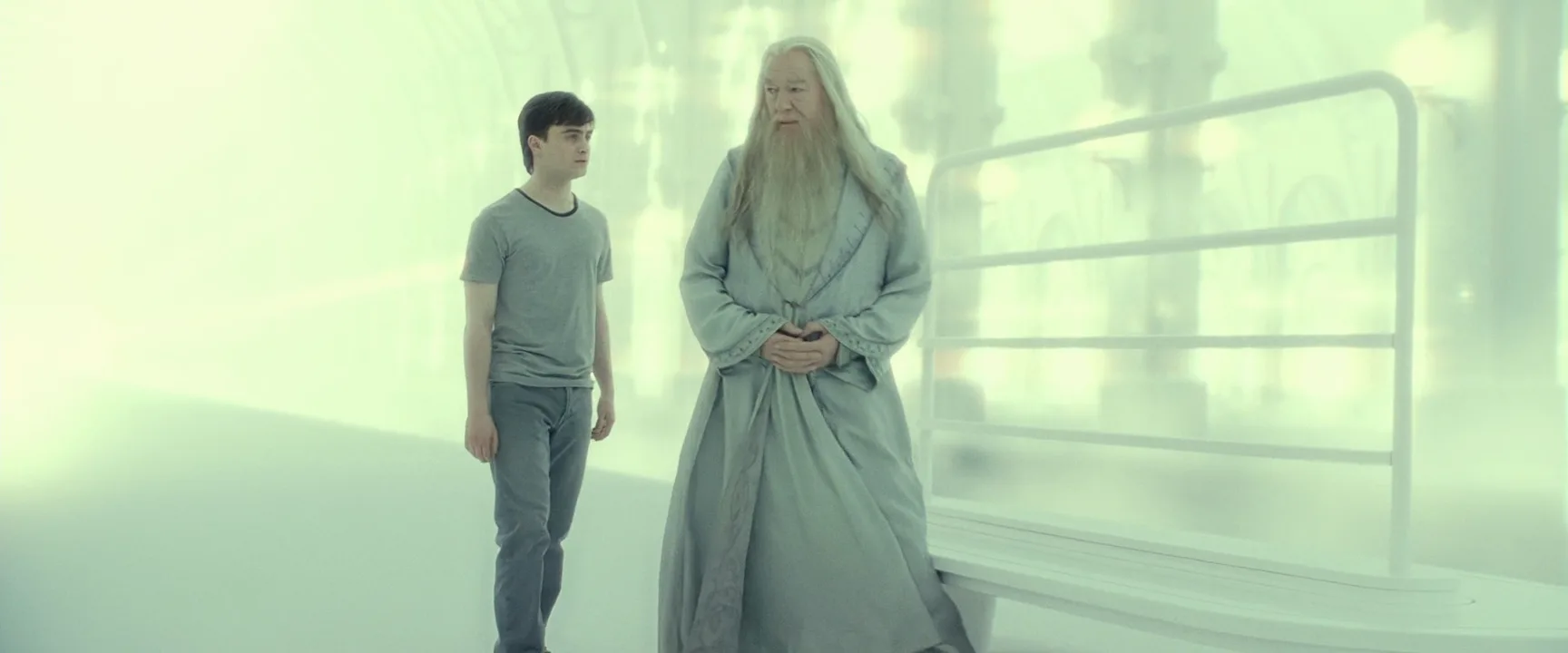
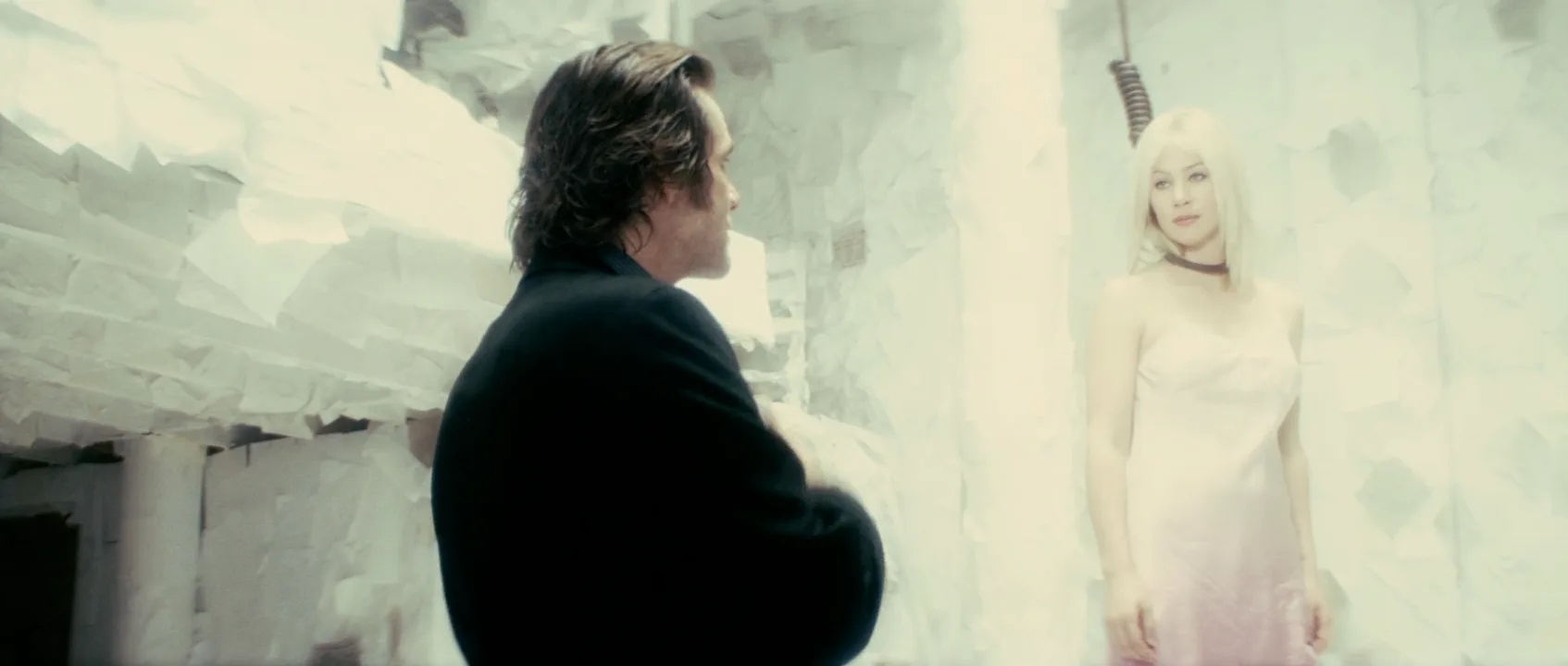
Heavens, dreams and the afterlife. A frame flooded with white feels weightless and outside time. The King's Cross limbo in Harry Potter and the Deathly Hallows: Part 2 (2011) is a white void with almost no shadow; the white prison in THX 1138 (1971) uses the same emptiness to erase any sense of place. Pushed further, high key merges with deliberate overexposure for memories and near-death moments.
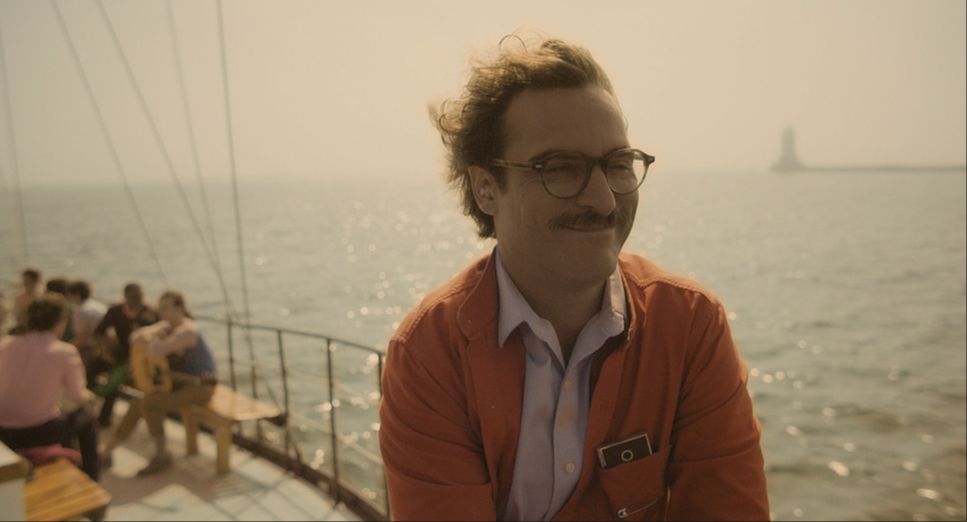
Sunny nostalgia and romance. Hazy daylight, pastel wardrobe and lifted shadows read as warmth and memory. Her (2013) uses soft, bright, low-contrast daylight for a gentle, optimistic surface over a lonely story.
Clinical and sterile worlds. High key is not always cheerful. A hospital or a lab lit bright and flat can feel exposed and cold, with nowhere to hide.
How to light a high-key scene
High key is built by the whole department — lighting, production design and wardrobe — and protected in the grade. A practical order of work:
1. Start with the set and wardrobe. Pale walls, light floors, white or pastel costumes do half the work before a single lamp is on. A white set reflects light back as natural fill; a dark set swallows it. Ask for walls around 60–80% reflectance and avoid large areas of black in frame.
2. Light the space, not just the actors. Put the ambient level up first: spacelights or a soft overhead frame on interiors, big bounces or a skylight through a large diffusion frame.
3. Build the key big and soft. A 4×4 to 8×8 frame of diffusion, a book light or a bounce off a 12×12 ultrabounce, placed 20–45° off the lens axis and slightly above eye line. The bigger the source relative to the face, the softer the transition. Diffusion and bounce lighting are the core tools here.
4. Fill generously. Aim for a ratio between 1:1 and 2:1 — with a key at f/4, the fill side should read around f/2.8 to f/4. A white bead board or a second soft source close to the lens is enough. On-axis fill near the camera adds flattering, near-front lighting.
5. Place the background. Light the background at or above skin exposure: +½ to +1 stop for a natural bright room, +1½ to +2 for a white limbo that still holds texture. Keep it under clipping unless you want it to burn.
6. Keep separation. Pale subject on pale background can flatten into one plane. Add a soft backlight or edge, choose wardrobe a shade darker or more saturated than the wall, or let a little falloff creep into the corners.
7. Expose and grade for the highlights. Expose so skin sits roughly one stop over middle gray, and check false color or zebras so whites carry detail. In the grade, lift the shadows and keep blacks from crushing; a low-contrast curve and a slight bloom sell the softness.
High-key vs. low-key lighting
Low-key lighting is the opposite end of the same scale. Where high key keeps the ratio low and the frame mostly light, low key uses a strong key, little or no fill and a ratio of 8:1 or more, so most of the frame falls into shadow and only fragments of faces and objects emerge.
| | High key | Low key | |---|---|---| | Lighting ratio | about 1:1 to 2:1 | 8:1 and higher | | Dominant tones | light, pale, pastel | dark, black, deep shadow | | Shadows | soft, shallow, few | deep, large, shaping the frame | | Typical sources | big soft frames, bounce, overhead soft light | a single hard or narrow soft key, practicals | | Mood | open, safe, optimistic, sterile | tense, secretive, dramatic | | Typical genres | comedy, romance, musicals, commercials | noir, thriller, horror, crime |
The choice is not only about mood but about information. High key shows everything; low key decides what you are allowed to see. Low key's extreme form, chiaroscuro, sculpts faces out of black; high key's extreme form dissolves them into white.
Most films sit around 3:1 or 4:1; high and low key are deliberate pushes away from it.
Is high-key lighting the same as overexposure?
No. High key is a lighting design; overexposure is an exposure choice or mistake. A well-lit high-key frame is bright but holds detail, down to the texture of a white shirt. Overexposure pushes values past what the sensor or film can record, so highlights clip to flat white with no information.
The two often work together. Dream and heaven scenes combine a high-key setup with a background deliberately pushed into clipping, while the faces stay correctly exposed. The King's Cross frame from Deathly Hallows in the gallery sits right on that line: the room glows almost to pure white, yet the figures keep their tones.
A quick test: stop down one stop. A normal, balanced frame means it was just bright exposure; a pale frame with shallow shadows means the lighting itself is high key.
High-Key Lighting examples in film
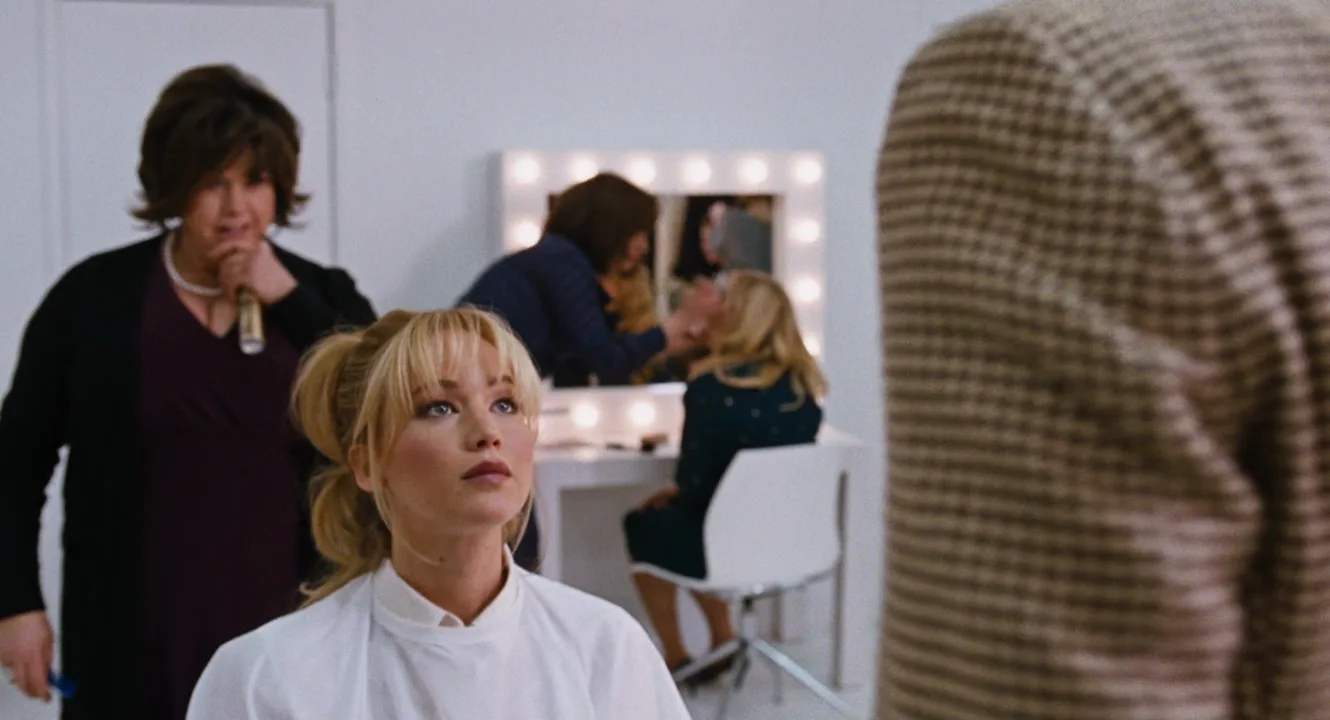
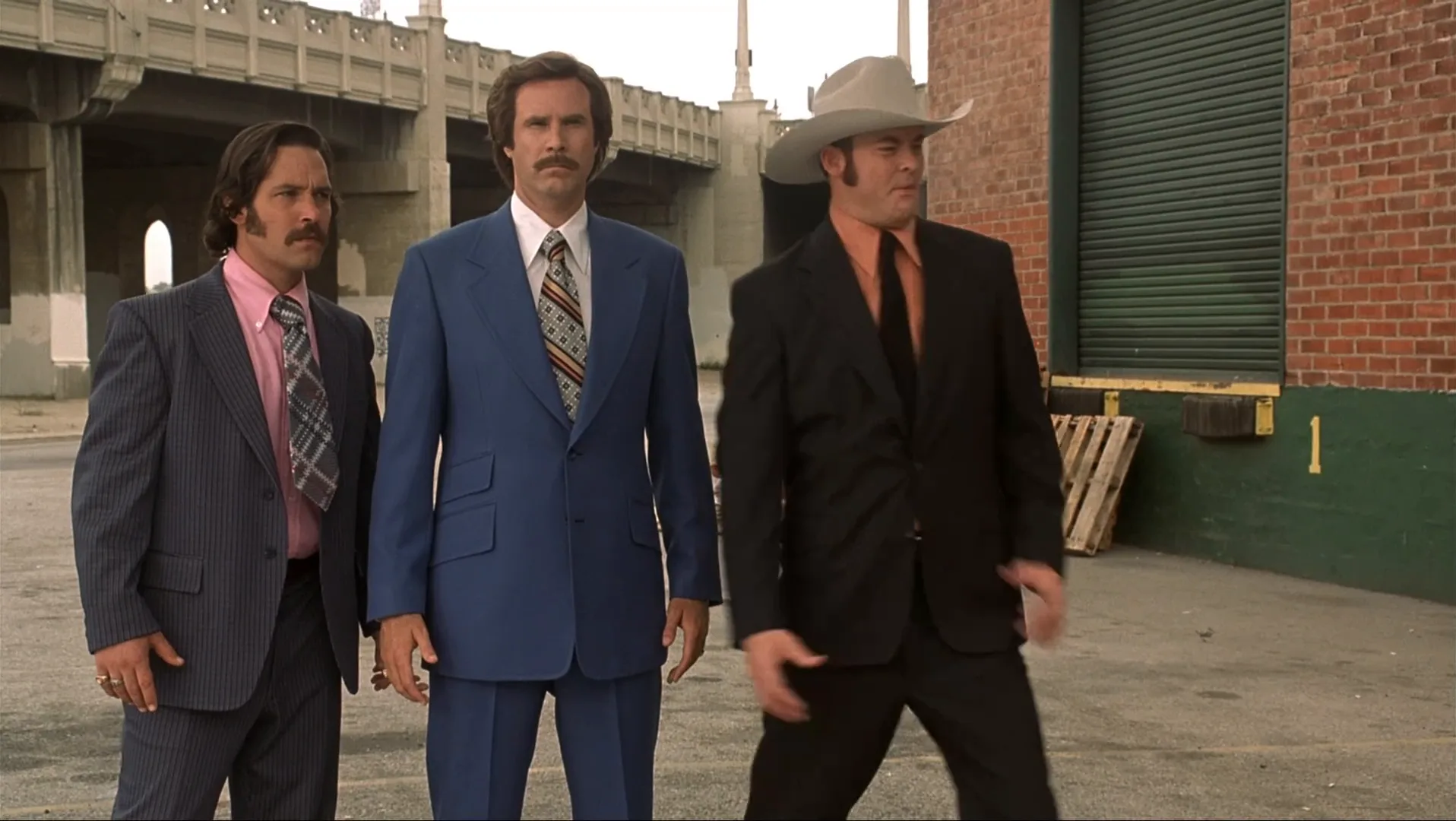
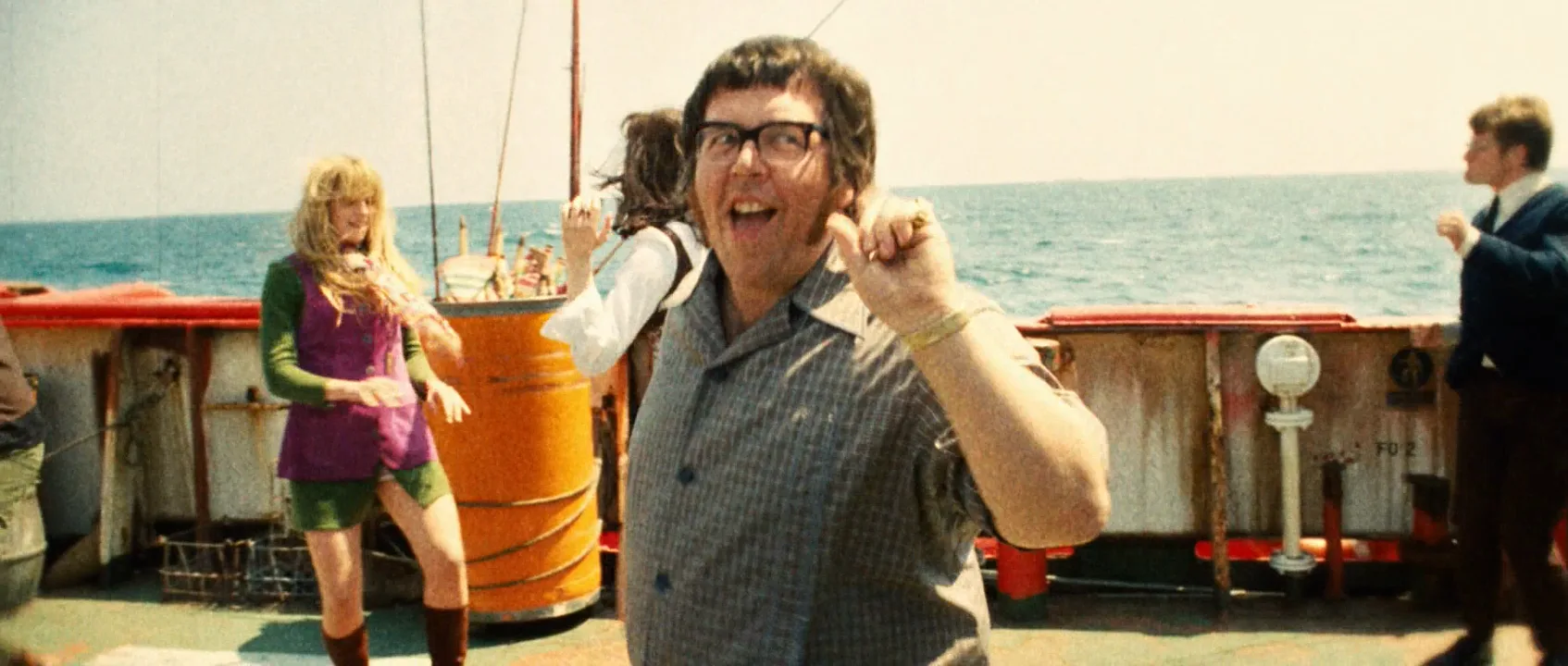
15 framesFifteen frames from comedy, fantasy, drama, thrillers and one fashion commercial. Look at how far the shadow side of each face falls — usually not far — and how much of the frame is taken by pale walls, sky or floor.
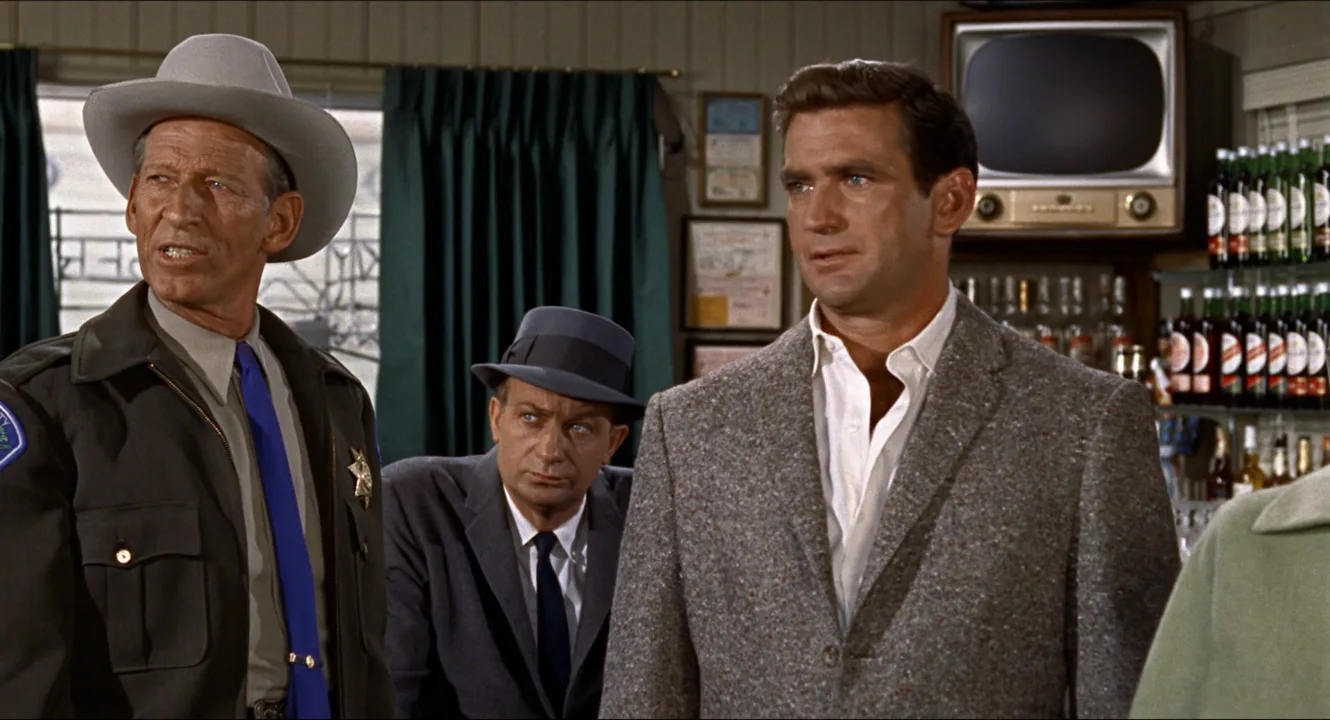
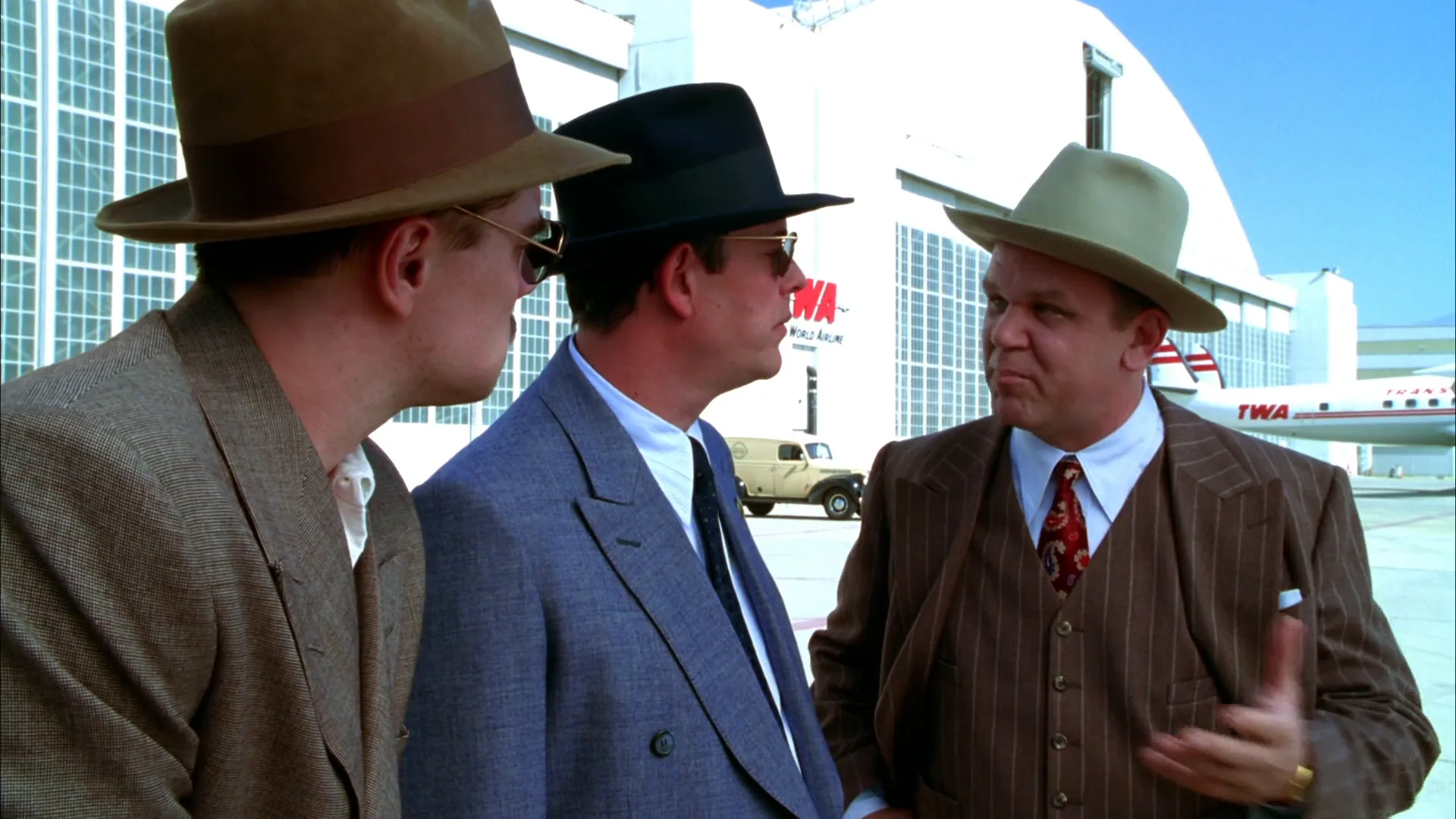
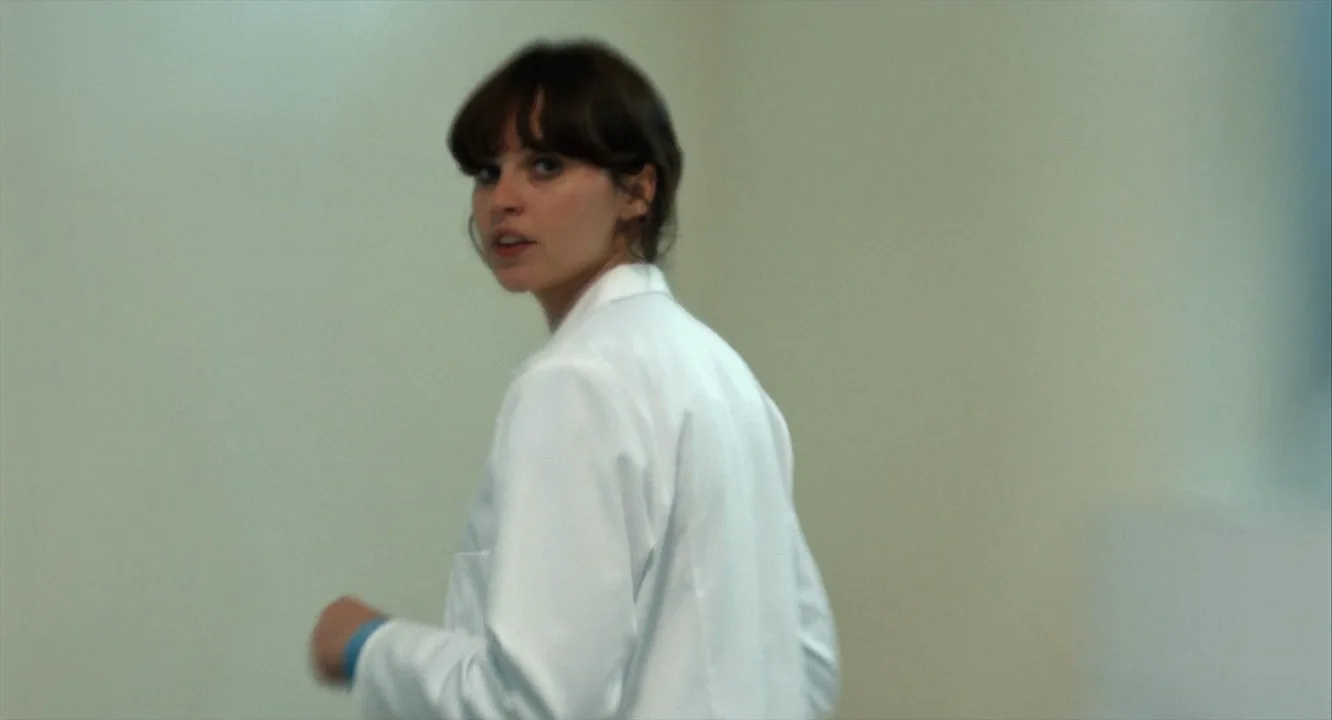
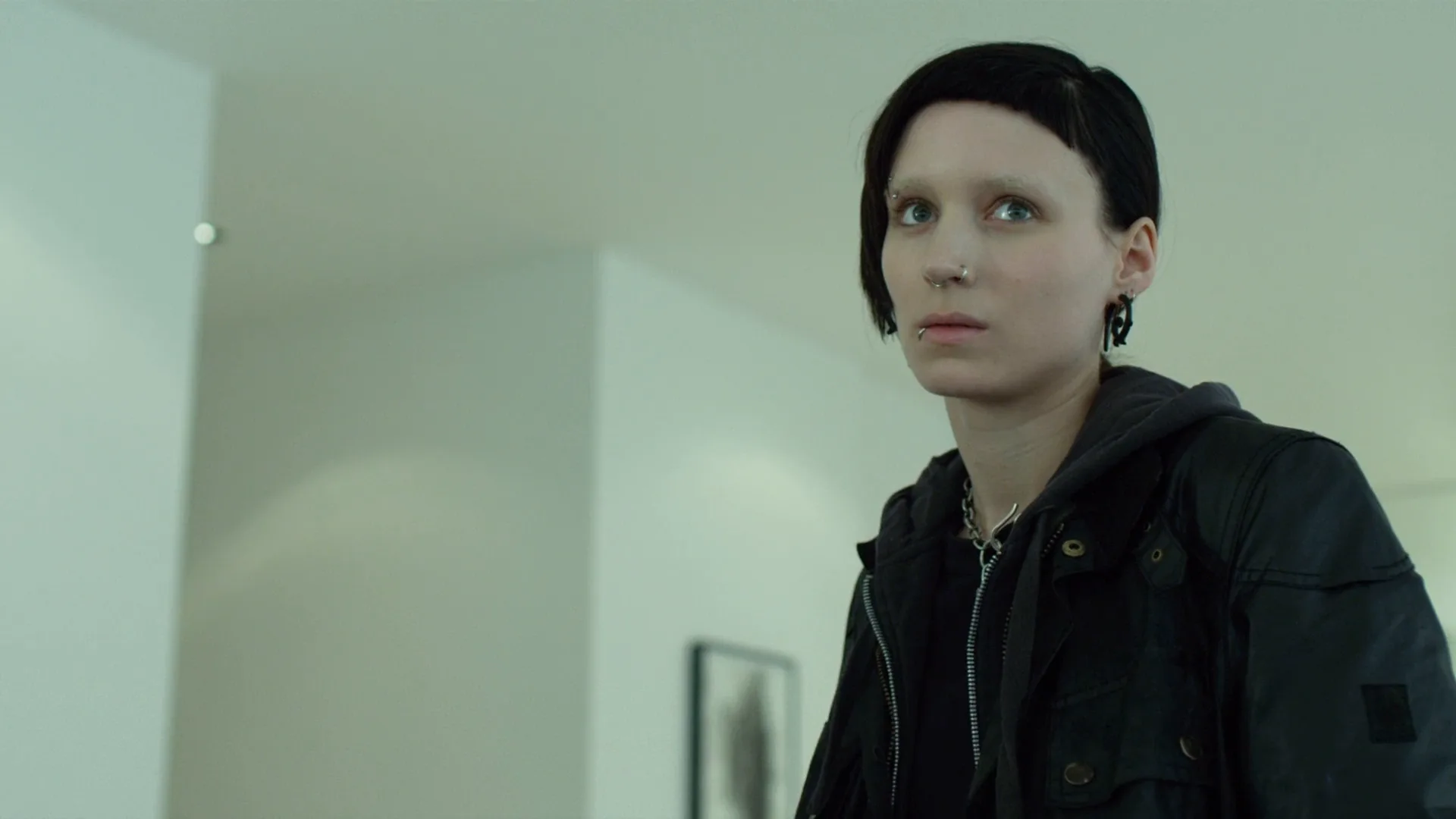
How to create a high-key lighting with AI
4 promptsImage and video models tend to add drama — dark vignettes, a single hard key, deep shadows — whenever a prompt says "cinematic", so high key has to be described as a lighting setup, not a mood. In FlashBoards, build the start frame with Nano Banana 2 Lite, try a second take with GPT Image 2.5, and animate the best frame with MiniMax H3 Max Turbo, keeping the reference frames above on the same board so you can compare brightness and shadow depth side by side. The fourth prompt re-shoots a real film shot from a text description alone, and the original plays next to the result so you can compare.
High-key lighting, cinematic film still. A fictional woman in her thirties with a short copper bob, freckles and a pale yellow cardigan laughs while trimming white tulips at a white marble counter in a white bakery; a white ceramic vase stands on the counter beside her. Medium shot at eye level, 50mm lens. Large soft key from front-left through diffusion, strong fill from near the camera, key-to-fill about 2:1, soft faint shadows. White walls behind her one stop brighter than her face but still showing texture. Pastel palette, low contrast, evenly lit to the edges of the frame, fresh morning mood.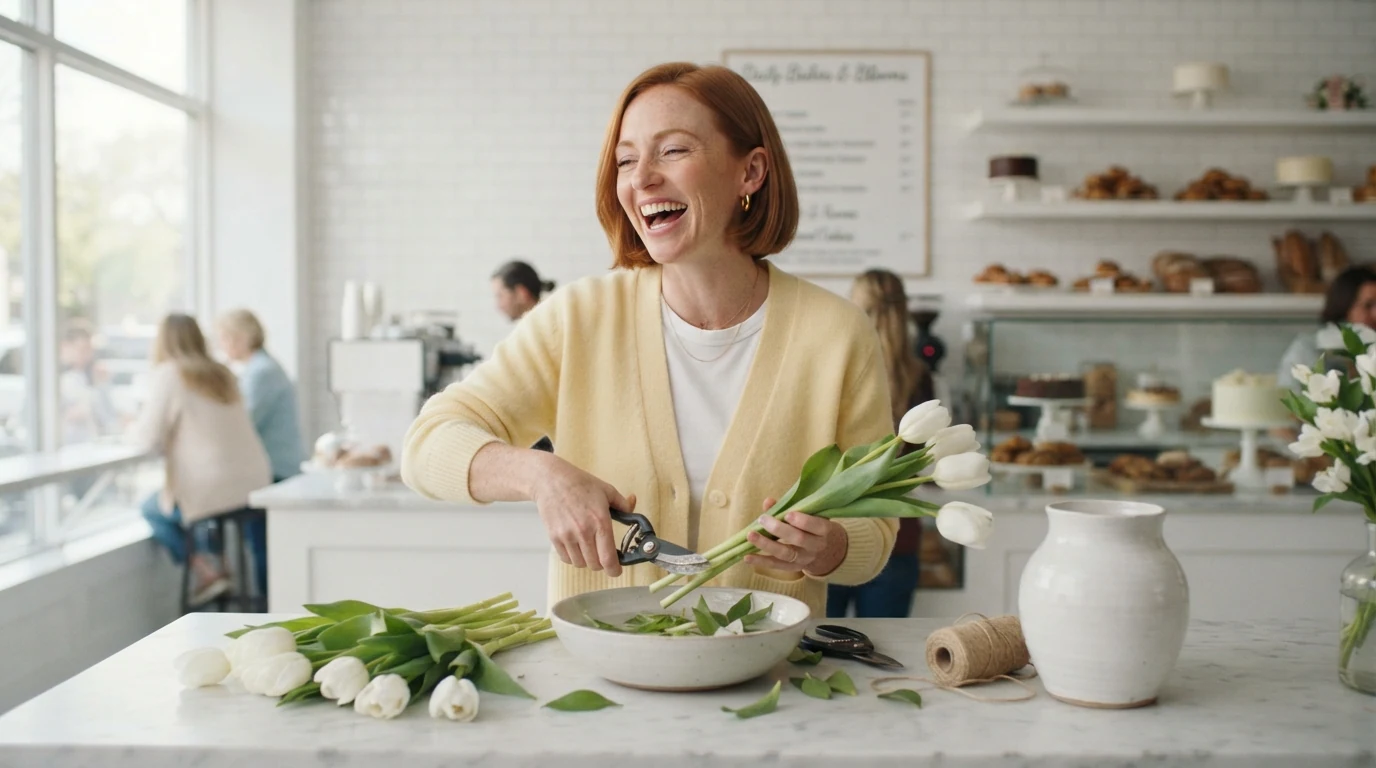
"High-key lighting" names the look, but the setup words carry it: "large soft key through diffusion", "strong fill", "key-to-fill about 2:1" and "soft faint shadows" keep the model from adding a dramatic shadow side. "One stop brighter… but still showing texture" puts the background above skin without clipping, and "evenly lit to the edges" heads off the default vignette. The white set and yellow cardigan give tonal separation without darkness.
Open FlashBoardsWide cinematic shot of a high-key white limbo. A fictional elderly man with a closely trimmed white beard, round wire glasses and a cream linen suit sits on a plain white bench in an endless white room; the floor glows softly and meets the walls without a visible line. Light comes from everywhere — broad soft overhead light and bounce from the floor — so shadows are almost absent. The background is bright white with a faint gradient; his face, beard and linen keep fine texture. Calm, weightless, dreamlike. 28mm lens at seated eye height, subject small in the right third.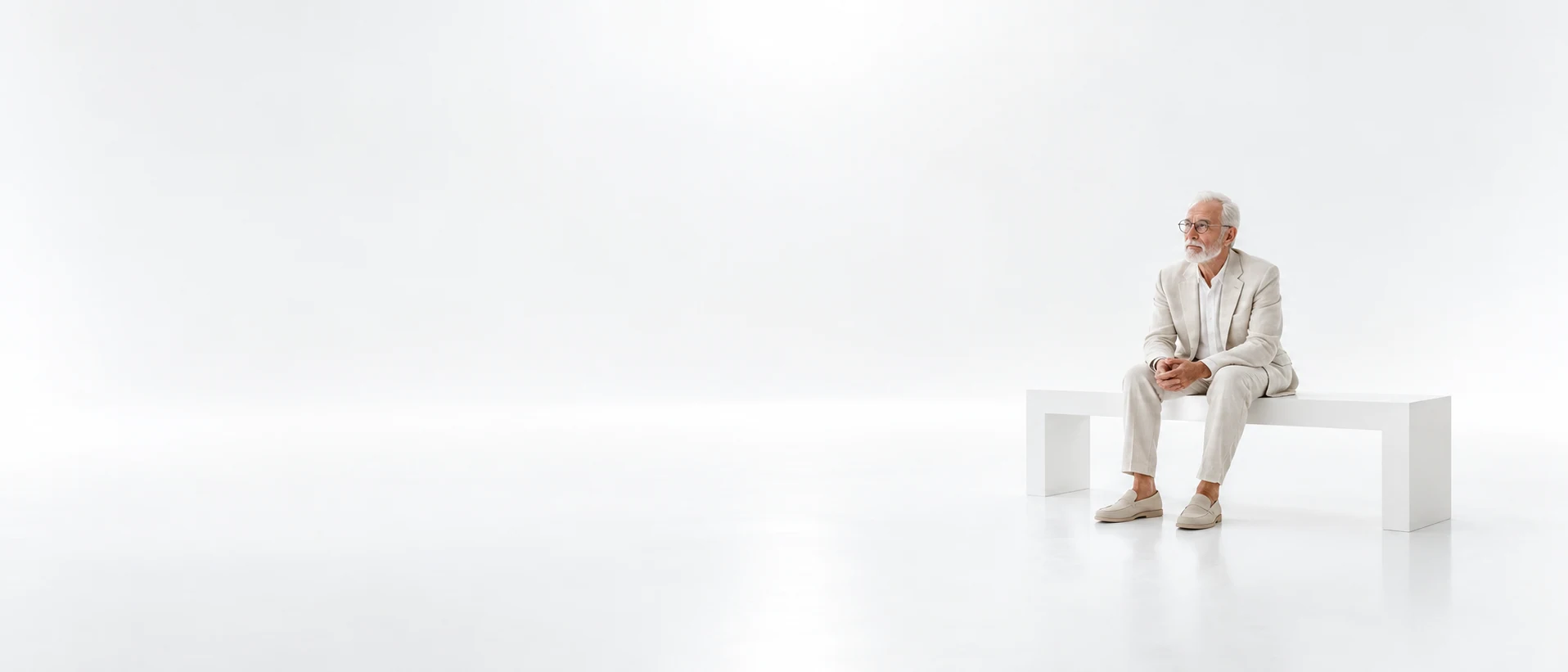
This take pushes high key toward the heaven-and-dream use. "Light comes from everywhere" and "bounce from the floor" remove the directional key; "faint gradient" and "keep fine texture" stop the white from becoming a flat blank. The cream suit and white beard keep him in the same tonal family, while glasses and skin give the only mid-tones.
Open FlashBoardsCamera: a slow, steady push-in at eye level from the medium shot to a medium close-up, moving continuously for the whole shot. Action: she is already laughing and snipping a tulip stem as the shot begins; she gathers the tulips into a small bouquet and places them into the white ceramic vase on the counter; she steps back, looks at the flowers and smiles. The light stays bright, soft and even, the white walls stay bright, and the shadows stay faint."Already laughing and snipping" makes the shot alive from the first frame, so the model doesn't drift into a static push on a still. The action uses only what is in recipe 1 — tulips, counter, the white vase — so nothing new gets invented. Restating "bright, soft and even… shadows stay faint" keeps the model from darkening the frame as the camera moves in.
Open FlashBoards{
"output": "Full-screen live-action scene from Bridesmaids (2011), from its very first frame: one single continuous shot. Glossy 2011 35mm comedy look with fine grain, 2.39:1 scope frame, a luxury bridal boutique in daytime: white walls, a white pillar and door frame at the left edge, a glass entrance door with sheer white curtains behind the group at frame left, a tall gilded mirror frame on the back wall, white mannequins in white wedding gowns at frame right. High-key lighting: a broad soft frontal wash with strong fill, every face lit to the same bright level, only faint soft shadows under chins, the white walls glowing a touch brighter than skin yet keeping their texture, low contrast, soft pastel palette of cream, blush, powder blue and lilac, evenly bright to the edges of the frame.",
"characters": {
"S1": {
"name": "Megan, played by Melissa McCarthy",
"look": "sturdy woman, dark hair slicked back into a low ponytail, loose short-sleeved white blouse with a small red print, black trousers, a folded paper napkin in her left hand",
"voice": "loud, deadpan, blunt"
},
"S2": {
"name": "Becca, played by Ellie Kemper",
"look": "young woman with shoulder-length auburn hair, butter-yellow cardigan over a white top, khaki skirt",
"voice": "none, she only smiles"
},
"S3": {
"name": "Helen, played by Rose Byrne",
"look": "slim woman with long brown half-up hair, fitted white short-sleeved sheath dress, a long strand of pale beads",
"voice": "none, she only reacts"
},
"S4": {
"name": "Rita, played by Wendi McLendon-Covey",
"look": "blonde woman with hair in a soft half-up twist, powder-blue wrap dress with a leopard-print collar, a black-and-white handbag on her arm",
"voice": "sharp, appalled"
},
"S5": {
"name": "Lillian, played by Maya Rudolph",
"look": "woman with long dark curly hair, lilac cardigan over a white-and-grey patterned dress, a beaded necklace",
"voice": "none, she only reacts"
},
"S6": {
"name": "Annie, played by Kristen Wiig",
"look": "woman with a wavy honey-blonde bob, navy blazer over a white button-front dress",
"voice": "none, she only reacts"
}
},
"shots": [
{
"shot": 1,
"camera": "static camera, eye level, wide group shot from the thighs up, the framing never changes; S1 at the far left edge beside the white pillar, S2 behind her in the doorway, then S3, S4 and S5 across the centre, S6 at frame right in front of the white gowns",
"action": [
"BEGINNING: alive from the first frame, the six women are just stepping in from the entrance at frame left, heads tilting up as they take in the white room; S1 in front throws her right arm (screen left) out and plants her palm flat on the white pillar at the left edge, her left hand on her hip, and speaks with her gaze sweeping up across the room.",
"THEN: S1 lifts her left hand with the paper napkin to her mouth and holds it there, eyes wide; S6 at frame right presses one hand flat to her chest and looks up in shock; S4 turns her head to screen left and grimaces straight at S1 as she speaks; S5 turns her head to screen right toward S6; S2 behind S1 smiles brightly.",
"THEN: S1 lowers the napkin from her mouth and speaks toward the group at screen right, palm still flat on the pillar; S3 turns her head from screen right to screen left and looks at S1; S5 turns to look at S1 too.",
"THEN: the whole row stands still facing S1 at screen left, S5 with her hands clasped in front of her dress, S6 motionless; S1 keeps talking, perfectly calm.",
"END: S3 raises one hand to cover her mouth, holding back a laugh; S1 gestures once with her left hand toward the group, her right palm never leaving the pillar."
],
"dialogue": [
{
"speaker": "S1",
"on_screen": true,
"when": "from the first frame, as she plants her palm on the pillar",
"delivery": "loud, impressed",
"line": "<d>[English] This is some classy shit here...</d>"
},
{
"speaker": "S4",
"on_screen": true,
"when": "while S1 holds the napkin to her mouth",
"delivery": "sharp, disgusted",
"line": "<d>[English] Jesus, Megan!</d>"
},
{
"speaker": "S1",
"on_screen": true,
"when": "right after she lowers the napkin",
"delivery": "flat, sincere",
"line": "<d>[English] I'm so... I want to apologize.</d>"
},
{
"speaker": "S1",
"on_screen": true,
"when": "right after, as the row stands still facing her",
"delivery": "deadpan, matter-of-fact",
"line": "<d>[English] I'm not even confident on which end that came out of.</d>"
}
]
}
],
"sound": {
"ambience": "hushed boutique interior, soft heels on a hard floor, a faint street hum heard from outside, one muffled burp behind S1's napkin",
"speech": "exactly these spoken phrases, each said once, in this order",
"never_spoken": "no narration and no voice-over: the descriptions, performance notes and step words of this prompt are never spoken aloud",
"music": "a film score under the scene, always below the voices: light plucked strings and a soft bouncy comedy groove",
"subtitles": "none"
}
}Remakes the static group shot from Bridesmaids (2011), dir. Paul Feig, DP Robert Yeoman: Megan's palm on the pillar, the napkin to her mouth, Rita's line and the row turning to stare, with the film's dialogue and the even, shadowless comedy light carried over.
The high key lives in the output field, written as a lighting setup: a broad soft frontal wash with strong fill, every face lit to the same bright level and walls a touch brighter than skin yet keeping their texture. The four lines are the film's own, in order, and each action step names who moves which hand and looks where, so the reactions land on the same beats while the static camera holds the bright, shadowless row.
Common mistakes
- "Cinematic" turns into low key. Many models read "cinematic" as dark and moody. Keep the word if you want film texture, but pair it with the ratio ("key-to-fill about 2:1"), "strong fill" and "soft faint shadows".
- Bright becomes blown out. "High key" alone can clip faces and whites to flat paper. Add "skin texture visible" or "white walls still showing texture" and give the background a stop value relative to the face.
- Pale subject melts into a pale background. State a separating element: a pastel or slightly darker costume, hair color, a soft backlight on the shoulders.
- Dark corners appear. Models add vignettes by habit. Say "evenly lit to the edges of the frame" rather than naming what to remove.
- Video drifts darker. Over a push-in or pan, image-to-video models often deepen shadows. Restate the lighting at the end of the video prompt so it holds through the move.
Keep the reference frames, prompts and every generated take side by side — images and video in one canvas.
FAQ
5 questionsWhat is high-key lighting in film?
High-key lighting is a style in which most of the frame sits in light tones and shadows are soft and shallow. It uses strong fill, a low key-to-fill ratio of about 1:1 to 2:1, and backgrounds lit as bright as or brighter than the faces. The effect is open, clear and optimistic, which is why it dominates sitcoms, comedies, commercials and dreamlike heaven scenes.
What is the difference between high-key and low-key lighting?
High-key lighting keeps the ratio low and the frame mostly bright, with little shadow, so everything is visible and the mood is light. Low-key lighting uses a strong key with little or no fill, ratios of 8:1 and higher, and leaves most of the frame dark, so the mood is tense or mysterious. High key suits comedy and commercials; low key suits noir, thrillers and horror.
What lighting ratio is considered high key?
A key-to-fill ratio between 1:1 and 2:1 is typical for high key, meaning the shadow side of a face is at most one stop darker than the lit side. Ratios around 3:1 to 4:1 read as a normal, medium key, and 8:1 or more reads as low key. The background level matters too: high key usually places walls and sky at or above skin exposure.
Why do sitcoms use high-key lighting?
Multi-camera sitcoms shoot a scene with several cameras at once, so the light has to work from every angle without constant relighting. Broad, soft overhead light with lots of fill does that. It also suits comedy itself: a joke depends on a clear reaction, and evenly lit faces keep every expression readable.
Can high-key lighting feel dark or unsettling?
Yes. Bright, flat light in a sterile setting — a hospital, a lab, a minimalist white apartment — can feel cold and exposed, because there is nowhere to hide. Filmmakers use this for clinical dystopias and for thrillers that stage danger in full daylight.
Related terms
6- Low-Key LightingLighting
Low-key lighting keeps most of the frame in shadow, with a strong key, little or no fill and a high lighting ratio, so only fragments of faces and objects emerge from the dark — the language of noir, thrillers and horror.
- OverexposureLenses, Focus & Exposure
Overexposure happens when too much light reaches the film or sensor: highlights clip to pure white and lose detail; used on purpose it reads as heat, memory, the afterlife or a dreamlike glare.
- Fill LightLighting
Fill light is a softer, weaker source on the side opposite the key that lifts the shadows the key creates; its level relative to the key — the lighting ratio — decides whether a face looks open and bright or moody and sculpted.
- Soft LightLighting
Soft light comes from a source that is large relative to the subject — an overcast sky, a big window, a bounced or diffused lamp — and wraps around forms with gradual, feathered transitions from light to shadow.
- ContrastLighting
Contrast is the difference between the brightest and darkest parts of an image — set on set by the ratio between key and fill — and ranges from flat, gentle low contrast to hard, graphic high contrast.
- Film LightingLighting
Film lighting is the craft of shaping light for the camera — its direction, quality, color and contrast — to model faces, build space, set the time of day and carry the mood of a scene.
Further reading
Blain Brown, Motion Picture and Video Lighting, 3rd ed. (Routledge, 2018). Kris Malkiewicz, Film Lighting: Talks with Hollywood's Cinematographers and Gaffers (Touchstone, 2012).